
Competing for attention in Milton Keynes is no easy feat when every local business wants to stand out online. Effective search engine marketing puts your brand right in front of customers actively searching for your products or services, combining paid advertising with search engine optimisation for maximum visibility. Discover how precise audience targeting and measurable campaign performance can accelerate your growth and help you reach exactly the right customers at the right moment.
| Point | Details |
|---|---|
| SEM Strategy | Search Engine Marketing combines paid advertising and organic search techniques to enhance online visibility and drive targeted traffic. |
| Types of SEM | Primary types include Pay-Per-Click (PPC), Display Advertising, and Remarketing, each serving distinct marketing purposes. |
| Common Pitfalls | Avoid mistakes such as broad keyword selection and neglecting conversion tracking to enhance campaign effectiveness. |
| Benefits for SMBs | SEM provides cost-effective advertising, precise audience targeting, and immediate visibility, empowering small businesses to compete effectively. |
Search Engine Marketing (SEM) represents a powerful digital strategy designed to enhance online visibility and drive targeted web traffic. At its core, SEM combines paid advertising techniques and organic search optimisation to help businesses capture consumer attention in digital marketplaces. Search engine marketing strategies involve sophisticated approaches to connect brands with potential customers precisely when they’re seeking relevant information.
The fundamental components of SEM include several critical elements:
Understanding SEM requires recognising its dual approach. Marketers utilise both organic search engine optimisation (SEO) techniques and paid advertising strategies to maximise digital visibility. This means businesses can appear prominently in search results through carefully crafted content and strategic ad placements.
SEM transforms digital marketing by allowing businesses to appear exactly where potential customers are searching.
Successful SEM campaigns require continuous optimisation and strategic planning. Marketers must constantly analyse search trends, refine keyword selections, and adjust targeting parameters to maintain competitive positioning. By understanding user intent and crafting precisely targeted content, businesses can significantly improve their online engagement and conversion rates.
Pro tip: Regularly review and update your keyword strategy to stay aligned with evolving search behaviours and emerging digital trends.
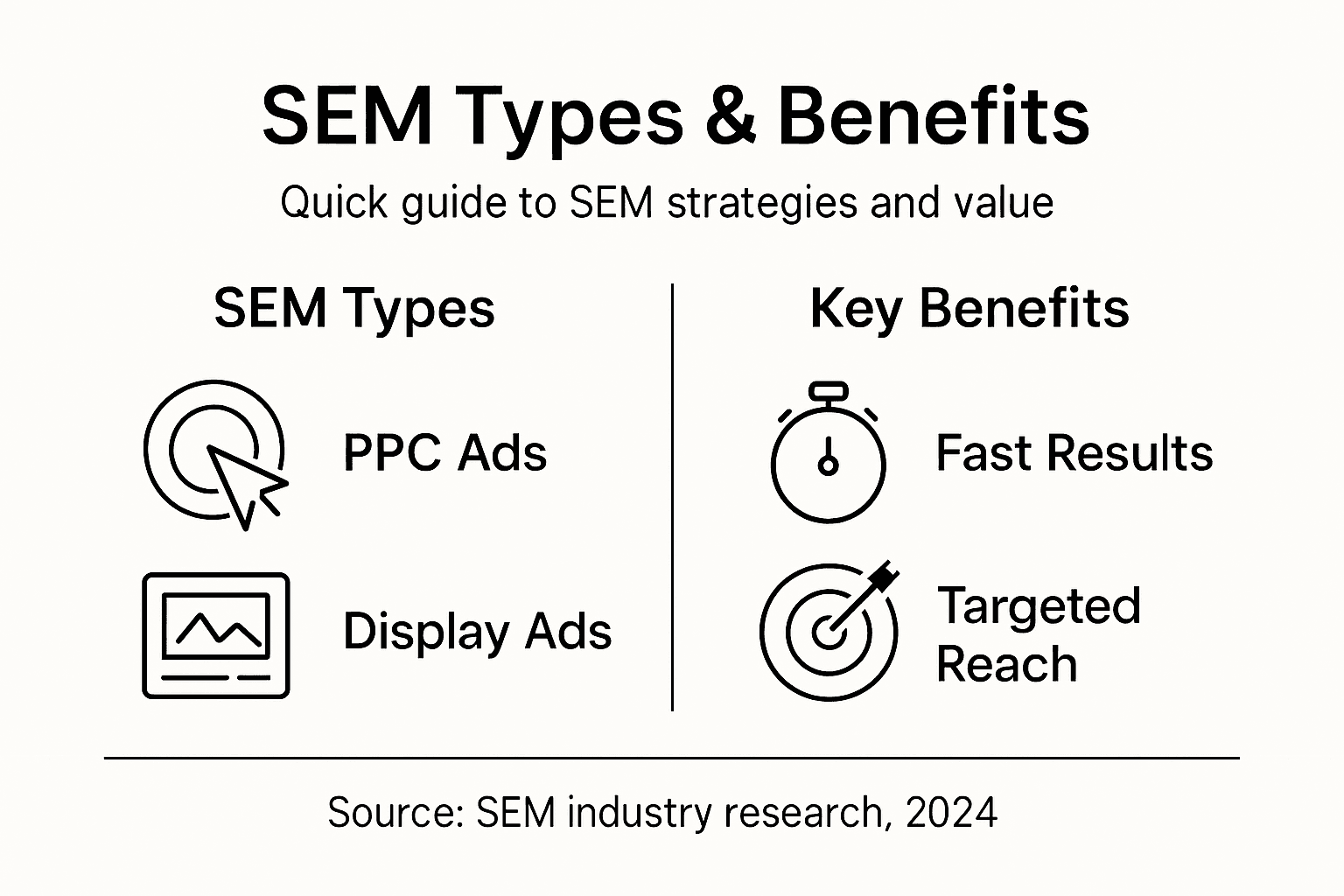
Search Engine Marketing (SEM) encompasses multiple sophisticated strategies designed to boost online visibility and drive targeted traffic. The primary types of SEM include Pay-Per-Click (PPC) advertising, display advertising, remarketing, and shopping advertisements, each serving unique marketing objectives. Targeted advertising strategies enable businesses to reach specific audience segments with precision and efficiency.
The main types of SEM can be categorised as follows:
Each SEM type offers distinct advantages for digital marketing strategies. PPC advertising allows immediate visibility by placing advertisements directly in search results, while display advertising provides broader brand exposure across multiple digital platforms. Remarketing campaigns specifically target individuals who have previously interacted with a brand, increasing the likelihood of conversion.

Here’s a comparison of SEM types and their optimal use cases:
| SEM Type | Best For | Typical Format | Business Impact |
|---|---|---|---|
| PPC Advertising | Immediate visibility | Text ads on searches | Quick traffic and conversions |
| Display Advertising | Brand awareness | Visual banners/sites | Wide reach, improved exposure |
| Remarketing | Engaging past visitors | Targeted display ads | Higher conversion potential |
| Shopping Ads | Retail product promotion | Product listings | Boosts e-commerce sales |
| Video Advertising | Storytelling, brand recall | Video content | Strong engagement, trust building |
Successful SEM strategies combine multiple advertising approaches to maximise digital marketing effectiveness.
Understanding the nuanced differences between SEM types enables businesses to craft more intelligent, targeted marketing campaigns. Marketers must carefully select and combine these approaches based on specific business goals, target audience characteristics, and available budget constraints.
Pro tip: Regularly analyse your SEM campaign performance and be prepared to adjust your strategy based on real-time data and audience engagement metrics.
Modern digital marketing relies on sophisticated search engine marketing strategies that combine precision targeting with data-driven insights. Search engine marketing techniques enable businesses to connect with potential customers at the most critical moments of their online journey, transforming how brands communicate and convert digital audiences.
The core mechanics of SEM involve several interconnected processes:
Each stage of SEM requires meticulous planning and continuous optimisation. Marketers must understand user intent, craft persuasive ad copy, and leverage advanced targeting technologies to ensure maximum return on investment. By analysing real-time data, businesses can rapidly adjust their strategies, focusing resources on the most effective keywords and audience segments.
Successful SEM transforms digital advertising from a scattergun approach to a precision-targeted communication strategy.
The integration of advanced analytics allows marketers to track every stage of the customer journey, from initial search to final conversion. This data-driven approach enables businesses to understand customer behaviour, refine their messaging, and create increasingly sophisticated marketing campaigns that deliver measurable results.
Pro tip: Implement conversion tracking and regularly review performance metrics to continuously refine your SEM strategy and improve campaign effectiveness.
Search Engine Marketing offers transformative advantages specifically tailored for small and medium businesses seeking to compete effectively in digital marketplaces. Search engine marketing strategies provide unprecedented opportunities for growth, enabling businesses to punch well above their weight in competitive online environments.
The key benefits for small and medium enterprises include:
Small businesses particularly benefit from SEM’s granular targeting capabilities. Unlike traditional advertising methods, digital marketing allows precise audience segmentation, ensuring marketing budgets are spent efficiently. Entrepreneurs can target specific geographical areas, demographic groups, and even consumer interests with remarkable accuracy.
SEM empowers small businesses to compete with larger competitors by levelling the digital marketing playing field.
The scalability of Search Engine Marketing means businesses can start with modest budgets and incrementally increase investment as they see tangible results. This approach allows for continuous learning and refinement, helping companies understand their market more deeply while generating meaningful customer engagement.
Pro tip: Start with a conservative budget, closely monitor your campaign performance, and progressively adjust your strategy based on measurable insights and conversion rates.
Search Engine Marketing success hinges on avoiding critical strategic errors that can drain budgets and undermine campaign effectiveness. Common SEM pitfalls represent significant challenges for digital marketers seeking optimal return on investment.
The most prevalent SEM mistakes include:
Marketers must approach SEM with strategic precision. Each mistake represents a potential financial drain, requiring meticulous planning and continuous refinement. Understanding how these errors manifest helps businesses develop more sophisticated, cost-effective digital marketing approaches.
For quick reference, here are strategies to avoid common SEM mistakes:
| Mistake | Strategic Solution | Long-term Benefit |
|---|---|---|
| Broad keywords | Use specific, targeted terms | Higher quality traffic |
| Weak negative keywords | Maintain exclusion lists | Reduced wasted spend |
| Poor geo-targeting | Set precise location filters | Local audience relevance |
| Neglecting conversion data | Track performance metrics | Improved ROI and insights |
| Unstructured campaigns | Organise ad groups clearly | Easier optimisation |
Successful SEM demands constant vigilance and data-driven decision-making.
The key to avoiding common SEM mistakes lies in developing a structured, analytical approach. This means conducting thorough keyword research, implementing precise targeting, creating compelling ad copy, and consistently monitoring campaign performance. Businesses should view SEM as an iterative process, continuously learning and adapting their strategies based on empirical insights.
Pro tip: Allocate time each week to review campaign metrics, test different strategies, and ruthlessly eliminate underperforming keywords and advertisements.
If you are struggling with driving precise online traffic or making sense of complex SEM strategies like Pay-Per-Click advertising and keyword targeting, you are not alone. Many small and medium businesses face challenges in balancing cost-effective advertising with measurable results. Understanding concepts such as keyword research, audience targeting, and conversion tracking is crucial but can feel overwhelming without a trusted digital partner. At Kickass Online, we specialise in transforming these intricate strategies into personalised action plans that maximise your online visibility and convert visitors into loyal customers.
Discover how our dedicated team of specialists can elevate your business through smart website design, robust SEO tactics, and ongoing website maintenance tailored specifically for your growth goals. Don’t let common SEM mistakes limit your success. Act now to benefit from a focused digital marketing strategy that adapts to evolving search trends and drives tangible results. Book a consultation today at Kickass Online and take the first step to a stronger online presence. You can also explore our comprehensive offerings on professional website design and SEO where customised, high-converting solutions await.
Search Engine Marketing (SEM) aims to enhance online visibility and drive targeted web traffic by combining paid advertising techniques with organic search optimisation.
Effective keyword research involves identifying specific search terms that potential customers use. Tools and analytics can help pinpoint the best keywords to target for improved visibility.
The different types of SEM advertising include Pay-Per-Click (PPC) advertising, display advertising, remarketing campaigns, shopping advertisements, and video advertising, each serving unique marketing objectives.
Performance tracking is crucial in SEM as it allows marketers to measure campaign effectiveness, understand user behaviour, and refine strategies based on real-time data to maximise return on investment.
Struggling to climb the search engine ranks, many business owners in Milton Keynes find duplicate content lurking behind sluggish website performance. Duplicate content—where matching or very similar text appears across multiple pages, can quietly disrupt your SEO efforts even if it is unintentional. Clearing up common myths and technical causes can help you protect your business against diluted rankings and wasted opportunities, empowering you to make confident decisions that drive growth.
| Point | Details |
|---|---|
| Understanding Duplicate Content | Duplicate content can arise from various sources and does not necessarily lead to search engine penalties unless it lacks unique value. |
| Managing Internal vs External Duplication | Internal duplication can be easier to control, while external duplication may require negotiation and strategic management. |
| SEO Risks of Duplicate Content | Duplicate content can significantly reduce organic search rankings and diminish website visibility, affecting revenue. |
| Practical Solutions | Implementing canonical tags and conducting regular content audits are effective strategies to prevent duplication issues. |
Duplicate content represents a significant challenge for website owners seeking strong search engine performance. At its core, duplicate content occurs when identical or substantially similar text appears across multiple web pages or URLs, either within a single website or across different domains. Semrush research indicates that this similarity must involve noticeable overlap in wording, structure, and lack of additional unique value.
Contrary to widespread misconceptions, not all duplicate content results in automatic search engine penalties. Google’s approach is nuanced: the search engine distinguishes between unintentional content similarity and deliberate manipulation. Backlinko’s analysis reveals that search algorithms typically do not penalise websites for occasional or accidental content duplication. Instead, the primary concern is whether the content provides genuine value to users and appears authentic.
Duplicate content can emerge through various scenarios, including:
Pro tip: Regularly audit your website using specialised SEO tools to identify and resolve potential duplicate content issues before they impact your search rankings.
Internal duplicate content occurs within a single website, where similar or identical text appears across multiple pages belonging to the same domain. This phenomenon frequently emerges in scenarios like product catalogues, category pages, or multiple blog posts addressing comparable topics. Web administrators might unintentionally create internal duplications through printer-friendly versions, multiple URL variations, or content syndication within their own site.
By contrast, external duplicate content involves identical or substantially similar text appearing across different websites. This can result from content scraping, syndicated articles, affiliates republishing product descriptions, or legitimate content sharing agreements. External duplication presents more complex challenges, as it involves multiple domains and potentially different intentions behind content replication.
Key distinctions between internal and external duplicate content include:
Understanding these differences helps website owners develop targeted strategies for managing and mitigating potential SEO risks associated with content replication.
Here’s a concise comparison of internal and external duplicate content challenges:
| Aspect | Internal Duplication | External Duplication |
|---|---|---|
| Content Ownership | Single website owner | Multiple website owners |
| Ease of Control | Direct and manageable | Limited, often requires negotiation |
| Typical Causes | Template reuse, site structure issues | Content scraping, syndication |
| SEO Risk Level | Moderate, mostly site-wide | High, may lead to ranking conflicts |
Pro tip: Implement a comprehensive content management strategy that includes regular audits, unique meta descriptions, and canonical tags to effectively manage both internal and external duplicate content risks.
Similarweb research highlights numerous technical causes behind duplicate content generation, with URL parameters standing out as a primary culprit. These parameters, typically used for tracking, filtering, or sorting, can inadvertently create multiple versions of the same webpage, each with a distinct URL but essentially identical content. E-commerce websites are particularly vulnerable, where product variations like colour, size, or configuration can spawn numerous near-identical pages.

Moz’s comprehensive analysis reveals additional technical scenarios that trigger duplicate content issues. These include domain variations (such as HTTP versus HTTPS, or www versus non-www versions), session ID tracking, pagination in content archives, and printer-friendly page versions. Each of these technical configurations can generate multiple URLs presenting fundamentally similar content, potentially confusing search engine algorithms about which version should be prioritised.
Real-world duplicate content scenarios manifest across various digital platforms:
Pro tip: Implement canonical tags and consistent URL structures to help search engines understand your preferred content version and minimise potential ranking complications.
Moz’s comprehensive analysis reveals that duplicate content can significantly undermine a business website’s search engine performance. The most immediate and damaging consequence is the reduction of organic search traffic, as search algorithms struggle to determine which page should be prioritised in rankings. This uncertainty leads to diminished visibility, potentially causing substantial revenue losses for businesses relying on online customer acquisition.
Duplicate content creates multiple problematic scenarios for business websites. Search engines become confused about which version of content to index, leading to inefficient crawl budgets where critical pages might receive less frequent or comprehensive indexing. The dilution of inbound link authority means that instead of concentrating link equity on a single, authoritative page, the website’s ranking potential becomes fragmented across multiple similar pages.
The specific SEO consequences for business websites include:
Pro tip: Conduct regular content audits and implement canonical tags to consolidate page authority and signal your preferred content version to search engines.
Search Engine Land highlights several strategic approaches for preventing duplicate content challenges. The most powerful technical solution involves implementing canonical tags, which explicitly signal to search engines the preferred version of a page. This approach allows businesses to consolidate ranking signals and prevent content fragmentation, ensuring that search algorithms understand exactly which page should be prioritised in search results.
Semrush research demonstrates that comprehensive prevention requires a multi-faceted strategy. Beyond canonical tags, website administrators should focus on consistent site architecture, careful URL parameter management, and proactive content creation. Techniques like 301 redirects can consolidate similar pages, while maintaining strict editorial standards helps generate truly unique content that naturally minimises duplication risks.
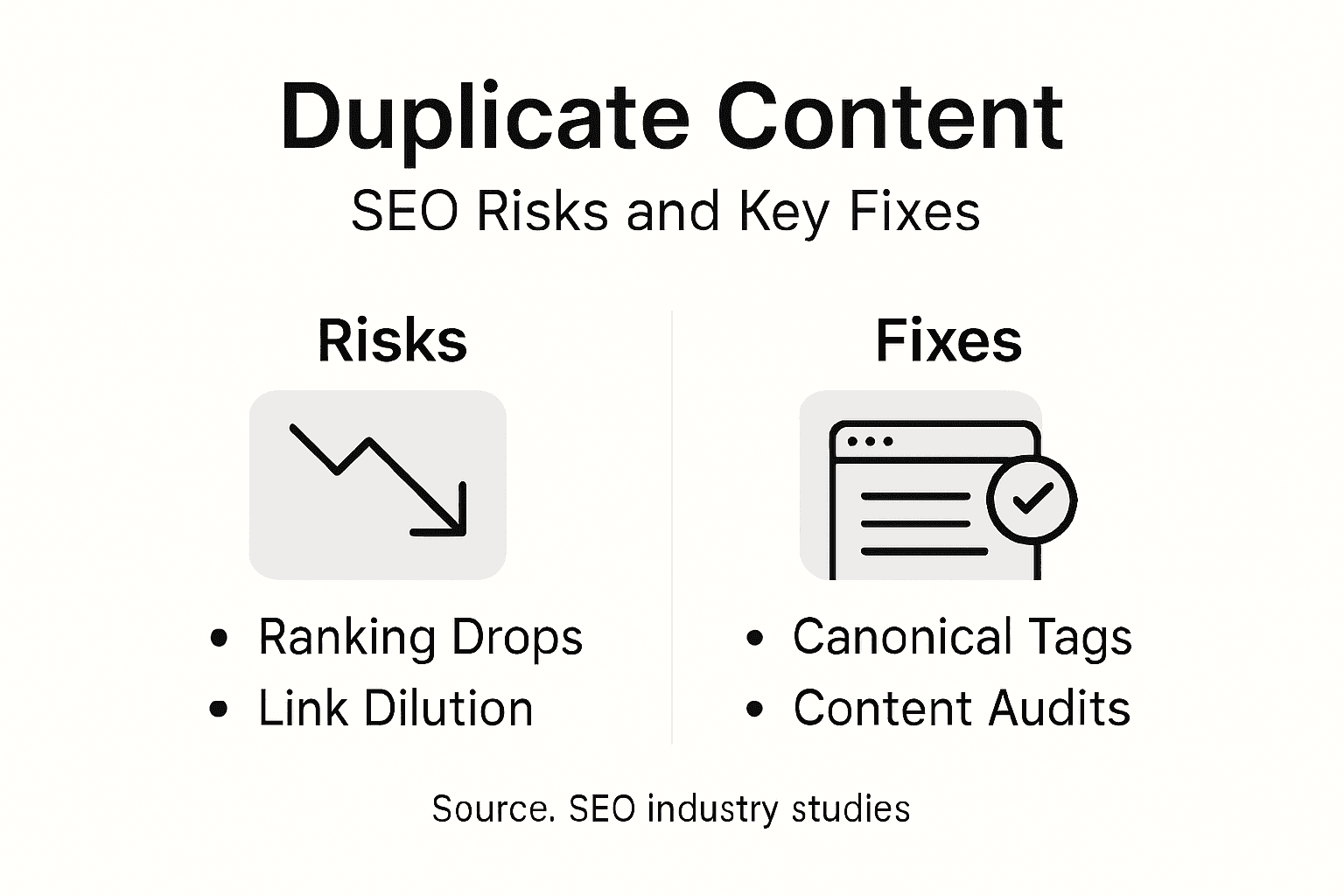
Key practical solutions for preventing duplicate content include:
Below is a summary of technical solutions and their primary benefits:
| Solution | Main Benefit | Ideal Use Case |
|---|---|---|
| Canonical Tags | Consolidates ranking signals | Multiple similar page versions |
| 301 Redirects | Directs visitors to preferred page | Old or merged content |
| URL Parameter Management | Prevents duplicate URLs from indexing | E-commerce/parameter-heavy sites |
| Noindex Tag | Removes low-value pages from search | Duplicate or thin content pages |
Pro tip: Develop a systematic content review process that includes monthly technical audits and content originality checks to proactively identify and resolve potential duplication issues before they impact search rankings.
Duplicate content is a hidden obstacle that can quietly drain your website’s search engine rankings and reduce valuable traffic. The confusion it creates for search engines leads to lost visibility and fragmented authority for your pages. At Kickass Online, we understand these challenges and offer tailored solutions that tackle issues like internal duplication, URL parameter complexities and technical SEO pitfalls. Our expert team specialises in creating unique, high-converting websites with clean architecture that prevents content duplication and maximises your organic reach.
Don’t let duplicate content hold your business back. Take control of your online presence today by booking a consultation with Kickass Online. Discover how our personalised web development and SEO strategies can improve your search rankings, secure your website’s performance, and enhance your visitor engagement. Learn more about our approach at Kickass Online and start building a stronger, clearer path to digital success now.
Duplicate content in SEO refers to identical or substantially similar text that appears across different web pages or URLs, either within the same website or across various domains. It can cause challenges for search engines trying to determine which page to prioritise in search rankings.
Duplicate content can lead to reduced organic search rankings, decreased visibility in search results, and diluted link authority. This can negatively impact the amount of traffic your site receives, potentially leading to significant revenue losses for businesses reliant on online customer acquisition.
Common causes of duplicate content include printer-friendly versions of pages, multiple product pages with similar descriptions, URL parameters, session ID tracking, and content syndication. E-commerce sites often face duplication issues due to product variations.
Preventing duplicate content can be achieved by implementing canonical tags to signal preferred pages, using 301 redirects to consolidate similar URLs, and managing URL parameters effectively. Regular content audits and the creation of unique content are also crucial strategies.
Managing a growing business in Milton Keynes often means juggling multiple websites, product categories, or regional branches while striving for brand consistency and efficient workflows. The challenge is finding a content management approach that grants both structure and flexibility, without overwhelming your editorial team. Discover how Umbraco’s blueprint-driven design streamlines control over your digital content, providing the tailored functionality and reliable performance needed to support business growth and improve your online presence.
| Point | Details |
|---|---|
| Structured Content Management | Umbraco requires pre-defined Document Types for content, ensuring organised data and consistent editorial processes. |
| Flexible Deployment Options | Businesses can choose between traditional, headless, custom, or hybrid solutions to best match their operational needs. |
| Community and Customisation | With strong community support and an open-source platform, Umbraco allows extensive customisation tailored to business requirements. |
| Scalability and Growth | Umbraco grows with your business, seamlessly handling multiple sites or expanded content needs without major overhauls. |
Umbraco operates differently from many other content management systems. Instead of letting you create content first and figure out structure later, Umbraco requires you to define your content before you start building anything. This approach gives you complete control over what data gets stored and how editors interact with it.
At the heart of this system sits the Document Type. Think of a Document Type as a blueprint for your content. Before your team publishes an article, product page, or news post, you first create a Document Type that specifies exactly what fields that content needs. A blog post Document Type might include fields for the article headline, body text, featured image, publication date, and author name. Your product page Document Type would look completely different, with fields for product name, price, specifications, and stock levels.
Document Types act as blueprints that organise how content gets structured and edited. They include field groups to categorise related information, templates that control how content displays on your website, and rules about where new content can live in your content tree. You can even assign custom icons to different content types, making navigation simpler for your editorial team.
Umbraco itself is a modern, open-source CMS built on ASP.NET Core that balances simplicity for editors with flexibility for developers. Your team creates, edits, and publishes content without touching code, while you maintain complete control over how everything works behind the scenes. Whether you need a traditional server-rendered website or a headless setup delivering content across multiple channels, Umbraco adapts to your requirements.
This structured approach prevents the chaos of uncontrolled content. Editors cannot accidentally add fields that do not belong to a page type, and content follows consistent patterns across your entire site. For a Milton Keynes business managing multiple locations or product categories, this consistency matters enormously when maintaining brand quality and search engine optimisation.
Pro tip: Map out your content types before building your Umbraco site, considering how editors will work and what data your site actually needs to display and function effectively.
Umbraco is not a one-size-fits-all system. Depending on your business goals, you can deploy it in several different ways, each suited to specific needs. Understanding these different solution types helps you choose the right approach for your Milton Keynes business.
The first major approach is the traditional website. This is what most businesses think of when they imagine a website: visitors arrive at your domain, see pages rendered on your server, and navigate through content. Umbraco handles this beautifully, managing your content through a user-friendly backoffice whilst your developers build the frontend experience. Your team publishes articles, updates product information, and modifies pages without touching code.
The second approach is headless Umbraco. Rather than rendering pages on your server, headless setups use Umbraco purely as a content repository. Your content gets delivered via APIs to whatever frontend you choose: a mobile app, a single-page web application, a smartwatch interface, or even a voice assistant. This flexibility matters enormously if you need content across multiple channels or platforms simultaneously.
Umbraco’s modular architecture supports both traditional and headless approaches, with layered infrastructure that handles content repositories, caching, and media management. This extensibility means developers can build custom packages tailored to your exact requirements rather than forcing your business into rigid templates.
Then there are custom solutions. Perhaps you need multilingual support across regional websites. Maybe you require flexible content blocks that editors can rearrange freely, or sophisticated media management for handling thousands of product images. Umbraco handles these scenarios through its developer-friendly architecture, allowing you to build precisely what your business needs.
For growing businesses, the hybrid approach combines elements of all three. You might use traditional rendering for your main website whilst simultaneously exposing content via APIs to power a mobile application or third-party integrations. This approach scales with your ambitions without requiring a complete platform replacement.
Here is a summary of Umbraco solution types and their ideal business use cases:
| Solution Type | Ideal For | Main Benefit | Common Scenario |
|---|---|---|---|
| Traditional | Brochure sites & business web presence | Simple editorial workflow | Company website |
| Headless | Multi-platform content delivery | API-driven flexibility | Mobile app, web app content |
| Custom | Businesses with unique requirements | Advanced customisation | Multilingual e-commerce site |
| Hybrid | Fast-growing or complex businesses | Scalable, cross-channel publishing | Website + mobile integration |
Pro tip: Start by mapping your content delivery channels before choosing your Umbraco solution type; if you need content on multiple platforms, headless or hybrid approaches save development time later.
Umbraco operates by separating content management from website design. Your editorial team works in one space whilst your developers build the customer experience in another. This separation creates efficiency, security, and flexibility that traditional website builders cannot match.
When you set up Umbraco, your developers first create the structure. They define Document Types (the blueprints we discussed earlier), set up templates that control how pages display, and configure workflows that match your business processes. Once this foundation exists, your team never touches code again. They simply create and publish content through the intuitive backoffice interface.

The backoffice is where your day-to-day work happens. Think of it as your content control centre. Editors log in, create new pages or blog posts, upload images, and schedule when content goes live. Umbraco delivers editorial controls including versioning, scheduled publishing, and multilingual capabilities that meet diverse business needs without requiring technical knowledge.
Versioning is particularly valuable. Every time you modify a page, Umbraco keeps a record of previous versions. If a team member makes a mistake or you want to revert to an earlier version, you can do so instantly. This safety net prevents panic when changes go wrong.
Scheduled publishing changes how you manage content timing. Rather than publishing immediately, you can set content to go live at a specific date and time. Your marketing team schedules promotional pages weeks in advance. Your news section automatically publishes press releases at precisely the right moment. No more manual updating at midnight on campaign launch dates.
Multilingual functionality means a single Umbraco installation can power websites in multiple languages. Regional offices across the UK can manage their own content whilst maintaining consistent branding and structure. Translators work independently without interfering with editorial processes.
Behind the scenes, Umbraco handles caching, security, and performance. Your website remains fast and secure even as content grows. The open-source nature means your developers can customise anything that does not quite fit your workflow, rather than compromising to match rigid software constraints.
Pro tip: Plan your editorial workflow and content approval process before implementation; Umbraco’s flexibility means you can build processes that match your actual business practices rather than adapting to predetermined constraints.
Umbraco offers significant benefits for small and medium-sized businesses, but it also comes with considerations that merit careful thought. Understanding both sides helps you make an informed decision about whether it suits your business.
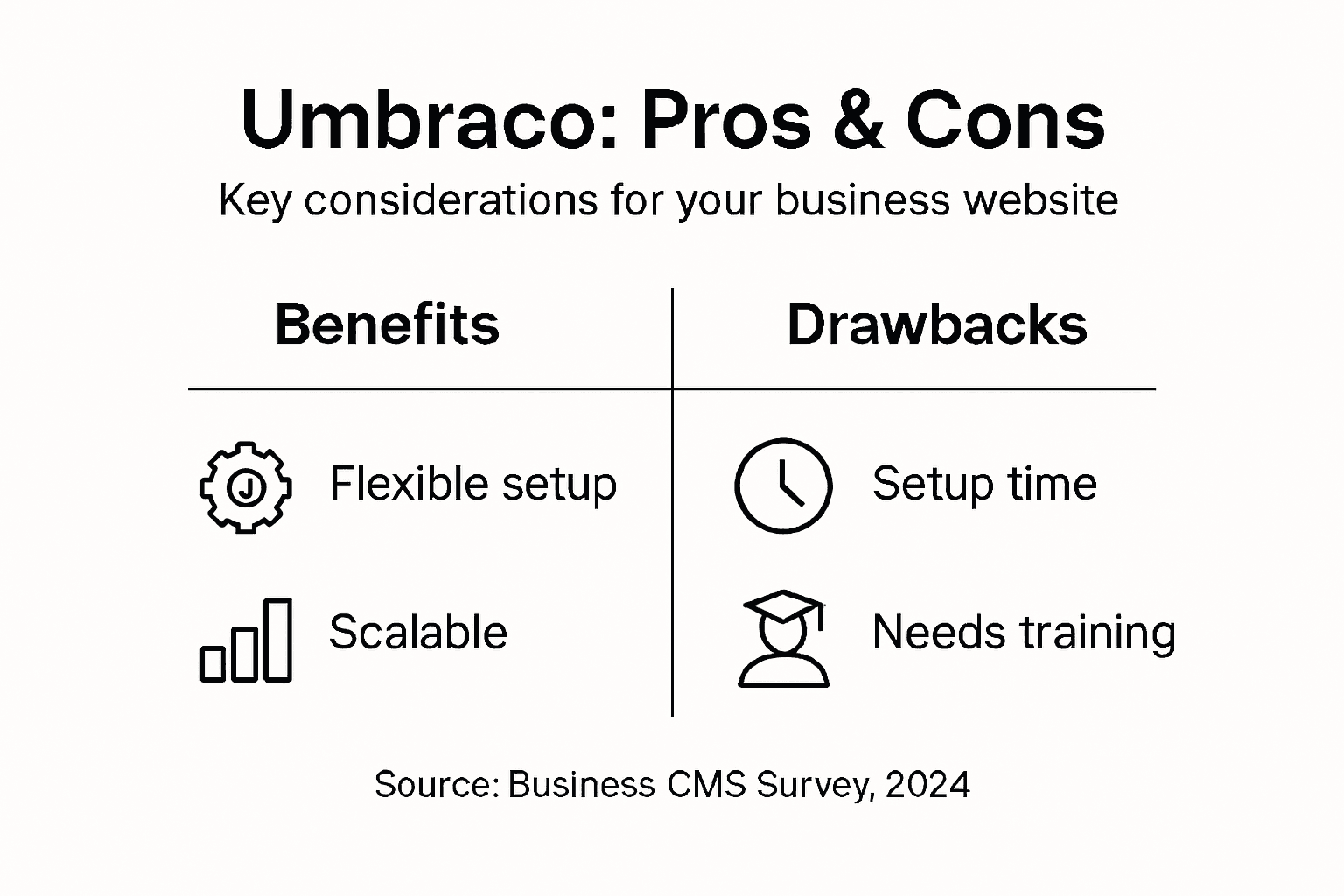
On the advantage side, Umbraco provides genuine flexibility. Your business is unique, so your website should be too. Rather than forcing your workflows into predetermined templates, Umbraco lets your developers build precisely what you need. If your Milton Keynes business requires specific content types, approval processes, or integrations with existing systems, Umbraco can accommodate these without expensive workarounds.
Scalability matters as your business grows. Umbraco grows with you. Whether you manage one website or dozens across multiple regional offices, the platform handles expansion without requiring a complete rebuild. Your initial investment protects your future growth.
The community support is substantial. Active developers worldwide contribute packages, share solutions, and help solve problems. When you hit a technical obstacle, community forums and documentation get you answers quickly. Umbraco provides strong community support and extensibility through custom packages, meaning your developers are never working in isolation.
Your editors benefit from an intuitive interface. Non-technical staff can publish content, manage media, and schedule posts without training courses or external help. This simplicity reduces dependency on developers for routine content tasks.
The drawbacks centre around setup complexity and investment. Umbraco requires developer time to configure properly. Unlike drag-and-drop website builders, you cannot launch an Umbraco site in an afternoon. Your developers need time to build Document Types, templates, and workflows that match your business. This upfront investment ranges from weeks for basic sites to months for complex implementations.
Training matters too. Whilst the interface is user-friendly, your editors need guidance on how your specific implementation works. Budget time for proper onboarding so your team uses Umbraco effectively rather than stumbling through confusion.
For businesses with minimal technical support, these considerations loom larger. If you lack an in-house developer or budget for ongoing support, Umbraco becomes more complex. However, agencies like Kickass Online provide managed support and maintenance, removing this burden.
Pro tip: Calculate your total cost of ownership including setup time, training, and ongoing maintenance before deciding; for many SMEs, the flexibility and long-term scalability justify the initial investment within 18 to 24 months.
Umbraco sits in a distinctive position among content management systems. To understand whether it suits your needs, it helps to see how it compares to other popular options your business might consider.
WordPress dominates the CMS market. It is incredibly easy to set up, has thousands of plugins, and costs very little to start. However, WordPress was built for blogging, not complex business applications. For a Milton Keynes business needing sophisticated content workflows, custom integrations, or strict security requirements, WordPress quickly becomes restrictive. You end up installing dozens of plugins, each adding complexity and potential security vulnerabilities. Performance also suffers as your website grows.
Drupal targets developers and handles complex content structures beautifully. But Drupal demands serious technical expertise. Your team needs experienced Drupal developers, and ongoing maintenance becomes expensive. For smaller businesses lacking dedicated development resources, Drupal often proves overkill.
Umbraco occupies the middle ground. It offers flexibility and developer control whilst maintaining an intuitive editor interface, balancing power with usability. Unlike WordPress, you are not constrained by plugin limitations. Unlike Drupal, you do not need an army of specialists to maintain it.
Proprietary platforms like Sitecore or Kentico provide enterprise features but demand substantial licensing fees and developer investment. For an SME, these costs quickly become prohibitive unless you are managing truly massive operations.
The technology foundation matters too. Umbraco’s open-source .NET framework base ensures no licence fees, scalability, and strong integration capabilities. If your business already uses Microsoft technologies, Umbraco integrates seamlessly into your existing infrastructure.
Cost differences are substantial. WordPress costs almost nothing upfront. Umbraco requires developer investment but zero licensing costs forever. Proprietary systems charge annual fees that compound over time. After five years, the total cost of ownership often favours Umbraco significantly.
Security and community support matter when choosing a platform. Umbraco benefits from regular security updates and an active developer community contributing solutions. You get enterprise-grade security without enterprise-grade pricing.
For quick reference, here is a comparison between popular CMS platforms for SMEs:
| Platform | Initial Cost | Technical Skills Needed | Customisation Level | Scalability |
|---|---|---|---|---|
| WordPress | Very low | Minimal for basics | Limited without plugins | Moderate |
| Drupal | Low | High developer expertise | Extensive functionality | High |
| Umbraco | Medium setup time | Moderate .NET knowledge | Full control over site | Excellent |
| Proprietary | High licence fees | Advanced team required | Highly configurable | Enterprise-grade |
Pro tip: Evaluate CMS options by your specific needs rather than default popularity; WordPress works brilliantly for simple blogs, but Umbraco’s flexibility better serves businesses requiring custom workflows and long-term scalability.
Understanding the challenges of setting up and managing Umbraco can be overwhelming. From crafting precise Document Types to choosing the right solution approach, whether traditional, headless, or hybrid, businesses need expert guidance to ensure their website is not only flexible but scalable and secure. At Kickass Online, we specialise in helping small and medium-sized businesses navigate these complexities. We focus on creating customised, high-performing websites that match your unique workflows, content structures, and growth ambitions.
Ready to transform your online presence with a tailored Umbraco solution that puts you in control without the hassle? Discover how our dedicated team delivers professional website design, seamless content management, and expert ongoing support to keep your business ahead. Act now to book your consultation and start building a website that performs as hard as you do. Visit Kickass Online to learn more about our custom web development services and how we can help you optimise for search engines and maintain peak website performance.
Umbraco is an open-source content management system (CMS) built on ASP.NET Core. It is designed to help businesses manage their content effectively by providing flexibility for developers and an intuitive interface for editors.
Unlike many other CMS platforms, Umbraco requires you to define your content structure before building the site. This approach helps prevent disorganized content and gives you control over how information is presented and edited.
Umbraco offers flexibility, scalability, and community support. It allows businesses to create customised content workflows, handle multiple websites, and manage training for non-technical editors without the need for extensive technical expertise. This makes it ideal for SMEs looking to grow.
Yes, Umbraco can be set up in a headless configuration, allowing content to be delivered via APIs to various platforms like mobile apps, web applications, or even IoT devices. This flexibility is beneficial for businesses that operate across multiple channels.
Searching for new customers can feel frustrating when your business seems hidden online despite your best efforts. Voice search technology is changing this by making online queries faster and more natural for people in Milton Keynes. As more customers ask lengthy, conversational questions through their phones and smart speakers, businesses that understand this shift are being discovered first. Learn what makes voice search different, and how you can use it to improve your visibility and attract more local customers.
| Point | Details |
|---|---|
| Importance of Voice Search | Voice search significantly changes customer interaction by favouring conversational queries, impacting SEO strategies. |
| Device Fragmentation | Businesses must recognise the diverse range of voice search platforms and optimise content accordingly. |
| Local SEO Advantage | Local businesses can capitalise on voice search by ensuring accurate location details and addressing common query types. |
| Data Privacy Concerns | Understanding data handling and providing transparent privacy policies are essential to maintain customer trust in voice technology. |
Voice search technology fundamentally changes how people interact with the internet. Instead of typing a search query, users speak their questions directly into a device, whether that’s a smartphone, smart speaker, or tablet. The technology uses speech recognition combined with natural language processing to understand what someone is saying, then converts that spoken command into a searchable query. The process feels instantaneous to users, but behind the scenes, complex AI algorithms are working to interpret meaning, context, and intent from natural speech patterns.
What makes voice search particularly powerful for your business is how it changes customer behaviour. When people speak rather than type, they naturally ask longer, more conversational questions. Instead of typing “plumber Milton Keynes,” a voice user might ask “Where can I find a reliable plumber near me who does emergency repairs?” This shift means voice search technology leverages natural language processing to capture more detailed search descriptions, which typically results in higher customer satisfaction and more qualified leads. The technology has become increasingly accurate, modern voice recognition systems now achieve around 95% accuracy rates, making them genuinely reliable for everyday use.
The growth of voice search isn’t accidental. Integration with AI has driven significant improvements in how these systems understand context and meaning. Users appreciate voice search because it enables multitasking, you can search while driving, cooking, or working without taking your hands away from what you’re doing. This accessibility factor means voice search appeals to a broader audience, including older customers who might find traditional typing cumbersome. For small to medium-sized businesses in Milton Keynes, this represents a genuine opportunity. Your customers are already using voice search; the question is whether your business appears in those results.
Pro tip: Start auditing your website content now to identify questions your customers actually ask aloud, these conversational phrases will become gold when you optimise for voice search.
Voice search isn’t a single technology controlled by one company. Instead, it’s fragmented across several major players, each with distinct approaches to how they capture and process voice commands. The three dominant platforms you need to know about are Google Assistant, Amazon Alexa, and Apple’s Siri, with Microsoft’s Cortana serving a smaller but meaningful segment. Understanding these differences matters for your business because each platform has unique user bases, search behaviours, and optimisation requirements. Your customers might ask the same question on Google Home one day and an Echo device the next, yet these assistants process and rank results differently.
The key distinctions lie in how these assistants handle connectivity, privacy, and device compatibility. Voice recognition technologies vary significantly in their speech recognition approaches, which directly affects accuracy and user experience. Google Assistant works seamlessly across Android phones, Google Home speakers, and smart displays, prioritising quick answers and local business information. Amazon Alexa dominates the smart home space with the Echo ecosystem, making it ideal for customers searching while managing their homes. Apple’s Siri operates within the Apple ecosystem, iPhones, iPads, HomePods, and appeals to privacy-conscious users because more processing happens on the device itself rather than in the cloud. Each platform also differs in how it handles internet connectivity. Some assistants struggle with latency issues when network access is disrupted, whilst others maintain basic functionality offline.
For small to medium-sized businesses in Milton Keynes, this device fragmentation creates both challenge and opportunity. You cannot optimise for voice search by focusing on just one platform. Instead, you must understand that your potential customers are distributed across multiple devices, each with different technical requirements and user behaviours. A homeowner searching for “local electricians” on Google Home gets different results than someone asking Alexa the same question. The good news? The fundamental optimisation principles work across all platforms. When your website content answers common questions in natural, conversational language, you improve your visibility across all major voice assistants simultaneously.
Pro tip: Audit which voice assistants your existing customers use, then prioritise optimisation for the platforms where your target audience is most active rather than spreading yourself thin across all four.
Here’s a comparison of the four main voice search platforms and their unique characteristics:
| Platform | Device Ecosystem | Privacy Approach | Key Business Advantage |
|---|---|---|---|
| Google Assistant | Android phones, smart displays | Cloud processing, strong safeguards | Local results accuracy |
| Amazon Alexa | Echo devices, smart homes | Data stored remotely, smart home focus | Voice shopping integration |
| Apple Siri | iPhones, iPads, HomePods | On-device processing, strict privacy | Appeals to privacy-conscious users |
| Microsoft Cortana | Windows PCs, enterprise apps | Data sync across devices, basic privacy | Enterprise productivity tasks |
Voice search fundamentally shifts how your business appears in front of customers. When someone uses voice search, they’re not just typing keywords, they’re asking questions in the way they naturally speak. Your business succeeds in voice search when your content answers those conversational questions directly. The process starts with a customer speaking a query into their device. The voice assistant captures that audio, processes it through speech recognition, and converts it into searchable text. But here’s where it differs from traditional search: the assistant then interprets intent, context, and location to deliver results. If a Milton Keynes resident asks “Where’s the nearest accountant open now?”, the assistant doesn’t just search for “accountant”, it considers their location, business hours, and urgency to provide one specific answer.
For your business, this means optimising content to cater to natural language queries and local intents becomes essential. Voice search heavily favours local businesses because most voice queries include location-based intent. Someone searching by voice is typically looking for something nearby and ready to act immediately. Your Google Business Profile becomes more critical than ever, because voice assistants pull business information directly from there, hours, location, phone number, reviews. The assistant also considers whether the query is transactional (someone ready to buy), informational (someone researching), or navigational (someone looking for a specific business). Your content needs to address all three types. A plumber in Milton Keynes benefits from having answers to “How much does a boiler service cost?” (informational), “Book an emergency plumber” (transactional), and “Find Smith’s Plumbing” (navigational).

What makes voice search powerful for small businesses is that it rewards specificity and clarity. Voice assistants typically provide one answer, not ten. This means you’re either the chosen result or you’re invisible. Unlike traditional search where you might rank tenth and still get clicks, voice search is binary. Your website content must be exceptionally clear, well-organised, and directly answer the questions your customers ask aloud. Structured data markup helps voice assistants understand your content better. When you properly mark up your business information, opening hours, prices, and service areas, voice search systems can find and recommend you more easily.
Pro tip: Create a list of ten questions your customers commonly ask when calling you, then craft dedicated content sections answering each one in conversational language without jargon.
Voice search has fundamentally altered how search engine optimisation works. Traditional SEO focused on matching keywords to search queries. Voice search demands something different: your content must answer the questions people actually ask when they speak. This shift means embracing conversational, long-tail keywords rather than single-word terms. Instead of optimising for “plumber Milton Keynes,” you now need content addressing “What should I do if my pipes are frozen?” or “How much does an emergency plumber cost near me?” The reason is simple. Voice queries tend to be longer, more natural, and more specific than typed searches. When someone speaks, they ask complete questions. Your SEO strategy must reflect this reality.
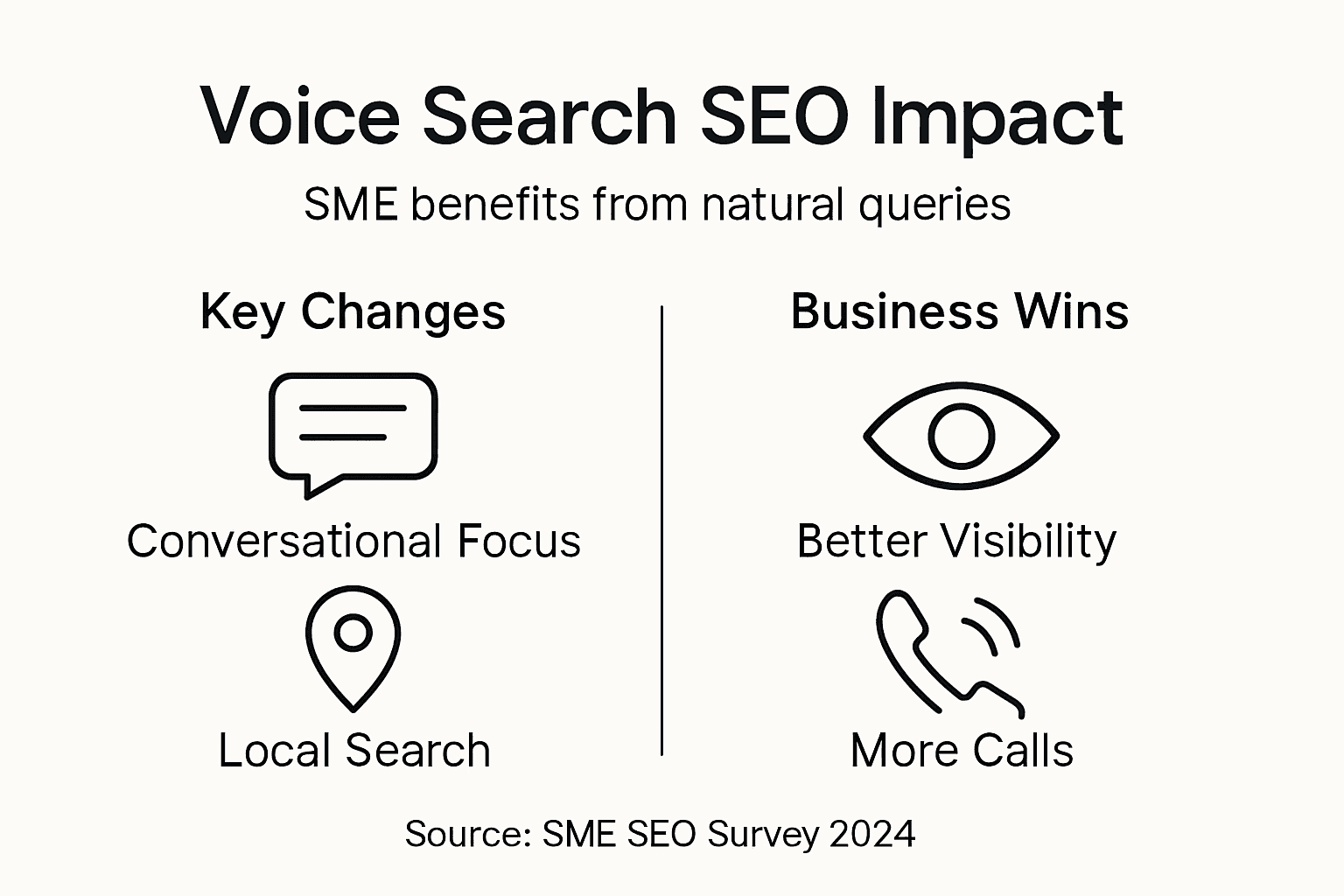
Local SEO becomes absolutely critical for voice search success, and this is where Milton Keynes businesses have a genuine advantage. Voice search requires businesses to embrace conversational queries and question-based content to optimise effectively, with local SEO proving essential due to the high volume of “near me” queries users perform. Think about it: when someone uses voice search, they’re usually looking for something nearby and ready to take action immediately. Your Google Business Profile accuracy matters more than ever. Ensure your business name, address, phone number, and hours are identical across all platforms. Encourage customer reviews because voice assistants use these signals to determine which local businesses to recommend. Schema markup and structured data also play a crucial role. When you properly tag your business information using schema markup, search engines understand your content better and can more easily feature you in voice search results.
Technical optimisation rounds out the voice search equation. Mobile optimisation and page performance significantly impact voice search rankings because users searching by voice expect instant answers. A slow website loses voice search traffic to faster competitors. Mobile responsiveness matters because most voice searches happen on smartphones. Fast-loading pages, clean site architecture, and clear heading structures all contribute to better voice search visibility. Your website must work flawlessly on mobile devices, not just render acceptably, but actually deliver an excellent experience. The combination of conversational content, accurate local information, structured data markup, and technical excellence creates the foundation for voice search success.
Pro tip: Review your FAQ or knowledge base section and rewrite answers to match how customers actually speak these questions aloud, then use those conversational versions as your primary content structure.
The table below summarises essential elements for voice search optimisation success:
| Optimisation Area | Why It Matters | Practical Benefit for Businesses |
|---|---|---|
| Conversational content | Matches natural speech | Higher chance of being selected result |
| Accurate local details | Powers location queries | Increased visibility in “near me” searches |
| Structured data markup | Enables assistant parsing | Improved business info display |
| Mobile optimisation | Most users search by voice on phones | Faster customer engagement |
Voice search technology brings genuine opportunities for your business, but it also introduces real concerns you need to understand. The most pressing issue centres on data privacy and security. Voice devices are constantly listening, capturing fragments of conversations and transmitting them to remote servers for processing. Voice assistant applications face significant security attacks and privacy threats including data breaches, unauthorised access, and information theft. These risks stem from the always-on nature of voice devices and the transmission of sensitive voice data across networks. Your customers’ voice recordings are stored somewhere, and that storage creates vulnerability. A data breach could expose personal information from conversations happening in people’s homes or offices. For your business, this matters because customer trust depends on understanding how their data is handled when they interact with voice search results.
The implications extend beyond simple data storage. Synthetic voice technologies enable voice cloning and misuse of vocal identities without consent, raising ethical and legal challenges around impersonation scams and misinformation. Imagine someone creating a deepfake of your business owner’s voice to advertise fraudulent services. This emerging threat highlights why businesses need to monitor their online reputation carefully and take swift action if someone misuses their identity. Privacy concerns also involve improper data handling and insufficient user consent. Many people don’t fully understand what information voice assistants collect or how companies use that data. As a business owner, you inherit some responsibility for protecting customer privacy when they access your information through voice search. Ensure your privacy policy clearly explains what happens when voice assistants access your content.
From a cost perspective, optimising for voice search requires investment, though not necessarily massive expenditure. You’ll need to audit and potentially rewrite website content to match conversational search patterns. Mobile optimisation may require website updates if your site isn’t currently performing well on smartphones. Structured data markup and schema implementation might require technical assistance. Unlike paid advertising where costs are predictable, voice search optimisation is more about smart allocation of resources. The good news is that improvements you make for voice search simultaneously benefit traditional SEO and mobile user experience, so the investment serves multiple purposes. Most small to medium-sized businesses find the effort manageable, especially when prioritised thoughtfully.
Pro tip: Audit your privacy policy and data handling procedures now, then communicate transparently to customers about how their voice interactions are protected, turning a compliance issue into a competitive advantage.
Voice search technology changes how customers find your business by favouring conversational, local, and clear answers. If you have struggled with making your website speak the language your customers use aloud or wondered how to stand out as the only voice search result, you are not alone. The challenge lies in adapting your content to match natural speech patterns and ensuring your local details are accurate and easy to access. Voice assistants do not show lists of options but one definitive answer, which means precise optimisation is critical for your business growth.
At Kickass Online, we specialise in helping small and medium-sized businesses in Milton Keynes and beyond bridge this exact gap. Our tailored digital marketing services include creating bespoke website content that answers your customers’ spoken questions directly, implementing structured data markup to enhance voice assistant recognition, and optimising your site’s mobile performance to deliver instant results. If you want to be the one business voice assistants recommend when customers say “near me” or ask for help now, start with a proven partner who understands both SEO and voice search intricacies.
Explore our expert web development and SEO solutions and discover how a personalised strategy can transform your online presence.
Book a consultation today to make sure your business is visible where it counts.
Learn more about our complete digital marketing approach and turn voice search into a powerful channel for attracting ready-to-act customers.
Voice search technology allows users to speak their search queries rather than type them. It uses speech recognition and natural language processing to understand spoken commands and delivers relevant search results based on context and intent.
SMEs can optimise their website for voice search by creating content that answers common conversational questions, ensuring their business information is accurate on Google Business Profiles, implementing structured data markup, and focusing on mobile optimisation for better user engagement.
Local SEO is critical for voice search because many voice queries are location-based. Users often search for businesses nearby, so having accurate and up-to-date local information ensures better visibility in voice search results.
The main risks include data privacy and security concerns, as voice devices continuously listen and may capture sensitive information. Businesses must be transparent about how they handle customer data and ensure robust security measures are in place.
Backend engineering note: for building Node.js APIs, this Fastify TypeScript REST API guide is a useful related reference.
Standing out online can feel impossible when your Milton Keynes business is surrounded by competitors. If your ads get lost or your website goes unseen, you miss the customers searching for exactly what you do. Finding rapid and reliable methods to get noticed is crucial for your growth.
The good news is that there are practical ways to achieve instant visibility and lasting brand recognition. Each advertising tactic on this list meets a real business challenge, from winning immediate attention to re-engaging visitors who left your site. You will discover actionable insights proven to connect you with the customers searching for what you offer.
Dive into these expert-backed strategies to learn how targeted, measurable online advertising can put your business in front of the right audience, right when it matters most.
| Key Message | Explanation |
|---|---|
| 1. Search Ads Provide Instant Visibility | Search engine advertising allows businesses to appear immediately for specific search queries, attracting potential customers actively looking for their services. |
| 2. Display Ads Build Brand Recognition | Display advertising engages users as they browse online, creating multiple brand touchpoints that enhance recognition before purchase decisions. |
| 3. Personalise Social Media Ads for Greater Engagement | Tailoring social media ads to specific demographics and interests increases engagement rates and enhances brand loyalty among potential customers. |
| 4. Video Ads Create Emotional Connections | Video storytelling fosters emotional resonance with audiences, leading to higher engagement and stronger brand recall compared to static ads. |
| 5. Use Remarketing for Higher Conversion Rates | Remarketing keeps your brand visible to past website visitors, encouraging them to return and complete their purchase, thus boosting conversions. |
When you need visibility now, not months from now, search engine advertising delivers. Unlike organic search engine optimisation which takes time to build momentum, search engine advertising places paid ads directly alongside search results matching what your potential customers are actively hunting for. This means your Milton Keynes business appears instantly to people searching for exactly what you offer, whether that is plumbing services, accounting advice, or bespoke manufacturing.
Here is how it works in practice. Someone in Milton Keynes types “emergency plumber near me” into Google, and your ad appears at the top of the results within seconds. You only pay when they click your ad, which is why this approach suits businesses with tight budgets who want to control spending precisely. The beauty of this method lies in intent. These are not random people browsing the web. These are individuals actively searching for solutions you provide, making them substantially more likely to convert into paying customers than cold traffic from other sources.
For your business specifically, this means you can launch a campaign on Monday morning and start receiving qualified enquiries by Monday afternoon. You will not wait for search rankings to improve or for content strategies to take effect. Your ads appear instantly to your target audience, whether they search in Milton Keynes or across the entire United Kingdom. You choose your keywords, set your daily budget, and watch the results flow in. Many SMEs we work with use search advertising as their quick win whilst building longer term organic visibility through SEO. The combination of both approaches creates a comprehensive online strategy that captures customers at every stage of their buying journey.
Pro tip: Start with 10 to 15 highly specific keywords related to your core products or services rather than broad terms, as this reduces wasted clicks and improves your return on investment significantly.
Display advertising works differently from search ads. Whilst search advertising targets people actively looking for your product, display advertising puts your brand in front of potential customers as they browse the web, whether they are reading news articles, checking social media, or visiting industry websites. These visually engaging ads combining text, images, and videos appear on relevant web pages and build recognition long before someone searches for what you sell. Think of it as the digital equivalent of billboard advertising, except you can target it to specific audiences and measure exactly who sees it.
For a Milton Keynes business, display advertising creates multiple touchpoints with your audience. A prospective customer might see your colourful banner ad on a local business directory, then encounter your video ad on a trade publication website, and finally recognise your brand name when they search for solutions weeks later. This repeated exposure builds familiarity and trust, which matters tremendously. When someone finally decides to buy, your business comes to mind because they have already seen you multiple times. The research shows that interactive display ads including banners and pop-ups increase consumer engagement and brand recall, meaning well-designed ads do not just sit there passively. They actually grab attention and stick in people’s minds.
The practical advantage for SMEs is precision targeting. You can display your ads only to people in your geographic area, within specific age ranges, or interested in particular topics related to your business. A plumbing company can target homeowners searching for property maintenance information. A marketing agency can target business owners reading entrepreneurship content. You are not paying to show ads to everyone. You are paying to build awareness amongst the people most likely to become customers. This makes display advertising cost-effective for building brand recognition whilst you also run search campaigns to capture ready buyers.
Pro tip: Create multiple versions of your display ads with different images and messages, then test which designs generate the highest engagement rates, allowing you to refine your approach based on real audience behaviour.
Social media advertising operates on a completely different principle than traditional advertising. Platforms like Facebook, Instagram, and LinkedIn possess vast amounts of data about their users, which they use to show your ads to precisely the right people at precisely the right moment. Rather than casting a wide net and hoping for interest, algorithmic targeting and machine learning deliver personalised ads to specific user segments based on their demographics, behaviours, and preferences. For a Milton Keynes SME, this means you can target property managers interested in facilities management, young professionals seeking professional services, or parents looking for family oriented businesses, all without wasting budget on irrelevant audiences.
The power of this approach lies in engagement. When someone sees an ad that genuinely matches their interests and needs, they are far more likely to click, comment, or share it. This creates a two way conversation rather than a one way broadcast. A local fitness centre can show ads specifically to people within five kilometres who have shown interest in health and wellness. A B2B consulting firm can target decision makers at specific company sizes in particular industries. Effective targeted social media ads foster stronger brand equity and drive consumer interaction and loyalty, meaning your advertising budget produces better results because you are speaking to genuinely interested people. The beauty of social media is that users are already in a social, engaging mindset. They are not rushing through results like they would on a search engine. They are spending time browsing, reading, and interacting. Your well targeted ad appears in this relaxed environment where people are receptive to discovering new businesses and products.
Practically speaking, this means lower costs and higher returns. You spend less per click because you are not competing for attention from uninterested users. Your conversion rates climb because you are attracting qualified prospects rather than accidental clicks. You also gain valuable feedback through engagement metrics. How many people liked your ad? Commented on it? Shared it? These signals tell you what messaging resonates with your audience, allowing you to continuously improve your campaigns.
Pro tip: Start by creating multiple ad variations with different images, headlines, and calls to action, then let the platform’s algorithm automatically optimise towards the best performers, saving you time whilst improving results over several weeks.
Video advertising taps into something fundamental about how humans connect with brands. Rather than simply listing product features, video allows you to tell a story that resonates emotionally with your audience. A plumbing company might show a family relieved when their heating system is finally fixed on a cold morning. A marketing agency could tell the story of a struggling small business that transformed after getting professional help. Video advertising utilises storytelling to create emotional resonance and build brand identity through compelling visual and auditory content that sticks far longer in people’s minds than static images or text alone. When someone watches a video, they are not just processing information. They are experiencing an emotion, remembering a feeling, and forming a connection with your brand.
The practical advantage for Milton Keynes businesses is measurable. Video content generates higher engagement rates than any other advertising format. People watch videos longer, click through more often, and are more likely to remember your brand weeks later. Your video does not need to be Hollywood quality. Authentic, genuine storytelling often outperforms expensive production work. A short video showing your team explaining how you solve customer problems, or a before and after sequence demonstrating your service in action, resonates powerfully. The key is narrative. You are not selling a product. You are showing how your product or service changes someone’s life for the better. This emotional connection drives action far more effectively than rational arguments about features and benefits.
Modern technology makes this increasingly accessible for SMEs. You do not need a massive budget to create compelling video content. Smartphones produce excellent quality video. Simple editing tools are freely available. What matters most is the story you tell and the genuine value you convey. Many SMEs find video advertising especially valuable on social media platforms where it plays automatically as people scroll, capturing attention in those precious first three seconds before they decide to keep watching. Start with one or two short videos showcasing what makes your business different, then expand based on what your audience responds to most.
Pro tip: Begin your video within the first two seconds by showing a problem your customer faces or a benefit they receive, rather than spending time on introductions, since most viewers decide whether to continue watching in those opening moments.
Native advertising works because it does not feel like advertising. Rather than interrupting someone’s browsing experience with a banner ad or pop-up, native advertising takes the form and style of the content people are already consuming. Imagine reading an interesting article about business efficiency on a trade publication website, only to realise halfway through that it was sponsored by a software company. You did not feel sold to. You learned something valuable, and incidentally, you discovered a solution that might benefit your business. Native advertising integrates paid promotional content into platforms in a form matching the organic content, reducing ad avoidance and increasing viewer engagement significantly. For Milton Keynes SMEs, this approach means your message reaches audiences without triggering the automatic mental block people develop against traditional advertising.
The key to native advertising success is genuine value. Your sponsored content must actually be worth reading or watching. A financial services firm might sponsor an article about tax planning strategies. A construction company could fund a video about sustainable building practices. A marketing agency might write about digital transformation for business owners. The advertising element sits quietly in the background. What matters is that readers find the content helpful, interesting, or informative. This builds trust and association with your brand far more effectively than interruptive advertising. Importantly, transparency matters. Properly disclosed native ads increase transparency without diminishing engagement, meaning you can blend your message seamlessly whilst maintaining consumer trust and regulatory compliance. Clear disclosure actually strengthens credibility rather than undermining it.
Practically, native advertising works exceptionally well when you already create quality content. If your business publishes blog articles, whitepapers, or videos anyway, sponsoring relevant placements on industry publications or business websites extends that content’s reach to new audiences. People trust editorial environments. When your content appears there, some of that trust transfers to your business. This differs from search advertising because readers are not actively looking for you. They are discovering you whilst seeking information about topics relevant to their needs. This creates a more natural introduction to your business and often generates higher quality leads because people discover you through genuine interest rather than direct searching.
Pro tip: Partner with established industry publications or websites where your ideal customers already spend time reading, rather than trying to create native ads everywhere, as relevance matters far more than reach for this advertising format.
Email advertising occupies a unique position in your marketing toolkit. Unlike social media where algorithms decide who sees your content, or search ads that interrupt browsing, email reaches people in their inbox with a direct, personal connection. When someone subscribes to your email list, they have explicitly agreed to hear from you. This consent transforms email from intrusive advertising into welcomed communication. Email marketing provides direct, personalised communication to subscribers’ inboxes, offering high ROI and precise audience control, making it one of the most cost effective channels available. For a Milton Keynes business, this means every email you send reaches people who already know and trust you, dramatically increasing the likelihood they will open your message and take action.
What makes email particularly powerful is personalisation and segmentation. You do not send the same message to everyone. You send targeted promotions to customers who have shown interest in specific products. You share educational content with subscribers in particular industries. You remind inactive customers about special offers designed to win them back. A plumbing company can email past customers when it is time for their annual boiler service. A consulting firm can share relevant case studies with prospects who fit their ideal client profile. A retail business can highlight new stock to people who have previously purchased similar items. This precision transforms your email list from a broadcast channel into a direct sales and relationship building tool. Your subscribers receive messages relevant to them, not generic promotions. This relevance drives engagement, conversions, and long term customer loyalty.
The practical advantage extends beyond sales. Email allows you to nurture relationships over time. New customers receive a welcome series introducing your business and values. Prospects who downloaded a resource receive follow up information addressing their specific concerns. Satisfied customers receive invitations to refer friends or leave reviews. Each email builds the relationship further. You maintain direct contact with your audience without depending on social media algorithms or search rankings. You own this channel. Your subscribers’ email addresses belong to you. Unlike social followers who might disappear if a platform changes its policies, your email list remains your own valuable asset. This ownership makes email advertising an investment in long term business stability and predictable customer communication.
Pro tip: Segment your email list by customer behaviour, location, or interests, then send highly targeted messages to each group rather than blasting everyone the same content, as relevant emails generate significantly higher open rates and conversions.
Remarking. Think about how frustrating it is when someone visits your website, browses your products or services, and then leaves without buying anything. They were interested. They took time to explore. But something stopped them from converting. Remarketing advertising solves this problem by keeping your business in front of those visitors even after they leave your site. Remarketing targets previous website visitors with personalised ads across multiple channels to increase brand recall and conversions. When that visitor browses other websites or uses social media, your ads appear, reminding them of what they saw and encouraging them to return. For a Milton Keynes business, this means turning browsing visitors into paying customers by staying present during their decision making process.
Here is how it works in practice. Someone searching for office supplies finds your website, looks at a few products, then leaves to compare prices elsewhere. The next day, as they scroll through Facebook, they see your ad featuring the exact products they viewed. Three days later, they spot your banner ad on a business news website. By the time they return to your site, your business feels familiar and trustworthy. They recognise your logo. They remember your products. This repeated exposure dramatically increases the likelihood they will complete a purchase. Remarketing uses tracking technologies to deliver targeted ads based on prior website interaction, boosting brand awareness, customer retention, and sales simultaneously. The beauty of remarketing is efficiency. You are not paying to reach cold audiences who have never heard of you. You are investing in warm leads who already showed genuine interest by visiting your website.
The practical advantage for SMEs extends beyond immediate sales. Remarketing data reveals valuable information about customer behaviour. Which products do visitors click on most? Where do they drop off in the purchasing process? How long do they spend browsing? This information helps you improve your website, refine your product offerings, and identify genuine objections preventing conversions. You can create specific remarketing campaigns targeting different visitor segments. Show different ads to people who viewed your pricing page versus those who only looked at your homepage. Target repeat visitors differently than first time browsers. Create urgency with special offers for people who abandoned shopping carts. This level of personalisation transforms casual browsers into committed customers whilst optimising your advertising budget.
Pro tip: Create a remarketing campaign specifically for visitors who viewed your product pages but did not complete a purchase, offering them a limited time discount code to overcome final purchase hesitation.
Below is a comprehensive table summarising the various advertising strategies and their unique advantages for businesses, as discussed in the article.
| Advertising Strategy | Mechanism | Benefits and Outcomes |
|---|---|---|
| Search Engine Advertising | Placing paid ads alongside relevant search engine results. | Instant visibility to actively searching customers; controlled budgeting through pay-per-click. |
| Display Advertising | Visual ads on industry-relevant websites to increase brand awareness. | Builds trust through repeated exposure; precision targeting by geography or interests. |
| Social Media Advertising | Utilising platform-user data for highly targeted ads. | Engages specific demographics; fosters direct interaction, producing qualified leads. |
| Video Advertising | Sharing narratives through video for emotional connection. | Generates higher engagement; delivers impactful storytelling. |
| Native Advertising | Promotional content designed to blend with the organic style of platforms. | Creates authentic user engagement; showcases expertise while earning trust. |
| Email Advertising | Direct communication with consenting subscribers through email. | Highly personalised and segmented communication; builds customer loyalty. |
| Remarketing Advertising | Re-engaging website visitors with ads matched to their browsing behaviour. | Increases conversions by addressing objections; boosts customer familiarity and retention. |
Struggling to master the diverse world of online advertising detailed in “7 Essential Types of Online Advertising for SME Growth”? From search engine ads to remarketing campaigns, each method requires specialised knowledge to maximise impact and control budgets effectively. Achieving precise targeting, storytelling that connects emotionally, and ongoing optimisation are challenges best met with dedicated guidance. At Kickass Online, we understand how crucial it is for small and medium businesses to not only be visible but to engage meaningfully with their audience across all advertising channels.
Explore our Tips and Tricks to unlock practical strategies, then partner with our digital marketing specialists at Kickass Online for personalised website design, SEO, and online visibility solutions that transform visitors into loyal customers. Don’t let your advertising efforts go to waste, book a consultation today and start converting clicks into business growth.
Discover professional insights and tailored services that make your advertising investment count with our Recommendations specially curated for SMEs ready to thrive online.
Search engine advertising can provide immediate visibility for your SME by placing paid ads alongside relevant search results. Launch a campaign today, and you could start receiving qualified enquiries within hours.
Search ads target users actively seeking specific products or services, while display ads showcase your brand to users as they browse content online. Consider running both types to reach customers at different stages of their buying journey.
To create effective social media ads, focus on algorithmic targeting to reach specific demographics or user behaviours. Start by crafting multiple ad variations with different images and messages to optimise engagement and identify what resonates best with your audience.
To maximise the impact of video advertising, tell a compelling story that resonates emotionally with viewers. Begin your video within the first two seconds by presenting a problem your customer faces, encouraging them to continue watching and connect with your brand.
Email advertising allows you to communicate directly with subscribers who have opted to hear from you, building a personal connection. Segment your email list based on customer behaviour or interests, and send targeted messages to enhance engagement and conversions.
Remarketing keeps your brand in front of potential customers who have already visited your website, increasing the likelihood of conversion. Set up remarketing campaigns targeting users who viewed specific products but didn’t complete a purchase to effectively encourage them to return.
Chasing new leads in the current UK market can feel like a guessing game, especially when old assumptions keep holding businesses back. Many owners believe more leads mean more sales or that quick fixes like automation will do all the work. The reality is, quality leads and intentional strategies always outperform volume alone. This guide clears up persistent myths and reveals practical steps so you can build a lead generation process that fits your business, delivers real results, and supports lasting growth.
| Point | Details |
|---|---|
| Focus on Quality Over Quantity | Generating fewer high-quality leads is more effective than a larger number of unqualified contacts. |
| Understand That Lead Generation Is Ongoing | Consistent efforts are essential as markets and consumer behaviours are continually evolving. |
| Integrate Inbound and Outbound Strategies | A balanced approach utilising both methods optimises lead generation efforts and accelerates sales. |
| Measure and Adapt Using KPIs | Track key performance indicators to gain insights and refine your lead generation process effectively. |
Lead generation is the process of attracting and converting potential customers into individuals who have expressed interest in your products or services. For small and medium-sized UK businesses, this means identifying people who might benefit from what you offer, then nurturing that interest until they’re ready to make a purchase decision. It’s not about casting the widest net possible; it’s about finding the right people at the right time with the right message.
The confusion around lead generation stems largely from persistent myths that waste time and money. One of the most damaging misconceptions is that more leads guarantee more sales. In reality, ten qualified prospects interested in your specific solution will produce far better results than a hundred lukewarm contacts scraped from a database. Another widespread belief treats lead generation as a one-time campaign rather than an ongoing process. Your competitors aren’t resting, and neither should your lead generation efforts. Markets shift, customer behaviour changes, and what worked three months ago may need adjustment today. Many business owners also fall into the trap of thinking automation solves everything. While tools and systems save considerable time, they require constant monitoring, tweaking, and human judgment to remain effective and compliant with regulations.
Another critical myth worth addressing is the assumption that expensive campaigns automatically deliver better results. A £5,000 paid advertising campaign with poor targeting performs worse than a £1,000 investment in quality-focused strategies paired with genuine sales and marketing alignment. The most successful lead generation combines multiple approaches: some inbound tactics (content marketing, SEO), some outbound efforts (targeted email, direct outreach), and always with proper segmentation. Not every lead deserves the same treatment. A prospect who downloaded your beginner’s guide needs different communication than someone who viewed your pricing page three times. Buying pre-made lead lists often backfires, delivering low-quality contacts with outdated information. Instead, focus on building a sustainable lead generation strategy that combines organic efforts with paid campaigns, ensuring your sales team receives genuinely interested prospects they can actually convert.
Pro tip: Stop measuring success by lead volume alone. Track conversion rates, cost per qualified lead, and pipeline value instead. A business generating 50 high-quality leads monthly beats one that gets 500 weak prospects, every single time.
Here is a comparison of common myths versus the actual realities of lead generation:
| Myth | Reality |
|---|---|
| More leads always bring more sales | Quality beats sheer quantity |
| Lead generation is a single campaign | Success needs ongoing efforts |
| Automation alone solves everything | Human input remains essential |
| Expensive campaigns work best | Targeting and relevance matter more |
| All leads deserve the same treatment | Segmentation improves results |
Inbound lead generation works like a magnet. You create valuable content, optimise your website for search engines, and build a presence on social media channels where your ideal customers are already looking. A prospect discovers your blog post about solving a common problem, reads it, finds it genuinely helpful, and decides to download your guide or contact you. They came to you voluntarily. This builds trust naturally because you’ve proven your expertise before asking for anything. The downside is patience. Inbound strategies take time to mature. Your SEO efforts won’t drive substantial traffic for months. Your content library needs consistent feeding. But when it works, the leads that arrive are typically higher quality because prospects have already self-qualified by engaging with your content.

Outbound lead generation takes the opposite approach. You proactively reach out to prospects through cold emails, phone calls, LinkedIn messages, or targeted advertising. You identify a potential customer, research them briefly, craft a personalised message, and hit send. The advantage is speed. You can fill your sales pipeline immediately rather than waiting six months for content to gain traction. You control who you’re contacting, so you can target specific industries, company sizes, or job titles with surgical precision. However, outbound requires ruthless discipline in targeting and messaging quality. A poorly targeted cold email campaign annoys prospects and wastes your team’s time. The interruption-based nature means lower response rates and requires thicker skin when prospects ignore or reject your outreach.
The strongest businesses don’t choose between these methods; they blend them strategically. Start with outbound prospecting to generate immediate pipeline momentum whilst your inbound engine builds. A prospect might not respond to your first cold email, but six months later they could discover your ranking number one in Google for their specific problem and convert. Use inbound to nurture relationships over time and outbound to accelerate deals that need faster closing. Your mix depends on your sales cycle length, budget, and market. A software company with a three month sales cycle might run 70 percent outbound and 30 percent inbound. A service business relying on referrals and reputation might flip that ratio. The key is tracking what actually produces qualified leads for your business, not copying what competitors do.
Pro tip: Start by testing both methods with a small budget. Dedicate two weeks to outbound prospecting using LinkedIn and email, then measure responses and conversions. Simultaneously, create three pieces of content addressing your audience’s top questions and monitor which attracts genuine interest. Your data will reveal which approach resonates with your specific market.
Below is a summary comparing inbound and outbound lead generation methods:
| Aspect | Inbound | Outbound |
|---|---|---|
| Approach | Attracts prospects | Proactively contacts prospects |
| Speed | Slow to build impact | Immediate pipeline results |
| Lead Quality | Typically higher | Varies, needs qualification |
| Main Challenge | Needs patience | Requires precise targeting |
| Best Use Case | Long-term trust building | Quick pipeline filling |
A structured lead generation process isn’t glamorous, but it works. Without one, your marketing efforts scatter in different directions whilst your sales team chases incomplete information. The foundation starts with defining your ideal customer profile. Who actually benefits most from what you offer? A UK plumbing business might target homeowners in affluent suburbs with properties built before 1990, not every homeowner everywhere. A B2B software company targets specific industries facing particular pain points, not all businesses. Once you know exactly who you’re looking for, everything else becomes easier. Your content speaks directly to them. Your advertising reaches them. Your outreach resonates because you understand their situation.
The next critical component is creating compelling offers that attract these specific prospects. This might be a free guide, a cost analysis tool, a consultation call, or exclusive discounted pricing for new customers. The offer must solve a genuine problem or answer a real question they have right now. A manufacturing company might offer a checklist for supply chain optimisation. A marketing agency might offer an audit of your current website traffic and conversion rates. Once you’ve attracted interest, you need mechanisms to capture it. That’s where landing pages and forms become essential. A well designed landing page removes distractions and makes one clear offer impossible to ignore. Your form should ask only for information you’ll actually use, not every detail under the sun. Asking for phone, email, and company name is sensible. Asking for shoe size isn’t.
Capturing the lead is only the beginning. You now have a name and contact details, but they’re not yet a genuine sales opportunity. This is where nurturing and segmentation separate successful businesses from those that waste leads. Not every lead deserves the same treatment. Someone who downloaded your beginner’s guide needs different communication than someone who requested a formal quote. Someone asking about pricing is closer to buying than someone just exploring options. Automating repetitive tasks whilst maintaining personal touches is essential here. An automated email series can drip relevant content to prospects, but your sales team should personally follow up with the warmest leads. Track everything. Measure which sources produce qualified leads. Measure which offers convert best. Measure which messages resonate. This data reveals what actually works for your business, not what works for someone else’s.
Pro tip: Document your entire process in a simple one-page flowchart showing how a prospect moves from awareness to becoming a customer. Share this with your team and refine it monthly based on real results. A business with a documented, repeatable process outperforms one relying on individual effort every single time.
You cannot improve what you do not measure. This applies ruthlessly to lead generation. Many small business owners generate leads, collect contact details, and then have no real idea whether their efforts actually moved the needle. They spend money on advertising, create content, and hope something works. The difference between that approach and a data-driven one is enormous. Key performance indicators (KPIs) give you visibility into what’s actually happening. They reveal which channels produce genuine prospects versus which ones just look busy. They show whether your investment is paying off or bleeding cash silently.
The critical metrics to track depend slightly on your business model, but certain ones matter universally. Lead volume tells you how many prospects you’re attracting. Conversion rate shows what percentage of those prospects become actual customers, which is far more important than volume alone. Cost per lead (CPL) reveals how much you’re spending to acquire each prospect. If your CPL is £50 and your average customer value is £200, that’s excellent. If your CPL is £75, you might be wasting resources. Marketing qualified leads (MQLs) are prospects your marketing team identified as fitting your ideal customer profile. Sales qualified leads (SQLs) are prospects your sales team actually wants to pursue because they’re ready to buy. Not every MQL becomes an SQL, and that gap tells you something important about either your targeting or your sales process. Understanding these KPIs and tracking them consistently reveals exactly where to optimise your efforts.
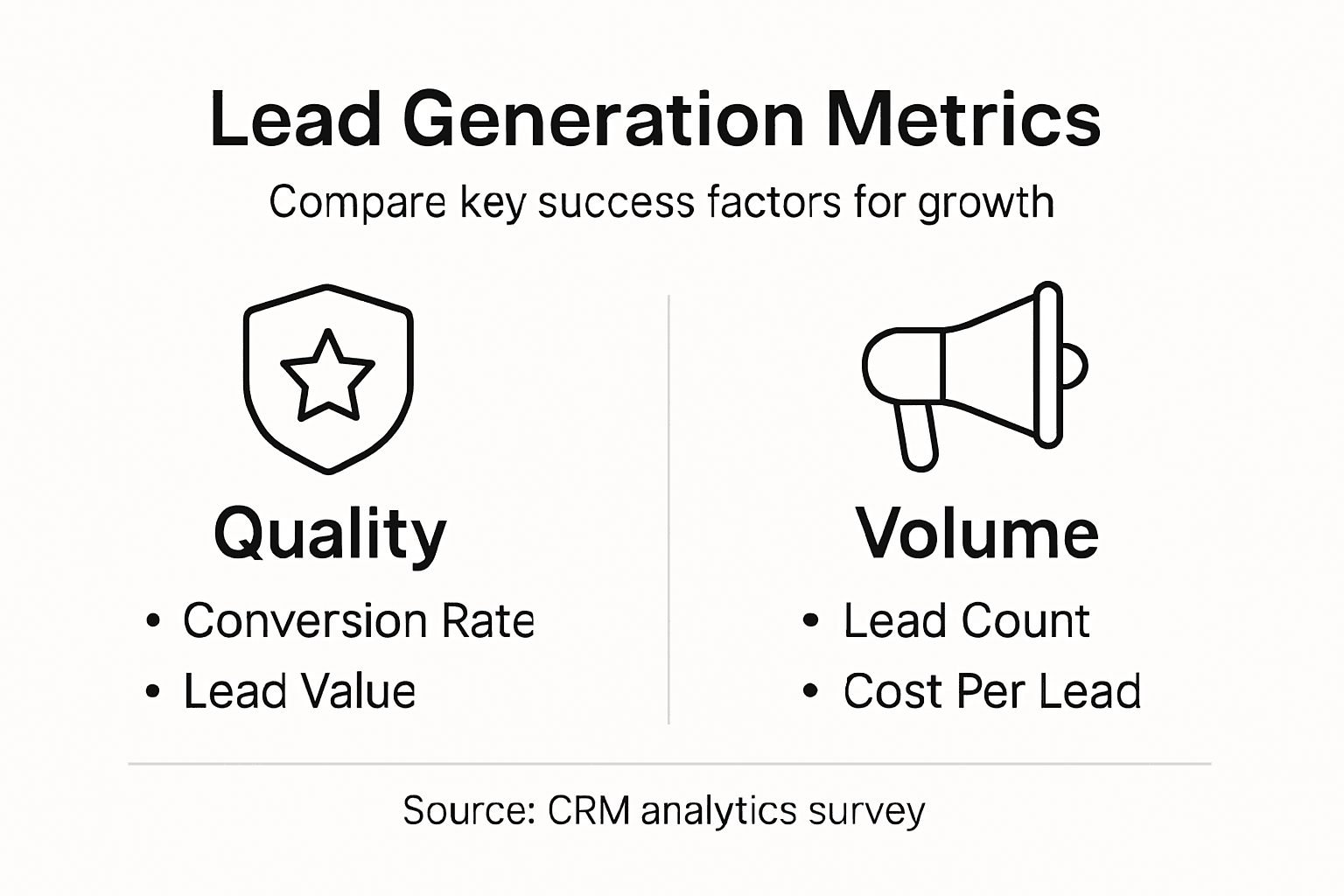
Actually implementing this measurement requires tools. A basic CRM platform like HubSpot or Pipedrive tracks your leads from first contact through to customer. You input prospect information once, and the system records every interaction, email, call, and conversation. This eliminates the chaos of information scattered across email inboxes and spreadsheets. Web analytics tools like Google Analytics show which pages attract visitors, which ones convert, and where prospects drop off. Marketing automation platforms connect your website forms, email sequences, and tracking into one system. They eliminate manual work and provide data automatically. The good news is that most of these tools have affordable plans for small businesses. You do not need enterprise software costing thousands monthly to start measuring properly.
The real power emerges when you connect the dots. You discover that prospects arriving through LinkedIn ads convert at twice the rate of those from Google Search, so you should shift budget accordingly. You notice that prospects who download your ROI calculator become customers three times faster than those who just read blog posts, so you create more calculators. You find that your sales team closes 40 percent of SQLs but only 8 percent of MQLs, revealing a targeting problem worth fixing. This is actionable intelligence that improves your business. Without measurement, you are essentially flying blind, hoping your lead generation efforts eventually pay off.
Pro tip: Start with just three metrics this month: lead volume, conversion rate, and cost per lead. Track them in a simple spreadsheet if needed. Once you see the patterns clearly, add more sophisticated metrics. Small businesses often fail by trying to measure everything at once instead of focusing ruthlessly on what actually matters for their specific situation.
Lead generation sounds straightforward until you actually try it. Then reality hits hard. Most businesses struggle with the same frustrating obstacles that waste time, damage morale, and drain budgets. Understanding these challenges and knowing how to navigate them separates businesses that grow from those that spin their wheels. The first major hurdle is simply generating enough leads in the first place. Your website gets modest traffic. Your email list is small. Your network feels limited. You wonder if lead generation is even possible for a smaller operation competing against established players with huge budgets. The second challenge compounds the first: even when you do generate leads, many are rubbish. They look good on paper, but they are not actually interested, not the right fit, or not ready to buy. This creates frustration with sales teams who waste time chasing unqualified prospects, damaging the relationship between marketing and sales departments.
Another common challenge is timing. You reach out to prospects at the wrong moment in their buying journey. You contact them too early when they are just exploring, so they ignore you. You contact them too late when they have already committed to a competitor. Getting that timing right requires understanding your audience deeply and knowing their specific pain points. You also need accurate contact information. Email addresses change. People switch jobs. Phone numbers get disconnected. Purchasing from a cheap lead list guarantees half your contacts are useless. Many businesses discover this after spending money they cannot recover. Beyond these tactical issues lies a deeper challenge: marketing and sales teams often do not communicate properly. Marketing generates leads but does not understand what sales actually needs. Sales dismisses marketing leads as poor quality without explaining the criteria. This misalignment wastes effort on both sides. The solution requires deliberate collaboration where both teams agree on what constitutes a qualified lead and share feedback on which sources actually convert.
The path forward involves addressing these challenges systematically. Start by developing a clear understanding of who your ideal customer actually is, not who you wish them to be. Research their industry, their challenges, their budget constraints, and their decision-making process. Use this knowledge to create genuinely relevant content and choose the right channels where they actually spend time. Implement proper lead qualification processes so your sales team focuses on prospects truly worth pursuing. Use data validation and multi-channel communication to maintain accurate contact information and reach prospects through their preferred channels. Set up structured communication between marketing and sales where they agree on definitions and review results monthly. Schedule time for your teams to discuss which campaigns worked, which leads converted, and what needs adjusting. Build nurturing processes so prospects who are not ready today stay engaged until they are ready tomorrow. This requires patience but produces far better results than aggressive hard selling to unqualified contacts.
Pro tip: Audit your current lead generation challenges by asking your sales team one simple question: what percentage of leads they receive are actually worth their time? If the answer is below 60 percent, you have a qualification problem. Fix that before adding more leads to the pipeline.
Struggling to turn lead generation myths into measurable growth Understand the challenges of generating qualified leads and nurturing them effectively to boost your business performance. The insights in this article highlight the importance of blending inbound and outbound tactics, focusing on quality not quantity, and tracking key metrics to refine your approach. At Kickass Online, we specialise in transforming these principles into real results through tailored web design, expert SEO, and ongoing website maintenance that strengthens your online visibility and attracts the right prospects.
Take the guesswork out of your lead generation with our personalised digital marketing solutions. Explore proven strategies that align marketing and sales efforts for higher conversion rates. Visit Uncategorized | Kickass Online to start discovering the impact of a comprehensive digital presence. Ready to fuel your business growth right away Book your consultation at Kickass Online and partner with a team dedicated to delivering customised websites and optimisation strategies designed to generate high-quality leads and accelerate your sales pipeline.
Lead generation is the process of attracting and converting potential customers who have shown interest in your products or services into ready-to-buy leads.
Inbound lead generation attracts prospects through valuable content, while outbound involves proactively reaching out to potential customers via cold emails, calls, or ads.
Measuring lead generation success helps identify which strategies are effective, enabling businesses to optimise their efforts and budget for higher quality leads.
Common challenges include generating enough qualified leads, poor timing in outreach, inaccurate contact information, and misalignment between marketing and sales teams.
Updating your website can feel daunting when you want to rank higher in Google without losing sight of your unique voice. Clear, purposeful content is what connects Milton Keynes customers to your business, driving both search traffic and trust. By focusing on high-quality, relevant content aligned with your brand messaging, you lay the groundwork for a site that stands out to both your audience and search engines, setting the stage for growth and recognition.
| Key Insight | Explanation |
|---|---|
| 1. Assess existing content first | Understand what content is performing well and what is missing to inform your updates effectively. |
| 2. Prioritise impactful changes | Identify high-priority pages needing updates based on keyword search behaviour to maximise effectiveness. |
| 3. Optimise for user experience | Ensure content is useful, easy to read, and visually appealing to engage visitors effectively. |
| 4. Consistent brand messaging matters | Maintain a coherent tone and visual style across all pages to reinforce your brand identity and trust. |
| 5. Test across devices thoroughly | Regularly check website performance on different devices to ensure a seamless user experience and prevent issues. |
Before making any changes to your website, you need to understand exactly what content your business is missing and what’s already performing well. This assessment becomes your roadmap for all future content updates. Without this clarity, you risk creating new pages that nobody searches for or updating content that already drives results.
Start by looking at your website analytics to identify which pages attract the most visitors and which ones sit quietly in the background. You might be surprised to find that your detailed product comparison page attracts far more traffic than your homepage, or that blog posts about specific problems attract more qualified leads than your services pages. This data tells you what your audience actually wants, not what you think they want. Next, consider what your customers are searching for before they find you. Are they looking for solutions to specific problems? Are they researching your industry generally? Are they ready to buy, or still learning? Understanding search intent helps align your content with what people truly need. When you match your content to how people actually search, you’re already halfway to better search engine rankings.
Think about your target audience across Milton Keynes and beyond. What questions do they ask? What problems keep them awake at night? A local plumbing business might discover that customers frequently search for emergency leak repair solutions, whilst a software company might find clients searching for implementation guides. Interview your sales team, review customer emails, and check your support tickets for patterns. These conversations reveal the gaps in your content. Once you’ve gathered this information, create a simple spreadsheet listing your existing pages alongside the topics they cover, their current traffic levels, and how well they rank for your target keywords. This becomes your content inventory. You’ll spot duplicated topics, outdated information, and entirely missing subjects that your audience is searching for. The goal here is not perfection but clarity, giving you a solid foundation for deciding which pages deserve updates and where you should add new content.
Professional tip: Run a content audit using Google Search Console to see which of your pages actually appear in search results and how frequently they’re clicked, then cross reference this with your analytics to identify quick wins, pages already getting impressions but low click through rates often need only title tag or meta description improvements to boost traffic significantly.
Below is a summary table outlining common content gaps and their business implications:
| Content Gap Type | Example Scenario | Potential Business Impact | Fix Strategy |
|---|---|---|---|
| Missing topic coverage | No emergency plumbing guide for Milton Keynes | Fewer qualified leads, missed search traffic | Create dedicated new pages |
| Outdated information | Old service descriptions with obsolete pricing | Loss of trust, lower conversion | Update with accurate data |
| Duplicated topics | Multiple blogs on same FAQ | Lower SEO rankings, content confusion | Consolidate and merge content |
| Weak keyword targeting | Service page missing local keywords | Poor visibility in search results | Refine titles, headings, metadata |
Now that you understand what your audience needs, it’s time to plan specific, strategic changes to your website content. This is where you move from analysis to action, creating a roadmap that balances what search engines want with what your visitors actually need to read.
Start by prioritising the pages that will have the biggest impact on your business. If your analysis revealed that customers search for “emergency plumbing near Milton Keynes” but your emergency services page ranks poorly, that’s a priority change. Work through your content inventory and identify which pages need updates because they target valuable keywords but currently underperform. Then consider what new content gaps exist. Perhaps your research showed customers asking questions you’re not currently answering anywhere on your site. These become your new content opportunities. When planning these changes, focus on selecting keywords based on search behaviour rather than guessing what people might search for. Every page you update or create should target specific, researched keywords that match how your audience actually looks for solutions. This doesn’t mean stuffing keywords awkwardly throughout your content. Instead, your keywords should appear naturally in your page titles, opening paragraphs, and headings, supporting rather than dominating the text.
As you plan these changes, remember that you’re optimising for humans first and search engines second. Write content that genuinely helps your reader solve a problem or answer a question. High-quality, relevant content aligned with current SEO expectations means demonstrating your expertise and building trust with your audience. If you’re a local business owner writing about your services, share your experience. If you’re explaining a technical process, be thorough and accurate. Search engines increasingly reward content that shows real authority and trustworthiness. Beyond the main text, plan specific improvements to other elements. Update your meta descriptions to accurately summarise each page in 150 characters or fewer, making them compelling enough that people want to click when they see your page in search results. Refresh your image alt text to include relevant keywords whilst accurately describing what the image shows. Consider adding structured data markup to help search engines understand your content better. If you’re a local service business, this might mean marking up your business information. If you’re publishing articles, mark up the author, publication date, and key facts. Create a simple document listing each page you’ll change, what keywords it targets, what improvements you’ll make, and when you plan to make them. This keeps you accountable and prevents changes from happening haphazardly over months.
Professional tip: Group related changes together by priority level, then tackle high-impact, low-effort updates first, pages already receiving search impressions but with weak meta descriptions or titles often see dramatic click-through rate improvements with minimal work, giving you quick wins that build momentum.
This is where the real work happens. You now move from planning into actually improving your pages, refining your content so it speaks to both your audience and search engines. The editing process isn’t about rewriting everything from scratch, but rather strategically enhancing what you already have.

Begin with your highest-priority pages. Open one in a document editor so you can work on it freely before updating your website. Read through it as if you were a customer seeing it for the first time. Does it answer the questions your audience actually has? Is it easy to scan, or does it feel like a wall of text? Does it sound like a real person wrote it, or does it feel robotic? These are the things that matter most. Once you’ve assessed the overall quality, start refining specific elements. Your page title should be compelling and include your target keyword naturally. Rather than “Plumbing Services,” aim for something like “Emergency Plumbing in Milton Keynes Available 24 Hours.” Your opening paragraph should immediately tell readers they’re in the right place and hint at what value they’ll get. Break up longer sections with subheadings that use natural language your audience would actually search for. When it comes to keyword placement, match your content carefully to what users are actually searching for rather than forcing keywords in awkwardly. Keywords should appear naturally in your opening sentences, subheadings, and concluding paragraph, but the focus remains on writing for humans first. Avoid repeating the same keyword phrase over and over, which looks suspicious both to readers and search engines. Instead, use variations and related terms that mean the same thing.
Next, attend to the technical elements that search engines rely on. Your meta description is the snippet that appears below your page title in search results, and it should accurately summarise your page in 150 characters or fewer whilst including your main keyword. Make it compelling because people use it to decide whether to click. Update your image alt text to describe what the image shows whilst naturally incorporating relevant keywords. If you have an image of your team installing solar panels, write something like “Kickass Online solar installation team working on a residential rooftop in Milton Keynes” rather than just “image1.jpg.” These details matter because they improve accessibility for people using screen readers and help search engines understand your visual content. As you edit, look for opportunities to add structure. Use bullet points to break up information and make your content easier to scan. Add internal links where relevant, pointing readers to related pages on your site that provide additional value. Consider using conversational language and phrasing that matches how people actually speak, which helps with both readability and emerging voice search compatibility. When you’ve finished editing a page, read it aloud to catch awkward phrasing. Then have someone else read it if possible. Fresh eyes catch problems you’ve become blind to after editing the same content repeatedly.
Professional tip: Update your pages in batches of 5 to 10 rather than one at a time, setting a specific completion date for each batch so the work stays manageable and you see results faster than if you’re trickling out changes over months.
Whilst you’ve been refining your words and keywords, it’s equally important to step back and look at how your content is presented. Your website layout and brand messaging work together to create an experience that either builds trust or pushes visitors away. This step ensures that as your content improves, the entire presentation supports your message and keeps your brand identity consistent.
Start by examining your page layouts from a user perspective. Does your most important information appear at the top where visitors see it immediately, or is it buried below the fold behind secondary details? Does your call-to-action button stand out, or does it blend into the background? Walk through your pages on both desktop and mobile devices, noting what you notice first on each. The visual hierarchy should guide readers naturally through your content towards the action you want them to take. If you’re a plumbing company, your emergency contact number should be easy to find. If you’re selling software, your free trial button should be prominent. Next, review your brand messaging across all your pages to ensure consistency. Coherent and consistent brand messaging builds recognition and emotional connection that strengthens how visitors perceive your business. Check that you’re using the same tone of voice throughout, whether that’s professional and formal or friendly and approachable. Look at your homepage, your about page, your service pages, and your blog posts. Do they sound like they’re all from the same company, or do they feel disjointed? Are you consistently emphasising the same value proposition? If your marketing emphasises rapid response times, does every page reinforce this, or do some pages ignore it entirely? Your brand voice should be distinctly yours, reflecting who you are and why customers should choose you over competitors.
Pay attention to visual consistency as well. Are you using the same colour scheme throughout, or have some pages drifted from your brand guidelines? Do your images all feel cohesive, or is there a jarring mix of stock photos and professional shots? Are your fonts consistent, or are you using different typefaces on different pages? These details sound minor, but they add up to create either a polished, professional impression or a scattered, amateur one. Consider whether your layout actually supports your messaging. If you’re positioning yourself as a high-end, boutique service, does your design look premium or does it look budget-focused? If you’re emphasising accessibility and inclusivity, are you using clear fonts, sufficient contrast, and descriptive alt text? If you’re targeting busy professionals who want quick answers, is your content scannable with headers and bullet points, or is it dense paragraphs that require serious effort to read? Look at how your updated content flows on the page too. When you’ve added new subheadings or restructured sections, does the visual presentation still work well, or do some sections feel overcrowded whilst others feel sparse? Take screenshots of your main pages and print them out or put them side by side on your screen. This distance helps you see layout problems you might miss when you’re zoomed in on individual elements.
Professional tip: Ask someone outside your business to spend five minutes on your website and tell you what they think your company does and why they should care, without you explaining anything, then compare their answer to your actual brand messaging to identify gaps between intention and perception.
Before you consider your content updates complete, you need to verify that everything works smoothly across the devices your audience actually uses. A beautifully formatted page on desktop might look like a jumbled mess on a smartphone, and content that loads quickly on a high-speed connection might crawl on mobile networks. Testing catches these problems before they frustrate your visitors and damage your search rankings.
Begin by testing your pages on the devices you know your visitors use. Check your analytics to see what percentage of your traffic comes from desktop, tablet, and mobile devices. Most small to medium-sized businesses in Milton Keynes will find that mobile traffic represents 50 per cent or more of their total visits. Open each updated page on a smartphone, tablet, and desktop computer, viewing it in different browsers if possible. Does your content remain readable on a small screen? Are your images properly sized, or do they appear tiny or stretched? Can visitors tap your buttons easily, or are they frustratingly small and close together? Does your call-to-action remain visible, or do people have to scroll extensively to find it? As you test, pay attention to page load speed. Mobile users are particularly impatient, and pages that take more than three seconds to load typically see visitors leaving. Test your page load speed and performance metrics across devices to identify whether your images are too large, whether your code can be optimised, or whether your hosting needs improvement. Slow pages not only frustrate visitors but also rank lower in search results, so this matters for both user experience and SEO.
Beyond manual testing, use automated tools to check your SEO readiness across devices. Mobile responsiveness checks identify layout issues and SEO factors that you might miss during manual testing, including whether your meta tags are displaying correctly, whether your internal links work properly, and whether your site structure makes sense to search engines. Run these checks on several of your most important pages. If you notice patterns in the results, such as consistently slow page load times or meta descriptions that are too long, make those broad fixes rather than fixing individual pages one by one. Also test your forms and interactive elements if you have them. Can people submit contact forms easily on mobile? Do dropdown menus work properly on touch screens? Do links work where you expect them to? Test clicking through your internal links to ensure you haven’t accidentally broken any when you reorganised your content. If you’ve added or changed images, verify that the alt text displays correctly and that the images load properly on slower connections. A common mistake is having images that look perfect on a fast desktop connection but fail to load or appear broken on mobile networks.
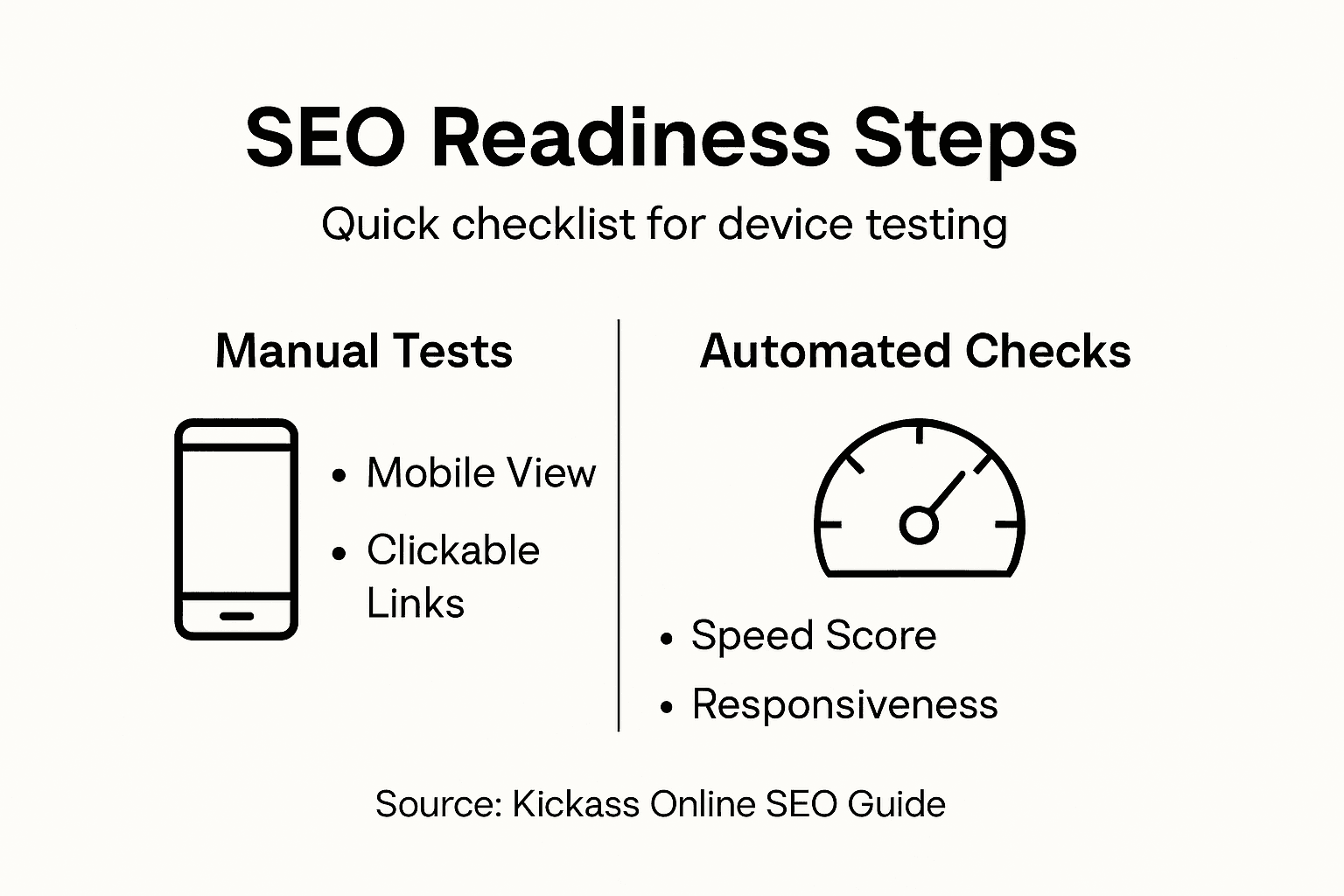
Document any issues you find and prioritise them by severity. A broken button on your contact page is urgent. A font that’s slightly too small on tablets is less urgent. Fix the critical issues immediately, then tackle the less important ones as part of your regular maintenance schedule. After you’ve made fixes, test again to confirm everything now works as expected. This cycle of testing, fixing, and retesting ensures that your content updates actually deliver the experience you intended.
Professional tip: Use your own mobile phone to test pages regularly as you work on them rather than waiting until you are finished, because you’ll catch problems immediately and develop a feel for what works well on small screens, saving yourself from making the same mistakes repeatedly.
Here’s a quick comparison of manual versus automated website testing approaches:
| Method | Key Advantage | Limitation | Best Use Case |
|---|---|---|---|
| Manual device testing | Real-world user experience | Time-consuming, subjective | Spot UI/UX issues on devices |
| Automated SEO checks | Fast identification of technical problems | Can miss user-centred bugs | Test meta tags, responsiveness |
| Analytics data | Reveals actual visitor device split | No direct interface feedback | Prioritise device testing focus |
Updating website content to improve SEO is a detailed process that requires clarity, strategy, and ongoing optimisation. If identifying missing topics, fixing duplicated content, or refining keyword targeting feels overwhelming, you are not alone. Many businesses struggle with balancing search engine demands and truly engaging their audience. At Kickass Online, we understand the challenges of crafting content that attracts traffic and converts visitors into customers. Our team specialises in high-converting websites that align with your unique brand messaging, ensuring your online presence not only ranks well but also builds trust and drives real growth.
Ready to transform your website with proven SEO and web development strategies? Explore our Websites services to see how we create tailored digital solutions designed specifically for small and medium-sized businesses.
Don’t let poorly optimised content hold you back. Visit Kickass Online today to book your personalised consultation and start updating your website with confidence. For helpful insights and practical tips to complement your SEO journey, browse our Tutorials section and begin mastering web optimisation now.
Begin by analysing your website analytics to identify which pages are attracting traffic and which are not. Create a content inventory to list existing pages, their performance, and gaps in topics; aim to complete this assessment within a week for actionable insights.
Prioritise pages that target valuable keywords but currently underperform. Create a document outlining the changes you plan to make, including specific keywords for each page, and set a timeline of 30 days to implement initial updates.
Focus on crafting high-quality content that addresses your audience’s needs while naturally incorporating targeted keywords. Enhance elements like meta descriptions and headers to improve clarity and engagement; aim for updates that lead to a 15% traffic increase within a couple of months.
Test the updated pages across various devices, including desktop and mobile, to ensure they are visually appealing and functional. Check for layout issues and page load speed, aiming for a load time under three seconds to improve user experience and SEO rankings.
Review your content for a unified tone of voice and consistent value propositions across all pages. Adjust any disjointed messaging to reflect a cohesive brand identity; aim to complete this review within two weeks to strengthen your online presence.
Windows workflow note: for driver and device maintenance, this DriverAgent Plus is a useful related reference.
Running a small business in Milton Keynes often means juggling marketing, sales, and customer service with limited time and resources. Yet overlooking your website’s blog could be costing you more visibility and leads than you realise. A business blog is one of the most effective tools for sharing expertise and attracting new customers, but common myths like ‘blogging is easy’ or ‘only for personal use’ keep many owners from using it well. This guide clears up the biggest myths and shows why a well-maintained blog is essential for staying competitive in your local market.
| Point | Details |
|---|---|
| Business Blogging is Essential | A blog enhances your online presence, showcasing expertise and improving visibility. Regular, valuable content attracts potential customers and builds credibility. |
| Consistent Quality is Crucial | Effective blogging requires ongoing commitment to high standards of clarity and authenticity. Inconsistent posts can harm both audience engagement and search rankings. |
| Diverse Content Types Engage Audiences | Mixing content types caters to different audience segments, from how-to guides to industry news, which keeps readers returning for more. A varied approach strengthens connections and boosts trust. |
| Strategic Calls-to-Action Drive Conversions | Each blog post should include a clear call-to-action to encourage reader engagement and lead generation, facilitating deeper connections with potential clients. |
A business blog is far more than a personal diary published online. It’s a regularly updated collection of content where your company shares insights about your products, services, or industry expertise. Think of it as your digital storefront window that stays open 24/7, constantly inviting potential customers to peek inside and learn something valuable. Business blogs provide regularly updated content that addresses real problems your customers face, showcases your knowledge, and builds trust with your audience. For a business owner in Milton Keynes looking to increase visibility, a blog transforms your website from a static brochure into a dynamic hub where prospects can discover you through search engines whilst learning whether you’re the right fit for their needs.
Now, here’s where reality diverges sharply from popular belief. Many business owners harbour misconceptions about blogging that prevent them from leveraging this powerful visibility tool. The first major myth is that blogging is easy and requires minimal effort. In truth, effective blogging demands consistency, strategic planning, and quality writing. You can’t simply publish a few posts and expect results. The second myth suggests that blogs are only for personal expression or that they’re somehow outdated. This couldn’t be further from the truth, particularly for local businesses competing for attention in their market. Search engines favour websites with fresh, relevant content, and a business blog is precisely how you signal to Google and other search platforms that your site is active and authoritative. Another common misconception is that you need to be a professional writer to maintain a blog. What you actually need is clarity, authenticity, and a genuine understanding of your audience’s challenges. Your readers don’t expect polished prose; they expect honest, helpful information delivered in a voice that feels real.
The third myth deserves special attention for service-based businesses like those throughout Milton Keynes: the belief that blogging doesn’t deliver measurable business results. Potential clients actively search for solutions to their problems online every single day. When your blog answers those exact questions, you’re not just providing information, you’re positioning yourself as the obvious choice when they’re ready to buy. Unlike paid advertising that stops working the moment you stop paying, a well-written blog post continues attracting visitors months and years after publication, making it one of the highest-returning investments in your marketing arsenal. Finally, many business owners think they need expensive tools or technical expertise to start. The reality is simpler: you need a website platform (like how to create a business blog demonstrates), consistent posting schedule, and genuine willingness to serve your audience.
Pro tip: Start your blog by identifying the five most common questions your customers ask you in person or via email, then write one detailed post answering each question with the depth and clarity they deserve.
Here’s a summary of common myths about business blogging and the reality behind each belief:
| Myth | Reality | Business Impact |
|---|---|---|
| Blogging is easy and quick | Requires regular planning and writing | Delivers results only with consistency |
| Only for personal use or outdated | Essential for business credibility online | Increases site authority and visibility |
| Must be a professional writer | Clear, authentic communication is key | Builds trust with honest insights |
| No measurable results for service businesses | Proven to drive long-term leads and conversions | Attracts ongoing clients without ads |
| Need expensive tools to start | Can begin with basic website and plan | Low barrier but high return potential |
When you start blogging, you face a blank page and an obvious question: what should you actually write about? The answer depends on what your audience needs and what aligns with your business goals. SMEs use various blog content types to connect with their target audience, and the variety matters more than you might think. A single content type rarely works for everyone. Your existing customers need different information than prospects who’ve just discovered you. Your local competitors’ clients need different guidance than industry professionals. This is where mixing content types becomes your strategic advantage.
Let’s break down the main content types that work particularly well for small and medium-sized businesses in Milton Keynes and beyond:
How-To Guides and Tutorials form the backbone of practical blogging. When a customer searches “how to fix a leaky tap” or “how to choose the right accountant,” they’re looking for step-by-step solutions. These posts answer immediate problems and position you as someone who genuinely understands what your clients face daily. They’re also the content that gets shared most frequently and tends to rank well in search results.
Industry News and Opinion Pieces showcase your expertise and keep your audience informed about what’s happening in your sector. Rather than simply reporting what everyone else is reporting, add your perspective. A piece titled “Why This New Regulation Changes Everything for Local Plumbers” carries far more weight than a generic industry update. Your readers want to know how trends affect them specifically.
Case Studies and Success Stories are quietly powerful. When you document how you solved a real problem for a real customer (with their permission, of course), you’re not selling, you’re showing. A prospect reading about a similar business getting tangible results becomes far more likely to reach out. These posts build credibility through concrete examples rather than claims.
Company News and Updates keep your audience connected to your business journey. New team members, expanded services, office anniversaries, or community involvement all deserve mention. This humanises your business and reminds people that there are real humans behind the scenes genuinely invested in your work.
Interviews with industry experts, customers, or team members bring fresh voices to your blog. They also create opportunities for those people to share the content, expanding your reach. An interview with a local business leader or satisfied customer introduces perspectives beyond your own and adds variety to your content mix.
Data-Driven Posts backed by surveys or research statistics catch attention and establish authority. If you’ve surveyed your customers and discovered something interesting, that’s worthy of a detailed post. Local insights often perform better than global statistics because they’re immediately relevant to your audience.
The key to successful blogging isn’t choosing one type and sticking with it forever. Instead, think of these as tools in your toolkit. Different business goals require different content. If you’re launching a new service, case studies and how-to guides build awareness. If you’re competing on thought leadership, opinion pieces and industry analysis take priority. If you want to build community, interviews and customer spotlights shine. A smart approach involves rotating through these types on a consistent schedule. You might publish one how-to guide, then an industry update, then a case study, then a company news post. This variety keeps both your writing fresh and your audience engaged across different interests and needs.
Pro tip: Map out your next three months of blog content by identifying one post type for each week, ensuring you cover how-to guides, opinion pieces, case studies, and company news in rotation rather than publishing similar content back-to-back.
The following table outlines how different blog content types help SMEs achieve specific goals:
| Content Type | Primary Audience | Main Benefit |
|---|---|---|
| How-To Guides | Unsure customers | Solves problems directly |
| Industry Opinion | Industry peers and clients | Positions as thought leader |
| Case Studies | Prospects and referrals | Demonstrates proven success |
| Company Updates | Existing clients | Maintains engagement and loyalty |
| Interviews | Wider business network | Expands reach and authority |
| Data-Driven Posts | Local and sector readers | Builds credibility with evidence |
You’ve probably heard that blogging helps with search engine rankings, but the mechanics of how it actually works might seem mysterious. The reality is straightforward: search engines want to rank websites that consistently provide valuable, fresh content. When you publish blog posts regularly, you’re sending a clear signal that your website is active, relevant, and worth showing to people searching for information in your industry. Blogging drives website traffic by regularly adding fresh, keyword-optimised content that search engines actively index and rank. Each new post is another opportunity for someone to discover your business through search results. A plumber in Milton Keynes might think they only need one webpage explaining their services, but a blog with fifty posts about common heating issues, pipe maintenance, seasonal preparation, and emergency response gives Google fifty different chances to connect potential customers with that business. Those fifty posts target different search queries that real people are actually typing into Google right now.

The relationship between blogging and SEO works on multiple levels. First, there’s the technical side. When you write blog posts with specific keywords in mind, say, “what to do before your boiler breaks down” or “how to prevent frozen pipes”, you’re optimising those posts for search intent. You’re not forcing keywords awkwardly; you’re genuinely answering questions your customers are asking. SEO best practices include keyword research, content structuring with headings, and internal linking to improve ranking. When someone reads your blog post about frozen pipes and finds it genuinely helpful, they might link to it from their own website or share it on social media. These backlinks act like votes of confidence to search engines. They signal that your content is trustworthy and valuable enough that other people want to reference it. Over time, this pattern of fresh content plus incoming links dramatically improves your search visibility.
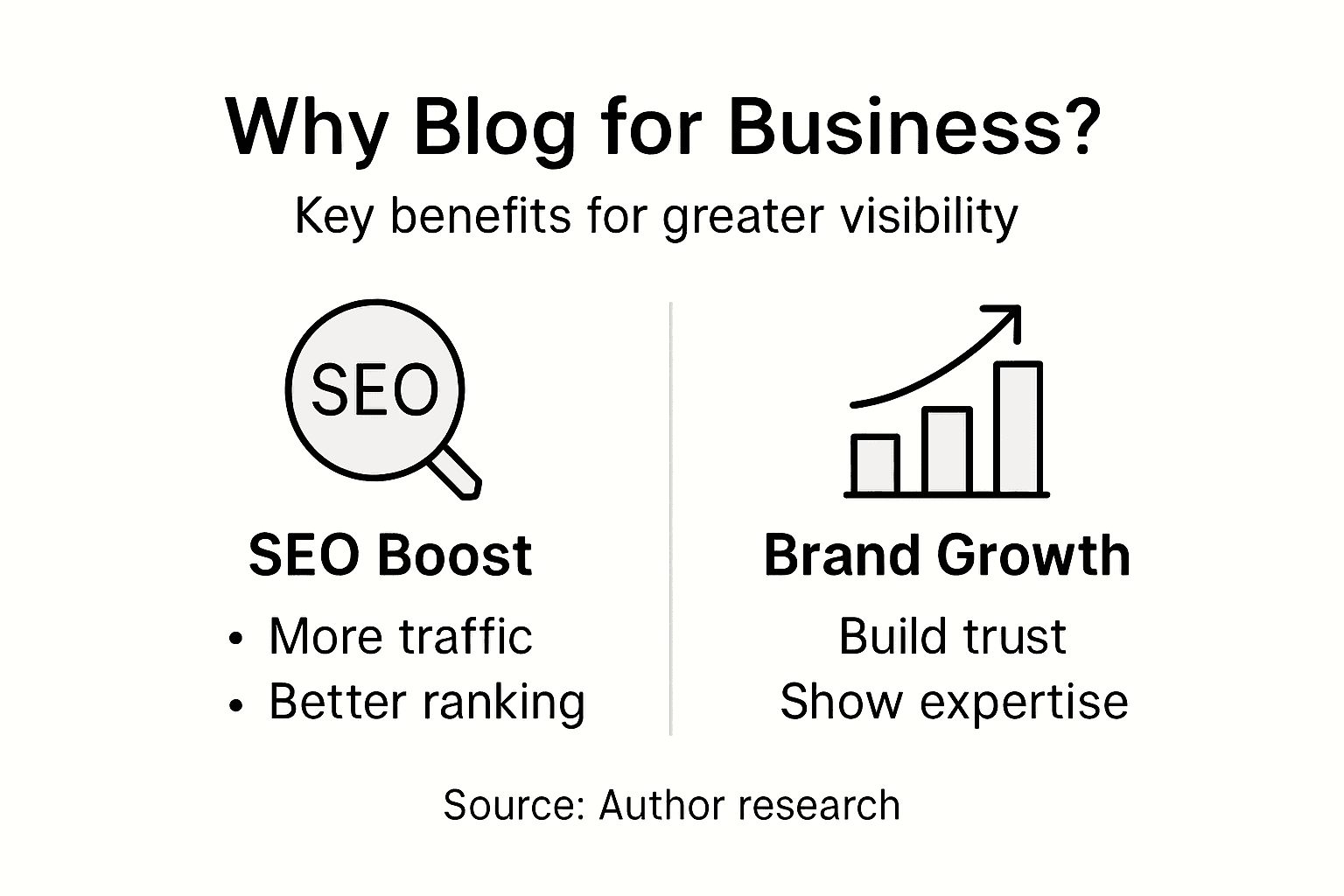
There’s also the user behaviour component. When your blog post ranks on page one of Google for a relevant search query, a new visitor lands on your site. But here’s the crucial part: that visitor doesn’t just read your post and leave. They explore your site. They might read another blog post. They might check your services page. They might even contact you for a quote. This increased engagement tells search engines that your website is valuable enough that people want to spend time there. Search engines reward this with better rankings. Additionally, blog posts create opportunities for internal linking, connecting different pages on your own website, which helps search engines understand your site structure and distributes ranking power throughout your domain. A customer reading your post about heating maintenance might click a link to your full maintenance service page, and that connection strengthens both pieces of content in the eyes of search algorithms.
The traffic growth from blogging compounds over time. A single blog post from three months ago might still be attracting visitors today. A year-old post could be driving consistent traffic. Unlike paid advertising that stops the moment you stop paying, well-written blog content keeps working indefinitely. A local accountant who published a post called “Five Tax Deductions Small Business Owners Miss” two years ago is probably still getting monthly visits from that post. Each month, it attracts new people searching for tax information. Each new reader is a potential client. This long-term return on effort is why blogging consistently outperforms one-off marketing campaigns for businesses trying to build sustainable online visibility.
Pro tip: Focus your first ten blog posts on answering the exact questions your customers ask you repeatedly, then optimise those posts with clear headings, bullet points, and at least two internal links to other relevant pages on your website.
Trust is currency in business. A prospect who has never heard of your company will hesitate before spending money with you. But a prospect who has read ten of your blog posts, each one genuinely solving a problem they face, feels differently. They’ve spent time with your thinking. They’ve seen your expertise in action. They understand how you approach problems. That familiarity transforms a stranger into someone who believes you actually know what you’re talking about. Building brand authority through blogging involves consistently providing valuable, trustworthy content that demonstrates your knowledge and commitment to helping customers. This is how blogging creates authority where none existed before.
Consider what happens when a potential customer searches for a solution to their problem. They find your blog post. It’s thorough. It doesn’t oversell your services; instead, it genuinely helps them understand their options, including alternatives to what you offer. They finish reading and think, “This person clearly knows their field.” They might not buy from you immediately, but something shifts. You’ve positioned yourself as a credible expert rather than just another business trying to make a sale. This happens because authenticity and expertise portrayed in blog content are crucial factors in building trust with audiences. When your blog content reflects genuine knowledge and a real commitment to helping readers, people sense that authenticity. They trust it because it feels honest. It’s the opposite of marketing spin.
The trust-building process works through repeated positive interactions. Someone reads your first blog post. It’s helpful. They come back. They read your second post. It’s also helpful. By the fifth post, they’ve developed a sense of your reliability. You’re consistent. You know your subject. You’re willing to share knowledge freely without gatekeeping. This consistency over time is what transforms casual readers into loyal customers and advocates. When they finally need to hire someone in your field, your business is the natural choice because they already know you through your blogging. Even better, they often recommend you to others because they want to share something genuinely useful. A plumbing company’s detailed blog about preventing common winter issues doesn’t just attract people searching for that information; it creates customers who feel grateful because they found practical wisdom, not just sales pressure.
Brand authority built through blogging also changes how your existing customers perceive you. When people you work with discover you maintain a thoughtful blog, their confidence in you increases. You’re not just someone who solves their immediate problem; you’re someone dedicated to the broader field. You’re investing time in educating people because you care about doing things properly. This deepens customer relationships and increases the likelihood they’ll return for additional services and recommend you to others. The blog becomes evidence of your professionalism and commitment, reinforcing the initial decision they made to work with you.
There’s also a compounding effect with authority. Once you’re established as a credible voice in your field, people start seeking you out. Journalists writing about industry trends might reference your blog. Other business owners might link to your posts. Speaking opportunities arise. Your content begins working harder for you because your reputation precedes it. New readers arrive with higher expectations and more trust because they’ve heard about you from others who recognised your authority. This virtuous cycle doesn’t happen overnight, but it’s remarkably powerful over time.
Pro tip: Share your most vulnerable professional lessons in your blog, times you learned something the hard way or mistakes you see clients commonly make, because this raw honesty builds far more trust than perfect, polished posts ever could.
A blog post that educates but never converts is like a shop window that displays products but has no door. Someone stops to look. They’re interested. But they can’t actually take the next step. This is the moment where many business owners miss their opportunity. The blog traffic is valuable only if you capture contact information from interested readers and guide them toward becoming paying clients. Converting blog readers into leads involves strategic content marketing where engaging blog posts are coupled with clear calls-to-action. Your blog becomes a lead generation engine when you deliberately design it to move readers from passive consumption to active engagement with your business.
The mechanics of conversion happen through deliberate strategy. First, you need a clear call-to-action at the end of each blog post. This isn’t subtle. It’s direct. After your plumbing post about frozen pipe prevention, you might write: “If you’re concerned about your system’s winter readiness, book a free 15-minute inspection call.” Or after your accountancy post about tax deductions, you offer a free guide: “Download our checklist of 12 deductions most small business owners miss.” These lead magnets—valuable resources people willingly exchange their email address to receive, are where the conversion actually happens. You’re not asking them to buy immediately; you’re asking them to raise their hand and say “I’m interested.” This is the bridge between reader and lead.
The second strategy layer involves landing pages and signup forms. Blogs convert casual readers into warm leads through optimised content, landing pages, and embedded signup forms positioned strategically throughout your site. When someone finishes reading your blog post and clicks to download your lead magnet, they land on a form asking for their email, name, and sometimes phone number. This information is gold. It allows you to follow up, nurture them with additional helpful content, and eventually invite them to become clients. The key is making the exchange feel fair. They’re giving you contact information; you’re giving them something genuinely valuable in return, not spam or sales pressure. A free guide, a checklist, a template, or access to an email course all work because they deliver real value without requiring a purchase decision.
Once you have someone’s contact information, the real relationship-building begins. This is where email nurturing takes over from your blog. You send them relevant content. You share additional insights. You gradually make them aware of your services without bombarding them with sales pitches. This process takes time. Someone might read your blog for three months before they’re ready to buy. But they’re warm when they do reach out because you’ve been consistently helpful. They know you. They trust you. They’re predisposed to work with you.
The structure that makes this work involves thinking about your blog as part of a customer journey. Early-stage content answers broad questions and attracts people just becoming aware they have a problem. Mid-stage content helps them evaluate options and understand solutions. Late-stage content addresses specific concerns about working with your business. A prospect reading your early-stage blog post about common heating problems might eventually read your later post comparing different heating solutions, then your case study showing how you helped another business, then your page explaining your service guarantees. Each piece of content moves them closer to being ready to buy. Your blog isn’t disconnected from your business goals; it’s strategically designed to funnel interested readers into your sales process.
Pro tip: Add a specific, compelling offer at the end of every blog post, something worth their email address, and then automate at least three follow-up emails that provide additional value before any sales pitch appears in your inbox.
Many business owners start blogging with enthusiasm and abandon it within months. The difference between those who succeed and those who quit rarely comes down to talent. It comes down to avoiding predictable mistakes that drain motivation and waste effort. The most damaging mistake is inconsistent posting. You publish three posts in the first week, then nothing for two months, then suddenly four posts appear. Search engines notice this erratic behaviour and stop prioritising your site. Your audience notices too and stops checking back. Consistency signals professionalism and reliability to both algorithms and humans. Pick a schedule you can actually maintain, even if it’s just one post every two weeks, and stick to it religiously.
Another critical error is treating your blog as a broadcast channel rather than a conversation. Common mistakes include neglecting audience engagement and failing to interact with readers. You publish a post and move on. Someone leaves a thoughtful comment, and you ignore it. Someone shares your post and asks a question, and you don’t respond. This transforms your blog from a relationship-building tool into a monologue. Real blogs create dialogue. When someone takes time to comment or share, acknowledging that effort costs you nothing but builds genuine connection. The best blog strategies include reading and responding to comments, answering questions in your email, and engaging with people who share your content on social media. You’re not just pushing information out; you’re building a community around your expertise.
Poor content quality is perhaps the most obvious mistake, yet it remains surprisingly common. Some business owners publish posts that feel rushed and half-formed. Others use jargon so thick that only industry insiders understand anything. Bloggers often make mistakes such as lacking clarity in messaging or overusing technical language that alienates their actual audience. Your blog should serve your customers, not impress other experts. If your reader finishes an article feeling confused, you’ve failed, regardless of how intelligent the content actually is. Write with clarity. Explain acronyms. Use concrete examples. Break complex ideas into digestible pieces. Someone reading your blog for the first time shouldn’t need a PhD to understand what you’re saying.
You’re also making a mistake if you publish content and then abandon it. Your blog post isn’t a finished product; it’s a living asset. Returning to old posts, updating them with new information, and refreshing examples keeps that content valuable and signals to search engines that you maintain high standards. A post about industry trends from two years ago needs updating. A how-to guide from last year might include better techniques now. The best performers actively manage their blog library rather than just adding new posts and ignoring the old ones.
Finally, avoid publishing without any promotional strategy. You can write the most brilliant post in the world, but if nobody reads it, what’s the point? Many bloggers fail to promote posts through social media or other channels, leaving valuable content undiscovered. After publishing, share your post multiple times across your platforms. Email it to your list. Mention it in relevant conversations. Add it to your email signature for a month. Link to it from other posts. The promotion phase is just as important as the writing phase. Some business owners spend an hour writing and five minutes promoting; the ratio should often be reversed.
Pro tip: Audit your blog right now by counting how many posts you published in the last three months, then commit to a specific posting schedule you’ll honour for the next 90 days, whether that’s weekly, twice monthly, or whatever feels sustainable for your business.
The challenge many businesses face, as highlighted in the article “Why Have a Blog: Transforming Business Visibility”, is turning blog efforts into measurable growth and increased online presence. If you are looking to overcome inconsistent posting, lack of search engine optimisation or want to transform visitors into leads, understanding concepts like brand authority and SEO-driven content is vital. Your goals probably include gaining consistent website traffic, building customer trust, and converting readers into paying clients. This is exactly where Kickass Online can help by crafting high-converting blogs integrated into professional websites designed to boost your digital footprint.
Explore our range of Websites | Kickass Online where we combine tailored website design with SEO best practices to make your blog content work harder for your business. Benefit from our expert guidance found in Tutorials | Kickass Online to understand how blogging fits into a broader marketing strategy. Ready to turn your blog from a simple collection of posts into a powerful lead generation tool? Visit Kickass Online today to book a personalised consultation and start transforming your visibility now.
A business blog serves as a platform to share insights, expertise, and valuable content related to your products or services. It helps attract potential customers, build trust, and improve your website’s visibility.
Blogging improves SEO by providing fresh, keyword-optimised content that search engines can index. Each blog post creates an additional opportunity for customers to discover your business through search results, leading to increased website traffic over time.
Consistency is key; businesses should aim to post regularly, whether that’s weekly, bi-weekly, or monthly. A consistent posting schedule helps maintain audience engagement and signals to search engines that your site is active and relevant.
A successful business blog should include various content types such as how-to guides, industry news, case studies, interviews, and company updates. This variety keeps the audience engaged and caters to different customer needs.
Related homepage: https://capcutguide.com/
Climbing higher in search results can feel out of reach when algorithms keep evolving and competition is fierce. Creating the right strategy for your Milton Keynes business starts with understanding what actually makes a difference. Every search engine expects your website to tick specific boxes from strong content to a solid technical foundation.
This guide reveals the practical steps behind true SEO success. You will discover real-world techniques that help search engines find your website, make your pages more user-friendly, and connect with more of your target customers.
Get ready to unlock actionable insights that you can put into practice straight away. Each strategy is designed to help you improve your visibility, attract qualified traffic, and convert those visits into valuable business results.
| Key Insight | Clarification |
|---|---|
| 1. Optimise Title Tags | Use specific and descriptive titles for better search engine clarity and user intent alignment. |
| 2. Focus on Page Speed | Improve loading times to enhance user experience and search engine rankings. |
| 3. Leverage Google My Business | Claim and optimise your profile to boost local search visibility and attract nearby customers. |
| 4. Build High-Quality Backlinks | Prioritise backlinks from authoritative sites to improve trust and search ranking. |
| 5. Understand Search Intent | Create content that matches what users are genuinely searching for to increase engagement and conversions. |
On-page SEO is where the real work happens. This is the process of optimising your website’s content, structure, and technical elements to help search engines understand what your pages are about and rank them higher in results. For business owners in Milton Keynes, this is the foundation upon which everything else builds.
When you optimise on-page elements, you’re essentially having a conversation with search engines. You tell them what your content is about through strategic use of title tags, meta descriptions, headers, and the actual content itself. Search engines then use this information to decide whether your page matches what someone is searching for. The better aligned these elements are with user intent, the more likely you’ll appear in front of potential customers actively looking for what you offer.
Let’s break down what this actually looks like in practice. Your page title is one of the first signals search engines receive. A title like “Milton Keynes Web Design Services” tells a search engine exactly what your page covers. Compare that to a vague title like “Home,” and you’ll see why specificity matters. Your meta description, the snippet that appears below your title in search results, should accurately summarise your page content in around 155 characters. This is your chance to convince someone to click through.
Headers structure your content and guide both readers and search engines through your page. When you use headers properly, you create a clear hierarchy. Your main H1 should appear once per page and contain your primary keyword. Subsequent headers (H2, H3) should break your content into digestible sections. This structure helps readers scan your page quickly and helps search engines understand your content’s organisation. The content itself must address what users are actually searching for. If you’re targeting “web design in Milton Keynes,” your page should answer questions potential clients might ask about design services in your area.
Internal linking deserves special attention here. When you link from one page to another within your website, you’re creating pathways for both users and search engines. These links pass authority through your site and help search engines discover pages they might otherwise miss. For instance, linking from your services page to relevant case studies or detailed guides keeps visitors engaged whilst signalling content relationships to search engines.
Page speed also plays a critical role in on-page optimisation. When a page takes too long to load, visitors leave before they’ve even seen your content. Search engines have made it clear that page speed affects rankings, so ensuring your images are optimised, your code is clean, and your hosting is reliable matters significantly. Many Milton Keynes businesses find that addressing speed issues alone leads to noticeable ranking improvements within weeks.
The beauty of on-page SEO is that you have complete control over it. Unlike backlinks or brand mentions, which depend on others, you can implement on-page strategies yourself or work with specialists who understand your business. When you focus on optimising website content for higher conversions, you’re not just chasing search engine rankings. You’re creating pages that genuinely serve your audience by providing clear information, easy navigation, and solutions to their problems. This dual benefit is why on-page SEO remains one of the most reliable long-term investment strategies for business growth.
Pro tip: Audit your top 10 performing pages and document their exact title tags, meta descriptions, and header structure, then use this as a template for optimising underperforming pages with similar topics.
Imagine a potential customer finds your website in search results and clicks through, only to wait five seconds for your homepage to load. They’ve already lost patience and moved to a competitor. Technical SEO is your behind-the-scenes infrastructure that prevents this scenario from happening. It involves optimising your website’s structure, speed, and security to meet both search engine requirements and user expectations.
When search engines crawl your website, they need to easily navigate your pages, understand your content structure, and render everything properly. If your site has technical issues, search engines struggle to index your pages effectively, which directly impacts your rankings. Beyond search engines, users expect fast, secure websites. A slow site frustrates visitors and damages your credibility. A site with security vulnerabilities puts customer data at risk and can result in search engines warning potential visitors away from your domain. Technical SEO addresses all of these concerns simultaneously.
Site speed is arguably the most visible technical factor affecting user experience. When your pages load quickly, visitors stay longer, explore more of your content, and are more likely to convert. For a Milton Keynes business, this means faster loading times can directly increase enquiries and sales. Slow sites lose traffic not just to poor rankings but because users simply abandon them. Image optimisation is one of the quickest wins you can achieve. Large, uncompressed images bloat your page size and slow everything down. Compressing images without losing quality can reduce page load times by 20 to 30 percent. Enabling browser caching tells browsers to store certain files locally, so returning visitors don’t need to download everything again. Minifying CSS and JavaScript removes unnecessary characters from your code without changing functionality, resulting in smaller file sizes and faster loads.
Server response time also matters significantly. This is how quickly your web server responds to requests. If your hosting is poor quality or your server is overloaded, response times suffer. Upgrading to better hosting or using a content delivery network, which stores your content across multiple servers worldwide, can dramatically improve response times for visitors regardless of their location.
Security is equally important, though sometimes overlooked. Search engines actively penalise sites without proper security protocols. An HTTPS certificate, which encrypts data between your website and visitors’ browsers, is now a ranking factor. Beyond rankings, security protects your customers’ information and your business reputation. Without proper security measures, your site becomes vulnerable to hackers, malware, and data breaches. A compromised website can lead to expensive recovery costs and lost customer trust. Firewalls, regular backups, and security patches should be standard practice. Many business owners in Milton Keynes discover that addressing site security concerns actually prevents costly incidents before they occur.
Mobile optimisation ties directly into technical SEO as well. With more people browsing on smartphones than desktops, search engines now prioritise mobile friendly websites. Your site should be responsive, meaning it adapts seamlessly to different screen sizes. Buttons should be easy to tap, text should be readable without zooming, and navigation should be intuitive on mobile devices.
XML sitemaps and robots.txt files might sound technical, but they serve clear purposes. Your XML sitemap tells search engines which pages exist on your site and how often they change. Your robots.txt file controls which parts of your site search engines can access. These files help search engines crawl your site more efficiently. Structured data markup, implemented through schema.org vocabulary, helps search engines understand specific information about your content, such as business details, product information, or article metadata. This additional context can lead to richer search results and better visibility.
The practical benefit of strong technical SEO is that it removes barriers between your content and your audience. Technical SEO creates solid foundations upon which your other SEO efforts build. Without proper technical optimisation, even brilliant content struggles to rank well. When you address technical issues, you’re investing in infrastructure that supports all your marketing efforts long term. Most businesses find that working through a technical SEO audit and fixing identified issues leads to noticeable improvements within two to three months.
Pro tip: Run your website through Google PageSpeed Insights and fix the top three recommendations immediately, then retest monthly to track improvements and identify new issues before they impact your rankings.
Local SEO is where geography becomes your competitive advantage. Unlike broader SEO strategies that target national or international audiences, local SEO focuses on helping customers in your specific geographic area find your business when they search online. For a business in Milton Keynes, this is incredibly powerful because you can dominate search results for customers actively looking for services in your town.
When someone searches “plumber near me” or “web design Milton Keynes,” they’re expressing local intent. They want a business that can serve them in their area. Local SEO ensures your business appears prominently for these geographically targeted searches. This is fundamentally different from generic keyword targeting because you’re capturing customers at the exact moment they’re ready to buy or use your service. Local search results often include a map with business listings, reviews, and contact information, which gives you multiple ways to get noticed.
Google My Business is the cornerstone of local SEO. This free tool allows you to control how your business appears in Google search results and Google Maps. When you claim and optimise your Google My Business profile, you provide Google with essential information about your business including your address, phone number, business hours, website, and photos. Customers can see this information directly in search results without even visiting your website. They can call you, get directions, or read reviews without leaving Google. A complete, accurate Google My Business profile significantly increases your visibility in local searches. Businesses with fully optimised profiles receive more calls, website visits, and foot traffic from their local area.
Local citations are another critical component. A citation is any mention of your business name, address, and phone number on the internet. These citations appear on business directories, local listings, social media platforms, and other websites. When your business information is consistent across multiple platforms, search engines gain confidence that your business is legitimate and located where you say it is. Inconsistencies, such as different phone numbers or addresses across platforms, confuse search engines and damage your local rankings. Claiming your business on major directories like Yell.com, Yelp, and industry specific directories ensures your information is accurate and visible to both customers and search engines.
Reviews play an enormous role in local SEO. Customer reviews signal trust and credibility to both potential customers and search engines. Businesses with higher ratings and more reviews typically rank better in local search results. Positive reviews encourage customers to choose your business over competitors. They also provide social proof, showing potential customers that others have had good experiences with your company. The process is straightforward. Encourage satisfied customers to leave reviews on Google, Yelp, and other relevant platforms. Respond to reviews, both positive and negative, to show that you value customer feedback. This engagement improves your local search visibility and builds customer loyalty.
Location pages are valuable for businesses serving multiple areas. If you serve Milton Keynes plus surrounding towns, creating separate pages for each location helps you rank for location specific searches. A location page for Newport Pagnell, for instance, should include information about your services in that area, local testimonials, and area specific keywords. This allows you to capture search traffic from customers in each location you serve.
Local content creation ties into local SEO as well. Writing blog posts about local events, local industry news, or local customer stories helps you rank for location based searches. When you mention local landmarks, neighbourhoods, or community events in your content, you signal to search engines that your business is relevant to that specific area. Exploring practical local SEO examples shows how businesses successfully target their communities, from highlighting sponsorships of local events to featuring area specific case studies.
Mobile optimisation becomes even more critical for local SEO. Most local searches happen on smartphones, often from people actively looking for a business right now or very soon. Your website must load quickly on mobile devices and provide easy access to your location, phone number, and hours. Map integration allows customers to get directions directly from your website to your physical location.
For Milton Keynes businesses, local SEO creates a powerful competitive moat. Large national competitors struggle to rank locally in every single market they serve. A local business focused on its specific area can outrank national competitors in local search results. This means you can attract customers right in your backyard, often at lower cost than businesses trying to compete nationally. Many business owners discover that focusing on local SEO first, then expanding their geographic reach gradually, builds a more sustainable and profitable business.
Pro tip: Ask your five most satisfied customers to leave Google reviews this week, then set a monthly reminder to encourage three to five new reviews each month, which compounds your local search visibility significantly over time.
Off-page SEO happens outside your website, but it has profound effects on your search rankings. Backlinks are links from other websites pointing to yours, and they function as votes of confidence. When authoritative websites link to your content, search engines interpret that as a signal that your website is trustworthy and valuable. Building high-quality backlinks is one of the most powerful ways to improve your SEO performance, yet many business owners overlook it because it requires effort beyond their own website.
Think of backlinks as digital credibility. If a respected industry publication links to your website, search engines notice. If an influential blogger mentions your company and links to your site, that matters. If multiple local business directories include links to your business, search engines recognise you as a legitimate, established business in your area. The quality of backlinks matters far more than quantity. A single link from a highly authoritative, relevant website is worth far more than ten links from low-quality directories or spammy sites. Search engines have become sophisticated at distinguishing between genuine backlinks earned through quality content and artificial links created solely for SEO purposes.
Guest blogging is one effective method for building backlinks. This involves writing articles for other websites in your industry, with a link back to your site included in your author bio or within the article itself. When you contribute valuable content to reputable websites, you gain exposure to their audience while earning a backlink. The key is targeting websites that attract your ideal customers and have genuine authority in your field. A guest post on a respected industry blog will drive more value than dozens of posts on obscure, low-traffic websites.
Broken link building is another strategic approach. This technique involves finding broken links on relevant websites, then offering your content as a replacement. For example, if a popular Milton Keynes business directory has a broken link to a local marketing resource, you could contact them and suggest they link to your relevant content instead. You help them fix a problem on their site whilst earning a backlink. This method requires research and outreach, but it often yields results because website owners appreciate the help.
Creating shareable content naturally attracts backlinks. When you produce valuable resources like comprehensive guides, original research, infographics, or tools that solve problems for your audience, other websites want to link to and share that content. The more useful and unique your content, the more likely people will reference it and link to it. A well researched guide on Milton Keynes web design best practices might attract links from local business blogs, directories, and media outlets.
Brand mentions and social media engagement contribute to off-page SEO as well. When people mention your business online, even without a direct link, search engines take notice. When your content is shared on social media, it increases visibility and the likelihood of earning backlinks. Active engagement with your industry community, participation in relevant online discussions, and building relationships with other businesses and influencers all support your off-page SEO efforts.
Influencer outreach can be surprisingly effective for small and medium-sized businesses. Identify influencers or thought leaders in your industry who have engaged audiences. When you create content they find valuable, reach out and let them know about it. They might link to it, mention it, or share it with their followers. You’re not asking for a favour so much as connecting them with content they’ll genuinely want to share.
Local backlinks deserve special attention for Milton Keynes businesses. Links from local news outlets, chamber of commerce websites, local business associations, and community organisations signal that your business is an active, respected part of your local community. These local backlinks often come naturally when you sponsor local events, participate in community activities, or achieve recognition in your industry.
Quality matters infinitely more than quantity when building backlinks. One link from a relevant, authoritative website beats a hundred links from irrelevant or low-quality sources.
Understanding why high-quality backlinks matter for SEO helps you focus your efforts on building links that actually improve your rankings. You’ll avoid wasting time chasing low-quality link-building tactics that might even harm your site. The search algorithms that evaluate backlinks have become incredibly sophisticated, and Google has publicly stated that they can identify and ignore artificial or manipulative linking patterns.
Building backlinks takes time. You won’t see results overnight. Most businesses find that a consistent backlink building strategy yields noticeable ranking improvements within three to six months. The advantage is that once you earn high-quality backlinks, they continue to benefit your site for years. Unlike paid advertising, which stops working the moment you stop paying, quality backlinks provide lasting value.
Pro tip: Identify your top five competitors, analyse their backlink profiles using tools like Ahrefs or SEMrush to see where they’re getting links, then outreach to those same websites with a pitch explaining why your content is even more relevant to their audience.
Content is the engine that drives SEO success. Without valuable, relevant content, all your technical optimisation efforts and backlink building strategies fall flat. Content SEO means creating material that answers the questions your audience is asking, optimising that material for search engines, and structuring it in ways that both humans and search algorithms find compelling. For Milton Keynes business owners, this is where you demonstrate expertise and build trust with potential customers.
The foundation of content SEO is understanding search intent. Search intent refers to what someone actually wants when they type a query into Google. Are they looking for information, trying to make a purchase decision, or searching for a specific website? If you create a detailed guide about web design principles when someone is searching for “web designers Milton Keynes,” you’re answering the wrong question. They want to find a service provider, not learn about design theory. When you match your content to search intent, you provide exactly what people are looking for, which improves your rankings and increases conversions.
Keyword research forms the backbone of your content strategy. By identifying keywords your audience searches for, you discover the topics worth writing about. Tools like Google Keyword Planner, SEMrush, and Ahrefs help you find keywords with sufficient search volume and reasonable competition. For a local business, this might mean discovering that “affordable web design Milton Keynes” has more search volume than “web design Milton Keynes,” or that “how much does web design cost” is a common question potential customers ask. These insights guide your content creation.
Once you know what to write about, the content itself must be genuinely valuable. Search algorithms have become increasingly sophisticated at identifying superficial, low-quality content. Your material should provide unique insights, solve real problems, or offer information readers cannot easily find elsewhere. If you run a web design agency, creating a comprehensive guide on what to expect during the web design process, common mistakes to avoid, and questions to ask potential designers provides real value. Readers get answers they need, and search engines recognise the content as genuinely helpful.
Content length matters, but not in the way many assume. You don’t need 3,000 words just to rank well. What matters is that your content is thorough enough to fully address the search intent. Some queries are answered perfectly in 500 well-written words. Others require 2,000 words or more. A comprehensive guide might be lengthy, whilst a quick answer to a specific question might be brief. Focus on completeness rather than hitting an arbitrary word count.
Readability determines whether people actually consume your content. Long paragraphs of dense text overwhelm readers. Breaking your content into shorter paragraphs, using subheadings, incorporating bullet points, and including relevant images makes your content easier to scan and understand. Many readers skim rather than read word for word, so clear formatting helps them find the information they need quickly. Short sentences and simple vocabulary serve you better than complex jargon, especially when targeting small business owners who may not have technical backgrounds.
Searchable content uses targeted keywords strategically throughout your material. Your primary keyword should appear in your title, ideally in the first 100 words, and naturally throughout the body. Related keywords and variations should appear as well. Avoid keyword stuffing, which means jamming your keyword into sentences unnaturally. Search engines penalise this tactic. Instead, write for humans first, then ensure your important keywords appear naturally when discussing your topic.
Meta descriptions and title tags must be optimised too. Your meta description is your sales pitch in search results. It should be compelling enough to make someone click through, whilst accurately representing your content. A title tag should be clear, include your keyword when possible, and create curiosity or promise value. These elements don’t directly impact rankings as much as they once did, but they significantly affect click-through rates, which indirectly supports your rankings.
Content types matter for your audience. Blog articles work well for educational content and information queries. Case studies and testimonials build trust and address decision-stage queries. Product guides help people understand your offerings. Videos appeal to visual learners. Infographics make complex information digestible. For Milton Keynes businesses, a mix of content types reaching different learning styles and stages of the customer journey performs better than relying solely on blog articles.
Internal linking within your content guides readers to relevant pages on your site. When you mention a related topic, link to that article or service page. This keeps visitors on your site longer, distributes authority throughout your website, and helps search engines understand relationships between your content. A guide on responsive web design might link to your web design services page and a case study showcasing responsive design work.
Updating and refreshing old content extends its value. Search algorithms show some preference for fresh content, but updating existing high-performing content often works better than creating new pieces. If an article ranks well but is several years old, refresh the statistics, examples, and information. This tells search engines the content remains current and relevant.
The most successful content strategy marries what your audience needs with what search engines reward. Content that serves only search engines eventually fails. Content that ignores search optimisation never reaches the people who need it.
When you understand why content marketing works for your business, you recognise content as an investment rather than a cost. Quality content continues attracting traffic and generating leads months or years after publication. A well-researched article published today might bring in enquiries for three years or more, whereas a paid advertisement stops working the moment you stop paying.
Pro tip: Create one comprehensive piece of content per month addressing a major question your customers ask, then break that same information into three to five shorter, related articles linking back to the main piece, which multiplies your content reach whilst reinforcing your expertise.
More people now access the internet through mobile devices than desktop computers. If your website doesn’t work brilliantly on phones and tablets, you’re losing customers and rankings simultaneously. Mobile SEO ensures your site functions perfectly on mobile devices, loads quickly, and provides an excellent user experience. Google now uses mobile-first indexing, meaning it evaluates your website primarily based on its mobile version, not its desktop version. This shift reflects reality. Your Milton Keynes business must prioritise the mobile experience or fall behind competitors who do.
Responsive design is the foundation of mobile SEO. A responsive website automatically adapts its layout, images, and content to fit any screen size. When someone views your site on an iPhone, the content rearranges to fit the narrower screen. On an iPad, it adjusts again. This single codebase approach is far superior to having separate mobile and desktop versions. Responsive design ensures consistency, makes maintenance easier, and provides the best user experience across all devices.
Viewport configuration tells browsers how to scale your website on different devices. Without proper viewport settings, mobile browsers assume you want them to display your desktop site zoomed out, which makes everything too small to read. Adding a simple viewport meta tag instructs browsers to scale the site appropriately for the device. This technical element is straightforward but crucial. Most modern website builders handle this automatically, but it’s worth checking if you’re on an older platform.
Mobile page speed is non-negotiable. Mobile users are typically on slower connections than desktop users, and their patience runs thin. Pages that load in three seconds on desktop might take eight seconds on mobile because of slower connections and the processing power limitations of mobile devices. Optimising images aggressively, minimising code, leveraging browser caching, and using content delivery networks become even more important for mobile. A page that loads in two seconds on mobile can expect significantly higher conversion rates than one taking five seconds.
Touch interface design differs from mouse-based design. Buttons and links must be large enough to tap comfortably without accidentally hitting nearby elements. The minimum recommended touch target size is 48 pixels by 48 pixels. Forms should be easy to complete on mobile devices, with large input fields and minimal typing required. Avoid drop-down menus that are difficult to navigate on touch screens. Consider that people interact with your site differently on mobile than on desktop.
Intrusive pop-ups and interstitials destroy mobile user experience. A full-screen advertisement or newsletter signup form that covers content on a mobile device frustrates users and causes them to leave immediately. Google penalises sites with intrusive interstitials on mobile. If you want to collect email addresses or promote offers, do it subtly and don’t block content. A banner at the top or bottom of the page is acceptable. A full-screen modal that requires three taps to close is not.
Mobile specific content considerations matter as well. Long paragraphs feel overwhelming on small screens. Short paragraphs, bullet points, and clear spacing improve readability on mobile. Images should be optimised for mobile viewing, showing up quickly without consuming excessive data. Videos should autoplay only with sound muted on mobile, since many users browse with the device sound off. Text should be large enough to read without zooming.
Responsive design fundamentally improves how mobile visitors experience your website. When your site is built responsively from the start, rather than retrofitted later, the mobile experience feels native and intentional. Users get fast loading times, appropriate layouts, and functionality optimised for touch. These factors combine to improve engagement and conversions.
Mobile navigation requires special attention. Hamburger menus save space but can be harder to discover than traditional navigation. If you use a hamburger menu, ensure it’s immediately visible and clearly labelled. Ensure important pages are accessible within two taps from any page on your site. Breadcrumb navigation helps mobile users understand where they are and navigate back to higher level pages. Avoid deep navigation structures that require many clicks to reach important pages.
Testing on actual mobile devices reveals issues that desktop testing misses. Emulators in browser developer tools are helpful, but they don’t capture the reality of how your site performs on real smartphones with real network conditions. Test your site on an actual iPhone and Android phone. Try using your site over a slower network connection to experience what users on 4G or 3G experience. Browse your site as a customer would, completing key actions like filling out contact forms or viewing your products.
Local SEO and mobile SEO overlap significantly. When someone searches “web design near me” on their phone, they want immediate results showing nearby options. Your Google My Business profile, local citations, and location focused content become even more important for mobile users in your area. Many Milton Keynes customers search for services on mobile whilst out and about, so being discoverable locally on mobile directly impacts foot traffic and enquiries.
Mobile users have zero patience for poor experiences. They’ll switch to a competitor’s site in seconds if yours is slow, cluttered, or confusing.
The practical benefit of mobile optimisation is clear. Businesses with excellent mobile experiences capture customers that competitors with poor mobile sites lose. You gain ranking advantages because Google rewards mobile-friendly sites. You increase conversion rates because visitors have a better experience. You reduce bounce rates because pages load faster and work smoothly. These improvements compound over time, creating sustained competitive advantage.
Pro tip: Test your website on a real mobile device using a slow 4G connection to identify speed issues users actually experience, then prioritise fixing the elements that slow loading most, such as large images or unoptimised scripts.
If you sell products online, e-commerce SEO is your pathway to success. Unlike service businesses where local SEO dominates or content-focused websites where blog articles drive traffic, e-commerce depends on making individual products and categories discoverable through search. When someone searches for a specific product you sell, your listing must appear prominently. E-commerce SEO combines the technical foundations, content strategies, and optimisation principles from all the previous strategies we’ve discussed, then applies them specifically to product pages and category pages.
Product page optimisation is where e-commerce SEO begins. Each product page should be treated as its own SEO opportunity. Your product title should include the product name plus relevant descriptors that people actually search for. Rather than just “Blue Widget,” consider “Blue Widget for Home Use, Durable 10-Year Lifespan.” This longer, more descriptive title captures variations of how customers search whilst remaining readable and compelling. Product descriptions must balance marketing language with SEO. Describe the product features and benefits whilst naturally incorporating keywords related to what customers search for. Avoid keyword stuffing at all costs. A description written for humans first, with keywords integrated naturally, outranks keyword-stuffed content.
Keyword research for e-commerce differs slightly from service business keyword research. You’re often looking for more specific, transactional keywords. People search for “men’s running shoes size 10” or “organic dog food grain free” rather than just “running shoes” or “dog food.” Understanding the exact products customers search for guides your product naming, categorisation, and optimisation. Long-tail keywords, which are longer and more specific phrases, often have lower competition and higher conversion rates for e-commerce stores. A customer searching “blue ceramic planters for indoor plants” is far more likely to purchase than someone searching just “planters.”
Category pages deserve as much optimisation attention as product pages. Category pages for broad product groupings should include descriptive content explaining what types of products the category contains, features to consider when choosing products in that category, and internal links to relevant products. A category page for “Women’s Winter Coats” should help visitors understand different styles available, features to look for, and how to choose the right coat. This content attracts traffic for broader keywords whilst guiding visitors toward specific products.
Product images and videos significantly impact e-commerce SEO and user experience. High quality images that load quickly improve both conversion rates and SEO. Each image should have descriptive alt text describing what the image shows. Alt text serves visitors using screen readers and helps search engines understand your images. Rather than “image1.jpg,” use “blue ceramic planter with drainage hole on white background.” Videos showing products in use increase engagement and time on page, which signals quality to search engines.
Product reviews and ratings influence e-commerce SEO and purchasing decisions. Customer reviews provide unique, naturally occurring content mentioning product features and benefits. Positive reviews signal trustworthiness to both customers and search engines. Schema markup for product ratings tells search engines about review scores, which can be displayed in search results. Encourage satisfied customers to leave reviews. Respond to reviews, both positive and negative, to show you value customer feedback and are actively engaged with your business.
Structured data markup becomes increasingly important for e-commerce. Schema.org markup for products, prices, availability, and reviews helps search engines understand your product information and display it richly in search results. Rich snippets showing product images, prices, and ratings directly in search results increase click-through rates. The initial investment in proper schema implementation pays dividends through improved visibility and traffic.
Product URL structure should be clean and descriptive. A URL like kickassonline.com/products/blue-ceramic-planter-10-inch is far superior to kickassonline.com/products/?id=12345. Descriptive URLs help search engines understand page content and are easier for users to remember. Avoid parameters when possible, use hyphens to separate words, and keep URLs concise.
Internal linking strategy in e-commerce differs from other sites. You should link from category pages to relevant product pages, from product pages to related products, and from blog content to relevant products. If you write a guide on indoor plant care, link naturally to the plant pots and plant food products you sell. This internal linking helps search engines discover pages whilst encouraging visitors to explore more products.
Competitive pricing and product availability impact e-commerce SEO as well. If your products are consistently out of stock, visitors bounce and conversion rates plummet. Search engines notice high bounce rates and rank you lower. Maintaining adequate inventory ensures customers can actually purchase what they find. Competitive pricing keeps customers from leaving your site to shop competitors. Regular stock updates and price adjustments, reflected quickly on your site, matter for both user experience and SEO.
Implementing effective e-commerce optimisation strategies means treating your online store as a strategic platform rather than just a sales channel. Every product page, category page, and supporting content page represents an opportunity to capture organic traffic from customers searching for what you sell. When optimised properly, e-commerce sites generate increasing traffic and sales over time as their authority builds and more pages rank for relevant searches.
Amazon and other major marketplaces provide keyword research insights for e-commerce businesses. When you search for your product type on Amazon and examine autocomplete suggestions, you see real search queries. What appears in Amazon search results shows you what keywords have demand. This competitive intelligence helps you understand market gaps where your products might rank. Many successful e-commerce businesses study marketplace data to guide their SEO strategy.
Loadtime matters intensely for e-commerce sites. Slow checkout processes cause cart abandonment. Slow product pages cause visitors to leave. Optimising images, leveraging content delivery networks, and minimising unnecessary code become critical. Every additional second of load time reduces conversions measurably. For e-commerce, site speed directly translates to lost sales, making performance optimisation a priority rather than an optional enhancement.
E-commerce SEO is ultimately about making your products findable by customers actively searching for exactly what you sell, at the moment they’re ready to buy.
The distinction between general SEO and e-commerce SEO is subtle but important. Whilst all SEO principles apply, e-commerce requires obsessive attention to product discovery, conversion optimisation, and user experience on the path from search result to purchase. A blog about product topics can afford to rank for slightly less targeted keywords. An e-commerce store cannot. Every page must serve a clear purpose in either attracting qualified traffic or converting that traffic into sales.
Pro tip: Analyse your top 20 bestselling products and identify the exact keywords customers used to find them through your analytics, then use those proven keywords to optimise similar products and category pages that aren’t yet ranking well.
Below is a table summarising the main strategies and insights presented in the article regarding SEO optimisation techniques.
| SEO Category | Focus Area | Key Strategies |
|---|---|---|
| On-Page SEO | Website Content and Structure Optimisation | Ensure titles, headers, and meta descriptions are informative and aligned with user intent. Prioritise internal linking and page speed for improved usability and search engine consideration. |
| Technical SEO | Structural and Speed Enhancements | Enhance server response time and utilise compression and caching for faster page loads. Maintain robust website security including HTTPS encryption. |
| Local SEO | Capturing Geographically Targeted Traffic | Optimise Google My Business profiles and gather consistent citations. Include location-specific keywords and pages for improved local discoverability. |
| Off-Page SEO | Establishing Authority with Backlinks | Focus on acquiring high-quality backlinks from reputable sources. Develop shareable content and engage in influencer collaborations to increase website credibility. |
| Content SEO | Creating and Aligning Content to User Intent | Perform keyword research to identify user needs and create valuable, optimised content accordingly. Regularly update older content to maintain relevance and accuracy. |
| Mobile SEO | Ensuring an Optimal Mobile User Experience | Implement responsive design and prioritise fast page loads. Avoid intrusive mobile pop-ups and ensure touch navigation is user-friendly. |
| E-commerce SEO | Maximising Visibility of Online Products | Optimise product and category pages with descriptive titles and keywords. Leverage structured data markup for enhanced search result appearance. |
Struggling to implement essential SEO strategies like on-page optimisation, local targeting, or building high-quality backlinks can hold back your business growth. The journey to mastering technical, content, and e-commerce SEO demands personalised solutions crafted for your unique challenges. At Kickass Online, our team specialises in creating websites that not only rank well but deliver real conversions through proven SEO tactics. Discover practical advice and industry insights in our Tips and Tricks to stay ahead in the digital landscape.
Take control of your online presence today with Kickass Online’s dedicated approach. We limit our client intake to provide personalised attention, ensuring your business in Milton Keynes or beyond benefits from custom web development, targeted SEO, and maintenance strategies. Visit our site Kickass Online to explore how our Websites services can transform your digital performance. Book your consultation now and start turning SEO potential into measurable business growth.
On-page SEO refers to optimising your website’s content and structure to improve search engine rankings. Focus on including relevant keywords in your titles, meta descriptions, and headers to align with user intent and boost visibility.
Technical SEO involves optimising the behind-the-scenes elements of your website, such as site speed and security. By addressing issues like slow load times, you can enhance user experience and potentially see ranking improvements within weeks.
Local SEO helps your business appear prominently in search results for geographically targeted queries, making it easier for local customers to find your services. Ensure your Google My Business profile is fully optimised to increase visibility and drive more foot traffic.
Off-page SEO involves building backlinks from reputable websites, which signals to search engines that your site is trustworthy and valuable. Aim to secure high-quality backlinks by engaging in guest blogging or creating shareable content, which can enhance your online authority over time.
Content SEO centres around creating valuable, relevant content that answers your audience’s questions and matches their search intent. Develop in-depth articles or guides that provide unique insights, which can lead to increased traffic and customer engagement.
To ensure your website is mobile-friendly, implement a responsive design that adapts to different screen sizes. Prioritise fast loading times and user-friendly navigation to improve the mobile experience, which can significantly reduce bounce rates.
Reaching your ideal customers on social media often feels like searching for a needle in a haystack. With so many platforms, audience types, and content styles to consider, it can be overwhelming to know where to begin. Settling for generic posts wastes time and rarely delivers the results you want.
The right approach starts with understanding who you want to reach and how to connect with them in meaningful ways. When you align your strategy with your audience’s habits and interests, every post becomes an opportunity to build real engagement and trust. These actionable tips will show you how to identify your best audiences, choose the most effective platforms, and share content that keeps people coming back.
| Key Message | Explanation |
|---|---|
| 1. Clearly identify your target audience | Understand demographics, behaviours, and preferences to create tailored content that resonates with customers. |
| 2. Choose platforms based on audience preference | Select social media channels aligned with where your audience engages the most to optimise marketing effectiveness. |
| 3. Maintain a regular content schedule | Consistent posting at optimal times builds audience trust and engagement, ensuring your message reaches them effectively. |
| 4. Engage directly with followers | Foster genuine interactions by responding to comments and messages promptly to build customer loyalty. |
| 5. Monitor performance and adapt strategies | Regularly analyse engagement metrics and adjust your approach to optimise content effectiveness and audience connection. |
Understanding your target audience is the foundational cornerstone of any successful social media marketing strategy. Effective audience identification goes far beyond basic demographic information, requiring a deep dive into behavioural patterns, motivational drivers, and digital interaction preferences.
Modern marketing demands a nuanced approach to audience segmentation. By leveraging advanced analytics, businesses can create hyper personalised content that speaks directly to specific customer groups. This involves collecting and analysing comprehensive data points including age, gender, interests, online behaviour, purchase history, and engagement metrics.
To build a robust audience profile, start by conducting thorough market research. Use tools like social media insights, customer surveys, and website analytics to gather granular information about your potential customers. Create detailed buyer personas that capture not just statistical data, but also emotional motivations and communication preferences.
Consider mapping out customer journeys to understand how different audience segments interact with your brand across various digital touchpoints. This holistic approach allows you to craft messages that resonate on a deeper psychological level, increasing engagement and conversion potential.
Pro tip: Regularly update your audience personas every six months to ensure they reflect the dynamic nature of online consumer behaviour.
Not all social media platforms are created equal, and selecting the wrong channels can significantly undermine your marketing efforts. Your platform selection should be a strategic decision driven by your target audience’s preferences and your specific business objectives.
Each social media platform offers unique characteristics and audience demographics. Selecting appropriate marketing channels requires careful analysis of where your potential customers spend their time and how they interact online.
For business professionals and B2B marketing, LinkedIn provides a robust network for professional networking and industry insights. Brands targeting younger demographics might find more engagement on Instagram or TikTok, which emphasise visual and video content. Facebook remains versatile for broad audience reach, while Twitter works well for real time communication and news sharing.
Consider creating a matrix that maps your target audience characteristics against each platform’s strengths. Analyse factors such as age range, professional sector, content consumption habits, and typical engagement patterns. This approach ensures your social media strategy focuses resources on platforms most likely to generate meaningful interactions.
Pro tip: Allocate 80% of your social media efforts to two or three platforms where your audience is most active, rather than spreading yourself thinly across multiple channels.
Social media success hinges on delivering content that captivates your audience and maintains their interest through consistent, high quality communication. Creating a strategic approach to content generation transforms random posts into a compelling narrative that drives audience engagement.
Understanding platform specific nuances is crucial. Content strategies differ across social media platforms, requiring tailored approaches that resonate with unique audience expectations. Instagram might demand visually striking imagery, while LinkedIn requires more professional informative content.
Develop a robust content calendar that ensures regular posting without sacrificing quality. This means planning diverse content types including text posts, images, videos, infographics, and interactive elements. Mix educational insights with behind the scenes glimpses of your business to humanise your brand and maintain audience curiosity.
Focus on creating value for your audience. Every piece of content should either entertain, educate, inspire, or solve a problem. Incorporate storytelling techniques that connect emotionally, using relatable scenarios that reflect your brand personality and speak directly to your target demographic.
Pro tip: Aim to create a content ratio of 70% value driven information, 20% brand storytelling, and 10% direct promotional material to maintain audience engagement and trust.
Visual content has become the cornerstone of successful social media marketing, transforming how brands communicate and engage with their audiences. Images, graphics, and videos can convey complex messages instantly, cutting through the digital noise more effectively than text alone.
Consider the psychology behind visual communication. Humans process visual information approximately 60,000 times faster than text, making compelling imagery crucial for capturing audience attention. Your visual strategy should encompass high quality photographs, professionally designed graphics, infographics, short video clips, and visually engaging animations that align with your brand identity.
Each social media platform demands unique visual approaches. Instagram thrives on aesthetic and carefully curated imagery, while LinkedIn appreciates more professional and clean design elements. Twitter benefits from concise, punchy graphics, and Facebook allows for more varied visual storytelling. Consistency in colour palette, typography, and overall design language helps reinforce brand recognition.
When creating visual content, prioritise authenticity and relevance. Stock images can feel impersonal, so invest in original photography or graphics that genuinely represent your brand’s personality. Use web design elements that boost engagement to make your visuals more compelling and interactive.
Pro tip: Create a visual brand guideline document that specifies exact colour codes, font styles, and design principles to maintain consistent and professional visual communication across all platforms.
Successful social media marketing requires more than spontaneous posting. Strategic scheduling transforms your content approach from sporadic updates to a consistent, reliable communication channel that builds audience trust and engagement.
Social media scheduling tools offer sophisticated solutions for managing content deployment across multiple platforms. These tools enable marketers to plan content batches in advance, ensuring a steady stream of relevant posts that maintain audience interest without manual intervention every single time.
Analyse your audience behaviour to determine optimal posting times. Different platforms have unique peak engagement windows some audiences prefer morning updates while others interact more during evening hours. Use platform analytics to track when your specific followers are most active and receptive to content.
Create a content calendar that balances variety and consistency. Allocate specific content types to different days of the week for example educational posts on Mondays, behind the scenes glimpses on Wednesdays, and customer testimonial features on Fridays. This structured approach helps followers anticipate and look forward to your content.
Pro tip: Prepare a month’s content in advance and use scheduling tools to automate posting, freeing up your time for real time engagement and creative content development.
Social media is not a one way broadcasting channel but a dynamic conversation platform where meaningful interactions transform casual observers into loyal brand supporters. Direct engagement represents the heartbeat of successful digital communication.
Social media interaction requires proactive communication that goes beyond automated responses. Responding thoughtfully to comments, addressing queries quickly, and showing genuine interest in your followers’ perspectives builds trust and demonstrates your commitment to customer relationships.
Implement a structured approach to follower engagement. Set response time targets typically within 24 hours for comments and messages. Create a personalised communication protocol that reflects your brand voice whether playful, professional, or empathetic. Encourage conversations by asking open ended questions, running polls, and creating interactive content that invites genuine dialogue.
Utilise social listening tools to track mentions, understand sentiment, and identify opportunities for meaningful interaction. Acknowledge positive feedback warmly and address negative experiences with transparency and a solution oriented mindset. Remember that every interaction is a chance to showcase your brand’s values and customer commitment.
Pro tip: Dedicate specific daily time blocks for social media engagement to ensure consistent and meaningful follower interactions without disrupting your entire workflow.
Successful social media marketing is not a static process but a dynamic journey of continuous learning and adaptation. Understanding how your content performs allows you to refine strategies and maximise audience engagement.
Performance measurement requires systematic approaches that go beyond simple vanity metrics. Track key performance indicators such as engagement rates, reach, click through rates, conversion metrics, and audience sentiment to gain comprehensive insights into your social media effectiveness.
Utilise native platform analytics and third party tools to gather detailed data. Compare performance across different content types videos, images, text posts to understand what resonates most with your audience. Pay attention to metrics like shares, comments, and saved posts these indicate deeper audience connection beyond superficial likes.
Create a monthly review process where you analyse your social media performance. Look for patterns in successful posts, identify content that underperformed, and understand the reasons behind these variations. Be prepared to pivot your strategy quickly experiment with different formats, posting times, and messaging to maintain audience interest.
Pro tip: Develop a quarterly social media performance dashboard that tracks key metrics, allowing you to visualise progress and make data driven strategic decisions.
Below is a comprehensive table summarising the key strategies and insights for successful social media marketing as discussed in the article.
| Strategy | Key Points | Benefits |
|---|---|---|
| Identify Your Target Audience Clearly | Define detailed audience personas based on interests, behaviours, and digital interactions. Use surveys and analytics for data collection. | Enables creation of tailored marketing approaches that resonate deeply with audiences. |
| Choose the Right Social Media Platforms | Select platforms aligned with target demographics and business goals. Evaluate characteristics of options such as Instagram, LinkedIn, or Facebook. | Maximises reach and engagement by focusing efforts on the most appropriate channels. |
| Craft Engaging Content | Maintain consistency and quality in posts across varied media types. Tailor content to platform-specific expectations while delivering audience value. | Builds trust and ongoing interest from followers while humanising the brand. |
| Utilise Effective Visual Elements | Employ high-quality original visuals such as photos and videos that align with the brand identity. Ensure design consistency with a visual brand guideline. | Leads to stronger brand recognition and effectively captures audience attention. |
| Schedule Posts Strategically | Plan and automate post-release timings using scheduling tools. Align release times with audience activity patterns determined through analytics. | Ensures consistent audience reach while increasing efficiency in management. |
| Engage Directly with Followers | Respond quickly to comments and messages, engaging in genuine and personalised communication. Use polls and interactive content to foster dialogue. | Enhances trust and loyalty by showing dedication to customer relationships. |
| Monitor Performance and Adjust Strategies | Regularly analyse engagement data and refine strategies accordingly. Use tools and dashboards to track KPIs like reach, clicks, and conversion metrics. | Promotes continual improvement in campaign effectiveness and alignment with audience preferences. |
Are you ready to overcome the challenges of crafting consistent, engaging content and mastering platform-specific strategies from the article “7 Essential Tips for Your Social Media Marketing List”? At Kickass Online, we understand how crucial it is to clearly identify your target audience, schedule your posts strategically, and engage directly with followers to build meaningful connections. Our personalised web development and SEO services help small and medium-sized businesses turn these social media marketing essentials into measurable growth.
Discover practical strategies and expert advice on social media marketing in our Tips and Tricks | Kickass Online section. Let us partner with you to design high-converting websites and optimise your online presence so that your social media efforts translate into real business results. Don’t wait to make your digital marketing truly effective – visit Kickass Online and explore our Recommendations | Kickass Online to take your social media campaigns to the next level today.
To identify your target audience, conduct thorough market research to understand their demographics, interests, and online behaviours. Utilise tools like social media insights and customer surveys to gather detailed information and create buyer personas that reflect your potential customers’ motivations.
The best social media platforms depend on your target audience’s preferences. Analyse the audience characteristics and engagement patterns on platforms like LinkedIn, Instagram, and Facebook to select the two or three that will provide the most meaningful interactions.
Aim to post content regularly, ideally several times a week. Create a content calendar that includes a mix of educational, entertaining, and promotional posts to keep your audience interested and engaged over time.
Incorporate high-quality images, graphics, and videos to enhance your social media posts. Ensure your visual content is tailored to the platform’s style and engages your audience, maintaining consistency in branding elements such as colours and typography.
Engage with your followers by responding to comments and messages promptly and genuinely. Set a target to respond to inquiries within 24 hours and encourage dialogue by asking open-ended questions, allowing followers to feel valued and connected to your brand.
Monitor your social media performance by tracking key metrics like engagement rates, reach, and audience sentiment. Create a monthly review process to analyse these metrics and adjust your strategies based on what content resonates most with your audience.
Many Milton Keynes businesses struggle to keep up as customers move between mobiles, tablets and desktops. A one size fits all website no longer works when your audience expects smooth browsing everywhere. By focusing on responsive web design principles and tailored digital marketing strategies, your business can reach more people in Milton Keynes and beyond with a website that looks sharp and works flawlessly on every device.
| Important Insight | Clarification |
|---|---|
| 1. Assess project requirements thoroughly | Understand the specific needs for device compatibility, performance, and audience preferences before selecting a responsive framework. |
| 2. Use a mobile-first approach | Start your HTML structure focusing on smaller screens, progressively enhancing for larger devices to ensure optimal performance. |
| 3. Implement fluid grids for layouts | Shift from fixed widths to percentage-based layouts to ensure adaptability across varying screen sizes effectively. |
| 4. Test across multiple browsers and devices | Execute comprehensive testing to validate your website’s functionality and appearance across different platforms and browsers. |
| 5. Prototype frameworks before full development | Always create a small test project to validate your chosen framework’s performance and compatibility prior to full-scale implementation. |
Selecting the right responsive framework requires a strategic approach tailored to your specific web development needs. You will analyse your project’s technical requirements, device compatibility goals, and performance expectations before making a framework selection.
Start by comprehensively mapping out your project’s specific demands. This involves understanding your target audience’s device usage, screen resolution ranges, and performance expectations. Responsive web design principles suggest examining factors like mobile traffic percentages, typical screen sizes, and loading speed requirements. Consider creating a detailed matrix of device types your website must support most effectively.
Next, evaluate popular responsive frameworks against your specific requirements. Look beyond marketing materials and assess practical capabilities. Popular options like Bootstrap, Foundation, and Tailwind CSS offer different strengths. Some prioritise lightweight performance, while others provide extensive pre built components. Carefully compare framework features such as grid systems, responsive breakpoints, browser compatibility, and customisation flexibility. Your goal is finding a framework that matches your project’s unique technical landscape and design vision.
Here’s a comparison of three popular responsive frameworks to help guide your selection:
| Framework | Grid System Flexibility | Customisation Ease | Notable Advantage |
|---|---|---|---|
| Bootstrap | Highly configurable | Extensive variables | Large pre built component set |
| Foundation | Advanced and flexible | Modular Sass structure | Excellent accessibility tools |
| Tailwind CSS | Fully utility based layouts | Rapid design iteration | Small CSS bundle size |
Top Tip: Always prototype your chosen framework with a small test project before committing to full website development to validate its real world performance and compatibility.
Designing responsive websites requires establishing a robust HTML and CSS foundation that adapts seamlessly across different devices and screen sizes. You will learn how to structure your markup and style sheets to create layouts that flex and adjust dynamically.
Responsive design principles recommend using a mobile first approach when structuring your HTML. Begin by creating a semantic HTML structure that separates content from presentation. Use semantic tags like header, main, section, and footer to provide meaningful document structure. Implement a flexible container system using percentage based widths or CSS grid layouts that automatically adjust to different screen sizes.
For CSS, focus on creating fluid and adaptive styling. Utilise relative units like percentages, em, rem, and viewport width (vw) instead of fixed pixel measurements. Implement media queries to define specific layout changes at different breakpoints. This allows your design to smoothly transition between mobile, tablet, and desktop views. Prioritise flexible box (flexbox) and grid layouts that inherently support responsive design, enabling content to reflow and reorganise intuitively across various device dimensions.

Top Tip: Test your responsive layouts using browser developer tools that simulate different device screen sizes to ensure consistent performance across multiple platforms.
Creating responsive websites demands intelligent design strategies that allow content to adapt gracefully across different screen sizes. You will learn how to construct flexible grid systems and make visual elements resize intelligently without losing quality or visual integrity.
Fluid grid techniques provide the foundation for responsive layouts by using relative measurements instead of fixed pixel values. Begin by converting your existing fixed width layouts to percentage based configurations. This means transforming static pixel measurements into proportional width calculations. For example, instead of defining a column as 800 pixels wide, define it as a percentage of the total container width like 62.5%. This approach ensures that your layout will automatically adjust and redistribute content across different device screens.
To make images scalable, implement CSS techniques that allow visual content to resize proportionally. Use max width 100% and height auto properties to ensure images never exceed their container width while maintaining their original aspect ratio. For more advanced responsive image handling, leverage the picture element or srcset attributes in HTML5, which allow browsers to select the most appropriate image resolution based on the device characteristics. This strategy reduces unnecessary data loading and improves performance across mobile and desktop platforms.
This summary outlines essential responsive CSS concepts and their typical use cases:
| Concept | Description | Common Use Case |
|---|---|---|
| Fluid Grids | Layouts using percentage widths | Main page structure |
| Media Queries | Adapts design at set breakpoints | Adjust for tablet screens |
| Scalable Images | Images resize with container | Hero and gallery images |
| Relative Units | Sizing with em, rem, vw, % | Font and spacing scaling |
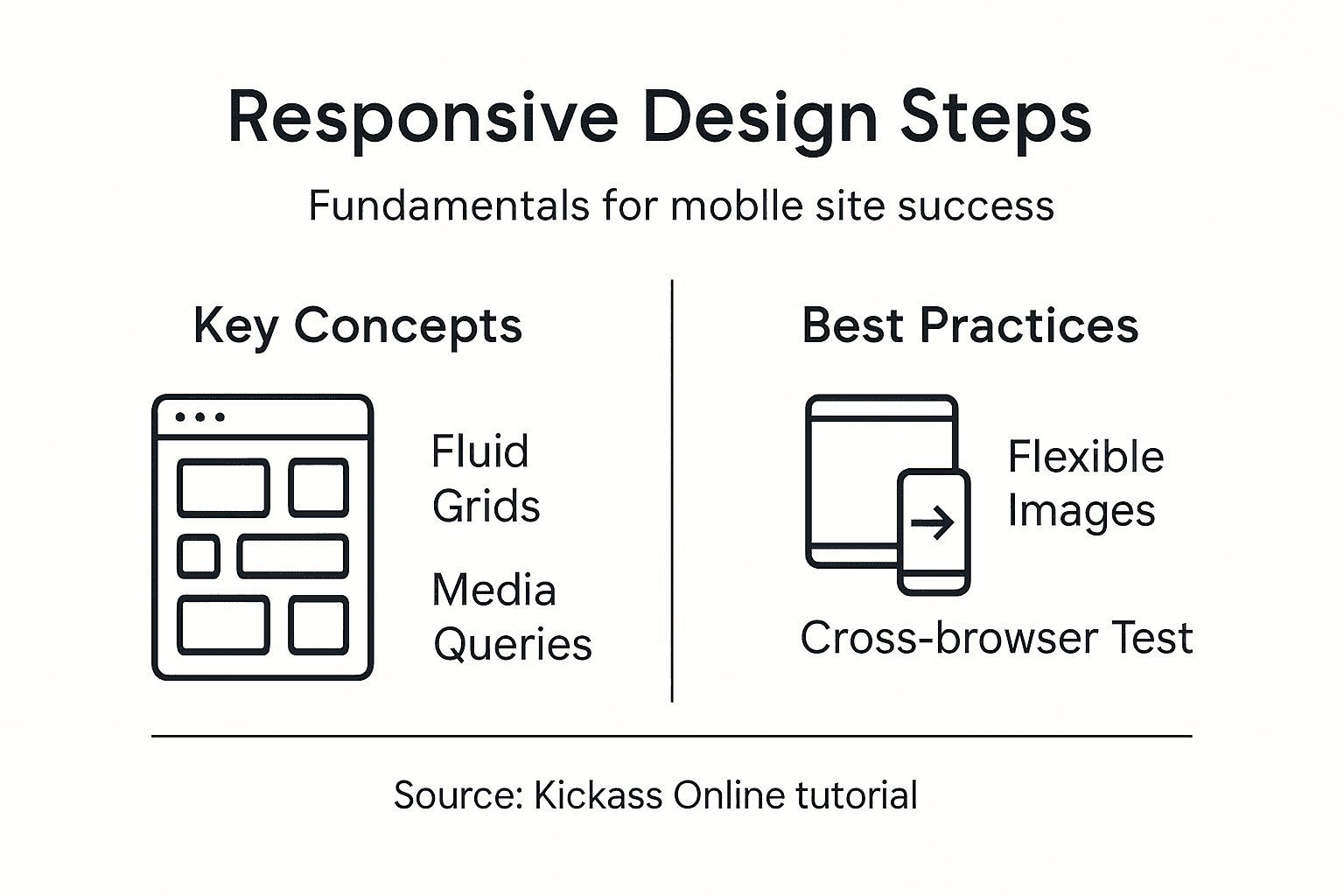
Top Tip: Always test your fluid grid and image scaling on multiple devices to verify consistent visual presentation and performance.
Responsive web design requires precise techniques to adapt your website seamlessly across different screen sizes and device types. You will learn how to use media queries to create intelligent layouts that respond dynamically to varying viewport dimensions.
Media query fundamentals involve defining specific CSS rules that activate at predetermined screen width breakpoints. Start by implementing a mobile first approach, where your base CSS styles target smaller screens, then progressively enhance the layout for larger displays. Typical breakpoints include 600 pixels for tablets and 900 pixels for desktop screens. Write your media query rules using max width or min width attributes to control how styles change across different device sizes.
Structure your media queries strategically to handle layout transformations smoothly. Use CSS properties like display flex, grid, and relative units to create flexible containers that reorganise content intelligently. Consider not just width, but also orientation and resolution. Advanced media queries can target specific device characteristics such as touch capabilities, screen aspect ratios, and pixel densities. This granular approach ensures your website looks professional and functions optimally across smartphones, tablets, laptops, and desktop computers.
Top Tip: Regularly test your media queries using browser developer tools that simulate various device screen sizes and resolutions.
Ensuring your responsive website performs consistently across different browsers and devices is crucial for delivering a seamless user experience. You will learn comprehensive testing strategies to validate your design’s functionality and appearance across various platforms.
Cross browser testing techniques involve using a systematic approach to evaluate your website’s performance. Begin with manual testing by accessing your site on different browsers like Chrome, Firefox, Safari, and Edge. Use virtual machine environments or cloud testing platforms that simulate various device configurations. Pay special attention to how your responsive layouts adapt, checking that text remains readable, images scale correctly, and interactive elements function smoothly across different screen sizes.
Adopt a structured testing methodology that covers multiple dimensions of browser compatibility. Use automated testing tools that can quickly validate your design across numerous browser versions and operating systems. Consider browser specific rendering differences, particularly for older browser versions. Test not just visual presentation, but also functional elements like forms, navigation menus, and interactive components. Prioritise testing on mobile browsers, as they often present the most challenging compatibility scenarios, ensuring your responsive design remains robust and user friendly across smartphones, tablets, and desktop browsers.
Top Tip: Invest in cloud based testing platforms that provide instant access to multiple browser and device configurations for comprehensive validation.
Building a responsive website that truly adapts to every device is no small feat. This article addressed major challenges and goals such as selecting the right framework, implementing fluid grids, scalable images and using media queries effectively. If you are aiming for a professional site that performs seamlessly across mobiles, tablets and desktops you need more than just basic knowledge. You deserve a customised solution that embraces these core principles and turns them into a high-performing, user-friendly website.
Kickass Online specialises in creating responsive websites tailored specifically for small and medium-sized businesses striving for mobile optimisation and improved online presence. Our team understands the critical role of responsive layouts, scalable visuals and adaptive media queries that your project demands. Browse our extensive collection of Websites | Kickass Online to see how we have helped other clients thrive.
Ready to transform your mobile website into a powerhouse that captivates your customers everywhere? Take the next step by exploring our practical Tutorials | Kickass Online or connect directly with our experts at Kickass Online for a personalised consultation. Seize the moment and make your responsive design goals a reality today.
Responsive frameworks are collections of CSS and JavaScript tools that help create websites that adapt to different screen sizes. They are essential because they ensure that your website provides a seamless user experience, whether viewed on a smartphone, tablet, or desktop. Start by evaluating your project requirements to select the best framework for your needs.
To set up essential HTML and CSS for responsive layouts, begin with a semantic HTML structure that uses tags like header, main, section, and footer. Then, implement a flexible container system using percentage-based widths and CSS grid layouts to enable your design to adjust dynamically across various devices. Focus on using relative units such as em and rem for styling.
To create fluid grids, convert fixed-width layouts to percentage-based configurations, ensuring that elements rearrange based on the screen size. Make images scalable by applying CSS properties like max-width: 100% and height: auto to maintain aspect ratios. Test these configurations regularly on different devices for optimal results.
To implement media queries, start by defining specific CSS rules that activate at set breakpoints, typically at widths like 600 pixels for tablets and 900 pixels for desktops. Use a mobile-first approach where your base styles are designed for smaller screens, progressively enhancing for larger displays. Structure your media queries for a smooth layout transition across devices.
To ensure cross-browser compatibility, perform manual testing on various browsers like Chrome, Firefox, Safari, and Edge. Use a structured testing methodology that covers both visual and functional aspects of your site, focusing on how responsive layouts adapt. Regularly check for compatibility issues, especially on mobile browsers, to enhance user experience.
Many e-commerce owners know the frustration when a customer tries to check out, only to find the site unresponsive. For businesses in Milton Keynes, site reliability is not just about avoiding embarrassing moments. It is a key factor that protects sales and reputation. Understanding website uptime provides the foundation for delivering trustworthy shopping experiences and keeping your business accessible when it matters most.
| Point | Details |
|---|---|
| Importance of Uptime | Website uptime is crucial for business success, as even minimal downtime can lead to significant revenue loss and damage to brand reputation. |
| Metrics Distinction | Understanding the difference between uptime and availability metrics allows organisations to accurately assess performance and service quality. |
| Comprehensive Monitoring | Employing advanced monitoring tools and multiple measurement strategies is essential for proactively managing website performance and minimising downtime. |
| Uptime Guarantees | Assessing uptime service level agreements (SLAs) is critical for ensuring reliable service; even slight differences in availability percentages can have substantial effects on operational continuity. |
Website uptime represents the percentage of time a website remains fully operational and accessible to users without interruption. Website reliability metrics typically measure continuous availability, calculating the precise duration a site functions correctly versus total monitored time.
Contrary to popular misconceptions, website uptime isn’t simply about being online occasionally. It encompasses consistent performance, rapid response times, and uninterrupted user access. Professional hosting providers often guarantee specific uptime percentages, with top-tier services promising 99.9% availability or higher. These benchmarks translate into critical business metrics - even minutes of downtime can represent substantial revenue losses for digital enterprises.
Common myths surrounding website uptime include believing occasional brief interruptions are insignificant or that manual monitoring suffices. In reality, sophisticated businesses utilise automated monitoring tools that track performance continuously, detecting potential issues before they escalate. Comprehensive uptime tracking helps organisations proactively manage digital infrastructure, ensuring seamless user experiences and maintaining brand reputation.
Pro tip: Invest in robust monitoring solutions that provide real-time alerts and comprehensive performance analytics to minimise potential downtime risks.
Understanding the nuanced differences between uptime and availability is crucial for businesses seeking comprehensive performance insights. Uptime measurement techniques reveal critical distinctions in how system performance is evaluated, with each metric offering unique perspectives on digital infrastructure reliability.
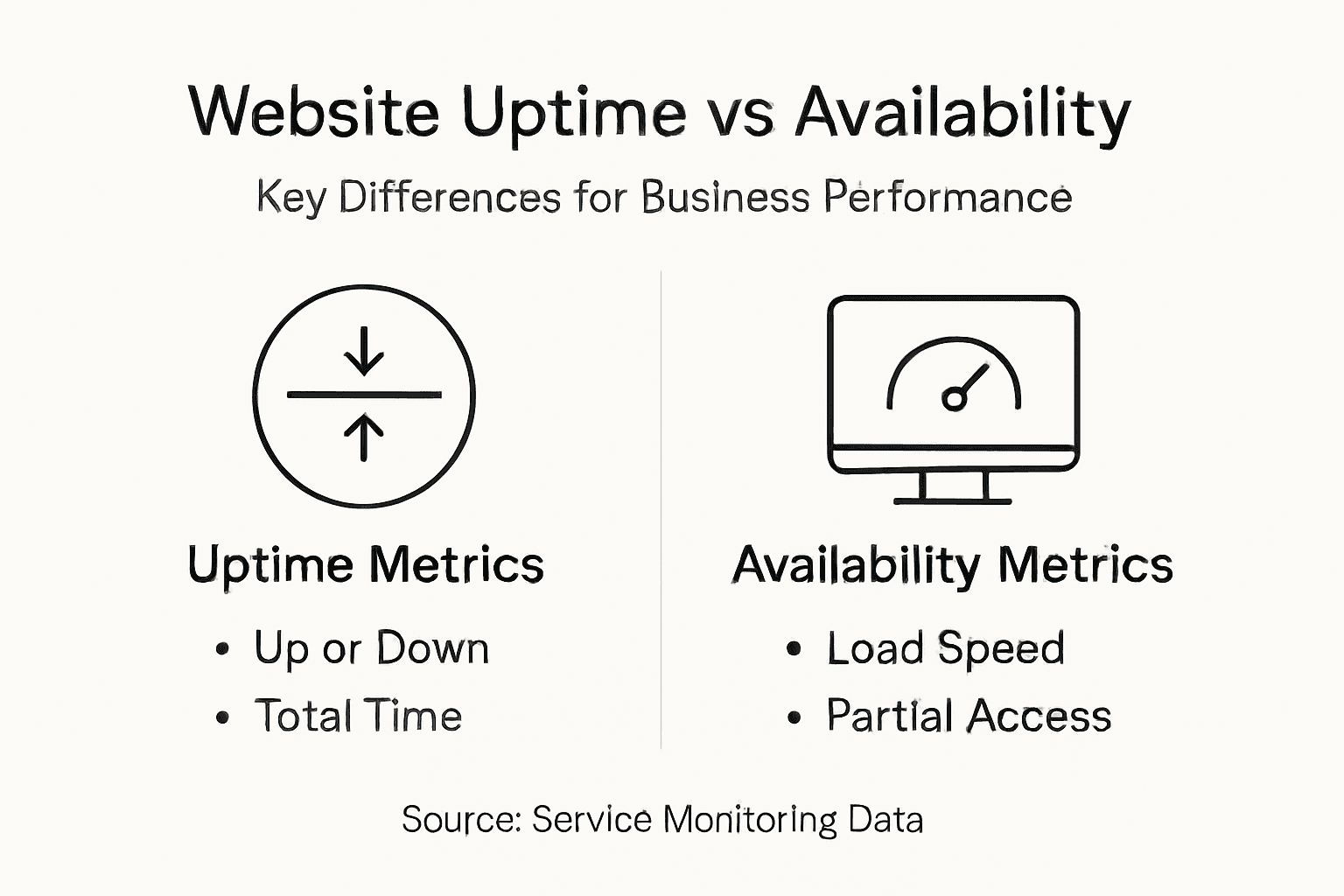
Traditional uptime metrics provide a binary assessment of system operational status - essentially measuring whether a system is functioning or completely offline. This approach offers a straightforward calculation of total operational time versus total downtime. In contrast, availability metrics offer a more sophisticated analysis, capturing the subtleties of system performance beyond simple operational status. These advanced measurements consider factors such as response times, error rates, and partial service degradations that might not trigger a complete system shutdown.
Professional organisations typically employ multiple measurement approaches to gain comprehensive insights. Comprehensive service reliability tracking involves monitoring both pure uptime percentages and more nuanced availability indicators. Some critical measurement types include:
Here’s a summary contrasting uptime and availability metrics commonly used in digital infrastructure:
| Metric Type | What It Measures | Business Relevance |
|---|---|---|
| Uptime Percentage | On/off operational status | Identifies outright outages |
| Performance Availability | Latency and partial issues | Detects slow or degraded service |
| User Experience Availability | Real usability impacts | Reveals customer-facing problems |
| Maintenance Availability | Planned downtime inclusion | Aids in compliance and planning |
Pro tip: Implement multi-layered monitoring strategies that capture both uptime and detailed availability metrics to gain a holistic understanding of your digital infrastructure’s true performance.
Uptime calculation methods provide critical insights into digital infrastructure reliability by converting operational performance into precise mathematical measurements. The fundamental approach involves tracking a system’s total operational time against its total monitored time, expressed as a percentage that reveals the true consistency of digital services.
The mathematical process involves a straightforward yet precise calculation. Technicians divide the total operational time by the complete monitored period, then multiply by 100 to generate a percentage. Monitoring techniques range from basic interval checks to sophisticated real-time tracking systems that continuously validate system status. These approaches capture nuanced performance data, including brief service interruptions, partial degradations, and complete system outages.
Professional monitoring strategies typically employ multiple verification methods to ensure accuracy. Comprehensive downtime verification involves cross-referencing data from multiple monitoring points, eliminating potential false positive reports. Organisations often utilise advanced tools that:
Pro tip: Implement multi-source monitoring with overlapping verification points to maximise the accuracy of your uptime measurements and quickly identify potential service disruptions.
Business downtime consequences can be catastrophic, transforming seemingly minor technical interruptions into significant financial and reputational challenges. For small and medium enterprises, even brief website outages represent more than just temporary inconvenience - they can trigger cascading negative impacts that threaten overall business sustainability.

The financial implications of low uptime extend far beyond immediate revenue loss. Downtime costs encompass multiple layers of economic damage, including lost sales opportunities, reduced customer confidence, and increased operational recovery expenses. Large enterprises might face losses reaching thousands of pounds per minute of system unavailability, while smaller businesses can experience proportionally devastating economic disruptions that compromise their competitive positioning.
Beyond direct monetary losses, hidden downtime impacts create long-term challenges for organisational reputation and customer trust. Repeated service interruptions can permanently damage brand perception, leading to customer churn, negative word-of-mouth marketing, and potentially irreparable harm to hard-earned market credibility. Critical business risks include:
Pro tip: Develop a comprehensive incident response plan that outlines precise steps for minimising downtime impact and communicating transparently with customers during service interruptions.
Website uptime monitoring strategies require a comprehensive, multi-layered approach that combines technological tools, proactive management, and strategic planning. Successful uptime optimisation goes beyond simple technical interventions, demanding a holistic understanding of potential performance vulnerabilities and systematic risk mitigation techniques.
Technical infrastructure plays a critical role in maintaining consistent website availability. Performance optimisation involves selecting robust hosting solutions, implementing content delivery networks, and ensuring server configurations can handle anticipated traffic loads. This approach includes regular performance audits, identifying potential bottlenecks, and upgrading infrastructure components before they become critical failure points.
Scalable monitoring approaches emphasise implementing intelligent alert systems and comprehensive monitoring protocols. Key strategic elements include:
Pro tip: Develop a comprehensive incident response playbook that outlines specific steps for addressing potential downtime scenarios, ensuring your team can react swiftly and efficiently to any technical disruptions.
Uptime service level agreements represent critical contractual commitments that define expected operational reliability for digital services. These sophisticated agreements translate technical performance metrics into tangible promises that protect businesses from prolonged service interruptions.
The landscape of uptime guarantees ranges from basic 99% availability to exceptional 99.999% (‘five nines’) reliability standards. Each percentage point represents dramatically different potential downtime durations, with significant implications for business continuity. A seemingly minor difference between 99.9% and 99.99% can translate to hours of potential annual service interruption, making careful evaluation essential for organisations seeking robust digital infrastructure.
Alternative reliability strategies extend beyond simple percentage commitments. Professional organisations increasingly focus on comprehensive approaches that include:
Typical uptime guarantee tiers include:
To better understand the impact of different uptime levels, see the following business-focused comparison:
| Uptime Level | Annual Downtime | Typical Business Effect |
|---|---|---|
| 99% | 3.65 days | Frequent disruptions, major losses |
| 99.9% | 8.76 hours | Noticeable incidents, revenue risk |
| 99.99% | 52.56 minutes | Minor interruptions, reduced risk |
| 99.999% (‘five nines’) | 5.26 minutes | Near-continuous service, high trust |
Pro tip: Always request detailed service level agreement documentation and understand the precise compensation mechanisms for potential service interruptions before committing to any hosting or infrastructure provider.
Website uptime is vital for your business success because every moment offline means lost revenue and eroded customer trust. If you have experienced the frustration of unexpected downtime or struggled to maintain consistent website performance, you are not alone. Our team understands the importance of concepts like uptime guarantees, real-time performance availability, and proactive monitoring that were highlighted in the article. We know that maximising uptime means protecting your brand reputation and avoiding costly disruptions.
Explore practical insights and expert guidance in our Tutorials | Kickass Online to deepen your understanding of website reliability.
Take control of your online presence today by partnering with Kickass Online. We specialise in creating resilient, high-performing websites tailored specifically for small and medium-sized businesses. Our dedicated team focuses on Websites | Kickass Online services combining professional design, robust hosting strategies, and continuous maintenance that ensure exceptional uptime and fast load times. Do not wait until downtime hurts your business reach out now at https://kickassonline.com to book your personalised consultation and secure a website that never lets you down.
Website uptime measures the percentage of time a website is operational and accessible to users without interruptions. It is a critical metric for evaluating website reliability and can impact business performance significantly.
Website uptime is calculated by dividing total operational time by the total monitored time, then multiplying by 100 to express it as a percentage. Accurate measurement involves continuous monitoring of performance to capture both downtime and service degradations.
While uptime refers to whether a system is operational, availability considers additional factors like response times and service degradations. Availability gives a more nuanced insight into user experience and system performance.
Low website uptime can lead to significant financial losses, reduced customer trust, and long-term reputational damage. Even brief outages can disrupt sales, negatively affect user experience, and create operational challenges.