
Most british brands see that a well-crafted blog drives over 50 percent more website traffic than relying on static content alone. For small and medium-sized business owners from Canada to Singapore, standing out online means more than just selling products—it is about building trust and credibility with every post. This guide unpacks how to set clear blogging goals, speak directly to your ideal reader, and turn a blog into a powerful tool for growth.
Table of Contents
- Step 1: Define Key Objectives And Ideal Audience
- Step 2: Select Best Blogging Platform And Hosting
- Step 3: Design Blog Layout And Brand Identity
- Step 4: Craft And Optimise Compelling Blog Content
- Step 5: Verify Functionality And Publish Confidently
Quick Summary
| Key Insight | Explanation |
|---|---|
| 1. Define clear objectives | Identify what you aim to achieve with your blog to maintain focus and guide your content strategy. |
| 2. Understand your audience | Create detailed reader profiles that reflect their needs, challenges, and preferred content types. |
| 3. Choose the right platform | Select a blogging platform that aligns with your business goals, technical skills, and budget. |
| 4. Maintain consistent design | Design your blog with consistent branding and intuitive navigation that reflects your business identity. |
| 5. Verify before publishing | Conduct thorough checks on functionality, content accuracy, and user experience before launching. |
Step 1: Define key objectives and ideal audience
Creating a successful business blog starts with crystal clear objectives and understanding exactly who you want to reach. Your blog is not just a random collection of thoughts but a strategic communication tool designed to connect with specific readers and achieve precise business goals.
Begin by mapping out what you want to accomplish through your blog. Are you aiming to demonstrate industry expertise, generate potential customer leads, or establish thought leadership? Precise research objectives help maintain focus and guide your content strategy. Consider creating a concise list of measurable targets such as increasing website traffic by 30 per cent, generating 20 quality leads per month, or improving brand recognition within your sector.
To pinpoint your ideal audience, develop detailed reader profiles that go beyond basic demographics. Audience targeting strategies recommend understanding not just age and location, but professional interests, pain points, and information consumption habits. Ask yourself: What challenges does your target reader face? What type of content will they find most valuable? What tone and language will resonate with them?
Your audience profile should include specific details like job roles, industry sectors, professional challenges, and preferred content formats. The more precisely you can describe your ideal reader, the more effectively you can craft content that genuinely speaks to their needs.
Here is a summary of key reader profile aspects to guide content tailoring:
| Aspect | Description | Example Detail |
|---|---|---|
| Job Role | Professional position of reader | Marketing Manager |
| Sector/Industry | Relevant business sector | Financial Services |
| Major Challenge | Typical pain point faced | Lead Generation |
| Content Format Preference | Preferred way to absorb information | In-depth Articles |
Top Tip: Create a hypothetical persona representing your ideal reader to help you visualise and understand their perspective more deeply.
Step 2: Select best blogging platform and hosting
Selecting the right blogging platform and hosting service forms the technical foundation of your online content strategy. Your choice will impact everything from website performance to content management capabilities and future scalability.
When evaluating blogging platforms, consider your technical skills, budget, and long term business goals. Blogging platform selection requires careful analysis of features like ease of use, customisation options, and potential for growth. WordPress remains the most versatile option for businesses, offering unparalleled flexibility and extensive plugin ecosystems that can adapt to your evolving needs.
Hosting services are equally crucial in determining your blog’s reliability and performance. Key considerations include server uptime, loading speed, technical support quality, and pricing structures. Web hosting considerations suggest prioritising providers that offer robust WordPress support, reliable customer service, and scalable hosting plans that can grow alongside your business.
Compare potential platforms across multiple dimensions: cost, ease of use, SEO capabilities, mobile responsiveness, and integration potential with other business tools. Look beyond surface features and evaluate each option’s alignment with your specific content marketing objectives.
Below is a comparison of popular blogging platforms and their notable business advantages:
| Platform | Ease of Use | SEO Capabilities | Integration Strength |
|---|---|---|---|
| WordPress | Intuitive editing | Advanced plugins | Extensive compatibility |
| Wix | Simple drag-and-drop | Basic optimisation | Moderate integrations |
| Squarespace | Smooth interface | Strong built-in SEO | Good analytics links |
Top Tip: Choose a hosting plan that offers easy WordPress migration and includes automated backup services to protect your content investment.
Step 3: Design blog layout and brand identity
Your blog’s design and brand identity are critical visual elements that communicate your business personality and professional credibility. These visual components will determine how potential readers perceive and interact with your content.

Digital design strategies demonstrate that successful online branding goes far beyond aesthetic choices. Your blog layout should reflect your business values, create visual consistency, and provide an intuitive user experience. Start by selecting a colour palette that aligns with your brand personality selecting no more than three primary colours that represent your business ethos. Consider typography carefully choosing fonts that are both readable and reflective of your professional image.
Ensure your blog design maintains consistent branding across all elements. This means integrating your logo strategically, using consistent colour schemes, and creating a visual hierarchy that guides readers through your content. Brand identity development research suggests creating visual guidelines that maintain coherence across different digital platforms. Your blog should feel like a natural extension of your broader business brand with design elements that reinforce your unique professional narrative.
Pay attention to layout functionality ensuring your design supports easy navigation, highlights key content, and works seamlessly across mobile and desktop platforms. Include clear navigation menus, strategically placed call to action buttons, and responsive design that adapts to different screen sizes.
Top Tip: Create a simple brand style guide documenting your colour palette, font choices, and design principles to maintain consistency across all your digital platforms.
Step 4: Craft and optimise compelling blog content
Crafting exceptional blog content requires a strategic approach that balances creativity, expertise, and technical precision. Your words are the primary mechanism for connecting with your audience and establishing professional credibility.
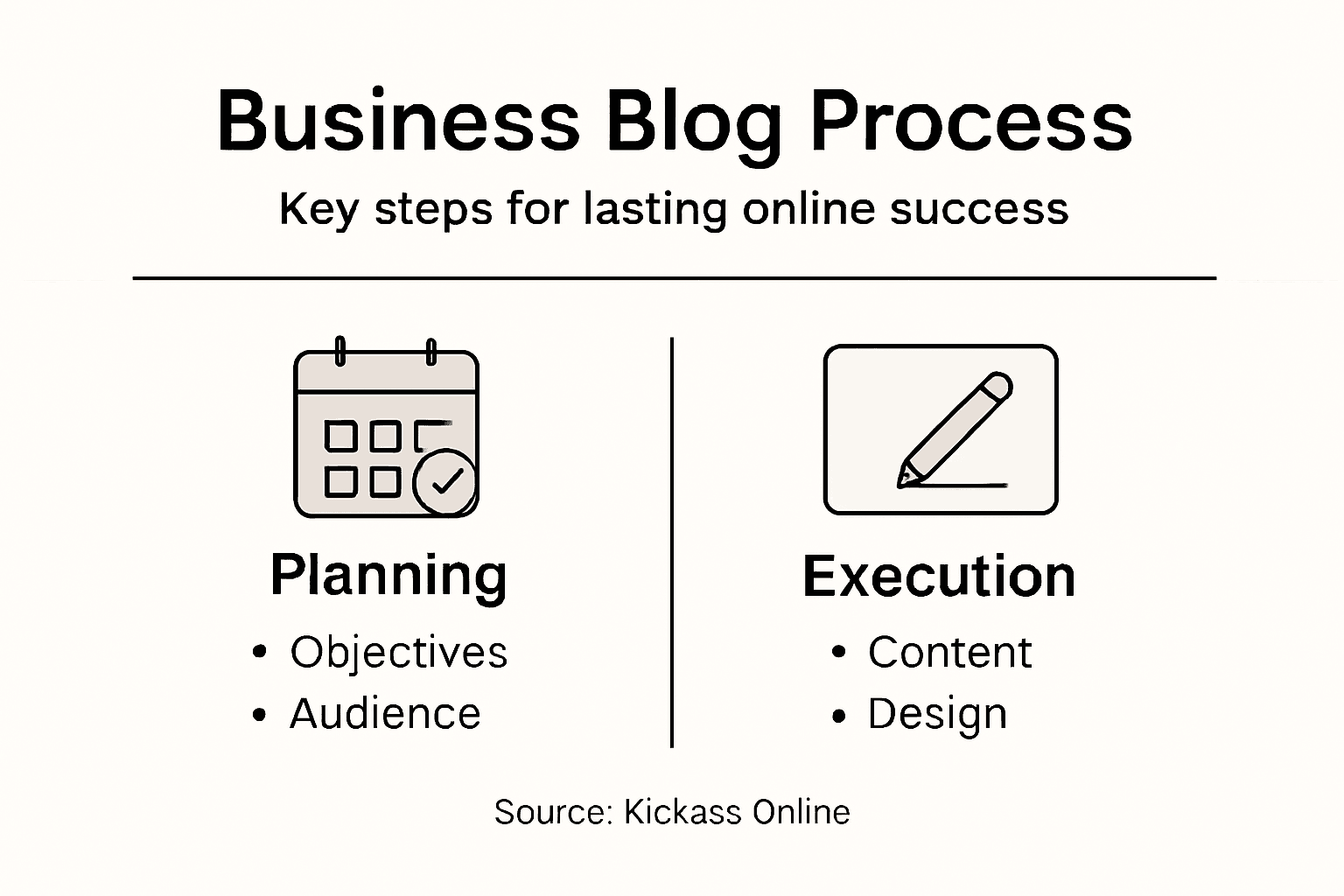
Effective blogging strategies emphasise translating complex ideas into accessible, engaging language. Focus on developing comprehensive articles that offer genuine value to your readers. This means diving deep into topics, providing unique insights, and presenting information in a clear, structured manner that guides readers through your narrative. Aim to create evergreen content that remains relevant long after publication by exploring fundamental principles and timeless strategies within your industry.
Understand the critical importance of search engine optimisation when developing your content. This involves carefully selecting keywords, creating descriptive headings, and ensuring your writing addresses specific reader questions. Blog content evolution suggests that successful blogs continuously adapt to changing digital landscapes by producing in depth, authoritative pieces that establish your expertise.
Structure your content thoughtfully with clear introductions, substantial main sections, and compelling conclusions. Use subheadings to break up text, include relevant examples, and incorporate data or expert quotes to enhance credibility. Ensure each article provides actionable insights that readers can immediately apply in their professional or personal contexts.
Top Tip: Create a content calendar that plans topics at least three months in advance, allowing you to maintain consistent publishing and strategic topic selection.
Step 5: Verify functionality and publish confidently
Before launching your blog, conducting a comprehensive verification process ensures a professional and seamless reader experience. This final stage transforms your carefully crafted content into a polished digital publication ready to engage your audience.
Blog platform testing requires meticulous attention to structural and functional details. Review each article for formatting consistency, checking that headings, paragraphs, images, and links display correctly across different devices. Test all internal and external hyperlinks to confirm they direct readers to the intended destinations, and verify that your blog loads quickly and maintains responsive design on mobile and desktop platforms.
Website functionality checks involve more than visual inspection. Systematically review your site navigation, ensure contact forms work correctly, and test comment sections if applicable. Verify that your SEO metadata is correctly configured, meta descriptions are compelling, and all images include appropriate alternative text for accessibility. Conduct security checks by updating plugins, removing unused extensions, and confirming SSL certificate installation.
Prepare a final pre-publication checklist that includes technical performance, content accuracy, and overall user experience. This methodical approach minimises potential issues and presents your blog as a professional, trustworthy resource for your target audience.
Top Tip: Ask a trusted colleague or professional contact to review your blog before public launch to gain fresh perspective and identify potential improvements.
Elevate Your Business Blog for Lasting Online Success
Building a business blog that drives enduring online success requires more than just great ideas. It means overcoming challenges like defining clear objectives, selecting the right platform, designing an engaging layout, and crafting optimised content that truly connects with your ideal audience. If you find yourself struggling with these critical steps or aiming to boost your website’s visibility and reliability, our expert team at Kickass Online is here to guide you. Explore our curated Tips and Tricks | Kickass Online for actionable insights that complement your blogging journey.
Take control of your digital presence right now. At Kickass Online, we specialise in creating customised websites designed to capture your brand identity, enhance search engine rankings, and maintain peak performance through ongoing support. Don’t let technical hurdles or unclear strategies hold you back. Visit our Recommendations | Kickass Online to see how we have helped businesses like yours transform their online impact. Book a consultation today and start building a blog that delivers real business growth.
Frequently Asked Questions
What are the key objectives to define before starting a business blog?
Establishing clear objectives is essential for a successful business blog. You should aim to demonstrate industry expertise, generate leads, or build thought leadership. Create a list of measurable targets, such as increasing website traffic by 30% within 90 days or obtaining 20 quality leads each month.
How can I identify my ideal audience for the blog?
To pinpoint your ideal audience, develop detailed reader profiles that encompass job roles, industry sectors, and specific challenges they face. Consider what type of content will provide value to them, and tailor your messaging to resonate with their needs. Start by creating a hypothetical persona to visualise their perspective and preferences.
What factors should I consider when choosing a blogging platform?
When selecting a blogging platform, evaluate factors like ease of use, customisation options, and scalability. Platforms like WordPress offer extensive flexibility and plugin capabilities, making them suitable for growing businesses. Compare potential platforms on aspects such as cost, SEO capabilities, and mobile responsiveness before making a decision.
How do I design my business blog’s layout and brand identity?
Creating a cohesive design and brand identity involves selecting a colour palette and typography that reflect your business values. Ensure that elements like your logo and colour schemes are consistent across the blog. Develop a visual hierarchy for seamless navigation and easy access to key content.
What strategies should I apply to optimise my blog content?
To optimise your blog content, focus on using accessible language while diving deep into relevant topics. Ensure you incorporate effective SEO practices, like selecting appropriate keywords and structuring your articles with clear headings. Consistently publish well-researched, authoritative pieces to enhance your credibility.
What should I check before publishing my blog?
Before launching your blog, conduct a thorough verification process that assesses formatting consistency, link functionality, and overall site performance. Review your SEO metadata and ensure that all elements work seamlessly on mobile and desktop devices. Prepare a pre-publication checklist to minimise issues and enhance user experience.