
Most British businesses believe organic search is as simple as tweaking keywords, yet over 60 percent of clicks go to organic results rather than paid ads. Understanding how organic search truly works is crucial because it shapes trust, website credibility, and long-term digital growth. This guide uncovers the real meaning of organic search, clears up widespread myths, and highlights what genuinely matters for anyone wanting lasting online success.
Table of Contents
- Organic Search Defined: Meaning And Myths
- How Organic Search Works For Websites
- Differences Between Organic And Paid Search
- Key Factors Influencing Organic Rankings
- Business Benefits And Common Pitfalls
Key Takeaways
| Point | Details |
|---|---|
| Understanding Organic Search | Organic search results are earned through genuine content relevance and not paid placements, requiring continuous optimisation and high-quality content creation. |
| Holistic Strategy | Successful organic search performance hinges on a balanced approach that includes technical optimisation, quality content, and user experience improvement. |
| Value of Credibility | Organic search builds long-term digital reputation and user trust, often viewed as more authoritative compared to paid advertisements. |
| Importance of Continuous Learning | Regularly analyse performance, adapt to algorithm changes, and refine strategies to maintain and enhance search visibility. |
Organic Search Defined: Meaning And Myths
Organic search represents the natural, non-paid search engine results that appear based on their genuine relevance to a user’s search query. Unlike sponsored advertisements, these listings are determined algorithmically, reflecting the authentic merit of web content. Organic search results are listings that appear due to their relevance, demonstrating search engines’ commitment to providing users with the most appropriate and valuable information.
Many businesses misunderstand organic search, believing it’s a simple matter of keyword stuffing or quick technical tricks. However, true organic search success requires a nuanced approach. Search engines like Google employ sophisticated algorithms that analyse multiple factors including content quality, website authority, user experience, and contextual relevance. These algorithms continuously evolve, rewarding websites that genuinely serve user needs rather than those attempting manipulative tactics.
The core principle of organic search is natural discovery. Organic linking occurs when other websites naturally link to your content without payment or artificial manipulation, which signals to search engines that your material provides genuine value. This means creating high-quality, informative content that addresses user questions, solving problems, and offering unique insights becomes the primary strategy for improving search visibility.
Pro Tip: Strategic Content Development: Focus on creating in-depth, user-focused content that comprehensively answers specific queries in your industry, ensuring each piece provides genuine value beyond surface-level information.
How Organic Search Works For Websites
Organic search functions as a complex algorithmic ecosystem where websites compete for visibility based on multiple intricate factors. Search engines deploy sophisticated mechanisms to evaluate and rank web content, analysing everything from keyword relevance to user engagement metrics. Deep learning systems can optimise landing pages to enhance organic search traffic, demonstrating the advanced technological approaches modern businesses can leverage to improve their online presence.
The core mechanics of organic search involve several critical components. Search engine algorithms meticulously crawl and index web pages, assessing factors such as content quality, website structure, loading speed, mobile responsiveness, and contextual relevance. Websites that provide comprehensive, authoritative information addressing user queries are more likely to achieve higher rankings. Research exploring search engine result page features reveals how specific elements impact organic click-through rates, highlighting the nuanced strategies required for successful digital visibility.
Successful organic search performance demands a holistic approach. Businesses must develop strategic content ecosystems that provide genuine value, focusing on creating in-depth, well-researched material that directly addresses user needs. This involves understanding target audience search behaviours, developing comprehensive content strategies, and continuously refining website elements to align with evolving search engine algorithms. Technical optimisation, high-quality content creation, and user experience improvements work synergistically to enhance organic search performance.
Pro Tip: Continuous Learning Strategy: Regularly analyse your website’s search performance using analytics tools, track keyword rankings, and stay updated with the latest search engine algorithm changes to maintain and improve your organic search visibility.
Differences Between Organic And Paid Search
Organic and paid search represent two distinct strategies for achieving digital visibility, each with unique characteristics and approaches to attracting online traffic. Research exploring search result interleaving reveals the complex dynamics between sponsored and organic listings, highlighting the nuanced relationship between these two search methodologies. While paid search involves direct financial investment to secure prominent placement, organic search requires strategic content development and sustained optimisation efforts to achieve high rankings.

The fundamental distinctions between organic and paid search extend beyond their immediate visibility mechanisms. Paid search advertisements appear prominently with clear ‘Ad’ markers, providing immediate visibility for businesses willing to invest financially. Organic search results, conversely, are earned through comprehensive content quality, technical website optimisation, and demonstrated relevance to user queries. Studies have shown that higher organic rankings can significantly enhance the performance of paid search advertisements, creating a synergistic relationship between these two search strategies.
Businesses must understand that organic search credibility often surpasses paid alternatives. Users frequently perceive organic results as more trustworthy and authoritative, recognising them as genuine recommendations rather than purchased placements. This perception means that while paid search offers immediate visibility, organic search builds long-term digital reputation. Successful digital marketing strategies increasingly recommend a balanced approach, leveraging both organic optimisation and strategic paid advertising to maximise overall search engine performance and audience engagement.
Here’s a comparison highlighting the major differences between organic and paid search:
| Characteristic | Organic Search | Paid Search |
|---|---|---|
| Visibility | Earned through content and optimisation | Purchased via bidding and spend |
| Trust and Credibility | Seen as impartial, highly trusted | Marked as ‘Ad’, user scepticism possible |
| Time to See Results | Gradual, requires ongoing effort | Immediate exposure once campaigns launched |
| Cost Structure | No direct fee per click or impression | Ongoing costs for each click or impression |
| Sustainability | Long-term presence with continual updates | Ends when budget is exhausted or campaign stops |
Pro Tip: Strategic Search Integration: Develop a holistic search strategy that combines organic content excellence with targeted paid advertising, ensuring comprehensive digital visibility across multiple search platforms.
Key Factors Influencing Organic Rankings
Organic search rankings are determined by a complex interplay of technical, content-related, and user experience factors that search engines meticulously evaluate. Essential SEO techniques including directory submission, strategic keyword generation, and sophisticated link exchanges significantly impact search engine rankings, providing businesses with a roadmap for improving their digital visibility. These multifaceted elements require a comprehensive approach that goes beyond simple keyword manipulation.
The primary factors influencing organic rankings include content quality, website technical performance, and user engagement metrics. Search engines analyse multiple dimensions such as page loading speed, mobile responsiveness, content depth, relevance, and the quality of inbound links. Specific features on search engine result pages play a crucial role in determining organic click-through rates, underscoring the importance of understanding how search algorithms evaluate web content. High-quality, original content that comprehensively addresses user queries remains the cornerstone of successful organic ranking strategies.
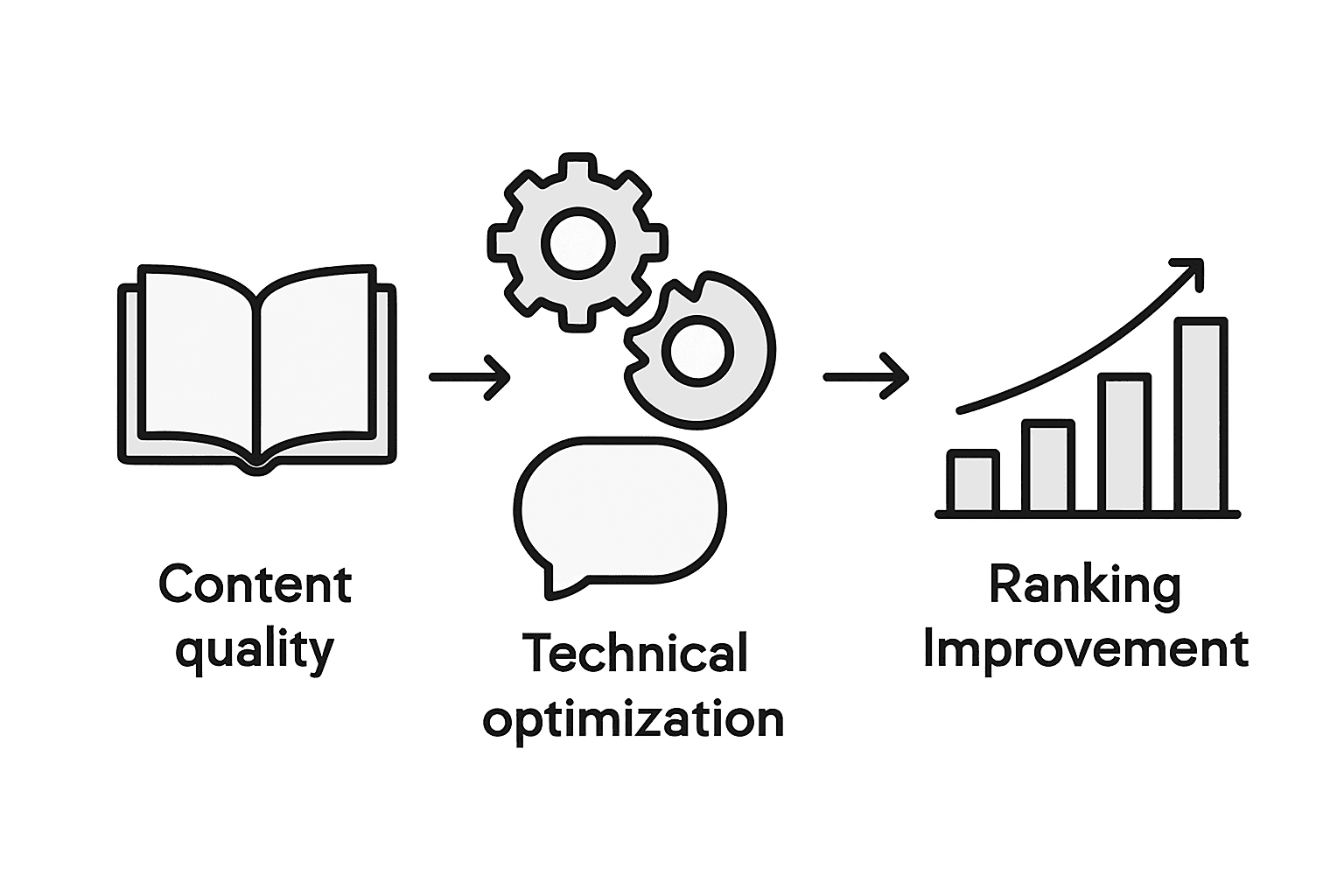
Beyond content creation, technical website optimisation plays a pivotal role in organic search performance. This encompasses website architecture, structured data implementation, security protocols, and seamless user experience across different devices. Search engines prioritise websites that demonstrate expertise, authoritativeness, and trustworthiness. Businesses must invest in creating comprehensive, well-structured content that not only answers user questions but also provides unique insights, backed by credible sources and clear, engaging presentation.
Pro Tip: Continuous Optimisation Strategy: Regularly audit your website’s technical performance, update content to maintain relevance, and monitor search engine algorithm changes to sustain and improve your organic search rankings.
The table below summarises key factors that influence organic search rankings:
| Factor | Description | Impact on Rankings |
|---|---|---|
| Content Quality | Original, relevant, comprehensive writing | Major influence on ranking |
| Technical Optimisation | Fast loading, responsive design, structure | Essential for crawlability |
| User Engagement | Time on site, bounce rate, click-throughs | Signals content relevance |
| Backlink Authority | Links from reputable external websites | Boosts trust and credibility |
Business Benefits And Common Pitfalls
Implementing effective organic search strategies can significantly transform business performance, offering substantial competitive advantages in the digital marketplace. Organic search provides businesses with a powerful mechanism for increasing visibility, attracting targeted traffic, and establishing long-term digital credibility without the recurring costs associated with paid advertising. Unlike temporary marketing approaches, organic search creates sustainable pathways for customer acquisition and brand recognition.
Digital marketing transformation requires understanding both the potential benefits and inherent challenges. Web analytics and SEO play crucial roles in determining the growth trajectories of small and medium enterprises, revealing the nuanced impact of digital strategies. Businesses frequently encounter challenges such as inconsistent content quality, technical website limitations, and rapidly changing search engine algorithms that demand continuous learning and adaptation. The most successful organisations approach organic search as an ongoing process of refinement rather than a one-time implementation.
Common pitfalls in organic search strategies include over-optimisation, neglecting user experience, and failing to produce genuinely valuable content. Many businesses mistakenly focus on manipulating search algorithms instead of creating authentic, informative material that genuinely serves user needs. Successful organic search requires a holistic approach that balances technical optimisation, high-quality content creation, and consistent performance monitoring. Search engines increasingly prioritise websites that demonstrate expertise, provide comprehensive user solutions, and maintain high engagement metrics.
Pro Tip: Continuous Learning Strategy: Regularly audit your organic search performance, stay updated with algorithm changes, and maintain a flexible, user-centric approach to content development and website optimisation.
Elevate Your Business Growth with Expert Organic Search Strategies
Understanding the complexities of organic search and its pivotal impact on business growth is just the first step. The article highlights challenges such as the need for continuous optimisation, high-quality content creation, and maintaining website authority to achieve sustainable visibility. If you are striving to overcome these hurdles and build a trustworthy online presence, professional guidance is essential. At Kickass Online, we specialise in crafting tailored digital solutions that focus on improving your search engine rankings through comprehensive website optimisation and content strategies aligned with the latest algorithms.
Explore our Recommendations | Kickass Online for expert insights and strategies that empower businesses like yours to thrive in organic search results.

Take control of your organic search performance today. Visit Kickass Online and book a personalised consultation to unlock the full potential of your website. Our dedicated team ensures your business receives strategic content development, website optimisation, and ongoing support designed to grow your digital visibility and convert visitors into loyal customers.
Frequently Asked Questions
What is organic search?
Organic search refers to the non-paid search engine results that appear based on the relevance of the content to a user’s query. Unlike paid advertisements, these listings are determined algorithmically, providing users with genuine and valuable information.
How does organic search impact business growth?
Organic search can significantly enhance business growth by increasing visibility, attracting targeted traffic, and establishing long-term credibility without the ongoing costs of paid advertising. It offers sustainable pathways for customer acquisition and brand recognition.
What factors influence organic search rankings?
Key factors that influence organic search rankings include content quality, technical website optimisation, user engagement metrics, and the authority of backlinks. High-quality, relevant content combined with a well-structured website leads to better rankings.
How can businesses improve their organic search performance?
Businesses can improve their organic search performance by focusing on creating high-quality, user-centric content, ensuring technical website optimisation, and continuously analysing their search performance. Regular updates and adjustments in response to changing algorithms are also crucial.