Website Maintenance: Why It Matters for SMEs

Nearly 60 percent of British small businesses experience website security breaches each year, putting customer trust and sales at risk. For business owners in Milton Keynes, keeping your online presence safe and running smoothly is crucial for credibility and growth. This guide explains what professional website maintenance involves, why it matters to British enterprises, and how you can avoid costly mistakes with smart, effective solutions.
Table of Contents
- Defining Website Maintenance For Businesses
- Types Of Website Maintenance Services
- Core Tasks And How Maintenance Works
- Security, Compliance, And Legal Duty
- Risks, Costs, And Common Pitfalls
Key Takeaways
| Point | Details |
|---|---|
| Website maintenance is essential for business success | Regular updates and monitoring help prevent technical issues and enhance online credibility. |
| Invest in comprehensive maintenance services | Focus on content management, security, and performance optimisation to protect your digital presence. |
| Proactive maintenance reduces costs | Establish a maintenance schedule to minimise risks and address issues before they escalate. |
| Understand legal obligations | Ensure compliance with data protection regulations to avoid penalties and safeguard your reputation. |
Defining Website Maintenance for Businesses
Website maintenance represents a comprehensive set of strategic activities designed to keep a business’s digital presence functional, secure, and optimised. At its core, this practice involves regular monitoring, updating, and managing various technical and content-related aspects of a website to ensure peak performance. Just like a vehicle requires routine servicing, websites demand consistent care to operate effectively and meet the evolving needs of businesses and their customers.
The scope of website maintenance encompasses multiple critical domains, including technical health, content management, security protocols, and performance optimisation. Regular website maintenance checks help businesses prevent potential issues before they escalate into significant problems. This proactive approach involves tasks such as:
- Updating software and plugins
- Checking and fixing broken links
- Monitoring website loading speeds
- Ensuring mobile responsiveness
- Backing up website data
- Reviewing and refreshing content
For small and medium-sized enterprises (SMEs), website maintenance is not just a technical necessity but a strategic business investment. A well-maintained website acts as a powerful marketing tool, instilling confidence in potential customers and reflecting a professional, detail-oriented business approach. Neglecting website maintenance can lead to security vulnerabilities, poor user experience, and decreased search engine rankings - all of which can directly impact a company’s online credibility and revenue potential.
Pro tip: Schedule quarterly website maintenance reviews to systematically assess and address potential technical and content-related issues before they become critical problems.
Types of Website Maintenance Services
Website maintenance services represent a comprehensive suite of technical and strategic interventions designed to keep digital platforms running smoothly and efficiently. Key website maintenance services encompass multiple critical domains that ensure a business’s online presence remains robust, secure, and continuously optimised.
These services typically fall into several essential categories:
- Content Management: Regular updates and refreshing of website content to maintain relevance and engagement
- Technical Updates: Routine software, plugin, and content management system (CMS) updates
- Security Maintenance: Implementation of robust security protocols including:
- Malware scanning
- Firewall configuration
- Vulnerability assessments
- Performance Optimisation: Monitoring and improving website speed, responsiveness, and user experience
- Backup and Recovery: Regular data backups and disaster recovery planning
- Compliance Management: Ensuring websites meet current legal and regulatory standards
For small and medium-sized enterprises, these maintenance services are not optional luxuries but fundamental business requirements. WordPress maintenance services offer specialised support for businesses using this popular content management platform, addressing platform-specific challenges and opportunities.
Additionally, comprehensive maintenance services go beyond technical upkeep. They involve strategic monitoring, proactive problem prevention, and continuous improvement of digital assets. By investing in professional website maintenance, businesses protect their online reputation, enhance customer trust, and create a resilient digital infrastructure capable of adapting to rapidly changing technological landscapes.
The following table summarises the main types of website maintenance services and their direct business benefits:
| Service Type | Primary Objective | Key Business Benefit |
|---|---|---|
| Content Management | Keep website content current | Increased audience engagement |
| Technical Updates | Maintain latest software and plugins | Reduced technical disruptions |
| Security Maintenance | Strengthen defences against online threats | Lower risk of data breaches |
| Performance Optimisation | Enhance speed and responsiveness | Improved customer satisfaction |
| Backup and Recovery | Ensure data can be restored if lost | Business continuity ensured |
| Compliance Management | Meet legal and regulatory standards | Avoid penalties and lawsuits |
Pro tip: Develop a structured maintenance schedule that includes monthly technical reviews and quarterly comprehensive assessments to stay ahead of potential digital challenges.
Core Tasks and How Maintenance Works
Website maintenance operates like a sophisticated digital health management system, requiring systematic and strategic approaches to keep online platforms functioning optimally. Maintaining a robust website involves a complex series of interconnected tasks designed to address technical, security, and performance challenges proactively.
The core maintenance workflow typically follows a structured approach:
-
Initial Assessment
- Comprehensive website performance audit
- Identifying existing vulnerabilities
- Mapping current technical infrastructure
-
Preventative Maintenance
- Software and plugin updates
- Security patch implementations
- Performance optimisation checks
-
Continuous Monitoring
- Real-time threat detection
- Uptime tracking
- Performance metric analysis
-
Reactive Intervention
- Immediate security threat resolution
- Broken link repairs
- Content and functionality corrections
Small and medium-sized enterprises require particularly nuanced maintenance strategies. Unlike large corporations with extensive IT departments, SMEs need efficient, cost-effective maintenance solutions that address critical digital infrastructure needs without overwhelming technical complexity. This approach demands a balance between proactive management and strategic resource allocation.
Technical maintenance goes far beyond simple website updates. It encompasses a holistic approach to digital ecosystem management, integrating security protocols, performance optimisation, content relevance, and user experience design. Each maintenance cycle represents an opportunity to enhance digital resilience, protect business reputation, and create a more engaging online presence.

Pro tip: Create a detailed maintenance checklist with specific tasks, responsible team members, and completion timeframes to ensure consistent and comprehensive website care.
Security, Compliance, and Legal Duty
Website security and legal compliance represent critical responsibilities for businesses operating in the digital landscape. Website maintenance services play a crucial role in protecting organisations from potential legal and security risks that can emerge from digital vulnerabilities.
Cybersecurity Compliance involves multiple critical dimensions:
-
Data Protection Regulations
- Adhering to GDPR guidelines
- Protecting user personal information
- Implementing robust data handling protocols
-
Security Infrastructure
- Regular vulnerability assessments
- Implementing advanced encryption technologies
- Maintaining secure user authentication mechanisms
-
Legal Obligations
- Ensuring website accessibility standards
- Maintaining transparent privacy policies
- Protecting intellectual property rights
Small and medium-sized enterprises face unique challenges in navigating these complex legal and security landscapes. Unlike large corporations with dedicated legal and technical teams, SMEs must develop strategic approaches that balance comprehensive protection with resource-efficient implementation.
The legal implications of website management extend beyond simple technical considerations. Businesses can face significant financial penalties and reputational damage for non-compliance, making proactive maintenance not just a technical requirement but a fundamental business strategy. This includes understanding sector-specific regulations, implementing appropriate consent mechanisms, and maintaining transparent communication about data usage and protection.
Pro tip: Consult with a specialised digital compliance expert annually to ensure your website meets the latest legal and security standards for your specific industry.
Risks, Costs, and Common Pitfalls
Website maintenance involves navigating a complex landscape of potential risks and financial considerations that can significantly impact small and medium-sized enterprises. WordPress maintenance services highlight the critical nature of understanding these potential challenges before they escalate into costly problems.
Key Risks for SMEs Include:
-
Financial Vulnerabilities
- Unexpected repair costs
- Potential revenue loss during website downtime
- Emergency technical intervention expenses
-
Operational Disruptions
- Extended website unavailability
- Compromised customer trust
- Reduced digital marketing effectiveness
-
Security Threats
- Data breaches
- Malware infections
- Potential legal and regulatory penalties
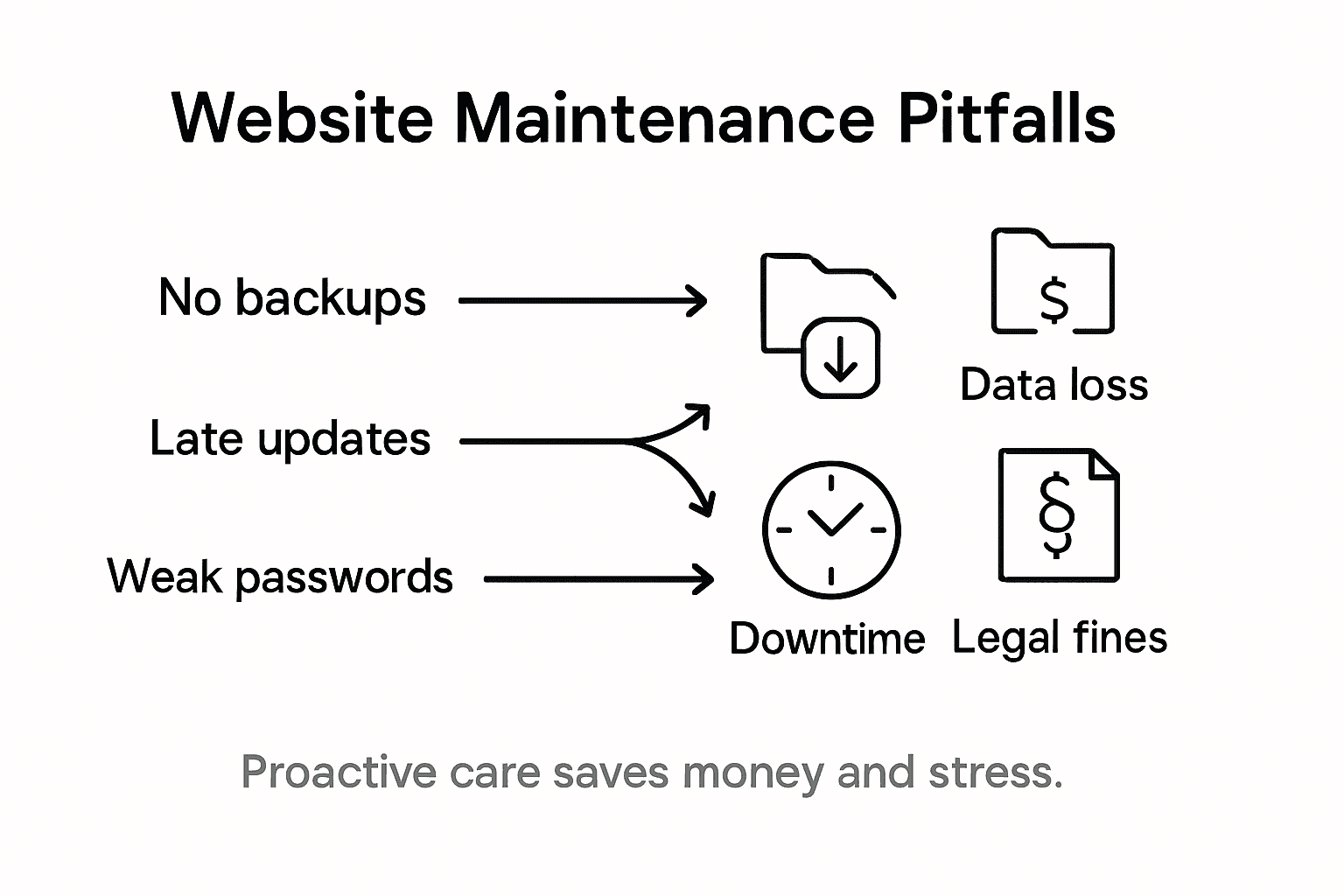
The financial implications of neglecting website maintenance can be profound. Small businesses often underestimate the cumulative costs of reactive maintenance, which can be substantially higher than proactive, consistent management. A single significant security breach or extended website downtime can result in thousands of pounds of lost revenue, damaged reputation, and potential client migration.
Common maintenance pitfalls typically stem from misconceptions about digital infrastructure. Many SMEs view website maintenance as an optional expense rather than a critical business investment. This approach frequently leads to compounding technical debt, where minor issues progressively transform into complex, expensive problems that require extensive resources to resolve.
Here is a quick comparison of proactive versus reactive website maintenance and the typical outcomes for businesses:
| Approach | Timing | Typical Result | Cost Implication |
|---|---|---|---|
| Proactive | Scheduled, ongoing | Fewer critical issues | Lower long-term expenditure |
| Reactive | After problems arise | Disruptive emergencies | Higher, unpredictable costs |
Pro tip: Allocate a dedicated budget for website maintenance that represents approximately 10-15% of your initial website development costs to ensure consistent, comprehensive digital health management.
Protect Your SME with Expert Website Maintenance Solutions
Struggling to keep your website secure, fast and compliant as explained in the article Website Maintenance: Why It Matters for SMEs Your business deserves a partner who understands the critical importance of ongoing technical updates, security measures and content management to avoid costly downtime and reputational harm At Kickass Online we specialise in tailored website maintenance services designed specifically for small and medium-sized enterprises Our team delivers proactive support including regular audits, performance optimisation and compliance adherence so you can focus on growth with peace of mind

Discover how our dedicated specialists can transform your online presence by providing personalised care with limited client intake Browse our Websites | Kickass Online category to see how we maintain digital health and security for similar businesses Don’t wait for an emergency to address your website challenges Book your consultation now at Kickass Online and safeguard your digital investment today
Frequently Asked Questions
What is website maintenance for SMEs?
Website maintenance for SMEs includes a set of strategic activities that ensure a business’s online presence is functional, secure, and optimised. It involves regular monitoring, updating, and managing technical and content-related aspects of a website to ensure peak performance.
Why is regular website maintenance important for my business?
Regular website maintenance is essential as it helps prevent potential issues from escalating into significant problems, ensures security against cyber threats, enhances user experience, and improves search engine rankings, thus maintaining your business’s credibility and enhancing customer trust.
What are the core tasks involved in website maintenance?
Core tasks in website maintenance include content management, software and plugin updates, security checks, performance optimisation, data backups, and compliance management, all aimed at ensuring optimal website functionality.
How can neglecting website maintenance impact my business?
Neglecting website maintenance can lead to security vulnerabilities, poor user experience, decreased search engine rankings, and ultimately, potential revenue loss, as customers may lose trust in businesses with poorly maintained websites.
Recommended
- Website Hosting Explained: Key Choices for SMEs | Kickass Online
- What Is Web Development and Why It Matters for SMEs | Kickass Online
- 10 Key Reasons You Need Regular Website Maintenance Checks | Kickass Online
- The Importance of Regular Website Maintenance: Keep It Updated | Kickass Online
- CPAP Maintenance Tips | Keep Your Equipment Clean & Effective


Book A Discovery Call
Stay Connected