
Over half of british businesses admit they lack a clear plan for tracking website traffic, highlighting a crucial gap in digital decision making. Knowing how visitors interact with your site can shape marketing, improve content, and boost results. With the right analytics approach, you gain valuable insights while respecting privacy, turning simple visitor numbers into strategies that fuel measurable growth for your online presence.
| Key Point | Explanation |
|---|---|
| 1. Choose the Right Analytics Tool | Select reputable tools like Google Analytics to collect meaningful audience insights while ensuring data privacy protection. |
| 2. Set Clear Traffic Analysis Goals | Establish specific, measurable objectives to focus your analysis on key metrics that drive business performance. |
| 3. Collect and Interpret Data Systematically | Examine essential metrics and segment data to extract actionable insights for enhancing user experience and engagement. |
| 4. Identify Audience Patterns for Insights | Deeply analyse user behaviours and demographics to understand visitor interactions and refine digital strategies effectively. |
| 5. Continuously Monitor and Adapt Strategies | Establish regular reporting and a responsive strategy to make timely decisions based on emerging insights for ongoing improvement. |
Setting up website analytics tools demands strategic precision to understand your digital audience without compromising user privacy. Choosing the right analytics platform enables you to collect meaningful insights about website performance while maintaining robust data protection standards.
Start by selecting a reputable web analytics tool like Google Analytics or Microsoft Clarity. These platforms offer comprehensive tracking capabilities that help decode user behaviour patterns. When configuring your chosen tool, focus on setting privacy respecting tracking parameters to ensure transparent data collection. This means configuring settings to anonymise IP addresses, enabling data retention controls, and providing clear opt out mechanisms for website visitors.
Implement tracking carefully by inserting the analytics tracking code into your website header or using tag management systems. Verify the installation works correctly by checking real time analytics and testing tracking across different pages. Most importantly, configure goals and conversion tracking to measure critical metrics like page views, user engagement, and customer journey progression. By taking a methodical approach, you transform raw website data into strategic intelligence that drives meaningful business growth.
Warning: Always prioritise user consent and transparency when implementing website tracking mechanisms. Respect data protection regulations and provide clear information about your data collection practices.
Defining clear website traffic analysis goals transforms raw data into strategic business intelligence. By establishing precise objectives, you create a focused roadmap for understanding your digital performance and making informed decisions.

Begin by developing a comprehensive analytics strategy that aligns with your broader business objectives. This means identifying specific metrics that truly matter to your organisation. Consider goals such as tracking user engagement, measuring conversion rates, understanding visitor demographics, or evaluating content performance. Each goal should be specific, measurable, actionable, relevant, and time-bound.
Break down your analysis goals into granular categories. For instance, if you are an ecommerce business, you might focus on tracking sales funnel progression, identifying drop off points, and understanding customer acquisition channels. Service based businesses might prioritise lead generation metrics, contact form submissions, or time spent on key service pages. The key is to select metrics that provide genuine insights into user behaviour and business performance.
Warning: Avoid collecting data for data’s sake. Every metric you track should directly contribute to understanding and improving your business outcomes.
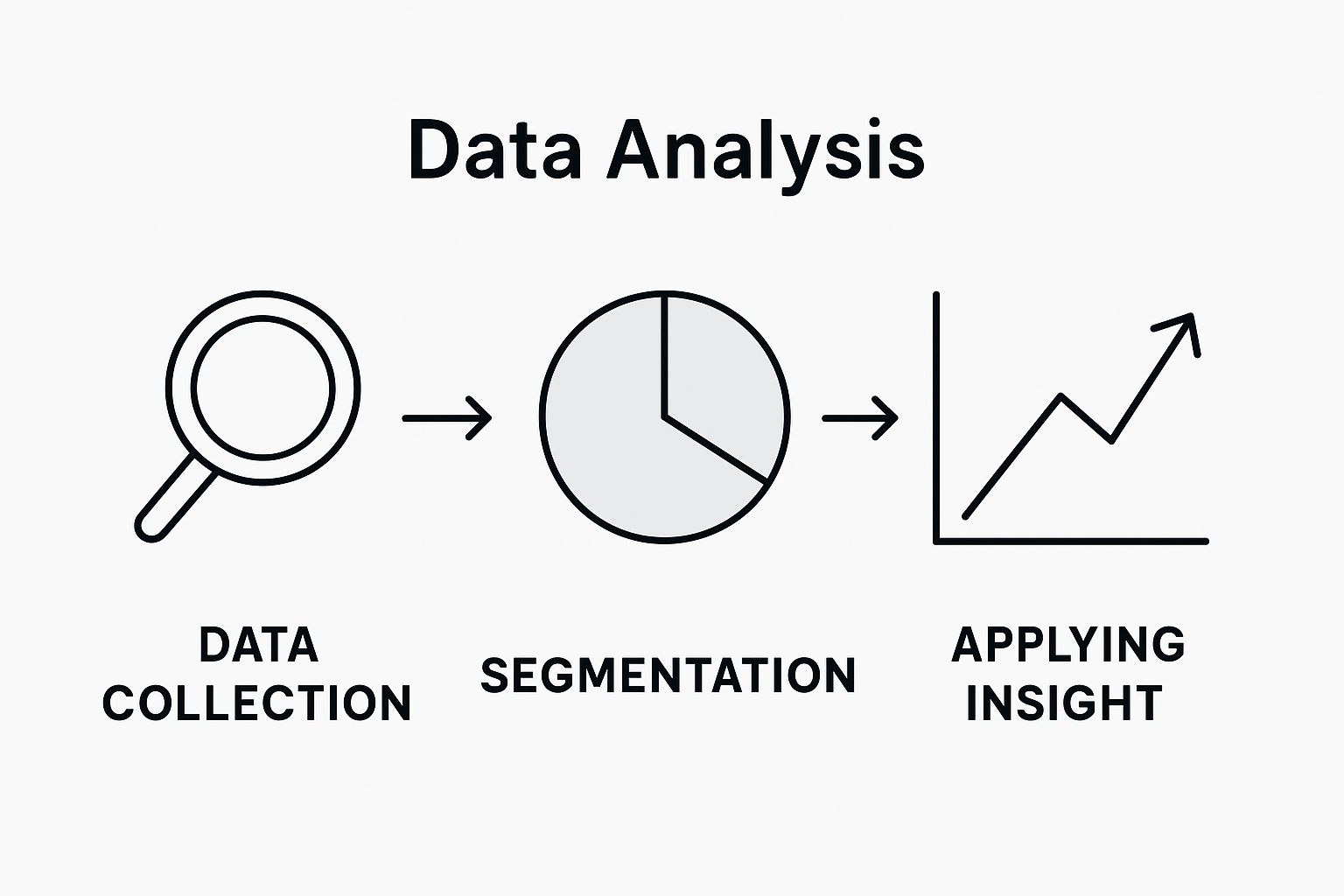
Collecting and interpreting website traffic data is a critical process that transforms raw visitor statistics into actionable business insights. Understanding how to extract meaningful information from your analytics platform enables you to make strategic decisions about your digital presence.
Implementing comprehensive web analytics tools requires a systematic approach to data collection and analysis. Start by examining key metrics such as total page views, unique visitors, average time on site, bounce rates, and traffic sources. These fundamental indicators provide a snapshot of how users interact with your website. Pay close attention to visitor demographics, referral channels, and user behaviour patterns that reveal insights about your audience’s preferences and engagement levels.
Dig deeper by segmenting your data to uncover nuanced insights. Look for trends in user behaviour across different device types, geographic locations, and specific landing pages. Analyse conversion paths to understand how visitors move through your website and identify potential obstacles in their journey. Create custom reports that highlight performance metrics most relevant to your business goals. By treating website data as a strategic asset, you can continuously refine your digital strategy, improve user experience, and drive meaningful business outcomes.
Warning: Always maintain data integrity by regularly verifying your tracking implementation and cross referencing metrics from multiple sources to ensure accuracy.
Identifying website audience patterns transforms raw data into strategic business intelligence, enabling you to understand precisely how visitors interact with your digital platform. This critical step goes beyond surface level metrics to uncover deeper insights about user motivations and behaviours.
Exploring web analytics tools reveals intricate user interaction patterns that can dramatically improve your digital strategy. Examine key behavioural indicators such as page view duration, click through rates, scroll depth, and navigation paths. Look for recurring trends like which pages retain visitor attention, what content generates the most engagement, and where users typically exit your website. Pay special attention to device specific behaviours, understanding how mobile and desktop users interact differently with your digital content.
Segment your audience data to uncover nuanced insights about different visitor groups. Create user personas based on demographic information, geographic location, and behavioural characteristics. Analyse conversion funnels to understand precisely where potential customers might be losing interest or encountering obstacles. By treating website data as a strategic asset, you can continuously refine your digital experience to meet user expectations and drive meaningful business outcomes.
Warning: Avoid over analysing data. Focus on actionable insights that directly contribute to improving user experience and business performance.
Transforming website analytics insights into tangible improvements requires a strategic and methodical approach. This critical stage bridges the gap between data collection and meaningful business enhancement, allowing you to optimise your digital presence with precision.
Developing a comprehensive analytics strategy involves creating an actionable roadmap for website improvements. Prioritise changes based on their potential impact on user experience and business objectives. Start by addressing critical issues identified in your data analysis such as high bounce rates, underperforming landing pages, or conversion bottlenecks. Implement incremental modifications rather than wholesale redesigns to track the direct impact of each adjustment.
Prioritise changes that demonstrably improve user journey and engagement. This might involve restructuring navigation menus, optimising page load speeds, refining content placement, or creating more intuitive user interfaces. Use A/B testing to validate the effectiveness of proposed changes, comparing performance metrics before and after implementation. Continuously monitor the results of your modifications, remaining agile and ready to iterate based on ongoing user feedback and evolving performance data.
Warning: Resist the temptation to make sweeping changes based on limited data. Each modification should be carefully considered, measured, and aligned with your broader business strategy.
Successful website traffic analysis requires an ongoing commitment to monitoring performance and adapting your digital strategy based on emerging insights. This continuous improvement process transforms raw data into a dynamic roadmap for business growth.
Establishing a robust analytics monitoring framework involves creating a systematic approach to tracking key performance indicators. Set up regular reporting intervals such as weekly or monthly reviews to assess critical metrics like user engagement, conversion rates, and audience behaviour. Create custom dashboards that highlight the most relevant performance indicators for your specific business objectives. Pay particular attention to trends over time, looking for consistent patterns or sudden shifts that might require immediate strategic adjustments.
Develop a responsive strategy that allows for quick pivots based on data insights. This means being prepared to modify website content, redesign user interfaces, or adjust marketing approaches when performance metrics suggest potential improvements. Implement a culture of continuous learning within your organisation, where data insights drive strategic decision making. Cross reference your website analytics with other business performance indicators to ensure a holistic understanding of your digital strategy effectiveness.
Warning: Avoid becoming paralysed by data. While monitoring is crucial, remember that insights are most valuable when they prompt decisive and timely action.
Understanding your website traffic is crucial for business growth but implementing effective analytics and interpreting complex data can be challenging. If you are striving to identify meaningful user behaviour patterns or aiming to optimise conversion paths without getting overwhelmed by raw metrics, Kickass Online offers specialised support. With a focus on precision and privacy respecting analytics, we help you translate insights into actionable strategies that boost engagement and sales.

Explore our tailored Websites services to build a high-converting digital platform designed for your unique audience. Visit Kickass Online today to secure personalised attention and strategic guidance that turns website traffic into real business results. Dive deeper with expert Tutorials created to empower your analytics journey. Take the first step towards smarter digital growth now.
To set up website analytics tools effectively, start by selecting an analytics platform and configuring tracking parameters that respect user privacy. Implement the tracking code on your website, verify its functionality, and set clear goals for conversion tracking to measure key metrics within the first few days after installation.
Your website traffic analysis goals should be specific, measurable, actionable, relevant, and time-bound. Identify important metrics such as user engagement and conversion rates, and use these goals to guide your analysis for better decision-making in your business strategy.
Collect website traffic data by monitoring key metrics like total page views, unique visitors, and bounce rates. Analyse this data systematically to extract insights, and segment your audience to discover patterns that inform your digital strategy within a regular reporting interval such as weekly.
Look for trends like page view duration and click-through rates to identify how users interact with your website. Pay attention to recurring behaviours based on device type or geographical location, which can help refine your user experience to increase engagement and reduce drop-off rates.
Implement changes by prioritising modifications that directly address issues highlighted in your analytics. Make incremental changes, such as optimising page load speeds or navigation structures, and monitor their impact continuously to ensure improvements align with your business objectives.
Monitoring results and refining strategies is crucial because it allows you to adapt to emerging insights and trends. Establish regular reporting intervals to assess performance, and be responsive to changes by adjusting your website content and marketing approaches based on data findings.
Over half of british businesses face website ranking issues due to technical SEO gaps. With new search algorithms becoming more sophisticated every year, getting the technical side right now affects far more than just web developers or IT specialists. Understanding the true scope of technical SEO helps ensure your website performs strongly against modern search standards, improving both visibility and user experience across every visit.
| Point | Details |
|---|---|
| Understanding Technical SEO | Technical SEO is essential for optimising a website’s infrastructure, ensuring it meets search engine requirements while enhancing user experience. |
| Continuous Optimisation | Successful technical SEO requires ongoing monitoring and refinement, rather than viewing it as a one-time task. |
| Core Components | Key elements include website crawlability, page load speed, mobile responsiveness, and secure connections that collectively improve search visibility. |
| Common Errors | Avoid pitfalls such as neglecting site architecture, slow performance, and inadequate security measures, which can significantly harm search rankings. |
Technical SEO represents the critical behind-the-scenes optimisation strategies that enable search engines to effectively crawl, understand, and index a website’s content. Unlike content or link-based SEO approaches, technical SEO focuses on improving a website’s foundational infrastructure and performance metrics that directly impact search rankings. When implemented correctly, these strategies ensure your website meets modern search engine requirements and provides an optimal user experience.
Many business owners misunderstand technical SEO as a purely technical process disconnected from user experience. In reality, technical SEO intertwines website performance, accessibility, and search engine compatibility. Key elements include website speed, mobile responsiveness, secure connections, structured data markup, and clean website architecture. Onsite SEO strategies play a crucial role in translating these technical optimisations into tangible search visibility improvements.
Common misconceptions about technical SEO can significantly hinder a website’s performance. Some businesses believe technical optimisation is a one-time task, when in fact it requires continuous monitoring and adaptation. Others assume complex technical configurations automatically guarantee higher rankings, overlooking the importance of content quality and user engagement. Successful technical SEO demands a holistic approach that balances technical precision with meaningful, user-centric website design and content strategies.
To effectively implement technical SEO, businesses must understand its multifaceted nature. This involves regular website audits, performance monitoring, addressing crawl errors, optimising page load speeds, implementing proper redirects, and ensuring mobile compatibility. By treating technical SEO as an ongoing process of refinement rather than a static checklist, organisations can create robust online platforms that both search engines and users appreciate.
Technical SEO comprises several critical components that work together to enhance a website’s search engine performance and user experience. These core elements form the foundation of a robust digital strategy, ensuring websites are not just visible but also effectively communicating with search engine algorithms. Content optimisation tips play a pivotal role in translating technical configurations into tangible search ranking improvements.
The first fundamental element involves website crawlability and indexing. Search engines must effortlessly navigate and understand a website’s structure, which requires clean, logical site architecture, XML sitemaps, and a well-configured robots.txt file. This means creating a hierarchical website structure that allows search engine bots to discover and comprehend content efficiently, reducing potential barriers that might prevent proper indexing.

Website performance metrics represent another crucial technical SEO dimension. Page load speed, mobile responsiveness, and overall user experience directly influence search rankings. Businesses must optimise image sizes, minimise server response times, leverage browser caching, and implement responsive design techniques. Modern search algorithms increasingly prioritise websites that deliver swift, seamless experiences across multiple devices, making performance optimisation a non-negotiable aspect of technical SEO strategy.
Secure and accessible website infrastructure completes the technical SEO equation. This involves implementing HTTPS protocols, ensuring proper SSL certification, creating clean URL structures, managing canonical tags, and developing structured data markup. By meticulously addressing these technical elements, organisations create a solid foundation that not only satisfies search engine requirements but also builds user trust and credibility. Technical SEO is ultimately about creating a harmonious digital environment where technology, content, and user experience converge to deliver optimal search visibility.
Technical SEO challenges can significantly undermine a website’s search performance, requiring businesses to proactively identify and address potential obstacles. Identifying common website failures helps organisations prevent critical technical issues that might compromise their digital visibility. These challenges often manifest in multiple complex ways, demanding strategic and comprehensive solutions.
Crawlability and indexing issues represent a primary category of technical SEO problems. These include broken links, improper redirect chains, duplicate content, and ineffective XML sitemaps that prevent search engines from efficiently understanding website structure. Businesses must conduct regular technical audits to detect orphaned pages, resolve 404 errors, implement proper canonical tags, and ensure search engine bots can seamlessly navigate their digital ecosystem. Diagnostic tools like Google Search Console become invaluable in identifying and rectifying these underlying structural impediments.
Performance-related technical SEO challenges encompass page speed, mobile responsiveness, and user experience metrics. Slow-loading pages, unoptimised images, excessive server response times, and non-responsive design can drastically reduce search rankings and user engagement. Modern websites must prioritise technical optimisation strategies such as image compression, browser caching, minifying CSS and JavaScript, leveraging content delivery networks, and implementing responsive design frameworks that adapt seamlessly across various devices and screen sizes.
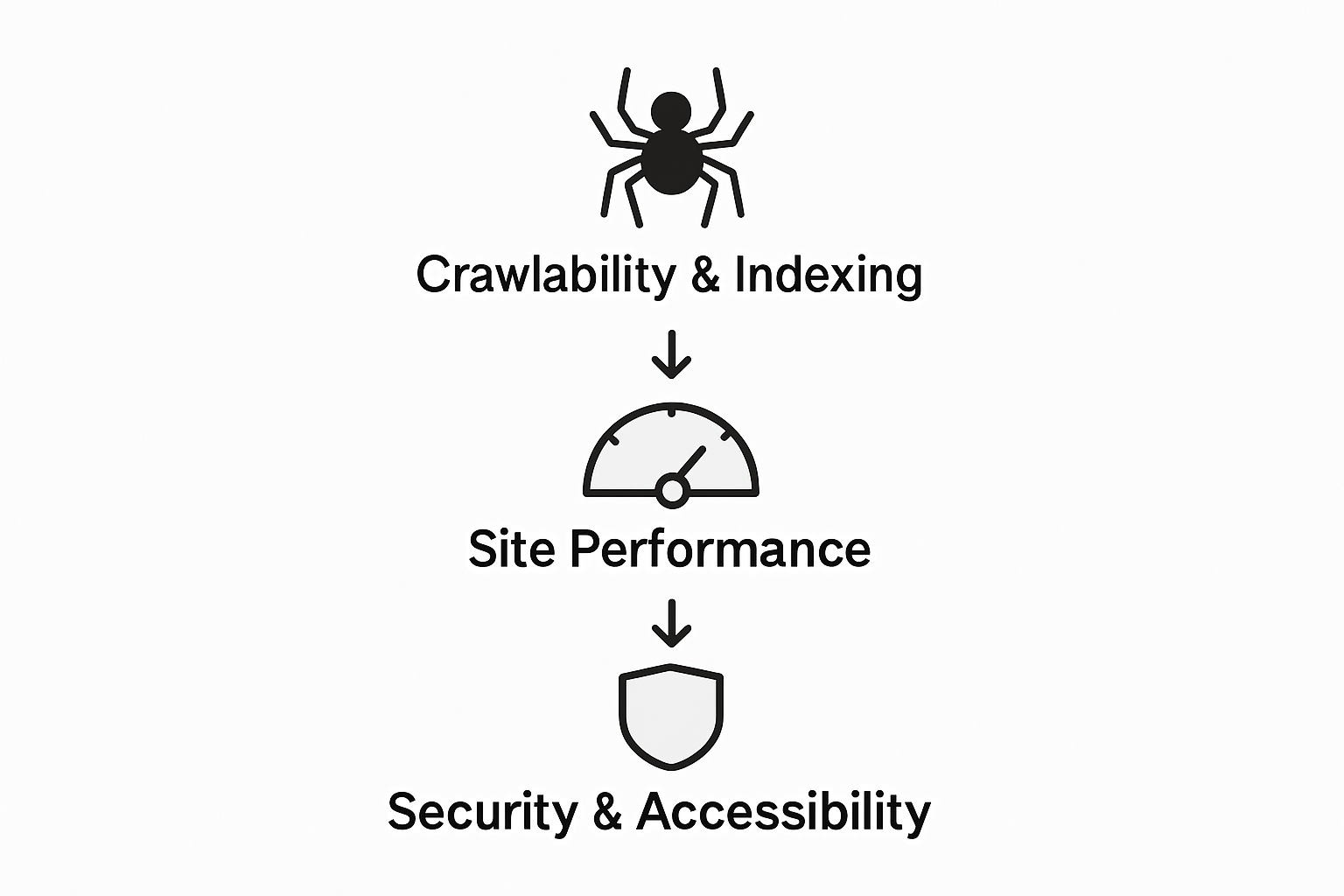
Security and accessibility represent another critical dimension of technical SEO problem resolution. Websites must implement robust HTTPS protocols, maintain current SSL certifications, create clear and descriptive URL structures, and develop comprehensive structured data markup. By meticulously addressing these technical elements, organisations construct a resilient digital infrastructure that not only satisfies sophisticated search engine algorithms but also builds user trust and credibility. Technical SEO solutions are ultimately about creating a harmonious digital environment where technological precision meets user-centric design.
Search engine rankings are fundamentally determined by a complex interplay of technical infrastructure and content quality. Website visibility strategies demonstrate how technical SEO serves as the critical foundation that enables search engines to effectively evaluate, understand, and rank digital content. Modern search algorithms assess websites through sophisticated technical performance metrics that go far beyond simple keyword matching.
The primary mechanism of technical SEO impact involves search engine crawlability and indexing efficiency. Websites with clean, logical architectural structures, fast loading times, mobile responsiveness, and clear navigation pathways receive preferential treatment from search algorithms. Technical optimisations like proper XML sitemap configuration, strategic internal linking, minimised redirect chains, and comprehensive structured data markup directly influence how comprehensively and quickly search engines can interpret a website’s content and relevance.
Performance metrics play a decisive role in determining search visibility. Page load speed, mobile compatibility, secure connections, and user experience signals are now integral ranking factors. Search engines prioritise websites that deliver seamless, rapid experiences across multiple devices, penalising those with slow response times, broken links, or poor mobile adaptability. Modern technical SEO requires a holistic approach that balances sophisticated backend configurations with intuitive, user-friendly design principles.
Secure and accessible website infrastructure represents another critical dimension of search ranking determinants. Implementing robust HTTPS protocols, maintaining current SSL certifications, creating semantically clear URL structures, and developing comprehensive schema markup directly communicate a website’s credibility and reliability to search algorithms. By meticulously addressing these technical elements, organisations can construct digital platforms that not only meet stringent search engine requirements but also provide optimal user experiences, ultimately driving improved search rankings and online visibility.
Technical SEO demands precision and strategic implementation, with numerous potential pitfalls that can dramatically undermine a website’s search performance. Digital marketing mistakes frequently stem from overlooking critical technical configurations that search engines use to evaluate and rank websites. Understanding these potential errors becomes paramount for businesses seeking to maintain robust online visibility.
Website performance optimisation represents a crucial area where technical SEO mistakes frequently occur. Slow page loading times, uncompressed images, excessive server response durations, and non-responsive design can severely compromise search rankings. Businesses must prioritise comprehensive performance audits, implementing strategies like image compression, browser caching, minimising CSS and JavaScript files, and ensuring seamless mobile adaptability. Neglecting these technical elements creates significant barriers to search engine crawlability and user experience.
Crawlability and indexing configurations constitute another fundamental domain where technical SEO errors can emerge. Improper XML sitemap structures, complex redirect chains, duplicate content issues, and ineffective robots.txt configurations can prevent search engines from effectively understanding and ranking website content. Strategic technical SEO requires meticulous attention to site architecture, ensuring clean URL structures, implementing proper canonical tags, and creating logical internal linking pathways that facilitate comprehensive content discovery and indexing.
Secure and accessible website infrastructure represents a final critical dimension where technical SEO mistakes can significantly impact online performance. Failing to implement robust HTTPS protocols, neglecting SSL certifications, or overlooking structured data markup directly undermines a website’s credibility and search engine reliability. Organisations must develop a holistic approach that balances sophisticated technical configurations with intuitive, user-centric design principles, recognising that modern search algorithms demand comprehensive, security-focused digital infrastructures that prioritise both technical precision and user experience.
Technical SEO is the foundation of improved search visibility and seamless user experience, yet many businesses struggle with crawlability issues, slow page speeds and security lapses. If you are aiming to boost your website’s performance and overcome common technical SEO challenges like indexing errors, slow loading times and poor mobile responsiveness, you need a partner who understands these critical elements inside out. Our approach at Kickass Online focuses on optimising your site’s infrastructure to satisfy both search engines and visitors through precise technical adjustments and ongoing maintenance.
Discover how our customised strategies in website development and SEO can transform your digital presence. Whether it is enhancing site speed, implementing clean URL structures or ensuring your site is secure and accessible, we provide dedicated attention to every technical detail. Learn more about our expert services in Websites | Kickass Online and explore the proven steps to maintain high-performing websites.
Take the next step today and secure your business’s online success by partnering with Kickass Online. Visit us at https://kickassonline.com to book a consultation with our specialists and start turning technical SEO challenges into growth opportunities. See why so many clients trust our personalised solutions to enhance their website’s performance and search rankings. Don’t let technical hurdles hold your business back any longer.
Technical SEO refers to the optimisation strategies focused on improving a website’s foundational infrastructure, ensuring search engines can effectively crawl, understand, and index its content.
Technical SEO impacts website performance by enhancing elements such as page load speed, mobile responsiveness, and secure connections, which directly influence search engine rankings and user experience.
Common technical SEO issues include crawlability and indexing problems, slow page load speeds, non-responsive design, broken links, and improper XML sitemap configurations.
To improve your website’s technical SEO, conduct regular audits, optimise page load speeds, ensure mobile compatibility, implement HTTPS, and maintain clean URL structures and proper redirects.
Over 80 percent of british consumers expect personalised experiences from businesses, reshaping how customer relationships are built online. As digital marketing evolves, small and medium enterprises find themselves in a race to engage and retain audiences who crave relevance and trust. This article uncovers evidence-driven strategies that help british businesses boost customer connection, raise conversion rates, and stand out in a crowded digital space.
| Key Insight | Detailed Explanation |
|---|---|
| 1. Personalisation Enhances Customer Engagement | Implementing targeted personalisation strategies can significantly improve customer interactions, leading to better engagement and conversion rates. |
| 2. Optimise for Voice Search | Adapting content for voice search is crucial, focusing on conversational, intent-driven keywords to reach local consumers effectively. |
| 3. Leverage First-Party Data | Collecting and using direct customer data enables more effective marketing strategies that resonate with individual preferences and behaviours. |
| 4. Prioritise Website Security | Ensuring robust website security measures fosters customer trust and reassures users about their data safety during online interactions. |
| 5. Create Engaging Video Content | Using video content on social media can enhance brand loyalty and engagement; focus on authentic and concise storytelling. |
Personalisation is no longer a marketing luxury but a fundamental strategy for small and medium enterprises seeking meaningful customer connections. By leveraging advanced AI technologies, businesses can transform generic interactions into targeted, individual experiences that resonate deeply with each customer.
The power of personalisation lies in its ability to make customers feel uniquely understood. Research demonstrates that AI-driven personalisation significantly enhances online consumer behaviour, leading to substantial improvements in click-through rates, website engagement, and conversion metrics.
Key Personalisation Strategies for SMEs:
A groundbreaking study introducing SLM4Offer: Personalised Marketing Offer Generation revealed a remarkable 17% improvement in offer acceptance rates through advanced AI personalisation techniques. This demonstrates that customers respond dramatically when marketing feels genuinely relevant to their specific interests and requirements.
Implementing personalisation does not require massive technological infrastructure. Start small by using customer relationship management (CRM) tools that track interaction history, analyse purchasing patterns, and enable targeted communication. The goal is creating a feeling of individual attention that makes customers believe you truly understand their unique needs.
Practical first steps include collecting detailed customer data through surveys, analysing website interaction metrics, and experimenting with personalised email campaigns that address specific customer segments. Remember, personalisation is about creating meaningful connections, not just inserting a customer’s name into a generic message.
Voice search has transformed how consumers discover local businesses, shifting from traditional text-based queries to more conversational, intent-driven interactions. Small and medium enterprises must adapt their digital strategies to capture these emerging search behaviours and remain competitive in an increasingly voice-activated marketplace.
AI technologies are revolutionising local discovery by enabling more intuitive and personalised search experiences. Unlike traditional search methods, voice queries tend to be longer, more conversational, and often include specific local intent such as “find a coffee shop near me” or “best pizza restaurant in my neighbourhood”.
Key Voice Search Optimisation Strategies:
The potential of large language models in marketing management offers unprecedented opportunities for understanding and predicting customer search behaviours. By analysing conversational patterns, businesses can craft content that directly matches voice search queries.
Practical implementation starts with understanding how people actually talk. Consider the differences between typing “Italian restaurant London” and speaking “Where can I find a great Italian restaurant with outdoor seating in Soho?”. Your content should anticipate and answer such specific, conversational queries.
Small businesses can start by auditing their online presence, ensuring Google My Business listings are comprehensive, and creating content that answers common local questions. Prioritise mobile optimisation, as most voice searches occur on smartphones, and focus on creating genuine, helpful content that sounds natural when spoken aloud.
The landscape of digital marketing is undergoing a profound transformation as artificial intelligence and automation technologies redefine how small and medium enterprises design, execute, and optimise their marketing campaigns. Gone are the days of one-size-fits-all marketing strategies traditional manual approaches now give way to intelligent, data-driven campaign delivery.
AI techniques are emerging as a game-changer in digital marketing, enabling businesses to create more efficient and customised experiences that resonate deeply with target audiences. These technologies allow for unprecedented levels of personalisation, precision targeting, and real-time campaign optimisation.
Key AI and Automation Strategies for Campaign Delivery:
Large language models are revolutionising marketing management by providing strategic insights that were previously impossible to obtain. These advanced AI systems can analyse vast amounts of data rapidly, identifying nuanced patterns in customer interactions and preferences.
Practical implementation begins with selecting robust marketing automation platforms that integrate AI capabilities. Start by mapping your customer journey, identifying key touchpoints where automation can enhance engagement. Focus on tools that offer real-time analytics, allowing you to continuously refine and improve your marketing strategies.
Small businesses need not be intimidated by AI technologies. Many affordable marketing platforms now offer user friendly AI-driven features that can dramatically improve campaign performance without requiring deep technical expertise. The goal is to work smarter, not harder, using technology to create more meaningful connections with your audience.
Social media platforms have transformed into visual storytelling ecosystems where video content reigns supreme. Small and medium enterprises must recognise that static images and text are no longer sufficient to capture audience attention in an increasingly dynamic digital landscape.
Social media personalisation through video content has emerged as a powerful strategy for enhancing brand loyalty and perceived quality. Consumers now expect immersive, engaging experiences that go beyond traditional marketing approaches.
Strategic Video Content Approaches:
Research from digital marketing studies consistently demonstrates that video content significantly increases customer engagement and brand awareness across social platforms.
Practical implementation requires understanding platform specific video strategies. TikTok demands high energy and creativity. Instagram prefers aesthetically pleasing vertical videos. LinkedIn values professional and informative content. YouTube rewards longer educational pieces.
Small businesses do not require professional production studios to create compelling video content. Modern smartphones offer exceptional video quality. Focus on authenticity, clear messaging and solving your audience’s problems through visual storytelling. Consistency matters more than cinematic perfection.
In an era of increasingly sophisticated digital marketing, first-party data has become the most valuable currency for small and medium enterprises seeking precise customer understanding. Unlike third-party data which is purchased or sourced externally, first-party data represents direct insights collected from your own customer interactions.
Personalisation strategies powered by first-party data offer unprecedented opportunities to create targeted marketing experiences that resonate deeply with individual customer preferences. This approach transforms generic marketing into meaningful communication.
First-Party Data Collection Strategies:
Digital marketing research demonstrates that businesses leveraging first-party data can create more effective and targeted marketing strategies. The key lies in understanding how to ethically collect, analyse, and apply customer information.
Implementation begins with transparent data collection practices. Clearly communicate to customers how their information will be used, ensuring compliance with data protection regulations. Invest in customer relationship management systems that can help you segment and analyse your collected data effectively.
Small businesses should view first-party data as a strategic asset. By understanding your customers more intimately, you can create personalised experiences that feel less like marketing and more like genuine customer service. The goal is building trust through relevant, timely, and helpful interactions.
In the rapidly evolving digital landscape, sustainable and ethical practices have transformed from optional considerations to fundamental business requirements. Small and medium enterprises must now prioritise transparency, data protection, and responsible technology use to build genuine trust with their customers.
Digital marketing strategies increasingly emphasise ethical considerations as consumers become more discerning about how businesses handle their information and engage with digital platforms. This shift represents a profound change in marketing paradigms.
Core Ethical Digital Practice Principles:
Research on AI in marketing management highlights the critical importance of responsible technology deployment. Businesses must balance technological innovation with ethical considerations, ensuring that digital strategies prioritise human values.
Practical implementation requires developing comprehensive privacy policies, conducting regular ethical audits of digital practices, and creating transparent communication channels with customers. Small businesses can differentiate themselves by demonstrating a genuine commitment to responsible digital engagement.
The future of digital marketing belongs to organisations that recognise technology as a tool for building meaningful, respectful relationships rather than merely extracting value. By embedding ethical principles into your digital strategy, you create a competitive advantage that transcends traditional marketing approaches.
In the digital age, website security is no longer a technical afterthought but a critical component of customer engagement and business credibility. Small and medium enterprises must recognise that their online presence is a direct reflection of their commitment to protecting customer data and providing a safe digital environment.
Website security plays a pivotal role in enhancing customer engagement, transforming digital interactions from potential risks to trustworthy experiences. Modern customers are increasingly sophisticated in understanding online threats and evaluating business digital practices.
Essential Website Security Strategies:
Implementing robust security measures requires a holistic approach. Beyond technical safeguards, businesses must cultivate a culture of digital transparency. Customers want to understand how their information is protected and used.
Practical steps include displaying trust badges, maintaining clear communication about security practices, and investing in reputable hosting platforms with strong security infrastructures. Small businesses can differentiate themselves by prioritising customer digital safety as a fundamental business value.
Remember that website security is an ongoing process. Continuous monitoring, regular updates, and proactive threat assessment are essential in maintaining a trustworthy digital presence that reassures customers and protects your business reputation.
Below is a comprehensive table summarising the key strategies and practices discussed throughout the article for enhancing customer engagement and digital marketing effectiveness.
| Topic | Description | Strategies |
|---|---|---|
| Personalisation | Transforming generic interactions into individual experiences using AI. | Segment audience, dynamic content adaptation, AI-powered offers. |
| Voice Search Optimisation | Adapting to conversational and intent-driven voice search queries. | Conversational keywords, local context enrichment, schema markup. |
| AI and Automation | Redefining campaign delivery through AI and automation. | Predictive analytics, dynamic content generation, automated scheduling. |
| Video Content | Dominating social platforms through engaging video storytelling. | Short storytelling, behind-the-scenes, customer testimonials, educational series. |
| First-Party Data | Utilising direct insights from customer interactions for targeted marketing. | Website analytics, customer surveys, transaction history, email metrics. |
| Digital Ethics | Emphasising transparency and responsible technology use. | Transparent data collection, robust privacy, consent-driven marketing. |
| Website Security | Ensuring online safety and building digital trust. | SSL certificates, regular audits, multi-factor authentication, prompt updates. |
Navigating the evolving digital marketing landscape can feel overwhelming especially with critical trends like AI personalisation automation and voice search optimisation reshaping how customers engage with brands. At the heart of these shifts lies the challenge of creating genuine connections that drive real business growth while safeguarding trust with sustainable ethical digital practices and robust website security.
Kickass Online specialises in addressing these pain points by delivering tailored website design SEO and maintenance services that help small and medium enterprises capitalise on these essential trends. Whether it is leveraging first party data for precise targeting or implementing video content strategies that truly resonate our experts focus on high impact solutions that guarantee your business stands out online.
Start transforming your digital approach today with insights and advice from our Tips and Tricks resources.
Ready to future-proof your marketing and boost your online visibility with personalised strategies and trusted security? Visit Kickass Online now and book your consultation. Discover how our dedicated team can craft customised solutions that bring lasting results and position your SME ahead in 2025 and beyond. For insightful industry guidance check our Recommendations to stay a step ahead.
Personalisation can be implemented by first segmenting your audience based on behaviours and preferences. Start by collecting detailed customer data through surveys and website interactions, which will allow you to create targeted communications that resonate with individual customers.
To optimise for voice search, focus on using conversational keywords and providing local context in your content. Begin by auditing your existing online presence and ensuring your business listings are complete and up to date, which can increase visibility in voice search results.
You can use AI to enhance your marketing campaigns by implementing predictive analytics and dynamic content generation. Start by selecting a user-friendly marketing automation platform and mapping out your customer journey to identify key touchpoints for automation.
Creating short-form storytelling videos, behind-the-scenes content, and customer testimonials can significantly boost engagement. Focus on making videos concise and authentic, addressing your audience’s needs and preferences, which could improve viewer interaction by up to 30%.
You can collect first-party data by using website analytics, customer surveys, and monitoring email engagement metrics. Implement transparent data collection practices, ensuring customers know how their information will be used, which can enhance trust and improve data quality.
Key components of ethical digital marketing include transparent data collection, robust privacy protections, and consent-driven marketing practices. Ensure your marketing strategies prioritise clear communication about how customer data is used, which can help build trust and foster long-term customer relationships.
More than half of British consumers use search engines to find local businesses before making a purchase. For small and medium enterprises across the United Kingdom, showing up in these local results often makes the difference between being discovered by new customers and missing out altogether. Understanding local SEO gives British businesses the edge they need to connect with nearby shoppers and stand out from bigger competitors in their communities.
| Point | Details |
|---|---|
| Local SEO Enhances Visibility | Local Search Engine Optimisation helps SMEs increase their online visibility within specific geographical areas, attracting nearby customers actively searching for their products or services. |
| Key Factors Influence Rankings | Google Business Profile optimisation, consistency in NAP information, customer reviews, and local citations are critical for boosting local search rankings. |
| Targeted Strategies Drive Traffic | Applying geographically targeted keywords, localised content marketing, and engagement with Google Business Profile can significantly increase local website traffic and lead generation. |
| Avoid Common Mistakes | Businesses should ensure consistent NAP information, manage customer reviews actively, and avoid keyword stuffing to maintain optimal search visibility. |
Local Search Engine Optimisation (SEO) represents a powerful digital marketing strategy specifically designed for small and medium enterprises to enhance their online visibility within targeted geographical regions. By strategically optimising digital content and web presence, businesses can effectively attract nearby customers who are actively searching for their specific products or services.
The fundamental goal of local SEO is to help businesses rank higher in geographically targeted search results, which significantly improves competitive positioning in regional markets. This approach involves multiple strategic techniques, including:
Small businesses can leverage local SEO to compete effectively against larger corporations by demonstrating relevance and proximity to potential customers. Digital transformation research highlights how strategic web analytics and targeted SEO can dramatically accelerate growth trajectories for SMEs, making it a critical investment for businesses seeking to establish a robust online presence in their local marketplace.
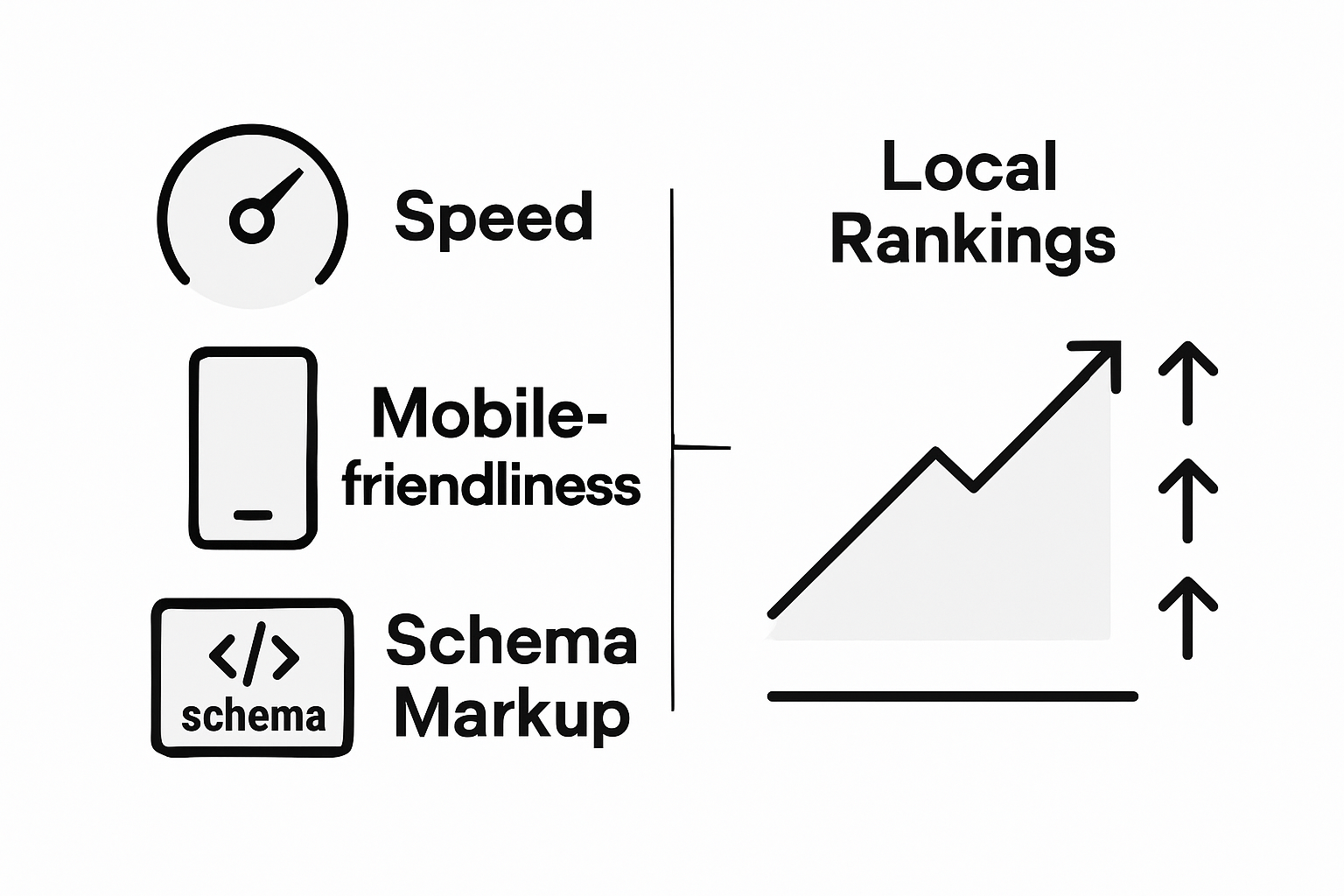
Local search rankings are determined by a complex algorithm that evaluates multiple critical factors designed to connect businesses with nearby customers seeking their specific services. Major search engines assess local business rankings through a comprehensive evaluation of online presence and relevance, considering numerous interconnected elements that demonstrate a business’s local credibility and visibility.
The primary factors influencing local search rankings include:
Technical aspects such as website loading speed, mobile responsiveness, and schema markup also play significant roles in determining local search performance. Businesses that strategically optimise these elements can significantly improve their visibility in geographically targeted search results, effectively increasing their chances of attracting local customers who are actively searching for their specific products or services.
Local Search Engine Optimisation (SEO) represents a strategic approach for small businesses to attract highly targeted customers within their specific geographical area. Implementing targeted web analytics can significantly drive local traffic and generate high-quality business leads, transforming digital marketing efforts into tangible business growth opportunities.
The key strategies for driving targeted local traffic include:
Research demonstrates that SMEs can substantially enhance their online presence and attract more local customers through strategic digital marketing approaches. By focusing on precise targeting and localised content strategies, businesses can effectively convert online visibility into tangible customer engagement, ultimately driving growth and increasing their competitive edge in the local marketplace.

Local businesses face intense digital competition, making strategic positioning crucial for success. Implementing precise local SEO practices can dramatically improve search result rankings and visibility against neighbourhood competitors, effectively establishing a dominant online presence in your specific market area.
To successfully outperform local competitors, businesses should focus on several critical strategies:
Successful competitive differentiation requires a multifaceted approach that goes beyond traditional marketing techniques. By consistently delivering high-quality, localised digital experiences and maintaining a robust online presence, small businesses can effectively carve out a unique market position, attract more qualified local customers, and gradually build a formidable reputation that sets them apart from competing enterprises in their immediate geographical area.
Local SEO can be a minefield for small businesses, with seemingly minor errors potentially derailing their online visibility and search rankings. Maintaining consistent business information across different online directories is critical to preventing significant ranking penalties, as search engines prioritise accuracy and reliability in local business listings.
The most prevalent local SEO mistakes that businesses must proactively avoid include:
Successful local SEO requires a strategic, detail-oriented approach that goes beyond basic listing management. Businesses must treat their online presence as a dynamic, continuously evolving digital ecosystem, constantly monitoring and refining their digital footprint to maintain optimal search visibility and attract local customer engagement.
Small and medium businesses often face the challenge of standing out in their local markets despite fierce competition. The article highlights critical issues like maintaining consistent NAP information, optimising Google Business Profiles and creating targeted local content, all essential for improving local search rankings and attracting nearby customers. If you are striving to enhance your digital presence but feel overwhelmed by these technical details, you are not alone. Achieving sustainable growth requires personalised strategies that align with your unique business goals.
At Kickass Online, we specialise in delivering customised solutions to help your business thrive locally. From designing high-converting websites to implementing tailored SEO strategies, our dedicated team focuses on your specific regional needs with expert care. Explore practical insights in our Tips and Tricks section to get started and discover how a strong local SEO foundation can transform your online visibility.
Take the first step towards outperforming your competition by partnering with Kickass Online today. Visit our homepage at https://kickassonline.com to book a consultation and learn how a personalised approach to local SEO and web development can unlock new opportunities for your business. For examples of our web design expertise, see Websites and let us help you turn your digital presence into a powerful growth engine.
Local SEO helps small businesses increase their visibility in local search results, attract targeted customers in their area, and improve competitive positioning against larger enterprises.
By optimising your Google Business Profile, ensuring consistent NAP information, generating local reviews, and creating location-specific content, businesses can enhance their chances of ranking higher in local search results.
Small businesses can implement geographically targeted keyword optimisation, engage with their Google Business Profile, create localised content, and establish local backlinks to effectively drive traffic from nearby customers.
Customer reviews significantly influence local SEO rankings by demonstrating local customer satisfaction and credibility. Positive reviews can enhance a business’s online reputation and attract more potential customers.
More than eighty percent of british consumers search online before visiting a local business. For both start-ups and established brands, getting noticed in Google results can make or break your visibility. With so many choices out there, setting up your Google My Business profile the right way can connect you to real customers at the moment they are searching. This guide walks you through each step to help your business stand out and earn trust locally.
| Key Message | Explanation |
|---|---|
| 1. Verify Your Google My Business Profile | Ensure you verify your profile within 30 days to maintain local search visibility and prevent deactivation. |
| 2. Enter Accurate Business Information | Provide precise and consistent business details across platforms to enhance credibility and improve local search rankings. |
| 3. Upload High-Quality Photos | Include 5 to 10 professional images that authentically showcase your business to engage potential customers effectively. |
| 4. Manage Customer Reviews Effectively | Create a systematic approach for requesting and responding to reviews, building trust through authentic feedback. |
| 5. Regularly Monitor Insights for Improvements | Analyse your Google My Business insights monthly to understand customer behaviour and proactively update your profile accordingly. |
Setting up and verifying your Google My Business profile unlocks powerful local visibility for your business online. This critical first step ensures potential customers can find accurate information about your services directly in Google search and maps results.
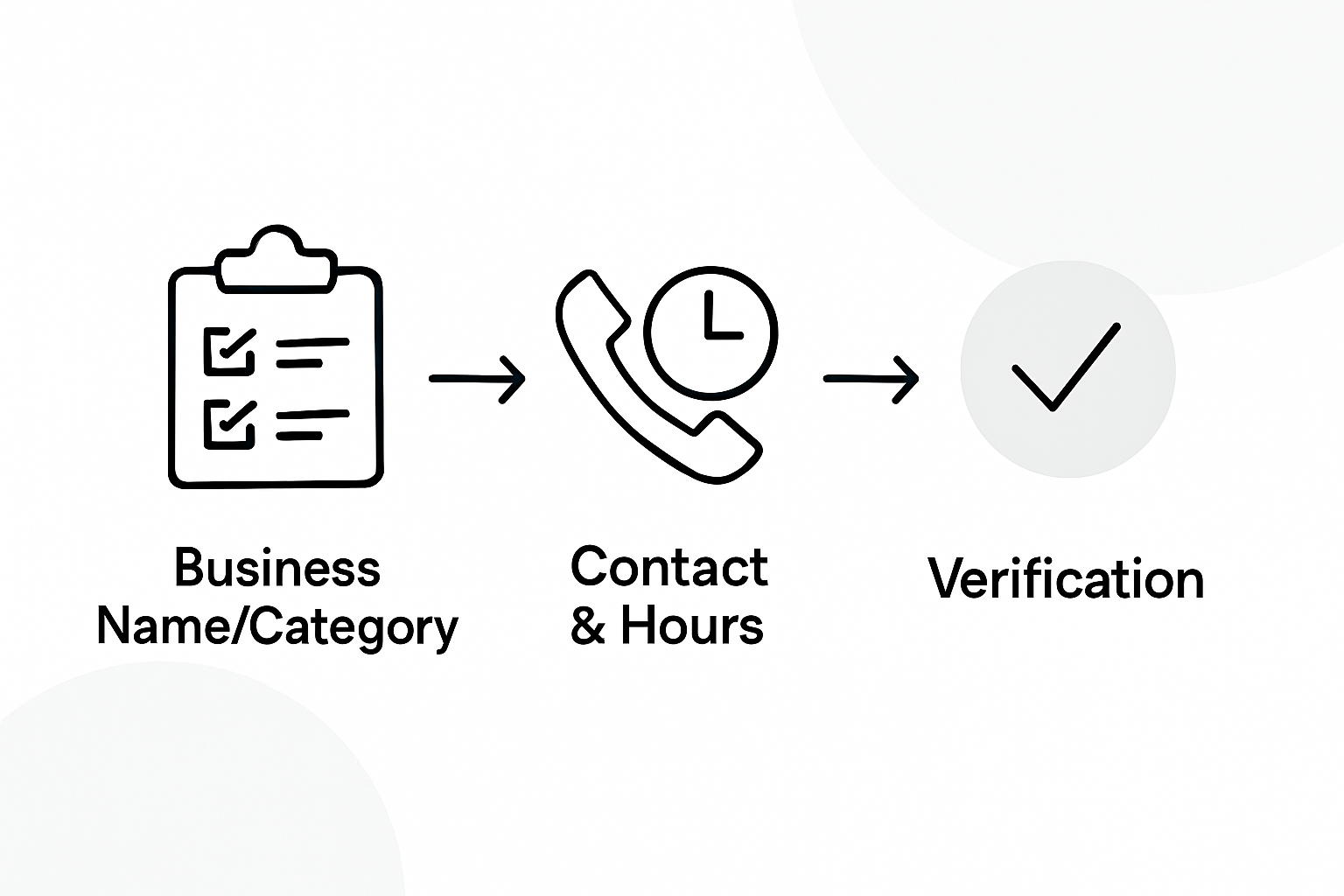
To begin, navigate to the Google My Business official platform and create your business profile by providing your company name, address, contact details, and primary business category. Be meticulous when entering information tracking precisely with your official business documentation. Local SEO strategies recommend using consistent business details across all online platforms to enhance search credibility.
Verification remains a crucial security step preventing unauthorized modifications. Google offers multiple verification methods including postal mail verification postcard, phone verification, or instant verification for eligible businesses with existing Google services. The postcard method remains the most common verification approach sending a unique verification code to your registered business address. Once received, enter the code online to confirm ownership and activate your complete business profile.
Pro tip: Verify your profile within 30 days of creation to prevent profile deactivation and maintain your local search presence. Accurate and comprehensive profile information significantly improves your chances of appearing in local search results and Google Maps recommendations.
Creating a comprehensive and precise Google My Business profile requires strategic attention to detail. Your goal is to provide potential customers with the most accurate representation of your business across digital platforms.
Start by entering your precise business name exactly as it appears on official documentation. Local SEO strategies recommend maintaining consistency across all online platforms to enhance search engine credibility. Include your complete physical address, ensuring it matches your registered business location. If you operate from multiple locations or a home based business, carefully select how you want your address displayed.
Select your primary business category with extreme precision. This classification determines how Google understands and recommends your business in local search results. Choose the most specific category that authentically represents your core services. Add secondary categories if they genuinely reflect additional business offerings. Include high quality photographs showcasing your business interior, exterior, products, and team members. Visual content significantly improves user engagement and provides potential customers with an immediate understanding of your business environment.
Pro tip: Update your business hours, contact information, and service details regularly. Outdated or incorrect information can frustrate potential customers and negatively impact your local search rankings.
Photographs are a powerful tool for transforming your Google My Business profile from a basic listing to an engaging visual representation of your business. Content marketing strategies emphasise the critical role visual elements play in attracting potential customer attention.
Begin by uploading a diverse range of high resolution photographs that showcase your business authentically. Professional recommendations suggest including exterior shots of your business premises, interior workspace, team members in action, and representative product or service images. Geo-tagged photographs that highlight your specific location can significantly strengthen local search visibility, helping potential customers understand precisely what your business offers.

Aim to include at least five to ten professional quality images representing different aspects of your business. Ensure photographs are well lit, clearly focused, and demonstrate your brand personality. Avoid stock images or generic visuals that could apply to any business. Instead, capture genuine moments that reflect your unique business environment and professional approach. Each uploaded image should serve a specific purpose whether highlighting your workspace, showcasing your team, or demonstrating your products and services.
Pro tip: Regularly update your photographs to keep your profile looking current and dynamic. Stale or outdated images can make potential customers perceive your business as inactive or less professional.
Customer reviews are the lifeblood of your online reputation, serving as powerful social proof that can significantly influence potential clients. Reputation marketing strategies emphasise the critical role authentic customer feedback plays in building trust and credibility.
Develop a systematic approach to requesting reviews by creating simple mechanisms for satisfied customers to share their experiences. This might involve sending follow up emails after service completion, generating short review links you can share directly, or training your team to politely request feedback at appropriate moments. When customers leave reviews, respond promptly and professionally to every single comment whether positive or negative. Your responses demonstrate that you value customer input and are committed to continuous improvement.
Encourage reviews that provide specific details about your local services by subtly guiding customers to mention your city or specific service area. This approach not only generates more meaningful feedback but also strengthens your local search visibility. Focus on generating authentic reviews that genuinely reflect your business performance rather than attempting to manipulate review metrics. Potential customers can quickly identify insincere or manufactured feedback.
Pro tip: Implement a review management workflow that ensures consistent and timely responses. Unaddressed reviews can damage your online reputation more effectively than negative feedback that receives a thoughtful professional response.
Tracking and analysing your Google My Business performance is crucial for understanding how potential customers interact with your online profile. Digital marketing KPIs can help you interpret the data and make strategic improvements to your listing.
Regularly explore the Google My Business insights dashboard to understand key metrics such as search queries used to find your business, customer actions like website clicks or phone calls, and photo view statistics. These insights provide valuable information about customer behaviour and engagement patterns. Pay close attention to which search terms are driving traffic and which geographic areas are generating the most interest in your services.
Develop a proactive approach to updating your listing based on these insights. This might involve adjusting your service descriptions, adding more relevant keywords, or creating posts that address the most common customer queries. Keep your profile dynamic by regularly sharing updates, special offers, and recent business achievements. Consistent activity signals to Google that your business is active and relevant, which can positively impact your local search rankings.
Pro tip: Set a monthly calendar reminder to review your Google My Business insights and make necessary adjustments. Treat your online listing as a living document that requires ongoing attention and refinement.
If you are aiming to optimise your Google My Business profile for maximum results but find the process overwhelming or time-consuming the detailed strategies in this article can only take you so far. The challenge of maintaining accurate listings, managing customer reviews, and regularly updating visual content demands personalised attention and expert execution. Your goal to boost local search visibility and build trust with your customers requires consistent optimisation and strategic insight.
At Kickass Online, we understand these pain points and specialise in delivering tailored digital marketing solutions crafted specifically for small and medium-sized businesses. Explore practical and actionable guidance in our Tips and Tricks and deep dive into step-by-step methods with our Tutorials. Our dedicated team focuses on creating high-converting websites and optimising your online presence to elevate your Google My Business performance.
Take control of your local search success today.
Ready to transform your Google My Business listing into a powerful lead generation tool Partner with Kickass Online to get expert support and a digital strategy customised for your business. Visit us now at Kickass Online and book your consultation. The sooner you act the faster you can secure your place at the top of local search results.
To effectively set up your Google My Business profile, visit the official platform and provide accurate details such as your business name, address, contact information, and primary category. Ensure consistency across all online platforms by matching these details with your official documentation.
Aim to upload a diverse range of high-resolution photographs that showcase your business authentically. Include at least five to ten images that represent various aspects of your business, ensuring they are well lit and clearly focused.
Encourage customer reviews by creating simple mechanisms, like follow-up emails after service completion, to request feedback. Always respond promptly and professionally to all reviews, as this demonstrates that you value customer input and are dedicated to improvement.
Monitor key metrics such as search queries, customer actions, and photo view statistics via the Google My Business insights dashboard. Regularly analyse this data to adjust your service descriptions and create posts addressing common customer queries, aiming for enhancements every month.
You should update your Google My Business profile regularly, ideally every month, to ensure your information remains accurate and relevant. This can include business hours, contact details, service offerings, and any new photographs, helping to maintain or improve your local search rankings.
If your Google My Business profile is deactivated, verify your profile within 30 days of creation to prevent this issue. Re-enter your verification code as soon as possible and ensure all of your information is up to date to reactivate your listing.
Most british businesses overlook a key truth about onsite SEO. Over 60 percent of websites lose out on search rankings due to persistent myths and out-of-date strategies. Understanding how to fine-tune your web pages directly can make the difference between lagging traffic and true online visibility. By clearing up common misconceptions and mastering real-world techniques, you can build a digital presence that stands out in both local and international markets.
| Point | Details |
|---|---|
| Understanding Onsite SEO | Onsite SEO involves optimising individual web pages to improve search engine rankings and drive organic traffic through strategies focused on content and technical elements. |
| Continuous Process | SEO is not a one-time task; it requires ongoing updates and strategic refinements to adapt to evolving search algorithms and user expectations. |
| Key Components | Effective onsite SEO hinges on quality content, optimised meta tags, fast loading speeds, and mobile responsiveness. |
| Common Pitfalls | Businesses should avoid mistakes such as keyword stuffing, neglecting mobile optimisation, and overlooking site speed, which can hinder search visibility and user experience. |
Onsite SEO represents the strategic optimisation of individual web pages to improve search engine rankings and drive organic traffic. It involves carefully crafting website elements to signal relevance and quality to search algorithms, focusing on factors directly within your website’s control. Successful onsite SEO requires understanding both technical configurations and content strategies that enhance overall digital visibility.
Many businesses fall prey to widespread misconceptions about search engine optimisation. Examining common SEO myths reveals persistent misunderstandings that can dramatically impede digital performance. For instance, contrary to popular belief, simply stuffing keywords or having excessive H1 tags will not magically improve rankings. Modern search algorithms demand nuanced, high-quality content that genuinely serves user intent.
The core components of effective onsite SEO include:
Understanding that SEO is an ongoing process rather than a one-time task is crucial. Search engine algorithms continuously evolve, requiring websites to adapt and refine their strategies consistently. Businesses that view SEO as a dynamic, strategic approach will ultimately achieve more sustainable digital visibility and competitive advantage.
Effective onsite SEO combines multiple technical and content-driven strategies to improve website performance in search engine rankings. Comprehensive SEO techniques require a holistic approach that addresses both visible content and underlying technical infrastructure. Successful implementation demands careful attention to detail and an understanding of how search algorithms evaluate website quality.
Content remains the cornerstone of onsite SEO, with search engines prioritising high-quality, relevant material that genuinely addresses user queries. Modern SEO demands creating in-depth, authoritative content that demonstrates expertise and provides substantial value. This means developing comprehensive articles, using clear structures, incorporating relevant keywords naturally, and ensuring every piece of content serves a specific user intent.
Key technical elements critical for onsite SEO include:
Website architecture plays a crucial role in search engine visibility. Integrating SEO with web design ensures that technical performance aligns with content strategy, creating a seamless user experience that search engines recognise and reward. Businesses must view their website as a dynamic ecosystem where design, content, and technical optimisation work together to enhance overall digital performance.

Content optimisation represents a critical intersection between technical performance and user engagement, where strategic design meets meaningful communication. Balancing content strategies requires understanding how visual elements, textual information, and technical infrastructure collectively create compelling digital experiences that attract and retain user attention.
Research demonstrates the intricate relationship between visual design and user interaction. Innovative approaches to web page design reveal that successful websites must carefully calibrate visual intensity, ensuring aesthetic appeal does not compromise functional clarity. This means creating interfaces that are both visually striking and intuitively navigable, with clear hierarchies of information and seamless interactive elements.
Key principles for content and user experience optimisation include:
Ultimately, exceptional user experience transcends mere visual aesthetics. It requires a holistic approach that anticipates user needs, simplifies complex interactions, and delivers value through every digital touchpoint. Businesses must view their online presence as a dynamic conversation, continuously refining their approach to meet evolving user expectations and technological capabilities.
Technical SEO encompasses the intricate backend elements that enable search engines to efficiently crawl, understand, and index website content. Optimising website architecture requires a sophisticated approach that balances technical precision with user-friendly design, ensuring websites meet both algorithmic requirements and human interaction standards.
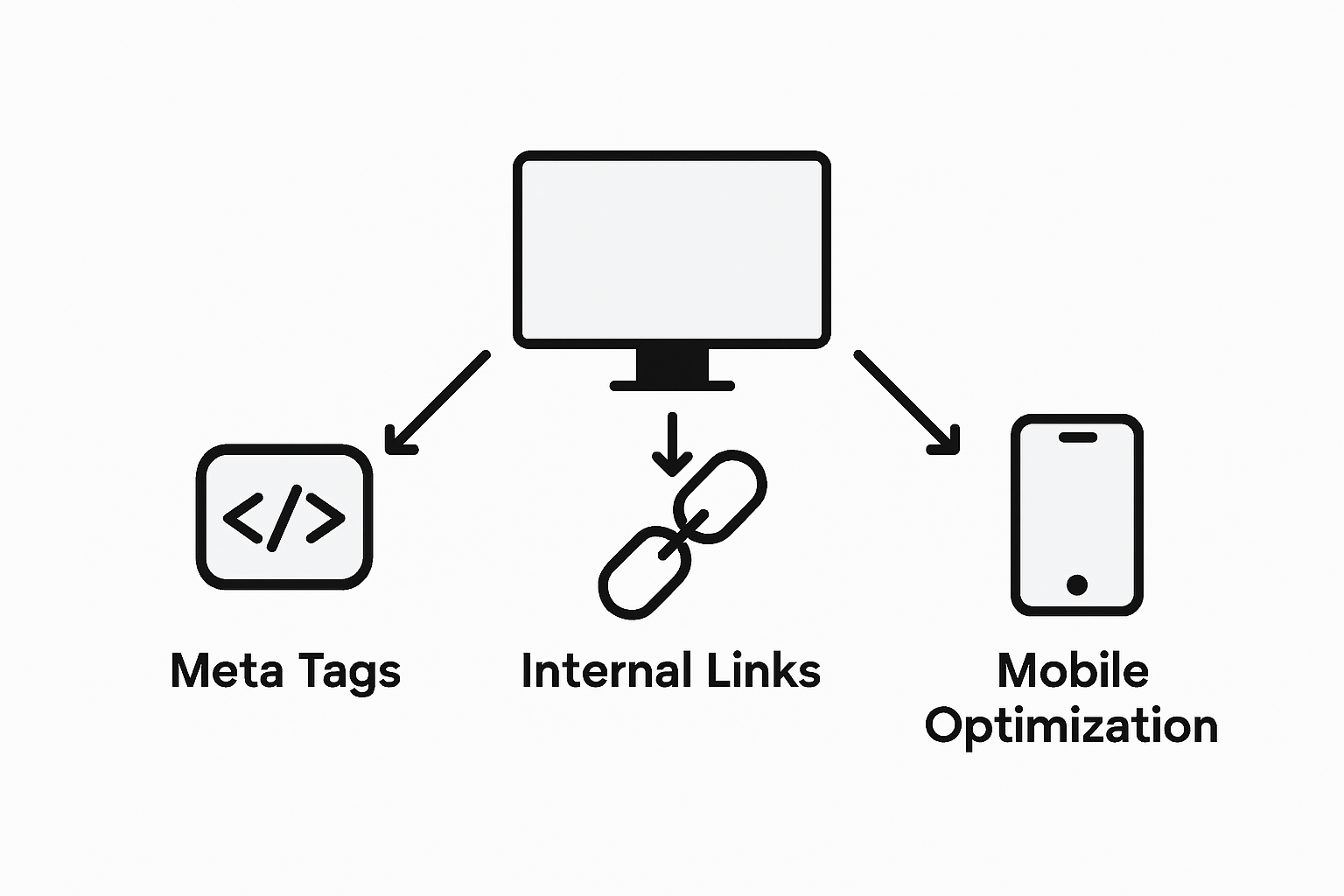
Advanced content extraction techniques have revolutionised how search engines interpret web page structures, emphasising the importance of clean, semantically structured HTML. This means implementing precise coding practices that clearly communicate content hierarchy, purpose, and relevance to search engine crawlers.
Critical technical SEO elements include:
Successful technical SEO transcends mere compliance with search engine guidelines. It represents a strategic approach to digital infrastructure that anticipates algorithmic changes, prioritises user experience, and creates a robust foundation for long-term online visibility. Websites must be viewed as dynamic ecosystems where technical performance, content quality, and user interaction converge to deliver exceptional digital experiences.
Onsite SEO demands precision and strategic thinking, yet many businesses repeatedly fall into predictable traps that undermine their digital performance. Identifying and preventing common SEO errors requires a comprehensive understanding of how seemingly minor mistakes can significantly impact search engine rankings and website visibility.
One of the most prevalent misconceptions is treating SEO as a one-time task rather than an ongoing process of refinement and adaptation. Websites that remain static quickly become outdated, with content losing relevance and technical configurations falling behind evolving search algorithm requirements. Successful digital strategies demand continuous monitoring, regular content updates, and proactive technical maintenance.
Critical SEO mistakes to avoid include:
Ultimately, avoiding SEO pitfalls requires a holistic approach that balances technical expertise with genuine user-focused content creation. Businesses must view their online presence as a dynamic ecosystem, constantly evolving to meet both algorithmic requirements and user expectations. Successful SEO is not about gaming the system, but creating genuine value that naturally attracts and retains digital audiences.
Struggling with the complexities of onsite SEO, from optimising meta descriptions to ensuring fast page load speeds and mobile responsiveness This article highlights common onsite SEO challenges that many businesses face, such as keyword stuffing myths and neglecting continuous optimisation efforts. At Kickass Online, we understand these pain points and specialise in creating high-converting, search engine optimised websites tailored for small and medium-sized businesses. Discover how strategic design, robust technical SEO, and engaging content work together to boost your rankings and drive lasting organic traffic by exploring our Websites | Kickass Online services and insightful Tips and Tricks | Kickass Online.
Ready to transform your online presence with personalised, results-driven SEO and web development expertise Dont wait for your competitors to outrank you Visit Kickass Online now to book your consultation and start building the foundation for sustainable digital growth and enhanced search engine visibility.
Onsite SEO refers to the strategic optimisation of individual web pages to improve search engine rankings and drive organic traffic. It involves optimising various elements of a website to signal its relevance and quality to search algorithms.
The core components include precise keyword research, optimised meta descriptions and title tags, clean website architecture, fast page loading speeds, mobile responsiveness, and high-quality content that addresses user questions.
Content quality is crucial for onsite SEO as search engines prioritise high-quality, relevant material that genuinely serves user intent. Producing in-depth, authoritative articles that provide substantial value is essential for improving rankings.
Critical technical elements include proper HTML semantic markup, clean website code, mobile responsiveness, secure HTTPS protocols, XML sitemap implementation, schema markup integration, and optimised page load speeds.
Over 75 percent of British companies now rely on marketing automation to drive growth and streamline customer engagement. In an environment where competition intensifies daily, businesses across the United Kingdom seek smarter ways to reach audiences and reduce repetitive tasks. Understanding what marketing automation really means and how it delivers measurable value is now essential for any British organisation aiming for sustained success.
| Point | Details |
|---|---|
| Marketing Automation Transforms Engagement | It streamlines complex marketing processes, allowing businesses to automate up to 70% of tasks while enhancing customer interactions. |
| Enhanced Data-Driven Strategies | Utilising advanced segmentation and campaign management tools leads to highly personalised marketing campaigns that resonate with customer behaviours. |
| Integration and Flexibility | Modern marketing automation platforms integrate with CRM systems, offering scalable solutions for businesses of all sizes without sacrificing the human element. |
| Avoid Common Pitfalls | Small businesses should steer clear of overcomplicated workflows and generic communications to ensure impactful marketing automation efforts. |
Marketing automation is a powerful technological strategy that transforms how businesses approach customer engagement and operational efficiency. At its core, marketing automation represents sophisticated software designed to streamline complex marketing processes, enabling companies to automate 70% of business tasks with remarkable precision and strategic insight.
According to key industry research, marketing automation is a category of software that fundamentally changes how organisations manage customer interactions. By leveraging advanced segmentation and campaign management tools, businesses can create highly targeted, data-driven marketing campaigns that respond dynamically to customer behaviours and preferences. These sophisticated systems allow companies to orchestrate complex marketing workflows automatically, reducing manual effort while simultaneously increasing personalisation and engagement.
The practical benefits of marketing automation extend far beyond simple task reduction. Modern marketing automation platforms enable businesses to:
By implementing strategic marketing automation, organisations can transform their approach to customer relationship management, turning potential interactions into measurable revenue opportunities while maintaining a human touch in an increasingly digital marketplace.
Marketing automation delivers transformative capabilities that go far beyond simple task management. Strategic automation enables businesses to build comprehensive online presence through intelligent, data-driven marketing approaches that streamline complex customer engagement processes.
By implementing advanced marketing technologies, organisations can unlock significant operational advantages. Research indicates that marketing automation enhances efficiency by creating sophisticated, personalised customer journeys that adapt in real-time. The core benefits include precise audience segmentation, dynamic content personalisation, and seamless multi-channel communication strategies that dramatically improve engagement rates.
The key features of modern marketing automation platforms encompass several critical capabilities:
These advanced features enable businesses to transform raw customer data into strategic insights, creating more meaningful and profitable marketing interactions while reducing operational complexity and increasing overall marketing efficiency.

Modern businesses increasingly rely on sophisticated email marketing strategies to streamline their digital communication efforts. Marketing automation platforms have evolved to provide comprehensive solutions that integrate seamlessly across various business functions, enabling organisations to manage complex customer interactions with unprecedented precision.
Marketing automation technologies now offer robust capabilities that transform how businesses approach customer engagement. These platforms typically integrate with Customer Relationship Management (CRM) and Customer Data Platforms (CDP), creating powerful ecosystems that automate critical marketing tasks such as lead scoring, campaign management, and personalised communication workflows.
Typical use cases for marketing automation include:
By implementing these sophisticated tools, businesses can create more intelligent, responsive marketing strategies that adapt in real-time to customer needs, ultimately driving more meaningful engagement and improving overall conversion rates.
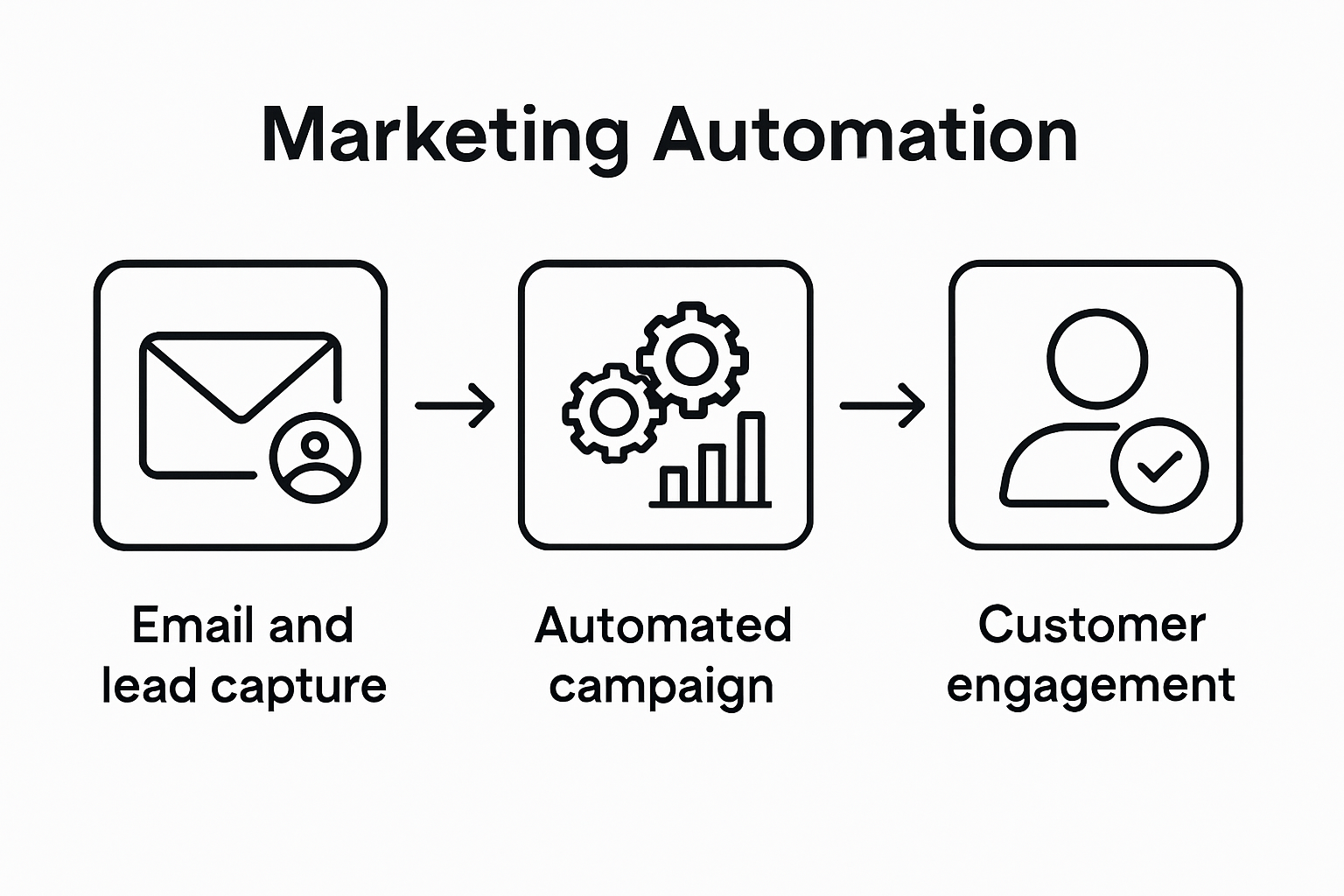
Marketing automation represents a sophisticated technological approach that is frequently misunderstood by businesses of all sizes. Contrary to popular belief, these platforms are not exclusively designed for large enterprises but offer scalable solutions for organisations across different scales and complexity levels.
Integration challenges remain a critical consideration for businesses implementing marketing automation technologies. These complexities typically emerge from several key areas that require strategic planning and technical expertise:
Common challenges and misconceptions include:
Successful marketing automation demands a nuanced understanding that balances technological capabilities with strategic human insight. By recognising these challenges proactively, businesses can develop more effective, adaptive marketing strategies that leverage automation without sacrificing the essential human touch of meaningful customer engagement.
Small businesses embarking on marketing automation must navigate a complex landscape of technological opportunities and potential pitfalls. Digital marketing strategies require careful implementation to ensure meaningful engagement and sustainable growth.
Strategic automation demands a nuanced approach that goes beyond simple technological deployment. Many small businesses fall into common traps that can undermine their marketing effectiveness, including overcomplicated processes that obscure genuine customer connections. The key is developing a clear, focused strategy that prioritises authentic customer interactions while leveraging technological capabilities.
Critical mistakes small businesses should avoid include:
Successful marketing automation requires a delicate balance between technological efficiency and genuine human connection. Small businesses must approach these tools as strategic enablers, not replacements for meaningful customer relationships, ensuring that every automated interaction feels personalised and intentional.
Many businesses struggle with effectively personalising customer engagement while managing complex marketing workflows. This article highlights critical challenges such as overcomplicated automation processes, the need for precise audience segmentation, and balancing technology with authentic connections. At Kickass Online, we understand that strategic marketing automation is essential to streamline these tasks and create high-converting customer journeys that truly reflect your brand’s unique voice.
Discover how our expert team can help your small or medium-sized business implement tailored digital solutions that optimise website performance, improve search engine rankings, and enhance customer interactions with automation tools designed for your needs. Explore success stories and recommendations on our Recommendations | Kickass Online page to see real results. Act now to elevate your business with personalised strategies crafted for sustained growth. Visit us today at Kickass Online and start your transformation journey.
Marketing automation is a software strategy designed to streamline marketing processes, enabling businesses to automate tasks and improve customer engagement with data-driven campaigns.
Marketing automation provides small businesses with enhanced efficiency, personalised communication, and real-time performance analytics, helping them to engage customers more effectively without overwhelming their resources.
Key features include intelligent lead scoring, behavioural tracking, personalised messaging, campaign performance analytics, and workflow automation, all of which simplify complex marketing tasks and enhance customer interactions.
Small businesses should avoid overcomplicating workflows, neglecting personalisation, inadequate data management, ignoring customer feedback, and poor integration with existing systems to ensure meaningful engagement and successful implementation.
Most british businesses underestimate the impact of keyword strategy on search performance. With over 90 percent of online experiences beginning with a search engine, knowing how keywords drive visibility is more than a technical detail. When you understand what makes keywords powerful and how search engines use them, you gain the tools to craft content that speaks directly to your audience and rises above the competition.
| Point | Details |
|---|---|
| Importance of Keywords | Keywords are essential for connecting businesses with potential customers by aligning content with user search behaviours. |
| Keyword Types | Short-tail and long-tail keywords serve different purposes; businesses should use a mix to optimise visibility and conversion. |
| Effective Placement | Integrating keywords naturally across critical website areas maximises search engine visibility while enhancing user experience. |
| Avoiding Common Mistakes | Businesses must avoid keyword stuffing and neglecting semantic variations to maintain effective SEO strategies. |
In the digital marketing ecosystem, keywords are fundamental communication bridges connecting businesses with potential customers through online search platforms. These strategic word combinations represent the core language users employ when seeking specific information, products, or services online. By understanding how keywords play a critical role in content discovery, businesses can effectively align their digital content with audience search behaviours.
Research indicates that keywords are not merely random words, but precise semantic signals that help search engines comprehend and categorise web content. Drawing from academic research on information retrieval, keywords represent the main conceptual elements that encapsulate a topic’s essence, allowing search algorithms to match user queries with the most relevant digital resources. When strategically selected, these linguistic markers enable websites to communicate their purpose and relevance directly to search engine indexing systems.
Successful keyword implementation requires a nuanced understanding of audience language patterns. Businesses must move beyond generic terms and develop a sophisticated approach that considers search intent, user psychology, and contextual relevance. This means selecting keywords that not only describe your content accurately but also reflect the specific phraseology potential customers might use when searching for solutions in your industry. By crafting a keyword strategy that balances technical precision with natural language, organisations can significantly enhance their online visibility and attract more targeted web traffic.
Key considerations for effective keyword selection include:
In the realm of search engine optimisation, keywords are strategically divided into distinct categories that serve unique purposes in digital marketing. Keyword research reveals a complex landscape where different types of keywords can dramatically impact a website’s online visibility and search performance. Understanding these variations allows businesses to craft more targeted and effective content strategies.
Primary keyword categories include short-tail and long-tail keywords, each with specific characteristics and strategic applications. Short-tail keywords are broad, generic terms typically consisting of one to two words, characterised by high search volumes and intense competitive landscapes. These keywords generate significant traffic but present considerable challenges in ranking due to their generalised nature. Conversely, long-tail keywords offer more nuanced targeting opportunities, representing more specific phrases that capture precise user search intentions.

The strategic selection between short-tail and long-tail keywords depends on multiple factors, including business objectives, industry competitiveness, and target audience behaviours. While short-tail keywords might attract broader audiences, long-tail keywords often demonstrate higher conversion potential by addressing specific user queries. Businesses must carefully analyse search volume, competition levels, and relevance when developing their keyword strategies, recognising that an effective approach typically involves a balanced mixture of both keyword types.
Key differences between keyword types include:
Search engines employ sophisticated algorithmic processes to interpret and analyse keywords, transforming them into critical signals for understanding web content relevance. Keyword density plays a fundamental role in this sophisticated evaluation mechanism, allowing search algorithms to assess how comprehensively a webpage addresses specific user queries. These intelligent systems go beyond simple word matching, examining contextual nuances and semantic relationships between keywords to determine the most appropriate content rankings.
Modern search engines utilise advanced techniques like keyword clustering to develop a more holistic understanding of webpage content. This approach involves grouping related keywords and examining their thematic connections, enabling search platforms to comprehend the broader context and intent behind web pages. By analysing these intricate keyword networks, search algorithms can more accurately match user search intentions with the most relevant digital resources, ensuring higher-quality search results.
The process of keyword interpretation is complex and multifaceted, requiring continuous algorithmic refinement. Search engines actively discourage manipulative practices like keyword stuffing, instead rewarding content that demonstrates natural, contextually appropriate keyword usage. Businesses and content creators must therefore focus on creating genuinely informative, well-structured content that organically incorporates keywords, reflecting authentic user needs and search motivations.
Key strategies for effective keyword usage include:
Successful keyword integration requires a strategic approach that balances technical optimisation with natural, engaging content creation. Keyword placement is critical, with certain website areas demanding more focused attention to maximise search engine visibility. Content optimisation tools can help businesses identify optimal keyword positioning across different website elements, ensuring a comprehensive and effective implementation strategy.
Website content should incorporate keywords seamlessly across multiple critical areas, including page titles, headings, meta descriptions, image alt text, and primary content sections. Strategic keyword placement begins with the page title, which serves as the primary signal to search engines about the content’s primary focus. Website headers and subheaders provide additional opportunities for keyword integration, allowing businesses to reinforce topical relevance while maintaining a natural, reader-friendly narrative flow.
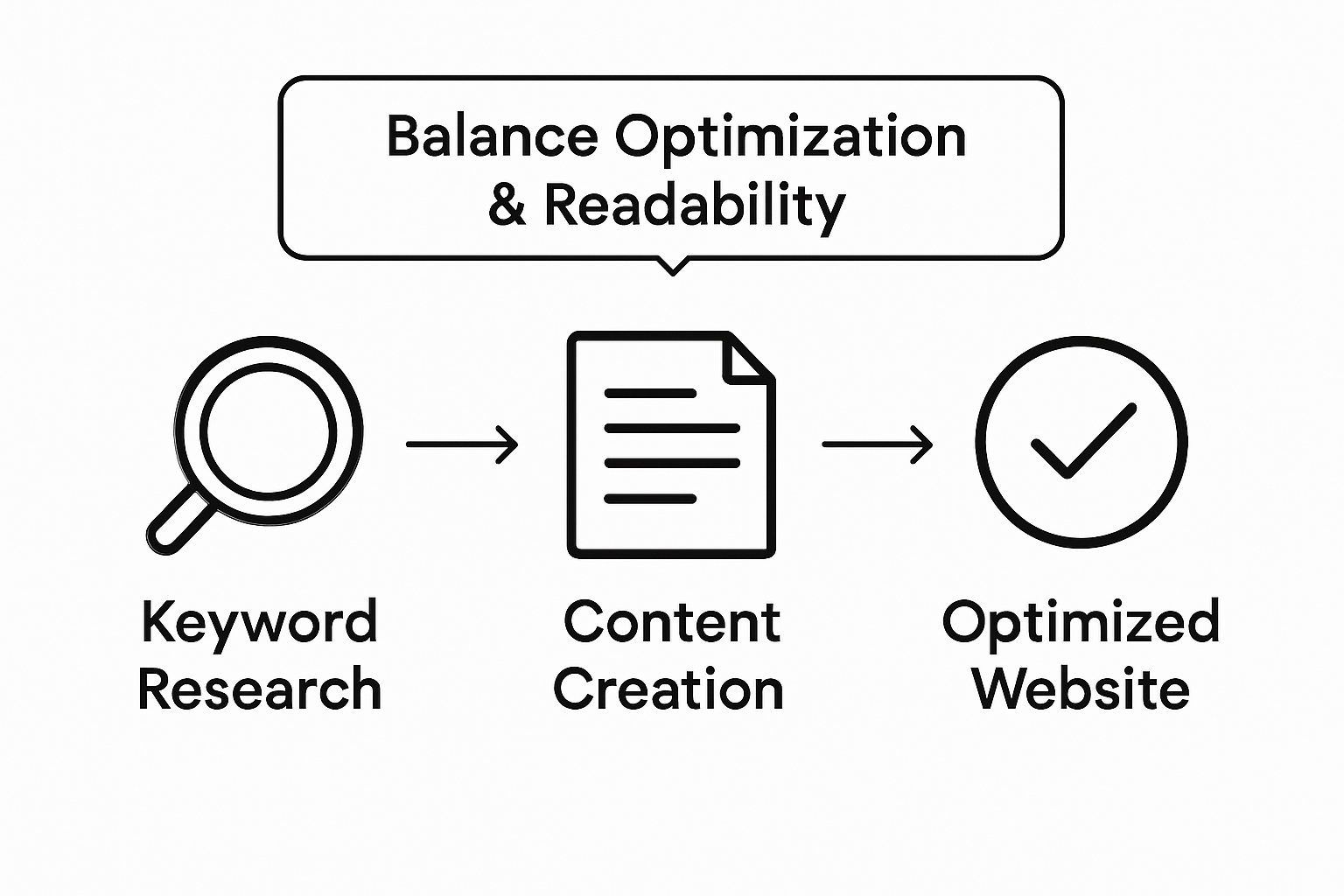
Beyond technical placement, successful keyword incorporation demands a holistic approach that prioritises user experience and content quality. Businesses must avoid overly mechanical keyword insertion, instead focusing on creating comprehensive, informative content that naturally includes relevant search terms. This approach not only satisfies search engine algorithms but also ensures that website visitors receive valuable, engaging information that addresses their specific needs and search intentions.
Key strategies for effective keyword integration include:
Keyword strategies can quickly become ineffective when businesses fall into common pitfalls that undermine their search engine optimisation efforts. Keyword density represents a critical area where many organisations inadvertently compromise their digital visibility by misunderstanding how search engines evaluate content. The most prevalent mistake involves keyword stuffing, an outdated technique that involves artificially cramming excessive keywords into content in an attempt to manipulate search rankings.
Keyword clustering is another nuanced area where businesses frequently stumble. Many organisations fail to understand the importance of semantically related keywords, instead focusing on isolated terms that do not create a comprehensive topical context. This approach results in disjointed content that confuses search engine algorithms, ultimately reducing the potential for achieving higher search rankings. Successful keyword strategies require a more sophisticated approach that considers thematic relevance and user search intentions.
Professional digital marketers recognise that keyword implementation is an intricate balance between technical optimisation and genuine content value. Avoiding SEO errors demands a strategic approach that prioritises user experience and informative content over mechanical keyword insertion. Businesses must move beyond simplistic tactics and develop a nuanced understanding of how search engines interpret contextual relevance, semantic relationships, and user engagement.
Common keyword mistakes to avoid include:
The article highlights the critical challenge many businesses face: connecting with their ideal audience through precise keyword selection and strategic SEO implementation. If you find yourself struggling with keyword confusion, low search engine rankings, or ineffective content optimisation, you are not alone. Properly addressing user search intent, avoiding common keyword mistakes, and integrating keywords naturally are essential steps to boost online visibility and attract targeted traffic.
At Kickass Online, we specialise in crafting personalised, high-converting websites that align perfectly with your business goals. Our dedicated team understands the importance of keywords and SEO in digital marketing, and we ensure your website’s content and structure are optimised for maximum impact. Learn more about our tailored solutions on our Websites | Kickass Online page.
Don’t let your website get lost in the digital crowd. Take control of your online presence today by partnering with experts who prioritise your growth. Book a consultation now at Kickass Online and explore practical insights in our Recommendations | Kickass Online section to stay ahead with the latest SEO trends and personalised strategies.
Keywords are specific words or phrases that users type into search engines when looking for information, products, or services. They are crucial for SEO because they help connect businesses with their target audience by aligning content with search intent, thus enhancing online visibility.
Selecting the right keywords involves understanding your audience’s language patterns and search intent. Focus on a mix of high-volume and niche long-tail keywords that accurately describe your content and reflect the specific queries your potential customers may use.
Short-tail keywords are broad, general terms with high search volumes but intense competition, usually consisting of one or two words. Long-tail keywords are more specific phrases that capture precise search intentions, often resulting in lower competition and higher conversion rates.
To effectively incorporate keywords, place them strategically in key areas such as page titles, headings, and meta descriptions. Ensure the integration appears natural and maintains readability, prioritising user experience while still satisfying search engine algorithms.
Over 80 percent of British consumers say they will only engage with organisations they completely trust online. As companies shift more of their services to digital platforms, every digital interaction now hinges on a foundation of reliability and data security. This guide unpacks what digital trust truly means, why it has become a critical concern for both British businesses and individuals, and how core principles are shaping the future of secure, transparent digital relationships.
| Point | Details |
|---|---|
| Understanding Digital Trust | Digital trust is vital for secure online interactions, involving reliability, data protection, and transparency in practices. |
| Core Components | Key aspects of digital trust include robust security measures, consistent performance, and clear communication of data policies. |
| Types of Digital Trust | Businesses should focus on areas such as data protection, digital identity, transaction security, and communication integrity. |
| Managing Risks and Challenges | Organisations must proactively address digital risks like data breaches and authentication weaknesses to sustain user confidence. |
In the rapidly evolving digital landscape, digital trust has emerged as a fundamental concept for businesses and individuals navigating online interactions. At its core, digital trust represents the confidence and reliability that underpins relationships, transactions, and exchanges within digital ecosystems. According to ISACA, digital trust extends far beyond mere technological considerations, encompassing trust in people, processes, and organisations.
The essence of digital trust lies in creating a secure, transparent environment where users feel confident about their online engagements. This involves multiple critical components:
Building digital trust requires a holistic approach that integrates technological infrastructure, ethical practices, and user-centric design. Businesses must demonstrate their commitment to protecting user data, maintaining transparent operations, and fostering an environment of reliability and integrity. By prioritising these elements, organisations can create meaningful digital relationships that transcend traditional transactional interactions and establish long-term credibility in an increasingly connected world.
Businesses today recognise that digital trust is a multifaceted concept with several critical dimensions. According to NCS research, digital trust fundamentally encompasses four primary types: data protection, artificial intelligence, digital identity, and systems infrastructure. These interconnected elements form the backbone of secure digital interactions in the modern business environment.
The key types of digital trust can be comprehensively categorised as follows:
Digital transaction security represents a particularly crucial aspect of digital trust, where businesses must demonstrate their ability to handle sensitive interactions with integrity and reliability. This involves implementing sophisticated encryption technologies, maintaining rigorous authentication protocols, and creating transparent systems that provide users with confidence in their digital engagements. By prioritising these trust mechanisms, organisations can build resilient digital ecosystems that support seamless, secure interactions across various platforms and services.

Digital trust operates through a complex ecosystem of interconnected principles that establish confidence and reliability in digital interactions. According to research from Preprints, digital trust is fundamentally characterised by several critical attributes: competence, reliability, robust security, fair practices, positive user experience, regulatory compliance, and comprehensive auditability. These characteristics work together to create a framework that enables organisations to build and maintain trustworthy digital relationships.
The key characteristics of digital trust can be understood through multiple essential dimensions:
Digital trust mechanisms function by creating a dynamic environment of confidence, flexibility, and user empowerment. This involves developing sophisticated systems that not only protect sensitive information but also provide users with clear visibility into how their data is managed. Organisations must continuously evolve their digital trust strategies, integrating advanced technologies, rigorous security protocols, and transparent practices to maintain credibility in an increasingly complex digital landscape.
Building digital trust requires a strategic and comprehensive approach that goes beyond simple technological solutions. According to Digital Trust research, effective digital trust implementation demands robust cybersecurity measures, comprehensive safety protocols, and transparent data protection strategies that can be independently audited and clearly communicated to users. This multifaceted approach ensures that organisations create an environment of genuine confidence and reliability.
Key strategies for building and maintaining digital trust online include:
Digital ecosystem integrity extends far beyond technological solutions, encompassing trust in people, processes, and organisational practices. Businesses must demonstrate a holistic commitment to digital trust by continuously evolving their approaches, investing in advanced security technologies, maintaining rigorous ethical standards, and fostering a culture of transparency and accountability. This ongoing commitment helps organisations build long-term digital relationships founded on mutual respect, reliability, and genuine user confidence.
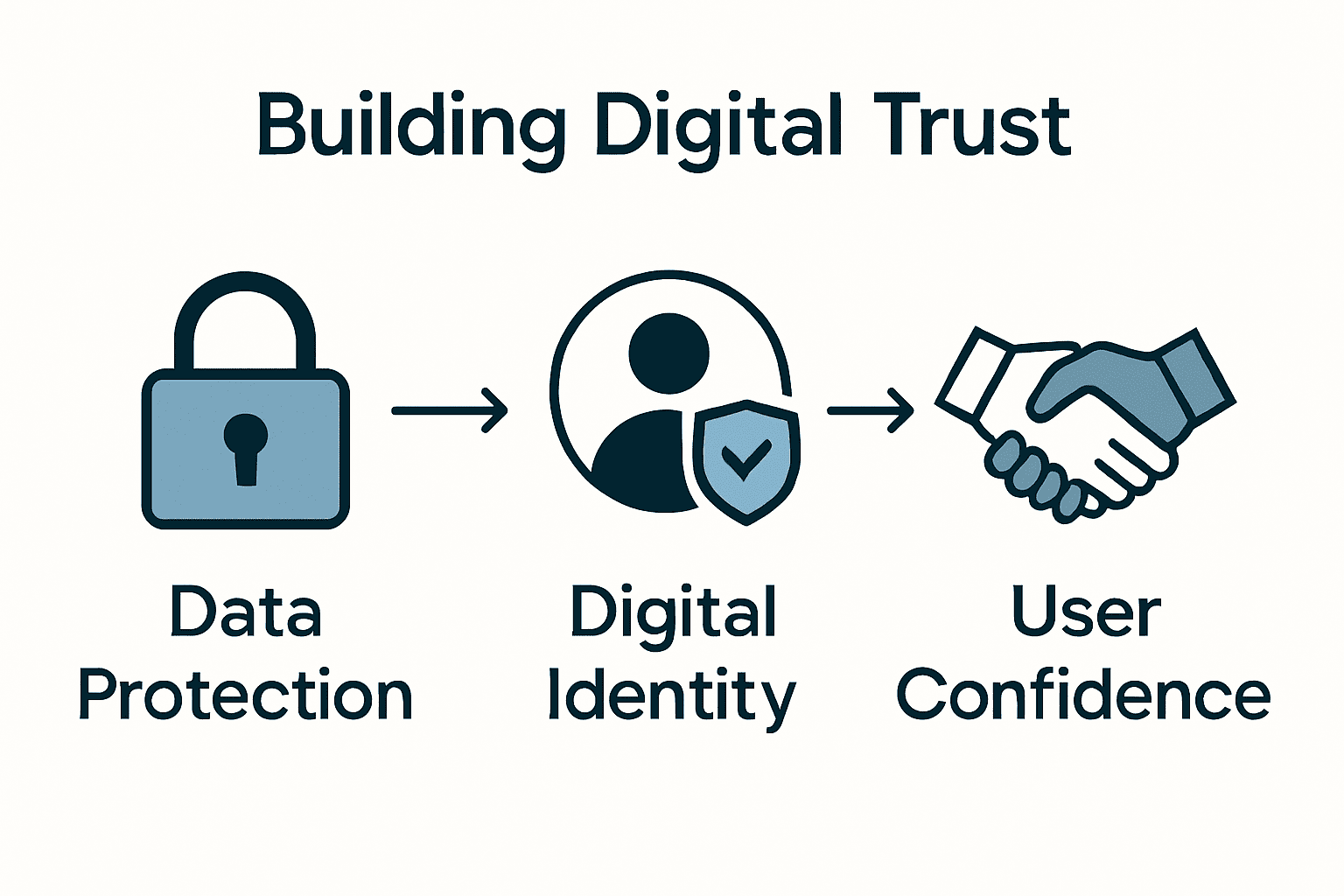
Digital trust faces numerous complex challenges that require proactive and strategic management. According to research from SHS Conferences, potential threats like data breaches and privacy violations significantly contribute to digital distrust, making it crucial for organisations to create and maintain robust conditions that foster genuine trust in digital technologies and interactions.
Key digital risks and challenges organisations must navigate include:
Cybersecurity solutions represent the critical defence mechanism against digital risks. Organisations must continuously invest in advanced technological safeguards, implement comprehensive security protocols, and develop adaptive strategies that anticipate emerging threats. This requires a holistic approach that combines cutting-edge technological solutions, rigorous staff training, and a proactive culture of digital security awareness to effectively mitigate potential vulnerabilities and maintain user confidence.
Building and maintaining digital trust is essential for any business seeking to create secure, reliable online relationships. The challenges of protecting data, ensuring transactional security, and delivering consistent, transparent experiences can feel overwhelming. At Kickass Online, we understand these critical pain points and specialise in crafting personalised digital strategies that prioritise robust security and seamless user experience. Our expert team focuses on high-converting web design, SEO optimisation, and continuous website maintenance to help your business establish credibility and foster long-term trust with your customers.
Take control of your digital presence with solutions that address key concerns such as data protection, regulatory compliance, and user empowerment. Discover how our tailored services can transform your website into a trustworthy, secure platform that drives confident customer interactions and sustainable growth.

Ready to build digital trust the right way Start by partnering with a team that prioritises your business security and online integrity. Explore our comprehensive services at Kickass Online and secure your free consultation to begin your journey toward a more trusted digital future today. Learn more about how we deliver personalised website development and ongoing website maintenance designed to keep your online presence safe and strong.
Digital trust refers to the confidence and reliability in online interactions, encompassing trust in people, processes, and organisations, alongside technological factors.
Businesses can build digital trust by ensuring robust data protection, maintaining transparent practices, providing consistent performance, and implementing strong security measures.
The key types of digital trust include data protection trust, digital identity trust, transaction security trust, communication trust, and technological infrastructure trust.
Organisations face challenges such as data breach vulnerabilities, compliance with privacy regulations, weaknesses in authentication, and inconsistencies in user experience.
Over 90 percent of british consumers research a company online before deciding to use its services, making a business website more crucial than ever. For businesses aiming to build credibility, reach new customers, and support long-term growth, a well-constructed website acts as the foundation for digital success. This guide demystifies what sets a business website apart, outlines its most valuable features, and explains why every british organisation needs a strong digital home to stay competitive.
| Point | Details |
|---|---|
| Importance of a Business Website | A business website serves as a professional online representation, facilitating communication and showcasing products or services effectively. |
| Types of Business Websites | Different business objectives require specific types of websites, including informational, e-commerce, portfolio, and content platforms. |
| Essential Features | Key components like clear brand identity, responsive design, and comprehensive content are crucial for a successful website. |
| Choosing a Development Partner | Selecting a web development partner should involve assessing technical expertise, strategic understanding, and support capabilities to ensure alignment with business goals. |
A business website is a professionally designed digital platform that represents a company’s online presence, serving as a virtual storefront and critical communication channel with potential customers. Unlike personal blogs or social media pages, a business website provides a dedicated space where organisations can showcase their products, services, and brand identity with complete control and credibility.
Modern businesses establish websites with strategic marketing objectives, automating services and achieving significant operational efficiencies that transform how they interact with customers. These digital platforms enable organisations to offer quality service, streamline customer interactions, and reduce administrative overhead through instant information transfer and data management.
A well-crafted business website typically includes essential components that communicate a company’s value proposition effectively. These elements might encompass:
By creating a strategically designed business website, small and medium enterprises can establish digital credibility, expand their market reach, and provide 24/7 access to potential customers, transforming how they engage and grow their business in the digital marketplace.
Businesses today have diverse digital needs, which are reflected in the various types of websites designed to serve different strategic purposes. These digital platforms are not one-size-fits-all solutions but carefully crafted tools tailored to specific organisational objectives and target audience requirements.
The most common categories of business websites include informational websites that provide comprehensive details about a company’s offerings, and e-commerce websites focused on direct online sales. Some businesses also develop specialised websites like educational platforms and community forums that facilitate knowledge sharing and user engagement.
Here are the primary types of business websites:
Informational Websites
E-commerce Websites
Portfolio Websites
Blog and Content Websites
By understanding and implementing the right type of business website, organisations can effectively communicate their value proposition, engage target audiences, and create meaningful digital experiences that drive business growth.
A successful business website must strategically incorporate key elements that reflect the organisation’s brand and communicate its core offerings. These essential features go beyond mere aesthetic design, serving as critical communication tools that connect businesses with potential customers and establish digital credibility.

The fundamental components vary depending on the type of website, but certain core features remain universal. E-commerce platforms require robust functionality like product listings and secure payment processing, while informational sites prioritise clear navigation and comprehensive content. Regardless of the specific business model, websites must provide visitors with immediate insights into the company’s value proposition.
Key essential features include:
Clear Brand Identity
Contact Information
Responsive Design
Comprehensive Content
Navigation Elements
By implementing strategic website elements that enhance user experience, businesses can transform their digital presence from a simple online brochure to a powerful customer engagement and conversion platform.
Developing and operating a business website involves complex financial considerations that extend far beyond initial design and implementation costs. Small and medium enterprises must approach their digital investment strategically, understanding that a website represents more than just an expense, it’s a potential revenue-generating platform with measurable return on investment.
The financial landscape of business websites encompasses multiple dimensions, including development costs, ongoing maintenance, and potential revenue generation. Mobile web solutions can significantly improve return on investment by expanding global reach and enhancing operational efficiency, though businesses must carefully navigate technological challenges and compatibility requirements.
Common website investment pitfalls include:
Unexpected Development Costs
Technical Limitations
Content Management Challenges
Security Vulnerabilities
By understanding essential digital marketing metrics for measuring website performance, businesses can transform their websites from potential financial burdens into strategic assets that drive growth and customer engagement.
Selecting the ideal web development partner requires a strategic approach that goes beyond superficial technical capabilities. Small and medium enterprises must carefully evaluate potential partners who can transform their digital vision into a functional, high-performing online platform that truly supports business objectives.
Web development partnerships demand comprehensive assessment of a partner’s experience across various corporate website types, ensuring they can deliver solutions tailored to specific business requirements. The right partner should demonstrate not just technical proficiency, but a deep understanding of how digital platforms can drive business intelligence and strategic growth.
Key criteria for selecting a web development partner include:
Technical Expertise
Strategic Understanding
Communication Skills
Support and Maintenance
By understanding the comprehensive requirements for web design partnerships, businesses can transform their digital strategy from a transactional service engagement to a collaborative growth partnership.
Struggling to define the perfect business website or unsure how to turn your online platform into a powerful growth engine? Small and medium enterprises often face challenges like unclear brand identity, poor user experience, and the complexity of choosing the right website type or development partner. The good news is you do not have to navigate these hurdles alone. Kickass Online specialises in crafting bespoke business websites that embody your unique value proposition and deliver measurable results.
Explore our Tutorials | Kickass Online to gain insights and practical advice tailored for SMEs. Then, experience the difference that a dedicated digital marketing agency focused on personalised service can make. Visit Kickass Online now to book your consultation and start transforming your website into a high-converting, secure, and professionally optimised business asset designed for long-term success.
A business website serves as a digital platform that represents a company’s online presence, showcasing products and services while facilitating communication with potential customers.
Common types of business websites for SMEs include informational sites, e-commerce platforms, portfolio websites, and blogs or content sites, each designed to serve specific strategic purposes.
Key features include a clear brand identity, contact information, responsive design, comprehensive content, and intuitive navigation elements to enhance user experience and engagement.
SMEs can measure ROI by assessing factors such as website traffic, conversion rates, and engagement metrics. Understanding these aspects transforms the website into a strategic asset that contributes to business growth.
More than 80 percent of british consumers use search engines to find products and local businesses, making online visibility more crucial than ever. In a world where competition is fierce and every click counts, understanding the foundations of search engine optimisation gives businesses a real chance to stand out. Whether you want to capture new customers locally or build trust through quality content, proven strategies can transform your website into a powerful magnet for engagement and growth.
| Takeaway | Explanation |
|---|---|
| 1. Optimise for Search Engines | Implement targeted SEO strategies to improve visibility and rank higher on search engines. |
| 2. Regularly Publish Quality Content | Consistent, valuable content increases engagement and boosts search engine rankings. |
| 3. Use Local SEO Techniques | Tailor your website for local searches to attract customers in your vicinity. |
| 4. Leverage Social Media for Traffic | Use strategic social media engagement to drive traffic to your website effectively. |
| 5. Monitor Performance Metrics | Regularly analyse data to refine strategies and improve online presence dynamically. |
Search engine optimisation is the powerhouse strategy that transforms your website from invisible to irresistible for search algorithms. By implementing targeted SEO elements for effective web design, you create a digital pathway that guides search engines directly to your content.
The foundation of search engine optimisation begins with understanding how search algorithms evaluate websites. Search engines like Google analyse multiple factors to determine your site’s relevance and ranking, including content quality, site structure, loading speed, and keyword integration. Successful optimisation means creating a website that not only looks great but communicates clearly with search engine crawlers.
Key Strategies for Search Engine Optimisation:
Practical implementation involves carefully selecting keywords that match user intent, crafting compelling meta descriptions, and structuring your website with clear, logical navigation. For instance, the Coursera course on website optimisation recommends using descriptive, concise page titles and ensuring each page targets specific search queries.
Remember that search engine optimisation is an ongoing process. Regularly audit your website, track performance metrics, and adapt your strategy based on changing search algorithm requirements. By treating your website as a dynamic, evolving platform, you create a robust online presence that attracts and retains your target audience.
Content is the heartbeat of your online presence, driving engagement, trust, and search engine visibility. Understanding how to craft content marketing strategies that engage and drive results transforms your website from a static digital brochure into a dynamic, interactive platform.
Why Regular Content Matters:
Regular content publication signals to search engines that your website is active, relevant, and committed to providing value. University of Washington research emphasises that publishing high quality, unique content consistently directly improves search engine rankings and attracts more website traffic.
Content Creation Strategies:
Stanford Medicine highlights that beyond search rankings, high quality content builds crucial audience trust. This means going beyond keyword stuffing and genuinely addressing user needs with well researched, authoritative information.
Practical implementation requires dedication. Aim to publish content weekly or bi weekly, maintaining a balance between quantity and quality. Track audience engagement metrics, gather feedback, and continuously refine your content strategy to ensure it remains relevant and compelling.
Local search engine optimisation transforms your website into a targeted magnet for nearby customers, connecting your business directly with local audiences seeking your services. Harnessing local SEO strategies bridges the gap between online visibility and real world customer acquisition.
Why Local SEO Matters:
Customers increasingly search for businesses using location specific queries like “cafe near me” or “plumber in Milton Keynes”. The University of Maine System emphasises that optimising content for local search terms significantly increases website visibility to nearby potential customers.
Practical Local SEO Strategies:
The Ohio State University recommends creating searchable site structures that prioritise local relevance. This means embedding your city, region, and neighbourhood naturally within your website content, metadata, and headings.
Consistent local information across your website and online directories signals credibility to search algorithms. Include your precise business address, local phone number, and region specific contact details. By tailoring your online presence to local audiences, you transform digital visibility into tangible local customer engagement.
Social media is not just a communication platform but a powerful engine for driving website traffic and expanding online visibility. Unlocking the power of social media advertising can transform your digital marketing strategy from passive to proactive.
Why Social Media Matters for Traffic:
YaleSites emphasises the critical importance of integrating social media accounts with your website to enhance online visibility. Social platforms provide direct pathways for potential customers to discover and engage with your content, creating powerful opportunities for traffic generation.
Strategic Social Media Traffic Techniques:
Cambridge University Press recommends creating content that naturally encourages sharing. This means developing posts that provide genuine value, spark conversation, and compel users to click through to your website.
Successful social media traffic generation requires understanding your audience, crafting platform specific content, and maintaining a consistent brand voice across all channels. By treating social media as a strategic communication tool rather than a mere broadcasting platform, you can create meaningful connections that translate into sustained website traffic.
Backlinks represent the digital world’s vote of confidence, transforming your website from an isolated resource to a recognised authority in your industry. Understanding the power of backlinks in SEO can significantly elevate your online visibility and search engine rankings.
Why Backlinks Matter:
Southern Methodist University highlights that quality backlinks are crucial for establishing website authority. Search engines interpret these links as external endorsements, essentially treating them as professional recommendations from other credible websites.
Strategic Backlink Building Techniques:
Cambridge University Press emphasises that not all backlinks are equal. Prioritise links from authoritative websites within your industry that demonstrate genuine relevance and editorial standards.
Successful backlink strategies require patience, persistence, and a commitment to producing outstanding content that naturally attracts links. Focus on building genuine relationships and creating resources that provide real value to your professional community.
In today’s digital ecosystem, website performance is the silent ambassador of user experience. Understanding mobile friendly design transforms your digital presence from frustrating to phenomenal.
Why Speed and Mobile Readiness Matter:
The University of Washington warns that slow loading pages directly correlate with higher bounce rates, potentially decimating your online engagement. Modern users expect instantaneous access to information across multiple devices.
Performance Optimisation Strategies:
Cambridge University Press emphasises that mobile compatibility is no longer optional. Websites must adapt dynamically to screen sizes, ensuring content remains readable and functional on smartphones, tablets, and desktop computers.
Implementing these strategies requires technical precision and ongoing maintenance. Regular performance audits, using tools like Google PageSpeed Insights, can help identify and resolve potential loading issues, keeping your website swift and user friendly.
Website visibility is not a static achievement but a dynamic journey of continuous improvement and adaptation. Tracking your website performance allows you to transform raw data into strategic insights that elevate your online presence.
Why Performance Monitoring Matters:
Cambridge University Press emphasises that search engine algorithms constantly evolve, requiring businesses to remain agile and responsive. Regular performance analysis helps you understand what strategies are working and which need refinement.
Strategic Performance Monitoring Techniques:
YaleSites recommends using comprehensive tools like Siteimprove to identify potential website issues and opportunities for optimisation. These platforms provide granular insights into technical performance, content effectiveness, and user interaction patterns.
Successful digital strategy requires a proactive approach. Set quarterly review periods to assess your website performance, experiment with new techniques, and continuously refine your approach based on data driven insights. Remember that digital visibility is an ongoing process of learning, adapting, and improving.
Below is a comprehensive table summarising key strategies and techniques for improving website visibility and effectiveness discussed throughout the article.
| Topic | Key Points & Actions | Benefits/Outcomes |
|---|---|---|
| Search Engine Optimisation | Conduct keyword research, improve content quality, ensure technical structure, and enhance mobile responsiveness | Improved search visibility and user experience |
| Content Creation | Understand audience, develop a content calendar, focus on value, and diversify content types | Increased engagement and search engine rankings |
| Local SEO | Create a Google Business Profile, utilise local keywords, create location pages, encourage customer reviews | Enhanced local customer engagement and visibility |
| Social Media Integration | Consistent posting, platform diversification, using engaging visuals and strategic hashtags | Increased traffic and online visibility |
| Backlink Building | Create exceptional content, guest blogging, and engage in professional networking | Enhanced website authority and search rankings |
| Performance Optimisation | Compress images, implement browser caching, utilise responsive design, and minimise plugin usage | Faster loading speeds and improved mobile readiness |
| Performance Monitoring | Utilise Google Analytics, conduct competitor analysis, track keyword rankings | Data-driven insights and ongoing strategic refinement |
If you are facing challenges with boosting your website visibility online or struggling to implement strategies like search engine optimisation or local SEO your business deserves a partner that delivers personalised solutions tailored for success. The article highlights critical pain points such as optimising for search engines maintaining fast loading speeds creating high quality content and building authoritative backlinks. Tackling these can feel overwhelming without expert guidance.
At Kickass Online we specialise in crafting high converting websites and optimising search engine rankings specifically for small and medium sized businesses. Our dedicated team focuses on providing hands on support in technical SEO mobile readiness and ongoing website performance monitoring to ensure your online presence not only attracts visitors but converts them to loyal customers. Discover how our services can transform your digital journey by exploring our comprehensive Websites solutions and practical Tutorials designed to empower you.
Take control of your online visibility today by booking a consultation with Kickass Online. Receive expert advice tailored to your business needs and start implementing effective strategies that produce real results. Visit Kickass Online and unlock your website’s true potential now.
To optimise your website for search engines, focus on keyword research to identify the terms your audience uses. Implement these keywords in your content, meta descriptions, and website structure to improve your visibility. Regularly audit your site to adapt to changes in search algorithms.
Create high-quality, relevant content that addresses the needs and questions of your audience. Diversify your content types by including blog posts, videos, and infographics, and aim to publish new material consistently, such as once a week or bi-weekly, to keep the audience engaged.
Local SEO is crucial as it connects your business with nearby customers who are looking for services like yours. To utilise local SEO, ensure your website includes location-specific keywords and maintain accurate information across online directories. This can significantly boost your visibility in local search results.
To drive traffic from social media to your website, post engaging and valuable content consistently across various platforms. Use eye-catching visuals and strategic hashtags, and encourage interactions through polls or quizzes to increase engagement and click-through rates.
Quality backlinks are links from reputable websites that signal to search engines that your site is authoritative. To build them, create exceptional content that others want to reference and consider guest blogging for industry publications. Focus on developing genuine relationships within your industry to boost your backlinking efforts.
Monitor your website’s performance by using analytical tools to track visitor behaviour, engagement metrics, and keyword rankings. Set specific review periods, such as quarterly, to assess your strategies and refine them based on the data you gather. Regular performance checks help you stay ahead in maintaining visibility and relevance online.
Over 70 percent of british consumers rely on local search to find businesses near them, yet many companies neglect key steps that boost their visibility. Strong local SEO can mean the difference between steady business and missed opportunities because competition for regional customers has never been fiercer. By taking practical, data driven actions, you can unlock more foot traffic, calls and credibility, setting your business apart in the crowded british market.
| Key Insight | Explanation |
|---|---|
| 1. Audit Your Online Presence | Regularly check your online listings for accuracy to improve local visibility. Consistency is essential in attracting customers. |
| 2. Optimise Google Business Profile | Ensure up-to-date and accurate business information to enhance visibility in local searches. Engage with customer reviews for better perception. |
| 3. Enhance On-Page SEO | Integrate local keywords into your website to attract nearby customers effectively. Content relevance is crucial for search engine understanding. |
| 4. Manage Local Citations | Build quality citations and maintain consistent information for improved search rankings and business legitimacy. Regular updates are necessary. |
| 5. Monitor and Refine SEO Tactics | Continuously track your SEO metrics and adjust strategies based on data findings to enhance overall online presence and performance. |
Auditing your current local search engine optimisation performance helps you understand exactly where your business stands in local digital visibility. This crucial first step reveals hidden opportunities to attract more local customers through strategic online positioning.
Begin by conducting a comprehensive review of your existing online presence. Local SEO assessment involves examining multiple digital touchpoints that influence your search rankings. Start with your Google Business Profile configuration checking that all business details are completely accurate including your precise location name street address operating hours contact information and business category. Verify your business name address and phone number remain consistent across all online directories platforms like Google Maps Yelp and industry specific listing services.
The most common mistakes businesses make involve neglecting regular profile updates or using inconsistent information. Inconsistent contact details can confuse potential customers and significantly harm your local search rankings. Create a systematic approach to monitoring and updating your online profiles every quarter ensuring your digital representation remains current and precise.
The next section will walk you through selecting and implementing the most impactful local SEO strategies to improve your online visibility and attract more regional customers.
Optimising your Google Business Profile provides the most direct pathway to enhancing local search visibility and attracting potential customers in your geographical area. This critical digital asset acts as your primary representation in local search results and Google Maps.
Configuring your business profile strategically involves several key actions. Begin by ensuring your business name address and contact details are 100 percent accurate and consistent across all platforms. Select the most precise business category that reflects your core services which directly impacts how search algorithms understand and rank your business. Upload high quality professional photographs showcasing your premises products or services these visual elements significantly improve user engagement and profile attractiveness.
The most impactful optimisation techniques involve regularly updating your profile with fresh content and responding promptly to customer reviews. Add posts about special offers upcoming events or recent achievements to demonstrate active business management. Reviews represent social proof potential customers value authentic feedback so encourage satisfied clients to share their experiences. Negative reviews should be addressed professionally and quickly showing potential customers your commitment to customer satisfaction.
By implementing these strategies your Google Business Profile will become a powerful tool for attracting local customers and improving your overall digital marketing effectiveness.
Enhancing on-page local SEO elements transforms your website into a powerful magnet for nearby customers seeking your specific services. This strategic approach ensures search engines understand precisely who you are and what geographical areas you serve.
Optimising your website content for local search requires careful integration of location specific keywords throughout your website. Include your city neighbourhood or region naturally within page titles headings meta descriptions and primary content. Embed your complete business address in the footer of every webpage and create a dedicated contact page that reinforces your local presence. Implement structured data markup to help search engines recognise and display your local business information more effectively.

Content strategy plays a crucial role in local SEO success. Develop location targeted blog posts highlighting local events community involvement or region specific services that demonstrate your connection to the area. Include customer testimonials from local clients and create service pages that mention specific neighbourhoods or regions you serve. Remember that authenticity matters more than keyword stuffing search engines prioritise meaningful relevant content that genuinely serves local customers.
These strategic on page optimisations will significantly improve your visibility in local search results positioning your business as a trusted local authority in your specific market.
Building and managing quality local citations is a crucial strategy for improving your business’s online visibility and search engine rankings. These digital references serve as powerful signals that validate your business’s legitimacy and local presence.
Managing consistent business information across online directories requires meticulous attention to detail. Start by identifying key online platforms where local businesses are typically listed such as Google Maps Yelp Yellow Pages industry specific directories and local chamber of commerce websites. Ensure your business name address and phone number are identical across all platforms a practice known as NAP consistency. Variations in contact details can confuse search algorithms and potentially harm your local search rankings.
The verification process is equally important. Many directories offer business verification options which add credibility to your listing. Consider creating profiles on multiple reputable platforms but focus on quality over quantity. Prioritise directories that are most relevant to your specific industry and local region. Regularly audit and update your citations every three to six months to maintain accuracy and remove any outdated or incorrect information. Some businesses find it helpful to use citation management tools that can track and synchronise business information across multiple platforms automatically.
Mastering local citations transforms your online presence making your business more discoverable and trustworthy to potential local customers.
Monitoring and refining your local SEO strategies is a continuous process that transforms raw data into actionable insights for improving your online visibility. This crucial step ensures your digital marketing efforts remain dynamic and responsive to changing customer behaviours.
Tracking performance metrics across multiple digital platforms requires a systematic approach. Leverage tools like Google Analytics Google Search Console and your Google Business Profile insights to understand how potential customers discover and interact with your business online. Pay close attention to key performance indicators such as search impressions local pack rankings website click through rates and phone call enquiries generated from your online listings. Compare these metrics quarter on quarter to identify trends and areas for improvement.
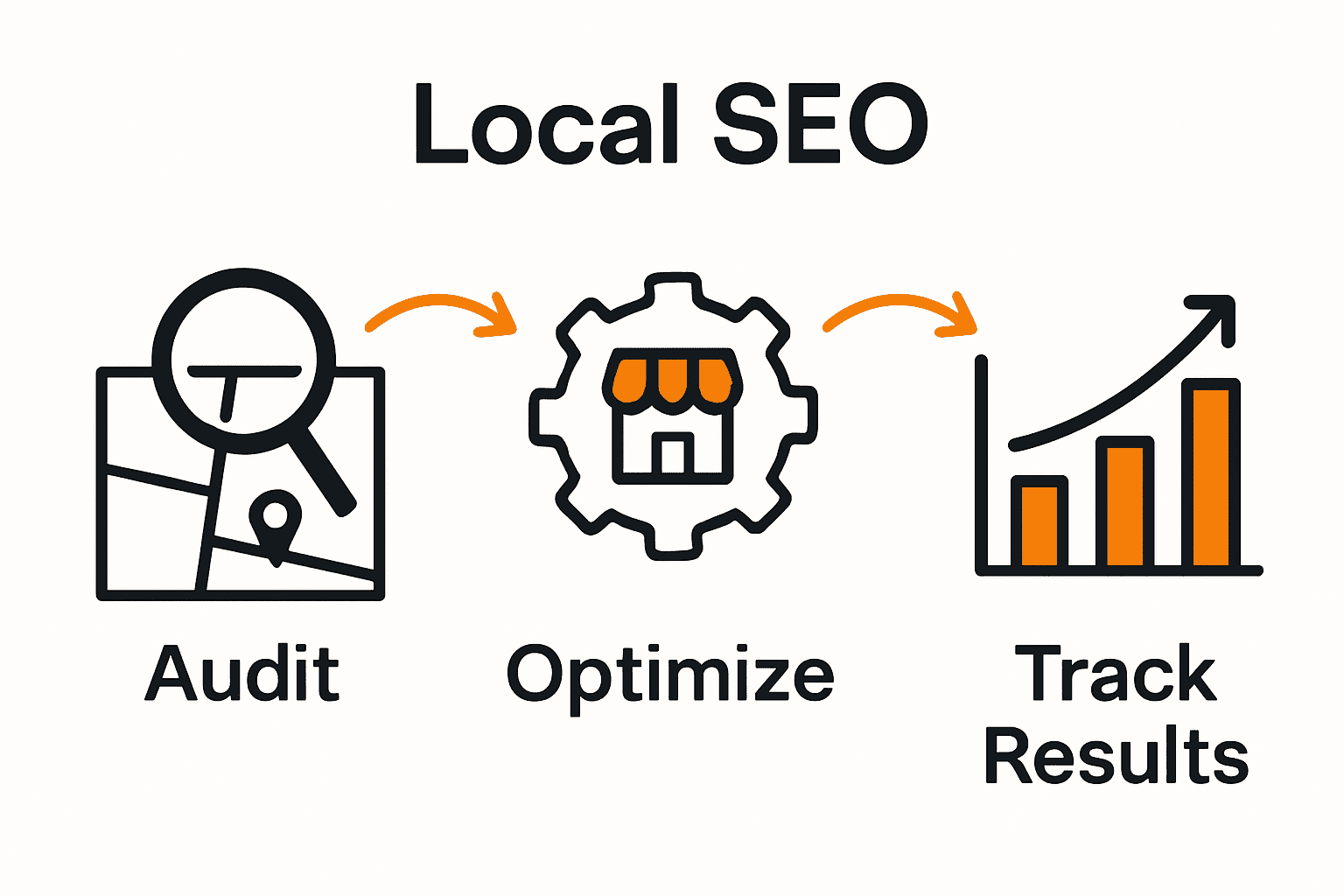
The most effective local SEO strategies emerge from a process of continuous testing and refinement. Experiment with different types of content such as location specific blog posts customer testimonials and service updates to see what resonates most with your local audience. Review customer reviews and feedback meticulously using them as a guide to understand user preferences and potential service improvements. Be prepared to adapt your approach swiftly implementing changes based on concrete data rather than assumptions.
By maintaining a proactive and data driven approach to local SEO you will incrementally enhance your digital presence and attract more high quality local business leads.
Struggling to turn local search visibility into steady leads? This article highlights common challenges such as inconsistent business information, underutilised Google Business Profiles, and the need for targeted local content. At Kickass Online, we understand how crucial it is to maintain accurate NAP details, optimise your Google Business Profile consistently, and craft on-page SEO that truly resonates with your community. Our tailored digital marketing strategies are designed to help small and medium businesses overcome these exact hurdles, driving stronger engagement and measurable growth.
Explore practical advice and discover insider tips on our Tips and Tricks page, packed with actionable strategies to complement your local SEO efforts.
Take control of your local digital presence today. Visit Kickass Online to learn how our expert team can build you a high-converting website optimised for local search. Ready to attract more local customers and grow your business with confidence? Start now by checking out our Websites services and book a free consultation with our specialists who prioritise personalised attention and proven results.
To audit your local SEO performance, conduct a thorough review of your online presence. Verify that your Google Business Profile details are accurate, consistent across all platforms, and that you are following up on customer reviews regularly.
To optimise your Google Business Profile, ensure your business name, address, and contact details are accurate and consistent. Upload high-quality photographs and update your profile with fresh content, including posts about offers and events, to enhance engagement.
To enhance on-page local SEO, integrate location-specific keywords naturally throughout your website content. Ensure your complete business address is embedded in the footer and create service pages that reflect the areas you serve.
To build quality local citations, maintain consistent business information across online directories and prioritise platforms relevant to your industry. Regularly audit your citations every three to six months to ensure accuracy and use quality over quantity in your listings.
To monitor and refine your local SEO tactics, track performance metrics using available analytics tools. Experiment with different types of content and customer feedback to identify effective strategies, and be ready to implement changes based on your findings within a month.