
Most british businesses overlook a key truth about onsite SEO. Over 60 percent of websites lose out on search rankings due to persistent myths and out-of-date strategies. Understanding how to fine-tune your web pages directly can make the difference between lagging traffic and true online visibility. By clearing up common misconceptions and mastering real-world techniques, you can build a digital presence that stands out in both local and international markets.
Table of Contents
- Defining Onsite SEO And Common Myths
- Essential Onsite SEO Elements And Techniques
- Optimising Content And User Experience
- Technical Aspects Of Onsite SEO
- Common Mistakes And How To Avoid Them
Key Takeaways
| Point | Details |
|---|---|
| Understanding Onsite SEO | Onsite SEO involves optimising individual web pages to improve search engine rankings and drive organic traffic through strategies focused on content and technical elements. |
| Continuous Process | SEO is not a one-time task; it requires ongoing updates and strategic refinements to adapt to evolving search algorithms and user expectations. |
| Key Components | Effective onsite SEO hinges on quality content, optimised meta tags, fast loading speeds, and mobile responsiveness. |
| Common Pitfalls | Businesses should avoid mistakes such as keyword stuffing, neglecting mobile optimisation, and overlooking site speed, which can hinder search visibility and user experience. |
Defining Onsite SEO and Common Myths
Onsite SEO represents the strategic optimisation of individual web pages to improve search engine rankings and drive organic traffic. It involves carefully crafting website elements to signal relevance and quality to search algorithms, focusing on factors directly within your website’s control. Successful onsite SEO requires understanding both technical configurations and content strategies that enhance overall digital visibility.
Many businesses fall prey to widespread misconceptions about search engine optimisation. Examining common SEO myths reveals persistent misunderstandings that can dramatically impede digital performance. For instance, contrary to popular belief, simply stuffing keywords or having excessive H1 tags will not magically improve rankings. Modern search algorithms demand nuanced, high-quality content that genuinely serves user intent.
The core components of effective onsite SEO include:
- Precise keyword research and strategic placement
- Optimised meta descriptions and title tags
- Clean, logical website architecture
- Fast page loading speeds
- Mobile-responsive design
- High-quality, original content that addresses user questions
Understanding that SEO is an ongoing process rather than a one-time task is crucial. Search engine algorithms continuously evolve, requiring websites to adapt and refine their strategies consistently. Businesses that view SEO as a dynamic, strategic approach will ultimately achieve more sustainable digital visibility and competitive advantage.
Essential Onsite SEO Elements and Techniques
Effective onsite SEO combines multiple technical and content-driven strategies to improve website performance in search engine rankings. Comprehensive SEO techniques require a holistic approach that addresses both visible content and underlying technical infrastructure. Successful implementation demands careful attention to detail and an understanding of how search algorithms evaluate website quality.
Content remains the cornerstone of onsite SEO, with search engines prioritising high-quality, relevant material that genuinely addresses user queries. Modern SEO demands creating in-depth, authoritative content that demonstrates expertise and provides substantial value. This means developing comprehensive articles, using clear structures, incorporating relevant keywords naturally, and ensuring every piece of content serves a specific user intent.
Key technical elements critical for onsite SEO include:
- Optimised page titles and meta descriptions
- Clean, semantic HTML structure
- Responsive mobile design
- Fast page loading speeds
- Strategic internal linking
- Structured data markup
- Secure HTTPS connection
Website architecture plays a crucial role in search engine visibility. Integrating SEO with web design ensures that technical performance aligns with content strategy, creating a seamless user experience that search engines recognise and reward. Businesses must view their website as a dynamic ecosystem where design, content, and technical optimisation work together to enhance overall digital performance.

Optimising Content and User Experience
Content optimisation represents a critical intersection between technical performance and user engagement, where strategic design meets meaningful communication. Balancing content strategies requires understanding how visual elements, textual information, and technical infrastructure collectively create compelling digital experiences that attract and retain user attention.
Research demonstrates the intricate relationship between visual design and user interaction. Innovative approaches to web page design reveal that successful websites must carefully calibrate visual intensity, ensuring aesthetic appeal does not compromise functional clarity. This means creating interfaces that are both visually striking and intuitively navigable, with clear hierarchies of information and seamless interactive elements.
Key principles for content and user experience optimisation include:
- Creating clear, scannable content structures
- Implementing responsive design across devices
- Utilising white space strategically
- Ensuring fast page load times
- Developing intuitive navigation pathways
- Maintaining consistent visual branding
- Prioritising accessibility for all users
Ultimately, exceptional user experience transcends mere visual aesthetics. It requires a holistic approach that anticipates user needs, simplifies complex interactions, and delivers value through every digital touchpoint. Businesses must view their online presence as a dynamic conversation, continuously refining their approach to meet evolving user expectations and technological capabilities.
Technical Aspects of Onsite SEO
Technical SEO encompasses the intricate backend elements that enable search engines to efficiently crawl, understand, and index website content. Optimising website architecture requires a sophisticated approach that balances technical precision with user-friendly design, ensuring websites meet both algorithmic requirements and human interaction standards.
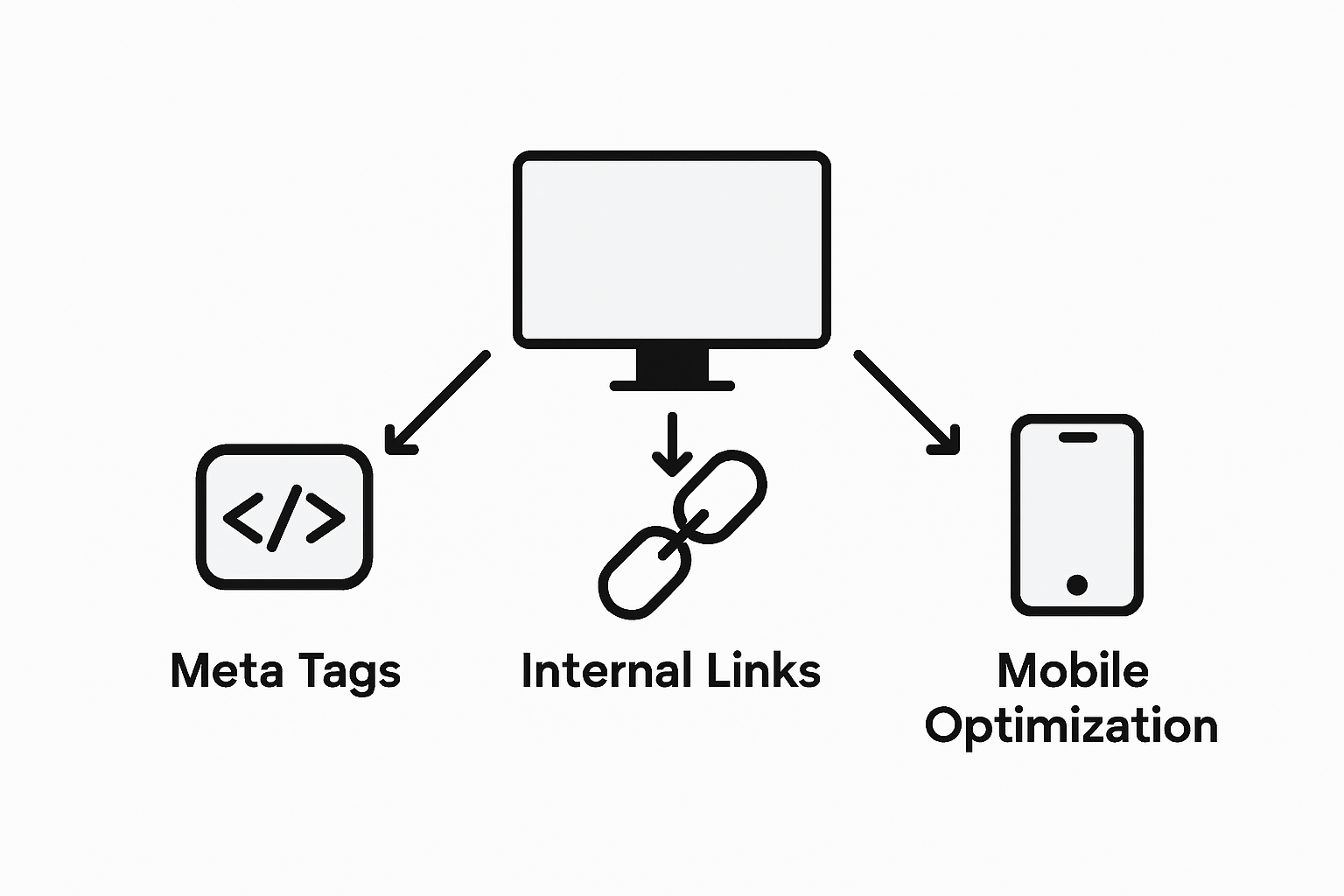
Advanced content extraction techniques have revolutionised how search engines interpret web page structures, emphasising the importance of clean, semantically structured HTML. This means implementing precise coding practices that clearly communicate content hierarchy, purpose, and relevance to search engine crawlers.
Critical technical SEO elements include:
- Proper HTML semantic markup
- Clean, efficient website code
- Mobile responsiveness
- Secure HTTPS protocols
- XML sitemap implementation
- Schema markup integration
- Optimised page load speeds
- Minimal redirect chains
- Canonical tag management
- Structured data implementation
Successful technical SEO transcends mere compliance with search engine guidelines. It represents a strategic approach to digital infrastructure that anticipates algorithmic changes, prioritises user experience, and creates a robust foundation for long-term online visibility. Websites must be viewed as dynamic ecosystems where technical performance, content quality, and user interaction converge to deliver exceptional digital experiences.
Common Mistakes and How to Avoid Them
Onsite SEO demands precision and strategic thinking, yet many businesses repeatedly fall into predictable traps that undermine their digital performance. Identifying and preventing common SEO errors requires a comprehensive understanding of how seemingly minor mistakes can significantly impact search engine rankings and website visibility.
One of the most prevalent misconceptions is treating SEO as a one-time task rather than an ongoing process of refinement and adaptation. Websites that remain static quickly become outdated, with content losing relevance and technical configurations falling behind evolving search algorithm requirements. Successful digital strategies demand continuous monitoring, regular content updates, and proactive technical maintenance.
Critical SEO mistakes to avoid include:
- Keyword stuffing and unnatural content placement
- Neglecting mobile responsiveness
- Ignoring page loading speed optimisation
- Using duplicate or thin content
- Overlooking internal linking strategies
- Failing to implement proper metadata
- Neglecting local SEO elements
- Ignoring analytics and performance metrics
- Using outdated or irrelevant backlink strategies
- Inconsistent NAP (Name, Address, Phone) information
Ultimately, avoiding SEO pitfalls requires a holistic approach that balances technical expertise with genuine user-focused content creation. Businesses must view their online presence as a dynamic ecosystem, constantly evolving to meet both algorithmic requirements and user expectations. Successful SEO is not about gaming the system, but creating genuine value that naturally attracts and retains digital audiences.
Elevate Your Website Visibility with Expert Onsite SEO Solutions
Struggling with the complexities of onsite SEO, from optimising meta descriptions to ensuring fast page load speeds and mobile responsiveness This article highlights common onsite SEO challenges that many businesses face, such as keyword stuffing myths and neglecting continuous optimisation efforts. At Kickass Online, we understand these pain points and specialise in creating high-converting, search engine optimised websites tailored for small and medium-sized businesses. Discover how strategic design, robust technical SEO, and engaging content work together to boost your rankings and drive lasting organic traffic by exploring our Websites | Kickass Online services and insightful Tips and Tricks | Kickass Online.

Ready to transform your online presence with personalised, results-driven SEO and web development expertise Dont wait for your competitors to outrank you Visit Kickass Online now to book your consultation and start building the foundation for sustainable digital growth and enhanced search engine visibility.
Frequently Asked Questions
What is onsite SEO?
Onsite SEO refers to the strategic optimisation of individual web pages to improve search engine rankings and drive organic traffic. It involves optimising various elements of a website to signal its relevance and quality to search algorithms.
What are the key components of effective onsite SEO?
The core components include precise keyword research, optimised meta descriptions and title tags, clean website architecture, fast page loading speeds, mobile responsiveness, and high-quality content that addresses user questions.
How does content quality impact onsite SEO?
Content quality is crucial for onsite SEO as search engines prioritise high-quality, relevant material that genuinely serves user intent. Producing in-depth, authoritative articles that provide substantial value is essential for improving rankings.
What technical elements should be optimised for onsite SEO?
Critical technical elements include proper HTML semantic markup, clean website code, mobile responsiveness, secure HTTPS protocols, XML sitemap implementation, schema markup integration, and optimised page load speeds.