
More than 48 percent of british businesses believe their website is the single most important tool for growth. The digital landscape is crowded, and standing out demands more than just an attractive web page. A web development agency offers the expertise to build not only visually appealing platforms but also secure, high-performing spaces that support your brand’s ambitions. Discover how these specialised teams help businesses achieve digital goals with precision and creativity.
| Point | Details |
|---|---|
| Role of Web Development Agencies | They transform digital visions into functional online platforms, serving as vital technological partners for businesses. |
| Service Categories | Key services include front-end, back-end, and full-stack development, along with CMS solutions tailored to business needs. |
| Growth through User Experience | Agencies enhance user engagement and brand visibility through intuitive design and performance optimisation. |
| Importance of Collaboration | Effective client collaboration involves understanding requirements, maintaining communication, and iterative development for successful outcomes. |
Web development agencies are specialised professional services that transform digital business visions into fully functional, engaging online platforms. According to Wikipedia, web development encompasses comprehensive processes including web design, content development, scripting, and network security configuration. These agencies serve as critical technological partners for businesses seeking to establish robust digital presences.
At their core, web development agencies provide end-to-end digital solutions that extend far beyond simple website creation. As detailed by PSSCIVE, they offer sophisticated services including front-end and back-end development, content management system integration, and performance optimisation. Their expertise covers technical domains such as:
The strategic value of web development agencies lies in their ability to translate complex technological requirements into user-friendly digital experiences. They bridge the gap between technical complexity and business objectives, ensuring that websites are not just visually appealing but also functionally robust, secure, and aligned with specific organisational goals.
 Learn more about choosing the right web agency for your business success.
Web development agencies offer a diverse range of specialised services designed to meet the unique digital requirements of businesses across various industries. According to PSSCIVE, these services are comprehensively categorised into distinct development approaches that address different technological needs.
The primary web development service categories include:
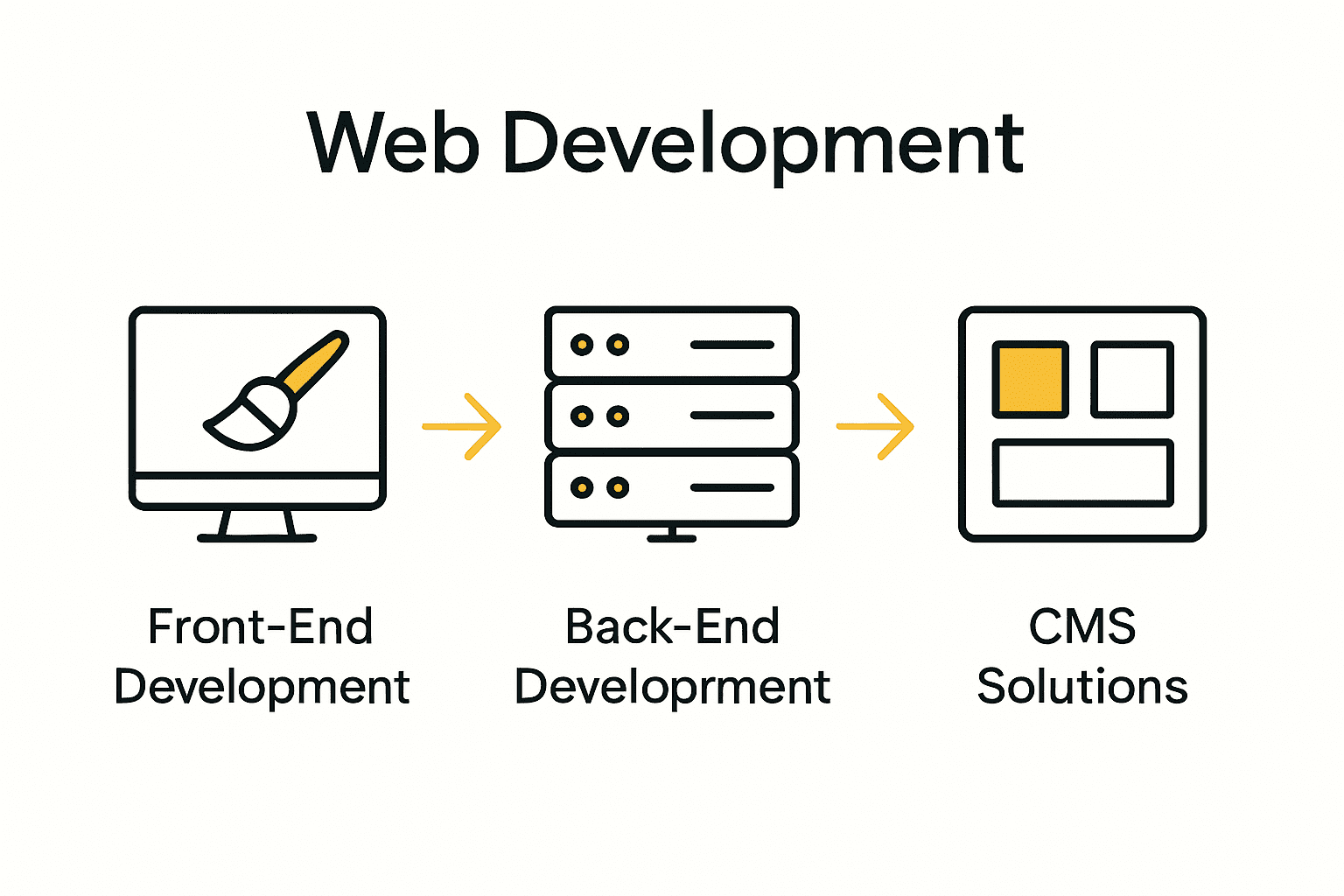
Each service type serves a specific strategic purpose, enabling businesses to craft digital experiences that are not just technologically sophisticated but also aligned with their specific operational goals. Whether a company requires a simple informational website or a complex e-commerce platform, these specialised services provide the technical foundation for digital success.
Discover the top reasons to outsource your e-commerce web development needs and understand how professional agencies can transform your digital strategy.
Web development agencies play a pivotal role in transforming digital business landscapes by creating strategic online platforms that drive substantial growth and competitive advantage. According to PSSCIVE, these agencies contribute significantly to online business growth by developing user-friendly websites that enhance customer engagement, improve brand visibility, and facilitate seamless e-commerce transactions.
The mechanisms through which web development agencies accelerate business growth are multifaceted:
Moreover, these agencies provide strategic technological partnerships that extend beyond mere website creation. They help businesses leverage digital technologies to reach wider audiences, streamline operations, and create more meaningful online interactions. Discover why choosing the right digital agency can be a game-changer for your business, transforming your digital strategy from a cost centre to a robust growth engine.
Client collaboration represents the cornerstone of successful web development projects, requiring meticulous communication, strategic planning, and mutual understanding. According to PSSCIVE, effective collaboration involves a comprehensive process of understanding client requirements, systematic planning, designing, developing, testing, and ultimately deploying websites that align precisely with specific business objectives.
The key responsibilities in client collaboration typically encompass:
Successful web development agencies recognise that collaboration is more than a transactional process. It requires building trust, demonstrating technical expertise, and creating a partnership that extends beyond the initial project completion. Learn about the key questions to ask before hiring a digital marketing agency to ensure you select a collaborative partner committed to your business’s digital success.
Selecting the right web development agency is a critical decision that can significantly impact your business’s digital strategy and online success. According to PSSCIVE, businesses should carefully evaluate multiple key selection factors including technical expertise, portfolio quality, client testimonials, project management approach, and comprehensive post-launch support services.
The most crucial considerations when choosing a web development agency include:
Beyond technical capabilities, the ideal agency partner should function as a strategic collaborator who understands your unique business objectives. The relationship goes beyond transactional website development, focusing on creating digital solutions that drive meaningful business growth. Learn about the red flags to watch out for when choosing a marketing agency to ensure you make an informed partnership decision.
The article highlights the crucial challenges businesses face when choosing the right web development agency, from understanding technical proficiency and ensuring seamless collaboration to achieving scalable digital solutions that truly reflect your organisational goals. If you are searching for dedicated partners who can translate your vision into high-converting, secure and fully optimised websites, it is essential to work with specialists who focus on personalised attention and proven results.
Discover how Websites | Kickass Online delivers tailored web development services designed to drive your online growth while simplifying complex technical processes.
Take the next step in transforming your digital strategy with a trusted agency that prioritises your business success. Visit Kickass Online now to explore customised solutions and book your exclusive consultation. Learn more about our client-focused approach in our Recommendations | Kickass Online and find out how you can gain a strategic advantage today.
Web development agencies offer a variety of services including front-end and back-end development, full-stack development, content management system (CMS) development, responsive website design, e-commerce platform construction, and website performance enhancement.
Web development agencies enhance business growth by creating user-friendly websites that improve customer engagement, boost brand visibility, implement performance optimisation, and provide data-driven insights for better decision-making.
When selecting a web development agency, consider technical proficiency, the quality of their portfolio, client testimonials, communication transparency, specialisation in your industry, and their ability to scale with your business needs.
Client collaboration is crucial as it ensures meticulous communication and mutual understanding between the agency and the client. It allows for tailored solutions that meet specific business objectives and involves regular updates, feedback, and iterative development to accommodate evolving needs.
Over 80 percent of british consumers search online before choosing a local business, yet many small firms miss out on vital opportunities by ignoring Google My Business. Building an effective online profile through this platform connects your company with potential customers right where their search begins. For local businesses across the UK, a polished presence can lead to more foot traffic, better reviews, and a stronger reputation in the community.
| Point | Details |
|---|---|
| Google My Business Overview | This free platform enhances local businesses’ online presence and connects them with customers through Google’s ecosystem. |
| Key Benefits | Businesses gain visibility on Google Search and Maps, manage information easily, and engage with customers. |
| Profile Management Steps | Setting up requires claiming your business, verifying ownership, and maintaining accurate, updated information. |
| Common Mistakes | Avoid failing to claim listings, using inaccurate information, and neglecting regular updates to enhance visibility. |
Google My Business is a powerful, free digital platform designed to help local businesses enhance their online presence and connect with potential customers directly through Google’s ecosystem. According to GeekSForGeeks, this platform enables businesses to provide essential business information, facilitate customer reviews, and seamlessly integrate with Google Maps to increase foot traffic.
The platform offers several critical advantages for small and medium-sized enterprises seeking to improve their local visibility. Key benefits include:
Research from ScitePress reveals that businesses utilising Google My Business can significantly broaden their customer reach by improving online accessibility.
 This means potential customers can quickly find your business location, contact details, operating hours, and critical service information with just a few clicks.
By creating and optimising a Google My Business profile, local businesses can transform their digital marketing strategy. Learn more about local SEO strategies to complement your Google My Business efforts and maximise your online visibility.
According to UmarComm, the Google Business Profile provides businesses with comprehensive tools to manage their online presence. This powerful platform allows companies to control critical information such as business name, category, address, operating hours, contact number, website link, and business photos.
The platform offers several standout features designed to help local businesses connect with potential customers:
Research from Coursera highlights how these features enable businesses to optimise their digital listings on Google Search and Maps. By providing accurate and engaging business information, companies can significantly enhance their local digital visibility and attract more potential customers.
For small and medium enterprises looking to maximise their online presence, local SEO strategies can complement the powerful features of Google Business Profile. Understanding and leveraging these tools can transform how local businesses connect with their target market.
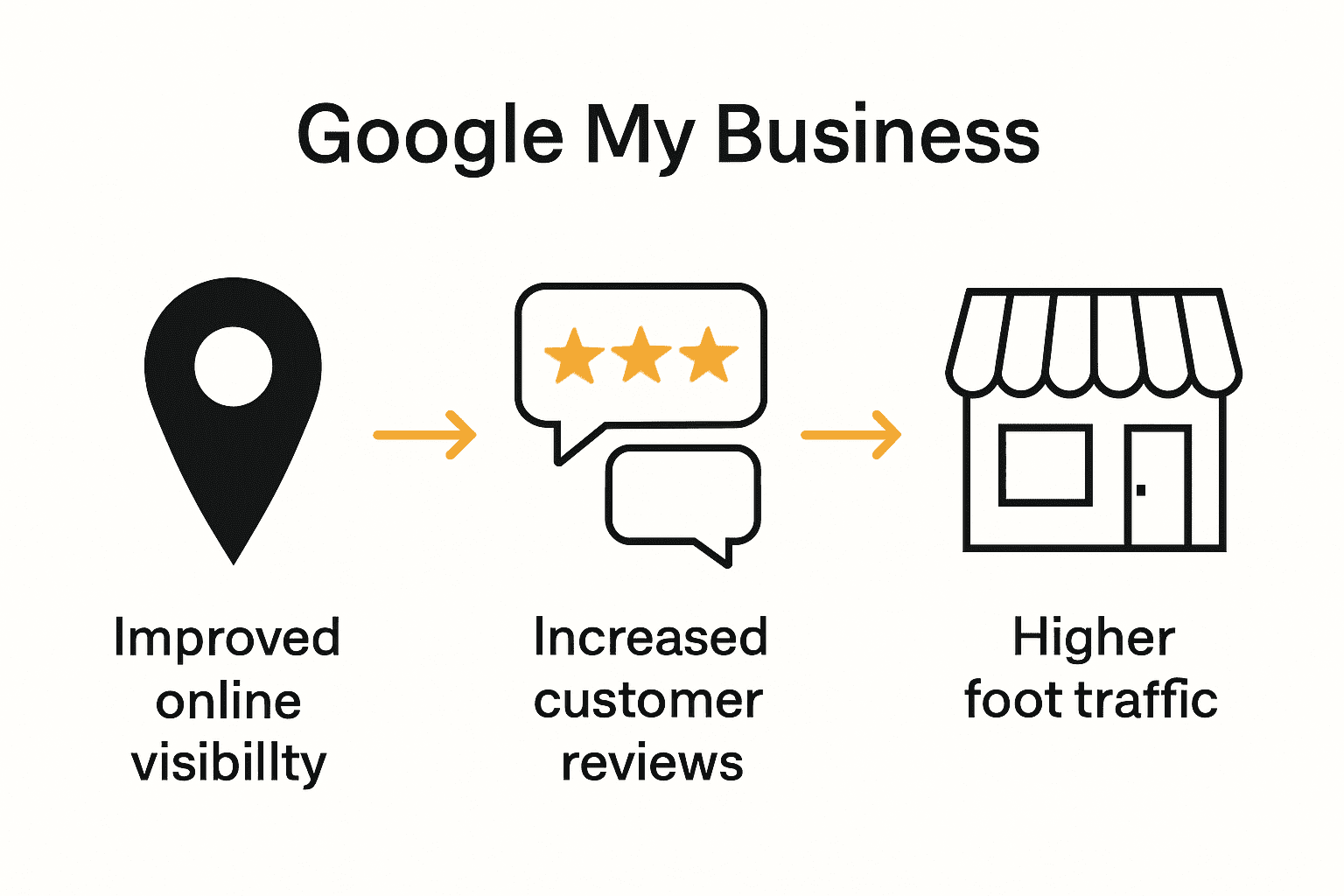
According to DMANC, setting up your Google My Business profile begins with a simple search for your business on Google, followed by claiming your business and completing a comprehensive information form. The process requires careful attention to detail to ensure accurate representation of your business online.
Here’s a step-by-step guide to creating and managing your profile:
Research from Optimum Digital emphasises the importance of ongoing management. This means not just creating the profile, but continuously updating information to maintain an accurate and engaging online presence that attracts potential customers.
For businesses seeking to maximise their digital marketing efforts, local SEO strategies can provide additional insights into effectively leveraging your Google Business Profile. Consistent and strategic profile management can significantly enhance your local digital visibility.
According to Coursera, businesses with physical locations or service areas are eligible to create a Google Business Profile. This includes brick-and-mortar stores, service-based businesses, and organisations that interact directly with customers at a specific location or within defined geographical boundaries.
Key eligibility and best practice considerations include:
Research from ScitePress emphasises that effective utilisation of Google Business Profile requires more than just creating a listing. Businesses must strategically leverage features like Google Maps integration, regularly update their information, and actively engage with potential customers to enhance their online visibility and reach.
For businesses looking to maximise their digital marketing efforts, local SEO strategies can provide comprehensive insights into effectively managing and optimising your Google Business Profile.
According to DMANC, businesses frequently make critical errors that can significantly undermine their online visibility. The most prevalent mistakes include failing to claim their business listing, providing inaccurate or incomplete information, and neglecting to upload professional photographs that showcase their brand.
Key mistakes to watch out for and their solutions:
Research from Optimum Digital emphasises the importance of consistent verification and profile maintenance. Businesses must proactively manage their online presence by regularly reviewing and updating their information to ensure accuracy and engagement.
To refine your digital strategy and avoid these common pitfalls, local SEO strategies can provide comprehensive guidance on maintaining an effective and compelling Google Business Profile.
Understanding how to set up and manage your Google My Business profile is crucial to gaining instant visibility and genuine customer engagement. Many small and medium-sized businesses struggle with keeping their information accurate, responding to reviews, or integrating local SEO strategies effectively. These challenges can leave your business unseen by potential customers when they search or map local services.
Kickass Online specialises in providing personalised web development and local SEO services that help you avoid these common pitfalls. Our team ensures your digital presence is optimised across platforms like Google Search and Maps by crafting high-converting websites, managing your online information flawlessly, and implementing tailored SEO strategies designed for local markets. Let us help you transform your Google Business Profile into a powerful tool for growth.
Ready to stop losing customers to competitors simply because they show up first online Visit Kickass Online today to schedule a consultation and learn how our expert team can boost your local visibility and manage your digital presence with precision. Discover more about how local SEO can complement your Google My Business efforts by exploring our resources at local SEO strategies. Take control of your online reputation and see your business thrive by choosing professional support from Kickass Online.
Google My Business is a free digital platform that helps local businesses enhance their online presence by providing essential business information and integrating with Google Maps.
The key benefits include improved visibility on Google Search and Maps, easier management of business information, free customer engagement tools, enhanced local search rankings, and direct communication channels with customers.
You can set up your Google My Business profile by searching for your business on Google, claiming your listing, verifying your ownership, completing the profile information, adding photos, and regularly updating your details.
To be eligible, your business must have a physical address or service area, operate legitimately with real customer interactions, comply with Google’s guidelines, and provide accurate and up-to-date information.
Over 80 percent of british businesses now rely on digital agencies to keep pace with a rapidly changing online world. Understanding what digital agencies do and why their expertise matters can be the difference between staying seen and getting left behind. This guide breaks down what sets digital agencies apart and reveals how they help companies sharpen their strategy, strengthen their brand, and generate lasting results.
| Point | Details |
|---|---|
| Role of Digital Agencies | Digital agencies connect traditional business practices with the digital landscape, offering specialised services that enhance communication and brand visibility. |
| Comprehensive Services Offered | Agencies provide a wide range of services, including web development, digital marketing, and ongoing support, tailored to meet specific business needs. |
| Impact on Online Performance | By leveraging data-driven strategies and advanced technologies, digital agencies optimise businesses’ online presence and improve performance metrics. |
| Consideration of Risks and Costs | Engaging a digital agency involves understanding potential costs and risks, as well as overcoming common misconceptions regarding immediate results and one-size-fits-all solutions. |
A digital agency is a specialised service-based business that bridges the gap between traditional business operations and the dynamic digital landscape. According to Sustainability Directory, these agencies are “organizational entities within the digital economy” that provide expert services in digital marketing, technology, and strategic consulting.
Digital agencies operate as external partners, offering comprehensive solutions that many businesses cannot develop internally. Their core function involves leveraging digital platforms to enhance communication, brand visibility, and organisational performance. They bring together a multidisciplinary team of experts who understand how to navigate complex digital ecosystems, from web design and development to search engine optimisation and targeted marketing campaigns.
The scope of a digital agency’s work is remarkably broad. As Sustainability Directory explains, these agencies deliver strategic, creative, and technical expertise across multiple domains. Their services typically encompass:
By partnering with a digital agency, businesses gain access to specialised skills, cutting-edge technologies, and strategic insights that can transform their online presence and drive measurable growth.
Digital agencies provide a comprehensive suite of services designed to help businesses navigate and excel in the online world. These services are meticulously crafted to address different aspects of digital presence, strategy, and performance.
At the core of digital agency offerings are web development and design services. These include creating responsive, user-friendly websites that not only look professional but also function seamlessly across various devices and platforms. Web design goes beyond aesthetics, focusing on user experience, intuitive navigation, and converting visitors into customers.
Digital marketing services represent another critical component of agency offerings. These encompass a wide range of strategic activities:
Technical services are equally important, involving complex digital infrastructure development. These include:
Moreover, agencies often provide ongoing support and maintenance services. These ensure that digital assets remain secure, updated, and performing optimally. Regular monitoring, performance optimisation, and proactive technical support help businesses maintain a robust and competitive digital presence.
Digital agencies transform businesses’ online performance by implementing strategic, data-driven approaches that go far beyond traditional marketing techniques. They leverage sophisticated technologies and expert insights to create comprehensive digital strategies that drive measurable results and competitive advantage.
One of the primary ways digital agencies enhance online performance is through targeted performance optimisation. They conduct in-depth analyses of website functionality, user experience, and conversion pathways. By identifying and eliminating technical barriers, agencies ensure websites load quickly, navigate smoothly, and provide intuitive user journeys that directly impact engagement and sales potential.
Search engine performance represents another critical area of improvement. Digital agencies employ advanced search engine optimisation (SEO) techniques to elevate a business’s online visibility. These strategies include:
Moreover, agencies bring data-driven marketing intelligence to the forefront. They utilise advanced analytics tools to track, measure, and interpret digital performance metrics. This approach allows businesses to:
For businesses seeking to truly optimise their digital strategy, partnering with a professional digital agency provides a structured, expert-led pathway to enhanced online performance and sustainable digital growth.
Digital agency partnerships come with potential risks and challenges that businesses must carefully consider. As Sustainability Directory notes, these agencies operate as intermediaries within the digital economy, which inherently introduces complex dynamics businesses need to understand.
Cost considerations are often the most significant barrier for small and medium-sized enterprises. Digital agency services typically range from £1,500 to £10,000 per month, depending on project complexity and scope. Many businesses mistakenly believe digital marketing is a one-time expense, when in reality it requires ongoing investment and strategic refinement.
Common misconceptions about digital agencies include:
Potential risks businesses should evaluate include:
To mitigate these risks, businesses should ask targeted questions before hiring and establish clear communication protocols. Transparent expectations, well-defined deliverables, and regular performance reviews can transform potential challenges into collaborative opportunities for digital growth.

Digital marketing presents a complex landscape where businesses must decide between in-house efforts and professional agency support. As Sustainability Directory highlights, digital agencies offer a specialised skillset that may not be readily available within internal teams, creating a significant distinction between DIY and professional approaches.
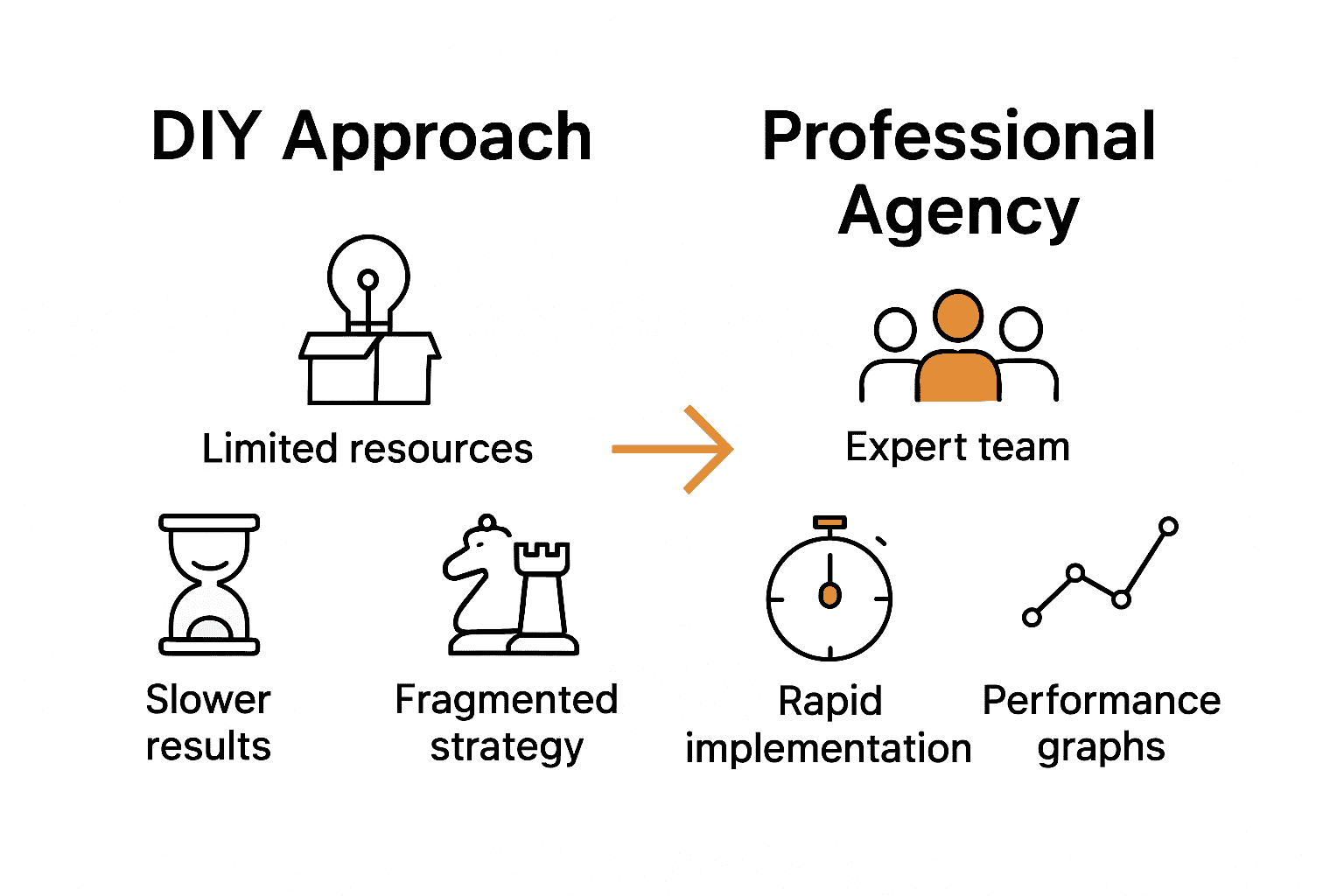
The DIY approach typically involves businesses attempting to manage digital strategies independently, which can seem cost-effective initially but often leads to suboptimal results. Small businesses might invest considerable time learning complex digital marketing techniques, whereas professional agencies bring immediate expertise and sophisticated technological capabilities. Key differences emerge in areas like strategic planning, technical implementation, and performance analytics.
Comparative analysis reveals several critical distinctions:
DIY Approach Limitations:
Professional Agency Advantages:
Cost considerations extend beyond monetary investments. While DIY approaches might seem cheaper, the opportunity cost of inefficient marketing can be substantially higher. Professional agencies bring structured methodologies, cutting-edge technologies, and industry insights that typically outperform internal efforts.
Businesses seeking to optimise their digital strategy must carefully evaluate their internal capabilities, resources, and long-term growth objectives. The decision between DIY and professional expertise is not merely about expense, but about strategic positioning and competitive advantage in an increasingly digital marketplace.
Struggling to navigate the complexities of digital marketing while aiming for sustained online growth is a common challenge highlighted in the guide. Many businesses find it difficult to balance effective brand strategy development, SEO optimisation, and website performance improvements without dedicated expertise. If you recognise the need to overcome these hurdles through personalised, results-driven solutions, Kickass Online offers tailored services designed specifically for small and medium-sized enterprises seeking measurable digital success.
Explore practical insights and proven approaches in our Tips and Tricks | Kickass Online to start transforming your digital presence today. Our experienced team specialises in creating high-converting websites, elevating search engine visibility, and maintaining optimal website security and performance. Do not let costly trial and error slow your progress. Visit Kickass Online now to book a consultation and partner with experts committed to unlocking your online potential. For further reassurance and shared success stories, check out our Recommendations | Kickass Online and take decisive action to accelerate your digital growth.
Digital agencies provide a wide range of services, including web development and design, digital marketing (SEO, content marketing, and social media management), technical services (like e-commerce integration and cybersecurity), and ongoing support and maintenance.
A digital agency improves online performance by utilising targeted performance optimisation, advanced SEO techniques, and data-driven marketing intelligence to enhance website functionality, visibility, and user engagement.
Potential risks include misalignment of business objectives, communication gaps, dependency on external expertise, and variable quality of service delivery. It’s crucial to establish clear expectations and protocols.
A DIY approach may save money initially but often leads to limited expertise and fragmented strategies. In contrast, hiring a digital agency provides comprehensive strategic planning, advanced technology, and faster implementation, which can lead to better overall results.
Most british businesses underestimate the true power of online branding, yet research shows companies with a strong digital identity can see up to a 23 percent boost in customer engagement. Today, first impressions are formed in seconds, often before a single conversation starts. Understanding the depth and impact of online branding gives brands a vital edge, helping them connect with audiences and thrive in a competitive digital world.
| Point | Details |
|---|---|
| Importance of Online Branding | A strong online brand enhances credibility, recognition, and loyalty, directly influencing business growth and customer engagement. |
| Core Elements of a Digital Brand | Consistent visual design, unified messaging, and authentic engagement are essential for building a memorable digital identity. |
| Strategies for Trust and Credibility | Transparent communication and responsive customer service are vital for establishing and maintaining brand trust in the digital environment. |
| Avoiding Common Pitfalls | Businesses must avoid inconsistent messaging and neglecting online reputation to maintain credibility and customer trust. |
Online branding is far more than a digital logo or colour scheme. According to CSJ, branding represents a strategic process of creating meaningful value that shapes how consumers perceive firms, products, and services in the digital marketplace.
At its core, online branding involves systematically developing a distinct digital identity that resonates with your target audience. This means carefully crafting a consistent narrative across websites, social media platforms, and digital touchpoints that communicate your unique value proposition. Unlike traditional branding, online branding allows businesses to create immersive, interactive experiences that connect directly with potential customers.
The importance of online branding cannot be overstated. Research indicates that a robust digital brand presence directly correlates with business growth. ArXiv highlighted how increased online brand visibility can significantly impact visitor engagement and business performance. For small and medium enterprises, this translates into tangible benefits:
By strategically developing an online brand, businesses transform from anonymous digital entities into recognisable, trustworthy organisations that stand out in an increasingly crowded digital landscape. Check out our guide on defining business branding online to dive deeper into creating a compelling digital brand strategy.
Building a robust digital brand requires a strategic approach that goes beyond superficial design elements. Visual identity serves as the foundation, encompassing more than just logos and colour palettes. It involves creating a cohesive visual language that communicates your brand’s personality and values across every digital touchpoint.
The core elements of a powerful digital brand include consistent messaging, compelling storytelling, and authentic engagement. This means developing a distinctive voice that resonates with your target audience and maintains uniformity across websites, social media platforms, email communications, and digital advertising. Your digital brand should articulate a clear value proposition that differentiates you from competitors and establishes a memorable connection with potential customers.
Key components of an effective digital brand strategy include:
To streamline your digital branding efforts, explore our comprehensive guide on digital branding strategies which offers actionable insights for small and medium businesses looking to strengthen their online brand presence. By implementing these core elements systematically, businesses can transform their digital identity from generic to genuinely distinctive.
Online branding has transformed the way businesses connect with potential customers, significantly expanding their digital footprint. According to arXiv, internet advertising has emerged as a powerful alternative to traditional marketing, providing businesses with smarter channels to increase their market visibility and reach.
Digital visibility goes beyond mere online presence. Wikipedia defines internet branding as a strategic approach using web and social media channels to position a brand effectively in the marketplace. This means creating a comprehensive digital ecosystem where your brand can be discovered, understood, and remembered by your target audience across multiple platforms.
The critical ways online branding impacts visibility include:
To maximise your online visibility strategies, explore our comprehensive guide on ways to get your brand noticed online, which offers actionable insights for businesses looking to enhance their digital presence. Effective online branding isn’t just about being seen, it’s about being remembered and chosen in an increasingly competitive digital landscape.
Establishing trust in the digital realm requires a multifaceted approach that goes beyond traditional marketing techniques. Online credibility is built through consistent, transparent, and authentic interactions that demonstrate your brand’s genuine commitment to customer values and expectations.
Interestingly, trust-building extends beyond visual communication. According to Wikipedia, strategic branding can leverage even sensory elements like sound to create preference, enhance recall, and ultimately build deeper customer trust. This illustrates how every touchpoint of your digital presence contributes to your brand’s perceived reliability.
Key strategies for developing online trust and credibility include:
To dive deeper into reputation management strategies that can transform your digital presence, explore our guide on reputation marketing. Remember, in the digital world, trust isn’t given, it’s carefully cultivated through every single online interaction.
Local businesses face unique challenges in establishing a compelling digital presence that resonates with their immediate community. Digital branding for small, locally-focused enterprises requires a nuanced approach that blends hyper-local targeting with authentic storytelling and community connection.
Successful digital branding for local businesses goes beyond generic online marketing. It involves creating a distinctive digital identity that reflects the business’s local roots, values, and personality. This means developing a strategic online presence that speaks directly to local customers, highlighting what makes the business uniquely valuable within its specific geographical context.
Key strategies for effective local digital branding include:
For small businesses looking to transform their digital strategy, our guide on local SEO for small business growth provides actionable insights into building a powerful local digital brand. The most successful local businesses understand that digital branding is about creating genuine connections, not just broadcasting messages.

Navigating the digital branding landscape requires strategic awareness and proactive management. Online reputation is fragile, and businesses must understand the potential missteps that can undermine their digital presence and credibility.
According to Wikipedia, online brands are constantly exposed to public scrutiny through various review and complaint platforms, making reputation management critically important. The digital ecosystem can be unforgiving, with fake reviews and negative feedback potentially causing significant damage to a brand’s perception and trustworthiness.
The most critical pitfalls businesses must avoid include:
To help businesses navigate these challenges, our guide on digital marketing mistakes provides comprehensive insights into avoiding common digital branding errors. Remember, in the digital world, your brand’s reputation is built and maintained through consistent, transparent, and genuine interactions.
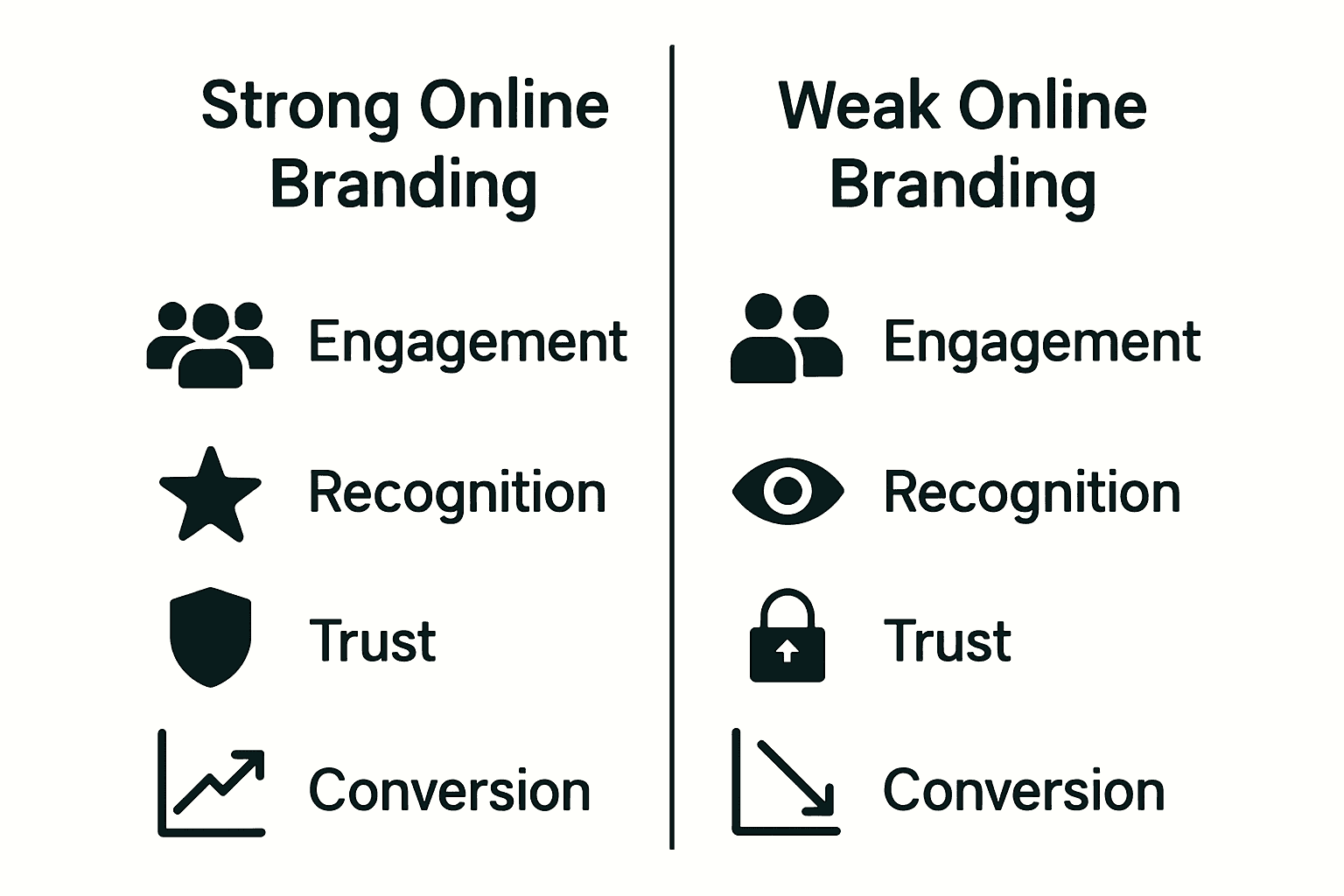
Building a trustworthy and recognisable digital brand is essential but can be overwhelming without the right support. This article outlines key challenges such as creating a consistent visual identity, managing online reputation, and enhancing visibility through strategic branding. Small and medium businesses often struggle with these complex tasks, risking lost credibility or missed opportunities in a crowded online marketplace.
Kickass Online understands these pain points and offers tailored digital marketing services designed to address your unique branding needs. Whether you seek a high-converting website, targeted SEO, or ongoing maintenance to maintain peak performance, our dedicated team ensures your brand stands out authentically and memorably.
Discover actionable tips in our Tips and Tricks | Kickass Online category that align directly with concepts from this guide.
Take control of your digital brand today by partnering with professionals who prioritise your growth and trust-building. Visit Kickass Online to explore personalised strategies and book a consultation. For additional expert advice and proven recommendations, see our Recommendations | Kickass Online page and start transforming your online presence now.
Online branding is the strategic process of creating a distinct digital identity that shapes how consumers perceive a business, its products, and services across various online platforms.
Online branding is crucial as it enhances visibility, credibility, and customer trust, ultimately driving growth through higher engagement, conversion rates, and customer loyalty.
Key elements of a strong digital brand include consistent visual design, unified messaging, strategic digital presence, seamless user experience, and authentic communication with customers.
Local businesses can enhance their digital branding by creating localised content, optimising their Google My Business listings, engaging with the community, focusing on relevant social media platforms, and using authentic visual storytelling.
Over 90 percent of british businesses now rely on their digital presence to influence customer decisions. Whether you run a small shop or a large company, how you appear online shapes your reputation and trust with potential clients. As more people turn to digital platforms for information and services, understanding digital presence becomes crucial for business growth. This guide offers clear direction on building a strong and consistent online identity that resonates with your audience.
| Point | Details |
|---|---|
| Importance of Digital Presence | A strong digital presence is essential for business success, significantly influencing brand perception and customer engagement. |
| Key Components of Strategy | Businesses should focus on visibility, authority, and relationship-building to enhance credibility and trust with customers. |
| Effective Management Practices | Regular content updates, audience engagement, and brand consistency are crucial for maintaining a robust digital footprint. |
| Common Pitfalls to Avoid | Businesses must actively manage online reviews and ensure consistent branding to avoid damaging credibility and reputation. |
In today’s interconnected digital world, a digital presence represents far more than a simple website or social media account. According to research from Departments UNWE, digital presence encompasses all online activities managed by an organisation, including websites, blogs, and social media profiles, as well as interactions by stakeholders like employees and consumers.
These digital interactions collectively shape how potential customers perceive and engage with your business. A strategic digital presence goes beyond merely existing online - it’s about creating meaningful connections and communicating your brand’s unique value proposition. The research highlights that these online activities can significantly influence brand perception and ultimately impact business success.
Businesses must recognise that digital presence is now a critical competitive advantage. A compelling study from Scitepress on Brazilian banks introduced a Digital Presence Index (DPI) demonstrating strong correlations between digital metrics and business outcomes. This means your online strategy isn’t just about visibility, but about creating a robust digital ecosystem that:- Builds trust with potential customers- Demonstrates professional credibility- Provides accessible information about your services- Creates multiple touchpoints for customer interaction
By understanding and investing in a comprehensive digital presence, businesses can transform their online platforms from simple informational resources into powerful marketing and engagement tools that drive real growth and competitive differentiation.
Building a robust digital presence requires strategic planning and thoughtful execution. According to research from People UTM, the essential elements include creating visibility, establishing authority, building relationships, and making a positive first impression. These foundational aspects contribute significantly to brand recognition and customer trust.

Comprehensive digital strategies extend beyond simple online visibility. As detailed by Departments UNWE, a strong digital presence involves strategic management of online activities designed to build credibility and engagement. Key components of this approach include:
To strengthen your digital footprint, businesses should focus on creating a digital branding strategy guide that integrates multiple channels and touchpoints. This holistic approach transforms your online presence from a mere information source into a dynamic platform for customer interaction, brand storytelling, and business growth.
Navigating the digital landscape requires a strategic approach to selecting and utilising various online platforms. According to Wikipedia, major digital channels for establishing a web presence include corporate websites, social media profiles like LinkedIn, Facebook, and Twitter, blogs, and online directories. Each of these platforms serves as a critical point of presence, contributing to a business’s overall digital footprint.
Digital marketing channels have evolved dramatically, offering businesses multiple touchpoints to engage with potential customers. As detailed in research from Wikipedia, electronic business now encompasses diverse platforms including e-commerce websites, online marketplaces, and digital communication tools. These channels facilitate the exchange of products and services, forming the fundamental infrastructure of a company’s digital strategy.
Businesses can leverage these platforms through a comprehensive multi-channel marketing approach that integrates different online spaces. Key platforms to consider include:
Successful digital presence requires not just being present on these platforms, but actively engaging, sharing valuable content, and maintaining a consistent brand voice across all channels. This holistic approach transforms digital platforms from mere communication tools into powerful engines of business growth and customer relationship management.
Creating and maintaining a robust digital presence requires strategic planning and consistent execution. According to Wikipedia, building a digital presence involves establishing and maintaining a comprehensive digital footprint through various online platforms, including creating and updating websites, managing social media accounts, and ensuring consistent branding and messaging across all digital channels.
Effective digital presence management goes beyond simple online visibility. Research from People UTM highlights that successful strategies require regular content updates, active audience engagement, and careful monitoring of online reviews. These practices are crucial for building credibility, trust, and a positive brand image.
To develop a comprehensive digital strategy, businesses should consider these key management practices:
Successful digital presence management is an ongoing process that requires attention, creativity, and strategic thinking. By treating your online platforms as dynamic, interactive spaces, you can transform your digital presence from a static information source into a powerful tool for building relationships, demonstrating expertise, and driving business growth.
Navigating the digital landscape requires awareness of potential pitfalls that can undermine your online strategy. According to research from People UTM, common mistakes in digital presence include neglecting online reviews, maintaining inconsistent branding, and failing to engage meaningfully with your audience. These missteps can significantly damage your brand’s credibility and online reputation.
Wikipedia highlights the critical importance of comprehensively monitoring your digital footprint to prevent misinformation and fragmented brand representation. Businesses must proactively manage all points of their web presence, regularly auditing digital channels and addressing any unauthorised or misleading content that might emerge.
To safeguard your digital reputation, consider these strategic approaches:
Successful digital presence management demands constant vigilance and proactive strategy. By understanding and avoiding these common mistakes, businesses can transform potential vulnerabilities into opportunities for building trust, demonstrating professionalism, and creating meaningful connections with their digital audience.
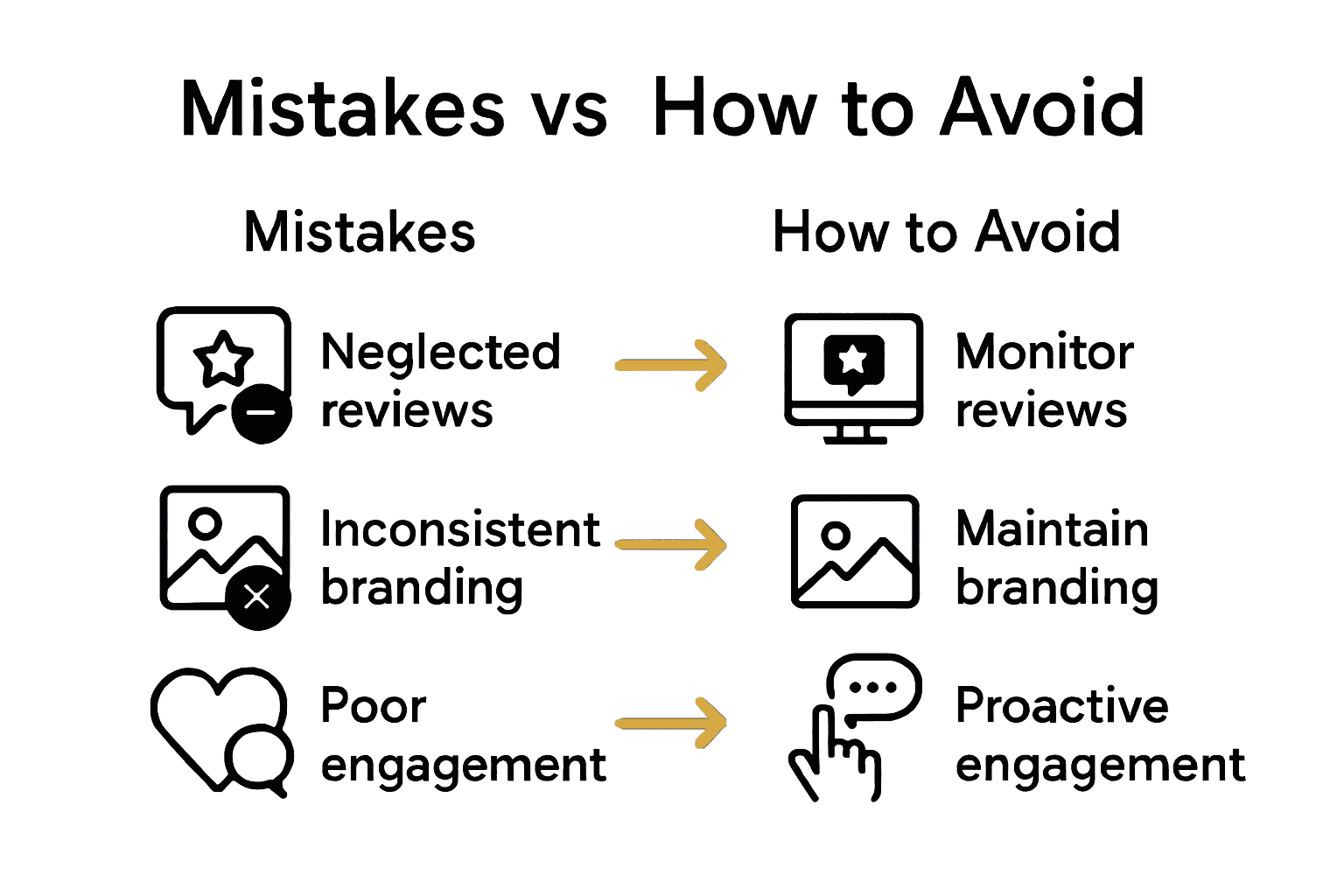
Many businesses struggle to build a consistent and engaging digital presence that truly connects with their audience and drives growth. This can lead to missed opportunities, weak brand authority and lost customer trust. The article highlights essential challenges like maintaining a user-friendly website, managing active social media channels and delivering valuable content that resonates. It also stresses the importance of a comprehensive digital branding strategy and ongoing digital presence management.
At Kickass Online, we understand these pain points deeply. Our expert team specialises in creating customised website designs, optimising your search engine rankings and maintaining your site to keep it secure and performing at its best. With a focus on personalised solutions and limited client intake, we ensure your digital platforms are transformed into trusted and engaging hubs for your customers. Discover insights and successful tactics in our Recommendations that have helped businesses like yours excel.
Ready to stop struggling with fragmented online efforts and start building a powerful digital presence that grows your business? Visit Kickass Online now to book your consultation and take the next step towards a strategic, results-driven online strategy tailored just for you.
Digital presence refers to all online activities managed by an organisation, including websites, blogs, social media profiles, and interactions by stakeholders. It encompasses how potential customers perceive and engage with your business online.
A strong digital presence is crucial as it builds trust with potential customers, demonstrates professional credibility, and creates multiple touchpoints for customer interaction. It ultimately influences brand perception and business success.
Improving your company’s digital presence involves creating a user-friendly website, engaging in social media, maintaining consistent branding, and producing valuable content that resonates with your target audience. Developing a comprehensive digital branding strategy can also help.
Common mistakes include neglecting online reviews, maintaining inconsistent branding, and failing to engage with your audience. Monitoring your digital footprint and addressing any misleading content are essential to safeguarding your brand’s credibility.
Most british businesses still believe SEO is all about tricking search engines, yet research shows that more than 60 percent of successful websites grow by focusing on user value over clever tactics. Understanding what truly drives online visibility sets leading brands apart in a crowded market. This guide untangles outdated myths and reveals how simple, smart strategies can help british companies improve rankings, attract loyal visitors, and see real business growth.
| Point | Details |
|---|---|
| Understanding SEO | SEO is a strategic approach that enhances website visibility and focuses on creating genuine value rather than manipulating search rankings. |
| Debunking Myths | Many myths about SEO, such as it requiring technical expertise or being a one-time task, can mislead businesses and hinder their effectiveness. |
| Types of SEO | SEO encompasses three key types: On-Page, Off-Page, and Technical, each contributing to a cohesive improvement in search performance. |
| ROI Measurement | Calculating the ROI of SEO involves tracking organic traffic, conversion rates, and overall visibility to gauge long-term value. |
Search Engine Optimisation (SEO) represents a strategic digital marketing approach designed to improve a website’s visibility and ranking within search engine results. Unlike common misconceptions, SEO is not merely about manipulating search rankings, but creating genuine value for online users and search platforms. According to Bentley University, the true measure of SEO success extends far beyond simple search rankings, focusing instead on critical business metrics like conversions and profitability.
Many business owners harbour misunderstandings about SEO that can hinder their digital marketing effectiveness. One prevalent myth is that SEO requires extensive technical expertise. However, LeTourneau University clarifies that contributing to SEO efforts does not demand complex technical skills. Instead, the fundamental principle is straightforward: provide complete, useful information that enhances your website’s search engine visibility.
Key SEO myths that need debunking include:
Successful SEO is about understanding user intent, creating valuable content, and building a website that genuinely serves your audience’s needs. Why is SEO important for small businesses can provide deeper insights into how even smaller organisations can leverage these strategies effectively.
Search Engine Optimisation (SEO) is a multifaceted digital strategy comprising three primary approaches: On-Page, Off-Page, and Technical SEO. Kent State University provides a comprehensive breakdown of these distinct yet interconnected techniques that work together to improve a website’s search engine performance and visibility.
On-Page SEO focuses on optimising content and HTML source code directly within your website. This involves strategic keyword placement, crafting high-quality content, improving meta descriptions, and ensuring each webpage communicates clear, relevant information to search engines. Businesses must carefully select keywords that align with user search intent and integrate them naturally into website content.

Off-Page SEO represents activities conducted outside your website to boost search rankings. This includes:
Technical SEO addresses the underlying website infrastructure. As Michigan Technological University emphasises, this involves optimising website architecture, improving site speed, ensuring mobile responsiveness, implementing structured data, and creating a clear site map. Boost Your SME’s Visibility with Expert SEO Strategies can provide additional insights into implementing these technical optimisations effectively.
Search Engine Optimisation (SEO) represents a powerful digital strategy that transforms how businesses connect with potential customers online. Santa Clara University highlights the critical role of SEO strategies in enhancing online visibility, particularly through targeted content marketing and strategic link-building techniques that directly contribute to business growth and expanded digital reach.
Effective SEO goes beyond simple keyword placement, creating a comprehensive approach to digital visibility. Binghamton University emphasises that precise on-page optimisation practices, such as crafting compelling title tags and meta descriptions, can significantly improve a website’s search engine rankings and drive meaningful user engagement. These technical refinements act as digital signposts, guiding potential customers directly to your online content.
Key ways SEO drives business growth include:
The transformative power of SEO lies in its ability to connect businesses with their ideal audience precisely when they’re seeking relevant solutions. The Power of SEO: How to Improve Online Visibility offers deeper insights into leveraging these digital strategies for sustainable business growth.
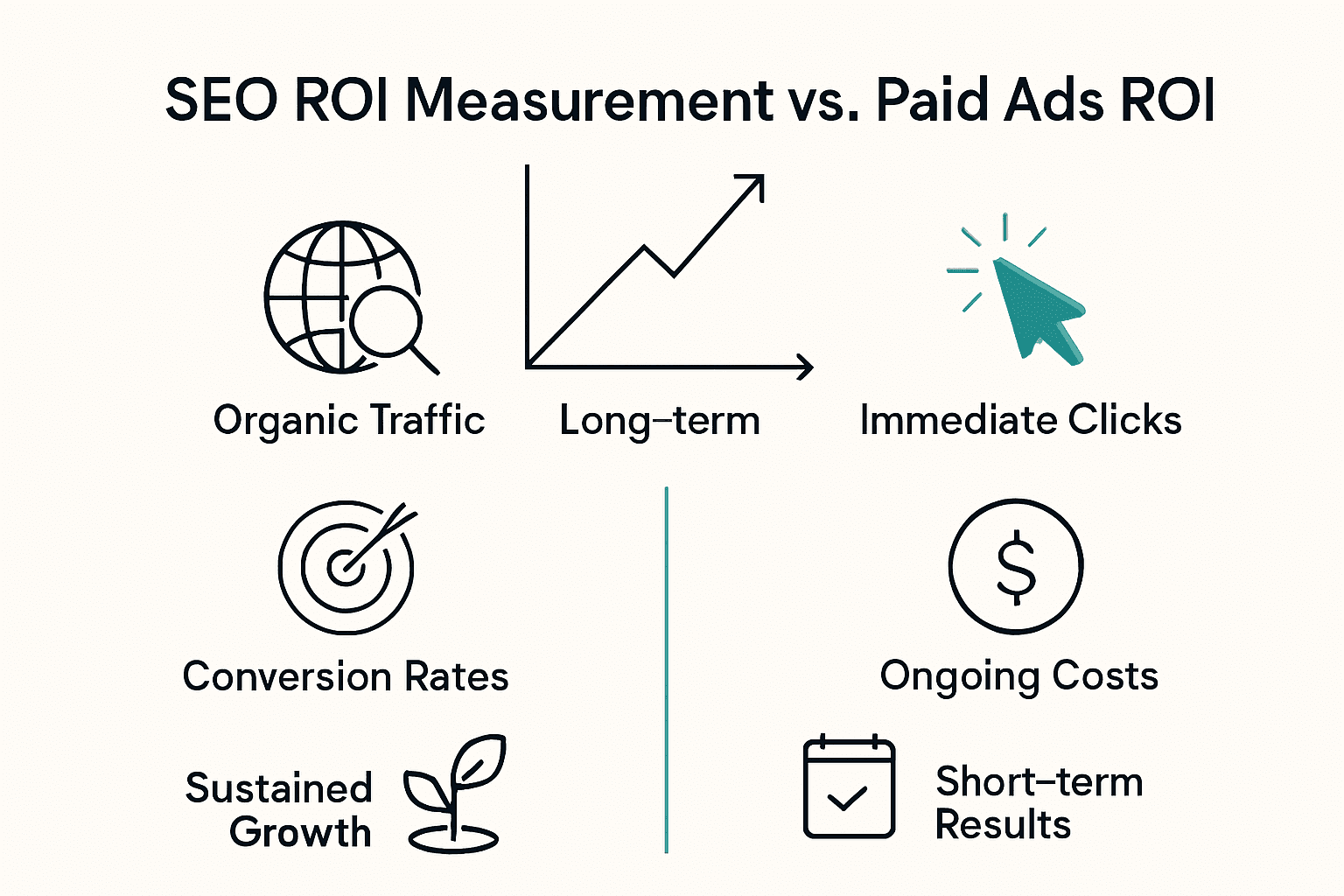
Foothill College highlights the critical distinctions between organic Search Engine Optimisation (SEO) and paid advertising strategies in online marketing. While both approaches aim to increase digital visibility, they fundamentally differ in execution, cost structure, and long-term value for businesses seeking to attract potential customers.
Organic SEO represents a strategic, sustainable approach to digital marketing that focuses on improving website content and structure to naturally attract search engine traffic. In contrast, Paid Advertising delivers immediate visibility through direct financial investment. University of Missouri–St. Louis emphasises the nuanced differences between on-page and off-page SEO techniques, which stand in stark contrast to the more direct paid advertising methods.
Key comparative aspects include:
Understanding these strategic differences helps businesses make informed marketing decisions.
How SEO and PPC Work Together offers deeper insights into combining these complementary approaches for maximum digital marketing effectiveness.
Iowa State University emphasises that calculating the return on investment (ROI) for Search Engine Optimisation requires a comprehensive approach that goes beyond simple website traffic metrics. True SEO value encompasses increased organic visibility, enhanced brand credibility, and sustainable long-term growth strategies that compound over time.
Keyword Research stands at the core of measuring SEO effectiveness. Western Washington University highlights that on-page optimisation provides the quickest pathway to demonstrating tangible results. Businesses must track specific metrics to understand their SEO investment’s genuine impact, including organic traffic growth, conversion rates, keyword ranking improvements, and revenue attributable to organic search channels.
Key ROI measurement strategies include:
Understanding SEO’s long-term value requires patience and strategic analysis.
 Measuring the ROI of Your Digital Marketing Campaigns provides deeper insights into transforming raw data into meaningful business intelligence.
Understanding the vital role of SEO in driving sustainable online growth can be challenging. This article highlights common challenges businesses face, such as the need for ongoing optimisation, creating valuable user content, and navigating technical SEO complexities. If your goal is to overcome these hurdles and elevate your digital presence, personalised, expert-led support is essential. At Kickass Online, we focus on crafting high-converting websites and enhancing search engine rankings with tailored strategies designed to meet your unique business needs.
Explore our proven methods and see the difference professional SEO can make in improving your organic traffic and lead generation by visiting our Recommendations and Websites sections.
Take the next step towards transforming your online visibility today. Experience dedicated attention and customised digital solutions by partnering with Kickass Online. Visit our website at Kickass Online to book a consultation and start boosting your business growth now.
SEO, or Search Engine Optimisation, is a digital marketing strategy aimed at improving a website’s visibility and ranking in search engine results. It is important for businesses as it increases organic traffic, enhances brand credibility, and helps connect with potential customers at the right moment.
SEO focuses on organic traffic growth through content and site optimisation, providing sustainable visibility without continuous financial investment. In contrast, paid advertising offers immediate results driven by financial input, but visibility ceases once funding stops.
The three primary types of SEO are On-Page SEO, which optimises content and HTML directly on the site; Off-Page SEO, which involves external strategies like link-building and reputation management; and Technical SEO, which focuses on website infrastructure, ensuring usability and performance.
To measure the ROI of SEO, track metrics such as organic traffic growth, conversion rates from organic searches, keyword ranking improvements, and revenue generated from organic channels. This ensures a comprehensive understanding of SEO’s impact over time.
Over 90 percent of british consumers report that transparent, solution-focused content increases their trust in a business. In a crowded online world, brands must prove their expertise with real stories and practical advice, not just empty promises. Whether you run a start-up or an established company, sharing credible examples and offering actionable resources is the key to building lasting trust with your audience.
| Key Message | Explanation |
|---|---|
| 1. Use customer case studies | Presenting real client successes builds trust and demonstrates your capability. |
| 2. Create educational blog posts | Address genuine audience challenges to position your brand as a trusted resource. |
| 3. Produce effective how-to videos | Visual tutorials simplify complex topics and establish your expertise for your audience. |
| 4. Launch engaging email newsletters | Provide consistent, valuable content that fosters ongoing relationships with your audience. |
| 5. Develop impactful lead magnets | Offer valuable resources that solve specific problems in exchange for contact information. |
Customer case studies are powerful storytelling tools that transform abstract business promises into concrete, believable experiences. By presenting real client success narratives, businesses can establish genuine credibility and demonstrate tangible value.
According to research in the Management Studies and Entrepreneurship Journal, content marketing approaches like case studies play a pivotal role in fostering long term customer relationships and enhancing brand trust. These documented stories provide potential clients with transparent insights into how your services solve genuine business challenges.
To create compelling case studies, focus on structured storytelling that highlights specific client problems, your strategic solution, and measurable outcomes. Your narrative should include:
Effective case studies go beyond mere marketing material they serve as social proof that validates your expertise. When potential clients see detailed accounts of how you have successfully helped similar businesses, their confidence in your services increases dramatically. Select case studies that represent diverse industry scenarios and demonstrate your versatility in solving complex business problems.
For maximum impact, consider our guide on customer reviews to learn additional strategies for collecting and presenting powerful client testimonials that build robust trust signals.
Educational blog posts are powerful tools for connecting with your audience by addressing their specific challenges and providing actionable solutions. These content pieces transform your website from a simple marketing platform into a valuable resource that potential customers actively seek out.
According to research in Syntax Literate, informative problem solving content significantly builds brand trust and customer loyalty by directly addressing consumer needs. Similarly, ShodhKosh suggests that educational blog posts create emotional connections with audiences by offering practical insights.
To craft compelling educational blog posts, focus on strategic problem solving with these key principles:
Start by understanding your target audience deeply. What challenges do they encounter? Which questions do they frequently ask? Research industry forums, customer feedback, and social media conversations to uncover authentic problems your content can address.
When writing, prioritise clarity and practicality. Break complex topics into digestible sections, use real world examples, and ensure your solutions are immediately applicable. Learn more about the broader benefits of maintaining a blog to understand how these educational posts contribute to your overall digital strategy.
Remember that truly valuable educational content positions your brand as a trusted expert. By consistently delivering high quality problem solving resources, you transform your blog from a marketing channel into a genuine community asset.
How-to videos represent a dynamic and engaging method of showcasing your brand’s technical knowledge and problem solving capabilities. These visual tutorials transform complex information into digestible content that potential clients can easily understand and appreciate.
According to research in Syntax Literate, how-to videos effectively demonstrate a brand’s expertise, directly leading to increased customer trust and loyalty through solution oriented content. ShodhKosh further emphasises that instructional videos serve as powerful tools in content marketing, significantly enhancing consumer engagement.
To create impactful how-to videos, focus on strategic content design with these essential principles:
Start by identifying precise problems your target audience encounters. Your video should offer practical solutions that viewers can immediately implement. Quality matters more than production complexity technical accuracy and genuine helpfulness will always trump expensive cinematography.
Consider breaking complex processes into short manageable segments. Use screen recordings, demonstrations, or talking head formats depending on the content. Crucially, ensure your video provides genuine value rather than serving as a thinly veiled sales pitch.
Get professional tips for crafting videos that drive engagement to refine your approach and maximise the impact of your instructional content. By consistently delivering high quality how-to videos, you position your brand as a trusted industry expert and valuable resource for your audience.
Email newsletters represent a powerful communication channel that bridges the gap between businesses and their audience through consistent, personalised content delivery. These digital missives offer a direct line of communication that can transform casual readers into loyal customers.
Research from the Management Studies and Entrepreneurship Journal highlights how regular email newsletters contribute to sustained customer engagement by delivering consistent valuable content that reinforces trust and loyalty. Syntax Literate further suggests that these newsletters provide a personalised content channel meeting specific customer needs.
To create compelling newsletters, focus on strategic content design with these fundamental principles:
Successful newsletters go beyond simple promotional messages. They should educate, entertain, and provide actionable insights that your audience genuinely anticipates receiving. Consider segmenting your email list to deliver more targeted content that resonates with specific reader groups.
Prioritise quality over frequency. A meticulously crafted monthly newsletter will outperform weekly emails filled with generic information. Develop a consistent brand voice, use engaging subject lines, and always include clear value propositions that encourage reader interaction.
Discover comprehensive email marketing strategies for SMEs to refine your approach and maximise subscriber engagement. By treating your newsletter as a valuable resource rather than a marketing tool, you will build lasting connections with your audience.
Lead magnets are strategic resources designed to attract potential customers by offering immediate, tangible value in exchange for contact information. These valuable assets serve as powerful conversion tools that transform casual website visitors into interested prospects.
Research from ShodhKosh reveals how valuable resources can attract new contacts by addressing specific consumer problems and initiating trust. The Management Studies and Entrepreneurship Journal further emphasises that free guides or templates effectively capture new contacts by establishing immediate credibility.
To create compelling lead magnets, focus on strategic value design with these essential principles:
Successful lead magnets solve genuine problems for your target audience. Consider developing resources like comprehensive guides, industry research reports, interactive calculators, exclusive templates, or short video training sessions that deliver precise solutions to your audience’s challenges.
Quality matters more than quantity. A single meticulously crafted resource that genuinely helps your audience will outperform multiple generic offerings. Design your lead magnet to showcase your expertise while providing real world value that encourages potential clients to engage further with your brand.
Learn how to create a sustainable lead generation strategy to refine your approach and maximise your contact acquisition efforts. By treating lead magnets as valuable resources rather than mere marketing tools, you will build meaningful connections with potential clients.
Social media campaigns are powerful vehicles for connecting with audiences, transforming digital interactions into meaningful business opportunities. These strategic communications go far beyond simple promotional posts, serving as dynamic platforms for building genuine relationships with potential customers.
Research from the Journal of Social Sciences Review reveals how social media marketing profoundly influences customer trust and satisfaction through authentic campaigns that deliver tangible results. The Journal of Business Studies further emphasises the critical role of real results in building customer engagement and loyalty.
To develop impactful social media campaigns, focus on strategic engagement design with these essential principles:
Successful campaigns require deep audience understanding. Research your target demographic meticulously. Develop content that speaks directly to their challenges, aspirations, and interests. Instead of broadcasting generic messages, craft narratives that invite conversation and meaningful connection.
Measure campaign success through substantive metrics like engagement quality, audience sentiment, and actual conversion rates rather than superficial indicators like likes or shares. Your goal is creating content that resonates emotionally and provides practical value.
Unlock the power of social media advertising for your SME to refine your approach and transform digital interactions into genuine business growth opportunities. Remember that authentic storytelling trumps aggressive marketing every time.
Infographics transform complex information into visually compelling narratives that capture audience attention and simplify understanding. These graphical representations bridge the gap between technical data and accessible knowledge, making sophisticated concepts immediately comprehensible.
According to ShodhKosh, infographics are powerful tools that simplify intricate information, making content more engaging and accessible while enhancing brand awareness. The Management Studies and Entrepreneurship Journal further emphasises that sharing infographics effectively communicates insights and fosters customer engagement.
To create impactful infographics, focus on strategic visual communication with these essential principles:
Successful infographics tell a coherent story through visual elements. Begin by identifying the core message you want to communicate. Select data points that support your narrative and design a logical flow that guides the viewer through the information.
Remember that design matters as much as content. Use clean typography, intuitive layouts, and a harmonious colour scheme that aligns with your brand identity. Avoid cluttering the design with excessive information choose impactful statistics and present them in a manner that invites curiosity and understanding.
By transforming complex data into digestible visual stories, you create content that not only informs but also engages and inspires your audience. Your infographics become powerful communication tools that transcend traditional text based information sharing.
Below is a comprehensive table summarising the key strategies for building trust through content marketing as discussed in the article.
| Strategy | Implementation | Expected Results |
|---|---|---|
| Customer Case Studies | Use structured storytelling to highlight client challenges, solutions, and outcomes. Incorporate testimonials. | Builds credibility and shows real-world problem-solving, enhancing brand trust. |
| Educational Blog Posts | Identify audience pain points and provide clear, actionable solutions. Use research and real-world examples. | Establishes brand as a valuable resource and fosters customer loyalty. |
| How-To Videos | Create concise, clear tutorials addressing audience challenges. Focus on helpfulness over production quality. | Demonstrates expertise, increasing trust and engagement with the brand. |
| Email Newsletters | Deliver personalised, consistent, valuable content that educates and entertains. | Strengthens customer relationships and retains engagement through continual value delivery. |
| Lead Magnets | Offer high-quality, actionable content addressing specific problems in exchange for contact information. | Converts website visitors into leads by establishing immediate value and credibility. |
| Social Media Campaigns | Use authentic, problem-solving content to foster genuine interactions. Measure success with engagement quality and conversions. | Builds deep connections and transforms digital interactions into business opportunities. |
| Infographics | Simplify complex data into engaging visual stories using clean design. Ensure data accuracy and clarity. | Enhances audience understanding and engagement with accessible knowledge sharing. |
The challenge for many businesses lies in transforming content marketing theories into real, measurable growth. This article highlights essential tactics such as customer case studies, educational blogs, how-to videos and lead magnets that build trust and deliver genuine value. If you seek to overcome obstacles like low engagement or unclear ROI, personalised digital solutions become key. At Kickass Online, we specialise in crafting high-converting websites, optimising search rankings and maintaining your online presence to drive lasting results.
Explore practical insights and expert tips tailored for small and medium-sized businesses in our Tips and Tricks | Kickass Online section.
Ready to elevate your content marketing impact with a trusted digital partner? Visit Kickass Online to book a consultation and discover customised strategies that convert visitors into loyal customers. Dive deeper into our Recommendations | Kickass Online for proven approaches that position your brand as an industry leader. Take the first step today to transform your marketing challenges into growth opportunities.
To drive business growth through content marketing, consider showcasing customer case studies, creating educational blog posts, and using how-to videos. Implement at least one of these strategies within the next month to see measurable engagement improvements.
Begin by identifying a client with a compelling success story, detailing their initial challenges, your implemented solutions, and the measurable results achieved. Aim to have a well-structured case study ready for publication within 30 days to showcase your expertise effectively.
Focus on addressing specific audience pain points and providing clear, actionable solutions. By delivering practical content regularly, you can enhance brand trust and customer loyalty over time, ideally aiming to publish at least one blog post每周.
Evaluate your content marketing by tracking metrics like audience engagement, conversion rates, and customer feedback. Set a goal to analyse these metrics monthly to guide future content improvements and maximise effectiveness.
High-value lead magnets such as comprehensive guides, exclusive templates, or interactive tools tend to attract new contacts effectively. Develop one strong lead magnet that solves a significant problem within your industry to start building your email list immediately.
Transform your social media platforms into interactive channels that address real audience challenges and foster meaningful engagements. Create content that invites discussion and prioritises authentic interactions, aiming to post consistently at least three times a week.
The digital world never sleeps, making it tough for british businesses to stand out online. With over 80 percent of shoppers starting their research on the internet, online visibility shapes whether a brand fades into the background or turns browsers into customers. Understanding how online channels, search engines, and strategic content work together gives businesses a real edge, offering practical ways to attract the right audience and build lasting recognition.
| Point | Details |
|---|---|
| Importance of Online Visibility | Online visibility is essential for businesses to thrive in a competitive digital landscape, influencing discoverability and customer engagement. |
| Key Strategies | Effective online visibility requires a combination of SEO, content marketing, social media engagement, and digital reputation management. |
| Risks and Challenges | Businesses must be aware of potential pitfalls such as inconsistent messaging, mobile optimisation, and reputation management risks that can hinder online success. |
| Dynamic Process | Maintaining online visibility is an ongoing effort that demands strategic planning and adaptation to evolving digital trends. |
Online visibility represents a critical digital strategy that determines how effectively businesses can be discovered and recognised in the vast online marketplace. According to Marketing.gl, online visibility encompasses a brand’s ability to be discoverable across various digital channels, including search engine results, social media platforms, and online directories.
For modern businesses, online visibility is no longer optional - it’s essential for survival and growth. As BigCommerce explains, simply having a great website isn’t enough; businesses must proactively ensure users can actually find them. This means strategically positioning your digital assets to maximise potential customer interactions.
Successful online visibility involves multiple interconnected strategies:
Business owners must understand that online visibility is a dynamic, ongoing process. It requires consistent effort, strategic planning, and adaptation to evolving digital landscapes. By investing in comprehensive digital strategies, businesses can transform their online presence from passive to powerful, ensuring they remain competitive and accessible in an increasingly digital world.
Online visibility spans multiple digital platforms, each offering unique opportunities for businesses to connect with potential customers. As EDUCBA explains, online visibility reflects how prominently a business appears across different digital spaces, making strategic channel selection crucial for successful digital marketing.
The primary online visibility channels can be categorised into several key areas:
Businesses must strategically leverage these channels, understanding that visibility is not about being everywhere, but being strategic and targeted. By selecting the most relevant platforms for their specific audience, companies can maximise their digital presence without spreading resources too thin.
Successful online visibility requires consistent effort, quality content, and a deep understanding of where your target audience spends their digital time. Learn more in our guide on multi-channel marketing strategies to refine your approach and amplify your digital reach.
Online visibility is a complex ecosystem of interconnected factors that determine a business’s digital presence and discoverability. As European Business Review highlights, effective online visibility goes beyond mere existence - it’s about creating consistent brand awareness that keeps businesses at the forefront of potential customers’ minds.
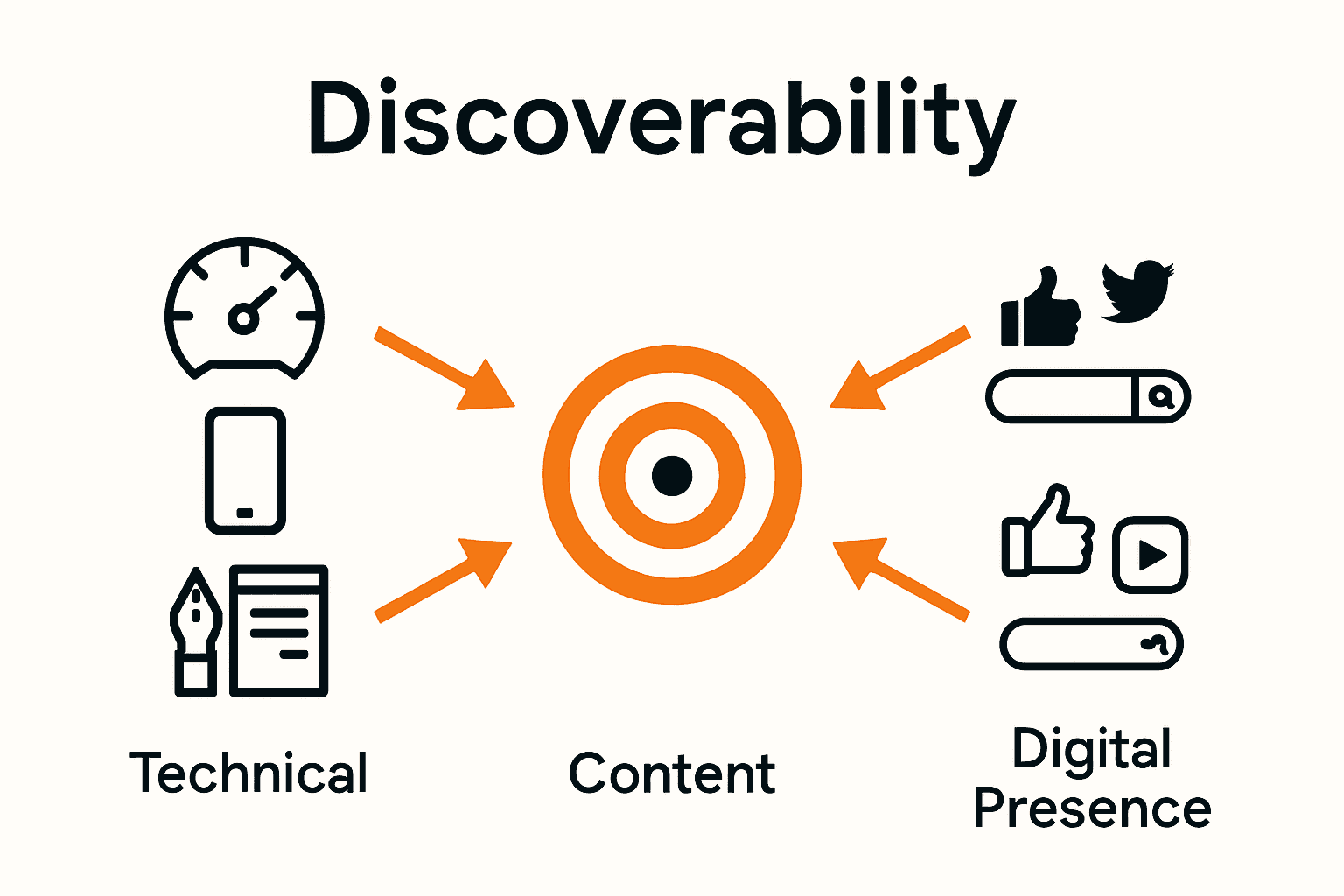
The core factors influencing online visibility can be categorised into several critical dimensions:
Technical Factors
Content-Related Factors
Digital Presence Factors
According to Crystallize, online visibility fundamentally determines whether potential customers can discover and access a company’s products or services. This means businesses must adopt a holistic approach, understanding that visibility is not about isolated tactics but a comprehensive digital strategy.
Discover powerful SEO techniques to enhance your online visibility and transform your digital presence from invisible to irresistible.
Online visibility is no longer a luxury but a critical necessity for businesses seeking digital success. As Forbes explains, having a website is not enough - the real advantage lies in being findable from anywhere in the world.
Key strategies to enhance online visibility include:
Search Engine Optimisation (SEO) Techniques
Content Marketing Approaches
Digital Engagement Strategies
According to Marketing.gl, increasing online visibility is about strategically optimising digital content, engaging audiences through social media, and leveraging targeted online advertising. The ultimate goal is attracting more traffic, reaching broader audiences, and improving brand recognition.
Discover the top ways to get your brand noticed online and transform your digital marketing approach.
Online visibility is a double-edged sword that requires strategic navigation. As European Business Review emphasises, while the internet has transformed business operations, it also presents significant challenges that can undermine digital success.
Common Pitfalls in Online Visibility
Reputation Management Risks
Technical Visibility Challenges
According to Crystallize, online visibility is about creating a prominent and accessible digital presence. This means businesses must be proactive in addressing potential risks that could diminish their online reputation and discoverability.

Learn how to protect and enhance your brand’s online visibility to stay ahead in the competitive digital landscape.
The challenge of standing out in today’s crowded digital marketplace is clear from the article. Achieving strong online visibility means tackling complex issues like SEO optimisation, content freshness, and consistent brand presence. If you are striving to ensure your business not only exists online but truly captivates potential customers, understanding these strategies is only the first step. Feeling overwhelmed by technical factors or unsure about where to focus your efforts is common. That is why personalised solutions tailored to your unique needs are essential for turning online visibility from a concept into measurable growth.
At Kickass Online, we specialise in crafting custom websites and digital marketing plans designed specifically for small and medium-sized businesses eager to improve their search engine rankings and maintain a secure, high-performing web presence. Explore our practical advice and insider knowledge in the Tips and Tricks section to start enhancing your digital strategies today.
Ready to transform your online visibility and gain the dedicated attention your business deserves? Visit our Websites page to discover how our expert team can create high-converting websites tailored to your goals. Book a consultation now at Kickass Online to begin your journey towards becoming unmistakably visible in the digital world.
Online visibility refers to how easily a business can be found and recognised across various digital platforms, such as search engines, social media, and online directories.
Online visibility is essential for business survival and growth in the digital marketplace. It enables potential customers to discover and engage with a brand, leading to increased traffic and sales.
Key strategies include search engine optimisation (SEO), content marketing, active social media management, and targeted online advertising. These methods help attract and engage audiences effectively.
Core factors include technical website performance, content quality and relevancy, digital presence across social media and search engines, and digital reputation management.
Most british businesses face a vital choice when selecting a web agency, yet more than 60 percent admit their projects missed key objectives due to unclear planning. Picking the right partner can shape your company’s online presence for years ahead and directly influence sales, growth, and reputation. This guide helps you break down each critical step, from defining clear goals to evaluating agency portfolios, so your next web project starts on a solid foundation.
| Essential Insight | Detailed Explanation |
|---|---|
| 1. Define Clear Objectives | Set specific, measurable goals like increasing website conversions by 25% within six months to guide your project effectively. |
| 2. Shortlist Suitable Agencies | Use online directories and professional networks to compile a list of agencies that align with your business needs and challenges. |
| 3. Evaluate Experience Thoroughly | Examine agency portfolios for projects similar to yours, focusing on their problem-solving capabilities and innovation skills. |
| 4. Assess Communication Style | Gauge their responsiveness and clarity during initial consultations to ensure they understand and adapt to your business needs. |
| 5. Verify Client Feedback | Conduct detailed reference checks with previous clients to understand their project experiences and the agency’s overall performance. |
Before diving into web development, you need a crystal-clear roadmap of what you want to achieve. According to research from arxiv.org, successful web projects require a robust framework that combines strategic planning with flexible implementation.
Start by mapping out your specific business goals. Are you looking to increase online sales? Improve customer engagement? Enhance brand visibility? Each objective needs to be precise and measurable. As insights from oracle.com suggest, your project scope should directly align with your core business processes and deliver tangible outcomes.
Break down your objectives into actionable components. This means identifying key performance indicators (KPIs), target metrics, and specific milestones. For instance, instead of a vague goal like “grow online presence,” define something concrete such as “increase website conversions by 25% within six months” or “reduce customer support queries by implementing an intuitive FAQ section.”
Pro Tip: Always involve key stakeholders when defining objectives to ensure comprehensive and realistic goal setting.
With your business objectives clearly outlined, you are now ready to move forward into the next phase of selecting the right web agency to bring your digital vision to life.
Researching and shortlisting web agencies requires a strategic approach to finding the right digital partner for your business. According to research from arxiv.org, evaluating web agencies involves understanding their capabilities in promoting task innovation and technological adaptability.
Start by casting a wide net. Leverage online directories, professional networks like LinkedIn, and industry recommendations to compile an initial list of potential agencies. Look beyond their flashy websites and dive deeper into their portfolios. Pay attention to agencies that have worked with businesses similar to yours in size, industry, or specific digital challenges. Research from arxiv.org suggests examining their technological approach and how they integrate modern architectural solutions into their web development process.
Narrow down your list by conducting thorough due diligence. Check client testimonials, case studies, and request detailed project portfolios. Look for agencies that demonstrate clear communication, proven track records, and a strategic approach to web development. Create a comparison spreadsheet tracking key factors such as expertise, pricing, past project complexity, turnaround times, and additional services.
Pro Tip: Schedule initial consultation calls with your top 3-5 shortlisted agencies to get a real sense of their communication style and understanding of your project.
With your shortlist refined, you are now prepared to move forward to the next critical stage of evaluating these potential web agency partners in depth.
Evaluating a web agency’s experience and portfolio is crucial to finding the right digital partner for your business. According to arxiv.org, successful web development projects require a robust framework that combines strategic project management methodologies with adaptable implementation techniques.
Delve deep into each agency’s portfolio, looking beyond surface level aesthetics to understand their true capabilities. Pay close attention to projects similar to your own business sector or digital challenges.
IMAGE:descriptive_key_1] [Research from arxiv.org highlights the importance of assessing web agencies’ ability to drive task innovation and demonstrate technological adaptability. Look for evidence of comprehensive solutions that go beyond mere website design to showcase strategic thinking and problem solving skills.
Create a systematic evaluation process that goes beyond visual appeal. Request detailed case studies, client references, and specific examples of how they have solved complex digital challenges for businesses in your industry. Examine their technical expertise, the diversity of their portfolio, and their ability to deliver measurable results. Pay special attention to metrics like project completion rates, client retention, and documented business outcomes from previous projects.
Pro Tip: Ask potential agencies to walk you through a specific project that demonstrates their strategic approach and problem solving capabilities.
With a comprehensive understanding of each agency’s experience and portfolio, you are now prepared to move forward with more targeted and informed discussions.
Assessing a web agency’s communication style and service flexibility is critical to establishing a successful long term partnership. Research from arxiv.org highlights the importance of understanding how agencies integrate service oriented architectures into their project management approach, which directly impacts their communication and adaptability.
Begin by evaluating their initial communication responsiveness and clarity. Schedule initial consultation calls to gauge their listening skills and ability to understand your specific business needs. Research from arxiv.org suggests that truly innovative web agencies demonstrate a capacity for task adaptation and strategic communication. Pay attention to how they explain complex technical concepts, their proposed solutions, and whether they seem genuinely interested in solving your unique challenges rather than offering generic responses.
Examine their service flexibility by discussing potential project scenarios and understanding their approach to unexpected changes or technical roadblocks. Request detailed information about their project management processes, communication protocols, and how they handle scope adjustments. Look for agencies that offer transparent timelines, clear milestone tracking, and proactive problem solving strategies. Assess their willingness to provide regular updates, their preferred communication channels, and how they integrate client feedback into their development process.
Pro Tip: Ask specific questions about their communication cadence and request examples of how they have adapted to client needs in previous projects.
With a comprehensive understanding of their communication approach and service flexibility, you are now prepared to make an informed decision about your potential digital partner.
Verifying references and thoroughly reviewing client feedback is a critical step in selecting the right web agency for your business. Research from arxiv.org emphasises the importance of understanding an agency’s capacity for task innovation and real world performance through comprehensive client testimonials.
Reach out directly to the agency’s previous clients and conduct structured reference checks. Request specific details about their project experiences, including challenges encountered, communication effectiveness, and overall satisfaction with the agency’s deliverables. Research from arxiv.org suggests that evaluating service oriented approaches requires deep insights into how agencies handle complex technological challenges and adapt to client needs.
Dive beyond surface level testimonials by seeking nuanced feedback. Look for patterns in client experiences such as consistency in project management, ability to meet deadlines, technical expertise, and responsiveness to changing requirements. Examine online reviews, industry forums, and professional networking platforms to gather a comprehensive view of the agency’s reputation. Pay special attention to reviews that provide specific examples of problem solving, technical innovation, and measurable business outcomes.
Pro Tip: Request references from clients with projects similar to your own business sector and technological requirements.
With a comprehensive understanding of the agency’s client track record, you are now equipped to make an informed decision about your potential digital partner.
Choosing the right web agency is crucial to overcoming challenges like unclear objectives, poor communication, and lack of technical adaptability. This article highlights essential steps such as defining measurable goals, evaluating portfolio quality, and verifying client feedback. At Kickass Online, we understand these pain points and specialise in providing bespoke digital solutions tailored to your unique business needs. Our expertise lies in delivering high-converting websites, optimising search engine rankings, and ensuring ongoing website performance that aligns with your growth objectives.
Explore our Websites category to see how we turn strategic planning into impactful results.
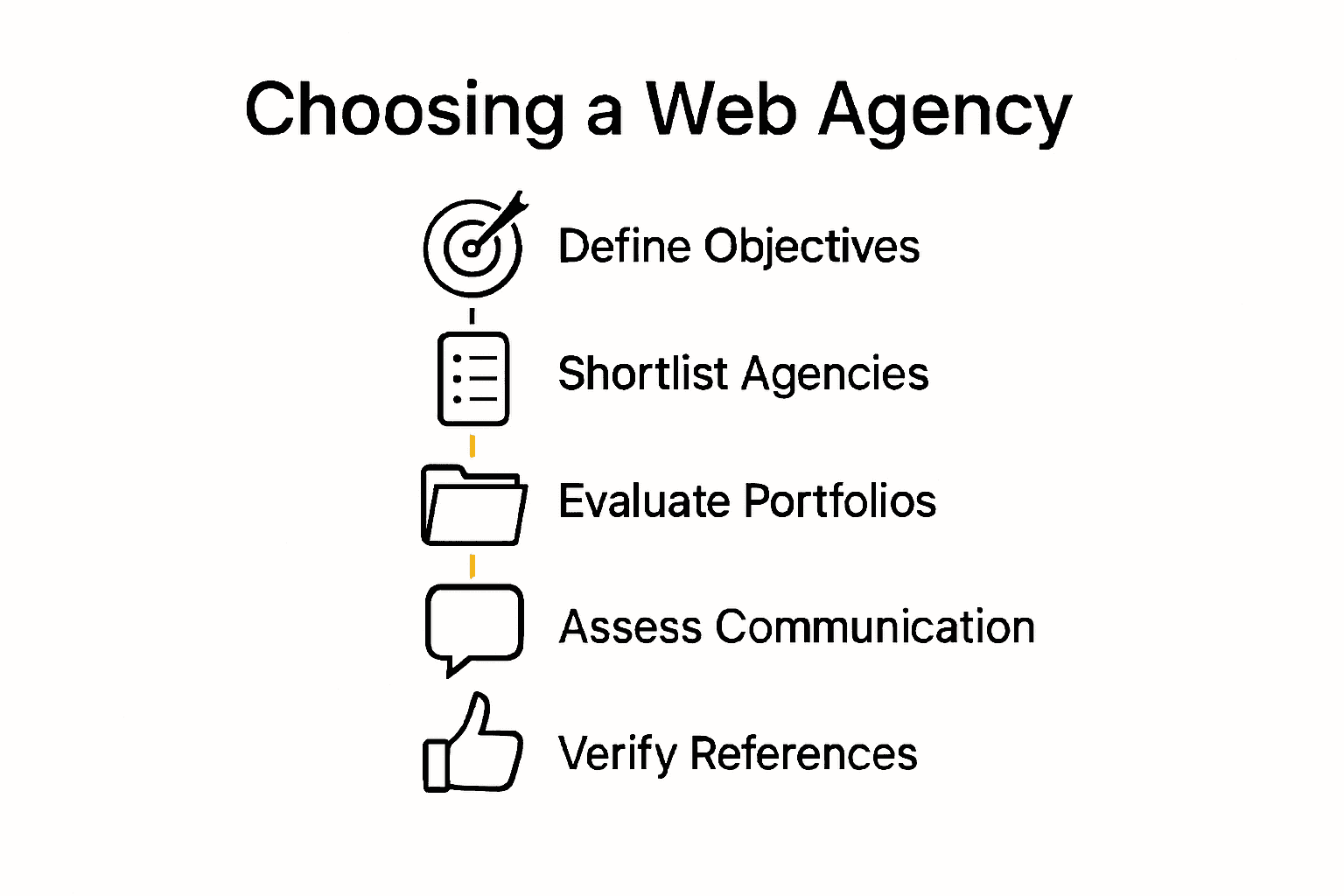
Take control of your online success today by partnering with a team that values clear communication and personalised service. Visit Kickass Online now to book a consultation and discover how our comprehensive solutions can be the game changer for your business. For more insights and trusted client stories, check out our Recommendations. Your business deserves a digital partner who can deliver lasting growth and measurable success.
To define your business objectives, identify what you specifically want to achieve, such as increasing online sales or improving customer engagement. Break these goals into measurable components, like aiming to boost website conversions by 25% within six months.
When shortlisting web agencies, consider their expertise, previous project experience, and client testimonials. Create a comparison spreadsheet to track key factors and ensure that the shortlisted agencies align with your specific needs and project scope.
To evaluate a web agency’s portfolio, look beyond aesthetics and assess how their previous projects relate to your industry and challenges. Request detailed case studies that demonstrate their problem-solving capabilities and results, focusing on metrics like project completion rates and client satisfaction.
During initial consultation calls, ask about their communication style, project management process, and how they adapt to client needs. Specifically, request examples of how they’ve managed unexpected changes in previous projects to gauge their flexibility and responsiveness.
To verify references, contact the agency’s past clients and inquire about their experiences, focusing on project challenges and satisfaction. Look for recurring themes in the feedback that highlight the agency’s reliability, technical expertise, and ability to meet deadlines.
Assess an agency’s communication skills by gauging their responsiveness and clarity during initial discussions. Pay attention to how well they listen to your needs and explain complex concepts, as this will indicate their commitment to a collaborative working relationship.
Choosing the right digital tools can make all the difference between getting lost in the crowd and standing out to your customers. With so many options promising to bring more visitors and better results, the challenge is finding the one that matches your needs and ambitions. Some offer all in one solutions packed with powerful features while others shine with tailored services and a personal approach. The options each have their strengths and it is not always clear which path will lead to the most impact. As you look for ways to grow, improve your online presence, and secure lasting results, it helps to see how these choices stack up. The details that matter are often hidden in how these services work day to day and what real users say about them.
Kickass Online is a results-driven digital marketing agency focused on web design, SEO, website maintenance and tailored digital strategies for small and medium-sized businesses. The agency prioritises quality over quantity by limiting client intake, which ensures highly personalised service and measurable growth in visibility, traffic and conversions. If you want a partner that builds high-conversion websites and keeps them secure and performant, Kickass Online delivers focused, strategic work rather than one-size-fits-all packages.
Kickass Online combines visually appealing, conversion-focused website design with search engine optimisation and ongoing website maintenance for security, updates and performance. Their offering includes custom digital marketing plans aligned to client goals and budgets, plus PPC profitability tools and resources to sustain paid campaigns that actually convert. The site showcases a team of specialists, selected successful projects and glowing client reviews, and it promotes booking consultations alongside informative resources to help businesses make confident decisions.
Kickass Online is ideal for small to medium-sized businesses, especially local retailers, professional services and franchises, seeking a dedicated digital partner rather than a faceless vendor. If you want a high-conversion website, clearer search visibility and reliable site maintenance, and you value strategic partnership over low-cost volume work, this agency is a strong fit. Expect a more consultative onboarding process; this is built-in, not a hurdle.
Kickass Online’s edge is its deliberate trade-off: fewer clients so each receives senior-level attention and a cohesive digital strategy. That design choice produces measurable outcomes, improved search rankings, cleaner conversion funnels and resilient website performance, because the team can align design, SEO and PPC from day one. Unlike agencies that parcel out tasks, Kickass Online integrates specialists around a single growth plan, and their emphasis on PPC profitability tools means paid media complements organic work rather than cannibalising it. In short: you get a boutique, accountable partner geared to deliver tangible business results, not just vanity metrics.
A local retailer in Milton Keynes engaged Kickass Online to revamp their site, implement SEO, and run a targeted PPC campaign; the combined approach increased footfall and online orders by improving search visibility and converting visitors more effectively.
Pricing is not specified publicly; Kickass Online emphasises tailored plans and limited onboarding to ensure quality, so costs are bespoke and tied to scope and desired outcomes.
Website: https://kickassonline.com
SEMrush is an all-in-one, data-driven marketing platform that consolidates SEO, content, advertising, social and local marketing tools into a single interface. Its strength lies in AI-powered insights and an immense dataset that helps you analyse competitors and surface clear optimisation opportunities. For businesses ready to invest time learning the platform, it can replace several point tools and centralise workflows. However, smaller teams may find the breadth of features intimidating and the cost a notable consideration.
SEMrush brings together SEO keyword analysis (backed by billions of keywords and AI insights), backlink analysis with traffic potential evaluation, technical site audits and rank tracking, plus local listing optimisation for Google My Business. It also offers AI-generated content ideas and scoring, social media scheduling and brand monitoring, AI advertising planning for Google and Meta, and media outreach/PR monitoring. In short: search, content, ads, social and local functions live under one roof, supported by AI to speed decision-making.
SEMrush suits marketing professionals, SEO specialists, content creators, advertising agencies and enterprises that need a single, advanced platform to manage multiple marketing channels. If you run an agency or an in-house marketing team aiming to scale organic and paid performance, and you can dedicate time to learning the tool, SEMrush will likely fit your needs.
SEMrush’s unique value is its combination of breadth and scale: comprehensive digital-marketing tooling coupled with AI-driven insights and one of the largest keyword and backlink datasets available. That mix lets you move from discovery to execution without stitching together multiple platforms, efficient, centralised, data-led workflows.
A digital marketing agency uses SEMrush to map competitors’ backlinks and keywords, refine client SEO strategies, monitor brand reputation, and plan paid ad campaigns. The result: clearer prioritisation of technical fixes and content gaps, faster campaign optimisation, and measurable uplifts in traffic and search visibility.
Plans and pricing details are available on the SEMrush website; free trial options are offered for new users.
Website: https://semrush.com
ahrefs is a data-first AI marketing platform that combines extensive search and backlink intelligence with AI-powered content and localisation tools. It’s designed for teams that need reliable, large-scale insights rather than casual keyword checks. Expect a steep but rewarding learning curve: once configured, ahrefs delivers market and competitor clarity that directly informs content and SEO strategy.
ahrefs offers a broad toolkit centred on search and competitive intelligence: Brand & AI Search, Rank Tracker, Site Explorer, Keyword Explorer and Content Explorer, plus an AI Content Helper and Grader. It also supports local SEO and GBP monitoring, social media management, reporting dashboards, enterprise API access and AI-driven localisation and content strategy tools. In short, it merges big‑data crawling with AI workflows so you can research, create, monitor and report from one platform.
ahrefs is best for digital marketers, SEO professionals, content creators, marketing agencies and enterprise teams that require comprehensive search and AI-driven marketing tools. If you manage multiple clients or large sites and need reliable backlink, rank and content analytics, this platform suits you. If you’re a one-person operation with minimal SEO needs, it may be more than you require.
ahrefs’ unique value lies in pairing a large-scale data infrastructure with AI content and localisation tools, so you can move from research to content execution within the same ecosystem. That integration reduces manual handoffs and helps teams turn competitive insights into actionable content plans faster.
A marketing agency uses ahrefs to monitor client backlink profiles, analyse competitors’ SEO strategies, optimise content for higher search rankings and generate detailed client reports. The result: clearer prioritisation of technical fixes, targeted content gaps filled, and demonstrable ranking improvements used in client reviews.
Plans start from $129/month for the Lite plan, $249/month for Standard, $449/month for Advanced, and enterprise solutions at $1,499/month, with annual billing options and add-ons available.
Website: https://ahrefs.com
Moz is an all-in-one SEO platform that combines keyword research, competitive analysis, link authority data and rank tracking into a single suite aimed at businesses and agencies. It pairs a user-friendly interface with AI-powered insights to speed up interpretation of SEO data. For teams that need an integrated workflow, from site audits to local listings, Moz offers breadth and educational support, though the cost and initial interface complexity may be a barrier for solo practitioners. Bottom line: dependable and comprehensive, but not the cheapest entry point.
Moz provides an integrated toolkit centred on Moz Pro that covers keyword research and search volume analysis, competitive research and gap analysis, link profile and authority insights, and rank tracking with detailed SERP analysis. The platform also supports APIs and data solutions for custom workflows, and offers local SEO management via Moz Local, enabling businesses to monitor multiple locations and listings from the same account.
Moz suits digital marketing professionals, SEO specialists and agencies that need a reliable, unified SEO platform to manage campaigns across organic search and local listings. It works well for small to large business owners who want a single vendor for keyword discovery, competitive analysis and link management rather than multiple point tools.
Moz’s strength lies in combining authoritative link and domain insights with practical keyword and rank-tracking tools, wrapped in a platform supported by strong educational resources and APIs for custom data needs. That blend helps teams move from analysis to action without losing context across tasks.
A small e-commerce business uses Moz Pro to identify high-impact keywords, analyse competitors’ organic strategies, track rankings over time and optimise local listings via Moz Local, resulting in clearer prioritisation of content and local visibility improvements.
Moz offers various subscription plans and a free trial, with pricing starting at $39 per month for the Starter plan and higher tiers, Standard, Medium and Large, available for expanded capabilities; discounts apply for annual payments and during special sales.
Website: https://moz.com
This table provides a comprehensive overview of digital marketing platforms based on their features, target audiences, and pricing options, enabling easy comparison for informed decision-making.
| Platform | Key Features | Pros | Cons | Pricing |
|---|---|---|---|---|
| Kickass Online | Web design, SEO, maintenance, PPC tools | Personalised service, SEO expertise, ongoing maintenance, proven results | Pricing not publicly specified | Bespoke, based on scope |
| SEMrush | SEO, content, advertising, social media management, AI insights | Integrated platform, AI insights, real-time data, trusted by brands | Complex for beginners, expensive for small teams | Various plans available, free trial |
| ahrefs | Search, backlink analysis, AI content tools, localisation | Comprehensive data, AI integration, competitive analysis | High pricing, complex for basic users | Starts at $129/month |
| Moz | Keyword research, link authority, rank tracking, local SEO | Comprehensive suite, link focus, AI insights, robust support | Initial complexity, higher price for small businesses | Starts at $39/month |
Navigating the sea of SEO tools can be overwhelming especially when every business aims to enhance search visibility and boost conversion rates. The article highlights the common challenge of selecting the right tools to build a strategic digital marketing plan that delivers measurable results. If your goal is to achieve personalised, high-impact SEO tailored just for your business needs, you need more than generic solutions or complicated platforms – you need a dedicated partner.
At Kickass Online we specialise in crafting bespoke website design and SEO strategies that focus on sustainable growth and consistent performance. We limit our client intake to ensure every business benefits from hands-on senior expertise, combining technical optimisation with engaging user experience and reliable website maintenance. This approach helps you move beyond simply using top SEO tools to executing a fully integrated digital plan that drives real conversions.
Discover practical advice and smart digital marketing insights by exploring our Tips and Tricks and Recommendations sections.
Ready to stop juggling complicated software and start growing your business with a results-driven digital partner? Take the next step with Kickass Online by booking a consultation today at https://kickassonline.com and transform how your website attracts and converts customers.
When evaluating SEO tools for businesses, seek features such as keyword research capabilities, backlink analysis, site audit functions, and competitor analysis. Prioritise tools that provide actionable insights through AI or data-driven analytics to improve your website effectively.
Identify your specific goals, such as improving search rankings or increasing organic traffic, and assess tools based on how well their features align with these objectives. Test the tools through free trials or demos to see which ones best suit your workflows and provide the insights needed for growth.
Consider allocating a budget that allows for flexible investment, typically ranging from £30 to £500 per month depending on the size of your business and required features. Start small, invest in essential tools, then expand based on the value and data-driven results you observe.
You can expect to see preliminary results, such as improved search rankings and traffic increases, within 30 to 60 days of effectively implementing the insights from your chosen SEO tools. Monitor your performance regularly to adjust strategies based on real-time data.
Yes, many businesses find it beneficial to use multiple SEO tools to cover different areas of optimisation, such as keyword research, analytics, and backlink monitoring. Ensure that the tools you select can integrate smoothly and complement each other to streamline your workflow.
Use metrics like organic traffic growth, keyword rankings, and conversion rates to evaluate the success of your SEO strategy. Regularly review these metrics and adjust your tactics based on the insights gathered from your SEO tools to optimise performance continually.
Over 80 percent of businesses miss out on potential customers because their digital marketing approach lacks clear goals and defined audiences. In a crowded online world, having a strong foundation sets you apart. Understanding how to set measurable objectives, engage your audience, and track results makes the difference between guesswork and growth. This guide covers every step, from building a powerful website to creating content that truly connects.
| Key Message | Explanation |
|---|---|
| 1. Define clear marketing goals | Establish specific, measurable goals and target audience for effective marketing strategies. |
| 2. Optimise your website for conversions | Design your website to guide visitors toward clearly defined actions, enhancing user experience and conversion rates. |
| 3. Implement SEO and local search strategies | Use targeted keywords and optimise local listings to ensure your business is easily discoverable online. |
| 4. Regularly track and analyze metrics | Monitor essential metrics to understand performance and adjust marketing strategies for better outcomes. |
| 5. Leverage social media effectively | Engage with audiences on social platforms to build brand awareness and foster customer loyalty through meaningful interactions. |
Successful digital marketing begins with crystal clear goals and a well understood target audience. Without these foundational elements, your marketing efforts will feel like shooting arrows in the dark.
According to research from Jeppiaar College, the DAGMAR model emphasises setting concrete, measurable marketing objectives with a precisely defined target audience. This means moving beyond vague aspirations to specific, actionable targets.
Key Steps for Goal Definition:
Audience Segmentation Strategies:
Understanding your audience requires deep insight. As Wikipedia explains, audience segmentation involves dividing your market into sub-groups based on shared characteristics. This allows for highly targeted marketing approaches.
To nail down your target audience, consider these critical dimensions:
Practical tip: Create 2-3 detailed buyer personas representing your ideal customers. These fictional representations will guide your entire marketing strategy, helping you craft messages that resonate precisely with your intended audience.
Remember, the more specific and nuanced your understanding of your target market, the more effectively you can design marketing campaigns that genuinely connect and convert.
Your website is your digital storefront. It must do more than look pretty it must persuade visitors to take action.
Research from arXiv reveals a critical insight: successful web design requires balancing user experience with visual intensity to maximise conversion rates. This means creating a site that not only looks attractive but strategically guides visitors toward making a purchase or inquiry.
Website Design Principles for Conversion:
According to arXiv research, using the 8C model can provide a quantitative approach to evaluating website quality. This means considering factors like context, content, community, customisation, communication, connection, commerce, and care.
Key conversion strategies include:
Practical tip: Your website should answer three critical questions within seconds of a visitor arriving: What do you offer? Why should they care? What action should they take next?
Remember websites that convert are not accidents. They are carefully crafted experiences designed to guide potential customers smoothly from interest to action.
Search engine optimisation transforms your website from an invisible digital brochure into a powerful customer acquisition tool. Getting this right means potential customers can actually find you online.
According to Rockstar Rand Moon, data driven design and rigorous testing are crucial for improving digital performance. This principle applies perfectly to SEO strategy.
Critical Local SEO Elements:
Technical SEO Fundamentals:
Practical keyword strategies involve understanding what potential customers actually search for. This means moving beyond generic terms to specific phrases that reflect local search intent. For example instead of targeting “marketing services” focus on “marketing services in Milton Keynes”.
Key optimisation techniques include:
For small businesses local SEO is not optional. It is the difference between being found or being invisible. Your goal is to become the go to local solution in your specific market.
Without tracking the right metrics your digital marketing efforts are like driving blindfolded. Analytics provide the roadmap to understanding your marketing performance and making intelligent strategic decisions.
Research from arXiv highlights the critical importance of tracking customer responses and continuously adjusting marketing actions. This means moving beyond vanity metrics to insights that drive real business growth.
Essential Analytics Platforms:
Key Performance Indicators to Monitor:
According to research, understanding consumer behaviour through analytics involves clustering brand preferences using personality and socio demographic variables. This means diving deep into data to truly comprehend your audience.
Practical implementation requires setting up conversion tracking that connects directly to your business objectives. Start by identifying your most critical business goals and creating specific metrics that demonstrate progress towards those goals.
A powerful approach is establishing a dashboard that provides a snapshot of your most important metrics. This allows you to make quick data driven decisions and rapidly adjust your marketing strategy based on real world performance.
Content is the currency of digital marketing. Without strategic content creation your online presence becomes invisible and forgettable.
According to Wikipedia, effective content marketing relies on understanding psychological characteristics of your target audience. This means crafting messages that genuinely resonate with specific consumer segments.
Content Creation Principles:
Content Types to Consider:
A marketing plan serves as your strategic roadmap for executing content initiatives. This means developing a systematic approach to content creation that aligns with your business objectives.
Practical scheduling strategies involve:
Key recommendation: Develop a content mix that balances educational informative pieces with promotional material. Aim for an 80 20 ratio where 80% of content provides genuine value and 20% subtly promotes your services.
Remember great content solves problems builds trust and positions your brand as an authoritative solution provider in your industry.
Social media is no longer optional for businesses. It is a critical platform for connecting with your audience and building brand recognition.
Marketing Theory emphasises the importance of understanding consumer behaviour and communication strategies when developing social media approaches. This means moving beyond random posting to strategic engagement.
Social Media Platform Strategies:
Content Types for Brand Building:
According to Wikipedia, establishing a clear frame of reference helps position your brand effectively. This means crafting a consistent narrative that communicates your unique value proposition across all social channels.
Practical implementation involves:
Remember social media success is not about follower count. It is about creating meaningful connections that transform casual followers into loyal brand advocates.
Successful digital marketing is not a one time setup but an ongoing process of measurement, learning and refinement.
Research from arXiv emphasises the critical importance of monitoring marketing actions and customer responses to optimise targeted strategies. This means treating your digital marketing approach as a living system that constantly evolves.
Performance Monitoring Techniques:
Key Metrics to Track:
According to research, understanding consumer behaviour through analytics involves clustering brand preferences and responding to emerging insights. This requires a systematic approach to data analysis and strategic adaptation.
Practical implementation involves:
Remember marketing is not about perfection. It is about continuous learning and intelligent adaptation based on real world performance data.
Below is a comprehensive table summarising key strategies for effective digital marketing as discussed throughout the article.
| Strategy | Implementation | Expected Results |
|---|---|---|
| Define Marketing Goals & Audience | Set concrete, measurable objectives using the DAGMAR model; segment audience by demographics, geography, psychographics, and behaviour; create buyer personas. | Enhanced targeting, focused marketing campaigns, increased conversion rates. |
| Build a Conversion-Focused Website | Use clear calls to action, ensure mobile responsiveness, optimise loading speed, and implement the 8C model. | Improved user experience, higher conversion rates. |
| Optimise Website for SEO and Local Search | Enhance Google Business Profile, use specific local keywords, and improve technical SEO features like loading speed and schema markup. | Increased online visibility, better local search rankings. |
| Set Up and Track Key Analytics Metrics | Utilise platforms like Google Analytics, monitor KPIs such as conversion rates and traffic sources, and establish dashboards. | Data-driven insights, optimised marketing efforts. |
| Create and Schedule Engaging Content | Develop a content calendar, focus on audience preferences, and maintain a consistent brand voice. | Increased engagement, strengthened brand presence. |
| Leverage Social Media for Brand Awareness | Select relevant platforms, maintain a consistent voice, and create a content calendar with high quality visuals. | Enhanced brand recognition, more meaningful customer connections. |
| Monitor Results and Continuously Improve | Regular performance reviews, use data visualisation, and adapt strategies based on analytics. | Continuous improvement, optimised marketing performance. |
Struggling to implement a clear 7-step digital marketing checklist that drives real business growth can quickly become overwhelming. If defining measurable goals, optimising your website for conversions, or tracking key analytics feels like navigating a complex maze, you are not alone. Many businesses face these exact challenges that the article highlights, including understanding audience segmentation and maintaining consistent, engaging content.
At Kickass Online, we specialise in providing tailored digital marketing solutions designed specifically for small and medium-sized businesses looking to elevate their online presence. We focus on creating high-converting websites that answer your customers’ key questions within seconds. Our expertise extends to SEO mastery and ongoing website maintenance, ensuring your site remains both visible and performant in local search results.
Discover practical tips and proven strategies in our Tips and Tricks | Kickass Online category where we share actionable advice to enhance your digital efforts. For trustworthy recommendations tailored to business growth, visit our Recommendations | Kickass Online page, where real client successes inspire smart marketing decisions.
Don’t let disjointed digital marketing efforts hold you back any longer. Visit Kickass Online today to explore how our personalised services can transform your marketing checklist into measurable success. Book a consultation now to start building your path to growth with a team that prioritises your business results.
The main steps include defining your marketing goals and target audience, building a conversion-focused website, optimising for SEO and local search, tracking key analytics metrics, creating engaging content, leveraging social media for brand awareness, and continuously monitoring results. Follow these steps sequentially to ensure a systematic approach to your digital marketing efforts.
To define your marketing goals effectively, identify specific revenue or growth targets and set measurable key performance indicators (KPIs). Aim for objectives that are timebound and outline specific marketing milestones to achieve them, such as increasing website traffic by 30% within three months.
Your conversion-focused website should include clear and compelling calls to action, intuitive navigation, mobile responsiveness, and optimised page loading speed. Ensure that it answers three critical questions: What do you offer? Why should visitors care? What action should they take next?
Essential metrics to track include website traffic volume, conversion rates, customer acquisition costs, and bounce rates. Set up conversion tracking to monitor these metrics so you can adjust your strategy effectively, aiming for a 15% increase in conversion rates over the next quarter.
To create engaging content, understand your audience’s preferences and address their specific pain points while providing genuine value. Develop a content calendar and maintain a clear and consistent brand voice to ensure your content remains relevant and resonates with your target market.
Social media is crucial for connecting with your audience and building brand awareness. Use it strategically by engaging authentically with followers and posting platform-specific content to create meaningful connections, aiming to increase engagement by 25% within the next few months.
Small businesses that publish consistent content see up to 67 percent more leads each month than those that do not. Whether you want to educate customers or showcase your expertise, the right mix of content can help your brand attract attention, build trust, and keep your audience coming back. From blog posts to videos, discover which proven content types can connect you with customers and support real business growth.
| Takeaway | Explanation |
|---|---|
| 1. Educational blog posts establish authority | Consistently publishing informative articles positions your business as a trusted industry expert, attracting potential customers. |
| 2. Engage through diverse social media content | Use a mix of informative, entertaining, and interactive posts to foster genuine audience connections. |
| 3. Email newsletters should prioritise value | Focus on delivering valuable insights rather than constant promotions to nurture leads effectively. |
| 4. Short videos capture audience attention | Keeping videos concise and focused enhances viewer engagement and delivers valuable insights quickly. |
| 5. Infographics simplify complex information | Visual elements make intricate ideas easy to understand and share, enhancing your content’s reach. |
Blog posts represent a powerful content marketing strategy that allows small businesses to share knowledge and build meaningful connections with potential customers. According to the American Marketing Association, educational blog content can effectively engage audiences by addressing their questions and providing valuable information.
The core purpose of educational blog posts is to transform your website from a simple online brochure into an authoritative resource centre. When you consistently publish informative articles that tackle your audience’s most pressing challenges, you position your business as a trusted industry expert.
Successful educational blog posts typically follow a strategic approach. They should:
By creating comprehensive blog content that genuinely helps your target audience, you simultaneously achieve multiple business objectives. You improve search engine visibility, demonstrate your professional knowledge, and create opportunities for potential customers to connect with your brand.
Realistic implementation means committing to a consistent publishing schedule. Start with one high quality blog post per week that offers genuine value. Focus on solving real problems your customers experience rather than simply promoting your services. The goal is to become a go-to resource that readers trust and return to repeatedly.
Social media represents a dynamic platform for small businesses to connect directly with their target audience and showcase their brand personality. According to SAMHSA, effective social media content requires strategic planning and consistent messaging to drive genuine engagement.
Strategic content creation goes beyond merely posting updates. Your social media approach should focus on delivering value through a mix of informative, entertaining, and interactive content that resonates with your specific audience.
Successful social media content typically includes:
Working to maximise your SME’s social media impact means understanding that engagement is about quality over quantity. Your followers want authentic connections rather than generic promotional messages.
Practical implementation involves creating a content calendar that balances different types of posts. Share expert insights one day, customer success stories another and include occasional interactive elements like polls or quick questions that encourage audience participation. This approach transforms your social media from a broadcast channel into a genuine conversation platform.
Remember that visual content tends to perform significantly better. Short videos, infographics and high quality images will help your posts stand out in crowded social media feeds and increase the likelihood of audience interaction.
Email newsletters represent a powerful content marketing strategy that helps small businesses maintain consistent communication with potential customers. According to the American Marketing Association, effective email newsletters play a critical role in guiding potential customers through the sales funnel by delivering relevant content and strategic calls-to-action.
Lead nurturing through email requires a thoughtful approach that prioritises value over frequency. Your newsletter should not feel like a constant sales pitch but instead a valuable resource that genuinely helps your audience solve problems or learn something new.
Successful email newsletters typically include:
When leveraging email marketing best practices, segmentation becomes crucial. Group your subscribers based on their interests or interaction history to ensure the content remains highly relevant.
Practical implementation means creating a consistent schedule readers can anticipate. Whether you choose weekly or monthly newsletters, maintain a predictable rhythm that subscribers can look forward to. Aim to provide approximately 80% educational content and 20% subtle promotional material to keep your audience engaged without feeling overwhelmed.
Remember that compelling subject lines and mobile friendly design are essential. Most people first check emails on smartphones, so ensure your newsletter looks great across all devices.
Video content has emerged as a powerful medium for small businesses to showcase their professional knowledge and connect with potential customers. According to SAMHSA, video provides an accessible way to convey complex information and enhance audience engagement.
Demonstrating expertise through video requires a strategic approach that goes beyond simple promotional content. Your videos should educate, solve problems and provide genuine value to your target audience.
Effective video content typically includes:
When harnessing the power of video marketing, focus on creating content that answers your audience’s most pressing questions. Think about the challenges your potential customers face and develop video content that offers practical solutions.
Practical implementation means investing in decent recording equipment and understanding basic video production principles. You do not need Hollywood level production quality. Most smartphones now offer excellent video capabilities. The key is clear audio, good lighting and authentic delivery.
Remember that shorter videos typically perform better. Aim for concise three to five minute segments that get straight to the point. Your goal is to demonstrate expertise quickly and maintain viewer attention through valuable insights.
Infographics transform complex data into visually engaging narratives that capture audience attention instantly. According to HIV.gov, infographics are powerful tools for simplifying intricate information and making content significantly more shareable across digital platforms.
Visual communication represents a critical strategy for small businesses seeking to communicate complex ideas quickly and memorably. Infographics allow you to break down sophisticated concepts into digestible visual elements that resonate with viewers.
Successful infographics typically include:
When creating infographics, focus on telling a compelling story through visual hierarchy. The most important information should be most prominent. Your goal is to guide the viewer’s eye through the narrative you want to communicate.
Practical implementation means investing time in understanding basic design principles. You do not need professional graphic design skills. Several online tools make infographic creation accessible for small business owners. The key is maintaining clarity and visual appeal.
Remember that great infographics serve as silent salespeople for your brand. They can be shared across social media platforms increasing your potential reach far beyond traditional marketing methods.
Case studies represent powerful storytelling tools that transform abstract business achievements into compelling narratives of real world success. According to the American Marketing Association, case studies provide concrete evidence of a company’s capabilities and substantively enhance professional credibility.
Narrative driven marketing allows potential clients to visualise exactly how your business solves specific challenges. By documenting actual client experiences, you create transparent proof of your professional capabilities.
Compelling case studies typically include:
Building long term brand recognition requires demonstrating consistent value through detailed client success stories. Your case studies should read like mini documentaries showcasing how you uniquely address complex business challenges.
Practical implementation means collecting quantifiable data throughout client projects. Track specific metrics such as percentage improvements, time saved or revenue generated. These numeric insights transform case studies from generic narratives into powerful marketing assets.
Remember that authenticity matters more than perfection. Potential clients appreciate honest representations of your work process including challenges overcome and lessons learned.
Guides and ebooks represent sophisticated content marketing tools that transform your business from a simple service provider into a trusted knowledge centre. According to the American Marketing Association, comprehensive guides help businesses establish thought leadership by providing detailed information that educates and empowers their audience.
Strategic knowledge sharing goes beyond surface level information. Your guides should offer unique insights that demonstrate your professional expertise and understanding of complex industry challenges.
Effective guides and ebooks typically include:
When creating in depth resources, focus on solving genuine problems your target audience experiences. Content marketing strategies work best when they provide genuine value rather than serving as thinly disguised sales pitches.
Practical implementation means investing time in thorough research and presenting information in an accessible format. Break complex topics into digestible sections. Use visual elements like charts or infographics to enhance understanding. Consider offering these resources as free downloads in exchange for email contact details.
Remember that a well crafted guide can continue generating leads and establishing your credibility long after its initial publication. Treat each resource as a long term investment in your brand’s reputation and expertise.
Below is a comprehensive table summarising the key strategies and considerations for different content marketing approaches discussed throughout the article.
| Content Type | Purpose & Focus | Implementation & Key Points |
|---|---|---|
| Blog Posts | Share knowledge & build connections. | Answer industry questions, provide practical solutions, publish consistently. |
| Social Media Content | Enhance engagement & showcase personality. | Use a content calendar, mix post types, favour quality visuals. |
| Email Newsletters | Nurture leads & guide through sales funnel. | Prioritise value, segment audience, consistent schedule. |
| Videos | Demonstrate expertise & engage audiences. | Create short tutorials, invest in decent equipment, focus on clarity. |
| Infographics | Simplify complex information & enhance shareability. | Maintain visual hierarchy, create with accessible tools, ensure clarity. |
| Case Studies | Build trust & provide evidence of success. | Include measurable outcomes, testimonials, authentic storytelling. |
| Guides & Ebooks | Establish thought leadership & provide in-depth learning. | Offer actionable advice, use professional design, provide real-world examples. |
Small businesses face the challenge of consistently creating varied, high-quality content that truly connects with their audience. Whether it is crafting insightful blog posts, engaging social media updates, or powerful case studies, the struggle lies in turning these essential types of content marketing into measurable business growth. The key goals highlighted include building trust, improving online visibility, and nurturing leads through valuable information rather than pushy sales tactics.
At Kickass Online, we understand these challenges and provide tailored digital marketing services designed to help you maximise the impact of your content strategy. From professional website design that showcases your brand authority, to SEO optimisation that boosts your search rankings, our dedicated team ensures your content marketing efforts translate into real client engagement and sales growth. Discover actionable insights and proven strategies in our Tips and Tricks | Kickass Online section – the perfect companion to this educational article.
Looking to transform your content into a powerful business asset сейчас?
Explore personalised digital solutions designed for small businesses ready to rise above their online noise. Book a consultation at Kickass Online now and start turning your content marketing into your strongest growth engine. For more innovative approaches, visit our Recommendations | Kickass Online page and take the first step towards truly standout digital marketing.
Content marketing for small businesses includes blog posts, social media content, email newsletters, videos, infographics, case studies, and guides or ebooks. Explore each type to determine which best aligns with your audience’s needs and your business goals.
To create engaging blog posts, focus on answering common questions your audience has and providing practical solutions to their problems. Aim to publish one high-quality post per week that genuinely addresses your readers’ challenges to establish your expertise.
Include exclusive industry insights, helpful tips, customer success stories, and upcoming events or announcements in your email newsletter. Aim to provide about 80% educational content and 20% promotional material to keep subscribers engaged without feeling overwhelmed.
Utilise video content by creating quick tutorials, expert advice segments, or client success stories that offer solutions to your audience’s problems. Focus on concise, three to five-minute segments to maintain viewer interest and demonstrate your expertise quickly.
An effective infographic should have clear data visualisations, a consistent colour scheme, minimal text, and a logical flow of information. Create infographics that tell a compelling story and guide viewers through the main points visually.
Structure your case study with a clear problem statement, the solution you implemented, measurable outcomes, and client testimonials. Use quantifiable data to enhance credibility and demonstrate the tangible benefits your services provide.