
Many UK SME owners think off-page SEO means only building backlinks. Off-page SEO includes brand mentions, social signals, reputation management, and more. Businesses using a diverse off-page SEO strategy achieve 30% higher ranking improvements than those focusing exclusively on link building. This article will explain what off-page SEO really is and how it benefits your business.
Table of Contents
- Understanding Off-Page SEO Fundamentals
- The Impact of Off-Page SEO on Business Growth
- Beyond Backlinks: Other Off-Page SEO Strategies
- Local Off-Page SEO Strategies for UK SMEs
- Risks and Ethical Considerations in Off-Page SEO
- Choosing Professional Off-Page SEO Services
- Measuring and Monitoring Off-Page SEO Success
- Common Misconceptions About Off-Page SEO
- Why Choose Kickass Online for Your Off-Page SEO Needs?
- Frequently Asked Questions About Off-Page SEO
Key Takeaways
| Point | Details |
|---|---|
| Definition | Off-page SEO encompasses all external activities that boost your website’s authority and trust beyond your own site. |
| Impact | Diverse off-page strategies deliver significantly higher ranking improvements than backlinks alone. |
| Local Tactics | UK-specific approaches like local citations and community engagement enhance SME visibility in regional searches. |
| Ethical Approach | White-hat methods ensure sustainable growth while avoiding penalties that damage rankings. |
| Professional Support | Choosing transparent SEO services with proven results ensures measurable ROI for your business. |
Understanding Off-Page SEO Fundamentals
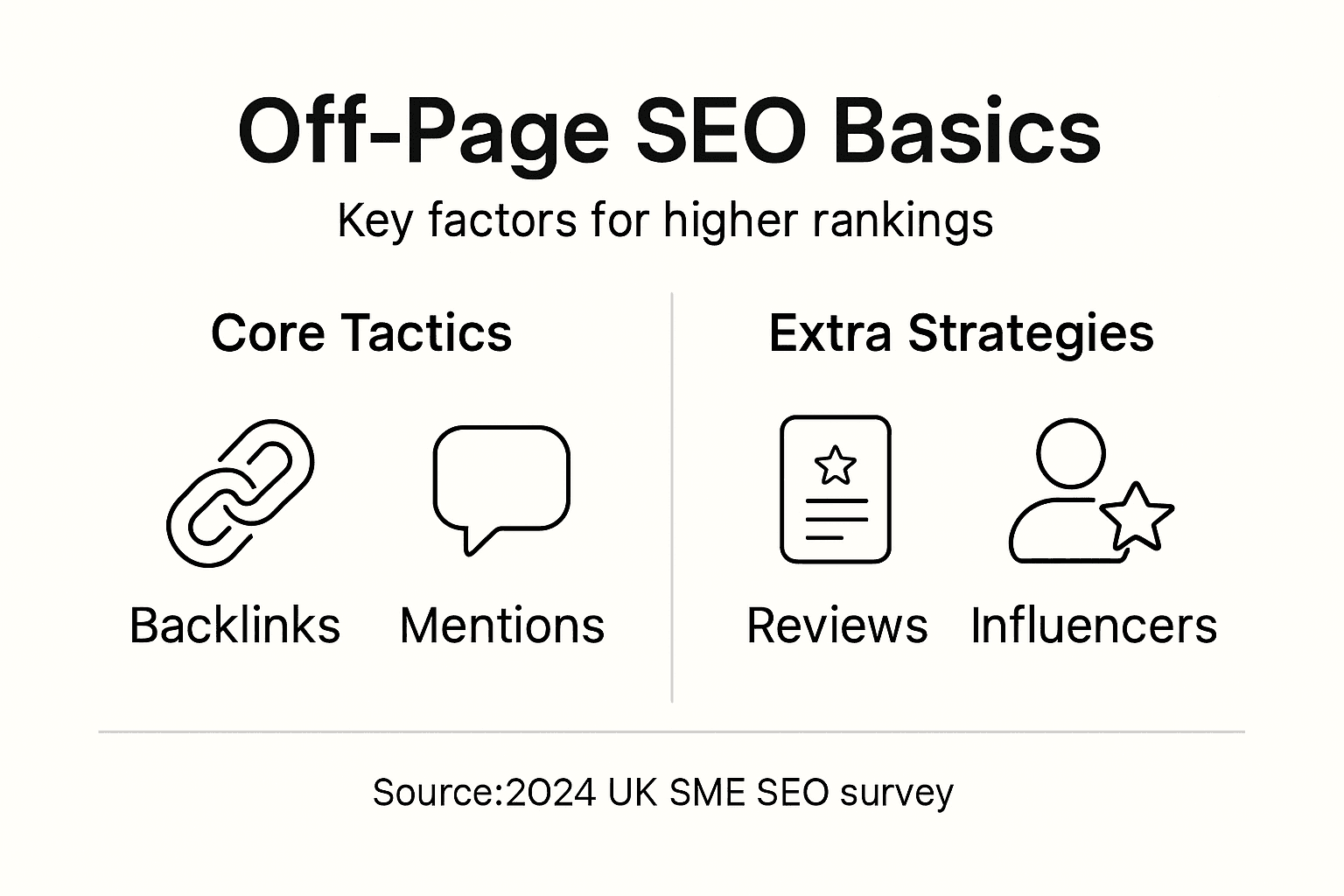
Off-page SEO refers to all optimisation activities that happen outside your website to improve search engine rankings. Think of it as building your reputation across the internet rather than just decorating your own shop. While on-page SEO focuses on content quality, site structure, and technical elements within your website, off-page SEO centres on external signals that tell Google your site deserves authority.
The core components include:
- Backlinks: Links from other websites pointing to yours, acting as votes of confidence
- Brand mentions: References to your business name online, even without links
- Social signals: Engagement and shares on social media platforms
- Reputation management: Reviews, ratings, and online testimonials about your business
Backlinks remain one of the most influential off-page SEO factors, with Google’s algorithm heavily weighting sites linked by authoritative, relevant sources. Quality trumps quantity every time. A single link from a respected industry publication carries more weight than hundreds of links from low-quality directories.
Off-page SEO builds authority and relevance in Google’s eyes by demonstrating that real people and reputable sites trust your content. When authoritative websites link to yours, search engines interpret this as validation of your expertise. This external validation combines with your SEO strategies to create a powerful ranking boost that drives organic traffic to your business.
The Impact of Off-Page SEO on Business Growth
The numbers tell a compelling story. Companies implementing robust off-page SEO strategies report up to 55% organic traffic increases within six months. This growth translates directly to more potential customers discovering your services through search engines.
Google ranks websites significantly based on off-site signals like backlinks and brand mentions, which influence visibility substantially. Higher search ranking positions correlate strongly with quality backlink profiles. Websites ranking in the top three Google positions typically have far more authoritative backlinks than those ranking lower.
Real Results for UK SMEs: A Manchester-based plumbing company gained local visibility after securing backlinks from regional news sites and home improvement blogs. Within four months, their organic traffic doubled, and they saw a 40% increase in quote requests. The combination of strong off-page signals and expert SEO strategies for SMEs created a virtuous cycle where higher rankings led to more brand awareness, which generated additional organic backlinks.
Authority and trust from backlinks foster business growth by positioning your company as an industry leader. When potential customers search for services you offer, appearing at the top of results builds immediate credibility. This visibility advantage compounds over time as your domain authority increases, making it easier to rank for competitive keywords. Investing in off-page SEO alongside good website design creates a foundation for sustainable online growth that pays dividends for years.
Beyond Backlinks: Other Off-Page SEO Strategies
Backlinks form just one piece of the off-page SEO puzzle. Businesses using a diverse off-page SEO strategy achieve 30% higher ranking improvements than those focusing exclusively on link building. Smart UK SMEs recognise that brand mentions, social engagement, and reputation management collectively amplify their online presence.

Unlinked brand mentions occur when websites reference your business name without creating a hyperlink. Search engines track these mentions and use them as trust signals. When industry publications, local news sites, or customer forums discuss your company, Google interprets this as evidence of brand authority even without direct links.
Social media engagement provides indirect SEO benefits worth pursuing:
- Content shared widely on social platforms gains visibility, attracting natural backlinks
- Active social profiles enhance brand recognition, increasing branded search volume
- Social proof from followers and engagement builds trust with potential customers
- Platform activity creates additional touchpoints where customers discover your business
Influencer marketing represents a modern off-page technique that amplifies reach. Partnering with respected voices in your industry generates both backlinks and brand mentions while exposing your services to engaged audiences. A single endorsement from a trusted influencer can spark conversations across multiple platforms, creating ripple effects that boost your off-page SEO metrics.
Reputation management and social proof matter immensely. Reviews on Google, Trustpilot, and industry-specific platforms influence both search rankings and conversion rates. Potential customers research your reputation before contacting you, making review management essential.
Pro Tip: Set up Google Alerts for your brand name to monitor unlinked mentions. Reach out to these sites requesting they convert the mention into a hyperlink, turning passive references into active backlinks that boost your diverse SEO strategies.
Local Off-Page SEO Strategies for UK SMEs
Local off-page SEO requires targeted tactics that connect your business with regional customers. Local businesses see an average 40% increase in local search visibility within 3 months using targeted local off-page SEO tactics. This dramatic improvement makes local optimisation essential for UK SMEs competing in specific geographic areas.
Building local citations means listing your business consistently across UK directories and platforms. Start with these reputable sources:
- Yell.com: The UK’s leading online business directory
- Thomson Local: Established directory with strong regional presence
- Bing Places: Microsoft’s business listing platform
- Apple Maps: Growing importance for mobile searches
Ensure your NAP (Name, Address, Phone) information matches exactly across all platforms. Inconsistent listings confuse search engines and weaken your local signals.
Google Business Profile reviews directly impact local search rankings. Encourage satisfied customers to leave detailed reviews mentioning specific services. Respond promptly to all reviews, both positive and negative, demonstrating active engagement with your community. This dialogue builds trust and shows potential customers you value feedback.
| Platform | Primary Benefit | Best For |
|---|---|---|
| Google Business Profile | Direct impact on local pack rankings | All local businesses |
| Yell.com | High domain authority backlink | Service-based SMEs |
| Trustpilot | Consumer trust and conversion | E-commerce and retail |
| Industry directories | Targeted, relevant traffic | Niche specialists |
Acquiring locally relevant backlinks requires community involvement. Sponsor local events, charities, or sports teams to earn mentions and links from their websites. Contribute expert articles to regional news sites or business publications. Partner with complementary local businesses for cross-promotion opportunities.
These tactics raise local trust and visibility in UK search results by creating a web of regional connections that search engines recognise. Your local SEO strategies for SMEs should prioritise building genuine relationships within your community, as these connections generate the most valuable local signals.
Pro Tip: Create location-specific content like neighbourhood guides or local market insights. These resources naturally attract backlinks from local bloggers, news sites, and community organisations, boosting your SME local presence organically.
Risks and Ethical Considerations in Off-Page SEO
Black hat off-page SEO tactics promise quick results but deliver long-term damage. Understanding these risks protects your business from devastating penalties that can erase years of digital marketing investment.
Dangerous practices to avoid:
- Buying links: Purchasing backlinks violates Google’s guidelines and triggers manual penalties
- Link farms: Networks of low-quality sites that exist solely to exchange links
- Automated link building: Software that spams comments or forums with your links
- Private blog networks: Groups of websites created specifically to manipulate rankings
Google penalties damage traffic and rankings severely. A manual penalty can remove your site from search results entirely, eliminating your organic traffic overnight. Algorithmic penalties from updates like Penguin silently suppress your rankings, making recovery difficult without identifying and removing toxic backlinks.
Ethical white-hat off-page SEO ensures sustainable growth through legitimate relationship building and content marketing. These methods take longer but create lasting value. Natural link earning through exceptional content, genuine partnerships, and community involvement builds a backlink profile that withstands algorithm updates.
Signs identifying unethical SEO providers include guaranteed rankings, bulk link packages, and vague explanations about link sources. Reputable agencies discuss link quality, relevance, and gradual growth. They provide transparent reporting showing exactly where backlinks come from and why those sources matter.
Best practice tips include regular backlink audits using tools like Google Search Console to spot suspicious links early. Disavow toxic backlinks promptly to prevent contamination of your profile. Focus on earning links through value creation rather than manipulation, following ethical SEO approaches that align with search engine guidelines.
Choosing Professional Off-Page SEO Services
Selecting the right off-page SEO partner determines whether your investment generates returns or wastes resources. UK SMEs need specialists who understand local markets while maintaining ethical standards.
Key criteria when evaluating providers:
- Proven track record: Request case studies showing measurable results for similar businesses
- Link quality focus: They should emphasise relevance and authority over volume
- Transparent reporting: Monthly reports detailing specific backlinks acquired and their sources
- ROI measurement: Clear metrics connecting off-page efforts to traffic and conversions
- UK local expertise: Understanding of regional directories, media outlets, and community connections
Assess claims about link sources carefully. Reputable agencies name specific publications, directories, or websites where they’ll pursue links. They explain why each source matters for your industry. Vague promises about “high-authority links” without specifics suggest low-quality tactics.
Red flags signalling problematic providers include guaranteed rankings within weeks, extremely low prices compared to competitors, reluctance to share previous work samples, and pressure to sign long contracts immediately. These warning signs often precede disappointing results or damaging penalties.
Vetting process:
- Shortlist three to five agencies with strong reviews and relevant experience
- Schedule consultations to discuss your specific business goals
- Request detailed proposals outlining strategies, timelines, and expected outcomes
- Check references by contacting current or former clients
- Review contracts carefully for transparency about methods and cancellation terms
Pro Tip: Ask potential providers how they handle algorithm updates and penalty recovery. Their response reveals whether they follow best practices. Strong agencies monitor your backlink profile continuously and proactively address issues, similar to comprehensive SEO audit services for SMEs that identify and fix problems before they escalate.
Compare providers using structured criteria. Create a spreadsheet evaluating each against your priorities. This systematic approach prevents emotional decisions and helps you select the agency best suited to your needs and budget, much like researching options in an SEO tool comparison.
Measuring and Monitoring Off-Page SEO Success
Tracking off-page SEO effectiveness requires looking beyond simple backlink counts. Meaningful metrics reveal how external signals actually impact your business performance.
Essential metrics to monitor:
- Referral traffic: Visitors arriving through backlinks, showing link quality and relevance
- Domain authority: Third-party scores like Moz DA indicating overall site strength
- Brand search volume: Increases in people searching your business name directly
- Ranking positions: Movement for target keywords over time
- Organic traffic growth: Overall visitors from search engines month over month
Recommended SEO tools include Google Search Console for backlink monitoring, Google Analytics for traffic analysis, and Ahrefs or SEMrush for competitive intelligence. Check these platforms weekly for significant changes and conduct comprehensive monthly reviews to identify trends.
Interpreting data guides decision making effectively. If referral traffic from specific backlinks converts well, prioritise similar sources. If brand searches increase after PR campaigns, invest more in outreach. Declining rankings despite new backlinks suggests quality issues requiring investigation.
Tracking local visibility improvements involves monitoring Google Business Profile insights, local pack rankings for key search terms, and traffic from regional directories. Compare performance across different locations if you serve multiple areas.
| Tool | Primary Function | Update Frequency | Best Use Case |
|---|---|---|---|
| Google Search Console | Backlink monitoring | Check weekly | Identifying new links and issues |
| Google Analytics | Traffic analysis | Check daily | Understanding visitor behaviour |
| Ahrefs | Competitive research | Check monthly | Discovering link opportunities |
| BrightLocal | Local SEO tracking | Check weekly | Monitoring citation consistency |
Connect off-page metrics to business outcomes by tracking how organic traffic converts to leads and sales. Calculate customer acquisition cost from SEO compared to paid advertising. This ROI analysis justifies continued investment and helps optimise your approach using proven SEO measurement strategies.
Common Misconceptions About Off-Page SEO
Clearing up misunderstandings helps you develop effective strategies based on how off-page SEO actually works rather than myths that waste resources.
Myth 1: Off-page SEO equals only link building. Off-page SEO includes brand mentions, social signals, influencer marketing, and reputation management beyond traditional backlinks. This broader view opens opportunities many competitors ignore.
Myth 2: More backlinks always improve rankings. Reality shows quality matters far more than quantity. Ten backlinks from authoritative, relevant sites outperform hundreds of links from low-quality sources. Google’s algorithms detect and devalue manipulative link schemes, making bulk approaches counterproductive.
Myth 3: Social media directly boosts Google rankings. Social signals don’t function as direct ranking factors, but they influence SEO indirectly. Viral content on social platforms attracts attention from bloggers and journalists who create backlinks. Social profiles often rank for branded searches, increasing your overall visibility.
Myth 4: Off-page SEO delivers instant results. Building authority takes time as search engines evaluate new backlinks and mentions cautiously. Expect three to six months before seeing significant ranking improvements from off-page efforts. Patience pays off as benefits compound over time.
Myth 5: You can ignore off-page SEO if your website is perfect. Even the best website needs external validation to compete for competitive keywords. On-page optimisation creates the foundation, but off-page signals provide the authority necessary to outrank established competitors.
Corrections emphasise quality, diversity, and ethical methods. Focus on earning backlinks naturally through exceptional content and genuine relationships. Diversify your off-page tactics across multiple channels rather than relying solely on one approach. Maintain ethical standards that ensure long-term sustainability rather than risking penalties for short-term gains.
Why Choose Kickass Online for Your Off-Page SEO Needs?
Navigating off-page SEO’s complexity requires expertise that most UK SMEs lack in-house. Kickass Online offers tailored off-page SEO strategies designed specifically for small and medium-sized businesses competing in regional and national markets.
Our transparent, ethical methods focus on sustainable growth rather than risky shortcuts. We build high-quality backlinks through genuine relationship building with respected publications and industry websites. Every link source is vetted for relevance and authority, ensuring your backlink profile strengthens over time.
Our experienced team specialises in link building, reputation management, and local SEO tactics that drive measurable results. We understand UK markets intimately, knowing which directories, media outlets, and community platforms matter most for your industry. This regional expertise helps us secure locally relevant backlinks that boost your visibility where it counts.
Client success stories demonstrate our approach works. We’ve helped dozens of UK SMEs double their organic traffic and dominate local search results through strategic off-page optimisation. Our continuous support means we monitor your backlink profile constantly, addressing issues proactively and identifying new opportunities as they emerge.
Explore our best SEO services in the UK to see how we’ve transformed online visibility for businesses like yours. Ready to develop a winning strategy? Our comprehensive SEO strategies guide provides the roadmap, and our team handles the execution so you can focus on running your business.
Frequently Asked Questions About Off-Page SEO
What are the main benefits of off-page SEO for small businesses?
Off-page SEO builds authority and trust that improve search rankings, driving more organic traffic to your website. Higher visibility leads to increased brand awareness, more customer enquiries, and ultimately greater revenue without ongoing advertising costs.
How long does it usually take to see results from off-page SEO?
Most businesses notice initial improvements within three to six months of consistent off-page SEO efforts. Significant ranking gains and traffic increases typically appear between six and twelve months as search engines recognise your growing authority.
Can I do off-page SEO myself or should I hire a professional?
You can handle basic off-page SEO like claiming directory listings and encouraging reviews yourself. However, strategic link building, outreach to publications, and avoiding penalties require expertise that professionals provide more efficiently.
What are signs of unethical off-page SEO services?
Warning signs include guaranteed rankings, extremely low prices, bulk link packages, vague explanations about link sources, and reluctance to share examples of previous work. Reputable providers emphasise quality over quantity and offer transparent reporting.
How is local off-page SEO different from general off-page SEO?
Local off-page SEO focuses on regional signals like local citations, Google Business Profile optimisation, community involvement, and backlinks from area-specific sources. These tactics target customers in specific geographic areas rather than broad national audiences.
Does removing bad backlinks improve rankings?
Yes, removing toxic backlinks through Google’s disavow tool can improve rankings by cleaning your backlink profile. Search engines penalize sites with spammy or manipulative links, so regular audits and proactive cleanup protect your rankings.
Recommended
- Boost Your SME’s Visibility with Expert SEO Strategies | Kickass Online
- Top-Notch SEO Agency | Best SEO Services in Milton Keynes, UK
- Maximising Your SME’s Online Visibility with Local SEO: How to Improve Rankings and Drive Targeted Traffic | Kickass Online
- Effective Local SEO Strategies for SMEs: Boost Visibility and Dominate Your Market | Kickass Online
- SEO Trends in 2025: Growth Strategies for Founders