
- Digital marketing success requires integrating website design, SEO, content, and maintenance into a strategic approach.
- Consistent effort over time builds authority, trust, and sustainable growth rather than quick fixes.
- Regular technical audits, targeted local SEO, and content refreshes are essential for ongoing online visibility.
Most small business owners assume that having a website is enough. Put it up, add your phone number, and wait for the customers to roll in. The reality is quite different. A website without strategy is like a shop with the lights off. True digital marketing success comes from weaving together your website design, search engine optimisation, content, and ongoing maintenance into one coherent approach. This guide breaks down exactly what that looks like in practice, why it matters for your bottom line, and how you can start building something that actually grows your business rather than just existing online.
Table of Contents
- Why digital marketing matters for small businesses
- Essential components of effective digital marketing
- Common pitfalls and how to avoid them
- From plan to action: building sustainable results
- Our perspective: the overlooked secret to digital growth
- How we help you achieve digital marketing success
- Frequently asked questions
Key Takeaways
| Point | Details |
|---|---|
| SEO drives growth | SEO brings more than half your visitors and builds long-term business visibility. |
| Integrate, don’t isolate | Strong website design, SEO, and content work best when aligned, not piecemeal. |
| Avoid common pitfalls | Skipping audits or chasing broad keywords wastes resources, stay focused and current. |
| Consistency wins | Sustainable digital growth is achieved through steady ongoing improvement, not quick fixes. |
| Measure and refine | Track traffic, conversions, and rankings regularly to see what’s working and adjust your strategy. |
Why digital marketing matters for small businesses
There is a big difference between having an online presence and actively using digital marketing to drive growth. Many small business owners treat their website as a static brochure. They build it once, forget about it, and wonder why enquiries are thin. The shift from passive presence to active marketing driver is where real results begin.
Search engine optimisation sits at the core of this shift. When someone needs a plumber, a solicitor, or a café, they search. They do not flip through a directory or ask a neighbour first. SEO drives 53% of all website traffic for SMBs, and 93% of online experiences start with a search engine. That is not a small slice of the pie. That is the pie.
Improving your search engine visibility for small businesses is not just about ranking higher. It builds credibility. Consumers trust businesses that appear at the top of search results, often before they have even visited the site. That trust translates into clicks, enquiries, and sales.
Here is what a well-executed digital marketing strategy delivers:
- Increased visibility so the right people find you at the right moment
- More qualified leads because organic search attracts users with clear intent
- Higher conversion rates when your site is designed to guide visitors toward action
- Stronger brand trust built through consistent, professional presence across channels
- Long-term cost efficiency compared to paid advertising that stops the moment you pause spend
“93% of online experiences begin with a search engine, making SEO the single most important driver of sustainable web traffic for small businesses.”
Pro Tip: Keep your business name, address, phone number, and brand messaging consistent across your website, Google Business Profile, and social media. Inconsistency confuses both search engines and customers, and it quietly erodes the trust you are trying to build.
Essential components of effective digital marketing
Understanding the business case is one thing. Knowing what actually makes up a robust digital presence is another. Think of your website as your digital home base. Everything else, your SEO, your content, your social media, points back to it. If the home base is weak, the rest of your efforts lose their impact.
Website design is where first impressions are made. A slow, cluttered, or confusing site sends visitors away within seconds. Your design needs to be clean, fast, mobile-friendly, and structured to guide users toward a clear action, whether that is booking a call, making a purchase, or filling in a contact form.

SEO is not a single task. Key SEO methodologies include starting with an audit, fixing technical issues, building content, and focusing on local keywords. Integrating SEO with your site design from the beginning is far more effective than bolting it on later. Exploring SME local SEO strategies can make a significant difference for businesses targeting customers in a specific area.
Content marketing gives search engines something to index and gives visitors a reason to trust you. Blogs, guides, and FAQs answer the questions your customers are already asking.
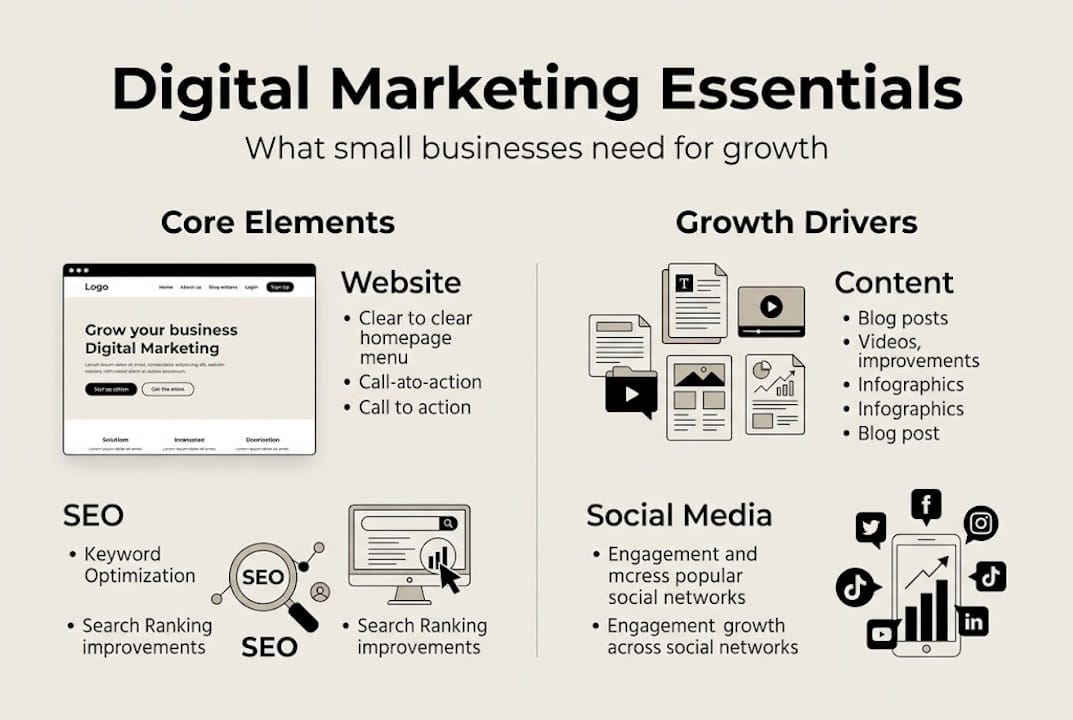
Social media amplifies your web presence. It does not replace it. Use it to drive traffic back to your site, not as a substitute for having strong foundational content.
Ongoing maintenance keeps everything running securely and smoothly, from plugin updates to broken link fixes.
| Component | Role | Primary outcome |
|---|---|---|
| Website design | Digital home base | First impressions and conversions |
| SEO | Discoverability engine | Organic traffic and rankings |
| Content marketing | Authority builder | Trust, engagement, and indexing |
| Social media | Amplifier | Brand awareness and referral traffic |
| Ongoing maintenance | Foundation keeper | Security, speed, and reliability |
Here is how the pieces come together in practice:
- Conduct a full site audit to identify technical and content gaps
- Fix technical issues such as page speed, mobile responsiveness, and broken links
- Research and target keywords relevant to your local market
- Create and publish content that answers real customer questions
- Promote content through social media and email
- Monitor performance monthly and adjust based on data
- Review and refresh older content quarterly to maintain relevance
Common pitfalls and how to avoid them
A solid plan can still fall apart if you walk into the common traps. Knowing what they are puts you well ahead of most small business owners.
The first and most costly mistake is skipping the audit. Many businesses jump straight into content creation or social media without fixing the technical foundations. A slow site, broken pages, or poor mobile experience will undermine everything built on top. Fix the foundations first.
The second pitfall is chasing broad or vanity keywords. Ranking for “marketing” or “restaurant” sounds impressive but delivers almost nothing useful. Avoid broad keywords, vanity terms, and outdated content. Instead, target specific, intent-driven phrases like “digital marketing agency in Bristol” or “best Thai restaurant near me.” These attract visitors who are ready to act.
Content decay is the third trap. A blog post written two years ago that no longer reflects current information quietly damages your credibility and rankings. Refreshing existing content regularly is often more effective than constantly producing new pieces. Structure your content for both AI-powered search and mobile users, following E-E-A-T principles (Experience, Expertise, Authoritativeness, and Trustworthiness).
Here are the top four mistakes to avoid:
- Skipping technical audits before investing in content or advertising
- Targeting keywords that are too broad to attract qualified visitors
- Letting content go stale without a regular refresh schedule
- Treating digital marketing as a one-time project rather than an ongoing commitment
Practical harnessing local SEO strategies and understanding effective SEO strategies for SMEs can help you sidestep these traps before they cost you time and money.
Pro Tip: Track your organic traffic and conversions every month using Google Analytics and Google Search Console. Do not judge your strategy on a week-by-week basis. Look at monthly trends over at least three months before drawing conclusions.
From plan to action: building sustainable results
Once the pitfalls are clear, putting your strategy into action is much simpler. The key is sequencing your efforts correctly and measuring the right things.
Start with the immediate priorities. Run your audit, fix technical basics, and ensure your site is fast and mobile-friendly. These steps cost little but deliver outsized returns. Without them, everything else is built on sand.
From there, shift into ongoing mode. Publish content consistently, carry out monthly maintenance checks, and review your analytics. Track organic traffic, conversions, and ranking gains as your primary indicators of progress. Expect three to six months before you see visible results from SEO efforts. That is not a flaw in the process. It is simply how search engines work.
For a clear view of how to sequence your efforts, here is a practical reference:
| Task | Priority | Frequency |
|---|---|---|
| Technical site audit | High | Quarterly |
| On-page SEO updates | High | Monthly |
| Content creation | High | Weekly or fortnightly |
| Content refresh | Medium | Quarterly |
| Analytics review | High | Monthly |
| Backlink building | Medium | Ongoing |
| Social media activity | Medium | Weekly |
A practical action plan to get started:
- This week: run a free audit using Google Search Console or a tool like Screaming Frog
- Week two: fix the top three technical issues identified
- Month one: publish two to three pieces of content targeting local, intent-driven keywords
- Month two: set up monthly analytics reporting and begin tracking conversions
- Month three: review what is working, refresh one older piece of content, and build on momentum
- Quarterly: conduct a full step-by-step local SEO review and adjust your keyword targets
This is not a sprint. It is a structured, repeatable process that compounds over time.
Our perspective: the overlooked secret to digital growth
Here is something most digital marketing content will not tell you: the businesses that win online are rarely the ones with the biggest budgets or the cleverest campaigns. They are the ones that show up consistently, fix problems quietly, and resist the urge to chase every new trend.
We see it constantly. An SME spends weeks chasing a viral social post or testing the latest AI content tool, while their site speed is still poor, their Google Business Profile is incomplete, and their top service page has not been updated in eighteen months. The flashy stuff gets the attention. The boring stuff gets the results.
Compounding is the real secret. A site that improves by one percent each week looks dramatically different after a year. Consistent content, regular maintenance, and methodical SEO adjustments build authority that no shortcut can replicate. Boosting business visibility is not about a single campaign. It is about building something that earns trust over time. No AI hack, no viral moment, and no paid shortcut replaces that kind of disciplined, steady effort.
How we help you achieve digital marketing success
If you are ready to turn your new knowledge into measurable results, our team can help every step of the way. At Kickass Online, we work with a limited number of clients at any one time, which means your business gets genuine, focused attention rather than a generic template.
Whether you need a high-converting professional website design, a clear SEO strategy guide tailored to your market, or reliable website maintenance for SMEs to keep your foundations solid, we have the specialists to make it happen. Our approach is practical, data-driven, and built around your specific goals. Book a consultation and let us show you what a properly integrated digital marketing strategy looks like in action.
Frequently asked questions
How long does it take to see results from digital marketing?
You can expect noticeable results within three to six months, though this depends on your starting point, competition level, and how consistently you implement your strategy.
Which is most important: website design, SEO, or content?
All three are essential and work best together. SEO integrated with design and supported by regular, high-quality content delivers far stronger outcomes than any single element alone.
How often should I update or maintain my website?
Update technical elements and publish fresh content monthly, and conduct a full SEO and performance review at least quarterly. Ongoing site maintenance is not optional if you want to stay competitive.
What is a digital marketing audit and why is it needed?
An audit analyses your site’s current strengths, weaknesses, and opportunities. Audits are the first step before any content or advertising investment, ensuring your foundations are solid before you build on them.
How can I make sure my digital marketing is future-ready?
Focus on mobile-first structured content and regular updates that align with E-E-A-T principles, as these are the factors that matter most as search algorithms continue to evolve.
Recommended
- Proven digital marketing strategies for small business success | Kickass Online
- Effective Digital Marketing Strategies for SMEs: Boost Your Online Performance | Kickass Online
- 7 Key Examples of Digital Marketing for Business Growth | Kickass Online
- Small Business Marketing Step by Step: Build Your Online Success | Kickass Online
- Social Media Marketing Strategies For Small Business – Hala Creative Agency