Site Security – Why It Matters For Your Business

For many business owners in Milton Keynes, a single security lapse can threaten customer trust and disrupt daily operations. As digital platforms become essential for every transaction, protecting sensitive data and ensuring site security takes priority. Adopting a robust strategy that includes multi-factor authentication, regular vulnerability testing, and ongoing risk assessment helps guard against evolving cyber threats while maintaining the reliability your customers expect.
Table of Contents
- What Site Security Means For Businesses
- Types Of Threats Facing Business Websites
- Core Components Of Effective Site Security
- Legal Obligations And Data Protection Laws
- Common Pitfalls And How To Avoid Them
Key Takeaways
| Point | Details |
|---|---|
| Importance of Site Security | Comprehensive site security is essential for protecting digital assets and customer data from evolving cyber threats. |
| Continuous Improvement Required | Site security is an ongoing process that necessitates regular risk assessments and updates to security measures. |
| Understanding Cyber Threats | Awareness of the diverse and sophisticated cyber threats, such as ransomware and phishing, is crucial for businesses. |
| Legal Compliance is Essential | Adhering to data protection laws and regulations is critical for businesses handling personal information. |
What Site Security Means For Businesses
For modern businesses, site security represents a comprehensive strategy to protect digital assets, customer information, and operational integrity against evolving cyber threats. Site security goes beyond simple password protection and encompasses a holistic approach to managing digital risks and maintaining robust online infrastructure.
At its core, site security involves implementing comprehensive protection protocols that control access, safeguard sensitive data, and prevent potential breaches. This means creating multiple layers of defence that monitor, detect, and respond to potential vulnerabilities across your digital platforms. These layers include secure connection protocols, multi-factor authentication, regular vulnerability assessments, and proactive threat monitoring.
Businesses must recognise that site security is not a one-time implementation but a continuous process of adaptation and improvement. Cyber threats constantly evolve, which means security strategies must remain dynamic and responsive to emerging challenges. This requires ongoing risk assessments, regular software updates, employee training, and a commitment to maintaining the highest standards of digital protection.
Pro tip: Implement a quarterly security audit to identify and address potential vulnerabilities before they can be exploited by malicious actors.
Types Of Threats Facing Business Websites
Business websites encounter a diverse and sophisticated landscape of cyber threats that can compromise operational integrity, financial stability, and customer trust. Cybercriminals have developed increasingly complex methods to exploit digital vulnerabilities, making it crucial for organisations to understand the specific risks they face.
The most prevalent threats include malicious software targeting business infrastructure, such as malware designed to steal or damage critical data. Ransomware represents a particularly dangerous category, where attackers encrypt valuable information and demand payment for its release. Phishing attacks pose another significant risk, using sophisticated social engineering techniques to trick employees into revealing sensitive login credentials or financial details.
Additionally, businesses must be vigilant about sophisticated network-based cyber attacks, including denial-of-service (DoS) attacks that can completely disrupt online operations, and injection attacks like SQL injection that exploit underlying website vulnerabilities. These threats can range from automated bot attacks to carefully orchestrated infiltrations by skilled cybercriminals seeking to breach system defences.
Below is a comparison of major cyber threats and their potential impact on business websites:
| Threat Type | Method of Attack | Potential Impact | Risk Mitigation Strategy |
|---|---|---|---|
| Malware | Software infiltration | Data loss or corruption | Deploy advanced anti-malware tools |
| Ransomware | Data encryption for ransom | Financial loss and downtime | Backup systems and staff training |
| Phishing | Deceptive emails/websites | Credential theft, fraud | Employee awareness programmes |
| Denial-of-Service | Network overload | Service disruption | Implement network monitoring |
| SQL Injection | Exploit code vulnerabilities | Data breaches, manipulation | Regular code testing and patching |
Pro tip: Develop a comprehensive incident response plan that includes immediate isolation protocols and predefined communication strategies to minimise potential damage from cyber incidents.
Core Components Of Effective Site Security
Effective site security demands a comprehensive and strategic approach that goes beyond simple defensive measures. Cybersecurity is not a single solution but a multifaceted system of interconnected components designed to protect an organisation’s digital infrastructure from evolving threats.
The foundation of robust site security begins with systematic risk identification and management. This involves conducting thorough asset inventories, understanding potential vulnerabilities, and developing targeted protection strategies. Key components include implementing strong authentication protocols, encrypting sensitive data, establishing stringent access controls, and creating comprehensive monitoring systems that can detect and respond to potential security breaches in real-time.

Organisations must also focus on comprehensive security control frameworks that provide structured approaches to defending digital assets. These frameworks typically encompass network defences, continuous vulnerability assessment, incident response planning, and regular security training for employees. By adopting a holistic approach that integrates technical solutions with human expertise, businesses can create resilient security ecosystems that adapt to changing digital threat landscapes.
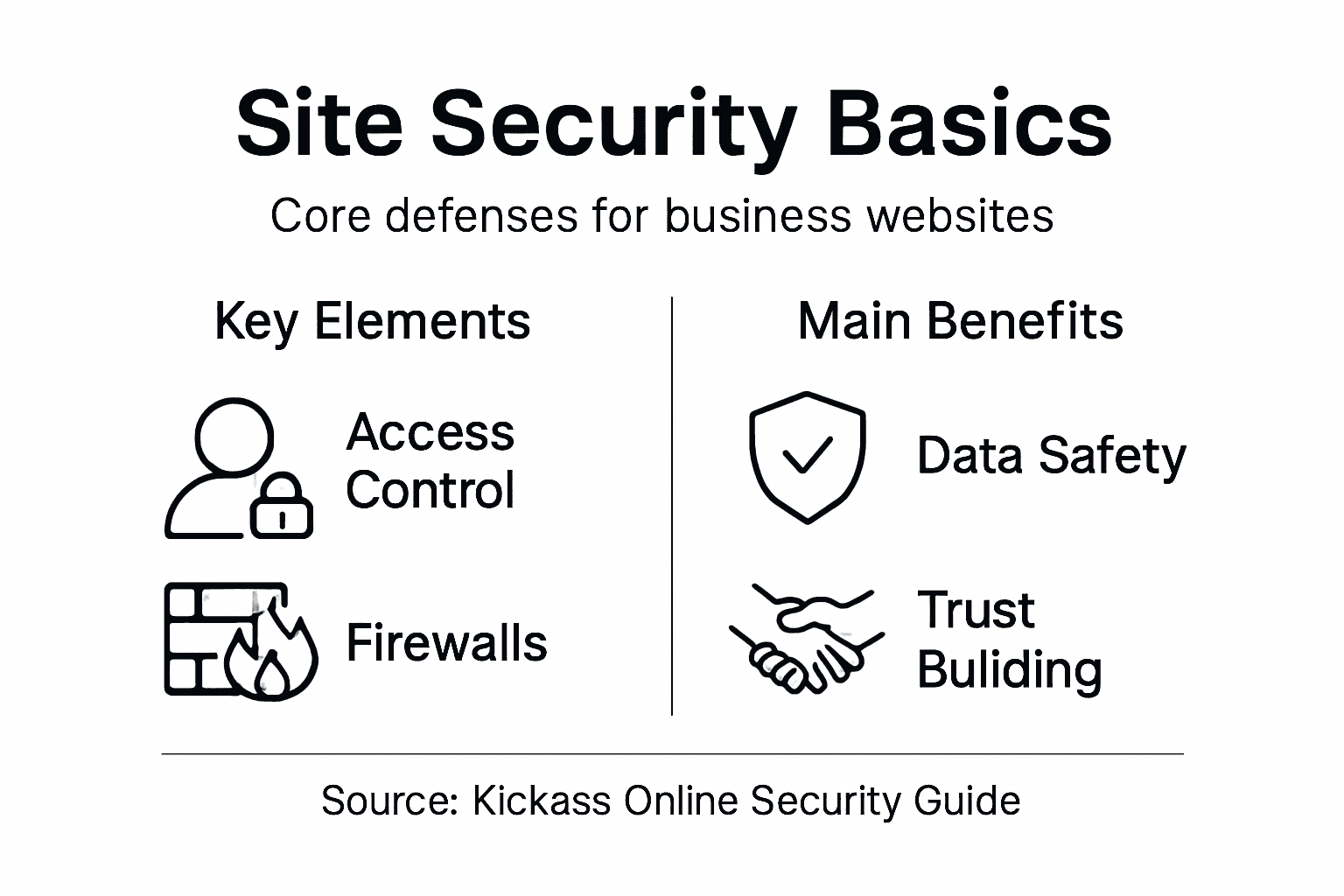
The following table summarises essential elements of effective site security and their organisational benefits:
| Security Element | Primary Function | Business Benefit |
|---|---|---|
| Authentication Protocols | Verify user identity | Prevent unauthorised access |
| Data Encryption | Protect confidential data | Safeguard customer information |
| Access Controls | Manage user permissions | Reduce insider threats |
| Real-time Monitoring | Detect suspicious activity | Enable rapid incident response |
| Employee Training | Foster security awareness | Minimise human-related vulnerabilities |
| Incident Response Plans | Structured breach management | Limit impact of security incidents |
Pro tip: Conduct monthly security audits and maintain a dynamic incident response plan that can be quickly activated to mitigate potential cyber threats.
Legal Obligations And Data Protection Laws
The digital landscape presents complex legal challenges for businesses managing online data and customer information. Data protection has evolved from a peripheral concern to a critical legal requirement that demands rigorous attention and systematic compliance across all operational levels.
Businesses must navigate comprehensive global data protection frameworks that establish stringent standards for collecting, processing, and securing personal information. These legal obligations extend far beyond simple record-keeping, requiring organisations to implement robust consent mechanisms, transparent data handling processes, and comprehensive security protocols that protect individual privacy rights.
European Union data protection regulations represent the most comprehensive global standard, setting benchmarks for legal compliance that many international jurisdictions now emulate. These frameworks mandate organisations to demonstrate proactive data management, including conducting regular privacy impact assessments, maintaining detailed documentation of data processing activities, and establishing clear mechanisms for individuals to exercise their rights regarding personal information.
Pro tip: Develop a centralised data governance framework that documents all data processing activities, consent mechanisms, and privacy protocols to ensure consistent legal compliance.
Common Pitfalls And How To Avoid Them
Navigating the complex landscape of site security requires a proactive and strategic approach. Cybersecurity vulnerabilities can emerge from seemingly innocuous oversights, transforming minor weaknesses into significant organisational risks that compromise digital infrastructure and customer trust.
Businesses frequently encounter critical security vulnerabilities that stem from neglecting fundamental protective measures. These pitfalls include failing to maintain regular software updates, implementing weak authentication protocols, and overlooking critical input validation processes that can expose systems to sophisticated cyber attacks like SQL injection and cross-site scripting. Organisations must develop comprehensive strategies that prioritise continuous monitoring, robust authentication mechanisms, and systematic vulnerability assessments.
Security management strategies require a holistic approach that integrates technological solutions with human expertise. This involves not only implementing advanced security technologies but also cultivating a culture of cybersecurity awareness among employees. Regular training programmes, strict access control protocols, and ongoing risk assessments are crucial in creating a resilient defence against evolving digital threats.
Pro tip: Establish a quarterly security review process that systematically evaluates and updates your organisation’s digital defence mechanisms, ensuring continuous adaptation to emerging cyber risks.
Secure Your Business Website With Expert Support From Kickass Online
Understanding the critical nature of site security is the first step towards protecting your business from evolving cyber threats such as malware, ransomware, and phishing attacks. The challenge lies in maintaining robust authentication protocols, real-time monitoring, and continuous vulnerability assessments to prevent breaches and safeguard sensitive data. At Kickass Online, we recognise that site security is not a one-time task but an ongoing commitment to shielding your digital assets and enhancing your online presence.

Take control of your website security today by partnering with our dedicated team that specialises in creating strong, high-performing websites with built-in security measures. Explore our Websites | Kickass Online to see how we integrate protection protocols with personalised designs tailored to your business needs. Start securing your digital future now by visiting Kickass Online and booking a consultation. Don’t wait until vulnerabilities turn into costly problems.
Frequently Asked Questions
What is site security?
Site security refers to a comprehensive strategy that protects digital assets, customer information, and operational integrity from evolving cyber threats. It involves multiple layers of defence, including access control, data protection, and proactive threat monitoring.
Why is site security important for businesses?
Site security is crucial for businesses to safeguard sensitive information, maintain operational integrity, and preserve customer trust. Effective security strategies help prevent data breaches, financial loss, and reputational damage.
What are the common types of cyber threats businesses face?
Common cyber threats include malware, ransomware, phishing attacks, denial-of-service attacks, and SQL injection. Each of these threats poses unique risks that can compromise a business’s digital infrastructure and customer data.
How can businesses improve their site security practices?
Businesses can improve site security by implementing strong authentication protocols, regular software updates, comprehensive monitoring systems, employee training programmes, and developing incident response plans to handle potential security breaches.
Recommended
- Website Security – Why It Matters for Your Business | Kickass Online
- Website Maintenance: Why It Matters for SMEs | Kickass Online
- Why is SEO important for small businesses? | Kickass Online
- Website Audit: Boosting Your Business Performance | Kickass Online
- Datenschutz bei Arztbefunden – Warum er Patienten schützt


Book A Discovery Call
Stay Connected