
Over one third of small British businesses have faced cyber attacks in the past year, putting vital website data and customer trust at risk. Strong website security is now a top priority for business owners in Milton Keynes, where digital threats can cost far more than just lost revenue. Learning the fundamentals of web security empowers you to make smarter choices, protect your investment, and create a safer online experience for both your customers and your growing business.
Table of Contents
- Website Security Fundamentals Explained
- Common Threats Facing Business Websites
- How Website Security Measures Work
- Legal Requirements And Best Practices UK
- Avoiding Costly Mistakes And Security Risks
Key Takeaways
| Point | Details |
|---|---|
| Website Security is Essential | Implementing robust website security is a critical strategy for protecting digital assets and ensuring business continuity. |
| Common Cyber Threats | Small and medium enterprises face increasing risks from ransomware, phishing, and DDoS attacks that can compromise their systems. |
| Importance of Holistic Approaches | A successful security strategy must integrate technical measures with human training and awareness to effectively mitigate threats. |
| Legal Compliance is Non-Negotiable | Businesses must adhere to UK cybersecurity regulations and best practices to protect customer data and avoid significant penalties. |
Website Security Fundamentals Explained
Website security isn’t just a technical requirement - it’s a critical business protection strategy. Cyber threats continue to evolve, targeting small and medium enterprises with increasing sophistication. Web security fundamentals encompass multiple layers of technological and procedural safeguards designed to protect digital assets from potential breaches.
At its core, website security involves implementing robust protective mechanisms against unauthorised access, data theft, and malicious attacks. This includes fundamental strategies like secure authentication protocols, encryption technologies, and regular vulnerability assessments. Businesses must understand that modern cybersecurity isn’t about creating an impenetrable fortress, but developing adaptive defence systems that can quickly detect, respond to, and mitigate potential threats.
Effective website security requires a holistic approach that integrates technical solutions with human awareness. Key components include strong password policies, multi-factor authentication, regular software updates, and comprehensive staff training on cybersecurity best practices. Small businesses are particularly vulnerable, with cybercriminals often targeting them due to perceived weaker security infrastructure. By implementing structured security frameworks and maintaining vigilant monitoring, organisations can significantly reduce their risk profile.
Pro tip: Conduct a comprehensive security audit every six months to identify and address potential vulnerabilities before they can be exploited by malicious actors.
Common Threats Facing Business Websites
Business websites face an increasingly complex landscape of cyber threats that can compromise digital infrastructure and operational continuity. Cybersecurity threat trends demonstrate the evolving sophistication of attacks targeting small and medium enterprises, with criminals developing more nuanced strategies to exploit digital vulnerabilities.
The most prevalent threats include ransomware attacks, which can encrypt critical business data and demand substantial financial ransoms, and phishing campaigns designed to steal credentials and gain unauthorised access to sensitive systems. Social engineering techniques have become particularly advanced, with attackers crafting highly personalised approaches that bypass traditional security mechanisms. Malicious actors often target websites through vulnerabilities in content management systems, outdated plugins, and weak authentication protocols.

Specific risks include distributed denial-of-service (DDoS) attacks that overwhelm website infrastructure, SQL injection attempts to manipulate database systems, and cross-site scripting vulnerabilities that enable attackers to inject malicious scripts. Small businesses are especially vulnerable, often lacking comprehensive cybersecurity resources and monitoring capabilities. Emerging cyber threats underscore the importance of implementing multi-layered defence strategies that combine technological solutions with robust staff training and proactive security management.
Here’s a summary of website security threats and their business impact:
| Threat Type | Typical Attack Method | Business Impact |
|---|---|---|
| Ransomware | Data encryption with ransom | Data loss, financial extortion |
| Phishing | Deceptive emails or websites | Credential theft, account takeover |
| DDoS (Denial-of-Service) | Server overwhelm | Website downtime, lost revenue |
| SQL Injection | Database code manipulation | Data breach, loss of integrity |
| Cross-Site Scripting (XSS) | Malicious code in web forms | User data theft, reputational damage |
Pro tip: Implement a regular security patch management process and conduct quarterly vulnerability assessments to identify and address potential website security weaknesses before they can be exploited.
How Website Security Measures Work
Website security operates through a sophisticated, multi-layered approach designed to protect digital assets from potential cyber threats. Cybersecurity frameworks provide structured methodologies that integrate technological controls, human processes, and continuous monitoring to create robust defensive strategies. These measures work simultaneously across different levels to identify, prevent, and mitigate potential security risks.
The core components of website security include authentication mechanisms, encryption protocols, and access control systems. Authentication ensures that only authorised users can access specific website areas by implementing multi-factor verification processes. Encryption transforms sensitive data into unreadable code, protecting information during transmission and storage. Access controls determine precise permissions for different user roles, limiting potential breach points and creating granular security boundaries.
Continuous monitoring and incident response form critical aspects of effective website security. Advanced systems utilise machine learning algorithms and real-time threat detection to identify unusual patterns or potential intrusions. Security implementation guidance emphasises the importance of proactive vulnerability assessments, regular security audits, and rapid response protocols. These strategies enable businesses to adapt quickly to emerging threats and maintain a resilient digital infrastructure.
For quick reference, compare core website security measures and their benefits:
| Security Measure | Main Function | Key Benefit for Business |
|---|---|---|
| Strong authentication | Verifies user identity | Prevents unauthorised access |
| Encryption protocols | Protects data in transit | Safeguards sensitive information |
| Regular software updates | Fixes vulnerabilities | Minimises exposure to known threats |
| Access control systems | Limits user permissions | Reduces potential breach points |
Pro tip: Implement automated security scanning tools that provide continuous vulnerability assessments and generate immediate alerts for potential security weaknesses.
Legal Requirements and Best Practices UK
Navigating the complex landscape of website security legal requirements in the United Kingdom demands a comprehensive understanding of national cybersecurity regulations. Government cyber security standards establish clear frameworks that businesses must follow to protect digital assets and customer information, with particular emphasis on risk management and proactive security measures.
Key legal obligations for UK businesses include compliance with the Data Protection Act 2018 and UK General Data Protection Regulation (UK GDPR), which mandate rigorous protection of personal data. Cyber security frameworks require organisations to implement robust security controls, including secure authentication mechanisms, encryption protocols, and comprehensive incident response plans. Businesses must demonstrate due diligence in protecting customer information, with potential significant financial penalties for non-compliance ranging from £8.7 million or 2% of global turnover to £17.5 million or 4% of global turnover, depending on the severity of the breach.
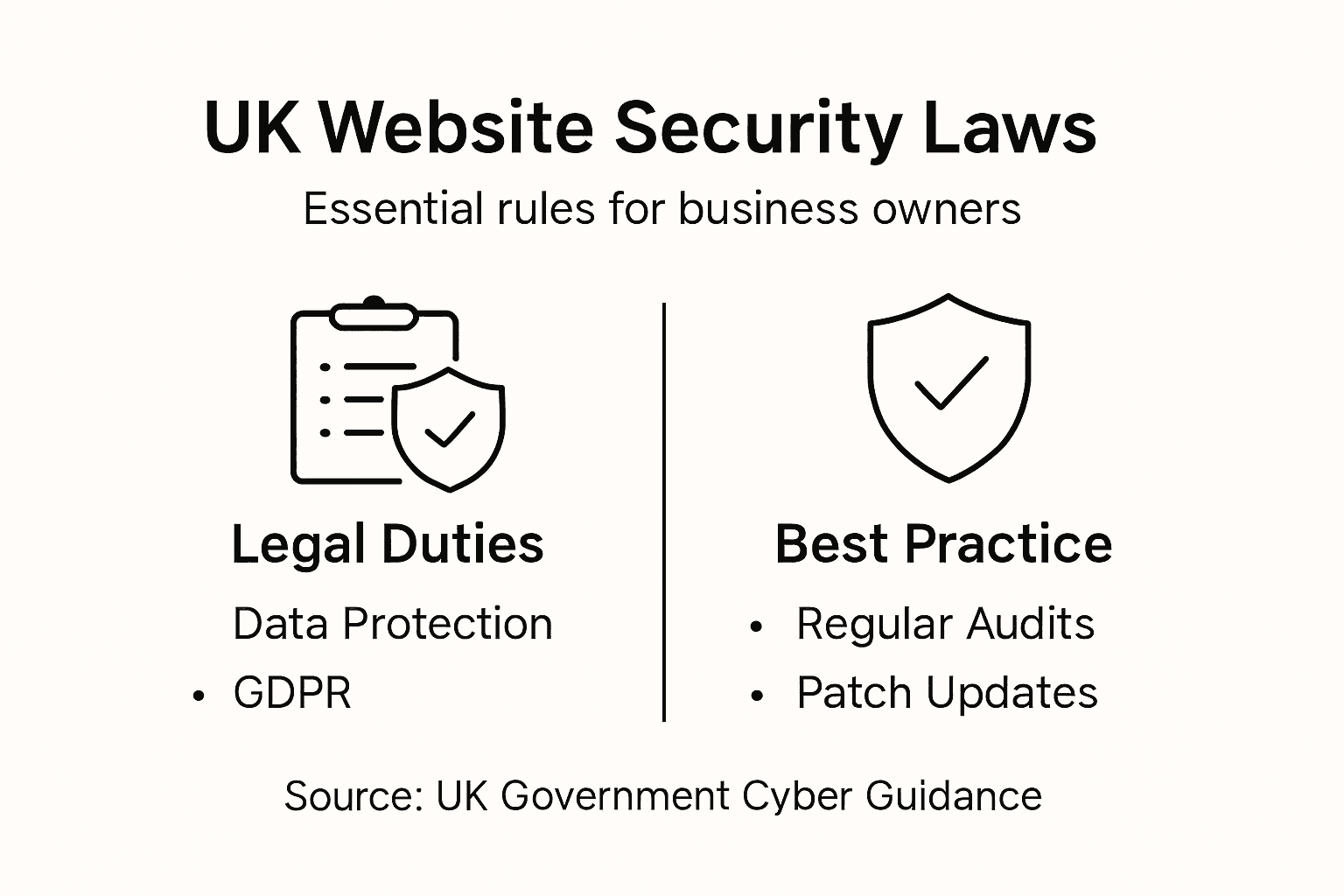
National cyber security guidelines provide detailed best practices for businesses seeking to enhance their digital security posture. These recommendations include conducting regular security assessments, maintaining up-to-date software systems, implementing multi-factor authentication, and developing comprehensive cyber incident response strategies. Small and medium-sized enterprises are particularly encouraged to adopt a proactive approach to cybersecurity, recognising that digital resilience is not just a technical requirement but a critical business survival strategy.
Pro tip: Engage a qualified cybersecurity consultant to conduct an annual comprehensive security audit and align your website’s security practices with the latest UK regulatory requirements.
Avoiding Costly Mistakes and Security Risks
Addressing website security vulnerabilities requires a strategic approach that proactively identifies and mitigates potential risks before they can cause significant damage. Web application security risks represent critical challenges that businesses must understand and systematically address to protect their digital infrastructure and customer data.
The most common and dangerous security mistakes include weak authentication mechanisms, unpatched software vulnerabilities, and inadequate data protection protocols. Small businesses are particularly susceptible to these risks, often lacking comprehensive security resources. Typical vulnerabilities include SQL injection opportunities, cross-site scripting weaknesses, and misconfigured access controls that can provide attackers with relatively simple entry points into organisational systems.
Cybersecurity best practices emphasise the importance of developing a robust, multi-layered security strategy. This involves implementing regular vulnerability assessments, maintaining up-to-date software systems, enforcing strict password policies, and creating comprehensive incident response plans. Businesses must recognise that security is an ongoing process, not a one-time implementation. Each unaddressed vulnerability represents a potential financial and reputational risk that could potentially compromise entire digital ecosystems.
Pro tip: Implement automated vulnerability scanning tools that provide continuous monitoring and generate immediate alerts for potential security weaknesses across your digital infrastructure.
Strengthen Your Website Security with Expert Support from Kickass Online
Protecting your business from evolving cyber threats requires more than basic measures. The challenges detailed in this article highlight key issues such as weak authentication, unpatched software vulnerabilities, and the crucial need for continuous monitoring to prevent costly breaches. At Kickass Online, we understand these pain points and offer tailored website solutions focused on security, performance, and resilience, especially designed for small and medium-sized businesses.

Explore how our Websites | Kickass Online services implement strong authentication protocols, encryption, and ongoing maintenance to keep your online presence secure. Dive deeper into best practices with our helpful Tutorials | Kickass Online, empowering you with knowledge to complement our expert support. Don’t leave your business exposed. Visit Kickass Online today to book a consultation and take the vital step towards bulletproof website security.
Frequently Asked Questions
What are common threats to business websites?
Business websites face several threats including ransomware attacks, phishing campaigns, DDoS attacks, SQL injection attempts, and cross-site scripting vulnerabilities. These threats can lead to data breaches, financial loss, and reputational damage.
How can I enhance the security of my website?
Enhancing website security involves implementing strong authentication mechanisms, using encryption protocols, conducting regular software updates, and maintaining comprehensive access control systems. Regular vulnerability assessments and staff training are also essential.
What are the legal requirements for website security?
Businesses must comply with regulations such as the Data Protection Act 2018 and the UK General Data Protection Regulation (UK GDPR). These regulations require robust protection of personal data, risk management practices, and the implementation of incident response plans.
What mistakes should I avoid in website security?
Common mistakes include using weak authentication mechanisms, failing to patch software vulnerabilities, and inadequate data protection protocols. It is crucial to implement regular security assessments and ensure that all security measures are up-to-date.