What Is Progressive Web App and Why It Matters

Finding new ways to keep customers engaged online can feel challenging when competition is fierce. Many British businesses discover that relying on outdated websites or limited native apps leads to missed opportunities. Progressive Web Apps (PWAs) offer a practical solution by providing offline functionality, app-like interfaces, and cross-platform compatibility using standard technologies supported by Chrome, Safari, Firefox, and Edge. This approach empowers business owners with smoother customer experiences and improved efficiency across devices.
Table of Contents
- Progressive Web App Defined and Debunked
- Core Features Powering Progressive Web Apps
- Real-World Uses for Business Engagement
- Benefits and Limitations Compared to Alternatives
- Implementation, Costs, and Key Mistakes to Avoid
Key Takeaways
| Point | Details |
|---|---|
| Progressive Web Apps (PWAs) offer unique advantages | PWAs combine the functionality of websites and mobile apps, enabling offline access and cross-platform compatibility. |
| User experience is paramount | Prioritising performance optimisation and responsive design leads to better engagement and satisfaction across devices. |
| Implementation requires careful planning | Attention to factors like service worker setup and security protocols is crucial for effective PWA deployment. |
| Cost efficiency is a significant benefit | A single codebase for multiple platforms reduces development costs, but thorough testing is essential to avoid pitfalls. |
Progressive Web App Defined and Debunked
A Progressive Web App (PWA) represents a sophisticated web application that bridges the gap between traditional websites and native mobile applications. First introduced in 2016, these innovative digital solutions provide users with a seamless, app-like experience directly through their web browsers.
PWAs leverage modern web technologies to deliver remarkable functionality across multiple platforms. Key characteristics include:
- Ability to function offline using service workers
- Cross-platform compatibility without separate app store packaging
- Instant installation directly from web browsers
- Performance comparable to native mobile applications
- Reduced development complexity compared to traditional app development
Browser compatibility plays a critical role in PWA effectiveness. Modern browsers like Chrome, Safari, Firefox, and Edge offer varying levels of support for PWA technologies, enabling developers to create versatile web experiences that feel like native applications.
The underlying technology stack for PWAs typically involves standard web programming languages, including HTML, CSS, JavaScript, and WebAssembly. These technologies enable developers to construct robust, responsive applications that can be accessed from virtually any device with a compatible web browser.
User experience remains paramount in PWA design. Leveraging advanced browser features such as service workers and web app manifests, PWAs can provide intuitive, engaging interfaces that feel remarkably similar to native mobile applications.
Pro tip: When developing a PWA, prioritise performance optimisation and responsive design to ensure a consistently smooth user experience across different devices and network conditions.
Core Features Powering Progressive Web Apps
Progressive Web Apps (PWAs) represent a revolutionary approach to web application development, combining multiple advanced technologies to create powerful, versatile digital experiences. These sophisticated applications leverage cutting-edge web technologies to deliver seamless functionality across various devices and platforms.
The core features that distinguish PWAs from traditional web applications include:
- Offline Functionality: Ability to operate without active internet connection
- Cross-Device Compatibility: Consistent performance across multiple platforms
- Push Notifications: Real-time engagement capabilities
- Background Updates: Automatic content refreshing
- Hardware Access: Integration with device-specific features
- Responsive Design: Adaptive interfaces for different screen sizes
Service workers play a critical role in PWA architecture. These background scripts enable offline support by implementing sophisticated caching strategies that allow applications to function smoothly even with intermittent internet connectivity.

Security remains paramount in PWA development. By requiring HTTPS protocols, these applications ensure robust data protection and provide users with a secure browsing experience. The web app manifest further enhances functionality by enabling standalone window launch, OS integration, and customised home screen presence.
Web technologies empower PWAs to merge the best attributes of traditional websites and native mobile applications. Developers can create responsive, performant applications using standard web programming languages like HTML, CSS, and JavaScript, significantly reducing development complexity and maintenance overhead.
Pro tip: Prioritise implementing service workers and creating a comprehensive web app manifest to maximise your Progressive Web App’s performance and user engagement capabilities.
Real-World Uses for Business Engagement
Progressive Web Apps (PWAs) have transformed digital business strategies across multiple industries, demonstrating remarkable real-world applications that drive significant user engagement and operational efficiency.
Several leading businesses have successfully implemented PWAs to enhance their digital experiences:
- Uber: Improved offline booking capabilities
- Pinterest: Optimised load times and user interactions
- Starbucks: Streamlined digital ordering processes
- Twitter: Reduced mobile data consumption
- Alibaba: Enhanced multilingual support and catalogue delivery
Performance metrics reveal compelling advantages for businesses adopting PWA technologies. Top companies leverage PWAs for enhanced user engagement by creating more responsive, accessible, and efficient digital platforms that significantly reduce development and maintenance costs.
The strategic implementation of PWAs allows businesses to overcome traditional limitations of native mobile applications. By providing seamless cross-platform experiences, these web applications enable companies to reach broader audiences while maintaining high-performance standards and minimising development complexities.
Customer interaction becomes more streamlined through PWA technologies, which offer intuitive interfaces, faster loading times, and improved accessibility across various devices and network conditions. This approach represents a sophisticated solution for businesses seeking to modernise their digital engagement strategies.
Pro tip: Conduct a comprehensive user experience audit before implementing a PWA to ensure the technology aligns precisely with your specific business requirements and target audience expectations.
Benefits and Limitations Compared to Alternatives
Progressive Web Apps (PWAs) represent a sophisticated digital solution that offers unique advantages and challenges when compared to traditional web and native mobile applications. Comprehensive studies reveal nuanced performance characteristics that highlight both the potential and constraints of this innovative technology.
Key benefits of PWAs include:
- Enhanced Performance: Faster loading and smoother interactions
- Offline Functionality: Ability to operate without constant internet connection
- Cross-Platform Compatibility: Seamless experience across different devices
- Reduced Development Costs: Single codebase for multiple platforms
- Instant Updates: No app store approval process required
- Lower Storage Requirements: Significantly smaller than native applications
Browser support remains a critical consideration for PWA implementation. While modern browsers increasingly accommodate PWA technologies, inconsistencies can still pose challenges for developers seeking uniform user experiences across different platforms.
The limitations of PWAs become particularly evident when comparing them to native mobile applications. Certain advanced device-specific functionalities, such as complex hardware integrations or platform-specific features, may remain challenging to implement fully within the PWA framework. This technological trade-off requires businesses to carefully evaluate their specific requirements before committing to a PWA approach.
Despite these limitations, PWAs continue to offer a compelling alternative for businesses seeking flexible, cost-effective digital solutions that prioritise broad accessibility and user engagement across multiple platforms.
Here is a comparison showing how Progressive Web Apps differ from traditional web and native apps:
| Aspect | PWA Strengths | Native App Traits | Standard Web App Traits |
|---|---|---|---|
| Installation Process | Instant via browser | Requires app store | No installation needed |
| Offline Functionality | Reliable with caching | Full hardware access | Typically limited |
| Platform Coverage | Cross-platform | Platform-specific | Cross-browser support |
| Update Mechanism | Automatic updates | Store approval needed | Direct publishing |
| Storage Usage | Minimal footprint | Higher device storage | Low browser dependency |
Pro tip: Conduct a thorough technical audit of your specific platform requirements before transitioning to a Progressive Web App to ensure compatibility and optimal user experience.
Implementation, Costs, and Key Mistakes to Avoid
Implementing a Progressive Web App (PWA) requires strategic planning and careful consideration of technical and financial factors. Effective development strategies emphasise performance and security to ensure a seamless user experience across multiple platforms.
Critical implementation considerations include:
- Service Worker Configuration: Robust offline functionality
- Security Protocol: Secure data handling
- Performance Optimization: Minimising load times
- Responsive Design: Consistent user interface across devices
- Update Mechanisms: Seamless content refreshing
- Installation Guidance: Clear user onboarding process
Cost considerations play a significant role in PWA development. While the single-codebase approach reduces multi-platform development expenses, technological barriers can introduce unexpected complexities that impact overall project investment.
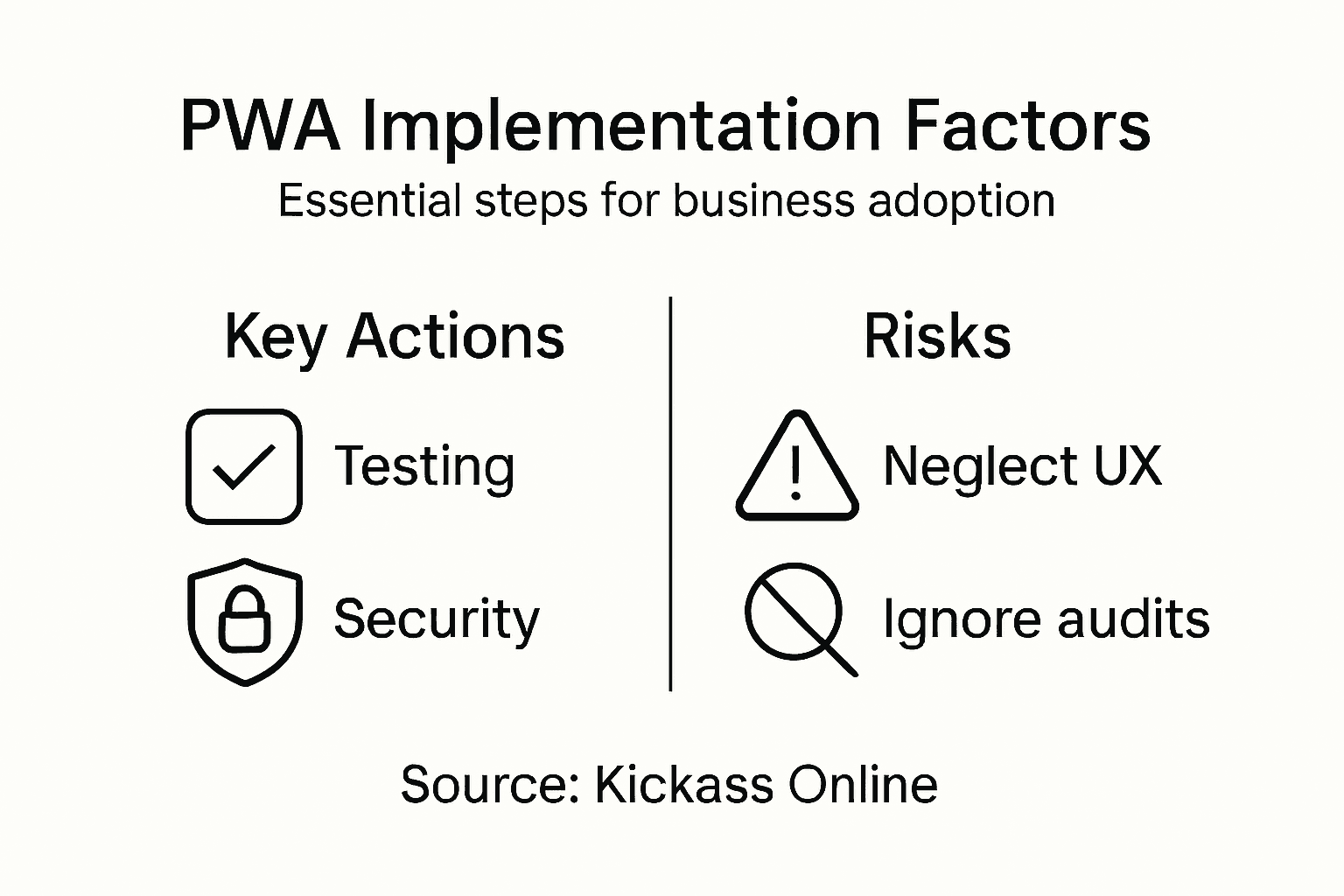
Businesses must be vigilant about potential implementation mistakes. Common pitfalls include neglecting user interface design, inadequate performance testing, and failing to provide clear installation instructions. These oversights can significantly diminish the potential benefits of PWA technologies and reduce user adoption rates.
Successful PWA implementation demands a holistic approach that balances technical sophistication with user-centric design principles. Organisations must invest time in understanding their specific technological requirements and user expectations to develop truly effective progressive web applications.
For businesses considering PWAs, these implementation checks are essential:
| Implementation Factor | Why It’s Essential | Potential Risk If Neglected |
|---|---|---|
| Service worker setup | Enables reliable offline use | Poor functionality in low connectivity |
| HTTPS enforcement | Secures data and builds user trust | Vulnerable to security breaches |
| Responsive interfaces | Ensures device adaptability | Inconsistent experience across devices |
| Performance audits | Identifies speed bottlenecks | Users may abandon slow apps |
Pro tip: Conduct comprehensive user experience testing and performance audits throughout the PWA development process to identify and address potential implementation challenges early.
Unlock the Full Potential of Your Business with Progressive Web Apps
Understanding what a Progressive Web App is and why it matters reveals common challenges businesses face like limited cross-platform compatibility, offline functionality, and costly app development. If your goal is to deliver high-performance, secure, and responsive digital experiences that truly engage your customers, embracing a PWA strategy might be the solution. With features such as instant installation, background updates, and minimised device storage needs, PWAs reduce complexity while substantially enhancing user satisfaction and reach.
At Kickass Online, we specialise in transforming these complex technological demands into customised, results-driven solutions. Our expert team focuses on building high-converting websites with outstanding online visibility that align perfectly with your business goals. Whether you want to optimise your site for better performance or explore the seamless integration of PWAs, our personalized approach ensures dedicated attention and tangible growth outcomes for your business.

Ready to elevate your digital presence with cutting-edge Progressive Web App capabilities? Visit our website design services to discover how we can craft a tailored solution for you. Don’t wait; book a consultation today and start turning the advantages of PWAs into your business success story.
Frequently Asked Questions
What is a Progressive Web App (PWA)?
A Progressive Web App (PWA) is a type of web application that combines the best features of traditional websites and native mobile applications, providing users with an app-like experience directly in their web browsers.
What are the key benefits of using a Progressive Web App for business?
PWAs offer enhanced performance, offline functionality, cross-platform compatibility, reduced development costs, and instant updates. These advantages contribute to improved user engagement and operational efficiency for businesses.
How does a PWA work offline?
PWAs utilise service workers, which are scripts that run in the background to manage caching strategies. This allows the application to function reliably without an active internet connection, enabling users to access content when offline.
What technologies are used to develop a Progressive Web App?
PWAs are built using standard web programming languages, including HTML, CSS, JavaScript, and WebAssembly. These technologies enable the development of responsive and performant applications that work across various devices and platforms.
Recommended


Book A Discovery Call
Stay Connected