What Is a CMS? Impact on Business Websites

Struggling to keep your digital content organised while growing your Milton Keynes business is a common challenge. With modern Content Management Systems now offering much more than simple website building, businesses can benefit from comprehensive tools that simplify content updates and support collaboration. Discover how embracing a CMS as a digital strategy partner can help you centralise content, maintain consistency across platforms, and build a professional online presence tailored to your needs.
Table of Contents
- CMS Defined: Purpose And Misconceptions
- Main Types Of CMS Software Explained
- Core Features And How A CMS Operates
- Business Use Cases: Websites And Beyond
- Risks, Costs, And Common Mistakes
- CMS Alternatives Compared For Businesses
Key Takeaways
| Point | Details |
|---|---|
| Understanding CMS Capabilities | A Content Management System is more than a website builder; it centralises content, enhances collaboration, and supports multi-channel distribution. |
| Choosing the Right CMS | Evaluate CMS options based on your organisation’s specific needs, including scalability, budget, and technical capabilities. |
| Recognising Risks | Be aware of potential security vulnerabilities and ongoing maintenance costs associated with CMS platforms. |
| Utilising CMS Flexibility | Leverage the adaptability of CMS platforms to create diverse content strategies across various digital channels. |
CMS Defined: Purpose and Misconceptions
A Content Management System (CMS) represents a sophisticated digital platform designed to simplify content creation, modification, and management across various digital channels. Unlike traditional perceptions, modern CMSs extend far beyond basic website construction, offering comprehensive solutions for organisations seeking streamlined digital content strategies.
At its core, a CMS comprises two fundamental components:
- Content Management Application (CMA): Provides user-friendly interfaces for content creation and editing
- Content Delivery Application (CDA): Manages content presentation and distribution across digital platforms
Modern CMSs provide comprehensive content management capabilities that transcend simple webpage development. These systems enable businesses to create, update, and distribute content efficiently across multiple digital touchpoints, including websites, mobile applications, and emerging digital platforms.
Common misconceptions about CMSs often limit understanding of their true potential. Many business owners mistakenly believe these systems are merely website builders, when in reality, they represent powerful tools for:
- Centralising content repositories
- Enabling collaborative workflows
- Supporting multi-channel content distribution
- Implementing robust access control mechanisms
- Facilitating seamless content updates
Modern CMSs support omnichannel content experiences that go beyond traditional website management. They provide structured content management through reusable components, allowing organisations to maintain consistency while adapting content for different platforms and audience segments.
Pro tip: When selecting a CMS, prioritise flexibility and scalability over immediate feature sets, ensuring the platform can grow alongside your business’s digital communication needs.
Main Types of CMS Software Explained
Content Management Systems (CMS) are not one-size-fits-all solutions, but rather a diverse ecosystem of platforms designed to meet varied business requirements. Top CMS platforms offer unique functionalities that cater to different organisational needs, technological capabilities, and strategic objectives.
The primary categories of CMS software include:
-
Web Content Management Systems (WCMS)
- Focused on website creation and management
- Ideal for businesses requiring straightforward online presence
- Examples: WordPress, Drupal
-
E-commerce CMS Platforms
- Specialised in online retail environments
- Integrated payment gateways and product management tools
- Examples: Shopify, Magento
-
Enterprise CMS Solutions
- Designed for large organisations with complex content workflows
- Advanced user permissions and collaboration features
- Examples: SharePoint, Sitecore
Professional CMS platforms vary significantly in their approach to content management. Open-source systems provide maximum customisation and control, while Software-as-a-Service (SaaS) platforms offer convenience and integrated hosting solutions.
Businesses must carefully evaluate their specific requirements when selecting a CMS. Factors to consider include scalability, technical complexity, budget constraints, and anticipated future growth. Each platform presents distinct advantages, making it crucial to align the CMS choice with specific organisational digital communication strategies.
The following table clarifies how different CMS types align with various organisational needs:
| CMS Type | Ideal Use Case | Key Benefit |
|---|---|---|
| Web CMS | Small business websites | Simple setup and management |
| E-commerce CMS | Online retail platforms | Integrated sales tools |
| Enterprise CMS | Large-scale organisations | Advanced permissions control |
Pro tip: Conduct a comprehensive audit of your organisation’s digital content needs before selecting a CMS, considering not just current requirements but potential future expansion and integration capabilities.
Core Features and How a CMS Operates
CMS architecture provides a comprehensive ecosystem for digital content management, transforming complex website development into an intuitive, user-friendly experience. These sophisticated platforms abstract away technical complexities, enabling businesses to create, modify, and publish digital content without extensive coding knowledge.
The core operational features of a typical CMS include:
-
Content Creation Tools
- Drag-and-drop page builders
- Rich text editing interfaces
- Media upload and management capabilities
-
Content Organisation Systems
- Categorisation and tagging mechanisms
- Version control and document history
- Workflow management and approval processes
-
Administrative Control Functions
- User role and permission management
- Access control configurations
- Security and authentication protocols
Modern CMS platforms operate through a sophisticated architectural framework that seamlessly integrates multiple digital content management functions. The system typically comprises three primary layers: the content creation interface, the database storage mechanism, and the content delivery engine, which work in concert to streamline digital publishing processes.

The technical infrastructure of a CMS enables businesses to manage digital assets efficiently, supporting multiple content types and providing flexible publishing options across various digital platforms. This comprehensive approach allows organisations to maintain consistent branding, streamline content workflows, and adapt quickly to changing digital communication requirements.
Pro tip: Prioritise CMS platforms that offer robust integration capabilities and scalable infrastructure to ensure your digital content management system can evolve alongside your business needs.
Business Use Cases: Websites and Beyond
CMS platforms support diverse business content strategies far beyond traditional website management. These sophisticated digital ecosystems enable organisations to manage, distribute, and optimise content across multiple channels and user touchpoints, transforming how businesses communicate and interact with their audiences.
The primary business use cases for CMS platforms include:
-
Public-Facing Websites
- Corporate communication platforms
- Product and service showcases
- Brand storytelling and engagement
-
Internal Communication Platforms
- Company intranets
- HR and employee service portals
- Knowledge management systems
-
Partner and Collaboration Spaces
- Extranets with controlled access
- Collaborative project management
- Secure information sharing environments
The comprehensive CMS ecosystem extends into multiple digital experience domains. Digital content delivery supports omnichannel strategies across websites, mobile applications, smart devices, and printed materials, enabling businesses to maintain consistent messaging and brand identity across diverse platforms.
Modern CMS platforms provide remarkable flexibility, allowing businesses to create microsites for specific campaigns, develop mobile applications with centralised content repositories, and manage complex digital communication strategies without extensive technical infrastructure. This adaptability empowers organisations to respond quickly to changing market dynamics and audience expectations.
Pro tip: Evaluate your CMS platform’s extensibility and integration capabilities before implementation, ensuring it can seamlessly support your current and future digital communication requirements.
Risks, Costs, and Common Mistakes
CMS platforms present complex technological challenges that extend far beyond initial implementation costs. Business owners must carefully navigate potential pitfalls, understanding that a seemingly straightforward content management solution can quickly become a significant strategic investment requiring nuanced technical expertise.
Key risks and potential cost factors include:
-
Security Vulnerabilities
- Unpatched extension risks
- Weak user authentication protocols
- Potential data breach exposure
-
Performance Limitations
- Slow page loading speeds
- Inconsistent mobile responsiveness
- Complex extension compatibility issues
-
Operational Expenses
- Ongoing maintenance costs
- Regular security updates
- Professional development and training
Common mistakes organisations frequently encounter involve underestimating the complexity of multi-channel content delivery. Businesses often select CMS platforms without thoroughly assessing their specific digital communication requirements, leading to suboptimal performance and unnecessary financial expenditure.
The financial implications of CMS implementation extend beyond initial setup, encompassing hosting expenses, potential custom development costs, and long-term maintenance investments. Organisations must conduct comprehensive cost-benefit analyses, considering not just immediate functionality but future scalability and technological adaptability.
Pro tip: Conduct a detailed strategic audit of your digital communication needs before CMS selection, prioritising platforms that offer flexible, scalable infrastructure with transparent pricing models.
CMS Alternatives Compared for Businesses
Leading CMS platforms offer diverse solutions for businesses seeking digital content management strategies. Understanding the strengths and limitations of each platform enables organisations to make informed decisions that align with their specific technological requirements and growth objectives.
Key CMS alternatives include:
-
WordPress
- Most flexible open-source platform
- Extensive plugin ecosystem
- Suitable for blogs, small to medium businesses
- Lower technical barrier to entry
-
Drupal
- High security and scalability
- Complex website architectures
- Enterprise-level customisation
- Steeper learning curve
-
Shopify
- E-commerce focused platform
- Integrated payment systems
- Rapid store setup
- Limited customisation options
Popular CMS platforms differ significantly in their approach to content management, technical complexity, and target market segments. Businesses must carefully evaluate their specific digital communication needs, technical capabilities, and budget constraints when selecting a platform.
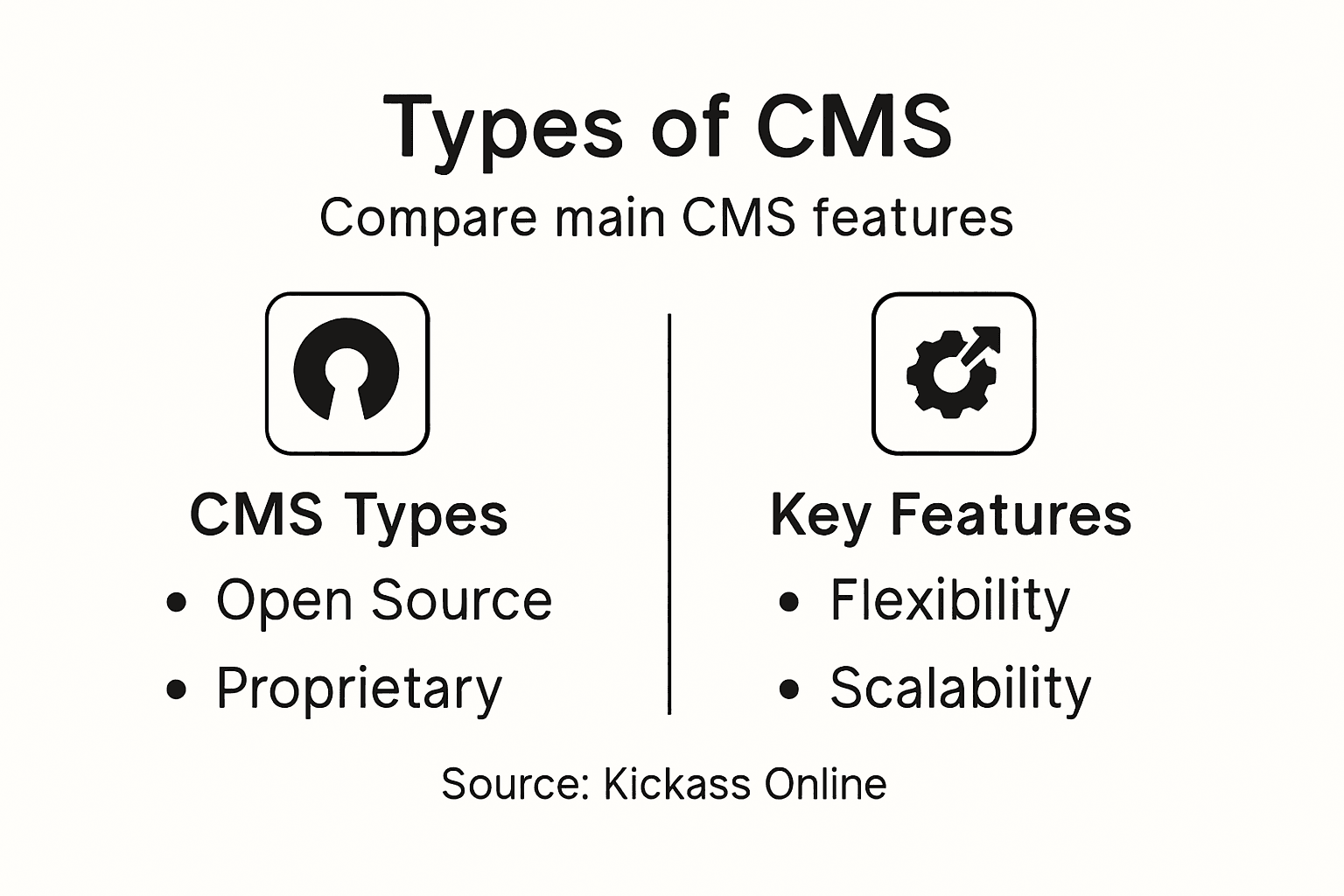
Each CMS alternative presents unique trade-offs between ease of use, customisation potential, and scalability. Smaller organisations might prioritise user-friendly interfaces, while larger enterprises require robust security and extensive integration capabilities. The selection process demands a comprehensive understanding of each platform’s strengths and potential limitations.
Here is a comparison of popular CMS platforms focusing on business priorities:
| Platform | Customisation Level | Scalability | Technical Requirement |
|---|---|---|---|
| WordPress | Extensive plugins | Moderate | Suitable for beginners |
| Drupal | Deep technical control | High | Requires technical expertise |
| Shopify | Limited flexibility | Retail-focused | Minimal coding needed |
Pro tip: Conduct a thorough internal audit of your digital requirements, technical expertise, and future growth plans before committing to a specific CMS platform.
Elevate Your Business Website with Expert CMS Solutions
Struggling to choose the right Content Management System that matches your unique business needs can be overwhelming. The article highlights the importance of selecting a scalable, secure, and flexible CMS platform that supports multi-channel content and robust workflows. If your goal is to centralise content management, improve website performance and security, or enable seamless collaboration, understanding CMS complexities is key. At Kickass Online, we specialise in transforming these challenges into opportunities by crafting personalised web solutions tailored for small and medium-sized businesses.
We focus on:
- Creating high-converting websites aligned with your business goals
- Optimising your search engine rankings with proven SEO strategies
- Providing ongoing website maintenance to ensure security and peak performance
Take control of your digital presence today with Kickass Online. Our dedicated team offers strategic consultation and hands-on support to help you select and implement the perfect CMS platform for your business. Visit our web development services page to discover how our tailored solutions can deliver the flexibility and scalability your business requires. Don’t let CMS complexity hold you back. Book a consultation now and start building a smarter, faster, and more secure website with Kickass Online.
Frequently Asked Questions
What is a Content Management System (CMS)?
A Content Management System (CMS) is a digital platform designed to simplify the creation, modification, and management of content across various digital channels, extending beyond basic website construction.
How does a CMS benefit businesses?
A CMS streamlines digital content strategies by centralising content repositories, enabling collaborative workflows, supporting multi-channel content distribution, and facilitating seamless content updates.
What are the main types of CMS software?
The main types of CMS software include Web Content Management Systems (WCMS), E-commerce CMS platforms, and Enterprise CMS solutions, each catering to different organisational needs and digital strategies.
What features should I look for in a CMS?
Key features to consider when selecting a CMS include content creation tools, content organisation systems, administrative control functions, as well as the platform’s integration capabilities and scalability.
Recommended
- What Is Umbraco and Why It Matters for Business | Kickass Online
- 7 Key Types of Website Designs for Business Success | Kickass Online
- Website Maintenance: Why It Matters for SMEs | Kickass Online
- Mobile Responsiveness: Boosting SEO and User Engagement | Kickass Online
- Karl Lundgren Business Coaching and M50 Media Blog
- Why Update Business Signage: Boosting Local Visibility -
- What Is Technical SEO and Why It Matters Most


Book A Discovery Call
Stay Connected