
Over half of british businesses face website ranking issues due to technical SEO gaps. With new search algorithms becoming more sophisticated every year, getting the technical side right now affects far more than just web developers or IT specialists. Understanding the true scope of technical SEO helps ensure your website performs strongly against modern search standards, improving both visibility and user experience across every visit.
Table of Contents
- Defining Technical SEO and Common Misconceptions
- Core Elements of Technical SEO Optimisation
- Types of Technical SEO Issues and Solutions
- How Technical SEO Impacts Rankings and Visibility
- Critical Mistakes to Avoid in Technical SEO
Key Takeaways
| Point | Details |
|---|---|
| Understanding Technical SEO | Technical SEO is essential for optimising a website’s infrastructure, ensuring it meets search engine requirements while enhancing user experience. |
| Continuous Optimisation | Successful technical SEO requires ongoing monitoring and refinement, rather than viewing it as a one-time task. |
| Core Components | Key elements include website crawlability, page load speed, mobile responsiveness, and secure connections that collectively improve search visibility. |
| Common Errors | Avoid pitfalls such as neglecting site architecture, slow performance, and inadequate security measures, which can significantly harm search rankings. |
Defining Technical SEO and Common Misconceptions
Technical SEO represents the critical behind-the-scenes optimisation strategies that enable search engines to effectively crawl, understand, and index a website’s content. Unlike content or link-based SEO approaches, technical SEO focuses on improving a website’s foundational infrastructure and performance metrics that directly impact search rankings. When implemented correctly, these strategies ensure your website meets modern search engine requirements and provides an optimal user experience.
Many business owners misunderstand technical SEO as a purely technical process disconnected from user experience. In reality, technical SEO intertwines website performance, accessibility, and search engine compatibility. Key elements include website speed, mobile responsiveness, secure connections, structured data markup, and clean website architecture. Onsite SEO strategies play a crucial role in translating these technical optimisations into tangible search visibility improvements.
Common misconceptions about technical SEO can significantly hinder a website’s performance. Some businesses believe technical optimisation is a one-time task, when in fact it requires continuous monitoring and adaptation. Others assume complex technical configurations automatically guarantee higher rankings, overlooking the importance of content quality and user engagement. Successful technical SEO demands a holistic approach that balances technical precision with meaningful, user-centric website design and content strategies.
To effectively implement technical SEO, businesses must understand its multifaceted nature. This involves regular website audits, performance monitoring, addressing crawl errors, optimising page load speeds, implementing proper redirects, and ensuring mobile compatibility. By treating technical SEO as an ongoing process of refinement rather than a static checklist, organisations can create robust online platforms that both search engines and users appreciate.
Core Elements of Technical SEO Optimisation
Technical SEO comprises several critical components that work together to enhance a website’s search engine performance and user experience. These core elements form the foundation of a robust digital strategy, ensuring websites are not just visible but also effectively communicating with search engine algorithms. Content optimisation tips play a pivotal role in translating technical configurations into tangible search ranking improvements.
The first fundamental element involves website crawlability and indexing. Search engines must effortlessly navigate and understand a website’s structure, which requires clean, logical site architecture, XML sitemaps, and a well-configured robots.txt file. This means creating a hierarchical website structure that allows search engine bots to discover and comprehend content efficiently, reducing potential barriers that might prevent proper indexing.

Website performance metrics represent another crucial technical SEO dimension. Page load speed, mobile responsiveness, and overall user experience directly influence search rankings. Businesses must optimise image sizes, minimise server response times, leverage browser caching, and implement responsive design techniques. Modern search algorithms increasingly prioritise websites that deliver swift, seamless experiences across multiple devices, making performance optimisation a non-negotiable aspect of technical SEO strategy.
Secure and accessible website infrastructure completes the technical SEO equation. This involves implementing HTTPS protocols, ensuring proper SSL certification, creating clean URL structures, managing canonical tags, and developing structured data markup. By meticulously addressing these technical elements, organisations create a solid foundation that not only satisfies search engine requirements but also builds user trust and credibility. Technical SEO is ultimately about creating a harmonious digital environment where technology, content, and user experience converge to deliver optimal search visibility.
Types of Technical SEO Issues and Solutions
Technical SEO challenges can significantly undermine a website’s search performance, requiring businesses to proactively identify and address potential obstacles. Identifying common website failures helps organisations prevent critical technical issues that might compromise their digital visibility. These challenges often manifest in multiple complex ways, demanding strategic and comprehensive solutions.
Crawlability and indexing issues represent a primary category of technical SEO problems. These include broken links, improper redirect chains, duplicate content, and ineffective XML sitemaps that prevent search engines from efficiently understanding website structure. Businesses must conduct regular technical audits to detect orphaned pages, resolve 404 errors, implement proper canonical tags, and ensure search engine bots can seamlessly navigate their digital ecosystem. Diagnostic tools like Google Search Console become invaluable in identifying and rectifying these underlying structural impediments.
Performance-related technical SEO challenges encompass page speed, mobile responsiveness, and user experience metrics. Slow-loading pages, unoptimised images, excessive server response times, and non-responsive design can drastically reduce search rankings and user engagement. Modern websites must prioritise technical optimisation strategies such as image compression, browser caching, minifying CSS and JavaScript, leveraging content delivery networks, and implementing responsive design frameworks that adapt seamlessly across various devices and screen sizes.
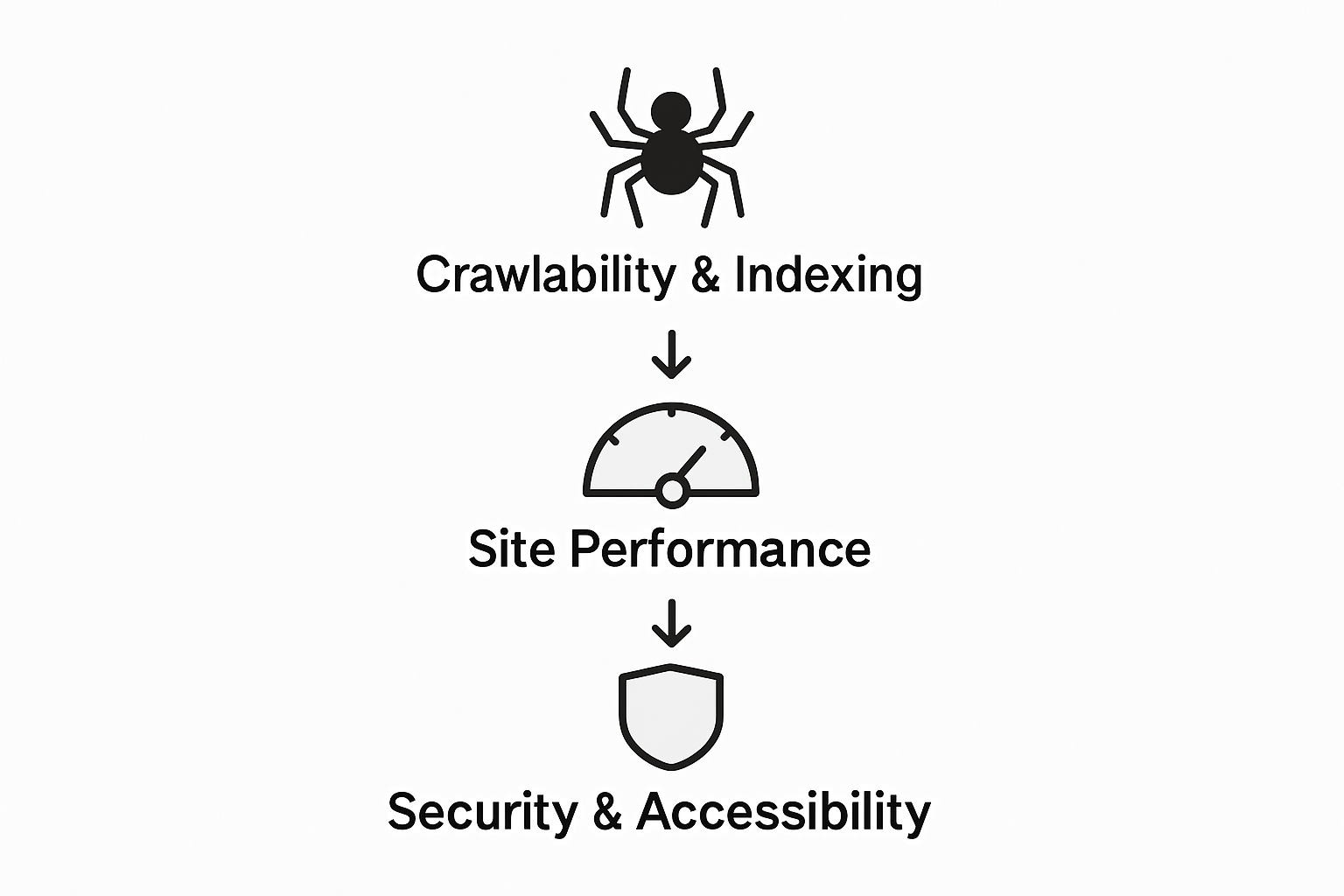
Security and accessibility represent another critical dimension of technical SEO problem resolution. Websites must implement robust HTTPS protocols, maintain current SSL certifications, create clear and descriptive URL structures, and develop comprehensive structured data markup. By meticulously addressing these technical elements, organisations construct a resilient digital infrastructure that not only satisfies sophisticated search engine algorithms but also builds user trust and credibility. Technical SEO solutions are ultimately about creating a harmonious digital environment where technological precision meets user-centric design.
How Technical SEO Impacts Rankings and Visibility
Search engine rankings are fundamentally determined by a complex interplay of technical infrastructure and content quality. Website visibility strategies demonstrate how technical SEO serves as the critical foundation that enables search engines to effectively evaluate, understand, and rank digital content. Modern search algorithms assess websites through sophisticated technical performance metrics that go far beyond simple keyword matching.
The primary mechanism of technical SEO impact involves search engine crawlability and indexing efficiency. Websites with clean, logical architectural structures, fast loading times, mobile responsiveness, and clear navigation pathways receive preferential treatment from search algorithms. Technical optimisations like proper XML sitemap configuration, strategic internal linking, minimised redirect chains, and comprehensive structured data markup directly influence how comprehensively and quickly search engines can interpret a website’s content and relevance.
Performance metrics play a decisive role in determining search visibility. Page load speed, mobile compatibility, secure connections, and user experience signals are now integral ranking factors. Search engines prioritise websites that deliver seamless, rapid experiences across multiple devices, penalising those with slow response times, broken links, or poor mobile adaptability. Modern technical SEO requires a holistic approach that balances sophisticated backend configurations with intuitive, user-friendly design principles.
Secure and accessible website infrastructure represents another critical dimension of search ranking determinants. Implementing robust HTTPS protocols, maintaining current SSL certifications, creating semantically clear URL structures, and developing comprehensive schema markup directly communicate a website’s credibility and reliability to search algorithms. By meticulously addressing these technical elements, organisations can construct digital platforms that not only meet stringent search engine requirements but also provide optimal user experiences, ultimately driving improved search rankings and online visibility.
Critical Mistakes to Avoid in Technical SEO
Technical SEO demands precision and strategic implementation, with numerous potential pitfalls that can dramatically undermine a website’s search performance. Digital marketing mistakes frequently stem from overlooking critical technical configurations that search engines use to evaluate and rank websites. Understanding these potential errors becomes paramount for businesses seeking to maintain robust online visibility.
Website performance optimisation represents a crucial area where technical SEO mistakes frequently occur. Slow page loading times, uncompressed images, excessive server response durations, and non-responsive design can severely compromise search rankings. Businesses must prioritise comprehensive performance audits, implementing strategies like image compression, browser caching, minimising CSS and JavaScript files, and ensuring seamless mobile adaptability. Neglecting these technical elements creates significant barriers to search engine crawlability and user experience.
Crawlability and indexing configurations constitute another fundamental domain where technical SEO errors can emerge. Improper XML sitemap structures, complex redirect chains, duplicate content issues, and ineffective robots.txt configurations can prevent search engines from effectively understanding and ranking website content. Strategic technical SEO requires meticulous attention to site architecture, ensuring clean URL structures, implementing proper canonical tags, and creating logical internal linking pathways that facilitate comprehensive content discovery and indexing.
Secure and accessible website infrastructure represents a final critical dimension where technical SEO mistakes can significantly impact online performance. Failing to implement robust HTTPS protocols, neglecting SSL certifications, or overlooking structured data markup directly undermines a website’s credibility and search engine reliability. Organisations must develop a holistic approach that balances sophisticated technical configurations with intuitive, user-centric design principles, recognising that modern search algorithms demand comprehensive, security-focused digital infrastructures that prioritise both technical precision and user experience.
Elevate Your Website Performance with Expert Technical SEO Solutions
Technical SEO is the foundation of improved search visibility and seamless user experience, yet many businesses struggle with crawlability issues, slow page speeds and security lapses. If you are aiming to boost your website’s performance and overcome common technical SEO challenges like indexing errors, slow loading times and poor mobile responsiveness, you need a partner who understands these critical elements inside out. Our approach at Kickass Online focuses on optimising your site’s infrastructure to satisfy both search engines and visitors through precise technical adjustments and ongoing maintenance.
Discover how our customised strategies in website development and SEO can transform your digital presence. Whether it is enhancing site speed, implementing clean URL structures or ensuring your site is secure and accessible, we provide dedicated attention to every technical detail. Learn more about our expert services in Websites | Kickass Online and explore the proven steps to maintain high-performing websites.

Take the next step today and secure your business’s online success by partnering with Kickass Online. Visit us at https://kickassonline.com to book a consultation with our specialists and start turning technical SEO challenges into growth opportunities. See why so many clients trust our personalised solutions to enhance their website’s performance and search rankings. Don’t let technical hurdles hold your business back any longer.
Frequently Asked Questions
What is technical SEO?
Technical SEO refers to the optimisation strategies focused on improving a website’s foundational infrastructure, ensuring search engines can effectively crawl, understand, and index its content.
How does technical SEO impact website performance?
Technical SEO impacts website performance by enhancing elements such as page load speed, mobile responsiveness, and secure connections, which directly influence search engine rankings and user experience.
What are common technical SEO issues to address?
Common technical SEO issues include crawlability and indexing problems, slow page load speeds, non-responsive design, broken links, and improper XML sitemap configurations.
How can I improve my website’s technical SEO?
To improve your website’s technical SEO, conduct regular audits, optimise page load speeds, ensure mobile compatibility, implement HTTPS, and maintain clean URL structures and proper redirects.