
How to Design a Shopify Website for Tech
Creating a Shopify website tailored specifically for tech products requires more than just listing gadgets and gizmos. In 2025, the expectations of online shoppers have evolved, with a strong emphasis on seamless user experience, cutting-edge technology, and trustworthy design. Whether you’re selling the latest smartwatches, home electronics, or innovative accessories, your Shopify store needs to reflect the sophistication of your products while remaining easy to navigate and engaging.
This guide explores key strategies to design a Shopify website for tech that not only looks modern but also converts visitors into loyal customers.
Prioritise Mobile-First Design
Mobile commerce continues to dominate the online shopping landscape. In fact, over half of all e-commerce sales now come from mobile devices, making it essential that your Shopify store is optimised for smartphones and tablets first. A mobile-first approach means designing your website with smaller screens in mind before scaling up for desktops.

This strategy ensures your store features responsive layouts that adapt fluidly to different screen sizes. Fast load times are crucial here; slow pages on mobile can frustrate users and increase bounce rates. Additionally, touch-friendly navigation—such as larger buttons and simplified menus—makes browsing effortless on handheld devices.
By focusing on mobile-first design, your tech store will provide a smooth shopping experience that meets the expectations of today’s consumers, who often shop on the go. Furthermore, incorporating features such as voice search and easy access to customer service can significantly enhance user engagement. With the rise of virtual assistants like Siri and Google Assistant, ensuring that your site is compatible with voice commands can streamline the shopping process, allowing users to find products quickly and efficiently without the hassle of typing on a small screen.
Moreover, it's vital to consider the integration of social media sharing options directly within your mobile layout. As consumers increasingly rely on social platforms for product recommendations and reviews, making it easy for them to share their favourite finds can drive traffic back to your store. This not only boosts visibility but also fosters a sense of community among your customers, encouraging them to interact with your brand and each other, ultimately leading to increased sales and customer loyalty.
Leverage AI for Personalisation and Search
Artificial intelligence is transforming how online stores engage with customers. For a tech-focused Shopify website, AI-powered personalisation can significantly boost sales and customer satisfaction.
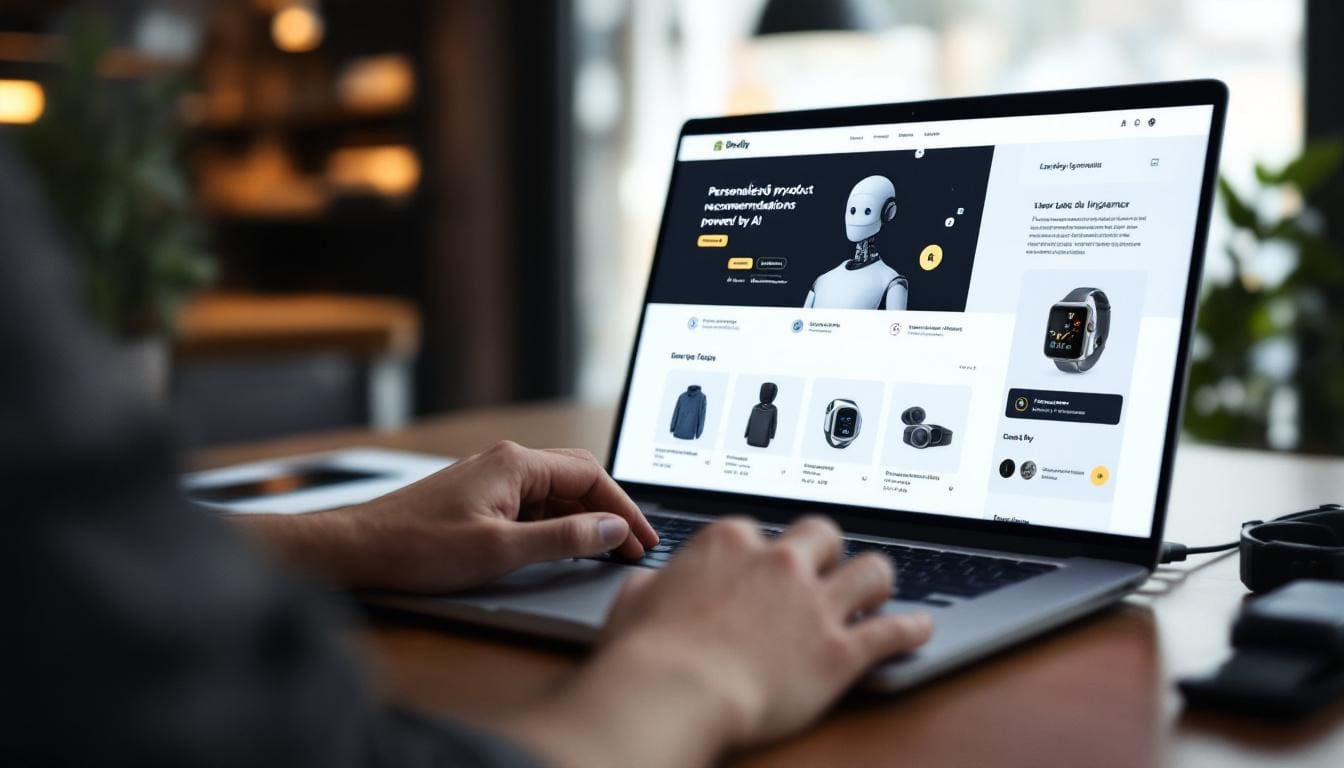
Implementing AI tools allows your store to offer tailored product recommendations based on individual browsing habits and purchase history. This dynamic content keeps shoppers engaged and helps them discover products they might otherwise miss. By analysing user data, AI can not only suggest items that complement previous purchases but also predict future needs, creating a seamless shopping experience that feels bespoke to each customer.
Moreover, advanced search capabilities powered by AI, such as predictive search and natural language processing, make it easier for customers to find exactly what they want. For example, a visitor could type “wireless noise-cancelling headphones” and receive precise results instantly. Adaptive filters that update based on search terms further streamline the shopping process, saving time and reducing frustration. This level of sophistication in search functionality not only enhances user satisfaction but also encourages longer browsing sessions, as customers are more likely to explore additional products that align with their interests.
AI-Driven Customer Support
Chatbots integrated with AI can provide immediate assistance, answering common questions and guiding users through the purchase process. This 24/7 support improves the overall shopping experience and frees up your team to focus on more complex queries. Furthermore, these chatbots can learn from interactions over time, becoming increasingly adept at understanding customer preferences and providing relevant suggestions. This continuous improvement ensures that your customer support remains efficient and effective, adapting to the evolving needs of your clientele.
In addition to chatbots, AI can also analyse customer feedback and sentiment, allowing businesses to gain valuable insights into customer satisfaction and areas for improvement. By processing reviews and social media comments, AI tools can identify trends and common pain points, enabling businesses to make informed decisions about product offerings and service enhancements. This proactive approach not only helps in retaining existing customers but also attracts new ones, as a brand that listens and adapts to its audience is more likely to foster loyalty and trust.
Use High-Quality Visuals and Interactive Elements
Tech products often rely on their design and features to appeal to customers. High-resolution images and videos are essential to showcase these details effectively. Crisp visuals help build trust, allowing shoppers to examine products closely and appreciate their quality.
Interactive elements take this a step further. Features like 360-degree product views enable customers to explore gadgets from every angle, replicating the in-store experience online. Video demos can highlight key functionalities, making complex tech easier to understand.
These engaging visuals not only enhance user experience but also reduce uncertainty, which can lower return rates and increase conversions. Furthermore, incorporating augmented reality (AR) features can elevate the shopping experience even more. With AR, customers can visualise how a product might fit into their lives, whether it's seeing how a sleek new laptop would look on their desk or how a pair of headphones might fit into their daily routine. This immersive experience not only captivates potential buyers but also encourages them to make informed decisions.
Moreover, the use of infographics and comparison charts can further aid in the decision-making process. By presenting complex information in a visually appealing and easily digestible format, customers can quickly grasp the advantages and specifications of various products. This not only saves time but also empowers consumers, leading to a more satisfying shopping experience as they feel more knowledgeable about their choices.
Integrate Augmented Reality for Immersive Shopping
Augmented Reality (AR) is becoming a powerful tool in e-commerce, especially for tech products. By allowing customers to visualise items in their own environment through their device’s camera, AR bridges the gap between digital and physical shopping.
For example, a customer considering a new smart speaker can see how it fits on their desk or shelf before buying. This immersive experience helps shoppers make informed decisions and boosts confidence in their purchase.
Incorporating AR into your Shopify store can set your tech brand apart and provide an innovative shopping journey that resonates with modern consumers.
Enhance User Experience with Advanced Filtering and Search
Tech products often come with numerous specifications and options. To help customers navigate this complexity, advanced filtering and search features are indispensable.
Filters that allow sorting by brand, price, features, compatibility, and more empower shoppers to narrow down choices quickly. Coupled with AI-powered search that understands natural language queries, these tools make product discovery intuitive and efficient.
Such functionality not only improves customer satisfaction but also increases the likelihood of completing a purchase by reducing the time and effort needed to find the right product.
Build Trust with Social Proof and Security Signals
Trust is a critical factor in online shopping, particularly for tech products that often involve significant investment. Displaying customer reviews and testimonials prominently on product pages can reassure potential buyers about quality and performance.
Additionally, trust badges—such as secure payment icons, money-back guarantees, and recognised certifications—signal that your website is safe and reliable. These elements work together to reduce purchase anxiety and encourage conversions.
Remember, authentic social proof is more persuasive than generic claims. Encourage satisfied customers to leave detailed reviews and consider featuring user-generated content to further enhance credibility.
Incorporate Social Commerce Features
Social media is a powerful channel for reaching tech enthusiasts. Integrating social commerce features into your Shopify website can bridge the gap between social engagement and direct sales.

Embedding shoppable posts, live social feeds, or popups showcasing recent purchases or reviews taps into the influence of peer recommendations. This approach leverages the growing trend of social commerce, where users discover and buy products through social platforms.
By making it easy for visitors to interact with your social content and shop simultaneously, you create a more connected and engaging shopping experience.
Optimise for Sustainability and Performance
Consumers are increasingly conscious of environmental impact, and this extends to their online shopping habits. Designing a sustainable Shopify website involves optimising for faster load times and lower energy consumption.
Simple steps such as compressing images, minimising code, and selecting green hosting providers contribute to a more eco-friendly website. Not only does this reduce your carbon footprint, but it also improves site speed, which benefits user experience and SEO.
Highlighting your commitment to sustainability can also enhance your brand’s reputation and appeal to environmentally minded customers.
Consider Progressive Web Apps and Voice Commerce
To stay ahead in 2025, exploring emerging technologies like Progressive Web Apps (PWAs) and voice commerce is worthwhile.
PWAs combine the best of websites and mobile apps, offering fast load times, offline functionality, and push notifications without requiring users to download an app. This can increase engagement and retention by providing an app-like experience directly through the browser.
Voice commerce is gaining traction with the rise of smart speakers and voice assistants. Optimising your Shopify store for voice search involves using natural language keywords and structuring content to answer common voice queries. Integrating voice command features can make shopping hands-free and convenient, appealing to tech-savvy customers.
Conclusion
Designing a Shopify website for tech products in 2025 means embracing a blend of modern design principles, advanced technology, and user-centric features. By prioritising mobile-first design, leveraging AI for personalisation and search, and incorporating immersive visuals and AR, your store can offer an engaging and seamless shopping experience.
Adding trust signals, social commerce integration, and sustainable practices further strengthens your brand’s appeal. Finally, exploring innovations like PWAs and voice commerce ensures your store remains competitive in an ever-evolving digital landscape.
With these strategies, your Shopify tech store will not only showcase your products effectively but also build lasting relationships with customers, driving growth and success in the years ahead.
Ready to elevate your tech Shopify store with a cutting-edge design that drives sales and delights customers? Kickass Online specializes in creating bespoke web solutions that resonate with your brand and audience. With our expertise in platforms like Shopify and our knack for integrating the latest in AI, SEO, and automation, we're here to help your business thrive. Don't miss out on the opportunity to transform your online presence. Book a discovery call with us today and take the first step towards a stellar tech website that stands out in the digital landscape.