
How to Design a Custom Website for a Graphic Designer
In today’s digital world, having a bespoke website is essential for graphic designers looking to showcase their work and attract new clients. A well-crafted website not only displays your portfolio but also reflects your unique style and professionalism. Designing a custom site can seem daunting, but with the right approach, it becomes an opportunity to create a compelling online presence that truly represents your brand.
Curate a Thoughtful Selection of Your Best Work
Your portfolio is the heart of your website. When selecting projects to feature, quality always trumps quantity. Aim to showcase 5 to 7 of your strongest pieces that demonstrate a range of skills and styles. This selection should highlight your versatility, whether it’s branding, illustration, web design, or print work.

Including a mix of personal and professional projects can give visitors a well-rounded view of your capabilities. Personal projects often reveal your creativity and passion, while professional work shows your ability to meet client needs and deadlines. Each project should be accompanied by a brief description that explains your role, the challenges you faced, and the solutions you implemented. This context helps potential clients understand your design thinking and problem-solving skills.
In addition to the visual appeal of your work, consider the narrative you weave through your portfolio. Each project can tell a story about your journey as a designer, showcasing not only the final outcome but also the evolution of your ideas. For instance, you might include sketches or iterations that led to the final design, providing insight into your creative process. This transparency can engage viewers more deeply, inviting them to appreciate not just the result, but the effort and thought that went into each piece.
Furthermore, think about the order in which you present your work. A well-structured portfolio can guide the viewer's experience, leading them through a curated path that highlights your strengths. You might start with a standout project that encapsulates your style, followed by a diverse range of works that demonstrate your adaptability. This strategic arrangement not only keeps the audience engaged but also reinforces your brand identity, making a lasting impression that encourages potential clients to reach out.
Create an Engaging and Interactive User Experience
Static portfolios can feel lifeless, so incorporating interactive elements can make your website more engaging. Subtle animations, hover effects, and micro-interactions can guide visitors through your work and keep them interested. For example, allowing users to click through different stages of a project—from initial sketches to the final product—adds depth and insight into your creative process. This not only captivates the audience but also encourages them to spend more time exploring your work, leading to a deeper appreciation of your skills and creativity.

Interactive features also help to demonstrate your technical skills and attention to detail. However, it’s important to balance interactivity with usability; avoid overwhelming visitors with too many effects that can distract from your work. The goal is to enhance the experience, not complicate it. Consider implementing features such as a dynamic gallery that rearranges images based on user interactions or a timeline that showcases the evolution of your projects, allowing for a more immersive experience that draws visitors into your narrative.
Using Case Studies to Showcase Your Process
Including detailed case studies is an excellent way to share your design journey. These narratives can outline your approach from concept to completion, highlighting the challenges and how you overcame them. Case studies build trust by showing transparency and your ability to think critically and creatively. By incorporating visuals such as sketches, wireframes, and final designs alongside your written narrative, you can create a compelling story that resonates with potential clients, illustrating not just the outcome but the thought process behind each decision.
They also provide potential clients with a glimpse of what collaborating with you might be like, making your services more tangible and relatable. Furthermore, consider including testimonials or quotes from clients within these case studies, as they can add an additional layer of credibility and personal connection. This not only showcases your ability to work collaboratively but also highlights the satisfaction of those who have experienced your services first-hand, creating a more persuasive case for your expertise and approach to design.
Adopt a Minimalist and Cohesive Design Style
A clean, minimalist design ensures that your work remains the focal point of your website. Cluttered layouts or overly busy backgrounds can detract from your portfolio pieces and confuse visitors. Instead, use plenty of white space to give your projects room to breathe and allow users to focus on the details. This approach not only enhances the visual experience but also encourages a more intuitive navigation, as users can easily find their way around without unnecessary distractions. By prioritising simplicity, you invite your audience to engage deeply with your work, fostering a more meaningful connection.
Consistency is key. Choose a limited colour palette and typography that align with your personal brand. This cohesion not only enhances visual appeal but also improves navigation, making it easier for visitors to explore your site. A well-thought-out design system creates a professional and polished look that reflects your design philosophy. Additionally, consider how different elements interact with one another; for instance, the way images and text are aligned can create a harmonious flow that guides the viewer's eye seamlessly across the page. Such attention to detail can elevate the overall user experience, making your site not just a portfolio, but a curated journey through your creative process.
Personal Branding Elements
Your website should be a reflection of your unique style and personality. Incorporating personal branding elements such as a custom logo, signature colours, and consistent fonts helps distinguish your site from others. These details make your portfolio memorable and reinforce your identity as a designer. Furthermore, consider integrating subtle animations or micro-interactions that align with your brand's ethos; these can add an engaging layer to your site that captivates visitors and encourages them to linger longer. By thoughtfully weaving your personal branding into every aspect of your website, you not only showcase your work but also tell a compelling story about who you are as a designer.
Ensure Mobile Responsiveness and Accessibility
With more than half of web traffic coming from mobile devices, it’s essential that your website looks and functions well on all screen sizes. A responsive design adapts seamlessly from desktop to tablet to smartphone, providing a smooth user experience regardless of device. This adaptability not only enhances user satisfaction but also positively impacts search engine rankings, as search engines increasingly favour sites that offer a mobile-friendly experience. By employing flexible grid layouts and media queries, you can ensure that your content is presented in an optimal format, making navigation intuitive and engaging for users on the go.
Beyond responsiveness, accessibility should be a priority. Following standards such as WCAG 2.1 ensures that your site is usable for people with disabilities, including those who rely on screen readers or have visual impairments. Accessibility not only broadens your audience but also demonstrates professionalism and inclusivity. By considering the diverse needs of users, you create an environment where everyone can interact with your content meaningfully. This commitment to accessibility can also enhance your brand's reputation, as more consumers are drawn to businesses that prioritise social responsibility and inclusivity.
Key Accessibility Practices
Some practical steps include using sufficient colour contrast, providing alternative text for images, and ensuring that your site can be navigated via keyboard. These measures help create an inclusive environment where all visitors can appreciate your work. Additionally, implementing ARIA (Accessible Rich Internet Applications) landmarks can significantly improve navigation for users with assistive technologies. By labelling sections of your website clearly, you allow screen reader users to jump to specific parts of the page, making their browsing experience more efficient. Furthermore, consider conducting regular accessibility audits to identify and rectify potential barriers, ensuring your site remains compliant and user-friendly for all.
Leverage AI-Powered Tools to Streamline the Design Process
Building a custom website can be time-consuming, especially if coding isn’t your forte. Fortunately, AI-powered website builders like Wix Studio offer intuitive platforms that simplify the process. These tools provide advanced features such as automated layout suggestions, design customisation, and easy integration of interactive elements.
Using AI-assisted builders can speed up development without sacrificing creativity or uniqueness. They also often include built-in optimisation for mobile responsiveness and accessibility, helping you meet essential standards effortlessly.
Make Contacting You Simple and Clear
Once visitors are impressed by your portfolio, you want to make it easy for them to get in touch. Prominently display your contact information, including an email address and phone number if appropriate. Additionally, links to professional social media profiles such as LinkedIn or Behance can encourage further engagement.
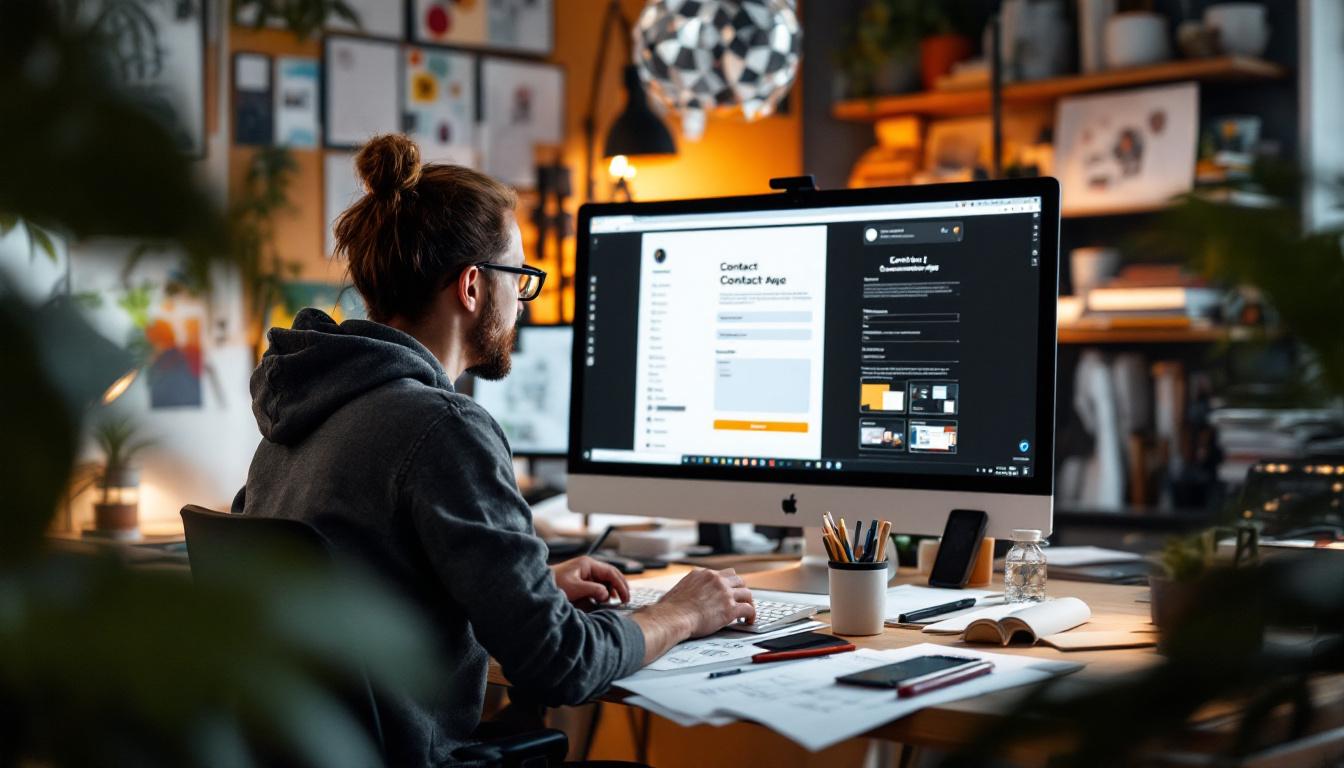
A clear call-to-action (CTA), such as “Get in Touch” or “Hire Me,” guides visitors toward the next step. Consider placing CTAs strategically throughout your site, particularly on your homepage and portfolio pages, to maximise opportunities for connection.
Final Thoughts: Building a Website That Reflects You
Designing a custom website as a graphic designer is an opportunity to showcase not only your work but also your personality and professionalism. By carefully curating your portfolio, incorporating interactive elements, and maintaining a clean, cohesive design, you create a site that stands out and resonates with visitors.
Prioritising mobile responsiveness and accessibility ensures your portfolio reaches the widest possible audience. Leveraging AI tools can make the process more efficient, while clear contact options encourage potential clients to reach out.
Ultimately, your website should be a true reflection of your unique style and approach to design—a digital space where your creativity shines and new opportunities begin.
Ready to transform your graphic design portfolio into a custom website that captivates clients and showcases your creativity? At Kickass Online, we specialize in bespoke web development, leveraging platforms like WordPress, Umbraco, Shopify, Webflow, and custom frameworks such as Angular, MERN, and Laravel. Our expertise extends to website maintenance, SEO, PPC, and leveraging AI and automation to elevate your business. Don't let the technicalities hold you back. Book a discovery call with us today and take the first step towards a digital presence that's as kickass as your designs.