Master SEO optimisation guide 2026 for business success

If your business website isn’t ranking on Google’s first page, you’re losing customers to competitors who’ve mastered SEO optimisation. Many small and medium business owners struggle to keep pace with constant algorithm changes, watching their online visibility decline whilst competitors surge ahead. This comprehensive guide cuts through the complexity, providing practical SEO strategies specifically designed for SMEs navigating the 2026 digital landscape. You’ll discover actionable steps to boost your search rankings, attract more qualified leads, and transform your website into a powerful customer acquisition tool.
Table of Contents
- Understanding The SEO Landscape In 2026: What You Need To Know
- Preparing Your Website For SEO Success: Key Prerequisites And Tools
- Executing Effective SEO Optimisation Steps For Your Business Website
- Monitoring, Troubleshooting, And Avoiding Common SEO Mistakes In 2026
- Improve Your Website With Expert SEO And Web Design Services
- Frequently Asked Questions
Key takeaways
| Point | Details |
|---|---|
| SEO demands continuous adaptation | Search algorithms evolve constantly, requiring regular updates to maintain competitive rankings in 2026 |
| Local visibility drives SME growth | Optimising for local search significantly increases foot traffic and nearby customer conversions |
| Technical foundations matter most | Site speed, mobile responsiveness, and proper indexing form the bedrock of successful SEO performance |
| Content quality trumps quantity | Search engines prioritise valuable, well researched content over keyword stuffed pages |
| Regular audits prevent ranking drops | Quarterly SEO reviews identify issues before they damage your hard earned search positions |
Understanding the SEO landscape in 2026: what you need to know
The SEO environment has transformed dramatically, with search engines placing unprecedented emphasis on user experience metrics. Google’s algorithm now evaluates how visitors interact with your site, measuring everything from page load times to mobile usability. If your website frustrates users with slow loading speeds or clunky mobile navigation, you’ll struggle to compete regardless of your content quality.
SEO in 2026 emphasises user experience, local relevance, and mobile optimisation as primary ranking factors. Search engines have become sophisticated enough to understand user intent, meaning they prioritise websites that genuinely answer searcher questions rather than those merely stuffed with keywords. This shift rewards businesses that invest in quality content and seamless user experiences.
Local SEO has emerged as particularly crucial for SMEs targeting nearby customers. When someone searches for services in your area, Google prioritises businesses with optimised local profiles, consistent directory listings, and positive customer reviews. Ignoring local optimisation means surrendering potential customers to competitors who’ve claimed their digital territory.
Search engines actively penalise websites with poor technical foundations. Sites plagued by broken links, duplicate content, or security vulnerabilities face ranking penalties that can take months to recover from. Understanding these trends helps you allocate resources effectively, focusing on improvements that deliver measurable results.
Key trends shaping 2026 SEO include:
- Voice search optimisation requiring conversational keyword targeting
- Artificial intelligence integration demanding higher content quality standards
- Core Web Vitals becoming mandatory ranking signals
- Video content gaining prominence in search results
- E-E-A-T principles (Experience, Expertise, Authoritativeness, Trustworthiness) influencing content evaluation
The businesses thriving in this environment recognise SEO as an ongoing investment rather than a one time project. They continuously refine their strategies based on performance data, adapting to algorithm updates whilst maintaining focus on delivering genuine value to their target audience. Your guide to SEO strategies should reflect this long term perspective.
Preparing your website for SEO success: key prerequisites and tools
Before implementing advanced SEO tactics, you need a solid foundation built on technical excellence and strategic planning. Starting optimisation without addressing underlying issues wastes time and resources, like painting a house with crumbling walls. Your first step involves conducting a comprehensive SEO audit to identify existing problems and opportunities.
Regular SEO audits improve search ranking and user engagement by revealing hidden technical issues. These audits examine site speed, mobile compatibility, broken links, duplicate content, and indexing errors. Many business owners discover their websites suffer from basic problems preventing search engines from properly crawling and indexing their content.
Technical optimisation forms the bedrock of SEO success. Slow loading pages frustrate visitors and trigger ranking penalties, whilst mobile incompatibility excludes the majority of modern searchers. Crawl errors prevent search engines from discovering your content, effectively rendering entire sections of your website invisible to potential customers.
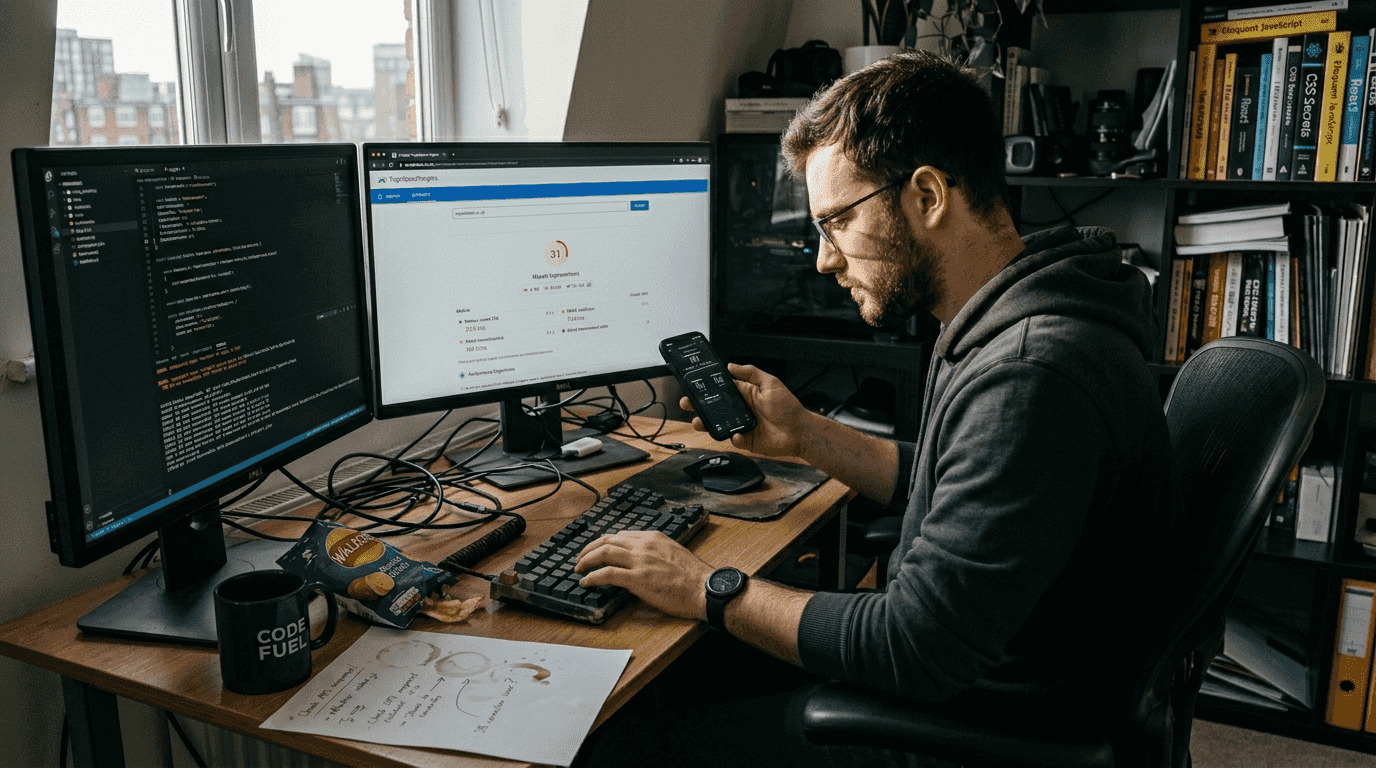
Pro Tip: Use Google Search Console to identify crawl errors and indexing issues for free. This tool provides direct insights from Google about how their systems view your website, highlighting problems requiring immediate attention.
Selecting appropriate SEO tools dramatically impacts your efficiency and results. The market offers countless options, from comprehensive enterprise platforms to focused solutions targeting specific needs. Using top SEO tools saves time and improves strategy application by automating routine tasks and providing actionable insights.
| Tool category | Primary function | Best for |
|---|---|---|
| Keyword research | Identifies search terms and competition levels | Content planning and targeting |
| Technical audit | Scans for site speed and crawl issues | Foundation optimisation |
| Rank tracking | Monitors keyword positions over time | Performance measurement |
| Backlink analysis | Evaluates link profile quality | Authority building |
| Content optimisation | Suggests improvements for on page elements | Content refinement |
Your content strategy requires careful planning before creation begins. Research relevant keywords your target audience actually uses, focusing on terms with reasonable search volume and manageable competition. Understanding user intent behind searches ensures your content answers the questions people are genuinely asking.
Priority preparation steps include:
- Establishing baseline metrics for traffic, rankings, and conversions
- Creating a prioritised list of technical issues requiring fixes
- Developing a keyword targeting strategy aligned with business goals
- Setting up analytics and tracking systems for performance monitoring
- Allocating realistic budgets for tools, content creation, and ongoing optimisation
Businesses that skip preparation often waste resources chasing the wrong keywords or implementing tactics that conflict with their technical limitations. Invest time upfront understanding your current position and defining clear objectives. This groundwork enables focused execution and measurable progress towards your SEO audits for SMEs goals.
Executing effective SEO optimisation steps for your business website
With preparation complete, you’re ready to implement proven optimisation tactics that drive measurable improvements. Successful SEO execution requires systematic attention to on page elements, technical performance, content quality, and local visibility. Each component contributes to your overall search presence, working synergistically to boost rankings and attract qualified traffic.
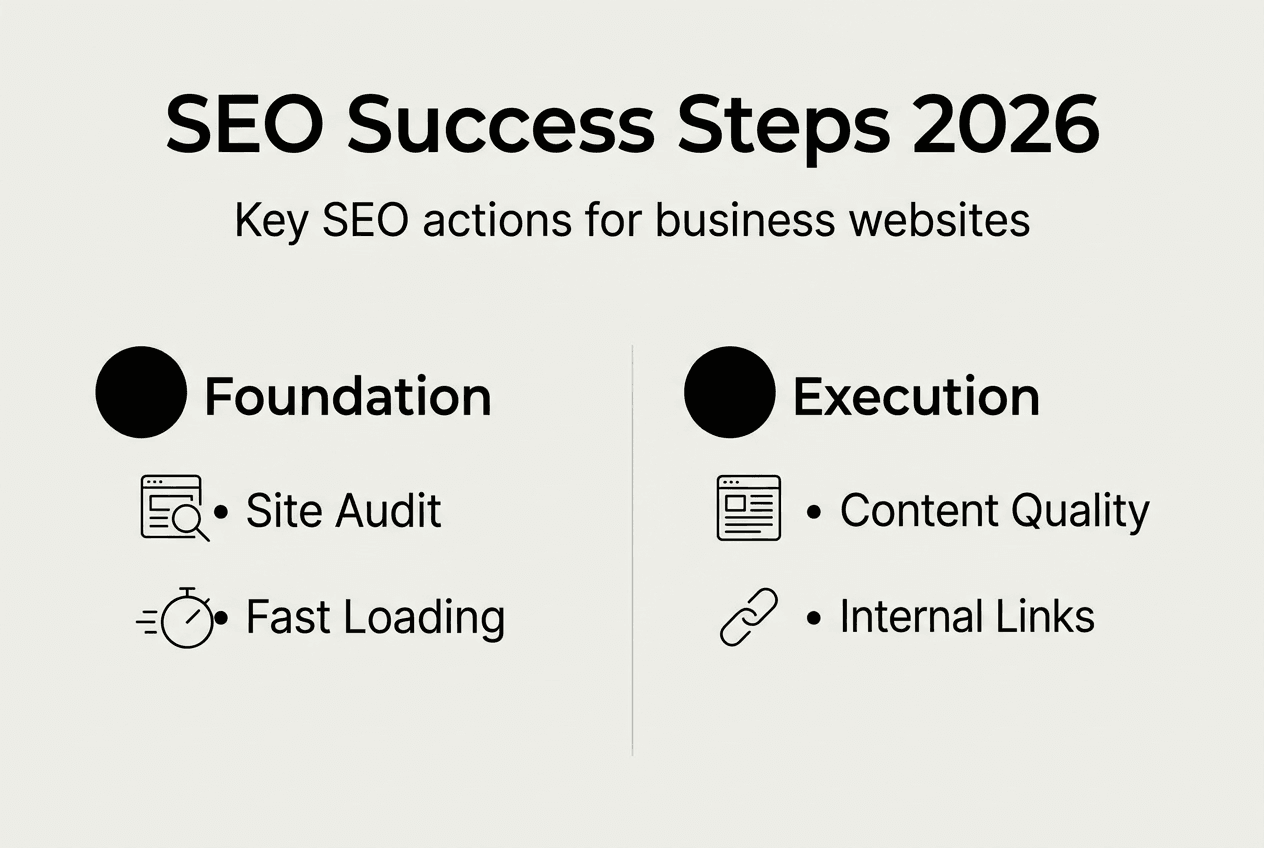
On page optimisation starts with perfecting meta elements that communicate your page content to search engines and users. Your title tags should include target keywords whilst remaining compelling to human readers, staying within the 50 to 60 character sweet spot. Meta descriptions, whilst not direct ranking factors, significantly impact click through rates when crafted to highlight unique value propositions.
Follow these on page optimisation steps:
- Craft unique, keyword rich title tags for every page
- Write compelling meta descriptions that encourage clicks
- Structure content with clear H1, H2, and H3 heading hierarchies
- Optimise URL structures to be short, descriptive, and keyword relevant
- Add descriptive alt text to all images for accessibility and SEO
- Implement schema markup to enhance search result displays
- Ensure internal linking connects related content logically
Technical performance directly impacts both user experience and search rankings. Site speed improvements often deliver the quickest wins, with even small loading time reductions significantly boosting conversion rates. Mobile responsiveness has transitioned from optional to mandatory, with Google’s mobile first indexing prioritising how your site performs on smartphones.
Content creation demands a quality over quantity approach in 2026. Search engines have become remarkably adept at distinguishing genuinely valuable content from keyword stuffed filler. Your articles, guides, and resources should demonstrate expertise whilst addressing specific user needs. Thin content that merely restates common knowledge without adding unique insights will struggle to rank competitively.
Pro Tip: Target long tail keywords with clear commercial intent rather than competing for impossibly competitive short terms. Phrases like “affordable web design for Manchester cafes” attract more qualified leads than generic terms like “web design”.
Local SEO significantly boosts online visibility and customer acquisitions for SMEs by connecting you with nearby searchers actively seeking your services. Claiming and optimising your Google Business Profile represents the single most impactful local SEO action. Complete every profile section, add high quality photos, encourage customer reviews, and respond promptly to all feedback.
Local optimisation tactics include:
- Ensuring NAP (Name, Address, Phone) consistency across all online directories
- Building citations on relevant local business directories
- Creating location specific content targeting local search terms
- Earning backlinks from local organisations and business associations
- Encouraging satisfied customers to leave detailed Google reviews
Internal linking enhances user navigation whilst distributing page authority throughout your website. Link related content using descriptive anchor text that clearly indicates the destination page topic. This practice helps visitors discover relevant information whilst signalling content relationships to search engines. Your guide to SEO strategies should inform your internal linking structure.
Successful execution requires consistency and patience. SEO improvements compound over time, with initial efforts laying groundwork for sustained growth. Monitor your progress regularly, but resist the temptation to constantly change tactics before they’ve had time to demonstrate results. The businesses dominating search results in 2026 are those that committed to systematic, ongoing optimisation rather than seeking quick fixes.
Monitoring, troubleshooting, and avoiding common SEO mistakes in 2026
Implementing SEO tactics represents only half the battle. Sustained success demands vigilant monitoring, prompt troubleshooting, and avoiding pitfalls that sabotage your hard earned progress. Many businesses invest heavily in initial optimisation only to watch rankings decline through neglect or easily preventable mistakes.
Tracking the right metrics provides actionable insights into your SEO performance. Organic traffic volume indicates overall visibility, but drill deeper to understand which pages and keywords drive visitors. Conversion rates reveal whether your traffic consists of qualified prospects or merely casual browsers. Average session duration and bounce rates signal content quality and relevance to user intent.
Key performance indicators to monitor include:
- Organic search traffic trends and sources
- Keyword ranking positions for target terms
- Conversion rates from organic visitors
- Page load speeds and Core Web Vitals scores
- Backlink profile growth and quality
- Local search visibility and map pack appearances
Regular monitoring and audits help maintain SEO performance and identify issues before they escalate into serious problems. Quarterly reviews catch emerging technical issues, content gaps, and competitive threats. Algorithm updates can suddenly shift rankings, requiring prompt analysis and strategic adjustments.
Common SEO mistakes plague even experienced marketers. Keyword stuffing, once an effective tactic, now triggers penalties and damages user experience. Ignoring mobile users alienates the majority of modern searchers, whilst slow loading pages frustrate visitors regardless of content quality. These errors often stem from outdated practices or misguided attempts to manipulate rankings.
| Mistake | Impact | Solution |
|---|---|---|
| Keyword stuffing | Penalties and poor readability | Write naturally, targeting 1 to 2% keyword density |
| Ignoring mobile UX | Lost traffic and ranking penalties | Implement responsive design and test thoroughly |
| Slow page speeds | High bounce rates and ranking drops | Optimise images, enable caching, upgrade hosting |
| Duplicate content | Diluted authority and indexing confusion | Consolidate similar pages, use canonical tags |
| Neglecting updates | Stale content and declining relevance | Refresh top performing content quarterly |
Troubleshooting indexing and crawl errors requires systematic investigation. Google Search Console identifies pages search engines cannot access or properly index. Common culprits include robots.txt restrictions, noindex tags accidentally applied to important pages, and server errors preventing crawler access. Addressing these issues promptly restores visibility and prevents prolonged ranking damage.
Content freshness increasingly influences rankings, particularly for topics where information changes rapidly. Regularly updating your most valuable pages signals ongoing relevance whilst providing opportunities to target new keywords and address evolving user questions. This doesn’t mean constantly rewriting everything, but rather strategically refreshing content that drives significant traffic or conversions.
Maintaining SEO improvements demands ongoing attention through SEO audits for ongoing optimisation. Set quarterly review schedules to assess performance, identify emerging issues, and refine your strategy based on results. The digital landscape evolves constantly, and businesses that adapt proactively maintain competitive advantages over those reacting to problems after rankings have already declined.
Improve your website with expert SEO and web design services
Mastering SEO optimisation requires significant time, expertise, and ongoing commitment. Whilst this guide provides a solid foundation, many business owners find partnering with specialists accelerates results whilst freeing them to focus on core operations. Professional SEO services bring deep technical knowledge, proven strategies, and dedicated resources that individual businesses struggle to maintain internally.

Kickass Online specialises in tailored SEO and web design solutions specifically crafted for small and medium businesses. Our approach combines comprehensive SEO strategies with stunning website design and development that converts visitors into customers. We understand the unique challenges SMEs face, offering personalised attention through our selective client intake model.
Our services include thorough SEO audits that identify immediate opportunities, ongoing optimisation to maintain competitive rankings, and strategic guidance aligned with your business objectives. Whether you need a complete website overhaul or focused improvements to existing assets, our team delivers measurable results that justify your investment. We don’t just improve rankings; we build sustainable online visibility that drives genuine business growth.
Frequently asked questions
What is the most important SEO change for 2026?
The strongest emphasis in 2026 falls on user experience signals, particularly Core Web Vitals measuring page speed, interactivity, and visual stability. Search engines now evaluate how real visitors interact with websites, rewarding those delivering smooth, frustration free experiences. Local SEO has also gained prominence, with search algorithms prioritising businesses demonstrating strong community connections and positive customer relationships.
How often should I perform an SEO audit?
Conduct comprehensive SEO audits quarterly or immediately after major website changes, algorithm updates, or significant ranking fluctuations. Regular audits identify emerging technical issues, content gaps, and competitive threats before they seriously damage your search visibility. Between formal audits, monitor key metrics weekly to catch obvious problems requiring immediate attention.
Which SEO tools are best for small business owners in 2026?
Small businesses benefit most from user friendly, budget conscious tools covering essential functions. Google Search Console and Google Analytics provide free foundational insights into performance and technical health. For keyword research and rank tracking, consider affordable options like Ubersuggest or SE Ranking that deliver professional features without enterprise pricing. The top SEO tools comparison helps identify solutions matching your specific needs and budget constraints.
What are common SEO mistakes to avoid in 2026?
Avoid keyword stuffing, which damages readability and triggers penalties from increasingly sophisticated algorithms. Ensure your website delivers excellent mobile experiences, as mobile first indexing makes smartphone performance critical. Maintain fast page load speeds through image optimisation, efficient coding, and quality hosting. Keep content fresh and relevant by regularly updating your most valuable pages with current information and insights.
Recommended
- Boost Your SEO with These Content Optimisation Tips | Kickass Online
- Step by Step SEO Guide for Boosting Business Rankings | Kickass Online
- SEO Optimization Workflow for Business Growth Success | Kickass Online
- Guide to SEO Strategies: Boost Online Visibility and Drive Organic Traffic | Kickass Online


Book A Discovery Call
Stay Connected