Role of metadata in boosting SMB visibility in 2026

Many small business websites remain invisible to potential customers despite offering excellent services. Optimised meta descriptions increase click-through rates by up to 35%, yet most SMB owners overlook this powerful tool. This guide reveals how metadata transforms your search engine presence and drives measurable traffic growth.
Table of Contents
- Understanding Metadata: What It Is And Why It Matters
- Key Types Of Metadata Every Small Business Should Know
- How Metadata Directly Influences SEO And User Engagement
- Common Mistakes And Misconceptions About Metadata
- Practical Steps For Implementing Effective Metadata Strategies
- Quantifying The Impact: Real Benefits From Metadata Optimisation
- Metadata’s Expanding Role In Digital Marketing Beyond SEO
- Enhance Your Website With Expert Online Solutions
- Frequently Asked Questions
Key takeaways
| Point | Details |
|---|---|
| Metadata drives visibility | Properly optimised metadata improves search rankings and user engagement significantly. |
| Title tags matter most | These elements contribute 40% of SEO impact and directly influence click decisions. |
| Structured data creates advantages | Schema markup generates rich snippets that increase organic traffic by over 20%. |
| Common errors harm results | Keyword stuffing and duplicate metadata trigger penalties and reduce effectiveness. |
| Strategic implementation pays off | Businesses optimising metadata see 15-30% ranking improvements within three months. |
Understanding metadata: what it is and why it matters
Metadata functions as the invisible layer of information describing your website content to search engines and users. Think of it as your site’s introduction before visitors arrive.
Three major types shape your online presence:
- Title tags: The clickable headline appearing in search results and browser tabs
- Meta descriptions: Brief summaries encouraging users to visit your page
- Schema markup: Structured data enabling enhanced search result displays
Search engines rely heavily on metadata to understand page content and relevance. Title tags contribute approximately 40% of SEO result impact for SMB websites. Without proper metadata, algorithms struggle to categorise your content accurately, pushing you lower in rankings.
The importance of SEO for small businesses extends beyond rankings. Metadata influences first impressions, brand perception, and user trust. When potential customers scan search results, your metadata determines whether they choose your business or a competitor.
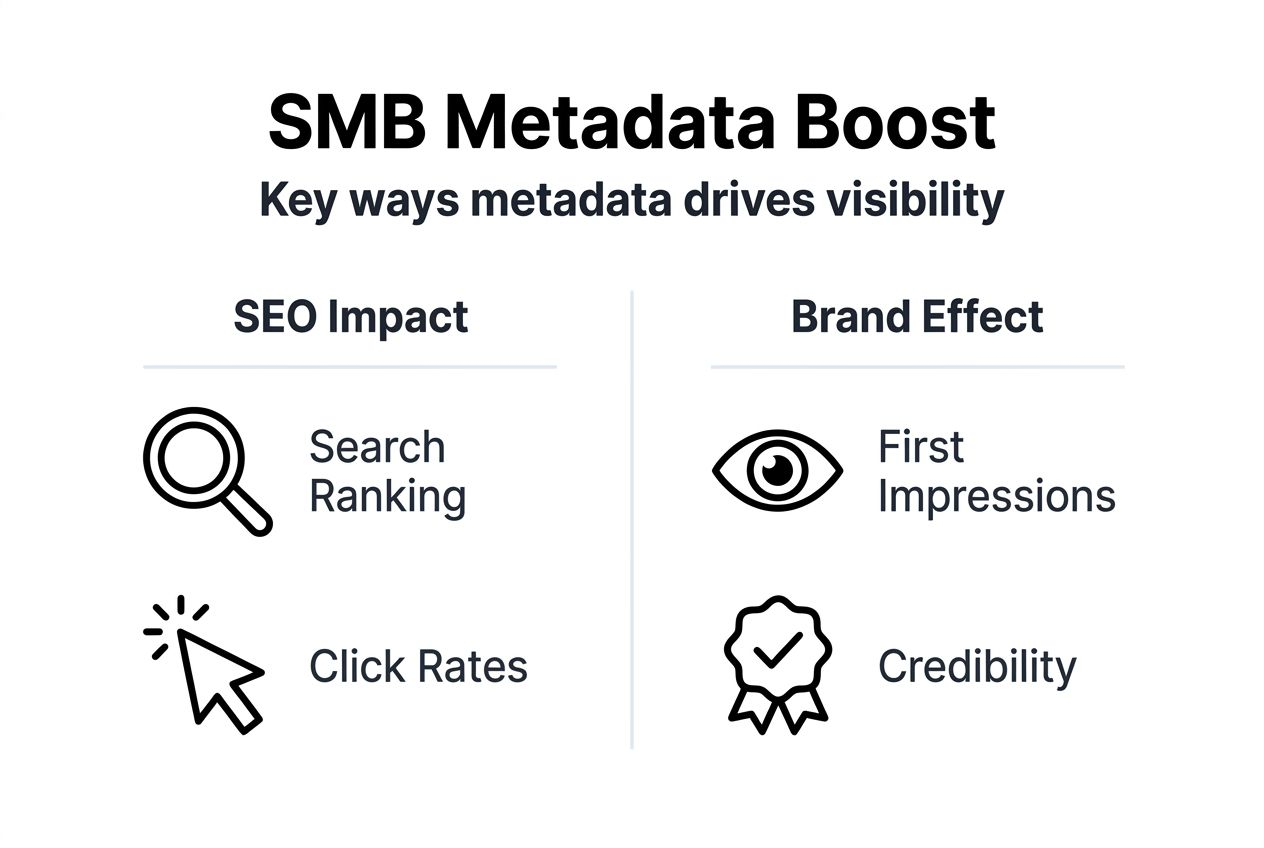
Beyond direct search engine ranking impact, metadata supports broader marketing goals. Social media platforms use Open Graph tags to format link previews. Email marketing tools read metadata for content snippets. Analytics platforms track metadata patterns to measure campaign effectiveness.
Proper metadata implementation creates a foundation for multi-channel visibility. Each optimised element compounds your marketing efforts across platforms, amplifying reach without additional advertising spend.
Key types of metadata every small business should know
Meta titles are the single most important metadata element influencing rankings and clicks. These appear as blue, clickable links in search results and must communicate your page’s value within 50-60 characters.
Meta descriptions serve as your sales pitch in search results. Whilst not direct ranking factors, they dramatically affect whether users click through to your site. Keep descriptions between 150-160 characters, include target keywords naturally, and write compelling copy highlighting unique value.
| Metadata Type | Primary Function | Character Limit | Direct Ranking Impact |
|---|---|---|---|
| Title Tags | Page identifier and main SEO signal | 50-60 characters | High |
| Meta Descriptions | Click encouragement and content summary | 150-160 characters | Indirect |
| Schema Markup | Rich snippet generation | Varies by type | Moderate |
| Open Graph Tags | Social media preview control | Platform specific | None |
Structured data represents the next evolution in metadata. Schema markup tells search engines exactly what your content means, not just what it says. Product pages can display prices and ratings. Local businesses show addresses and opening hours. Events feature dates and ticket links.

Social media metadata controls how links appear when shared. Open Graph tags for Facebook, Twitter Cards for X, and similar tags for LinkedIn ensure your brand presents consistently across platforms. Missing these elements means platforms generate random previews, often selecting inappropriate images or text.
Every webpage requires unique metadata. Duplicating descriptions across multiple pages confuses search engines and wastes opportunities to target different search queries. Treat each page as its own marketing campaign with tailored messaging.
Key considerations for effective image optimisation also apply to metadata. Alt text, image titles, and file names serve as metadata types supporting overall SEO strategy. Combined with proper keyword research for SMBs, these elements create comprehensive visibility frameworks.
How metadata directly influences SEO and user engagement
Search algorithms evaluate hundreds of factors, but meta titles remain among the top signals. Google’s algorithm reads title tags first to determine page relevance for specific queries. Including target keywords near the beginning increases matching likelihood.
Optimised meta descriptions boost click-through rates by up to 35%, translating directly to more website visitors without additional ranking improvements. This metric demonstrates metadata’s power as a conversion tool, not just an SEO element.
Rich snippets from schema markup transform standard search listings into eye-catching displays. Star ratings, price ranges, availability indicators, and featured images make your result stand out in crowded search pages. Implementing structured data improves visibility and can increase organic traffic by over 20% on average for small businesses.
Keyword stuffing represents the fastest route to penalties. Search engines penalise pages cramming excessive keywords into metadata unnaturally. Modern algorithms prioritise user intent over keyword density. Write for humans first, optimise for search engines second.
Consider how users actually search. Voice queries use natural language. Mobile searchers want quick answers. Desktop users may explore detailed comparisons. Effective metadata anticipates these variations and speaks directly to user needs.
Pro tip: Test different meta descriptions for high-traffic pages to identify which messaging drives the best click-through rates, then apply winning patterns across your site.
The connection between search engine ranking benefits and business outcomes becomes clear through metadata optimisation. Higher rankings mean nothing without clicks. Compelling metadata bridges the gap between visibility and actual traffic.
Understanding SEO importance for SMBs requires recognising metadata’s role in competitive differentiation. When you and competitors rank similarly, superior metadata wins the click battle.
Common mistakes and misconceptions about metadata
Many SMB owners believe cramming keywords into every metadata field improves rankings. This outdated tactic now triggers algorithmic penalties, pushing pages lower in results. Search engines detect unnatural keyword patterns and deprioritise offending content.
Duplicate metadata across pages creates internal competition. When multiple pages share identical titles or descriptions, search engines cannot distinguish which page best answers specific queries. This confusion dilutes ranking potential across your site.
- Missing schema markup entirely whilst competitors use rich snippets puts you at immediate disadvantage
- Generic, template-based metadata fails to highlight unique value propositions
- Ignoring character limits causes truncation, cutting off critical messaging
- Neglecting mobile preview formats means poor presentation on majority of searches
Another widespread belief suggests metadata optimisation is a one-time task. Search trends evolve, competitors adjust strategies, and business offerings change. Stale metadata quickly becomes irrelevant, reducing effectiveness over time.
Some business owners think metadata tricks can compensate for poor content quality. Search engines now evaluate page experience holistically. Misleading metadata that doesn’t match actual content results in high bounce rates, signalling low quality to algorithms.
Failing to align metadata with specific page intent wastes opportunities. Homepage metadata should differ dramatically from product pages, blog posts, and contact forms. Each serves distinct purposes requiring targeted messaging.
Pro tip: Schedule quarterly metadata audits to identify duplicates, outdated information, and new optimisation opportunities as your business evolves.
Understanding local SEO for SMEs reveals how metadata mistakes compound for location-based businesses. Missing location indicators in metadata means losing to competitors in “near me” searches.
Leveraging expert SEO strategies for SMBs starts with avoiding fundamental metadata errors that undermine broader optimisation efforts.
Practical steps for implementing effective metadata strategies
-
Conduct a complete metadata audit across all website pages to identify missing, duplicate, or poorly optimised elements using free tools like Screaming Frog or SEMrush.
-
Research target keywords for each page type, focusing on terms your ideal customers actually use when searching for your products or services.
-
Create unique title tags incorporating primary keywords near the beginning whilst maintaining natural readability and staying within 50-60 characters.
-
Write compelling meta descriptions that summarise page value, include secondary keywords naturally, and feature clear calls to action within 150-160 characters.
-
Implement appropriate schema markup for your business type, whether local business, product, article, event, or service schemas using Google’s Structured Data Markup Helper.
-
Add social media metadata including Open Graph tags and Twitter Cards to control how links display when shared across platforms.
-
Test metadata appearance using Google’s Rich Results Test and preview tools to verify proper formatting before publishing.
-
Monitor performance metrics including click-through rates, impressions, and average positions through Google Search Console to identify improvement opportunities.
-
Update metadata quarterly or whenever significant business changes occur, ensuring alignment with current offerings and market positioning.
-
Document your metadata strategy including keyword mappings and optimisation decisions to maintain consistency as your site grows.
Most content management systems and website builders include built-in metadata fields. WordPress users benefit from plugins like Yoast SEO or Rank Math providing guided optimisation. Shopify and Wix offer native metadata management within their interfaces.
Prioritise high-traffic and high-value pages first. Homepage, primary service pages, and top-performing blog posts deliver the biggest impact from metadata improvements. Expand optimisation to supporting pages once foundations are solid.
Following comprehensive SEO strategies guide approaches ensures metadata improvements integrate with broader visibility efforts. Regular SEO audits for SMEs catch metadata issues before they significantly impact performance.
Quantifying the impact: real benefits from metadata optimisation
Businesses optimising metadata see 15-30% higher search rankings within three months compared to those neglecting these elements. This improvement translates directly to increased visibility for high-value search terms.
Click-through rate improvements often exceed ranking gains. Pages moving from position five to four see average 2% CTR increases. Adding compelling metadata to a page holding position four can boost CTR by 5-10% without ranking changes.
| Optimisation Type | Average Ranking Improvement | Traffic Increase | Implementation Time |
|---|---|---|---|
| Title Tag Optimisation | 8-15 positions | 25-40% | 1-2 weeks |
| Meta Description Updates | No direct impact | 15-35% CTR boost | 1-2 weeks |
| Schema Markup Implementation | 3-8 positions | 20-30% | 2-4 weeks |
| Complete Metadata Overhaul | 15-30 positions | 50-80% | 4-8 weeks |
Rich snippet implementation through schema markup generates the most dramatic visual improvements. Product stars, pricing displays, and availability indicators create professional, trustworthy impressions that generic listings cannot match.
“Metadata optimisation represents the highest ROI activity in technical SEO. Small investments in time yield disproportionate returns through improved visibility and click-through performance across entire websites.” — Search Engine Journal
Conversion rate improvements follow traffic increases. When metadata accurately sets expectations, visitors arriving at your site find exactly what they sought. This alignment reduces bounce rates and increases engagement metrics, further signalling quality to search algorithms.
Local businesses implementing location-specific metadata see particularly strong results. Adding city names, service areas, and local schema markup helps dominate geographic searches where competition is less intense than national queries.
The connection between metadata improvements and boosting SMB visibility becomes measurable through analytics. Tracking specific pages before and after optimisation reveals direct cause-and-effect relationships.
Applying principles from comprehensive SEO strategies guide resources ensures metadata work supports broader business objectives rather than existing in isolation.
Metadata’s expanding role in digital marketing beyond SEO
Modern marketing automation platforms read metadata to categorise and distribute content efficiently. Email marketing systems extract meta descriptions for preview text. Social schedulers pull Open Graph data for post formatting. CRM tools use metadata tags for lead scoring and segmentation.
Content organisation relies heavily on metadata frameworks. Internal tagging systems built on metadata principles help marketing teams locate relevant assets quickly. Campaign tracking incorporates metadata markers for attribution analysis.
Personalisation engines use metadata signals to deliver relevant content experiences. When metadata accurately describes page intent and audience, systems can match users with appropriate content automatically. This capability scales personalisation beyond manual segmentation.
- Metadata enables programmatic advertising platforms to target contextually relevant placements
- Analytics tools aggregate metadata patterns to reveal content performance trends
- A/B testing platforms use metadata variants to optimise messaging systematically
- Content distribution networks rely on metadata for proper caching and delivery
Rich snippets and enhanced search features build immediate credibility. Users perceive businesses with professional, detailed search listings as more established and trustworthy than competitors with basic text results. This perception influences click decisions before users even visit your site.
Omnichannel marketing strategies require consistent metadata across touchpoints. When product information, availability, and messaging align from search results through social media to email campaigns, customer journeys feel cohesive. Inconsistent metadata creates friction and confusion.
Voice search increasingly depends on structured metadata. Smart assistants pull answers from schema markup rather than unstructured text. Businesses optimising for voice queries prioritise schema implementation to appear in featured snippets and direct answers.
Understanding digital marketing strategies for SMEs reveals metadata’s central role in modern integrated approaches. Examining digital marketing impact on consumers shows how metadata shapes initial brand impressions across channels.
Enhance your website with expert online solutions
Transforming your website’s metadata from afterthought to competitive advantage requires strategic planning and ongoing optimisation. Whilst the fundamentals are accessible, maximising results benefits from professional expertise.
Our SEO audits for SMEs identify immediate metadata improvements alongside broader technical optimisation opportunities. We analyse your current metadata against competitor benchmarks and search intent patterns to create actionable improvement roadmaps.
Explore our comprehensive SEO strategies guide for integrated approaches combining metadata optimisation with content development, link building, and technical enhancements. Our website design services build metadata best practices into site architecture from launch, ensuring every page starts with solid SEO foundations rather than requiring retrospective fixes.
Frequently asked questions
What is metadata and why is it important for my small business website?
Metadata comprises information describing your website content to search engines and users, improving how algorithms understand and rank your pages. For small businesses competing online, effective metadata enhances visibility, increases click-through rates, and drives qualified traffic without requiring large advertising budgets.
How often should I update the metadata on my website?
Review and update metadata at least quarterly, or whenever you modify site content, launch new products, or adjust business positioning. Regular updates maintain alignment with evolving search algorithms and market trends. High-priority pages warrant monthly monitoring to capitalise on performance opportunities quickly.
Can I optimise metadata myself without technical skills?
Most modern content management systems include user-friendly metadata fields requiring no coding knowledge. WordPress plugins like Yoast SEO provide guided optimisation with real-time feedback. Following clear instructions and applying basic keyword research principles enables effective self-management for straightforward implementations.
What are the risks of not optimising metadata for my website?
Neglecting metadata causes poor search rankings, reduced visibility, and lower click-through rates compared to optimised competitors. Your website may attract fewer visitors despite offering superior products or services. Missing opportunities for rich snippets and enhanced listings further disadvantages your business in crowded search results, ultimately limiting growth potential and customer acquisition.
Recommended
- Unlock SEO growth with effective image optimisation in 2026 | Kickass Online
- Boost Online Visibility in 2026: 70% More Local Reach | Kickass Online
- Effective Local SEO Strategies for SMEs: Boost Visibility and Dominate Your Market | Kickass Online
- Keyword Research: Boosting SME Visibility Online | Kickass Online


Book A Discovery Call
Stay Connected