
Website Hosting Explained: Key Choices for SMEs

Many british small businesses in Milton Keynes lose sales every year because customers abandon slow or unreliable websites. Securing trustworthy website hosting is critical for digital growth, yet myths and confusion often cloud the core concepts behind this service. This article breaks down the essentials and exposes common misconceptions, guiding you toward the hosting solutions that genuinely protect your reputation and drive results.
Table of Contents
- Website Hosting Defined: Core Concepts And Myths
- Key Types Of Website Hosting Compared
- How Website Hosting Works For Businesses
- Costs, Risks, And Security Implications
- Choosing Reliable Hosting For Business Growth
Key Takeaways
| Point | Details |
|---|---|
| Understanding Hosting Types | Recognise the differences between hosting types like Shared, VPS, Dedicated, and Cloud to select the appropriate solution for your business needs. |
| Importance of Security | Implement robust security measures and allocate a budget for cybersecurity to protect your digital assets and ensure business continuity. |
| Performance Metrics Matter | Prioritise hosting providers with high uptime guarantees and responsive support to enhance website performance and customer experience. |
| Regular Reviews Necessary | Conduct quarterly reviews of your website hosting performance and security protocols to adapt to evolving technological requirements and mitigate risks. |
Website Hosting Defined: Core Concepts And Myths
Web hosting represents the fundamental infrastructure enabling businesses to establish a digital presence. At its core, hosting is the service that transforms static website files into a live, accessible online experience. Web hosting services provide physical or virtual servers that store and deliver website content to visitors worldwide.
Understanding web hosting requires recognising the critical technical components involved. Hosting servers differ dramatically from standard computers by prioritising continuous operation and stability. These specialised machines typically run robust Linux-based systems designed to maintain 24/7 website availability. The hosting process involves multiple technical steps: domain registration, server configuration, file uploading, and precise DNS management. Each element plays a crucial role in ensuring your website remains accessible, secure, and performant.
Multiple hosting types exist to accommodate diverse business requirements. Shared hosting represents the entry-level option, where multiple websites share server resources. Virtual Private Servers (VPS) offer more dedicated resources and greater control. Dedicated servers provide complete server allocation for businesses with high-traffic or complex websites. Cloud hosting emerged as a flexible alternative, enabling scalable resource allocation based on real-time demand. Businesses must carefully evaluate their specific needs, anticipated website traffic, and technical infrastructure requirements when selecting an appropriate hosting solution.
Pro tip: Always conduct thorough performance testing and have a backup hosting plan to ensure minimal downtime and optimal website reliability.
Key Types Of Website Hosting Compared
Navigating website hosting options can feel overwhelming for small businesses seeking the right digital infrastructure. Web hosting types range from basic shared platforms to sophisticated cloud solutions, each designed to meet specific performance and budgetary requirements. Understanding these options allows business owners to make informed decisions that align with their online strategy and growth objectives.
The primary hosting categories offer distinct advantages and limitations. Shared hosting represents the most economical option, where multiple websites occupy the same server resources. This approach works well for small businesses with limited traffic and basic website needs. Virtual Private Servers (VPS) provide a more robust intermediate solution, offering dedicated resources and enhanced performance without the full expense of a dedicated server. Businesses experiencing consistent growth often transition to VPS hosting to gain more control and reliability.

Dedicated hosting delivers the highest level of performance and customisation, providing an entire server exclusively for one organisation’s website. This option suits high-traffic websites, complex web applications, and enterprises requiring maximum security and control. Cloud hosting has emerged as a flexible alternative, distributing website resources across multiple interconnected servers. This approach enables dynamic scaling, improved uptime, and resilience against individual server failures. Small businesses benefit from cloud hosting’s ability to adjust resources rapidly in response to traffic fluctuations.
Here is a comparison of key website hosting types and their typical business use cases:
| Hosting Type | Ideal Business Size | Key Benefit | Main Limitation |
|---|---|---|---|
| Shared Hosting | Start-ups, micros | Lowest cost entry | Resource contention risk |
| VPS Hosting | Growing small firms | Dedicated resource share | Limited scalability |
| Dedicated Server | Large, high-traffic | Complete server control | Highest operational cost |
| Cloud Hosting | Any, scalable | Flexible, real-time scale | Complex configuration needed |
Pro tip: Conduct a thorough assessment of your current website traffic, anticipated growth, and technical requirements before selecting a hosting solution to ensure optimal performance and cost-effectiveness.
How Website Hosting Works For Businesses
Website hosting serves as the digital foundation for modern businesses, enabling them to establish a robust online presence. Hosting providers offer scalable storage and technical infrastructure that transforms static website files into interactive, accessible digital experiences. This critical service allows businesses to publish websites, making their digital content available to customers worldwide through specialised server technologies.
The technical mechanics of website hosting involve complex data transmission processes. When a potential customer enters a business website address, their web browser sends a request to the hosting server. Server technologies then retrieve the specific website files, process them, and transmit the content back to the user’s device. These interactions happen in milliseconds, creating a seamless browsing experience. Different hosting environments provide varying levels of performance, security, and resource allocation, allowing businesses to select solutions matching their specific operational requirements.
Web hosting infrastructure supports business continuity and digital accessibility through sophisticated technical frameworks. Modern hosting solutions incorporate advanced security protocols, automated backup systems, and performance monitoring tools. Businesses can choose from shared, virtual private, dedicated, or cloud-based hosting models, each offering unique advantages in terms of cost, control, and scalability. The right hosting solution ensures websites remain available, responsive, and protected against potential technical disruptions or cybersecurity threats.
Pro tip: Regularly review your website hosting performance metrics and conduct periodic security audits to ensure your digital infrastructure continues meeting your business’s evolving technological needs.
Costs, Risks, And Security Implications
Navigating the complex landscape of website hosting requires a comprehensive understanding of potential financial and security challenges. Cybersecurity risks represent a significant consideration for businesses selecting hosting solutions, with potential consequences extending far beyond immediate technical disruptions. Small businesses must carefully evaluate hosting options that balance cost-effectiveness with robust security measures to protect their digital assets and customer data.
Transmission protocols play a critical role in mitigating online vulnerabilities. Businesses must prioritise secure HTTPS connections, implement robust authentication mechanisms, and conduct regular vulnerability assessments. The financial implications of potential data breaches can be substantial, potentially involving direct monetary losses, regulatory penalties, and long-term reputational damage. Hosting costs vary dramatically based on security features, with more comprehensive protection packages demanding higher investment but offering significantly reduced risk exposure.
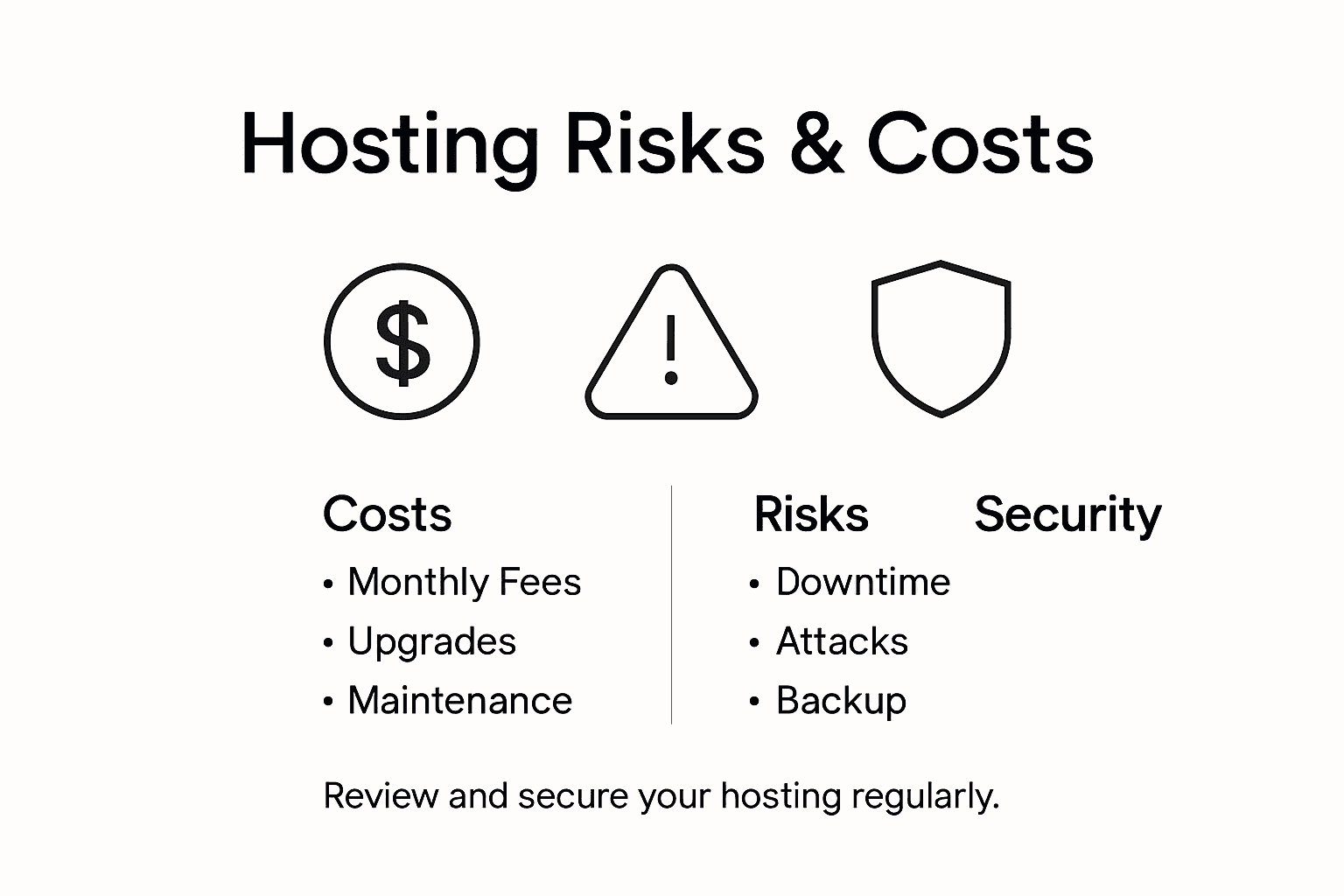
The NIST Cybersecurity Framework provides a structured approach to managing digital security risks, emphasising five core functions: identify, protect, detect, respond, and recover. Small businesses should view cybersecurity not as an optional expense, but as a critical investment in their digital infrastructure. Implementing proactive security measures, such as regular software updates, comprehensive backup systems, and continuous monitoring, can significantly reduce potential financial and operational risks associated with website hosting.
Pro tip: Allocate at least 10% of your hosting budget specifically for security measures and conduct quarterly comprehensive security audits to stay ahead of emerging digital threats.
Choosing Reliable Hosting For Business Growth
Selecting a reliable hosting provider represents a critical strategic decision for businesses seeking sustainable digital growth. The right hosting solution acts as the technological backbone supporting a company’s online presence, directly influencing website performance, customer experience, and ultimately, business credibility. Small businesses must carefully evaluate hosting options that provide robust infrastructure, scalability, and comprehensive support tailored to their evolving digital requirements.
Performance metrics play a crucial role in hosting selection. Businesses should prioritise providers offering high uptime guarantees, sufficient bandwidth, and flexible resource allocation. Critical evaluation criteria include server response times, ability to handle traffic fluctuations, integrated security features like SSL certificates, and responsive technical support. Scalability emerges as a key consideration, ensuring that hosting solutions can seamlessly accommodate business growth without requiring disruptive platform migrations or significant infrastructure redesigns.
The best hosting services balance affordability with advanced technological capabilities, recognising that digital infrastructure is an investment, not merely an expense. Comprehensive hosting packages should include tools for website management, robust security protocols, regular automated backups, and seamless integration with popular content management systems. Small businesses benefit from providers offering transparent pricing models, clear upgrade pathways, and proactive monitoring that allows entrepreneurs to focus on core business objectives rather than technical infrastructure management.
Below is a summary of fundamental performance and security factors impacting hosting decisions:
| Critical Factor | Business Impact | Consideration Example |
|---|---|---|
| Uptime Guarantee | Minimises customer disruption | 99.9% or higher preferred |
| Data Backup System | Safeguards against data loss | Daily or weekly backups |
| SSL Certificate | Secures sensitive information | HTTPS for e-commerce sites |
| Technical Support | Reduces lengthy downtime | 24/7 live chat assistance |
Pro tip: Schedule quarterly reviews of your hosting performance metrics and maintain an ongoing dialogue with your hosting provider to ensure your digital infrastructure continues meeting your business’s evolving technological requirements.
Secure Your Business Growth With Expert Website Hosting Solutions
Choosing the right website hosting is a crucial step for small and medium enterprises aiming to build a strong online presence. This article highlights key challenges such as balancing cost, scalability, security and performance to avoid downtime and costly disruptions. If you want to eliminate technical stress and ensure your website runs smoothly with tailored hosting and ongoing support, Kickass Online specialises in creating personalised, high-converting websites with expert SEO optimisation and robust security measures.

Discover how our team of digital specialists can streamline your website hosting and maintenance needs while helping you focus on growing your business. Don’t wait until hosting issues impact your customers experience. Visit Kickass Online now to book a consultation and secure a hosting partner aligned with your unique goals and challenges. Get the dedicated attention your website deserves for lasting online success.
Frequently Asked Questions
What is web hosting, and why is it essential for SMEs?
Web hosting is a service that allows businesses to store their website files on servers, making their content accessible online. It’s essential for SMEs to establish a digital presence and ensure their websites are operational 24/7.
What are the different types of web hosting available for businesses?
The main types of web hosting include shared hosting, Virtual Private Servers (VPS), dedicated servers, and cloud hosting. Each type caters to different business needs, with varying levels of performance, resources, and costs.
How should SMEs choose the right web hosting provider?
SMEs should evaluate hosting providers based on performance metrics, such as uptime guarantees and load times, as well as scalability, security features, and customer support to ensure their chosen solution meets their evolving needs.
What security measures should businesses consider when selecting a hosting solution?
Businesses should prioritise hosting solutions that offer secure HTTPS connections, regular software updates, comprehensive backup systems, and proactive monitoring to safeguard against potential data breaches and cyber threats.
Recommended


Book A Discovery Call
Stay Connected