
More than 80 percent of businesses now consider digital marketing crucial for their growth. Today, building a strong online presence goes far beyond running ads or posting on social media. Many still believe digital marketing is simply about being visible online, but the reality involves targeted strategies, in-depth analysis, and real connections with customers. Unpacking the facts helps you understand why digital marketing is an essential force shaping successful brands in every industry.
Table of Contents
- Defining Digital Marketing And Common Misconceptions
- Core Digital Marketing Channels Explained
- Strategic Benefits For Modern Businesses
- Measuring Roi And Tracking Performance Effectively
- Comparing Digital With Traditional Marketing Methods
Key Takeaways
| Point | Details |
|---|---|
| Digital Marketing is Essential | Beyond social media posts and ads, it’s a critical strategy that builds connections and drives measurable results. |
| Diverse Digital Channels | Effective digital marketing includes SEM, social media, and PPC, allowing for precise targeting and enhanced engagement. |
| Cost Efficiency and Data Utilisation | Digital marketing offers lower costs and insights for better decision-making on customer behaviour and market trends. |
| Real-Time Performance Measurement | Continuous tracking of KPIs enables businesses to optimise strategies and demonstrate clear ROI from marketing efforts. |
Defining Digital Marketing and Common Misconceptions
Digital marketing represents the strategic promotion of products, services, and brands using digital channels and technologies. According to journalofbusiness.org, digital marketing represents a profound transformation from traditional marketing methods, leveraging information technology to reach and engage potential customers through online platforms.
Contrary to popular belief, digital marketing is far more nuanced than simply posting content on social media or running a few online advertisements. It encompasses a comprehensive approach that involves:
- Strategic content creation
- Targeted audience engagement
- Data-driven performance analysis
- Continuous optimisation of marketing efforts
Many businesses mistakenly view digital marketing as an optional add-on rather than a critical business strategy. This misconception can lead to missed opportunities and ineffective online presence. Digital marketing isn’t just about being present online it’s about creating meaningful connections, understanding customer behaviour, and delivering value through precisely targeted digital experiences.
Core Digital Marketing Channels Explained
Digital marketing encompasses a diverse range of online channels that enable businesses to connect with potential customers effectively. According to journalofbusiness.org, these channels include search engine marketing (SEM), social media marketing, and pay-per-click (PPC) advertising, each offering unique opportunities for enhancing online presence and engagement.
Search Engine Marketing (SEM) represents a critical digital channel that helps businesses increase visibility through strategic online advertising. This approach includes two primary strategies:
- Organic Search Engine Optimisation (SEO)
- Paid Search Advertising
Social media platforms have revolutionized how businesses interact with their target audiences. Social Media Marketing allows companies to:
- Build brand awareness
- Engage directly with customers
- Create targeted advertising campaigns
- Generate user-generated content
- Provide real-time customer support
Pay-Per-Click (PPC) Advertising offers another powerful digital marketing channel, enabling businesses to display targeted ads across search engines and social media platforms. This method allows precise audience targeting and provides immediate visibility, with advertisers only paying when potential customers click on their advertisements.
Discover more about leveraging multi-channel marketing strategies for your business.
Strategic Benefits for Modern Businesses
Digital marketing offers transformative advantages for businesses seeking to thrive in the contemporary competitive landscape. According to journalofbusiness.org, digital strategies provide enhanced customer engagement, improved brand visibility, and the critical ability to track and measure campaign effectiveness.
Cost-Effective Marketing represents a significant strategic benefit for modern businesses. Unlike traditional marketing channels, digital platforms enable precise targeting and budget optimisation:
- Lower overall marketing expenditure
- Granular audience targeting
- Real-time performance tracking
- Flexible budget allocation
- Immediate campaign adjustments
Data-Driven Decision Making emerges as another crucial advantage. Digital marketing generates comprehensive insights that allow businesses to:
- Understand customer behaviour
- Predict market trends
- Personalise marketing approaches
- Identify potential growth opportunities
- Measure return on investment with unprecedented accuracy
The scalability of digital marketing ensures that businesses of all sizes can leverage these powerful strategies. Whether you’re a small local enterprise or a growing medium-sized company, digital channels provide flexible, measurable, and efficient ways to connect with your target audience.
Discover how digital marketing can specifically help your small business grow.
Measuring ROI and Tracking Performance Effectively
Tracking digital marketing performance is essential for businesses seeking to optimise their online strategies. According to journalofbusiness.org, continuous monitoring and analysis of key performance indicators (KPIs) plays a crucial role in improving marketing outcomes and understanding campaign effectiveness.
Key Performance Indicators (KPIs) provide the foundation for measuring digital marketing success. The most critical metrics businesses should track include:
- Click-through rates (CTR)
- Cost per acquisition (CPA)
- Conversion rates
- Return on ad spend (ROAS)
- Customer lifetime value
- Website traffic
- Engagement rates
Effective ROI Calculation requires a systematic approach to evaluating marketing investments. This involves comparing the financial investment in digital marketing campaigns against the revenue generated, enabling businesses to:
- Identify most profitable marketing channels
- Allocate budgets more strategically
- Eliminate underperforming marketing initiatives
- Predict future marketing investments
- Demonstrate tangible business value
Modern digital marketing tools and analytics platforms have simplified performance tracking, providing real-time insights and comprehensive dashboards that transform raw data into actionable intelligence. By consistently monitoring these metrics, businesses can make data-driven decisions that continuously improve their marketing effectiveness.

Learn more about calculating ROI for your digital marketing campaigns.
Comparing Digital With Traditional Marketing Methods
The marketing landscape has dramatically transformed with the emergence of digital platforms, offering businesses more sophisticated approaches to reaching potential customers. According to bemsreports.org, digital marketing provides remarkable flexibility and broader reach compared to traditional marketing’s broad but less targeted methodologies.
Traditional Marketing Methods typically encompass:
- Print advertisements
- Television commercials
- Radio broadcasts
- Direct mail campaigns
- Billboard advertising
In contrast, Digital Marketing Approaches offer:
- Precise audience targeting
- Real-time performance tracking
- Interactive engagement
- Lower cost per acquisition
- Immediate campaign adjustments
Research from jsr.org reveals that digital marketing strategies frequently demonstrate superior return on investment (ROI) due to their targeted nature and cost-efficient mechanisms.
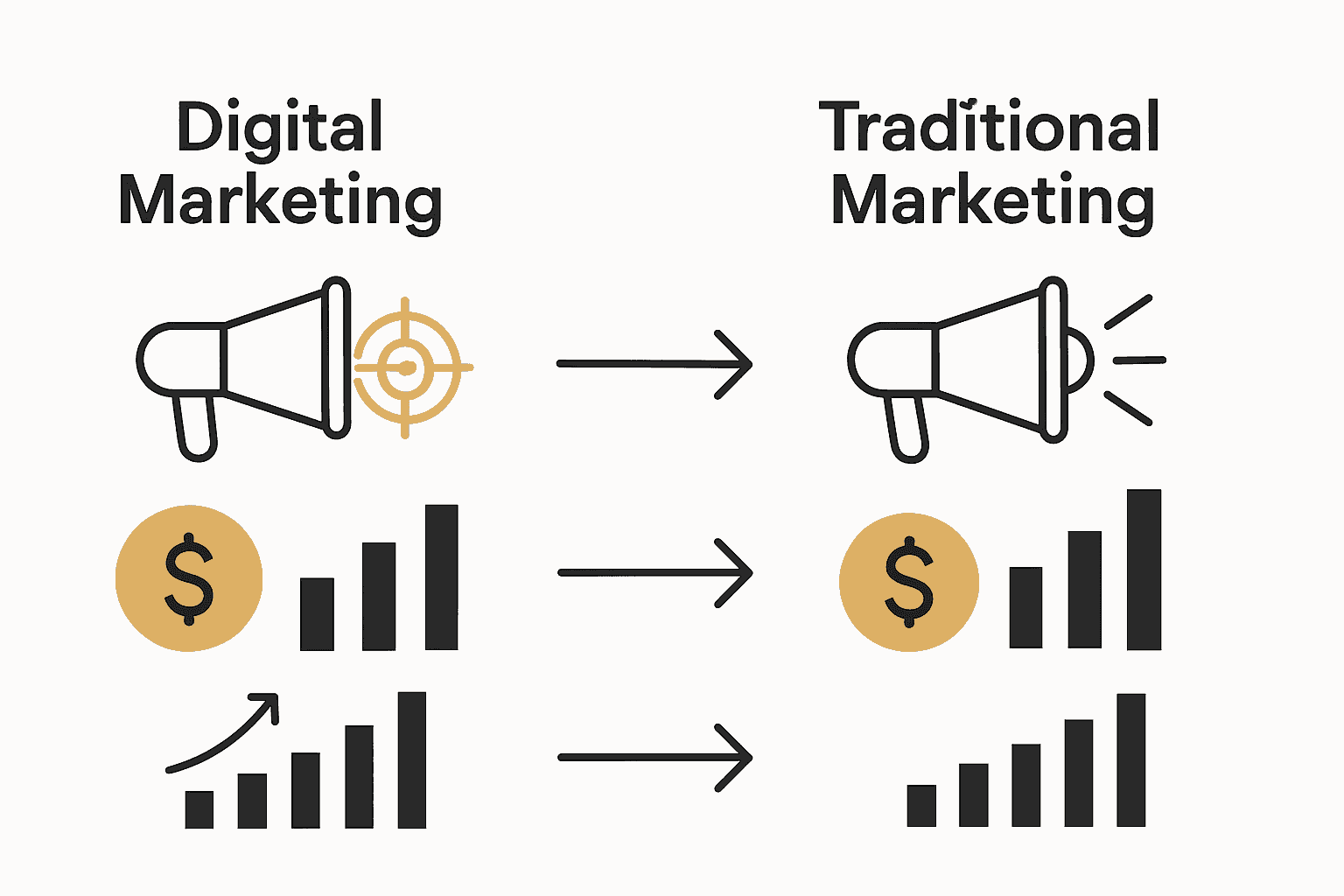 The ability to track, measure, and quickly adapt digital campaigns provides businesses with unprecedented marketing intelligence and strategic flexibility.
Here’s a comparison of digital marketing and traditional marketing methods:
| Feature | Digital Marketing | Traditional Marketing |
|---|---|---|
| Audience Targeting | Highly precise | Broad, less targeted |
| Cost per Acquisition | Lower | Higher |
| Performance Tracking | Real-time, data-driven | Delayed, limited insights |
| Engagement | Interactive, two-way communication | One-way communication |
| Adjustability of Campaigns | Immediate adjustments | Slow, costly changes |
| Geographic Reach | Global and local | Mainly local/regional (expensive for global) |
| ROI Measurement | Detailed, accurate | Difficult, often approximate |
Explore the comprehensive differences between digital and traditional marketing approaches.
Unlock Your Business Growth with Expert Digital Marketing Solutions
If you have read “Why Invest in Digital Marketing: Complete Guide” you already understand the importance of strategic content creation and precise audience targeting to boost your online presence. Many businesses struggle with optimising budget allocation and measuring real-time performance, leading to missed opportunities and ineffective campaigns. At Kickass Online, we specialise in solving these exact challenges through personalised web development, SEO optimisation, and dedicated ongoing website maintenance designed specifically for small and medium enterprises.
Benefit from dedicated attention and proven strategies:
- High-converting websites tailored to your brand
- Enhanced search engine rankings that drive targeted traffic
- Secure, well-maintained platforms supporting your growth
Explore our expert recommendations to start making informed decisions today.

Step confidently into the future of digital marketing with Kickass Online. Visit our main site at Kickass Online and discover personalised strategies backed by a team committed to your success. For practical advice and insider tips, see our Tips and Tricks to keep your digital marketing efforts sharp and effective. Don’t wait until your competitors do, take control of your online growth now.
Frequently Asked Questions
What is digital marketing?
Digital marketing refers to the strategic promotion of products, services, and brands using various digital channels and technologies to reach and engage potential customers online.
How does digital marketing differ from traditional marketing?
Digital marketing offers precise audience targeting, real-time performance tracking, and interactive engagement, while traditional marketing methods typically have broader but less targeted approaches, often with delayed insights and a higher cost per acquisition.
What are the key performance indicators (KPIs) for measuring success in digital marketing?
Key performance indicators for digital marketing include click-through rates (CTR), conversion rates, cost per acquisition (CPA), return on ad spend (ROAS), customer lifetime value, and website traffic.
Why is data-driven decision making important in digital marketing?
Data-driven decision making allows businesses to understand customer behaviour, predict market trends, and personalise marketing strategies effectively, leading to improved campaign effectiveness and measurable return on investment.
Recommended
- Complete Guide to the Role of Digital Marketing | Kickass Online
- How to Get Started With Digital Marketing | Kickass Online
- How Can Digital Marketing Help A Small Business? | Kickass Online
- Digital Marketing vs Traditional Marketing | Kickass Online
- 7 Common Pitfalls in Digital Marketing and How to Avoid Them