What Is Marketing Automation and Why It Matters

Over 75 percent of British companies now rely on marketing automation to drive growth and streamline customer engagement. In an environment where competition intensifies daily, businesses across the United Kingdom seek smarter ways to reach audiences and reduce repetitive tasks. Understanding what marketing automation really means and how it delivers measurable value is now essential for any British organisation aiming for sustained success.
Table of Contents
- Defining Marketing Automation For Business Growth
- Core Features And Benefits Explained
- Popular Marketing Automation Tools And Use Cases
- Key Challenges And Common Misconceptions
- Mistakes To Avoid For Small Businesses
Key Takeaways
| Point | Details |
|---|---|
| Marketing Automation Transforms Engagement | It streamlines complex marketing processes, allowing businesses to automate up to 70% of tasks while enhancing customer interactions. |
| Enhanced Data-Driven Strategies | Utilising advanced segmentation and campaign management tools leads to highly personalised marketing campaigns that resonate with customer behaviours. |
| Integration and Flexibility | Modern marketing automation platforms integrate with CRM systems, offering scalable solutions for businesses of all sizes without sacrificing the human element. |
| Avoid Common Pitfalls | Small businesses should steer clear of overcomplicated workflows and generic communications to ensure impactful marketing automation efforts. |
Defining Marketing Automation for Business Growth
Marketing automation is a powerful technological strategy that transforms how businesses approach customer engagement and operational efficiency. At its core, marketing automation represents sophisticated software designed to streamline complex marketing processes, enabling companies to automate 70% of business tasks with remarkable precision and strategic insight.
According to key industry research, marketing automation is a category of software that fundamentally changes how organisations manage customer interactions. By leveraging advanced segmentation and campaign management tools, businesses can create highly targeted, data-driven marketing campaigns that respond dynamically to customer behaviours and preferences. These sophisticated systems allow companies to orchestrate complex marketing workflows automatically, reducing manual effort while simultaneously increasing personalisation and engagement.
The practical benefits of marketing automation extend far beyond simple task reduction. Modern marketing automation platforms enable businesses to:
- Capture and analyse detailed customer interaction data
- Create personalised communication journeys
- Segment audiences with unprecedented granularity
- Measure campaign performance in real-time
- Integrate multiple marketing channels seamlessly
By implementing strategic marketing automation, organisations can transform their approach to customer relationship management, turning potential interactions into measurable revenue opportunities while maintaining a human touch in an increasingly digital marketplace.
Core Features and Benefits Explained
Marketing automation delivers transformative capabilities that go far beyond simple task management. Strategic automation enables businesses to build comprehensive online presence through intelligent, data-driven marketing approaches that streamline complex customer engagement processes.
By implementing advanced marketing technologies, organisations can unlock significant operational advantages. Research indicates that marketing automation enhances efficiency by creating sophisticated, personalised customer journeys that adapt in real-time. The core benefits include precise audience segmentation, dynamic content personalisation, and seamless multi-channel communication strategies that dramatically improve engagement rates.
The key features of modern marketing automation platforms encompass several critical capabilities:
- Intelligent Lead Scoring: Automatically rank and prioritise potential customer interactions
- Behavioural Tracking: Monitor and analyse customer engagement across digital touchpoints
- Personalised Messaging: Generate contextually relevant communications tailored to individual user profiles
- Campaign Performance Analytics: Provide granular insights into marketing effectiveness
- Workflow Automation: Streamline repetitive marketing tasks with minimal manual intervention
These advanced features enable businesses to transform raw customer data into strategic insights, creating more meaningful and profitable marketing interactions while reducing operational complexity and increasing overall marketing efficiency.

Popular Marketing Automation Tools and Use Cases
Modern businesses increasingly rely on sophisticated email marketing strategies to streamline their digital communication efforts. Marketing automation platforms have evolved to provide comprehensive solutions that integrate seamlessly across various business functions, enabling organisations to manage complex customer interactions with unprecedented precision.
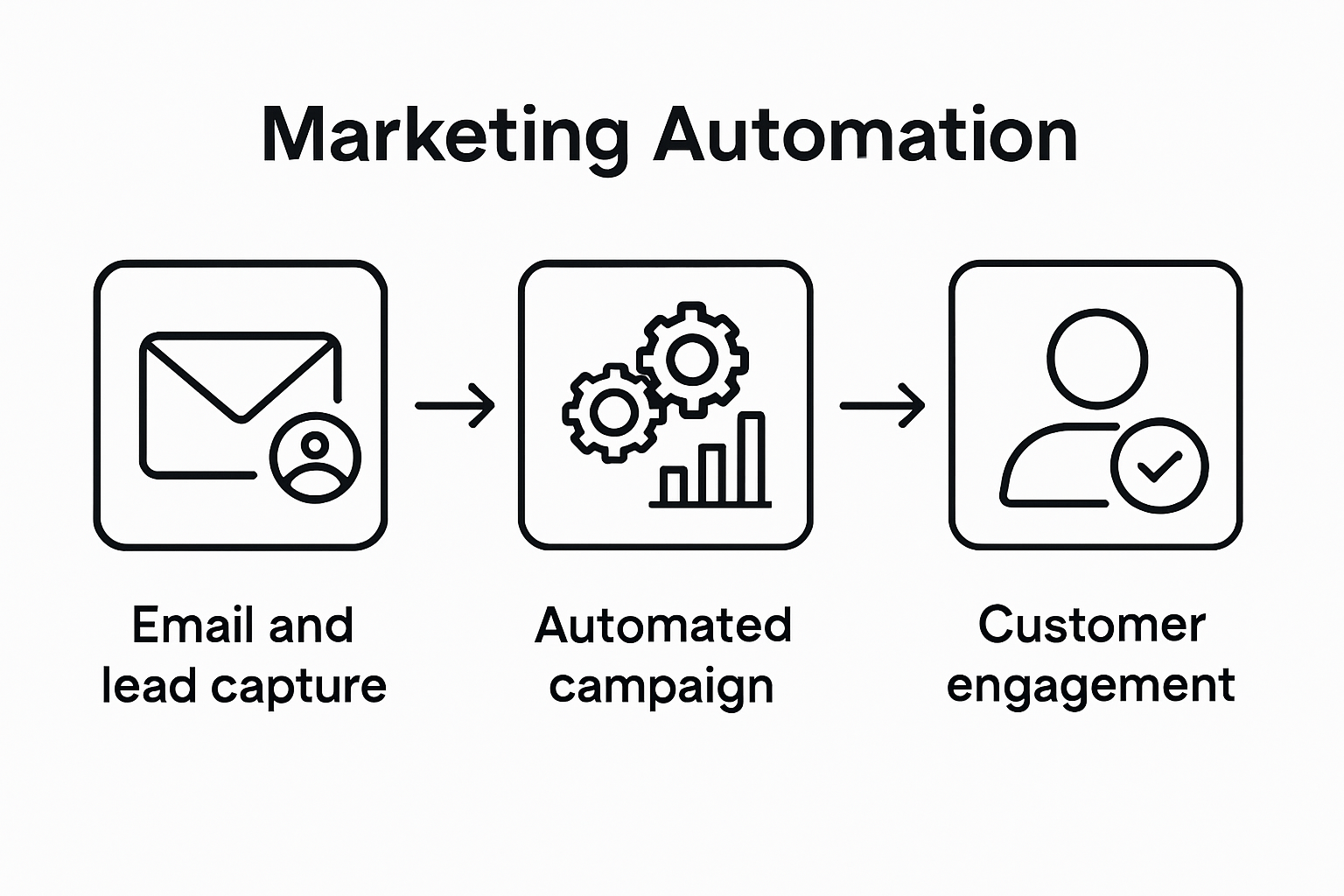
Marketing automation technologies now offer robust capabilities that transform how businesses approach customer engagement. These platforms typically integrate with Customer Relationship Management (CRM) and Customer Data Platforms (CDP), creating powerful ecosystems that automate critical marketing tasks such as lead scoring, campaign management, and personalised communication workflows.
Typical use cases for marketing automation include:
- E-commerce Customer Journeys: Tracking and responding to customer browsing and purchasing behaviours
- Lead Nurturing: Automatically segmenting and communicating with potential customers based on their interactions
- Personalised Email Campaigns: Generating targeted messaging triggered by specific customer actions
- Sales Funnel Management: Tracking and supporting potential customers through different stages of purchase consideration
- Customer Retention Programmes: Creating automated follow-up sequences to maintain engagement
By implementing these sophisticated tools, businesses can create more intelligent, responsive marketing strategies that adapt in real-time to customer needs, ultimately driving more meaningful engagement and improving overall conversion rates.
Key Challenges and Common Misconceptions
Marketing automation represents a sophisticated technological approach that is frequently misunderstood by businesses of all sizes. Contrary to popular belief, these platforms are not exclusively designed for large enterprises but offer scalable solutions for organisations across different scales and complexity levels.
Integration challenges remain a critical consideration for businesses implementing marketing automation technologies. These complexities typically emerge from several key areas that require strategic planning and technical expertise:
Common challenges and misconceptions include:
- Complexity Overload: Assuming marketing automation requires advanced technical skills
- Cost Perception: Believing these tools are prohibitively expensive for smaller businesses
- One-Size-Fits-All Approach: Thinking automation eliminates the need for human creativity
- Data Management: Struggling with seamless integration of existing customer databases
- Personalisation Limitations: Misunderstanding the depth of customisation possible
Successful marketing automation demands a nuanced understanding that balances technological capabilities with strategic human insight. By recognising these challenges proactively, businesses can develop more effective, adaptive marketing strategies that leverage automation without sacrificing the essential human touch of meaningful customer engagement.
Mistakes to Avoid for Small Businesses
Small businesses embarking on marketing automation must navigate a complex landscape of technological opportunities and potential pitfalls. Digital marketing strategies require careful implementation to ensure meaningful engagement and sustainable growth.
Strategic automation demands a nuanced approach that goes beyond simple technological deployment. Many small businesses fall into common traps that can undermine their marketing effectiveness, including overcomplicated processes that obscure genuine customer connections. The key is developing a clear, focused strategy that prioritises authentic customer interactions while leveraging technological capabilities.
Critical mistakes small businesses should avoid include:
- Overcomplicating Workflows: Creating unnecessarily complex automation sequences
- Neglecting Personalisation: Treating automated communications as generic mass messages
- Inadequate Data Management: Failing to maintain clean, accurate customer databases
- Ignoring Customer Feedback: Removing human touchpoints entirely from marketing processes
- Poor Integration: Not aligning automation tools with existing business systems
Successful marketing automation requires a delicate balance between technological efficiency and genuine human connection. Small businesses must approach these tools as strategic enablers, not replacements for meaningful customer relationships, ensuring that every automated interaction feels personalised and intentional.
Unlock the Power of Marketing Automation for Your Business Growth
Many businesses struggle with effectively personalising customer engagement while managing complex marketing workflows. This article highlights critical challenges such as overcomplicated automation processes, the need for precise audience segmentation, and balancing technology with authentic connections. At Kickass Online, we understand that strategic marketing automation is essential to streamline these tasks and create high-converting customer journeys that truly reflect your brand’s unique voice.
Discover how our expert team can help your small or medium-sized business implement tailored digital solutions that optimise website performance, improve search engine rankings, and enhance customer interactions with automation tools designed for your needs. Explore success stories and recommendations on our Recommendations | Kickass Online page to see real results. Act now to elevate your business with personalised strategies crafted for sustained growth. Visit us today at Kickass Online and start your transformation journey.
Frequently Asked Questions
What is marketing automation?
Marketing automation is a software strategy designed to streamline marketing processes, enabling businesses to automate tasks and improve customer engagement with data-driven campaigns.
How does marketing automation benefit small businesses?
Marketing automation provides small businesses with enhanced efficiency, personalised communication, and real-time performance analytics, helping them to engage customers more effectively without overwhelming their resources.
What are some core features of marketing automation platforms?
Key features include intelligent lead scoring, behavioural tracking, personalised messaging, campaign performance analytics, and workflow automation, all of which simplify complex marketing tasks and enhance customer interactions.
What common mistakes should small businesses avoid when using marketing automation?
Small businesses should avoid overcomplicating workflows, neglecting personalisation, inadequate data management, ignoring customer feedback, and poor integration with existing systems to ensure meaningful engagement and successful implementation.
Recommended
- Crucial Digital Marketing Trends to Know in 2023: Part 2 | Kickass Online
- Crucial Digital Marketing Trends to Know in 2023: Part 3 | Kickass Online
- How to Automate 70% of Your Business Tasks with AI Tools | Kickass Online
- Unlock Your SME’s Full Potential with Email Marketing Automation: Strategies and Best Practices | Kickass Online
- Understanding the Importance of Customer Communication – My WordPress


Book A Discovery Call
Stay Connected