
Most people judge a business within seconds of landing on its website. In a world where nearly every customer starts online, design choices mean much more than just colours or fonts. Web design now shapes how brands communicate, build trust, and drive results. This article unpacks what modern web design really involves and explains how the right approach can make any website stand out, connect, and convert.
Table of Contents
- Defining The Role Of Web Design Today
- Types Of Web Design And Key Differences
- Core Elements Of Effective Web Design
- How Web Design Impacts SEO And Conversion
- Common Web Design Pitfalls To Avoid
Key Takeaways
| Point | Details |
|---|---|
| Evolving Role of Web Design | Web design is now a strategic communication tool that enhances user experience and brand identity while facilitating business interactions. |
| Responsive vs. Adaptive Design | Understanding the key differences between responsive and adaptive web design can empower businesses to create optimised digital experiences across devices. |
| Core Elements of Effective Design | Successful web design integrates aesthetic appeal with functionality, focusing on visual hierarchy, intuitive navigation, and engaging imagery. |
| Impact on SEO and Conversion | Effective web design is crucial for SEO and conversion rates, influencing search rankings and guiding users towards desired actions on the site. |
Defining the Role of Web Design Today
Web design has dramatically transformed from a purely aesthetic discipline into a sophisticated strategic communication channel for businesses. According to Online Masters, web design now plays a pivotal role in communications by enhancing user experience, reinforcing brand identity, and facilitating critical business interactions.
Modern web design transcends visual decoration. It serves as a comprehensive strategic tool that bridges communication between businesses and their target audiences. As detailed by EBSCO Research, web designers are responsible for creating the entire visual ecosystem of a website, which includes:
- Layout composition
- Colour scheme selection
- Typography management
- User interface navigation
- Visual brand representation
The contemporary web design landscape demands a holistic approach that integrates aesthetic appeal with functional performance. Know Why SEO and Web Design Must Work Together represents this critical intersection, highlighting how design elements directly impact digital visibility and user engagement. Web design is no longer just about making websites look good, it’s about creating intelligent, responsive digital experiences that communicate, convert, and connect with audiences instantaneously.
Types of Web Design and Key Differences
Web design has evolved significantly, presenting multiple approaches to creating digital experiences. Two primary methodologies have emerged as fundamental strategies: Responsive Web Design and Adaptive Web Design, each offering unique approaches to solving cross-device presentation challenges.
Wikipedia defines Responsive Web Design (RWD) as an innovative approach that enables web pages to render seamlessly across diverse devices and screen sizes. This technique utilises:
- Fluid grid systems
- Flexible image configurations
- CSS3 media queries
In contrast, Wikipedia explains that Adaptive Web Design (AWD) takes a different strategy, creating multiple tailored versions of web pages specifically optimised for different device types. This approach ensures more precise user experiences by crafting distinct layouts for various screen dimensions.
To help businesses navigate these design strategies, Web Design, Easy Tips for Making a Website That Stands Out provides critical insights into selecting the most appropriate design methodology. The key difference lies in implementation: responsive design uses a single flexible layout, while adaptive design generates multiple fixed layouts targeted to specific device characteristics.
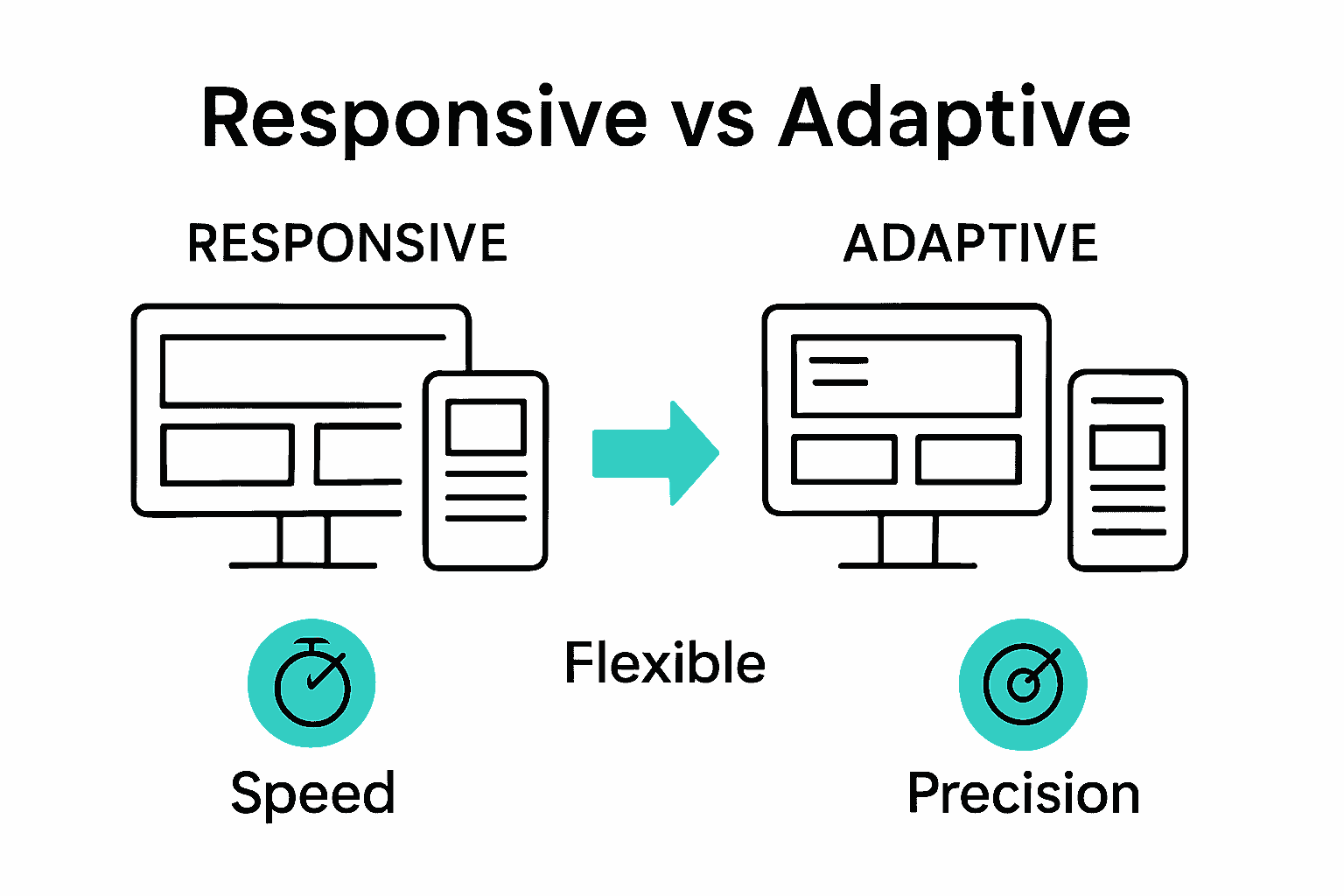 Understanding these nuanced approaches empowers businesses to create digital experiences that look stunning and function perfectly across smartphones, tablets, and desktop computers.
Core Elements of Effective Web Design
Effective web design is a delicate balance between aesthetic appeal and functional performance. Wikipedia reveals an intriguing aesthetic-usability effect, where people perceive more visually pleasing designs as significantly more intuitive and user-friendly.
The core elements of exceptional web design encompass several critical components:
- Visual Hierarchy
- Intuitive Navigation
- Consistent Branding
- Responsive Layout
- Clear Typography
- Strategic Colour Palette
- Engaging Imagery
Designing with Web Standards emphasises the importance of creating accessible, user-friendly websites through pragmatic implementation of design principles. This approach ensures that websites not only look attractive but also provide seamless user experiences across different devices and platforms.
To maximise the impact of these design elements, businesses can leverage insights from 5 Web Design Elements Guaranteed to Boost Conversions. The most successful web designs strike a perfect balance between visual storytelling and functional clarity, transforming websites from mere digital placeholders into powerful communication and conversion tools that engage, inform, and inspire visitors.
How Web Design Impacts SEO and Conversion
Web design is no longer just about aesthetics, it’s a critical driver of search engine performance and user conversion. According to Online Masters, web design is crucial to a site’s search engine rankings, directly influencing how websites appear in search results and attract organic traffic.
The technical elements that connect web design with SEO and conversion include:
- Page Loading Speed
- Mobile Responsiveness
- Intuitive Navigation
- Clean HTML Structure
- Strategic Keyword Placement
- Engaging Visual Hierarchy
- User Experience (UX) Design
EBSCO Research highlights that Search Engine Optimisation has become an integral aspect of web design, with keywords strategically embedded to drive search engine visibility. This means every design decision, from layout to content placement, impacts a website’s ability to attract and retain potential customers.
Businesses seeking to maximise their online potential can gain deeper insights from How Web Design Affects Conversion Rates: What the Data Says. The most successful websites understand that design is not just about looking good, but about creating a seamless, intuitive journey that guides visitors effortlessly from first click to final conversion.
Common Web Design Pitfalls to Avoid
Web design is an intricate process where seemingly minor mistakes can dramatically undermine a website’s effectiveness. Online Masters emphasises that a professionally designed website enhances a company’s credibility, making it crucial to avoid common design errors that could erode user trust.
The most prevalent web design pitfalls include:
- Overcrowded Page Layouts
- Inconsistent Navigation Structures
- Poor Mobile Responsiveness
- Slow Page Loading Times
- Complicated User Interfaces
- Ineffective Colour Schemes
- Lack of Clear Call-to-Action Buttons
EBSCO Research highlights the dynamic nature of web design, noting that trends like responsive design and enhanced scrolling are continuously evolving. This means designers must stay agile and avoid getting stuck in outdated design paradigms that no longer serve modern user expectations.
For businesses looking to refine their digital presence, 5 Common Mistakes to Avoid When Designing a Landing Page offers targeted insights. The key is understanding that great web design isn’t about perfection, but about creating intuitive, user-friendly experiences that guide visitors seamlessly towards their desired outcomes.
Elevate Your Online Presence with Expert Web Design Solutions
Understanding the vital role web design plays in user engagement and SEO is the first step to transforming your business website. If you are facing challenges with creating a seamless, responsive, and visually captivating site that truly communicates your brand’s value and drives conversions, you are not alone. The guide’s focus on responsive and adaptive design, aesthetic-usability balance, and the impact of layout on SEO and conversions highlights common hurdles businesses like yours encounter.
At Kickass Online, we specialise in crafting high-converting websites tailored to small and medium-sized businesses seeking to stand out in a crowded digital landscape. Our dedication to personalised, results-driven digital solutions means your website will not only look stunning but also perform flawlessly across all devices while boosting your search engine ranking. Discover how we blend creativity with technical expertise in our Websites | Kickass Online section.
Ready to stop losing visitors to slow or confusing websites? Take control of your digital communication now with Kickass Online. Visit us at Kickass Online to book your personalised consultation and explore practical insights in our Tutorials | Kickass Online. This is your chance to build a website designed to engage, convert and grow your business with expert support by your side.
Frequently Asked Questions
What is the role of web design in modern business communications?
Web design plays a pivotal role in enhancing user experience, reinforcing brand identity, and facilitating critical business interactions, making it a strategic communication channel for businesses.
What are the main differences between responsive web design and adaptive web design?
Responsive web design adapts to different screen sizes using a single flexible layout, while adaptive web design offers multiple fixed layouts optimised for specific devices. Each approach provides unique user experiences across various devices.
What are the core elements that make up effective web design?
Core elements of effective web design include visual hierarchy, intuitive navigation, consistent branding, responsive layout, clear typography, strategic colour palette, and engaging imagery, all contributing to an aesthetically pleasing and functional website.
How does web design impact SEO and conversion rates?
Web design significantly impacts SEO and conversion rates by influencing page loading speed, mobile responsiveness, navigation intuitiveness, and the overall user experience. Good design practices enhance search engine visibility and facilitate smoother conversions.
Recommended
- Complete Guide to the Role of Web Design in Marketing | Kickass Online
- 7 Website Elements That Can Help Improve Conversion Rates | Kickass Online
- Web Design, Easy Tips for Making a Website That Stands Out | Kickass Online
- Web Design Conversion: How to Achieve Optimisation? | Kickass Online
- Modern Website Design Trends for Business Growth