Maximise ROI with a digital media buying agency

TL;DR:
- Effective SME digital advertising relies on measurement and data-driven iteration, not just creative or channel choice.
- Reputable agencies ensure transparency through compliance standards, fraud detection, and honest performance reporting.
- Small businesses should focus first on increasing conversion volume and accurate tracking before complex attribution models.
Spending more on digital ads without a rigorous strategy is one of the most expensive mistakes an SME can make. Platform dashboards will show you impressive numbers: clicks, impressions, reported return on ad spend. But those figures often flatter your campaigns and obscure where your budget is actually going. A skilled digital media buying agency brings structure, accountability, and evidence-based decision-making to every pound you spend. This guide explains exactly what to look for, what to demand from an agency, and how to use expert guidance to genuinely improve your marketing ROI rather than simply increase your ad bill.
Table of Contents
- What does a digital media buying agency actually do?
- How agencies measure and boost marketing ROI
- Navigating programmatic buying: transparency, risk and control
- SME-specific challenges: low data volume, smart measurement and bidding
- The uncomfortable truth: why media buying success is 90% measurement and iteration
- Ready to get more from your digital media investment?
- Frequently asked questions
Key Takeaways
| Point | Details |
|---|---|
| True ROI requires real measurement | Agencies that use attribution, incrementality testing, and MMM deliver the best insight into what works for SMEs. |
| Transparency reduces wasted spend | Industry standards like ads.txt and sellers.json help SMEs avoid fraud and keep campaigns on brand. |
| Data volume impacts attribution | Lower conversion counts can weaken measurement—SMEs should focus on growing data before using advanced models. |
| Iterate for sustained growth | Continuous testing and optimisation, not one-off tactics, unlock long-term SME marketing success. |
What does a digital media buying agency actually do?
Many business owners picture a media buying agency as someone who simply places adverts on Facebook or Google on your behalf. The reality is far more involved, and far more valuable when done properly.
A full-service digital media buying agency manages the entire lifecycle of your paid media activity. That includes selecting the right channels for your audience, negotiating rates and placements, building campaign structures, installing proper tracking, and continuously optimising performance based on real data. Think of them as the strategic architects of your advertising, not just the builders.
For SMEs, the most important distinction is this: a good agency focuses on real business outcomes, not vanity metrics. Clicks are cheap. Impressions are easy to accumulate. What matters is whether your advertising is actually causing customers to buy, enquire, or convert. That causal link is where most in-house efforts and many budget agencies fall short.
Here is what a quality digital media buying agency typically handles for an SME client:
- Channel selection and planning: Identifying where your ideal customers spend time and which platforms offer the best cost per acquisition for your category.
- Media negotiation: Securing competitive rates on placements, particularly in programmatic and display environments.
- Campaign architecture: Structuring ad groups, audiences, and creative so that testing is meaningful and results are interpretable.
- Conversion tracking and tagging: Ensuring every meaningful action on your website is captured accurately before any campaign goes live.
- Ongoing optimisation: Weekly or fortnightly adjustments based on performance data, not gut instinct.
- Reporting and accountability: Translating data into plain English so you understand what your budget is achieving.
These strategies for SME media buying require coordination across technical, creative, and analytical disciplines. Few SMEs have all three in-house.
Pro Tip: When evaluating an agency, ask them directly how they measure causal lift, not just platform-reported conversions. Incrementality testing is increasingly treated as essential to avoid optimising toward proxy metrics that look good in a dashboard but do not reflect real revenue impact. Any agency that cannot answer this question clearly is likely relying on surface-level reporting.
How agencies measure and boost marketing ROI
Understanding what an agency does day-to-day is useful. Understanding how they prove their value is essential.
The single biggest failure point in SME digital advertising is measurement. Most businesses rely on whatever their ad platform tells them. Google says your campaign produced 40 conversions. Meta reports 25 purchases. These numbers look reassuring, but they often double-count, attribute credit incorrectly, or include actions that would have happened anyway without any advertising. This is why multi-step measurement for ROI and marketing effectiveness, recommending triangulation of attribution with incrementality testing, has become the gold standard for serious advertisers.

What does triangulation actually mean in practice? It means combining three distinct approaches rather than relying on any single one:
| Measurement approach | What it shows | Limitation for SMEs |
|---|---|---|
| Platform-reported ROAS | Fast, always available | Overestimates impact; double-counts |
| Media mix modelling (MMM) | Holistic spend vs revenue view | Requires 12+ months of data |
| Incrementality testing | True causal effect of ads | Needs sufficient traffic volume |
Platform-reported ROAS is the figure most SMEs live and die by. It is also the least reliable. Platforms have a financial incentive to show your ads in the best possible light, and their attribution windows are designed to maximise credited conversions.
Media mix modelling takes a top-down view, using statistical regression to analyse how changes in your overall media spend correlate with changes in revenue. It removes the noise of individual platform reporting and gives you a cleaner picture of which channels are genuinely driving growth. The limitation for smaller businesses is that it requires substantial historical data, usually at least a year of consistent spending.
Incrementality testing is the most rigorous approach. It works by splitting your audience into a group that sees your adverts and a control group that does not, then comparing their behaviour. The difference in conversion rate between the two groups represents the true causal lift of your advertising. As conversion lift experiments show, incrementality testing is increasingly treated as essential to avoid optimising toward proxy metrics that flatter campaigns without reflecting genuine business impact.
“The platforms will always show you numbers that justify continued spending. Your job, and your agency’s job, is to verify those numbers against reality.”
Understanding the essential digital ROI metrics that matter for your specific business stage is equally important, because not every metric applies equally to every SME. Knowing which numbers to prioritise and which to ignore is part of what a quality agency brings to the table.
Pro Tip: Ask prospective agencies for a real example of a campaign where their incrementality testing revealed that platform-reported ROAS was inflated. If they can walk you through how they shifted budget as a result, that is a strong indicator they are operating at a genuine strategic level. Agencies that only show you success stories without explaining the measurement behind them should raise a flag.
Good marketing campaigns that grow SMEs are always built on a measurement foundation, not creative alone. Strategy without data is guesswork. Data without strategy is noise.
Navigating programmatic buying: transparency, risk and control
Programmatic advertising, where ad inventory is bought and sold automatically through real-time bidding systems, offers SMEs access to massive audience reach at scale. It also introduces a unique set of risks that many business owners are completely unaware of until budget has already been wasted.
The three most significant risks in programmatic buying for SMEs are:
- Supply-path opacity: Your ad spend passes through multiple intermediaries before reaching a publisher. Each intermediary takes a cut, and without transparency standards, it is difficult to know how much of your budget reaches actual media inventory versus fees.
- Ad fraud: Automated bots can generate fake impressions and clicks, consuming your budget without delivering any real human audience.
- Brand safety failures: Without proper controls, your adverts can appear next to inappropriate, offensive, or damaging content, harming your brand reputation.
Programmatic transparency standards from IAB Australia explain that supply-path opacity is a key risk for SMBs, and that industry-wide standards exist specifically to address these problems. A reputable agency will implement these standards as a matter of course.
Here are the transparency measures you should expect any quality agency to have in place:
- Ads.txt verification: This is a simple text file that publishers place on their websites to declare which ad networks are authorised to sell their inventory. Your agency should only buy from ads.txt-compliant sources.
- Sellers.json checks: This standard allows buyers to trace the supply chain from the exchange back to the publisher. Agencies using sellers.json can verify that the inventory they are buying is legitimate.
- Brand safety protocols: Using category exclusions, keyword blocklists, and third-party brand safety tools to ensure your adverts do not appear alongside harmful content.
- Fraud detection tools: Independent verification through services that detect invalid traffic, separate from whatever the platform itself reports.
| Programmatic risk | Recommended agency action |
|---|---|
| Supply-path opacity | Enforce ads.txt and sellers.json compliance |
| Ad fraud | Deploy independent invalid traffic detection |
| Brand safety failures | Use category exclusions and content blocklists |
| Fee opacity | Request transparent cost breakdowns |
| Data leakage | Audit third-party pixels and data partners |
“Transparency is not a luxury in programmatic buying. For SMEs with limited budgets, even a 20% fraud or fee leakage rate can represent thousands of pounds lost every month.”
When launching high-performing ad campaigns, the governance and supply-path controls your agency has in place matter just as much as the creative or the targeting. Insist on transparent reporting that shows not just results, but where your money actually went.
SME-specific challenges: low data volume, smart measurement and bidding
Here is something that most agencies will not tell you upfront: many of the most sophisticated measurement and bidding tools available today simply do not work well for smaller businesses. They require data volumes that most SMEs cannot generate.
Google’s data-driven attribution model, for example, improves significantly with greater data volume. The algorithm needs enough conversion events across multiple touchpoints to learn meaningfully from your campaigns. If your business is generating fewer than 200 conversions per month, more complex attribution models may actually introduce noise rather than insight.
This is not a reason to despair. It is a reason to prioritise intelligently.
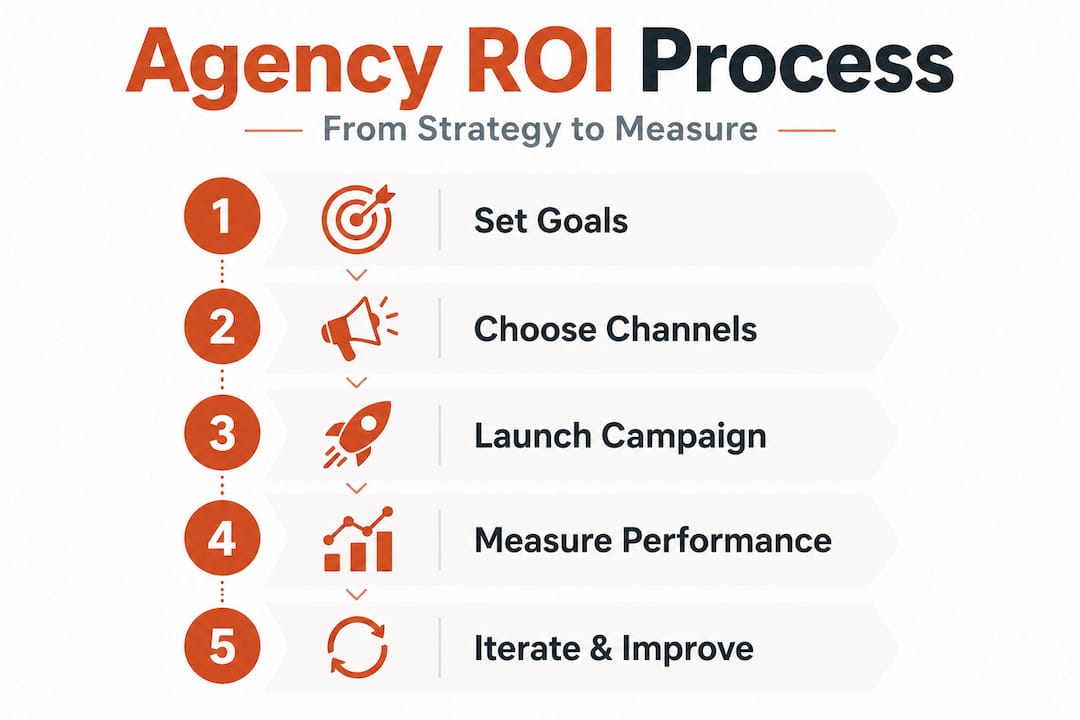
Here are practical steps every SME should take to build a stronger data foundation before investing heavily in advanced measurement:
- Audit your conversion tracking first. Before spending a single pound on ads, verify that every meaningful action on your website is tracked accurately. This means purchases, form submissions, phone call clicks, and any micro-conversions that signal intent.
- Expand your definition of a conversion. If you have few final purchases recorded, add earlier-funnel actions like product page views, add-to-cart events, or time-on-site thresholds to give algorithms more signal to work with.
- Consolidate your campaigns. Spreading budget thinly across many small campaigns fragments your data. Fewer, larger campaigns accumulate conversion data faster and let bidding algorithms learn more quickly.
- Use longer conversion windows. If your sales cycle is measured in weeks rather than days, make sure your conversion windows reflect that reality. A 30-day window captures more of the true impact than a 7-day window.
- Establish a baseline before testing. Run campaigns without significant changes for at least four weeks to establish a reliable performance baseline before drawing any conclusions.
Your smart SME marketing strategy should treat data infrastructure as a prerequisite, not an afterthought.
Pro Tip: If your business records fewer than 200 monthly conversions, do not prioritise sophisticated attribution models yet. Focus entirely on increasing conversion volume first, whether through improved landing pages, stronger offers, or broader audience targeting. A good agency will tell you this. A less scrupulous one will sell you complex reporting dashboards on a data set too thin to support them.
The uncomfortable truth: why media buying success is 90% measurement and iteration
Here is something the industry rarely says out loud: the channel you choose, the creative you run, and even the budget you set matter far less than most SMEs believe. What determines long-term media buying success is the rigour and honesty of your measurement, and what you do with it.
We see this pattern consistently. A business spends months agonising over whether to invest in Meta or Google, in video or static creative, in search or display. They make a decision, launch a campaign, check the platform dashboard after two weeks, see encouraging numbers, and declare success. Then they wonder why revenue has not moved proportionally six months later.
The temptation is always to chase the loudest channel or the newest tool. TikTok ads are exciting. Programmatic audio is intriguing. Performance Max campaigns promise simplicity. But if you are not measuring the true causal impact of any of these channels on your actual revenue, you are flying blind regardless of how sophisticated the platform sounds.
The businesses we see achieving sustainable ROI from their media investment share one characteristic: they iterate relentlessly based on honest data. They run experiments. They accept that some of those experiments will show disappointing results. They shift budget accordingly, even when the shift is uncomfortable. They treat digital marketing strategies for SMEs as a discipline, not a one-time decision.
The best question you can ask any agency is not “what results have you achieved?” It is “walk me through your experimentation process.” An agency that can describe how they design tests, how they read results honestly (including negative ones), and how they translate those learnings into the next campaign cycle is an agency that will genuinely improve your ROI over time. An agency that only shows you wins is one that has learned to present data selectively.
Measurement is not the unglamorous back-end of media buying. It is media buying. Everything else is just placement.
Ready to get more from your digital media investment?
Applying these principles well takes experience, the right tools, and honest interpretation of data. Many SMEs know what good media buying should look like in theory but lack the internal capacity to execute it consistently.
At Kickass Online, we work with a deliberately limited number of clients so that every campaign receives genuine strategic attention. Whether you are trying to understand digital and direct marketing compared, refine your marketing strategies for SME growth, or start with a thorough SEO audit for your SME, we bring the same measurement-first approach to every engagement. Book a consultation and find out how evidence-based media buying can move your business forward.
Frequently asked questions
How can an SME ensure they’re not wasting ad spend?
By using incrementality testing alongside triangulated measurement that includes MMM, you can see the true causal impact of your advertising rather than relying on platform-reported attribution that often overstates results.
Do SMEs really need complex attribution, or is last-click enough?
Last-click attribution consistently misrepresents campaign effectiveness by crediting only the final touchpoint; integrating attribution with incrementality testing gives a far more accurate picture of what is genuinely driving conversions.
What transparency measures should a media buying agency use?
A reputable agency should enforce ads.txt and sellers.json compliance, deploy independent fraud detection tools, and apply brand safety protocols to protect your budget and reputation in programmatic environments.
What if my business doesn’t have much conversion data?
Focus on increasing conversion volume before investing in sophisticated attribution models, since data-driven attribution requires sufficient data to produce reliable, actionable insights rather than misleading outputs from thin datasets.
Recommended
- What a digital marketing agency really does for SMBs | Kickass Online
- Maximise ROI Through PPC Advertising: A Guide
- Measuring the ROI of Your Digital Marketing Campaigns: Essential Metrics for SME Success | Kickass Online
- 5 Tips to Help You Make the Most Out of Your PPC ROI | Kickass Online
- Why invest in video ads? Boost sales and ROI with AI | QuickAdVideo Blog
- Elevating Your Brand with a Superior Digital Experience | Rule27 Design


Book A Discovery Call
Stay Connected