
Did you know that over 90 percent of customers check a business’s digital presence before making a purchase decision? Your online performance can make or break new opportunities. Knowing where your business stands online gives you a real edge in a crowded market. By uncovering patterns in your website analytics, social media, and customer behaviour, you lay the groundwork for smarter goals, better channel choices, and measurable results.
Table of Contents
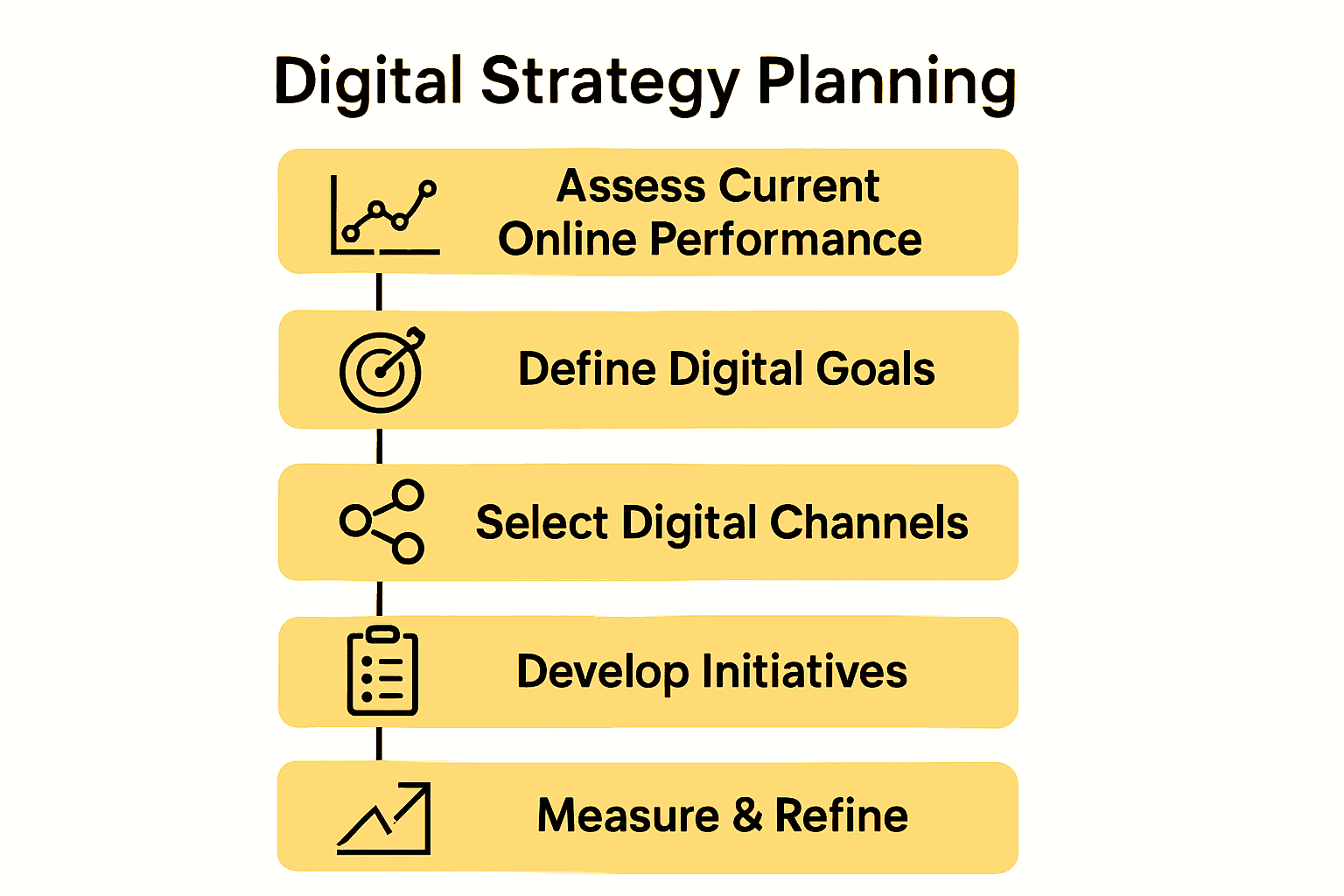
- Step 1: Assess Current Online Performance
- Step 2: Define Strategic Digital Goals
- Step 3: Identify Ideal Digital Channels
- Step 4: Craft Actionable Digital Initiatives
- Step 5: Measure And Refine Strategy Outcomes
Quick Summary
| Key Point | Explanation |
|---|---|
| 1. Assess Your Online Performance | Conduct a digital audit to analyze website analytics, social media metrics, and SEO rankings for a comprehensive understanding of your digital presence. |
| 2. Define Specific Digital Goals | Use the OGSM framework to create clear, measurable, and achievable digital goals that align with your overall business objectives. |
| 3. Select Appropriate Digital Channels | Identify where your target audience is most active online and choose digital channels that facilitate engagement and align with your strategic goals. |
| 4. Develop Actionable Digital Initiatives | Break down goals into specific actions, including timelines and responsibilities, to guide your strategy toward achieving the set objectives. |
| 5. Measure and Refine Outcomes | Regularly evaluate your digital strategy using KPIs and performance metrics to ensure continuous improvement and strategic alignment. |
Step 1: Assess current online performance
To create an effective digital strategy, you need a clear understanding of your current online performance. According to Business Queensland, conducting a digital audit involves evaluating your business’s digital readiness by assessing your online presence and comparing it against industry benchmarks.
Start by gathering comprehensive data about your digital channels. This means examining your website analytics, social media engagement metrics, search engine rankings, and overall online visibility. Look beyond surface level numbers and dig into meaningful insights that reveal how potential customers interact with your digital platforms.
Utilise tools like Google Analytics to track key performance indicators such as website traffic, bounce rates, average session duration, and conversion rates. These metrics provide concrete evidence of how well your digital presence is performing. Arxiv Research suggests using a Balanced Scorecard approach to measure and enhance your information systems’ performance systematically.
Create a structured assessment checklist that covers critical areas

Here’s an overview of critical areas for assessing digital readiness:
| Assessment Area | Description | Key Metrics |
|---|---|---|
| Website Experience | Usability and design quality | Bounce rate Session duration |
| Mobile Responsiveness | Performance on mobile devices | Mobile traffic Load speed |
| SEO Ranking | Visibility in search results | Keyword ranking Organic visits |
| Social Media Engagement | Interaction on social platforms | Likes Shares Comments |
| Conversion Rate Performance | Visitor actions leading to outcomes | Conversion rate Leads generated |
| Content Relevance and Quality | Value and consistency of content | Page views Time on page |
- Website user experience and design
- Mobile responsiveness
- Search engine optimisation ranking
- Social media engagement levels
- Conversion rate performance
- Content relevance and quality
Don’t just collect data. Interpret it critically. Identify patterns that indicate strengths and weaknesses in your current digital strategy. Are visitors leaving your website quickly? Do your social media posts generate meaningful interactions? Understanding these nuances will guide your strategic improvements.
The insights you gather now will become the foundation for targeted digital enhancements. In the next steps, you will transform these findings into a robust action plan that elevates your online presence and drives business growth.
Step 2: Define strategic digital goals
In this crucial stage, you will transform your digital performance insights into concrete, actionable objectives. According to Business Queensland, outlining digital business goals involves specifying desired achievements such as streamlining costs, enhancing customer communication, or implementing new technologies.
To craft meaningful digital goals, adopt a structured approach. Wikipedia recommends the OGSM framework, Objectives, Goals, Strategies, and Measures, which provides a systematic method for defining strategic digital goals. This framework helps you set qualitative ambitions, quantitative targets, key approaches, and tracking metrics.
Start by answering fundamental questions about your business objectives. What do you want to achieve online? Are you looking to increase website traffic, improve conversion rates, expand your social media presence, or reduce customer acquisition costs? Be specific and measurable in your goal setting.
Create goals that are
- Specific and clear
- Measurable with quantifiable targets
- Achievable within your resources
- Relevant to your business strategy
- Time bound with defined milestones
For instance, instead of a vague goal like “improve online presence,” define a precise objective such as “increase website conversion rate by 20% within six months by optimising landing page design and implementing targeted marketing campaigns.”
Focus on aligning your digital goals with broader business objectives. This ensures your online efforts directly contribute to your overall growth strategy. Digital Marketing Roadmap for SMEs can provide additional guidance in creating a cohesive digital strategy.
Remember that goal setting is an iterative process. Remain flexible and willing to adjust your objectives as you gather more data and insights about your digital performance.
Step 3: Identify ideal digital channels
Choosing the right digital channels is critical for reaching your target audience effectively. According to ResearchGate, selecting appropriate digital channels involves understanding various online platforms and data to implement communication objectives that align with organizational goals.
Start by mapping out where your target audience spends their online time. Different demographics prefer different platforms social media sites, professional networks, industry forums, and content sharing platforms each have unique characteristics and audience demographics.
Consider the strengths of various digital channels
- Social media platforms for engagement and brand awareness
- Professional networks for B2B connections
- Email marketing for direct communication
- Content marketing websites for thought leadership
- Video platforms for visual storytelling
Analyse your previous digital performance data to identify which channels generated the most meaningful interactions. Look beyond vanity metrics like follower counts and focus on engagement rates, conversion potential, and alignment with your strategic goals.
Pro Tip: Not all channels are created equal. Quality trumps quantity every time.
To refine your channel selection, Multi Channel Marketing for SMEs offers insights into creating a balanced digital presence. Consider your resources realistic budget, content creation capabilities, and team expertise when choosing platforms.
Remember that digital channel selection is not a one time decision. Remain adaptable and willing to experiment. As your business evolves and digital landscapes shift, your channel strategy should remain dynamic and responsive to emerging opportunities.
Step 4: Craft actionable digital initiatives
With your digital goals and channels identified, it is time to transform strategy into concrete actions. According to Business Queensland, developing a digital action plan involves listing all necessary actions to achieve digital goals, assigning priority rankings, and integrating these actions into a comprehensive strategy.
Break down your overarching digital objectives into specific tactical initiatives. Each initiative should be precise measurable, time bound, and directly linked to your strategic goals. Consider creating a structured roadmap that outlines key activities, required resources, responsible team members, and expected outcomes.
Key components of actionable digital initiatives include
- Specific tasks with clear ownership
- Realistic timelines and milestones
- Resource allocation and budget considerations
- Performance metrics for tracking progress
- Contingency plans for potential challenges
Prioritise your initiatives based on potential impact and feasibility. Some actions will deliver immediate results while others represent longer term investments in your digital infrastructure. Be strategic about sequencing these initiatives to maintain momentum and adaptability.
Pro Tip: Start with high impact low complexity initiatives to build early momentum and team confidence.
To help track your progress and measure the effectiveness of your digital initiatives, Measuring the ROI of Your Digital Marketing Campaigns provides comprehensive insights into performance evaluation.
Remember that crafting actionable initiatives is an iterative process. Stay flexible and prepared to adjust your approach based on emerging insights and changing business landscapes. Your digital strategy should be a living document that evolves with your organisation.
Step 5: Measure and refine strategy outcomes
The final step in your digital strategy involves continuous evaluation and strategic refinement. According to Arxiv Research, the Balanced Scorecard approach offers a framework to evaluate information systems agility through perspectives like business contribution and user orientation.
Wikipedia highlights that the OGSM framework emphasises defining clear measures to track progress, ensuring digital strategies are effectively monitored and refined based on performance metrics. This means moving beyond simple data collection to meaningful performance analysis.
Establish a comprehensive measurement system that tracks
- Key performance indicators (KPIs)
- Conversion rates
- Customer engagement metrics
- Return on digital investment
- Comparative benchmarks against initial goals
Regular performance reviews are crucial. Schedule monthly or quarterly assessments to analyse your digital strategy’s effectiveness. Look for patterns trends and unexpected outcomes that might require strategic adjustments.
Pro Tip: Data without context is just noise. Always interpret metrics through the lens of your broader business objectives.
To support your measurement efforts, Digital Marketing KPIs Every SME Needs provides essential insights into tracking the most relevant performance indicators for small businesses.
Remember that refinement is an ongoing process. Be prepared to pivot quickly adapt your strategy and experiment with new approaches based on your performance data. Your digital strategy should be a dynamic living document that evolves with your business landscape.
Empower Your Business with a Tailored Digital Strategy
Struggling to transform overwhelming digital data into clear, measurable goals that drive success? This article highlights the challenge of assessing digital readiness and defining specific, actionable objectives essential for business growth. At Kickass Online, we understand how daunting it can be to select the right digital channels and craft initiatives that truly convert visitors into customers.
Discover expert guidance on website design, SEO optimisation, and ongoing maintenance that ensure your digital strategy is not just a plan but a proven pathway to results. Whether you need to improve your website’s usability, boost search engine rankings, or measure campaign success effectively, our personalised solutions provide the support you need.
Explore practical advice and proven tactics in our Tips and Tricks | Kickass Online section to start making meaningful improvements today.

Take control of your digital future now by partnering with Kickass Online. Book a consultation to receive dedicated attention from our team of specialists who prioritise your unique business needs. Don’t let unclear digital activities hold your growth back. Visit our Recommendations | Kickass Online page and begin crafting a high-impact online presence with expert help today.
Frequently Asked Questions
How can I assess my current online performance for digital strategy planning?
To assess your current online performance, collect data from your website analytics, social media metrics, and search engine rankings. Start by reviewing key performance indicators like bounce rates and conversion rates to identify strengths and weaknesses in your digital presence.
What specific digital goals should I set for my business?
Set specific digital goals that are clear, measurable, achievable, relevant, and time-bound (SMART). For example, aim to increase website traffic by 25% within three months through targeted content creation and marketing efforts.
How do I choose the right digital channels for my strategy?
Identify which digital channels your target audience uses most frequently and evaluate their effectiveness based on past performance data. Focus on engaging platforms that align with your business goals, such as social media for brand awareness or email marketing for direct communication.
What are key components of actionable digital initiatives?
Actionable digital initiatives should include specific tasks, realistic timelines, assigned responsibilities, and measurable outcomes. For instance, create a timeline for optimising your website’s landing pages to improve the conversion rate by 15% within four months.
How can I measure the success of my digital strategy?
Measure the success of your digital strategy by establishing a set of key performance indicators (KPIs) tailored to your goals, such as customer engagement metrics and conversion rates. Schedule regular reviews, such as quarterly assessments, to update your strategy based on performance data.
What steps can I take to refine my digital strategy over time?
Refine your digital strategy by continuously analyzing performance data and adjusting your initiatives based on insights gained. Regularly assess what’s working and what’s not, and be prepared to pivot your approach to adapt to changes in the digital landscape.
Recommended
- Digital Marketing Roadmap for SMEs: Online Journey
- How Can Digital Marketing Help A Small Business? | Kickass Online
- Crucial Digital Marketing Trends to Know in 2023 - Part 1 | Kickass Online
- Developing a Robust Social Media Strategy for SMEs | Kickass Online
- What is Digital Marketing? Understanding Its Importance
- Understanding SEO Best Practices for Your Business – My Blog