
Documentation workflow note: for capturing a workflow for documentation, this Snagit screen recording guide is a useful related reference.
Your website sits there, pages published, design polished, yet traffic trickles in and conversions remain elusive. You know content matters, but piecing together a coherent strategy feels overwhelming amidst daily operations. This guide walks you through preparing, executing, and refining a high-impact content strategy that transforms your website into a customer magnet. You will learn exactly what to gather before starting, how to create and optimise content systematically, and how to measure success so your efforts deliver measurable business growth.
Table of Contents
- Key takeaways
- What you need to prepare before creating your content strategy
- Step-by-step execution of your website content strategy
- How to verify and refine your content strategy for ongoing success
- Enhance your website content strategy with expert services
- Frequently asked questions
Key Takeaways
| Point | Details |
|---|---|
| Clear goals and audience | Define specific, measurable content objectives and build detailed audience personas to guide every piece. |
| Editorial calendar discipline | Create an editorial calendar that schedules topics, formats, keywords, and owners for a predictable publishing rhythm. |
| Content audits drive updates | Audit existing content to reveal gaps, update outdated material, and prioritise improvements aligned with business goals. |
| optimisation focus | Optimise content through keyword research, on page enhancements, and audience based refinements to improve visibility and engagement. |
| Measure and refine regularly | Regularly analyse performance data to refine strategy, scale successful formats and discontinue underperforming content. |
What you need to prepare before creating your content strategy
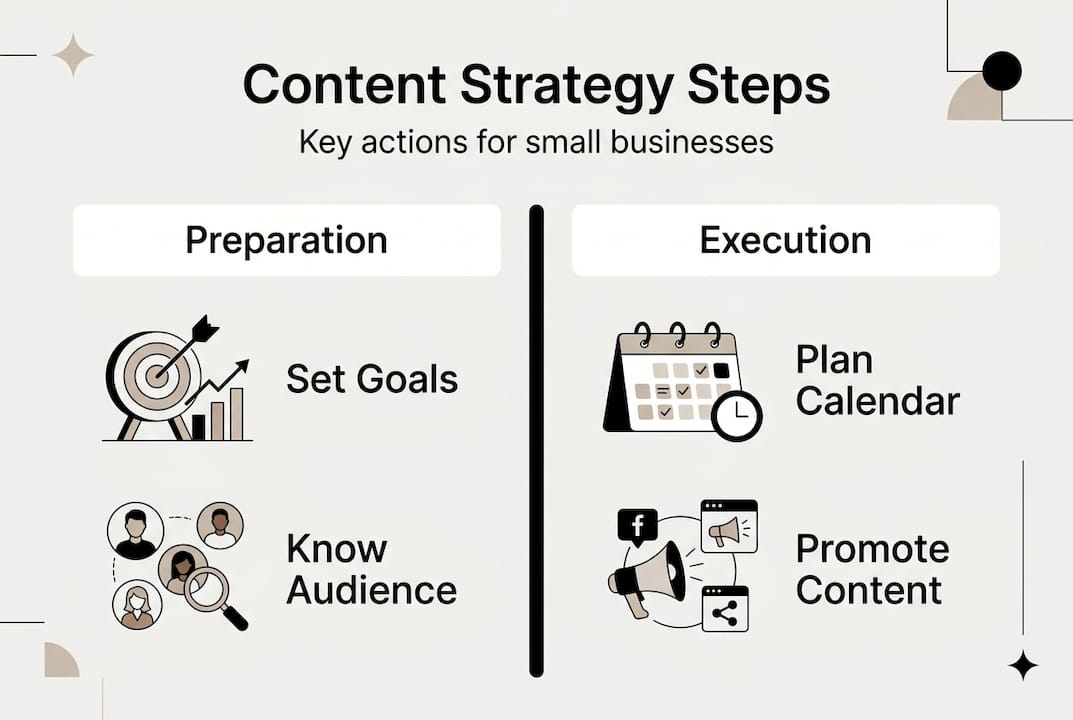
Starting with clear business and content goals is critical for effective website content strategy. Without defined objectives, you risk creating content that looks professional but fails to drive meaningful results. Begin by identifying what you want your content to achieve: increased organic traffic, higher conversion rates, stronger brand authority, or improved customer retention. Translate these aspirations into specific, measurable targets such as achieving 5,000 monthly organic visitors within six months or generating 50 qualified leads per quarter through content downloads.
Understanding your audience transforms generic content into magnetic material that resonates. Research goes beyond basic demographics to uncover pain points, questions, and decision-making processes. Interview existing customers to discover what information they wished they had found earlier. Analyse search queries your prospects use, examine comments on industry forums, and review competitor content to spot gaps you can fill. Create detailed audience personas that capture not just who your readers are, but what keeps them awake at night and what success looks like for them.
Auditing existing content reveals hidden opportunities and prevents wasted effort. Catalogue every page, blog post, and resource on your website in a spreadsheet. Assess each piece for performance metrics, relevance, accuracy, and alignment with current business goals. This inventory exposes outdated information that damages credibility, high-performing content worth updating and expanding, and topic gaps where your competitors dominate search results.
Pro Tip: Build audience personas by combining analytics data with direct customer interviews. Numbers show behaviour patterns, but conversations reveal the emotional drivers and specific language your prospects use when describing their challenges.
Your content audit should produce a structured inventory that guides decision making:
| Content Type | Current Count | High Performers | Needs Update | Gaps Identified |
|---|---|---|---|---|
| Service pages | 8 | 3 | 2 | Industry-specific case studies |
| Blog articles | 24 | 6 | 8 | How-to guides for beginners |
| Resource downloads | 5 | 2 | 1 | Comparison tools and checklists |
Gather essential tools before launching into content creation. You need a system for organising ideas, scheduling publication, tracking performance, and collaborating with team members. A simple spreadsheet can serve as your editorial calendar initially, though dedicated content management platforms offer automation and workflow features as you scale. Identify keyword research tools that reveal search volume and competition levels, and ensure you have access to website analytics that track visitor behaviour and conversion paths.
Step-by-step execution of your website content strategy
Developing an editorial calendar transforms sporadic content creation into a predictable system that builds momentum. Map out topics for the next 90 days, assigning specific publication dates, content formats, target keywords, and responsible team members. Balance evergreen content that remains valuable indefinitely with timely pieces that capitalise on seasonal trends or industry developments. Your calendar should reflect the customer journey, providing content for prospects at awareness, consideration, and decision stages.

Create diverse content types that cater to different learning preferences and consumption contexts. Written blog posts establish authority and capture search traffic, but video tutorials demonstrate complex processes more effectively. Infographics distil data into shareable visuals, whilst downloadable guides serve as lead magnets that build your email list. Podcasts reach audiences during commutes, and case studies provide social proof that converts hesitant prospects. Match formats to your audience preferences and your team’s capabilities rather than chasing every trend.
Consistent content creation combined with optimisation boosts search rankings and user engagement. Research target keywords before writing, focusing on terms your audience actually searches rather than industry jargon. Structure content with descriptive headings that guide readers and signal relevance to search engines. Write compelling meta descriptions that summarise value and encourage clicks from search results. Optimise images with descriptive file names and alt text that improves accessibility whilst reinforcing topic relevance.
Follow this systematic approach for each content piece:
- Research keywords and analyse top-ranking competitor content to identify what works and what gaps exist
- Outline your content structure with clear headings that answer specific questions your audience asks
- Write your first draft focusing on delivering genuine value without worrying about perfection
- Edit ruthlessly to eliminate fluff, tighten explanations, and ensure every sentence earns its place
- Optimise technical elements including title tags, meta descriptions, header hierarchy, and internal links
- Add visual elements like images, charts, or videos that enhance understanding and break up text
- Review for accuracy, clarity, and alignment with brand voice before scheduling publication
Promotion amplifies your content’s reach beyond organic discovery. Share new content across your social media channels with tailored messaging for each platform’s audience and format expectations. Send highlights to your email subscribers with context about why this content matters to them specifically. Reach out to industry contacts who might find your content valuable enough to share with their audiences. Consider paid promotion for cornerstone content that targets high-value keywords or addresses questions from your ideal customers.
Pro Tip: Repurpose your highest-performing content into multiple formats to extend its lifespan and reach. Transform a comprehensive blog post into a video script, an infographic summarising key points, a series of social media posts, and a podcast episode. This maximises return on your content investment whilst reinforcing core messages across channels.
How to verify and refine your content strategy for ongoing success
Regularly measuring content performance is key to refining strategies and achieving better outcomes. Analytics platforms reveal which content attracts visitors, holds attention, and drives conversions. Track organic traffic growth to assess whether your SEO efforts gain traction. Monitor bounce rates and time on page to gauge content relevance and engagement. Measure conversion rates for calls-to-action embedded in content to understand what motivates prospects to take the next step.
Google Analytics provides essential metrics, but layer in additional tools for deeper insights. Search Console data shows which queries drive traffic and where you rank for target keywords. Heatmap tools reveal where visitors click, how far they scroll, and which elements capture attention. User session recordings expose friction points where visitors abandon pages or struggle to find information. Combine quantitative data with qualitative feedback from customer surveys and support conversations to understand the why behind the numbers.
Comparing different content approaches reveals what resonates most powerfully with your audience:
| Approach | Organic Traffic | Average Time on Page | Conversion Rate | Shareability |
|---|---|---|---|---|
| How-to guides | High | 4:30 | 3.2% | Medium |
| Case studies | Medium | 3:15 | 5.8% | Low |
| Industry analysis | Medium | 5:45 | 2.1% | High |
| Quick tips lists | Very High | 2:00 | 1.8% | Very High |
Common mistakes undermine even well-intentioned content strategies. Neglecting analytics means flying blind, creating content based on assumptions rather than evidence. Ignoring audience feedback leads to misalignment between what you produce and what your market actually needs. Inconsistent publishing erodes audience expectations and search engine trust. Focusing solely on search engines whilst forgetting human readers produces technically optimised content that fails to engage or persuade.
Avoid these pitfalls through disciplined habits:
- Review analytics monthly to spot trends, identify top performers, and diagnose underperforming content
- Survey your audience quarterly to uncover evolving needs, questions, and content format preferences
- Maintain your editorial calendar rigorously, building a content buffer to handle unexpected disruptions
- Test different headlines, calls-to-action, and content structures to discover what drives better results
- Stay informed about algorithm updates and industry shifts that might require strategy adjustments
Refine your strategy based on accumulated insights rather than reacting to isolated data points. If certain topics consistently outperform others, expand coverage in those areas. When specific content formats generate higher engagement or conversions, shift resources towards those formats. Update and republish older content that ranks well but contains outdated information, signalling freshness to search engines whilst maintaining established authority. Retire or redirect content that attracts minimal traffic and serves no strategic purpose.
Maintain flexibility as markets evolve and new opportunities emerge. Search algorithms change, competitor strategies shift, and audience preferences develop over time. Your content strategy should be a living document that adapts based on performance data, business priorities, and market conditions. Schedule quarterly strategy reviews to assess what’s working, what needs adjustment, and where new opportunities lie. This continuous improvement approach compounds results over time, turning content into a genuine business asset rather than a cost centre.
Enhance your website content strategy with expert services
Building an effective content strategy demands time, expertise, and consistent execution that many small business owners struggle to maintain alongside daily operations. Professional support can accelerate results whilst you focus on running your business.

Expert SEO strategies guide services provide comprehensive audits that identify quick wins and long-term opportunities your competitors miss. Specialists analyse your existing content, research high-value keywords in your market, and develop prioritised action plans that align with your business goals. Custom website design and development ensures your content appears in layouts that guide visitors towards conversion whilst maintaining fast loading speeds and mobile responsiveness. Staying current with web development trends means your content strategy leverages the latest technologies and user experience best practices. Professional teams bring specialised skills in content creation, technical optimisation, and performance analysis that transform your website into a lead generation engine.
Frequently asked questions
What is a website content strategy and why is it important?
A website content strategy is a structured plan for creating, publishing, and managing content that serves both business objectives and audience needs. It ensures every piece of content has a clear purpose, targets specific reader questions, and contributes to measurable goals like traffic growth or lead generation. Without strategy, content efforts become scattered and ineffective, wasting resources on material that fails to attract or convert your ideal customers.
How often should I update my website content strategy?
Review your content strategy at least quarterly to assess performance, adjust priorities, and incorporate new insights about your audience and market. Major business changes like new service offerings, target market shifts, or competitive threats warrant immediate strategy reviews. Regular updates keep your content relevant, maintain search engine rankings, and ensure alignment with evolving business goals.
What tools can help with managing my content strategy?
Content calendars organise publication schedules and prevent last-minute scrambling, whilst keyword research platforms like Google Keyword Planner reveal search opportunities. Analytics tools such as Google Analytics track visitor behaviour and content performance. Project management platforms coordinate team workflows and deadlines. Choose tools that match your business size and complexity rather than overwhelming yourself with features you won’t use.
Can I create an effective content strategy without professional help?
Yes, small businesses can develop effective strategies through research, planning, and consistent execution. Start with clear goals, invest time understanding your audience deeply, and commit to regular content creation and analysis. Professional help becomes valuable when scaling efforts, tackling technical SEO challenges, or needing specialised skills your team lacks. Many businesses begin independently and engage experts for specific projects or ongoing support as they grow.