Digital marketing and SEO: A practical guide for UK SMEs

TL;DR:
- Successful digital marketing requires a deliberate multi-channel strategy centered around SEO.
- Organic and paid channels should be combined strategically for sustainable growth.
- SEO offers long-term visibility and credibility, making it essential for small and medium UK businesses.
Many UK business owners assume that having a website and posting occasionally on social media is enough to compete online. It is not. True digital marketing is a deliberate, multi-channel strategy, and SEO sits at the heart of it. This guide cuts through the confusion by explaining what digital marketing actually covers, how organic and paid channels differ, and why SEO is the single most powerful long-term tool available to small and medium-sized businesses in the UK. By the end, you will have a clear picture of how these tactics connect and what to do next.
Table of Contents
- What is digital marketing?
- Core digital marketing channels: free vs paid
- What is SEO and why does it matter?
- How digital marketing and SEO work together for UK SMEs
- Why most small businesses struggle with digital marketing (and how to fix it)
- Ready to grow your business online?
- Frequently asked questions
Key Takeaways
| Point | Details |
|---|---|
| Digital marketing defined | It covers all ways businesses use the internet to promote and sell their services. |
| Two main channel types | Organic (free) and paid options work best when chosen to match your goals and audience. |
| SEO is foundational | SEO earns you long-term online visibility and trust—far beyond just running ads. |
| Integration amplifies results | Combining SEO with social, paid, and content strategies achieves the biggest impact for UK SMEs. |
What is digital marketing?
Digital marketing is not a single tool or platform. It is the entire collection of online activities a business uses to attract, engage, and convert customers. Think of it as your complete online toolkit, with each instrument serving a different purpose.
Digital marketing covers online activities that promote a business and drive sales, using channels such as social media, email, SEO, and online advertising. That definition matters because it immediately tells you something important: no single channel is “digital marketing.” They all belong to a wider system that works best when the parts are coordinated.
For UK SMEs, the core digital marketing channels include:
- Search Engine Optimisation (SEO): Improving your website so it ranks higher in Google and other search engines without paying for placement
- Pay-Per-Click advertising (PPC): Paid adverts that appear in search results or across websites, charged each time someone clicks
- Social media marketing: Building an audience and driving engagement on platforms like Instagram, LinkedIn, Facebook, and TikTok
- Email marketing: Reaching existing and potential customers directly through targeted messages
- Content marketing: Creating valuable articles, videos, and guides that attract and educate your target audience
“The best digital marketing strategy for a small business is not the most expensive one. It is the one that matches your audience, your goals, and your capacity to deliver consistently.” This is a principle worth returning to every time you are tempted by the latest shiny tactic.
The key insight for small business digital marketing is that a scattergun approach wastes both time and money. Many SME owners try to be everywhere at once, posting on five social platforms, running Google Ads, writing a blog, and managing email campaigns simultaneously. Without a clear strategy, none of these efforts get the sustained attention needed to produce results. A focused approach, choosing two or three channels that genuinely reach your customers and committing to them consistently, will outperform a spread-thin presence every time. The data, the experience, and the logic all point in the same direction: strategy first, tactics second.
Core digital marketing channels: free vs paid
Building on the definition, it is worth looking at the different forms digital marketing can take, and specifically how free (organic) channels differ from paid ones. Understanding this distinction will help you allocate your time and budget far more effectively.
A practical approach combines free channels (content and SEO) with paid channels (ads and PPC), aligned to your goals and audience. Here is a quick comparison to make that choice clearer:
| Channel | Cost | Speed of results | Longevity | Best for |
|---|---|---|---|---|
| SEO | Low (time) | Slow (3 to 12 months) | Long-lasting | Sustainable traffic growth |
| Content marketing | Low (time) | Medium | Long-lasting | Brand authority and trust |
| PPC (Google Ads) | High (ongoing spend) | Fast (immediate) | Stops when budget stops | Quick visibility, promotions |
| Social media (organic) | Free | Medium | Medium | Community building |
| Paid social (Meta Ads) | Medium to high | Fast | Stops when budget stops | Targeted audience reach |
The table makes one thing clear: free channels take longer to show results but continue delivering value long after the initial effort. Paid channels produce quick wins but require constant investment to stay active. Most UK SMEs benefit from starting with organic channels to build a foundation, then introducing paid options to accelerate specific campaigns.
Here is a practical sequence for choosing your channels:
- Define your audience first. Where do your customers actually spend time online? A B2B service firm will find more traction on LinkedIn and via Google search than on Instagram.
- Assess your budget honestly. If cash is tight, lean heavily on SEO and content. These channels reward time and expertise, not just ad spend.
- Pick one or two channels and master them. Depth beats breadth, especially in the early stages of your digital marketing journey.
- Track performance monthly. Use Google Analytics and Google Search Console (both free) to see what is working before adding more channels.
- Scale what works. Once a channel is producing results, reinvest a portion of that return to expand it before moving to the next.
Pro Tip: Resist the urge to start a paid advertising campaign before you have an optimised website and a clear conversion goal. Sending paid traffic to a slow, confusing website is like pouring water into a leaking bucket. Fix the fundamentals with proven marketing strategies before spending on ads, and you will get far more from every pound.
One more practical point: boosting online visibility does not always require a big budget. Some of the most effective tactics, such as optimising your Google Business Profile, gathering customer reviews, and publishing genuinely helpful content, cost nothing beyond your time.
What is SEO and why does it matter?
With the main marketing channels clear, it is time to zero in on SEO, a term that is often misunderstood but is arguably the most powerful long-term tool in a UK SME’s marketing toolkit.
SEO stands for Search Engine Optimisation. In plain terms, it means improving your website so that search engines like Google rank it higher when people search for products or services like yours. SEO focuses on organic visibility in search results via improvements to content and site signals, making it a distinctly different channel from paid advertising with different economics altogether.
Here is what SEO actually involves in practice:
- Keyword research: Finding the exact phrases your potential customers type into Google, then creating content around those terms
- On-page optimisation: Writing clear page titles, meta descriptions, and structured content that search engines can understand and rank confidently
- Technical SEO: Improving site speed, mobile responsiveness, internal linking, and security (HTTPS) so your website performs well in search
- Link building: Earning links from reputable external websites that signal to Google your content is trustworthy and authoritative
- Local SEO: Optimising your presence for location-based searches, which is particularly valuable for UK businesses serving specific towns or regions
| SEO element | What it involves | Impact level |
|---|---|---|
| Keyword research | Identifying search terms your audience uses | High |
| On-page content | Titles, headings, and body copy optimised for target keywords | High |
| Technical performance | Page speed, mobile usability, crawlability | High |
| Backlinks | Earning links from credible websites | High |
| Local SEO | Google Business Profile, local citations | Very high for local SMEs |
The business case for SEO is compelling. Organic search remains the largest driver of website traffic across most industries, and unlike paid ads, the traffic does not stop the moment you cut your budget. A well-optimised page can attract visitors for months or years after it is published. This is why understanding SEO in digital marketing is so important for any SME planning for sustainable growth.
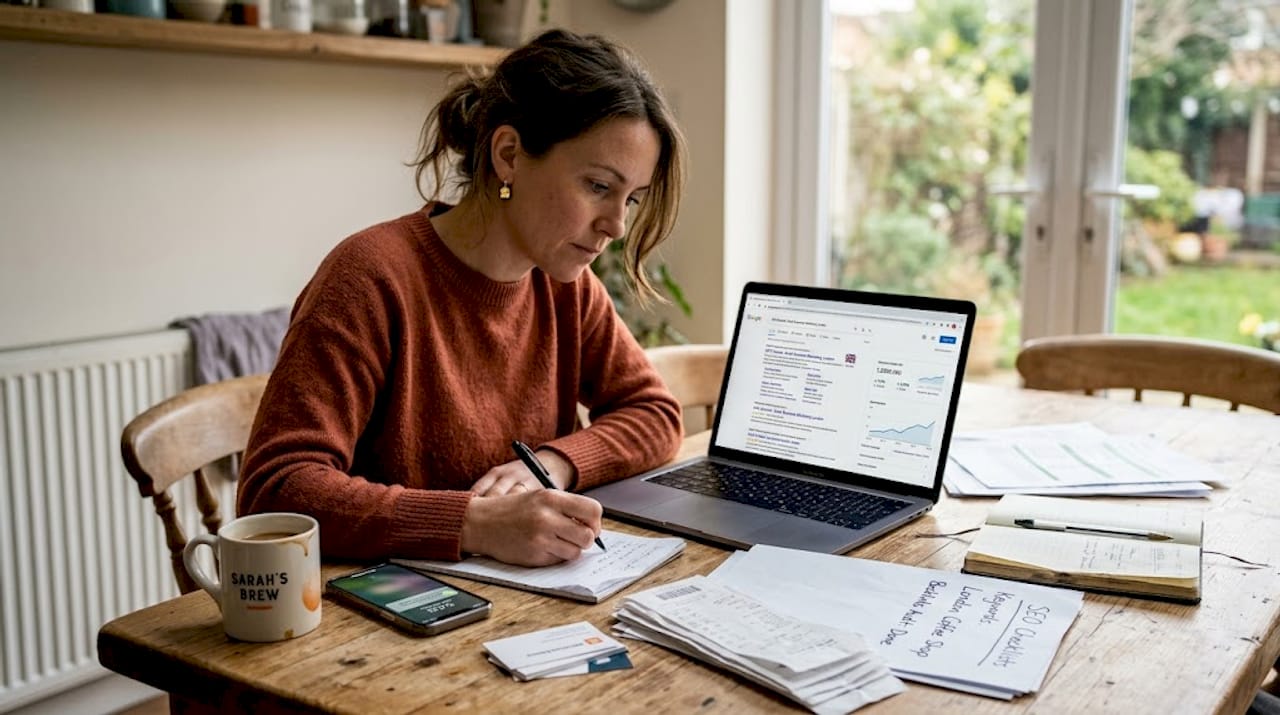
SEO also builds credibility in a way that paid ads cannot fully replicate. When your website appears at the top of Google’s organic results, customers perceive you as an authority. Ranking organically signals trust, which is particularly valuable in competitive UK markets where consumers are increasingly sceptical of paid placements. For businesses weighing their options, comparing SEO vs PPC reveals that both have their place, but SEO is the channel that keeps working long after the initial investment.
How digital marketing and SEO work together for UK SMEs
Knowing what SEO is, it becomes easier to see how it fits within the full marketing toolkit and how that integration creates real, measurable business growth.
Digital marketing is the umbrella, and SEO is one tactic inside it. That relationship matters enormously in practice. When your digital marketing channels are coordinated, each one amplifies the others. SEO and paid ads are not rivals. They are partners.
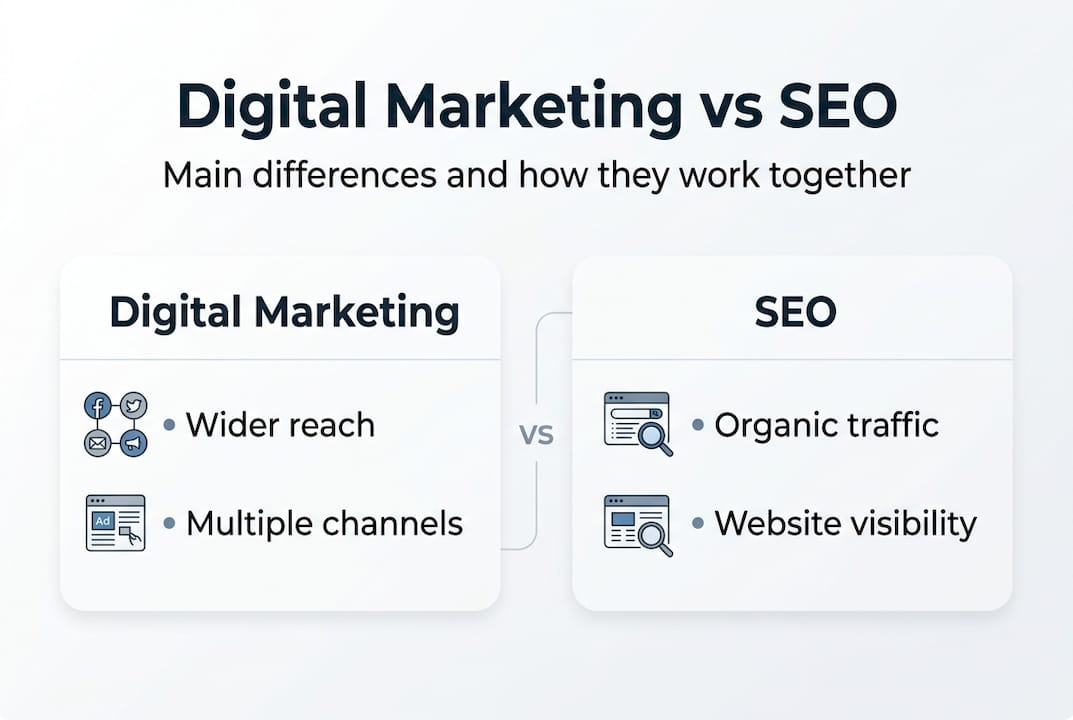
Here is a realistic example. A UK-based accountancy firm publishes a detailed guide on their website about self-assessment tax returns for freelancers. That piece is optimised for SEO so it ranks when freelancers search for help. The firm then promotes that same article through their LinkedIn page, includes it in their email newsletter, and runs a small paid campaign targeting freelancers in their region. The content does the work. SEO, social, email, and paid all work together to drive it to the right audience through different touchpoints.
Here are four practical steps to integrate your digital marketing and SEO effectively:
- Plan content around keyword opportunities. Before writing anything, check what your target audience is already searching for. Build your content calendar around those searches.
- Publish high-quality, helpful content consistently. Google rewards websites that regularly produce relevant, original material. Consistency matters more than volume.
- Promote every piece across your active channels. A blog post that only lives on your website is underperforming. Share it on social media, link to it in emails, and consider boosting it with paid promotion if it targets a high-value keyword.
- Measure and adjust monthly. Use Google Analytics to track organic traffic, time on page, and conversions. Adjust your strategy based on what the data tells you, not gut feeling alone.
Combining SEO and social media is one of the most effective strategies for UK SMEs because social engagement can generate backlinks, increase brand searches, and extend the reach of your content. Similarly, SEO and PPC synergy is powerful: you can use PPC data to discover which keywords convert well, then prioritise those terms in your organic SEO strategy.
“Consistency across channels amplifies results. A business that publishes one well-researched article per month, promotes it thoughtfully, and measures its impact will outperform a business that publishes ten pieces and does nothing else with them.”
The businesses that achieve the best results with effective SME marketing are those that stop treating their channels as separate efforts and start treating them as a single, coordinated system. That shift in thinking is often the difference between digital marketing that feels like a drain and digital marketing that genuinely grows a business.
Pro Tip: Create one strong piece of content per month that targets a specific keyword and speaks directly to a customer problem. Then repurpose it: post excerpts on social media, reference it in your next email campaign, and link to it from related pages on your website. One strong piece, promoted well, beats ten mediocre ones every time.
Why most small businesses struggle with digital marketing (and how to fix it)
Here is an uncomfortable truth most marketing content glosses over: the majority of UK SMEs that fail at digital marketing do not fail because they chose the wrong channel. They fail because they treat digital marketing as an event rather than a process.
We see this constantly. A business invests in a website redesign, publishes a few blogs, runs a short Google Ads campaign, and then wonders why nothing has changed. Digital marketing, and SEO in particular, is not a switch you flip. It is a discipline you build. The results from agency-driven SEO results we see from clients typically take three to six months to become visible, and they compound over time. That is not a weakness. It is the point.
The fix is straightforward, though it requires patience. Commit to a manageable plan. That might mean one blog post per month, a fully optimised Google Business Profile, and a quarterly review of your keyword rankings. Measure those specific activities, not vague feelings about whether “it is working.” Adjust based on data. Then repeat. Businesses that treat their digital marketing like a monthly utility, something that requires regular attention, not occasional bursts, are the ones that see sustained results.
Ready to grow your business online?
Now that you know what digital marketing really involves, and how SEO fits inside it, the next step is putting that knowledge into action for your specific business.
At Kickass Online, we work with a select group of UK SMEs who are serious about building a consistent, results-driven online presence. Whether you want to start with an SEO audit for your business to identify quick wins, explore our guide to SEO strategies to build your knowledge, or commission a high-converting website through our website design services, we are here to help you move from theory to measurable growth. We limit our client intake deliberately so every business we work with gets the focused attention it deserves.
Frequently asked questions
What is the main difference between digital marketing and SEO?
Digital marketing is an umbrella term for all online promotional activities, while SEO is a specific method focused on improving your site’s visibility in organic search results. As Xero’s guide explains, digital marketing is the umbrella and SEO is one tactic within it.
Can small businesses do digital marketing for free?
Yes, many digital marketing tactics including content creation, SEO, and organic social media are low-cost or free to start. Free digital marketing channels such as content creation and SEO require time rather than budget, making them accessible to businesses at every stage.
Is SEO a one-time setup or an ongoing process?
SEO is ongoing. Ongoing improvements to content and site signals are needed continuously to maintain and grow your search rankings over time.
Should I focus on paid ads or organic marketing first?
Most small businesses should start with organic tactics like SEO and content to build a solid foundation, then introduce paid advertising as their budget and needs grow. Combining free and paid marketing aligned to your goals and audience is the most sustainable approach for UK SMEs.
Recommended
- What is SEO in digital marketing? A guide for SMEs | Kickass Online
- SEO best practices checklist for UK small businesses 2026 | Kickass Online
- Local SEO for SMEs: Guide to Boost Search Visibility and Drive Local Traffic | Kickass Online
- Effective Digital Marketing Strategies for SMEs: Boost Your Online Performance | Kickass Online


Book A Discovery Call
Stay Connected