How to create a digital marketing plan for SMEs in 2026

Many small and medium businesses in Milton Keynes struggle without a clear digital marketing plan, limiting their growth potential and online visibility. Without structure, marketing efforts become scattered and ineffective. This guide walks you through creating a practical, step-by-step digital marketing plan tailored specifically for SMEs, helping you build a roadmap that drives real results and sustainable business growth.
Table of Contents
- Understand Your Business Goals And Target Audience
- Choose The Right Digital Marketing Channels And Tools
- Create A Step-By-Step Digital Marketing Plan
- Measure And Refine Your Digital Marketing Efforts
- Boost Your Digital Marketing With Expert Support From Kickass Online
- Frequently Asked Questions
Key takeaways
| Point | Details |
|---|---|
| Clear goals and audience understanding are essential | Define measurable objectives and profile your ideal customers to create targeted campaigns that resonate. |
| A structured plan includes preparation, execution, and measurement | Breaking down your strategy into actionable steps with timelines ensures consistent progress and accountability. |
| Choosing the right digital channels maximises impact | Select platforms where your target audience actively engages to optimise your marketing budget and reach. |
| Regular review and adjustment improve results over time | Track KPIs and refine tactics based on data insights to continuously enhance ROI and campaign performance. |
Understand your business goals and target audience
Before launching any digital marketing activity, you need absolute clarity on what you want to achieve and who you’re trying to reach. Defining clear business goals aligns marketing efforts for better performance and prevents wasted resources on unfocused campaigns.
Start by identifying specific, measurable goals. These might include increasing website traffic by 40% over six months, generating 20 qualified leads monthly, or boosting online sales by 25%. Vague ambitions like “get more customers” won’t give you the direction needed to build an effective plan. Your goals should tie directly to business growth, whether that’s revenue, market share, or brand awareness in Milton Keynes.
Next, profile your ideal customers in detail. What are their demographics, behaviours, pain points, and purchasing triggers? Understanding whether you’re targeting busy working professionals, local retailers, or corporate decision makers shapes every aspect of your digital strategy planning. Create customer personas that capture age ranges, job roles, online habits, and the problems your business solves for them.
Don’t forget the competitive landscape. Research what other Milton Keynes businesses in your sector are doing digitally. Identify gaps you can fill and strengths you can amplify. This competitive insight helps you position your messaging uniquely.
Key considerations when defining goals and audience:
- Set SMART goals: specific, measurable, achievable, relevant, time bound
- Identify where your customers spend time online and what content they consume
- Align marketing objectives with broader business ambitions for strategic coherence
- Document customer pain points to shape messaging that resonates emotionally
Pro Tip: Interview existing customers to validate your assumptions about audience needs and preferences. Their insights often reveal surprising opportunities you’d otherwise miss.
Choose the right digital marketing channels and tools
With your goals and audience clearly defined, you can now select the most effective channels to reach your customers. Selecting platforms where your target customers are active improves campaign success and prevents budget waste on irrelevant channels.
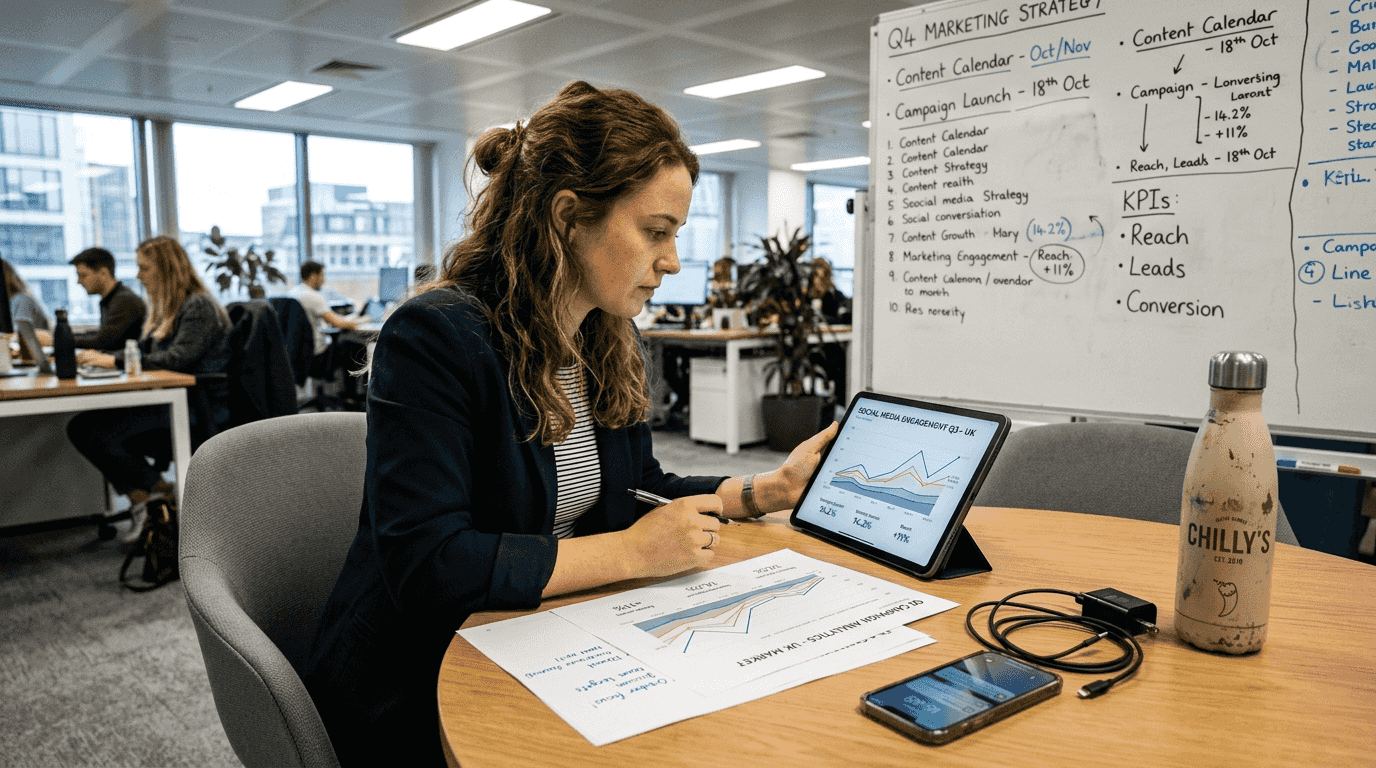
Each digital marketing channel offers distinct advantages for SMEs. SEO builds long term organic visibility, driving qualified traffic without ongoing ad spend. Social media platforms like LinkedIn, Facebook, and Instagram enable direct engagement and community building. Email marketing delivers exceptional ROI, nurturing leads through personalised communication. PPC advertising provides immediate visibility and precise targeting. Content marketing establishes authority and educates potential customers throughout their buying journey.
The right mix depends on your specific audience and resources. B2B companies often find LinkedIn and email highly effective, while consumer facing brands may prioritise Instagram and Facebook. Local businesses benefit enormously from Google Business Profile optimisation and local SEO.
| Channel | Best For | Typical ROI | Resource Needs |
|---|---|---|---|
| SEO | Long term organic growth | High over time | Medium to high |
| Social Media | Brand awareness, engagement | Medium | Medium |
| Email Marketing | Lead nurturing, retention | Very high | Low to medium |
| PPC Advertising | Immediate traffic, conversions | Variable | High budget |
| Content Marketing | Authority building, education | High over time | High time investment |
When matching channels to your customer profiles, consider where they actively seek solutions. Professionals researching business services often start with Google searches, making SEO crucial. Younger consumers may discover brands through Instagram or TikTok. Budget constraints matter too. Email and organic social require more time than money, while PPC demands ongoing ad spend.
Essential tools for planning and execution:
- Google Analytics for tracking website performance and user behaviour
- Social media scheduling platforms like Buffer or Hootsuite
- Email marketing tools such as Mailchimp or ConvertKit
- SEO software like SEMrush or Ahrefs for keyword research and monitoring
- Project management tools like Trello or Asana to organise campaigns
Consider exploring advertising platform options to understand different paid channels. Review your digital marketing checklist to ensure you’ve covered all essential elements.
Pro Tip: Start with two or three channels you can execute well rather than spreading yourself thin across every platform. Mastery beats mediocrity every time.
Create a step-by-step digital marketing plan
Knowing your channels and tools, you now need an organised framework that transforms strategy into action. A structured plan with timelines improves implementation and accountability, ensuring your team stays focused on priorities.
Begin by defining clear activities for each chosen channel. For SEO, this might include keyword research, on page optimisation, and monthly content creation. For social media, plan posting schedules, engagement protocols, and campaign themes. Email marketing requires list building tactics, content calendars, and automation sequences.
Set measurable objectives and deadlines for every activity. Rather than “improve SEO,” specify “rank on page one for five target keywords by August 2026.” Instead of “post regularly,” commit to “publish three valuable posts weekly on LinkedIn.” These concrete targets create accountability and allow progress tracking.
Assign roles and resources transparently. Who owns content creation? Who manages paid campaigns? For many SMEs, one person wears multiple hats initially, but clarity prevents tasks falling through cracks. If expertise gaps exist, decide whether to train internally or outsource to specialists. Budget planning must account for both tools and potential agency support.
Your implementation timeline:
- Month 1: Complete audience research, competitor analysis, and channel selection
- Month 2: Set up tools, create content calendars, and launch initial campaigns
- Month 3: Monitor early results, gather feedback, and refine tactics
- Month 4 onwards: Scale successful activities and test new approaches quarterly
| Activity | Owner | Timeline | Budget | Success Metric |
|---|---|---|---|---|
| SEO audit and keyword research | Marketing Manager | Week 1-2 | £500 | 20 target keywords identified |
| Website content optimisation | Content Writer | Week 3-6 | £1,200 | 10 pages optimised |
| Social media content creation | Social Media Coordinator | Ongoing | £800/month | 12 posts monthly |
| Email campaign setup | Marketing Manager | Week 2-4 | £300 | Welcome series live |
| PPC campaign launch | Paid Ads Specialist | Week 5 | £1,000/month | 50 qualified clicks weekly |
Include contingency planning for common obstacles. What if a campaign underperforms? Build in review points where you can pivot strategies. Allocate 10-15% of your budget as flexibility for testing new opportunities or addressing unexpected challenges.
Follow proven small business marketing steps to structure your approach systematically and avoid common pitfalls that derail SME marketing efforts.
Measure and refine your digital marketing efforts
Implementing your plan is just the beginning. Measuring results and continuously refining tactics ensures sustained improvement and growing returns. Using KPIs helps SMEs track effectiveness and improve campaigns based on real performance data rather than assumptions.
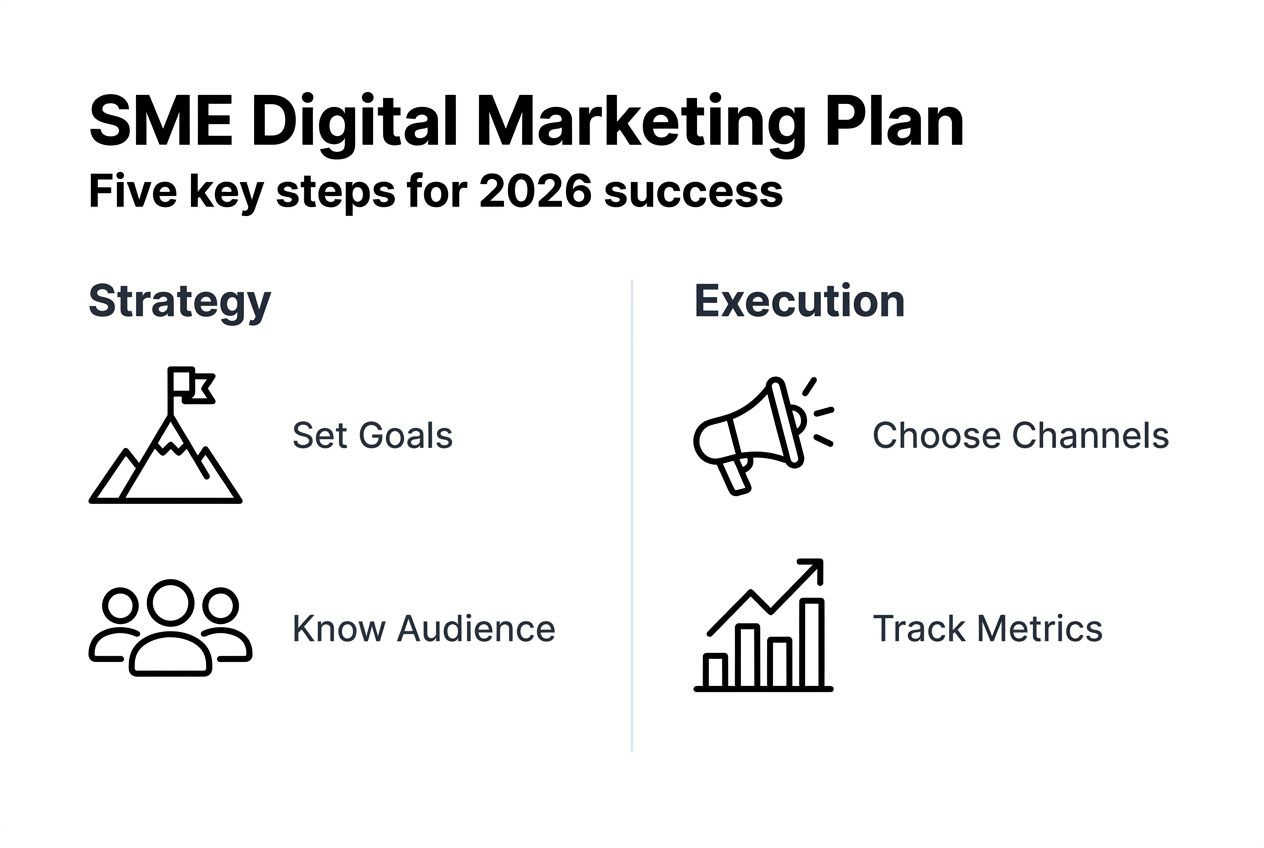
Identify key performance indicators aligned with your original goals. If you aimed to increase website traffic, track unique visitors, page views, and traffic sources. For lead generation goals, monitor conversion rates, form submissions, and cost per lead. E-commerce businesses focus on transaction volume, average order value, and customer acquisition cost. Choose three to five primary KPIs that directly reflect business impact.
Google Analytics provides comprehensive website data, showing which channels drive traffic, how visitors behave, and where they convert or drop off. Social media platforms offer native analytics revealing engagement rates, reach, and audience demographics. Email tools track open rates, click through rates, and conversion metrics. Consolidate these data sources into a simple dashboard you review weekly or monthly.
Interpreting data requires looking beyond surface numbers. A traffic spike means nothing if visitors immediately bounce. High email open rates are useless without clicks. Dig into user journeys to understand what’s working and why. Which content pieces generate the most engagement? Which traffic sources deliver the highest quality leads? What times and days perform best for social posts?
Essential metrics to track:
- Website traffic volume and quality (bounce rate, time on site)
- Conversion rates at each funnel stage
- Cost per acquisition across paid channels
- Engagement rates on social platforms (likes, shares, comments)
- Email performance (open rates, click rates, unsubscribe rates)
- Return on investment for each marketing activity
Based on insights, adjust tactics systematically. If blog posts about specific topics drive more traffic, create more of that content. When certain ad audiences convert better, reallocate budget towards them. If email subscribers engage more with video content, incorporate more multimedia. Optimisation is iterative, building on what works while eliminating what doesn’t.
“The most successful digital marketing plans are living documents, evolving based on performance data and changing market conditions rather than remaining static.”
Schedule formal review sessions quarterly to assess overall strategy effectiveness. Are you on track to meet annual goals? Do customer behaviours or market conditions require strategic pivots? Adapt your plan proactively rather than reacting to problems after they’ve damaged performance.
Explore comprehensive digital marketing KPIs to ensure you’re tracking the metrics that matter most for sustainable SME growth.
Pro Tip: Create a simple one page scorecard showing your top five KPIs, updated monthly. Share it with your entire team so everyone understands performance and can contribute to improvements.
Boost your digital marketing with expert support from Kickass Online
Creating and executing a comprehensive digital marketing plan requires expertise, time, and ongoing commitment. If you’re ready to accelerate your results with professional support, Kickass Online specialises in helping Milton Keynes SMEs build and implement effective digital marketing strategies that drive measurable growth.
Our tailored approach combines strategic planning with hands on execution across website design and development, search engine optimisation, and integrated marketing campaigns. We work with a limited number of clients to ensure dedicated attention and customised solutions that align with your specific business goals. Whether you need help refining your existing plan or building one from scratch, our team brings the technical expertise and local market knowledge to maximise your online visibility and customer engagement. Discover how our proven SEO optimisation workflow can transform your digital presence and deliver sustainable results.
Frequently asked questions
How long does it take to create a digital marketing plan?
Creating a basic digital marketing plan typically takes anywhere from a few days to two weeks, depending on your business complexity and existing knowledge. Comprehensive plans requiring detailed competitor research, audience analysis, and channel strategy development may need up to a month. The planning process includes research phases, goal setting, channel selection, budget allocation, and timeline creation. Following proven small business marketing steps can streamline this process significantly. Remember that your plan should remain flexible, evolving as you gather performance data and market insights.
What digital marketing channels are best for small businesses?
SEO, social media marketing, and email consistently deliver exceptional ROI for most small businesses due to their cost effectiveness and targeting capabilities. SEO builds sustainable organic visibility without ongoing ad costs, while email nurturing converts leads efficiently. Social platforms enable direct customer engagement and community building. However, the optimal channel mix depends entirely on your target audience behaviours and business goals. B2B companies often prioritise LinkedIn and content marketing, while consumer brands may focus on Instagram and Facebook. Review digital marketing strategies for SMEs to identify the best fit for your specific situation.
How do I measure the success of my digital marketing plan?
Measure success by tracking KPIs directly aligned with your original business goals, such as website traffic growth, conversion rates, lead quality, and revenue attribution. Use analytics tools like Google Analytics to gather comprehensive data on user behaviour, traffic sources, and conversion paths. Monitor engagement metrics on social platforms and email performance indicators like open and click through rates. The key is focusing on metrics that reflect actual business impact rather than vanity numbers. Successful measurement requires consistent data collection, regular analysis, and willingness to adjust tactics based on insights. Explore essential digital marketing KPIs to ensure you’re tracking what truly matters for SME growth.
Should I hire an agency or build an in-house marketing team?
This decision depends on your budget, timeline, and internal expertise. Agencies offer immediate access to diverse specialists and proven processes without recruitment overhead, making them ideal for SMEs needing quick results or lacking marketing experience. In-house teams provide deeper brand knowledge and dedicated focus but require significant investment in salaries, training, and tools. Many successful SMEs start with agency support to establish foundations and strategy, then gradually build internal capabilities for execution. Consider a hybrid approach where agencies handle specialised tasks like technical SEO while your team manages day-to-day content and social media. Evaluate your specific needs, growth stage, and resource availability to determine the best approach for your business.
Recommended


Book A Discovery Call
Stay Connected