Content Strategy Boosts UK SME Engagement 60% in 2026

Strategic planning transforms scattered efforts into measurable growth. UK SMEs implementing structured content strategies consistently achieve engagement rates up to 60% higher than competitors posting without direction. This guide unpacks what content strategy truly means, reveals its dual power in SEO and customer connection, and delivers practical frameworks tailored for resource-conscious businesses ready to compete confidently online.
Table of Contents
- Understanding Content Strategy: Definition And Importance
- The Role Of Content Strategy In Enhancing Online Presence
- The Role Of Content Strategy In Driving Customer Engagement
- Aligning Content Strategy With Business Goals And Audience Needs
- Common Misconceptions In Content Strategy
- Frameworks And Models For Content Strategy
- Content Types And Formats: Selecting What Works
- Maintaining And Evolving Your Content Strategy
- Enhance Your Content Strategy With Expert Web Solutions
- Frequently Asked Questions
Key Takeaways
| Point | Details |
|-------|---------||
| Strategy bridges goals and audience | Aligning business objectives with customer needs creates marketing that converts and builds loyalty. |
| SEO and engagement compound | Strategic content improves search rankings whilst deepening customer relationships through relevance. |
| Quality beats quantity always | Misconceptions around volume undermine results; focus on substance over frequency. |
| Frameworks enable execution | Audience research, content audits, and calendars transform strategy from theory to consistent action. |
| Evolution sustains impact | Regular performance reviews and content updates maintain competitive advantage long term. |
Understanding Content Strategy: Definition and Importance
Content strategy means planning, creating, delivering, and governing useful content that serves both audience needs and business goals. It’s not random blogging or social posts. It’s the systematic approach that determines what to say, to whom, when, and through which channels to drive specific outcomes.
This discipline acts as a bridge. One side connects to what your customers search for, worry about, and need to know. The other anchors to your business objectives like generating leads, building authority, or nurturing loyalty. Without this bridge, content floats aimlessly, consuming time and budget whilst delivering minimal returns.
For small and medium UK businesses, content strategy as a bridging concept becomes critical when competing against larger brands with deeper pockets. Strategic content levels the playing field by maximizing impact per pound spent and per hour invested.
Key objectives content strategy helps UK SMEs achieve include:
- Enhanced online visibility through search engine optimization
- Stronger customer relationships via relevant, timely messaging
- Higher conversion rates by addressing buyer journey stages
- Improved brand authority through consistent expertise demonstration
- Efficient resource allocation focused on high-impact activities
“Businesses with documented SME content marketing strategies are 538% more likely to report success compared to those without formal plans.”
This statistic reveals why intuition alone fails. Documentation forces clarity around audience, goals, and measurement, transforming vague intentions into accountable actions.
The Role of Content Strategy in Enhancing Online Presence
Search engines reward websites that consistently publish content matching user search intent. Content strategy ensures every article, video, or guide you create aligns with keywords your potential customers actually use when seeking solutions you provide.
This alignment dramatically improves search rankings. Higher positions drive exponential organic traffic growth because users rarely scroll past the first few results. For UK SMEs, this means capturing customers actively looking for your services without paying for every click.
Consider two Buckinghamshire plumbing firms. One publishes sporadically about whatever seems interesting. The other researches SEO strategies for SMEs, identifies high-intent searches like “emergency boiler repair Aylesbury,” and creates targeted content addressing these queries. The strategic firm dominates local search whilst the reactive competitor remains invisible.

| Approach | Monthly Organic Traffic | Lead Conversion Rate | Content Investment ROI |
|---|---|---|---|
| Unplanned content | 320 visitors | 1.8% | Poor, inconsistent |
| Strategic content | 2,140 visitors | 4.3% | Strong, predictable |
This comparison illustrates strategic content’s compounding advantage. More traffic plus higher conversion rates equals substantially more customers from the same effort.
SEO best practices supported by content strategy include:
- Keyword research informing topic selection and headline structure
- Internal linking architecture guiding users and search crawlers
- Regular publishing schedules signaling site freshness
- Topic clusters establishing topical authority in your niche
- Meta optimization ensuring compelling search result snippets
Video content particularly amplifies visibility. Video content impact on visibility shows platforms prioritizing video in search results, whilst users engage longer with visual formats. Strategic use of video tutorials, behind-the-scenes content, or product demonstrations attracts both algorithm favor and human attention.
Local SEO represents another strategic win for UK SMEs. By creating local SEO guidance focused content around geographic keywords and location-specific problems, businesses capture customers in their service area who are ready to buy now, not just browse.
The Role of Content Strategy in Driving Customer Engagement
Visibility brings people to your website. Engagement keeps them there, builds trust, and converts browsers into buyers then advocates. Strategic content achieves this by delivering exactly what audiences need at each relationship stage.
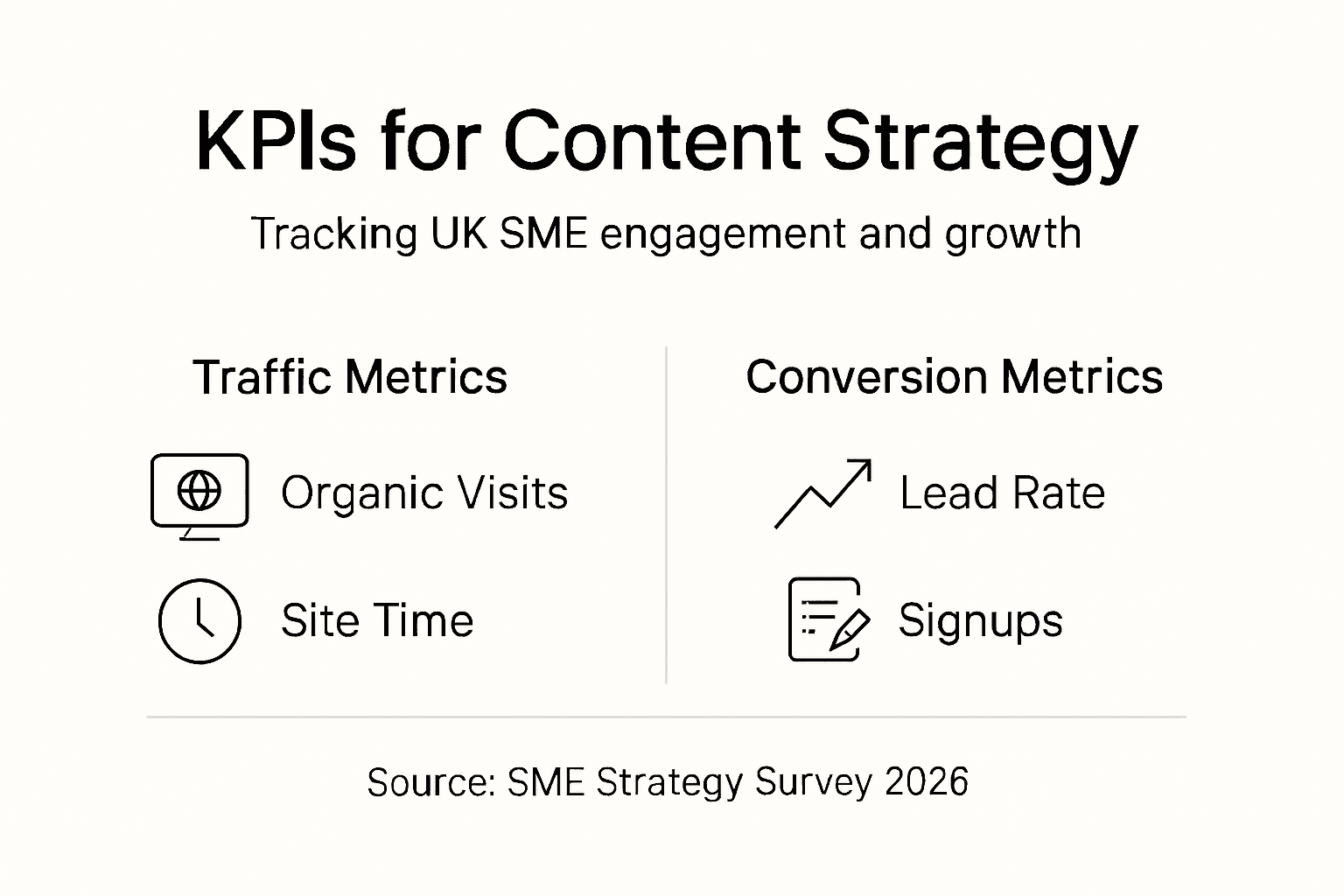
Engagement metrics improved by content strategy include time on site, social shares, comments, email signups, and repeat visits. Each metric signals growing customer interest and relationship depth. When visitors spend six minutes reading your guide instead of thirty seconds skimming generic text, search engines notice and reward you with better rankings.
Personalization transforms engagement from passive consumption to active participation. Content strategy enables this by segmenting audiences and tailoring messages. A manufacturer might create different content paths for procurement managers versus end users, addressing distinct concerns and using appropriate language for each.
Effective content formats driving engagement:
- In-depth blog articles establishing expertise and answering complex questions
- Video demonstrations showing products or processes in action
- User-generated content like customer stories building authentic social proof
- Interactive tools such as calculators or assessments providing immediate value
- Email sequences nurturing leads through personalized journeys
Pro Tip: Create a simple feedback loop by asking customers what questions they have before purchasing. Use their exact language in your content to ensure relevance resonates immediately.
The content marketing impact on engagement extends beyond metrics. Strategic content builds emotional connections by consistently demonstrating you understand customer challenges and possess solutions. This understanding manifests through helpful guides, honest comparisons, and transparent communication that prioritizes audience needs over aggressive selling.
Customer engagement benefits achieved with strategic content:
- Lower bounce rates as relevant content matches visitor intent
- Higher social sharing extending organic reach
- Increased email list growth from valuable lead magnets
- Stronger brand recall through consistent messaging
- More referrals as satisfied customers share helpful resources
Engagement compounds over time. Each interaction strengthens the relationship, making the next conversion easier. Strategic content creates this virtuous cycle by prioritizing audience value in every piece published.
Aligning Content Strategy with Business Goals and Audience Needs
Generic content wastes resources. Effective strategy starts by defining precise business objectives then identifying exactly who needs to hear your message to achieve those objectives.
Customer personas guide this targeting. A persona documents a representative customer segment’s demographics, challenges, goals, information sources, and buying triggers. Instead of creating content for “small business owners,” you write for “Sara, a 42-year-old accountancy firm partner worried about digital transformation whilst managing client deadlines and staff development.”
This specificity sharpens everything. Headlines address Sara’s exact concerns. Examples reference her industry. Tone matches her professional context. Content becomes a conversation with one person, not a broadcast to everyone.
Aligning content goals with sales and marketing objectives ensures every piece serves a purpose:
- Define measurable business goals like “generate 50 qualified leads monthly” or “reduce support tickets 30%”
- Map content to customer journey stages from awareness through consideration to decision
- Assign specific KPIs per content type such as traffic for awareness content or conversion rate for decision-stage pieces
- Establish baseline metrics before launching new content initiatives
- Review performance monthly and adjust topics, formats, or distribution based on data
- Connect content metrics to revenue by tracking how engaged users progress through your sales funnel
Pro Tip: Schedule quarterly persona reviews. Customer needs evolve, especially in fast-changing sectors. Outdated personas lead to irrelevant content that audiences ignore.
The guide to tailoring content strategy emphasizes this alignment as non-negotiable. Without clear goals and audience understanding, even beautifully crafted content fails because it speaks to no one specifically about nothing particularly urgent.
Measurable KPIs tracking strategy success include organic traffic growth, keyword ranking improvements, conversion rate by content type, engagement metrics like time on page, lead generation volume, and ultimately revenue attributed to content-influenced customers. These numbers transform content from a cost center to a profit driver.
Common Misconceptions in Content Strategy
Misunderstandings about content strategy waste budgets and undermine results. Clearing these misconceptions helps UK SMEs focus effort where it actually drives returns.
Quality trumps quantity every time. Publishing five mediocre articles weekly generates less value than one exceptional guide monthly. Search engines prioritize comprehensive, authoritative content over thin, rushed posts. Customers remember and share genuinely helpful resources, not forgettable filler.
Content strategy extends far beyond SEO. Yes, search visibility matters. But strategic content also builds brand identity, supports sales conversations, reduces support costs through self-service resources, and establishes thought leadership. Viewing content solely as an SEO tactic ignores these broader business impacts.
Ongoing maintenance keeps content working. Many businesses publish then forget. But outdated statistics, broken links, and obsolete advice erode trust and rankings. Regular content audits and updates maintain performance whilst requiring far less effort than creating new pieces constantly.
Key misconceptions to avoid:
- More content always beats better content
- Content strategy means stuffing keywords into articles
- Once published, content requires no further attention
- Social media posts alone constitute a content strategy
- Strategy works immediately without sustained effort
“Companies that neglect content maintenance see average rankings drop 32% within twelve months as competitors publish fresher, more accurate information.”
This statistic highlights the hidden cost of publish-and-forget approaches. Content degrades over time without intentional upkeep.
Another dangerous myth suggests small businesses lack resources for effective content strategy. Reality shows the opposite. Limited budgets demand strategic focus more than large enterprises that can afford scattershot approaches. Strategic SMEs achieve better ROI by concentrating resources on high-impact content rather than trying everything simultaneously.
Frameworks and Models for Content Strategy
Structured frameworks transform content strategy from overwhelming concept to manageable process. UK SMEs benefit most from cyclical models that acknowledge content’s ongoing nature whilst providing clear phases for execution.
The content strategy cycle includes these connected phases:
- Research your audience deeply through surveys, interviews, and analytics to understand their needs, language, and information gaps
- Align content objectives with business goals by defining what success looks like and how content contributes
- Audit existing content to identify gaps, outdated material, and high-performing pieces worth expanding
- Plan topics, formats, and publishing schedules using a content calendar that balances audience needs with business priorities
- Produce content consistently following quality standards and brand guidelines that ensure every piece meets strategic requirements
- Measure performance against established KPIs using analytics tools to track what works and what underperforms
- Optimize by refreshing high-potential content, eliminating dead weight, and adjusting strategy based on performance data
This cycle repeats continuously. Each iteration improves as you learn what resonates with your specific audience.
| Phase | Key Activities | Expected Outcomes |
|---|---|---|
| Research | Persona development, keyword research, competitor analysis | Clear audience understanding |
| Align | Goal setting, KPI definition, resource allocation | Strategic direction |
| Audit | Content inventory, performance review, gap analysis | Optimization opportunities |
| Plan | Calendar creation, topic clustering, resource scheduling | Execution roadmap |
| Produce | Writing, design, video creation following guidelines | Quality content assets |
| Measure | Analytics review, conversion tracking, engagement analysis | Performance insights |
| Optimize | Content updates, format testing, distribution refinement | Continuous improvement |
Pro Tip: Integrate analytics from day one. Install tracking before publishing so you measure impact accurately rather than guessing what works.
Content calendars deserve special attention. They prevent reactive scrambling by planning topics months ahead whilst maintaining flexibility for timely opportunities. Effective calendars balance evergreen content that stays relevant indefinitely with topical pieces addressing current events or seasonal needs.
Content audits identify which existing pieces deserve updates, which need retirement, and where gaps exist. This prevents duplication whilst maximizing value from past investments. The content strategy frameworks detailed in comprehensive guides show how regular audits double content ROI by optimizing what you already have before creating more.
Content Types and Formats: Selecting What Works
Different formats serve different purposes. Strategic selection based on goals and audience preferences maximizes impact per unit of effort.
Video content generates highest conversion rates, up to 80% better than text alone. Visual demonstrations build trust faster by showing rather than telling. However, video requires more production resources and technical skill, making it best for high-value topics or products.
Written articles remain essential for SEO and detailed explanations. Search engines index text easily, and comprehensive guides establish expertise whilst capturing long-tail keywords. Articles cost less to produce and update than video, making them ideal for covering broad topic ranges.
Infographics excel at simplifying complex data into shareable visual formats. They perform well on social media and earn backlinks when genuinely useful. But infographics alone rarely drive conversions without supporting detailed content.
User-generated content like customer reviews and case studies builds authentic social proof. Testimonials from real customers overcome skepticism more effectively than any marketing claim. This format requires minimal production cost but depends on having satisfied customers willing to participate.
| Format | Conversion Rate | Engagement Level | Production Cost | SEO Value | Best Use Case |
|---|---|---|---|---|---|
| Video | Highest (80%+) | Very high | High | Moderate | Product demos, tutorials |
| Articles | High (65%) | High | Low | Excellent | Expertise, education, SEO |
| Infographics | Moderate (45%) | Moderate | Moderate | Low | Data presentation, social |
| User content | Very high (85%) | Very high | Very low | Low | Trust building, social proof |
Format recommendations based on SME goals:
- Brand awareness: Video and infographics for social sharing
- Lead generation: In-depth articles with valuable downloadable resources
- Conversion: Customer testimonials and detailed product comparisons
- Customer retention: Educational video series and exclusive guides
- SEO growth: Comprehensive written content covering topic clusters
Balance matters. A content mix incorporating multiple formats engages different learning styles and distributes across varied channels. Start with formats matching your existing skills and equipment, then expand as resources grow.
Budget-conscious SMEs often succeed by repurposing content across formats. Transform one comprehensive guide into a video script, an infographic highlighting key stats, social posts covering individual tips, and an email series. This multiplies reach without multiplying effort.
Maintaining and Evolving Your Content Strategy
Content decay threatens even successful strategies. Published pieces gradually lose effectiveness as information ages, competitors publish newer content, and audience needs shift. Active maintenance sustains the gains your initial strategy delivers.
Ignoring content updates damages SEO as search engines favor fresh, accurate information. Rankings slip when competitors publish updated guides whilst your 2024 statistics and outdated advice remain unchanged. Engagement drops when visitors notice stale content, reducing trust in your expertise.
Analyzing content performance reveals what deserves attention. Review analytics monthly to identify:
- High-traffic pages with declining engagement worth refreshing
- Outdated content ranking well that could rank even better with updates
- Underperforming pieces to either improve or retire
- Successful formats and topics to replicate and expand
Recommended maintenance actions:
- Conduct quarterly content audits reviewing all published pieces
- Update statistics, examples, and screenshots annually minimum
- Refresh outdated content rather than archiving valuable rankings
- Repurpose top-performing content into new formats
- Consolidate thin content covering similar topics into comprehensive guides
- Monitor competitors to identify content gaps you should fill
Pro Tip: Schedule monthly strategy reviews every third Friday. Consistency ensures maintenance never gets forgotten during busy periods.
Leveraging analytics transforms maintenance from guesswork to systematic improvement. Track which headlines drive clicks, which sections readers engage with longest, where visitors drop off, and what calls-to-action convert best. Apply these insights when updating existing content and creating new pieces.
The website and content maintenance importance extends beyond content itself. Technical factors like page speed, mobile optimization, and security affect content performance. Holistic maintenance addresses both content quality and the technical foundation supporting it.
Adaptability keeps strategy relevant as markets evolve. What worked brilliantly in 2025 may need adjustment in 2026 as customer priorities shift or new competitors emerge. Build flexibility into your strategy by testing new formats, monitoring industry trends, and staying connected to customer feedback through surveys and conversations.
Enhance Your Content Strategy with Expert Web Solutions
Implementing everything covered requires time, expertise, and consistent execution. Many UK SMEs find partnering with specialists accelerates results whilst freeing internal teams to focus on core business activities.
Professional website design services in Buckinghamshire ensure your content sits on a technical foundation optimized for speed, mobile responsiveness, and user experience. Beautiful design means nothing if slow loading drives visitors away before reading your carefully crafted content.
Strategic SEO guidance transforms content plans into ranking realities. Experts conducting keyword research, competitive analysis, and technical audits identify opportunities your team might miss. The SEO strategy guide details how professional implementation compounds results over time.
Ongoing website maintenance services for SMEs handle the technical upkeep and content updates that keep strategies performing. Regular security patches, performance optimization, and content refreshes happen systematically rather than getting postponed during busy periods.
Kickass Online specializes in these integrated solutions for UK small and medium businesses. Limited client intake ensures personalized attention and strategies tailored to your specific market, goals, and constraints rather than generic approaches.
Frequently Asked Questions
What is the most important metric to measure content strategy success?
Conversion rate matters most because it directly ties content to revenue. Track how many visitors complete desired actions like requesting quotes, signing up, or purchasing after engaging with your content. High traffic means little if nobody converts into customers or leads.
How often should SMEs update their content strategy?
Review strategy quarterly and refresh individual content pieces at least annually. Market conditions, customer needs, and competitive landscapes shift constantly. Quarterly reviews catch major changes early whilst annual content updates maintain accuracy and rankings without overwhelming resources.
Can small businesses with limited budgets benefit from content strategies?
Absolutely. Limited budgets demand strategic focus more than large enterprises. Strategy ensures every pound and hour spent produces maximum impact by targeting high-value opportunities rather than scattering effort. Start small with core topics then expand systematically as results compound.
What is the difference between content strategy and content marketing?
Content strategy is the planning framework defining what, why, when, and for whom you create content. Content marketing is the execution and promotion of that content. Strategy comes first and guides marketing activities. You cannot market effectively without strategic direction underlying it.
How do I create effective customer personas for my content?
Interview real customers about their challenges, goals, information sources, and buying triggers. Combine interviews with analytics data showing how audiences actually behave on your site. Create 2-4 detailed personas representing major customer segments, then reference them when planning every piece of content.
Recommended


Book A Discovery Call
Stay Connected