How to Secure Website for Reliable Business Protection

Protecting your website is a challenge every business owner in Milton Keynes encounters as digital threats evolve. Securing your online presence is vital not only for maintaining smooth performance but also for safeguarding customer information against cyber attacks. This guide offers practical steps—starting with a thorough security risk assessment and moving through robust authentication, encryption, continuous updates, and compliance testing—to help you build resilient digital defences and keep your business reputation intact.
Table of Contents
- Step 1: Assess Website Security Risks
- Step 2: Implement Robust Authentication Methods
- Step 3: Configure SSL And Encrypt Data
- Step 4: Update Software And Monitor Vulnerabilities
- Step 5: Verify Security Measures And Test Compliance
Quick Summary
| Key Point | Explanation |
|---|---|
| 1. Conduct Regular Security Assessments | Perform comprehensive evaluations of your website’s vulnerabilities to identify and mitigate potential cyber risks effectively. |
| 2. Implement Strong Authentication Methods | Use multi-factor authentication and other advanced techniques to bolster security against unauthorized access and threats. |
| 3. Regularly Update Software and Monitor Vulnerabilities | Maintain proactive monitoring and update strategies to address security weaknesses and safeguard your digital infrastructure. |
| 4. Ensure Proper Data Encryption | Configure SSL/TLS protocols appropriately to protect sensitive data during transmission and foster user trust. |
| 5. Validate Security Measures Through Testing | Conduct rigorous compliance checks to ensure implemented security controls function effectively and meet necessary standards. |
Step 1: Assess website security risks
Securing your business website starts with a comprehensive understanding of potential vulnerabilities. A thorough security risk assessment helps you identify and mitigate potential threats before they can compromise your digital infrastructure.
To effectively assess your website’s security risks, you’ll want to follow a structured approach recommended by cybersecurity experts. The process begins with identifying potential cybersecurity vulnerabilities across multiple dimensions. This involves several key activities:
- Conduct a comprehensive website audit
- Review all software and plugin versions
- Analyse current security configurations
- Identify potential entry points for cyber attacks
- Evaluate user access management protocols
The assessment should systematically map out potential weaknesses in your digital infrastructure. This means examining everything from your content management system and hosting environment to individual user permissions and third-party integrations.
A rigorous security risk assessment is not a one-time event, but an ongoing process of continuous monitoring and improvement.
Pay special attention to common vulnerability areas such as outdated software, weak authentication mechanisms, unpatched security gaps, and potential configuration errors. You’ll want to create a detailed inventory of all digital assets, understanding how each component might represent a potential security risk.

Prioritise vulnerabilities based on their potential impact and likelihood of exploitation. Not all risks are created equal - some represent minor concerns while others could potentially devastate your business operations.
Below is a summary of common website security vulnerabilities and their business impact:
| Vulnerability Area | Potential Impact | Business Risk |
|---|---|---|
| Outdated software | Enables data breaches | Financial loss or reputation damage |
| Weak authentication | Allows unauthorised access | Loss of confidential data |
| Unpatched security gaps | Makes systems exploitable | Service interruption, legal penalties |
| Configuration errors | Undermines protection | System instability, trust erosion |
| Poor access control | Increases internal threats | Theft of sensitive information |
Professional tip: Schedule quarterly comprehensive security assessments to stay ahead of emerging cyber threats and maintain robust digital protection.
Step 2: Implement robust authentication methods
Strengthening your website’s security begins with implementing sophisticated authentication protocols that protect user accounts and sensitive business data. A comprehensive approach to authentication is crucial for preventing unauthorised access and potential cyber threats.
The foundation of robust security lies in multi-factor authentication strategies that go beyond traditional password protection. These advanced methods combine multiple verification techniques to create a formidable defence against potential breaches:
- Implement two-factor or multi-factor authentication
- Use biometric verification methods
- Integrate physical security tokens
- Create complex password requirements
- Enable risk-based authentication protocols
Careful configuration of your authentication systems involves more than just adding extra layers. You’ll need to select verification methods that balance security with user experience, ensuring that protection doesn’t become a barrier to accessing your digital resources.
Authentication is not just about preventing access, but about creating a seamless yet secure digital environment for your users.
Strong authentication requires a strategic approach that considers different risk levels and user contexts. This means developing adaptive authentication mechanisms that can respond dynamically to potential security threats.
Consider implementing contextual authentication protocols that analyse factors like login location, device characteristics, and user behaviour patterns. These sophisticated techniques can automatically detect and challenge suspicious access attempts.
Pro tip: Regularly review and update your authentication mechanisms, testing them against the latest cybersecurity standards to maintain robust protection.
The table below compares key authentication methods by security strength and user convenience:
| Method | Security Strength | User Experience |
|---|---|---|
| Password-only | Low | Fast, minimal steps |
| Two-factor (2FA) | Moderate | Extra steps, more secure |
| Multi-factor (MFA) | High | Multiple steps, highly secure |
| Biometric | High | Convenient, quick access |
| Physical token | Very high | Requires device, secure |
Step 3: Configure SSL and encrypt data
Securing your website’s data transmission requires implementing robust encryption protocols that protect sensitive information from potential cyber interceptions. Protecting your digital communication channels is a critical step in maintaining your business’s online security integrity.
TLS protocol configuration forms the cornerstone of effective data encryption, providing a comprehensive shield for your digital communications. When implementing encryption, you’ll need to focus on several key strategic elements:
- Select the latest TLS version (currently TLS 1.3)
- Disable outdated SSL and early TLS protocols
- Choose strong cryptographic cipher suites
- Implement proper certificate management
- Configure secure key exchange mechanisms
- Enable perfect forward secrecy
Effective encryption goes beyond simply installing an SSL certificate. You’ll need to carefully configure your server settings to ensure comprehensive protection across all communication channels.
Encryption is not just a technical requirement, but a fundamental commitment to protecting your customers’ digital trust.
Careful implementation requires understanding the nuanced differences between various encryption protocols. Secure socket layer technologies have evolved significantly, with modern transport layer security offering more robust protection mechanisms.
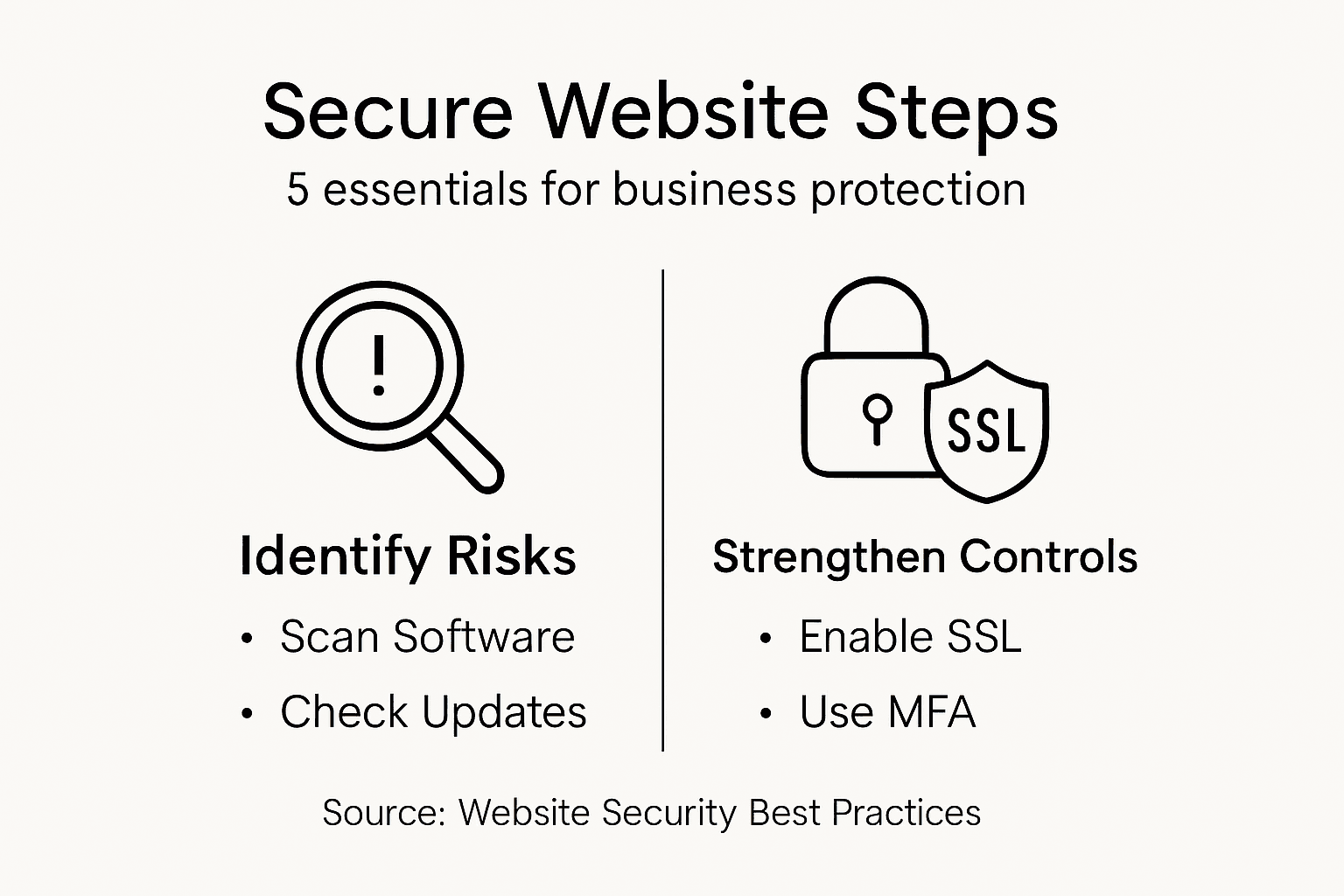
Pay close attention to your cipher suite selections, ensuring you’re using contemporary encryption standards that balance security performance with computational efficiency. This means regularly updating your configuration to address emerging cybersecurity challenges.
Pro tip: Conduct periodic security audits of your encryption configurations, using specialised scanning tools to identify and remediate potential vulnerabilities.
Step 4: Update software and monitor vulnerabilities
Maintaining your website’s security requires a proactive approach to software management and vulnerability tracking. Staying ahead of potential cyber threats means implementing a systematic strategy for monitoring and addressing potential security weaknesses.
Vulnerability management strategies are crucial for protecting your digital infrastructure from emerging cyber risks. When approaching software updates and vulnerability monitoring, you’ll need to focus on several critical aspects:
- Establish automated update mechanisms
- Create a comprehensive software inventory
- Implement regular vulnerability scanning
- Prioritise critical security patches
- Set up real-time threat monitoring
- Develop a rapid response protocol
Effective vulnerability management goes beyond simply installing occasional updates. You’ll need to develop a comprehensive approach that combines proactive monitoring with swift remediation techniques.
Vulnerability management is a continuous process, not a one-time task that can be completed and forgotten.
Cybersecurity maintenance requires consistent attention to detail and a systematic approach to identifying and addressing potential security gaps. This means developing a robust process for tracking and responding to potential vulnerabilities across all your digital platforms.
Pay close attention to the frequency and criticality of available updates. Some patches address minor improvements, while others resolve critical security vulnerabilities that could compromise your entire digital infrastructure.
Pro tip: Implement an automated patch management system that provides real-time alerts and streamlines the update process across all your digital platforms.
Step 5: Verify security measures and test compliance
Ensuring your website’s security isn’t just about implementing protective measures, but also systematically validating their effectiveness. A comprehensive security verification process helps you identify potential gaps and maintain robust digital protection.
Compliance monitoring frameworks are essential for thoroughly assessing your organisation’s security infrastructure. When conducting security verification, you’ll need to focus on multiple critical dimensions:
- Conduct comprehensive security audits
- Test all authentication mechanisms
- Simulate potential cyber attack scenarios
- Review access control configurations
- Validate encryption implementation
- Document and analyse security performance
Effective compliance testing requires a methodical and rigorous approach that goes beyond surface-level assessments. You’ll need to develop a structured process that examines technical, procedural, and operational security aspects.
Security verification is a dynamic process that demands continuous attention and proactive investigation.
Security compliance testing involves more than simply checking boxes. It requires a deep, nuanced understanding of your digital ecosystem’s potential vulnerabilities and resilience mechanisms.
Carefully document your testing procedures, ensuring you capture detailed insights about each security control’s performance. This documentation will help you track improvements and demonstrate your commitment to maintaining robust cybersecurity standards.
Pro tip: Engage independent cybersecurity professionals to conduct periodic penetration testing, providing an objective assessment of your security infrastructure.
Secure Your Website with Professional Expertise for Lasting Business Protection
The challenge of protecting your business website from cyber threats requires more than regular updates and basic security measures. From assessing vulnerabilities to implementing strong authentication and encryption protocols, every step is crucial to safeguard sensitive data and maintain your digital reputation. If you are aiming for continuous protection, expert support can help you navigate these complex security requirements with confidence.

Discover how Kickass Online’s dedicated team specialises in crafting high-converting, secure websites that prioritise robust authentication and ongoing security monitoring. Explore our tailored solutions in the Websites category designed for small and medium-sized businesses seeking reliable digital defence. Don’t leave your website at risk. Visit Kickass Online today and book your personalised consultation to secure your business future. Gain peace of mind and start protecting your digital presence now.
Frequently Asked Questions
How can I assess website security risks effectively?
Begin by conducting a comprehensive website audit to identify potential vulnerabilities. Review software versions, analyse security configurations, and evaluate access management protocols to create a detailed map of your digital infrastructure’s weaknesses.
What authentication methods should I implement to secure user accounts?
Implement multi-factor authentication to enhance account security significantly. Choose methods such as biometric verification or physical security tokens to create a robust barrier against unauthorised access.
How do I configure SSL and encrypt data for my website?
Select the latest TLS version and disable outdated SSL protocols to secure data transmission. Make sure to configure strong cryptographic cipher suites for optimal protection of sensitive information.
What is the best approach for updating software and monitoring vulnerabilities?
Establish automated update mechanisms and conduct regular vulnerability scanning to stay ahead of potential threats. Prioritise critical security patches to ensure your digital infrastructure remains resilient against emerging risks.
How can I verify the effectiveness of my security measures?
Conduct comprehensive security audits and simulate potential cyber attack scenarios to test your current measures. Document the performance of each security control to identify gaps and make necessary improvements.
How often should I review my website’s security measures?
Schedule quarterly comprehensive security assessments to ensure your website is protected against evolving cyber threats. This continuous process will help maintain robust digital protection and foster customer trust.
Recommended


Book A Discovery Call
Stay Connected