7 Essential Types of SEO Strategies for Business Growth
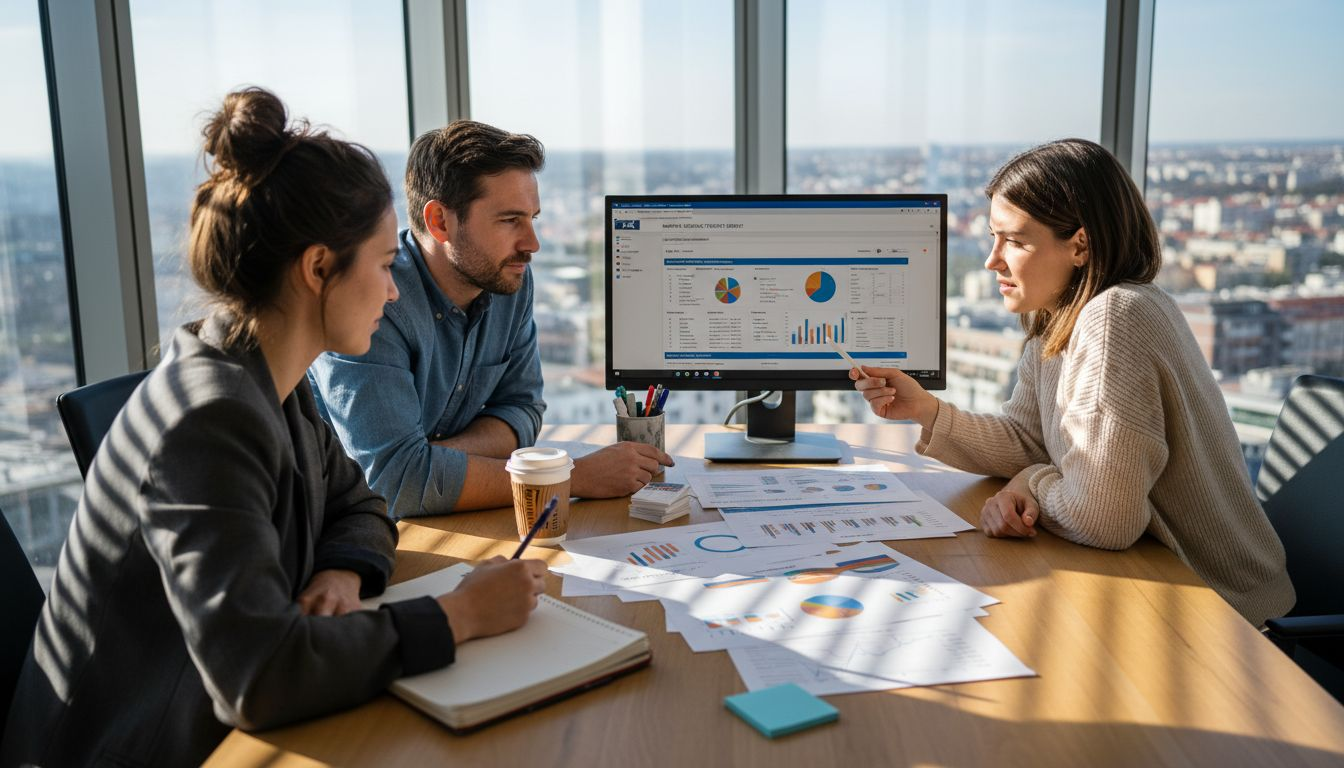
Climbing higher in search results can feel out of reach when algorithms keep evolving and competition is fierce. Creating the right strategy for your Milton Keynes business starts with understanding what actually makes a difference. Every search engine expects your website to tick specific boxes from strong content to a solid technical foundation.
This guide reveals the practical steps behind true SEO success. You will discover real-world techniques that help search engines find your website, make your pages more user-friendly, and connect with more of your target customers.
Get ready to unlock actionable insights that you can put into practice straight away. Each strategy is designed to help you improve your visibility, attract qualified traffic, and convert those visits into valuable business results.
Table of Contents
- 1. On-Page SEO: Optimising Website Content and Structure
- 2. Technical SEO: Enhancing Site Speed and Security
- 3. Local SEO: Targeting Customers in Specific Areas
- 4. Off-Page SEO: Building High-Quality Backlinks
- 5. Content SEO: Creating Valuable and Relevant Content
- 6. Mobile SEO: Ensuring a Seamless Mobile Experience
- 7. E-Commerce SEO: Maximising Product Visibility Online
Quick Summary
| Key Insight | Clarification |
|---|---|
| 1. Optimise Title Tags | Use specific and descriptive titles for better search engine clarity and user intent alignment. |
| 2. Focus on Page Speed | Improve loading times to enhance user experience and search engine rankings. |
| 3. Leverage Google My Business | Claim and optimise your profile to boost local search visibility and attract nearby customers. |
| 4. Build High-Quality Backlinks | Prioritise backlinks from authoritative sites to improve trust and search ranking. |
| 5. Understand Search Intent | Create content that matches what users are genuinely searching for to increase engagement and conversions. |
1. On-Page SEO: Optimising Website Content and Structure
On-page SEO is where the real work happens. This is the process of optimising your website’s content, structure, and technical elements to help search engines understand what your pages are about and rank them higher in results. For business owners in Milton Keynes, this is the foundation upon which everything else builds.
When you optimise on-page elements, you’re essentially having a conversation with search engines. You tell them what your content is about through strategic use of title tags, meta descriptions, headers, and the actual content itself. Search engines then use this information to decide whether your page matches what someone is searching for. The better aligned these elements are with user intent, the more likely you’ll appear in front of potential customers actively looking for what you offer.
Let’s break down what this actually looks like in practice. Your page title is one of the first signals search engines receive. A title like “Milton Keynes Web Design Services” tells a search engine exactly what your page covers. Compare that to a vague title like “Home,” and you’ll see why specificity matters. Your meta description, the snippet that appears below your title in search results, should accurately summarise your page content in around 155 characters. This is your chance to convince someone to click through.
Headers structure your content and guide both readers and search engines through your page. When you use headers properly, you create a clear hierarchy. Your main H1 should appear once per page and contain your primary keyword. Subsequent headers (H2, H3) should break your content into digestible sections. This structure helps readers scan your page quickly and helps search engines understand your content’s organisation. The content itself must address what users are actually searching for. If you’re targeting “web design in Milton Keynes,” your page should answer questions potential clients might ask about design services in your area.
Internal linking deserves special attention here. When you link from one page to another within your website, you’re creating pathways for both users and search engines. These links pass authority through your site and help search engines discover pages they might otherwise miss. For instance, linking from your services page to relevant case studies or detailed guides keeps visitors engaged whilst signalling content relationships to search engines.
Page speed also plays a critical role in on-page optimisation. When a page takes too long to load, visitors leave before they’ve even seen your content. Search engines have made it clear that page speed affects rankings, so ensuring your images are optimised, your code is clean, and your hosting is reliable matters significantly. Many Milton Keynes businesses find that addressing speed issues alone leads to noticeable ranking improvements within weeks.
The beauty of on-page SEO is that you have complete control over it. Unlike backlinks or brand mentions, which depend on others, you can implement on-page strategies yourself or work with specialists who understand your business. When you focus on optimising website content for higher conversions, you’re not just chasing search engine rankings. You’re creating pages that genuinely serve your audience by providing clear information, easy navigation, and solutions to their problems. This dual benefit is why on-page SEO remains one of the most reliable long-term investment strategies for business growth.
Pro tip: Audit your top 10 performing pages and document their exact title tags, meta descriptions, and header structure, then use this as a template for optimising underperforming pages with similar topics.
2. 2. Technical SEO: Enhancing Site Speed and Security
Imagine a potential customer finds your website in search results and clicks through, only to wait five seconds for your homepage to load. They’ve already lost patience and moved to a competitor. Technical SEO is your behind-the-scenes infrastructure that prevents this scenario from happening. It involves optimising your website’s structure, speed, and security to meet both search engine requirements and user expectations.
When search engines crawl your website, they need to easily navigate your pages, understand your content structure, and render everything properly. If your site has technical issues, search engines struggle to index your pages effectively, which directly impacts your rankings. Beyond search engines, users expect fast, secure websites. A slow site frustrates visitors and damages your credibility. A site with security vulnerabilities puts customer data at risk and can result in search engines warning potential visitors away from your domain. Technical SEO addresses all of these concerns simultaneously.
Site speed is arguably the most visible technical factor affecting user experience. When your pages load quickly, visitors stay longer, explore more of your content, and are more likely to convert. For a Milton Keynes business, this means faster loading times can directly increase enquiries and sales. Slow sites lose traffic not just to poor rankings but because users simply abandon them. Image optimisation is one of the quickest wins you can achieve. Large, uncompressed images bloat your page size and slow everything down. Compressing images without losing quality can reduce page load times by 20 to 30 percent. Enabling browser caching tells browsers to store certain files locally, so returning visitors don’t need to download everything again. Minifying CSS and JavaScript removes unnecessary characters from your code without changing functionality, resulting in smaller file sizes and faster loads.
Server response time also matters significantly. This is how quickly your web server responds to requests. If your hosting is poor quality or your server is overloaded, response times suffer. Upgrading to better hosting or using a content delivery network, which stores your content across multiple servers worldwide, can dramatically improve response times for visitors regardless of their location.
Security is equally important, though sometimes overlooked. Search engines actively penalise sites without proper security protocols. An HTTPS certificate, which encrypts data between your website and visitors’ browsers, is now a ranking factor. Beyond rankings, security protects your customers’ information and your business reputation. Without proper security measures, your site becomes vulnerable to hackers, malware, and data breaches. A compromised website can lead to expensive recovery costs and lost customer trust. Firewalls, regular backups, and security patches should be standard practice. Many business owners in Milton Keynes discover that addressing site security concerns actually prevents costly incidents before they occur.
Mobile optimisation ties directly into technical SEO as well. With more people browsing on smartphones than desktops, search engines now prioritise mobile friendly websites. Your site should be responsive, meaning it adapts seamlessly to different screen sizes. Buttons should be easy to tap, text should be readable without zooming, and navigation should be intuitive on mobile devices.
XML sitemaps and robots.txt files might sound technical, but they serve clear purposes. Your XML sitemap tells search engines which pages exist on your site and how often they change. Your robots.txt file controls which parts of your site search engines can access. These files help search engines crawl your site more efficiently. Structured data markup, implemented through schema.org vocabulary, helps search engines understand specific information about your content, such as business details, product information, or article metadata. This additional context can lead to richer search results and better visibility.
The practical benefit of strong technical SEO is that it removes barriers between your content and your audience. Technical SEO creates solid foundations upon which your other SEO efforts build. Without proper technical optimisation, even brilliant content struggles to rank well. When you address technical issues, you’re investing in infrastructure that supports all your marketing efforts long term. Most businesses find that working through a technical SEO audit and fixing identified issues leads to noticeable improvements within two to three months.
Pro tip: Run your website through Google PageSpeed Insights and fix the top three recommendations immediately, then retest monthly to track improvements and identify new issues before they impact your rankings.
3. 3. Local SEO: Targeting Customers in Specific Areas
Local SEO is where geography becomes your competitive advantage. Unlike broader SEO strategies that target national or international audiences, local SEO focuses on helping customers in your specific geographic area find your business when they search online. For a business in Milton Keynes, this is incredibly powerful because you can dominate search results for customers actively looking for services in your town.
When someone searches “plumber near me” or “web design Milton Keynes,” they’re expressing local intent. They want a business that can serve them in their area. Local SEO ensures your business appears prominently for these geographically targeted searches. This is fundamentally different from generic keyword targeting because you’re capturing customers at the exact moment they’re ready to buy or use your service. Local search results often include a map with business listings, reviews, and contact information, which gives you multiple ways to get noticed.
Google My Business is the cornerstone of local SEO. This free tool allows you to control how your business appears in Google search results and Google Maps. When you claim and optimise your Google My Business profile, you provide Google with essential information about your business including your address, phone number, business hours, website, and photos. Customers can see this information directly in search results without even visiting your website. They can call you, get directions, or read reviews without leaving Google. A complete, accurate Google My Business profile significantly increases your visibility in local searches. Businesses with fully optimised profiles receive more calls, website visits, and foot traffic from their local area.
Local citations are another critical component. A citation is any mention of your business name, address, and phone number on the internet. These citations appear on business directories, local listings, social media platforms, and other websites. When your business information is consistent across multiple platforms, search engines gain confidence that your business is legitimate and located where you say it is. Inconsistencies, such as different phone numbers or addresses across platforms, confuse search engines and damage your local rankings. Claiming your business on major directories like Yell.com, Yelp, and industry specific directories ensures your information is accurate and visible to both customers and search engines.
Reviews play an enormous role in local SEO. Customer reviews signal trust and credibility to both potential customers and search engines. Businesses with higher ratings and more reviews typically rank better in local search results. Positive reviews encourage customers to choose your business over competitors. They also provide social proof, showing potential customers that others have had good experiences with your company. The process is straightforward. Encourage satisfied customers to leave reviews on Google, Yelp, and other relevant platforms. Respond to reviews, both positive and negative, to show that you value customer feedback. This engagement improves your local search visibility and builds customer loyalty.
Location pages are valuable for businesses serving multiple areas. If you serve Milton Keynes plus surrounding towns, creating separate pages for each location helps you rank for location specific searches. A location page for Newport Pagnell, for instance, should include information about your services in that area, local testimonials, and area specific keywords. This allows you to capture search traffic from customers in each location you serve.
Local content creation ties into local SEO as well. Writing blog posts about local events, local industry news, or local customer stories helps you rank for location based searches. When you mention local landmarks, neighbourhoods, or community events in your content, you signal to search engines that your business is relevant to that specific area. Exploring practical local SEO examples shows how businesses successfully target their communities, from highlighting sponsorships of local events to featuring area specific case studies.
Mobile optimisation becomes even more critical for local SEO. Most local searches happen on smartphones, often from people actively looking for a business right now or very soon. Your website must load quickly on mobile devices and provide easy access to your location, phone number, and hours. Map integration allows customers to get directions directly from your website to your physical location.
For Milton Keynes businesses, local SEO creates a powerful competitive moat. Large national competitors struggle to rank locally in every single market they serve. A local business focused on its specific area can outrank national competitors in local search results. This means you can attract customers right in your backyard, often at lower cost than businesses trying to compete nationally. Many business owners discover that focusing on local SEO first, then expanding their geographic reach gradually, builds a more sustainable and profitable business.
Pro tip: Ask your five most satisfied customers to leave Google reviews this week, then set a monthly reminder to encourage three to five new reviews each month, which compounds your local search visibility significantly over time.
4. 4. Off-Page SEO: Building High-Quality Backlinks
Off-page SEO happens outside your website, but it has profound effects on your search rankings. Backlinks are links from other websites pointing to yours, and they function as votes of confidence. When authoritative websites link to your content, search engines interpret that as a signal that your website is trustworthy and valuable. Building high-quality backlinks is one of the most powerful ways to improve your SEO performance, yet many business owners overlook it because it requires effort beyond their own website.
Think of backlinks as digital credibility. If a respected industry publication links to your website, search engines notice. If an influential blogger mentions your company and links to your site, that matters. If multiple local business directories include links to your business, search engines recognise you as a legitimate, established business in your area. The quality of backlinks matters far more than quantity. A single link from a highly authoritative, relevant website is worth far more than ten links from low-quality directories or spammy sites. Search engines have become sophisticated at distinguishing between genuine backlinks earned through quality content and artificial links created solely for SEO purposes.
Guest blogging is one effective method for building backlinks. This involves writing articles for other websites in your industry, with a link back to your site included in your author bio or within the article itself. When you contribute valuable content to reputable websites, you gain exposure to their audience while earning a backlink. The key is targeting websites that attract your ideal customers and have genuine authority in your field. A guest post on a respected industry blog will drive more value than dozens of posts on obscure, low-traffic websites.
Broken link building is another strategic approach. This technique involves finding broken links on relevant websites, then offering your content as a replacement. For example, if a popular Milton Keynes business directory has a broken link to a local marketing resource, you could contact them and suggest they link to your relevant content instead. You help them fix a problem on their site whilst earning a backlink. This method requires research and outreach, but it often yields results because website owners appreciate the help.
Creating shareable content naturally attracts backlinks. When you produce valuable resources like comprehensive guides, original research, infographics, or tools that solve problems for your audience, other websites want to link to and share that content. The more useful and unique your content, the more likely people will reference it and link to it. A well researched guide on Milton Keynes web design best practices might attract links from local business blogs, directories, and media outlets.
Brand mentions and social media engagement contribute to off-page SEO as well. When people mention your business online, even without a direct link, search engines take notice. When your content is shared on social media, it increases visibility and the likelihood of earning backlinks. Active engagement with your industry community, participation in relevant online discussions, and building relationships with other businesses and influencers all support your off-page SEO efforts.
Influencer outreach can be surprisingly effective for small and medium-sized businesses. Identify influencers or thought leaders in your industry who have engaged audiences. When you create content they find valuable, reach out and let them know about it. They might link to it, mention it, or share it with their followers. You’re not asking for a favour so much as connecting them with content they’ll genuinely want to share.
Local backlinks deserve special attention for Milton Keynes businesses. Links from local news outlets, chamber of commerce websites, local business associations, and community organisations signal that your business is an active, respected part of your local community. These local backlinks often come naturally when you sponsor local events, participate in community activities, or achieve recognition in your industry.
Quality matters infinitely more than quantity when building backlinks. One link from a relevant, authoritative website beats a hundred links from irrelevant or low-quality sources.
Understanding why high-quality backlinks matter for SEO helps you focus your efforts on building links that actually improve your rankings. You’ll avoid wasting time chasing low-quality link-building tactics that might even harm your site. The search algorithms that evaluate backlinks have become incredibly sophisticated, and Google has publicly stated that they can identify and ignore artificial or manipulative linking patterns.
Building backlinks takes time. You won’t see results overnight. Most businesses find that a consistent backlink building strategy yields noticeable ranking improvements within three to six months. The advantage is that once you earn high-quality backlinks, they continue to benefit your site for years. Unlike paid advertising, which stops working the moment you stop paying, quality backlinks provide lasting value.
Pro tip: Identify your top five competitors, analyse their backlink profiles using tools like Ahrefs or SEMrush to see where they’re getting links, then outreach to those same websites with a pitch explaining why your content is even more relevant to their audience.
5. 5. Content SEO: Creating Valuable and Relevant Content
Content is the engine that drives SEO success. Without valuable, relevant content, all your technical optimisation efforts and backlink building strategies fall flat. Content SEO means creating material that answers the questions your audience is asking, optimising that material for search engines, and structuring it in ways that both humans and search algorithms find compelling. For Milton Keynes business owners, this is where you demonstrate expertise and build trust with potential customers.
The foundation of content SEO is understanding search intent. Search intent refers to what someone actually wants when they type a query into Google. Are they looking for information, trying to make a purchase decision, or searching for a specific website? If you create a detailed guide about web design principles when someone is searching for “web designers Milton Keynes,” you’re answering the wrong question. They want to find a service provider, not learn about design theory. When you match your content to search intent, you provide exactly what people are looking for, which improves your rankings and increases conversions.
Keyword research forms the backbone of your content strategy. By identifying keywords your audience searches for, you discover the topics worth writing about. Tools like Google Keyword Planner, SEMrush, and Ahrefs help you find keywords with sufficient search volume and reasonable competition. For a local business, this might mean discovering that “affordable web design Milton Keynes” has more search volume than “web design Milton Keynes,” or that “how much does web design cost” is a common question potential customers ask. These insights guide your content creation.
Once you know what to write about, the content itself must be genuinely valuable. Search algorithms have become increasingly sophisticated at identifying superficial, low-quality content. Your material should provide unique insights, solve real problems, or offer information readers cannot easily find elsewhere. If you run a web design agency, creating a comprehensive guide on what to expect during the web design process, common mistakes to avoid, and questions to ask potential designers provides real value. Readers get answers they need, and search engines recognise the content as genuinely helpful.
Content length matters, but not in the way many assume. You don’t need 3,000 words just to rank well. What matters is that your content is thorough enough to fully address the search intent. Some queries are answered perfectly in 500 well-written words. Others require 2,000 words or more. A comprehensive guide might be lengthy, whilst a quick answer to a specific question might be brief. Focus on completeness rather than hitting an arbitrary word count.
Readability determines whether people actually consume your content. Long paragraphs of dense text overwhelm readers. Breaking your content into shorter paragraphs, using subheadings, incorporating bullet points, and including relevant images makes your content easier to scan and understand. Many readers skim rather than read word for word, so clear formatting helps them find the information they need quickly. Short sentences and simple vocabulary serve you better than complex jargon, especially when targeting small business owners who may not have technical backgrounds.
Searchable content uses targeted keywords strategically throughout your material. Your primary keyword should appear in your title, ideally in the first 100 words, and naturally throughout the body. Related keywords and variations should appear as well. Avoid keyword stuffing, which means jamming your keyword into sentences unnaturally. Search engines penalise this tactic. Instead, write for humans first, then ensure your important keywords appear naturally when discussing your topic.
Meta descriptions and title tags must be optimised too. Your meta description is your sales pitch in search results. It should be compelling enough to make someone click through, whilst accurately representing your content. A title tag should be clear, include your keyword when possible, and create curiosity or promise value. These elements don’t directly impact rankings as much as they once did, but they significantly affect click-through rates, which indirectly supports your rankings.
Content types matter for your audience. Blog articles work well for educational content and information queries. Case studies and testimonials build trust and address decision-stage queries. Product guides help people understand your offerings. Videos appeal to visual learners. Infographics make complex information digestible. For Milton Keynes businesses, a mix of content types reaching different learning styles and stages of the customer journey performs better than relying solely on blog articles.
Internal linking within your content guides readers to relevant pages on your site. When you mention a related topic, link to that article or service page. This keeps visitors on your site longer, distributes authority throughout your website, and helps search engines understand relationships between your content. A guide on responsive web design might link to your web design services page and a case study showcasing responsive design work.
Updating and refreshing old content extends its value. Search algorithms show some preference for fresh content, but updating existing high-performing content often works better than creating new pieces. If an article ranks well but is several years old, refresh the statistics, examples, and information. This tells search engines the content remains current and relevant.
The most successful content strategy marries what your audience needs with what search engines reward. Content that serves only search engines eventually fails. Content that ignores search optimisation never reaches the people who need it.
When you understand why content marketing works for your business, you recognise content as an investment rather than a cost. Quality content continues attracting traffic and generating leads months or years after publication. A well-researched article published today might bring in enquiries for three years or more, whereas a paid advertisement stops working the moment you stop paying.
Pro tip: Create one comprehensive piece of content per month addressing a major question your customers ask, then break that same information into three to five shorter, related articles linking back to the main piece, which multiplies your content reach whilst reinforcing your expertise.
6. 6. Mobile SEO: Ensuring a Seamless Mobile Experience
More people now access the internet through mobile devices than desktop computers. If your website doesn’t work brilliantly on phones and tablets, you’re losing customers and rankings simultaneously. Mobile SEO ensures your site functions perfectly on mobile devices, loads quickly, and provides an excellent user experience. Google now uses mobile-first indexing, meaning it evaluates your website primarily based on its mobile version, not its desktop version. This shift reflects reality. Your Milton Keynes business must prioritise the mobile experience or fall behind competitors who do.
Responsive design is the foundation of mobile SEO. A responsive website automatically adapts its layout, images, and content to fit any screen size. When someone views your site on an iPhone, the content rearranges to fit the narrower screen. On an iPad, it adjusts again. This single codebase approach is far superior to having separate mobile and desktop versions. Responsive design ensures consistency, makes maintenance easier, and provides the best user experience across all devices.
Viewport configuration tells browsers how to scale your website on different devices. Without proper viewport settings, mobile browsers assume you want them to display your desktop site zoomed out, which makes everything too small to read. Adding a simple viewport meta tag instructs browsers to scale the site appropriately for the device. This technical element is straightforward but crucial. Most modern website builders handle this automatically, but it’s worth checking if you’re on an older platform.
Mobile page speed is non-negotiable. Mobile users are typically on slower connections than desktop users, and their patience runs thin. Pages that load in three seconds on desktop might take eight seconds on mobile because of slower connections and the processing power limitations of mobile devices. Optimising images aggressively, minimising code, leveraging browser caching, and using content delivery networks become even more important for mobile. A page that loads in two seconds on mobile can expect significantly higher conversion rates than one taking five seconds.
Touch interface design differs from mouse-based design. Buttons and links must be large enough to tap comfortably without accidentally hitting nearby elements. The minimum recommended touch target size is 48 pixels by 48 pixels. Forms should be easy to complete on mobile devices, with large input fields and minimal typing required. Avoid drop-down menus that are difficult to navigate on touch screens. Consider that people interact with your site differently on mobile than on desktop.
Intrusive pop-ups and interstitials destroy mobile user experience. A full-screen advertisement or newsletter signup form that covers content on a mobile device frustrates users and causes them to leave immediately. Google penalises sites with intrusive interstitials on mobile. If you want to collect email addresses or promote offers, do it subtly and don’t block content. A banner at the top or bottom of the page is acceptable. A full-screen modal that requires three taps to close is not.
Mobile specific content considerations matter as well. Long paragraphs feel overwhelming on small screens. Short paragraphs, bullet points, and clear spacing improve readability on mobile. Images should be optimised for mobile viewing, showing up quickly without consuming excessive data. Videos should autoplay only with sound muted on mobile, since many users browse with the device sound off. Text should be large enough to read without zooming.
Responsive design fundamentally improves how mobile visitors experience your website. When your site is built responsively from the start, rather than retrofitted later, the mobile experience feels native and intentional. Users get fast loading times, appropriate layouts, and functionality optimised for touch. These factors combine to improve engagement and conversions.
Mobile navigation requires special attention. Hamburger menus save space but can be harder to discover than traditional navigation. If you use a hamburger menu, ensure it’s immediately visible and clearly labelled. Ensure important pages are accessible within two taps from any page on your site. Breadcrumb navigation helps mobile users understand where they are and navigate back to higher level pages. Avoid deep navigation structures that require many clicks to reach important pages.
Testing on actual mobile devices reveals issues that desktop testing misses. Emulators in browser developer tools are helpful, but they don’t capture the reality of how your site performs on real smartphones with real network conditions. Test your site on an actual iPhone and Android phone. Try using your site over a slower network connection to experience what users on 4G or 3G experience. Browse your site as a customer would, completing key actions like filling out contact forms or viewing your products.
Local SEO and mobile SEO overlap significantly. When someone searches “web design near me” on their phone, they want immediate results showing nearby options. Your Google My Business profile, local citations, and location focused content become even more important for mobile users in your area. Many Milton Keynes customers search for services on mobile whilst out and about, so being discoverable locally on mobile directly impacts foot traffic and enquiries.
Mobile users have zero patience for poor experiences. They’ll switch to a competitor’s site in seconds if yours is slow, cluttered, or confusing.
The practical benefit of mobile optimisation is clear. Businesses with excellent mobile experiences capture customers that competitors with poor mobile sites lose. You gain ranking advantages because Google rewards mobile-friendly sites. You increase conversion rates because visitors have a better experience. You reduce bounce rates because pages load faster and work smoothly. These improvements compound over time, creating sustained competitive advantage.
Pro tip: Test your website on a real mobile device using a slow 4G connection to identify speed issues users actually experience, then prioritise fixing the elements that slow loading most, such as large images or unoptimised scripts.
7. 7. E-commerce SEO: Maximising Product Visibility Online
If you sell products online, e-commerce SEO is your pathway to success. Unlike service businesses where local SEO dominates or content-focused websites where blog articles drive traffic, e-commerce depends on making individual products and categories discoverable through search. When someone searches for a specific product you sell, your listing must appear prominently. E-commerce SEO combines the technical foundations, content strategies, and optimisation principles from all the previous strategies we’ve discussed, then applies them specifically to product pages and category pages.
Product page optimisation is where e-commerce SEO begins. Each product page should be treated as its own SEO opportunity. Your product title should include the product name plus relevant descriptors that people actually search for. Rather than just “Blue Widget,” consider “Blue Widget for Home Use, Durable 10-Year Lifespan.” This longer, more descriptive title captures variations of how customers search whilst remaining readable and compelling. Product descriptions must balance marketing language with SEO. Describe the product features and benefits whilst naturally incorporating keywords related to what customers search for. Avoid keyword stuffing at all costs. A description written for humans first, with keywords integrated naturally, outranks keyword-stuffed content.
Keyword research for e-commerce differs slightly from service business keyword research. You’re often looking for more specific, transactional keywords. People search for “men’s running shoes size 10” or “organic dog food grain free” rather than just “running shoes” or “dog food.” Understanding the exact products customers search for guides your product naming, categorisation, and optimisation. Long-tail keywords, which are longer and more specific phrases, often have lower competition and higher conversion rates for e-commerce stores. A customer searching “blue ceramic planters for indoor plants” is far more likely to purchase than someone searching just “planters.”
Category pages deserve as much optimisation attention as product pages. Category pages for broad product groupings should include descriptive content explaining what types of products the category contains, features to consider when choosing products in that category, and internal links to relevant products. A category page for “Women’s Winter Coats” should help visitors understand different styles available, features to look for, and how to choose the right coat. This content attracts traffic for broader keywords whilst guiding visitors toward specific products.
Product images and videos significantly impact e-commerce SEO and user experience. High quality images that load quickly improve both conversion rates and SEO. Each image should have descriptive alt text describing what the image shows. Alt text serves visitors using screen readers and helps search engines understand your images. Rather than “image1.jpg,” use “blue ceramic planter with drainage hole on white background.” Videos showing products in use increase engagement and time on page, which signals quality to search engines.
Product reviews and ratings influence e-commerce SEO and purchasing decisions. Customer reviews provide unique, naturally occurring content mentioning product features and benefits. Positive reviews signal trustworthiness to both customers and search engines. Schema markup for product ratings tells search engines about review scores, which can be displayed in search results. Encourage satisfied customers to leave reviews. Respond to reviews, both positive and negative, to show you value customer feedback and are actively engaged with your business.
Structured data markup becomes increasingly important for e-commerce. Schema.org markup for products, prices, availability, and reviews helps search engines understand your product information and display it richly in search results. Rich snippets showing product images, prices, and ratings directly in search results increase click-through rates. The initial investment in proper schema implementation pays dividends through improved visibility and traffic.
Product URL structure should be clean and descriptive. A URL like kickassonline.com/products/blue-ceramic-planter-10-inch is far superior to kickassonline.com/products/?id=12345. Descriptive URLs help search engines understand page content and are easier for users to remember. Avoid parameters when possible, use hyphens to separate words, and keep URLs concise.
Internal linking strategy in e-commerce differs from other sites. You should link from category pages to relevant product pages, from product pages to related products, and from blog content to relevant products. If you write a guide on indoor plant care, link naturally to the plant pots and plant food products you sell. This internal linking helps search engines discover pages whilst encouraging visitors to explore more products.
Competitive pricing and product availability impact e-commerce SEO as well. If your products are consistently out of stock, visitors bounce and conversion rates plummet. Search engines notice high bounce rates and rank you lower. Maintaining adequate inventory ensures customers can actually purchase what they find. Competitive pricing keeps customers from leaving your site to shop competitors. Regular stock updates and price adjustments, reflected quickly on your site, matter for both user experience and SEO.
Implementing effective e-commerce optimisation strategies means treating your online store as a strategic platform rather than just a sales channel. Every product page, category page, and supporting content page represents an opportunity to capture organic traffic from customers searching for what you sell. When optimised properly, e-commerce sites generate increasing traffic and sales over time as their authority builds and more pages rank for relevant searches.
Amazon and other major marketplaces provide keyword research insights for e-commerce businesses. When you search for your product type on Amazon and examine autocomplete suggestions, you see real search queries. What appears in Amazon search results shows you what keywords have demand. This competitive intelligence helps you understand market gaps where your products might rank. Many successful e-commerce businesses study marketplace data to guide their SEO strategy.
Loadtime matters intensely for e-commerce sites. Slow checkout processes cause cart abandonment. Slow product pages cause visitors to leave. Optimising images, leveraging content delivery networks, and minimising unnecessary code become critical. Every additional second of load time reduces conversions measurably. For e-commerce, site speed directly translates to lost sales, making performance optimisation a priority rather than an optional enhancement.
E-commerce SEO is ultimately about making your products findable by customers actively searching for exactly what you sell, at the moment they’re ready to buy.
The distinction between general SEO and e-commerce SEO is subtle but important. Whilst all SEO principles apply, e-commerce requires obsessive attention to product discovery, conversion optimisation, and user experience on the path from search result to purchase. A blog about product topics can afford to rank for slightly less targeted keywords. An e-commerce store cannot. Every page must serve a clear purpose in either attracting qualified traffic or converting that traffic into sales.
Pro tip: Analyse your top 20 bestselling products and identify the exact keywords customers used to find them through your analytics, then use those proven keywords to optimise similar products and category pages that aren’t yet ranking well.
Below is a table summarising the main strategies and insights presented in the article regarding SEO optimisation techniques.
| SEO Category | Focus Area | Key Strategies |
|---|---|---|
| On-Page SEO | Website Content and Structure Optimisation | Ensure titles, headers, and meta descriptions are informative and aligned with user intent. Prioritise internal linking and page speed for improved usability and search engine consideration. |
| Technical SEO | Structural and Speed Enhancements | Enhance server response time and utilise compression and caching for faster page loads. Maintain robust website security including HTTPS encryption. |
| Local SEO | Capturing Geographically Targeted Traffic | Optimise Google My Business profiles and gather consistent citations. Include location-specific keywords and pages for improved local discoverability. |
| Off-Page SEO | Establishing Authority with Backlinks | Focus on acquiring high-quality backlinks from reputable sources. Develop shareable content and engage in influencer collaborations to increase website credibility. |
| Content SEO | Creating and Aligning Content to User Intent | Perform keyword research to identify user needs and create valuable, optimised content accordingly. Regularly update older content to maintain relevance and accuracy. |
| Mobile SEO | Ensuring an Optimal Mobile User Experience | Implement responsive design and prioritise fast page loads. Avoid intrusive mobile pop-ups and ensure touch navigation is user-friendly. |
| E-commerce SEO | Maximising Visibility of Online Products | Optimise product and category pages with descriptive titles and keywords. Leverage structured data markup for enhanced search result appearance. |
Unlock Powerful SEO Strategies with Expert Support at Kickass Online
Struggling to implement essential SEO strategies like on-page optimisation, local targeting, or building high-quality backlinks can hold back your business growth. The journey to mastering technical, content, and e-commerce SEO demands personalised solutions crafted for your unique challenges. At Kickass Online, our team specialises in creating websites that not only rank well but deliver real conversions through proven SEO tactics. Discover practical advice and industry insights in our Tips and Tricks to stay ahead in the digital landscape.
Take control of your online presence today with Kickass Online’s dedicated approach. We limit our client intake to provide personalised attention, ensuring your business in Milton Keynes or beyond benefits from custom web development, targeted SEO, and maintenance strategies. Visit our site Kickass Online to explore how our Websites services can transform your digital performance. Book your consultation now and start turning SEO potential into measurable business growth.
Frequently Asked Questions
What is on-page SEO, and how can it help my business?
On-page SEO refers to optimising your website’s content and structure to improve search engine rankings. Focus on including relevant keywords in your titles, meta descriptions, and headers to align with user intent and boost visibility.
How does technical SEO impact my website’s performance?
Technical SEO involves optimising the behind-the-scenes elements of your website, such as site speed and security. By addressing issues like slow load times, you can enhance user experience and potentially see ranking improvements within weeks.
Why is local SEO important for attracting customers?
Local SEO helps your business appear prominently in search results for geographically targeted queries, making it easier for local customers to find your services. Ensure your Google My Business profile is fully optimised to increase visibility and drive more foot traffic.
How can off-page SEO benefit my website?
Off-page SEO involves building backlinks from reputable websites, which signals to search engines that your site is trustworthy and valuable. Aim to secure high-quality backlinks by engaging in guest blogging or creating shareable content, which can enhance your online authority over time.
What role does content SEO play in engaging my target audience?
Content SEO centres around creating valuable, relevant content that answers your audience’s questions and matches their search intent. Develop in-depth articles or guides that provide unique insights, which can lead to increased traffic and customer engagement.
How do I ensure my website is mobile-friendly?
To ensure your website is mobile-friendly, implement a responsive design that adapts to different screen sizes. Prioritise fast loading times and user-friendly navigation to improve the mobile experience, which can significantly reduce bounce rates.
Recommended


Book A Discovery Call
Stay Connected