
Why Website Speed Matters for Business Growth

Most british businesses underestimate how much a website’s loading speed shapes customer decisions in Milton Keynes. Studies show that over half of users abandon slow sites in just three seconds, costing businesses real revenue and trust. Understanding the facts and myths around website speed can help you pinpoint what really matters for user experience, search rankings, and daily operations, so you can turn your website into a true asset for customer engagement.
Table of Contents
- Website Speed Explained And Common Myths
- Key Metrics For Measuring Website Speed
- How Speed Impacts User Experience And Trust
- Website Speed’s Direct Effect On Seo Rankings
- Financial And Operational Costs Of Slow Websites
- Critical Mistakes To Avoid When Improving Speed
Key Takeaways
| Point | Details |
|---|---|
| Website speed is multi-faceted | Understanding website speed requires considering various performance metrics, not just milliseconds. Effective optimisation must consider user experience across different contexts and devices. |
| Impact on business outcomes | Slow loading times negatively affect user trust, engagement, and conversion rates, leading to significant potential revenue loss. Regular performance audits can help mitigate these issues. |
| SEO importance | Website speed is a critical ranking factor for search engines, with faster sites enjoying higher visibility and organic traffic. Implementing Google’s Core Web Vitals is essential for optimisation. |
| Avoid common optimisation mistakes | Implementing speed improvements without understanding their broader impact can harm functionality and user experience. A balanced and informed approach is essential for effective optimisation. |
Website speed explained and common myths
Website speed represents the total time required for a web page to load and become fully interactive, involving multiple complex technical processes. Contrary to popular belief, speed isn’t just about a single metric but encompasses various performance indicators that collectively determine user experience and website effectiveness.
Many businesses mistakenly assume that website speed is a straightforward concept, but web performance involves nuanced misconceptions that can mislead decision makers. Speed measurement isn’t simply about milliseconds - it involves understanding how different elements interact, how content renders, and how users perceive loading time. Some technical myths suggest universal solutions like aggressive caching or massive JavaScript compression, but real-world performance requires a more sophisticated approach.
The most critical myths surrounding website speed include believing faster always means better, assuming all pages should load identically, and thinking technical optimisations guarantee improved performance. Debunking website speed myths reveals that context matters significantly. Different user segments, device types, and network conditions dramatically influence perceived performance. A strategy that works perfectly for one website might prove ineffective for another.
Pro tip: Regularly audit your website’s speed using multiple tools and perspectives to understand real-world performance variations across different devices and network conditions.
Key metrics for measuring website speed
Measuring website speed goes far beyond a simple stopwatch approach. Website performance metrics encompass a comprehensive set of technical indicators that collectively reveal how quickly and effectively a website delivers content to users across different devices and network conditions.
Key performance metrics include Time to First Byte (TTFB), which measures server response time, and Largest Contentful Paint (LCP), which tracks how long the primary page content takes to load. These technical measurements help businesses understand nuanced performance aspects. Comprehensive site speed assessment requires evaluating multiple metrics including DNS lookup time, page load duration, and user interaction responsiveness.
The most critical speed metrics businesses should monitor include:
- First Contentful Paint (FCP)
- Time to Interactive (TTI)
- Total Blocking Time (TBT)
- Speed Index
- First Input Delay (FID)
Each metric provides unique insights into website performance, revealing potential bottlenecks in loading, rendering, and interactivity that might negatively impact user experience and conversion rates.
Pro tip: Use multiple performance measurement tools to cross-reference metrics and gain a holistic understanding of your website’s speed across different platforms and network conditions.
Here’s a summary of key website speed metrics and their business significance:
| Metric | What It Measures | Business Impact |
|---|---|---|
| Time to First Byte (TTFB) | Server response speed | Affects initial user impression |
| Largest Contentful Paint (LCP) | Main content load time | Influences site engagement |
| Speed Index | Speed of visible content rendering | Impacts perceived performance |
| First Input Delay (FID) | Time to first user interaction | Determines interactivity |
| Total Blocking Time (TBT) | Duration of main thread blockages | Impacts responsiveness |
| Time to Interactive (TTI) | Time until page fully usable | Affects conversion rates |
How speed impacts user experience and trust
Website speed is far more than a technical metric - it’s a critical factor in building and maintaining user trust. When visitors encounter a slow-loading website, their immediate psychological response is frustration, which rapidly translates into diminished confidence in the business’s professionalism and reliability.

Users make split-second judgments about a website’s credibility based on loading performance. Understanding user experience fundamentals reveals that websites taking longer than three seconds to load can experience bounce rates exceeding 50%. This means potential customers literally abandon sites before even viewing content, representing significant lost business opportunities. The connection between speed and trust is deeply psychological: slow websites subconsciously signal inefficiency, suggesting the business might be similarly unresponsive or outdated.
The impact of website speed extends beyond immediate user perception. Slow websites negatively influence multiple critical business metrics:
- Reduced customer engagement
- Lower conversion rates
- Decreased search engine rankings
- Diminished brand reputation
- Increased customer acquisition costs
Moreover, in an era of instant digital gratification, users have become increasingly impatient. They expect seamless, rapid interactions that require minimal waiting. A millisecond delay can mean the difference between securing a sale and losing a potential customer permanently.
Pro tip: Conduct regular website speed audits using multiple devices and network conditions to identify and eliminate performance bottlenecks before they impact user experience.
The table below highlights how website speed can affect business outcomes and user perceptions:
| Speed Outcome | User Reaction | Business Effect |
|---|---|---|
| Fast loading | Trust and confidence | Higher conversion rates |
| Moderate delays | Mild frustration | Lower engagement |
| Slow loading (>3 sec) | High abandonment, distrust | Lost revenue, reduced ranking |
Website speed’s direct effect on SEO rankings
Search engine rankings are intrinsically linked to website performance, with speed serving as a critical ranking factor that can dramatically influence a website’s visibility and organic traffic potential. Comprehensive website performance guides reveal that Google’s algorithms explicitly prioritise websites demonstrating fast, responsive user experiences.
Google’s Core Web Vitals have transformed website speed from a peripheral consideration into a fundamental ranking criterion. These metrics measure crucial performance aspects like loading speed, interactivity, and visual stability, directly impacting how search engines evaluate and position websites. Slower websites not only frustrate users but also receive lower search result placements, effectively penalising businesses with suboptimal digital infrastructure.
The most significant SEO speed-related ranking factors include:
- Page load time
- Mobile responsiveness
- Server response speed
- Content rendering efficiency
- Minimal cumulative layout shift
Businesses must recognise that search engine algorithms are increasingly sophisticated, using advanced machine learning techniques to assess website performance. A millisecond of additional load time can translate into meaningful ranking differences, potentially pushing a website several positions lower in search results and reducing organic traffic potential.
Pro tip: Regularly utilise Google’s PageSpeed Insights to identify and systematically eliminate technical performance barriers affecting your website’s search engine rankings.
Financial and operational costs of slow websites
Website performance is not merely a technical consideration but a critical business economic factor with profound financial implications. Professional studies reveal that businesses suffer significant revenue losses from poor website performance, with 67% of organisations experiencing direct economic consequences from suboptimal digital infrastructure.
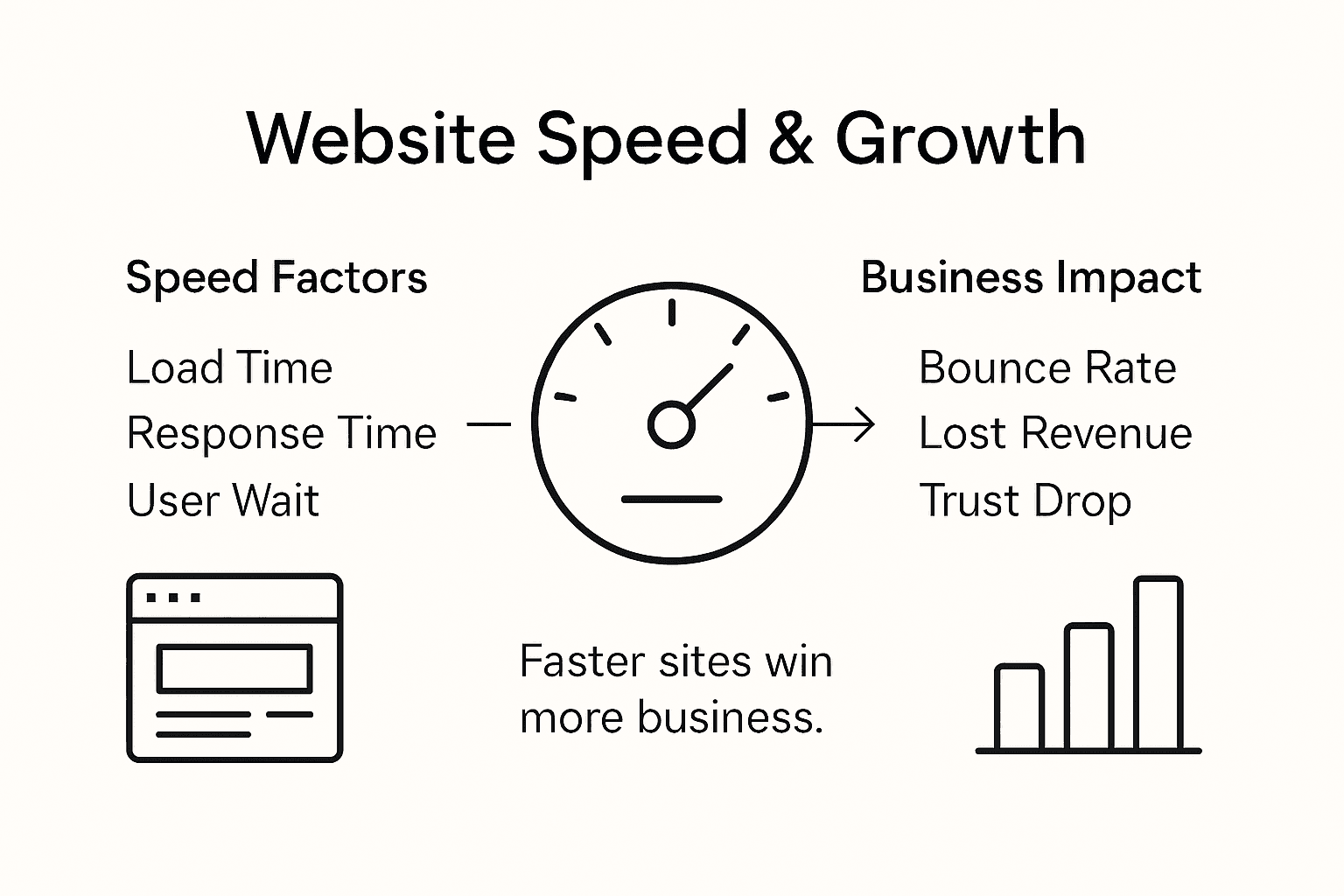
The financial impact of slow websites extends far beyond immediate transaction losses. Reduced website speed creates a cascading effect of operational inefficiencies, including increased customer acquisition costs, diminished conversion rates, and substantial marketing budget waste. Each second of loading delay can translate into measurable revenue reduction, with studies indicating potential losses ranging from 7% to 25% in potential sales conversions.
Key financial and operational costs associated with slow websites include:
- Lost sales opportunities
- Increased customer support workload
- Higher marketing spend for reduced returns
- Reduced customer lifetime value
- Elevated customer acquisition costs
- Decreased brand reputation and trust
- Potential loss of competitive market positioning
Moreover, slow websites create hidden operational expenses through increased customer service interactions, higher bounce rates, and reduced employee productivity. The cumulative effect can represent thousands of pounds in lost potential and unnecessary operational overhead, making website performance a strategic business investment rather than a mere technical expense.
Pro tip: Conduct a comprehensive website performance audit quarterly to identify and quantify potential financial losses associated with slow loading times.
Critical mistakes to avoid when improving speed
Website speed optimisation requires strategic and nuanced approaches, with many businesses inadvertently implementing counterproductive tactics that can compromise performance. Common website speed optimisation mistakes can significantly undermine technical improvements, creating unexpected bottlenecks that negate potential gains.
One of the most prevalent errors is implementing performance changes without comprehensive understanding. Businesses often pursue aggressive optimisation strategies like excessive image compression, indiscriminate plugin removal, or radical code minification without considering the holistic impact on user experience and functionality. These approaches can create more problems than they solve, potentially breaking critical website features or degrading visual quality.
Key mistakes to avoid during website speed improvement include:
- Neglecting proper image compression techniques
- Hosting large media files directly on the website
- Overusing complex animations and design elements
- Failing to implement effective browser caching
- Ignoring mobile responsiveness
- Using unoptimised, heavy WordPress themes
- Overlooking server-side performance considerations
Technical optimisation requires a balanced approach that considers performance, user experience, and functional integrity. Blindly following generic speed improvement guides without understanding their specific context can lead to diminished website effectiveness, reduced user engagement, and potential loss of critical website functionality.
Pro tip: Utilise professional performance testing tools and conduct thorough user experience testing before implementing any significant website speed modifications.
Propel Your Business Growth by Mastering Website Speed
If you have read this article, you already understand that slow website speed can harm user trust, reduce conversions and damage your SEO rankings. Tackling complex concepts like Core Web Vitals, Time to First Byte and First Input Delay is no small feat, especially when these metrics directly influence how potential customers perceive your brand and engage with your services. At Kickass Online, we specialise in custom website solutions that prioritise speed without sacrificing performance or user experience.

Explore our Websites | Kickass Online services where our expert team crafts high-converting, fast-loading websites designed to boost your online visibility and trust instantly. Don’t let slow load times cost you revenue—visit Kickass Online today to book a consultation and start transforming your digital presence now. Unlock the full potential of your website by leveraging professional optimisation strategies shared in our Tutorials | Kickass Online section and make speed your competitive advantage.
Frequently Asked Questions
What is website speed and why is it important for businesses?
Website speed refers to the total time it takes for a web page to load and become fully interactive. It’s crucial for businesses as it directly impacts user experience, trust, and conversion rates. A fast-loading website can enhance user satisfaction and encourage customers to stay longer, ultimately driving business growth.
How does website speed affect SEO rankings?
Website speed is a critical ranking factor for search engines like Google. Slower websites may be penalised in search results, leading to reduced visibility and organic traffic. Optimising site speed can help improve rankings and attract more users, enhancing overall business growth.
What are the key metrics for measuring website speed?
Important metrics include Time to First Byte (TTFB), Largest Contentful Paint (LCP), First Contentful Paint (FCP), Time to Interactive (TTI), First Input Delay (FID), and Total Blocking Time (TBT). Each metric provides insights into different aspects of website performance, allowing businesses to identify and address potential issues affecting speed.
What common mistakes should be avoided when trying to improve website speed?
Businesses should avoid over-compressing images, neglecting proper caching, and using heavy or unoptimised themes. Additionally, making performance changes without understanding their impact on user experience can lead to more problems. A balanced approach to optimisation is necessary to ensure improved website speed without sacrificing functionality.
Recommended


Book A Discovery Call
Stay Connected