
Web Analytics: Boosting Online Performance for SMEs

Almost 60 percent of British small and medium businesses say they struggle to turn website visits into real leads. For companies in Milton Keynes, understanding how web analytics work could mean the difference between being invisible online and standing out to local customers. By grasping the basics of user data and interpreting key website metrics, business owners can identify exactly where their site succeeds, what needs fixing, and how to attract and hold the right audience.
Table of Contents
- What Is Web Analytics And How It Works
- Major Types Of Web Analytics Tools
- Key Metrics And Features To Monitor
- Practical Benefits For Business Growth
- Common Pitfalls And How To Avoid Them
Key Takeaways
| Point | Details |
|---|---|
| Importance of Web Analytics | Web analytics provides businesses with critical insights into online performance, guiding strategic decisions and improving user experience. |
| Types of Analytical Tools | Understanding the various web analytics tools, such as traffic analysis and conversion tracking, is essential for effective data interpretation. |
| Key Metrics for Success | Focusing on 3-5 key metrics aligned with business goals can yield actionable insights and enhance digital strategies. |
| Common Analytic Pitfalls | Avoid misinterpretation of data by ensuring robust bot-filtering techniques and focusing on qualitative insights rather than aggregate data alone. |
What Is Web Analytics and How It Works
Web analytics represents a powerful digital strategy that goes far beyond simple website visitor counting. At its core, web analytics involves the measurement, collection, analysis, and reporting of web data to help businesses understand their online performance and make strategic decisions. Think of it as a comprehensive digital dashboard that reveals how users interact with your website, what content attracts them, and where potential improvements can be made.
The mechanics of web analytics are both technical and strategic. Businesses use specialised tracking tools to gather data points such as page views, user sessions, bounce rates, traffic sources, and user behaviour patterns. These metrics provide insights into website performance, revealing critical information like which pages engage visitors most, how long users stay on your site, and the pathways they take through your digital content. By understanding these patterns, small and medium enterprises can optimise their websites to improve user experience, increase conversions, and ultimately drive business growth.
Understanding web analytics requires looking beyond raw numbers. Successful implementation means interpreting data contextually and transforming insights into actionable strategies. For instance, a high bounce rate might indicate that your landing page needs redesigning, while tracking traffic sources can help you understand which marketing channels are most effective for your business. Web analytics empowers business owners to make informed decisions, turning website data into a strategic asset that guides digital marketing efforts.
Pro Tip: Start Small and Focused: Begin by tracking 3-5 key metrics that directly relate to your business goals, rather than getting overwhelmed by extensive analytics data. This approach helps you develop meaningful insights without drowning in information.
Major Types of Web Analytics Tools
Web analytics tools are essential for businesses seeking to understand their digital performance. These sophisticated platforms can be broadly categorised into several key types, each serving unique analytical purposes. Web log analysis software like Webalizer generates comprehensive web pages of analysis from access and usage logs, providing detailed insights into website traffic patterns and user interactions.
The primary categories of web analytics tools include traffic analysis platforms, behavioural analytics tools, conversion tracking systems, and real-time reporting dashboards. Traffic analysis platforms help businesses understand visitor numbers, geographical origins, and referral sources. Behavioural analytics tools delve deeper, tracking user journeys, click patterns, and engagement metrics. Conversion tracking systems focus on measuring specific business objectives, such as form submissions, product purchases, or newsletter sign-ups. Real-time reporting dashboards offer instant snapshots of website performance, allowing businesses to monitor ongoing digital activities.
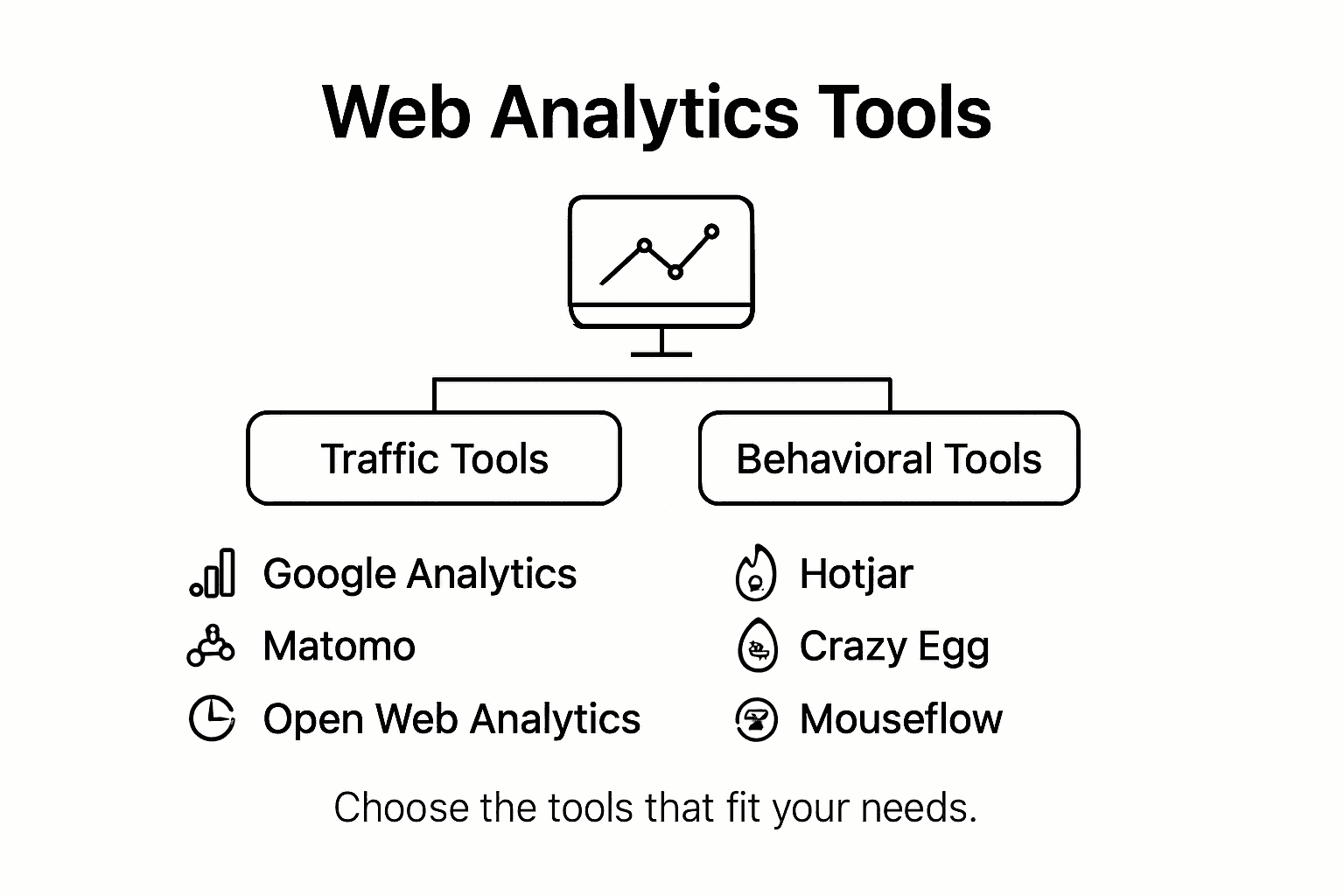
To help you differentiate between web analytics tool types, see the overview below:
| Tool Type | Main Purpose | Typical Data Provided |
|---|---|---|
| Traffic Analysis | Monitor overall website visitors | Visitor counts, locations, referrals |
| Behavioural Analytics | Track user activities and journeys | Clicks, paths, engagement flow |
| Conversion Tracking | Measure achievement of business goals | Sign-ups, sales, completed actions |
| Real-Time Reporting | Provide up-to-the-minute performance data | Live user counts, recent events |
Some advanced web analytics platforms offer integrated features that combine multiple analytical capabilities. Tools like Matomo provide comprehensive web and mobile analytics, featuring advanced functionalities such as A/B testing, custom reports, heatmaps, and session recordings. These sophisticated platforms enable small and medium enterprises to gain nuanced insights into their digital performance, helping them make data-driven decisions that can significantly improve online strategies.
Pro Tip: Strategic Selection: Choose web analytics tools that align specifically with your business goals, focusing on platforms offering actionable insights rather than overwhelming you with excessive data points.
Key Metrics and Features to Monitor
Web analytics provides critical insights into website performance, enabling businesses to track and understand their digital interactions with precision. The most fundamental metrics serve as a compass for digital strategy, revealing how users engage with online platforms. Key performance indicators include visitor numbers, page views, user behaviour profiles, and engagement patterns that illuminate the effectiveness of digital content and marketing efforts.
The most crucial metrics for small and medium enterprises can be categorised into several strategic groups. Traffic metrics encompass total visitors, unique visitors, and traffic sources, revealing where audiences originate. Engagement metrics track time spent on site, page views per session, and bounce rates, indicating content relevance and user interest. Conversion metrics measure specific business objectives, such as form submissions, product purchases, or newsletter sign-ups. Behaviour metrics provide deeper insights into user journeys, revealing which pages attract most attention and where potential improvements can be implemented.
Advanced web analytics go beyond basic number tracking, offering sophisticated features that transform raw data into actionable business intelligence. Heatmap technologies visualise user interactions, showing exactly where visitors click and scroll. Session recording tools provide granular insights into individual user experiences, helping businesses understand navigation patterns and potential website friction points. Demographic and geographic data further enhance understanding, allowing businesses to tailor content and marketing strategies to specific audience segments.
Here is a summary of advanced web analytics features and their business value:
| Feature | What It Does | Business Impact |
|---|---|---|
| Heatmaps | Visualise click and scroll patterns | Identify where users engage or abandon |
| Session Recordings | Replay user website interactions | Detect usability issues and friction |
| Demographic Analysis | Profile visitor traits and regions | Tailor content to targeted audiences |
| Predictive Analytics | Anticipate future user behaviours | Inform marketing and resource planning |
Pro Tip: Metric Mastery: Focus on 3-5 key metrics directly aligned with your specific business goals, rather than getting overwhelmed by excessive data points. Quality of interpretation matters more than quantity of metrics.
Practical Benefits for Business Growth
Web analytics can transform how businesses track and estimate the effectiveness of their marketing strategies, providing small and medium enterprises with powerful insights that directly impact bottom-line performance. By understanding digital interactions, businesses can make data-driven decisions that optimise marketing spend, improve customer experiences, and drive sustainable growth. These analytical insights act as a strategic compass, guiding entrepreneurs through the complex digital landscape with precision and confidence.

The practical benefits of web analytics extend across multiple business dimensions. Marketing optimisation becomes significantly more targeted, allowing businesses to identify which channels generate the most valuable traffic and highest conversion rates. Customer journey mapping reveals critical touchpoints and potential friction areas, enabling companies to streamline their online experiences. Budget allocation becomes more intelligent, with resources directed towards strategies demonstrating tangible returns. Competitive intelligence emerges as another crucial advantage, with businesses gaining insights into market trends, user preferences, and emerging opportunities that might otherwise remain invisible.
Beyond traditional metrics, advanced web analytics provide nuanced understanding of audience behaviour that can fundamentally reshape business strategies. Real-time data allows for agile decision-making, with businesses able to quickly adapt to changing user preferences and market conditions. Demographic and psychographic insights help create more personalised marketing approaches, improving customer engagement and loyalty. Predictive analytics tools can even forecast potential market shifts, giving proactive businesses a significant competitive edge in rapidly evolving digital ecosystems.
Pro Tip: Strategic Insight Focus: Prioritise web analytics metrics that directly correlate with your specific business objectives, transforming raw data into actionable strategic intelligence that drives measurable growth.
Common Pitfalls and How to Avoid Them
Web analytics tools can inadvertently generate misleading metrics, creating potential blind spots for businesses attempting to understand their digital performance. The complexity of tracking online interactions means that without careful implementation, organisations can easily misinterpret data, leading to strategic missteps that undermine digital marketing efforts. Understanding these potential pitfalls is crucial for small and medium enterprises seeking accurate insights into their online presence.
One of the most significant challenges involves distinguishing between genuine human traffic and automated bot interactions. Many analytics platforms struggle to differentiate between real visitors and robotic traffic, which can dramatically inflate visitor numbers and skew performance metrics. This issue becomes particularly problematic for dynamically generated websites, where query string analysis provides critical context. Businesses must implement sophisticated filtering mechanisms and use multiple analytics tools to cross-reference data, ensuring they’re making decisions based on authentic user interactions.
Additional common pitfalls include over-reliance on aggregate data, neglecting qualitative insights, and failing to establish clear key performance indicators aligned with specific business objectives. Organisations often become overwhelmed by complex dashboards, mistaking data volume for meaningful intelligence. The most effective approach involves selecting a focused set of metrics that directly correlate with business goals, using contextual interpretation rather than raw numbers. Segmentation, cohort analysis, and understanding user behaviour patterns become far more valuable than simplistic visitor count comparisons.
Pro Tip: Verification Vigilance: Always cross-reference web analytics data from multiple sources and implement robust bot-filtering techniques to ensure you’re analysing genuine user interactions and making informed strategic decisions.
Elevate Your Web Analytics Into Action with Kickass Online
Many small and medium enterprises struggle with transforming raw web analytics data into clear, actionable strategies that drive growth and improve user experience. Key challenges like identifying genuine user behaviour, focusing on relevant metrics, and optimising website performance demand expert support. If you want to avoid common pitfalls such as misleading metrics and information overload, partnering with specialists who understand these complexities is critical.
Discover how Kickass Online’s personalised approach to websites | Kickass Online can help you harness the power of web analytics through professional website design, SEO optimisation, and ongoing maintenance. Our dedicated team excels at creating high-converting websites and leveraging analytical insights to improve search engine rankings and customer engagement.

Ready to turn your web analytics into measurable business success? Visit Kickass Online today and book a consultation to start your journey towards a smarter, data-driven digital presence.
Frequently Asked Questions
What is web analytics and how does it work?
Web analytics involves the measurement, collection, analysis, and reporting of web data to help businesses understand their online performance and make strategic decisions. It provides insights into how users interact with your website, which content attracts them, and areas for improvement.
What are the main types of web analytics tools available?
Web analytics tools can be categorised into traffic analysis platforms, behavioural analytics tools, conversion tracking systems, and real-time reporting dashboards. Each type serves unique purposes, helping to monitor visitor numbers, track user activities, measure business objectives, and provide instant website performance updates.
What key metrics should SMEs focus on when using web analytics?
SMEs should focus on key metrics such as total visitors, unique visitors, bounce rates, conversion rates, and engagement metrics like time spent on site. These metrics provide critical insights into user behaviour and the effectiveness of digital content and marketing strategies.
How can web analytics benefit my business growth?
Web analytics can optimise marketing efforts by identifying valuable traffic sources, enhancing customer experiences through journey mapping, and informing budget allocation by directing resources to strategies that show tangible returns. Additionally, real-time data allows for agile decision-making in response to changing user preferences.
Recommended
- How to Analyse Website Traffic for Business Growth | Kickass Online
- Measuring the ROI of Your Digital Marketing Campaigns: Essential Metrics for SME Success | Kickass Online
- Digital Marketing KPIs Every SME Needs to Measure for Success | Kickass Online
- Leveraging Social Media Advertising for SMEs: Unlock Untapped Growth | Kickass Online


Book A Discovery Call
Stay Connected