
Search Engine Ranking: Impact on Business Visibility

Most advice about search engine ranking leaves many british businesses confused about what truly drives online visibility. When a website lands on the first page, it receives over 90 percent of all user clicks, showing just how much position matters. Understanding these rankings is vital for anyone aiming to build credibility and attract customers in the crowded digital space. This article demystifies search engine ranking, clears up common misconceptions, and offers practical ways to improve your online presence.
Table of Contents
- Defining Search Engine Ranking And Misconceptions
- How Search Engines Determine Website Rankings
- Types Of Search Ranking Factors Explained
- Business Impact Of Search Engine Positions
- Common Pitfalls And Ranking Improvement Strategies
Key Takeaways
| Point | Details |
|---|---|
| Understanding Search Engine Ranking | Search engine ranking is dynamic and influenced by algorithmic factors; continuous optimisation is vital for maintaining visibility. |
| Importance of Quality Content | High-quality and relevant content, along with natural keyword integration, enhances user engagement and improves search rankings. |
| Technical Performance Matters | A well-structured website with fast loading speeds and mobile readiness is essential for achieving higher search rankings. |
| Avoiding Common SEO Pitfalls | Businesses should steer clear of keyword stuffing and superficial content, focusing instead on genuine engagement and value-rich material. |
Defining Search Engine Ranking and Misconceptions
Search engine ranking represents the strategic positioning of a website within search results based on multiple algorithmic factors. When businesses appear higher in search listings, they gain substantial visibility and credibility. However, many entrepreneurs misunderstand how these rankings truly function.
The fundamental mechanism involves search engines using complex algorithms to evaluate webpage relevance and quality. Search engine optimization efforts are crucial for maintaining high rankings, as merely creating a website is insufficient. These algorithms analyse numerous elements including content quality, website structure, loading speed, and external references or backlinks.
Contrary to popular belief, search rankings are not static achievements but dynamic processes requiring continuous refinement. TrustRank algorithms help differentiate between legitimate webpages and potential spam, highlighting the importance of building genuine, high-quality web content. Search engines prioritise websites demonstrating authentic value, user engagement, and technical excellence.
Pro Tip: Regular Website Audit: Conduct quarterly comprehensive reviews of your website’s technical performance, content relevance, and search ranking metrics to identify and address potential optimization opportunities.
How Search Engines Determine Website Rankings
Search engines employ sophisticated methodologies to evaluate and rank websites, transforming complex digital landscapes into organised search results. Comprehensive ranking processes involve crawling websites, indexing content, and meticulously assessing multiple performance factors, creating a nuanced approach to digital visibility.

The primary ranking factors include content relevance, website structure, user experience, and external credibility signals. Algorithmic assessments examine elements such as keyword placement, page load speed, mobile responsiveness, and the quality of backlinks. Advanced machine learning techniques like RankBrain now enable search engines to understand contextual search queries with unprecedented sophistication, moving beyond simple keyword matching to comprehend user intent.
Website owners must recognise that search rankings are dynamic ecosystems requiring continuous strategic refinement. Technical performance, content quality, and user engagement metrics interact in complex ways, with search engines constantly updating their evaluation criteria. Successful digital strategies demand proactive monitoring, regular content updates, and a holistic approach to website optimization.
Pro Tip: Performance Tracking: Implement monthly analytical reviews of your website’s search performance, identifying trends, potential improvements, and adapting your content strategy based on emerging search engine algorithm preferences.
Types of Search Ranking Factors Explained
Search engine ranking factors encompass a complex array of technical and content-driven elements that determine a website’s visibility in search results. Domain authority plays a critical role in establishing a website’s credibility within its specific industry, representing a holistic measure of a site’s overall reputation and relevance.
The primary ranking factors can be categorised into several key groups: on-page factors, off-page factors, and technical performance metrics. On-page factors include content quality, keyword relevance, and user engagement signals. Off-page factors primarily revolve around external credibility, with competitor backlinking strategies providing valuable insights into effective link-building approaches, demonstrating how interconnected digital ecosystems truly are.
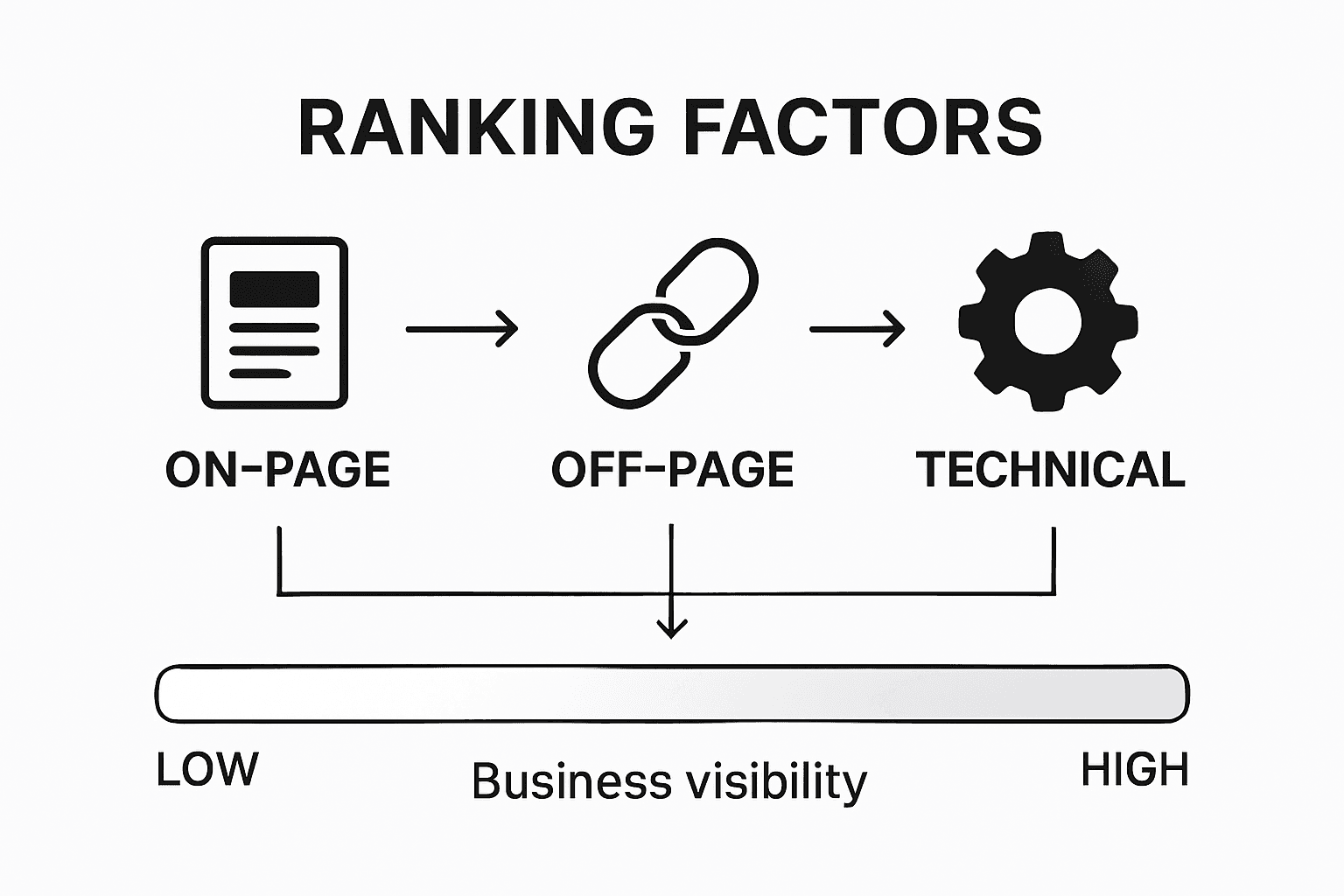
Technical performance metrics represent another crucial dimension of search ranking. These encompass website loading speed, mobile responsiveness, secure connections (HTTPS), structured data implementation, and overall user experience. Search engines increasingly prioritise websites that deliver seamless, fast, and secure browsing experiences, recognising that technical excellence directly correlates with user satisfaction.
Pro Tip: Strategic Benchmarking: Regularly analyse your competitors’ backlink profiles and technical performance to identify potential optimization opportunities and develop a more robust search ranking strategy.
Here is a summary of how different search ranking factors influence digital business success:
| Ranking Factor Type | Key Influence | Business Benefit |
|---|---|---|
| On-page Factors | Content relevance and quality | Increased user engagement |
| Off-page Factors | Backlink authority | Enhanced site credibility |
| Technical Performance | Page speed, mobile readiness | Improved user satisfaction |
| Domain Authority | Industry reputation | Higher trust and conversion rates |
Business Impact of Search Engine Positions
Web traffic distribution demonstrates profound economic implications for businesses seeking digital visibility, revealing that strategic search engine positioning can dramatically transform organisational success. Contrary to traditional marketing assumptions, modern digital landscapes offer unprecedented opportunities for smaller enterprises to compete against established market players.
Search engine rankings directly influence consumer perception and purchasing behaviour. Consumer trust emerges as a critical metric, with top-ranked websites inherently perceived as more authoritative and credible. The search engine manipulation effect highlights how ranking positions can fundamentally shape user decision-making processes, demonstrating that visibility translates into tangible business opportunities.
Beyond immediate visibility, search engine positions create long-term competitive advantages. Businesses consistently appearing in top search results benefit from increased brand recognition, enhanced customer acquisition rates, and improved market positioning. This digital real estate becomes a strategic asset, enabling organisations to establish thought leadership, build consumer confidence, and differentiate themselves within crowded marketplaces.
Pro Tip: Visibility Investment: Allocate consistent resources towards understanding and improving your search engine positioning, treating it as a strategic long-term investment in your business’s digital infrastructure and market presence.
Common Pitfalls and Ranking Improvement Strategies
Effective search engine optimization requires understanding complex technical and content-based parameters, recognising that simplistic approaches frequently lead to suboptimal outcomes. Businesses must navigate a nuanced landscape of ranking strategies, avoiding common mistakes that can dramatically undermine their digital visibility efforts.
The most prevalent pitfalls include keyword stuffing, purchasing low-quality backlinks, and creating superficial content designed solely for search algorithms. Technical optimization demands a holistic approach that balances algorithmic requirements with genuine user value. SEO contests historically demonstrate the risks of manipulative ranking techniques, highlighting how short-term tactics can ultimately damage a website’s long-term credibility and search performance.
Successful ranking improvement strategies involve comprehensive content development, technical website refinement, and consistent performance monitoring. This means producing high-quality, contextually relevant content, ensuring robust website architecture, maintaining fast loading speeds, and developing a natural backlink profile through genuine industry engagement and valuable information sharing.
Pro Tip: Strategic Auditing: Conduct quarterly comprehensive SEO audits, systematically identifying and addressing potential performance limitations while maintaining a user-centric approach to content and website development.
This table compares common SEO pitfalls and effective improvement strategies:
| Common Pitfall | Why It Fails | Effective Strategy |
|---|---|---|
| Keyword Stuffing | Decreases relevance | Natural keyword integration |
| Low-quality Backlinks | Harms site credibility | Genuine backlink building |
| Superficial Content | Lowers user engagement | Informative, value-rich text |
| Ignoring Technical SEO | Poor site performance | Regular technical audits |
Elevate Your Business Visibility with Expert Website Solutions
Understanding the complex dynamics of search engine ranking is vital for any business aiming to increase online visibility and customer trust. This article highlights the critical challenges of maintaining high search rankings through continuous optimisation of content quality, website performance, and genuine backlink building. If you recognise the frustration that comes with navigating constantly changing algorithms and want to avoid common pitfalls like keyword stuffing or low-quality backlinks, personalised support is essential.
At Kickass Online, we specialise in delivering comprehensive website solutions designed to boost search engine rankings sustainably. Our team focuses on creating high-converting, technically sound websites tailored to your business needs.

Are you ready to transform your digital presence and secure a strong position in search results that drives long-term business growth? Visit Kickass Online now to explore our services and schedule a personalised consultation. Discover why our clients trust us to enhance their online performance and turn search visibility into real-world success. For additional insights and advice, browse our recommendations and make your next move with confidence.
Frequently Asked Questions
What factors influence search engine rankings?
Search engine rankings are influenced by various factors, including content relevance, website structure, user experience, and external credibility signals such as backlinks.
How can businesses improve their search engine rankings?
Businesses can improve their search engine rankings by creating high-quality, relevant content, optimising their website’s technical performance, and developing a natural backlink profile through genuine engagement.
Why is search engine ranking important for business visibility?
Search engine ranking is crucial for business visibility as higher rankings lead to increased web traffic, enhanced brand credibility, and improved customer acquisition rates, ultimately driving business success.
What common mistakes should be avoided in SEO?
Common SEO pitfalls include keyword stuffing, purchasing low-quality backlinks, and creating superficial content. A focus on genuine engagement and informative content is essential for successful SEO strategies.
Recommended
- Why is SEO important for small businesses? | Kickass Online
- Why Choose SEO: Complete Guide for Business Growth | Kickass Online
- Benefits of SEO for Your Business Marketing | Kickass Online
- Defining Online Visibility: Complete Expert Guide | Kickass Online
- Understanding the Importance of Customer Communication – My WordPress


Book A Discovery Call
Stay Connected