The Essential Guide to Branding in Web Design

Most visitors form an opinion about a business website in less than five seconds. That snap judgment rarely comes down to colors or logos alone. Branding in web design goes much deeper, shaping how people feel, trust, and connect with your brand online. Clear, consistent digital branding design turns your website into a memorable experience, helping you stand out, share your story, and win customer loyalty.
Table of Contents
- Defining Branding In Web Design Context
- Core Branding Elements For Websites
- Integrating Branding Into Web Design Process
- Impact Of Branding On User Experience
- Common Branding Mistakes In Web Design
Key Takeaways
| Point | Details |
|---|---|
| Branding is More Than Aesthetics | Effective branding in web design communicates a business’s core identity and values through cohesive visual identity, brand messaging, and user experience. |
| Emotional Engagement is Key | Branding elements create emotional resonance and build trust, enhancing user experience and driving meaningful connections. |
| Integration is Essential | Successful web design requires a holistic approach, aligning every visual and functional element with the brand’s identity. |
| Avoid Common Mistakes | Brands should maintain consistent visuals, prioritize user experience, and effectively communicate their unique value proposition to avoid confusion and build credibility. |
Defining Branding in Web Design Context
Branding in web design represents far more than a mere visual aesthetic - it’s a strategic framework for communicating your business’s core identity through digital platforms. According to stan.vision, digital branding involves creating and maintaining a cohesive brand identity that captures a company’s essence, values, personality, and core messaging.
At its core, branding in web design is about crafting a consistent digital experience that resonates with your target audience. Bizango highlights that this process encompasses three critical elements: visual identity, brand messaging, and user experience. These components work together to create an engaging online presence that authentically reflects a company’s unique personality and professional standards.
Key aspects of effective web design branding include:
- Developing a consistent colour palette that reflects brand personality
- Creating a recognisable visual language across all digital touchpoints
- Ensuring typography and graphic elements align with brand values
- Designing intuitive navigation that enhances user understanding of your brand
Successful web branding transforms your digital platform from a simple website into a powerful communication tool. It’s not just about looking good - it’s about creating meaningful connections that help potential customers understand who you are, what you stand for, and why they should choose your business over competitors.
Core Branding Elements for Websites
Building a compelling website requires understanding the fundamental core branding elements that transform a generic online presence into a powerful digital representation of your business. These elements work together to create a cohesive, memorable brand experience that connects with your target audience and differentiates you from competitors.
Visual identity stands as the cornerstone of website branding. This encompasses your colour palette, typography, logo placement, and overall design aesthetic. Your visual elements should tell a consistent story - from the moment a visitor lands on your homepage to their interactions across different pages.
 For businesses looking to refine their approach, our guide to web design strategies offers comprehensive insights into creating a harmonious visual language.
Key core branding elements include:
- Colour Scheme: Carefully selected colours that reflect your brand’s personality and emotional tone
- Typography: Consistent font choices that enhance readability and reinforce brand character
- Logo Integration: Strategic placement and scaling of your logo across different website sections
- Imagery and Graphics: Visual content that aligns with your brand’s narrative and values
- Tone of Voice: Written content that speaks directly to your target audience
Beyond aesthetics, effective website branding requires a deep understanding of your target audience’s expectations and emotional triggers. Your website should not just look good - it must communicate your unique value proposition, build trust, and create an intuitive user experience that guides visitors toward meaningful engagement with your business.
Integrating Branding Into Web Design Process
Successful web design is a strategic dance between visual aesthetics and brand storytelling. According to stan.vision, integrating branding into web design involves ensuring that every visual and functional element reflects the brand’s unique identity, creating a cohesive digital experience that resonates with your target audience.
Bizango emphasizes that incorporating branding requires a holistic approach that aligns visual identity, messaging, and user experience. This means your website should be more than a collection of pages - it’s a living, breathing representation of your brand’s personality, values, and promise to your customers. For businesses seeking to refine their approach, our digital branding strategies guide provides comprehensive insights into creating a powerful online presence.
Key steps in integrating branding into web design include:
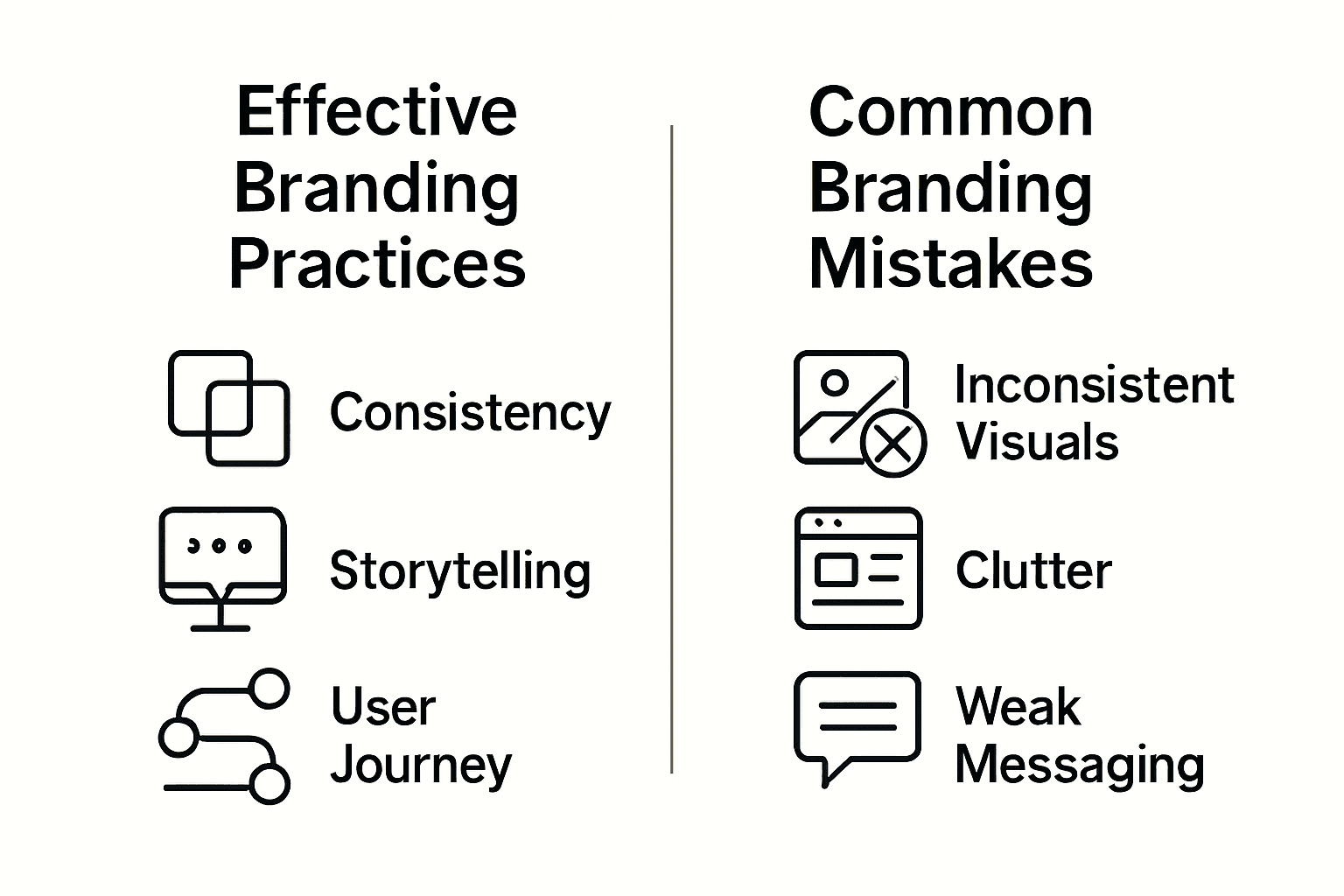
- Consistent Visual Language: Develop a unified colour palette, typography, and graphic style
- Emotional Storytelling: Craft website content that communicates your brand’s core values
- User Journey Mapping: Design navigation and interactions that reflect your brand’s personality
- Performance and Personality: Ensure website speed and functionality match your brand’s professional image
- Responsive Branding: Create a consistent experience across different devices and screen sizes
Ultimately, integrating branding into web design is about creating an immersive digital environment that doesn’t just showcase your business, but tells your unique story. It’s a powerful way to transform your website from a simple online presence to a compelling brand experience that captures attention, builds trust, and drives meaningful connections with your audience.
Impact of Branding on User Experience
User experience goes far beyond simple website functionality - it’s an emotional journey that transforms how potential customers perceive and interact with your brand. Branding elements play a crucial role in shaping this journey, creating intuitive, engaging digital environments that speak directly to your audience’s needs and expectations.
The psychological impact of branding on user experience is profound. When users land on a website, they unconsciously form immediate impressions based on visual design, colour psychology, typography, and overall aesthetic coherence. For businesses seeking to understand these nuanced interactions, our guide to improving user experience offers comprehensive insights into creating meaningful digital connections.
Key ways branding influences user experience include:
- Emotional Resonance: Creating visual and narrative elements that trigger positive emotional responses
- Trust Signals: Designing consistent, professional interfaces that build credibility
- Intuitive Navigation: Developing clear, brand-aligned interaction pathways
- Cognitive Ease: Reducing mental effort required to understand and use the website
- Memorable Interactions: Crafting unique brand touchpoints that differentiate from competitors
Ultimately, exceptional user experience is about creating a seamless, emotionally intelligent digital environment. Your website should not just inform or sell - it should make users feel understood, valued, and inspired to engage with your brand on a deeper level.
Common Branding Mistakes in Web Design
Navigating the complex landscape of web design requires strategic awareness of potential pitfalls that can derail your brand’s digital presence. According to stan.vision, one of the most critical branding mistakes is maintaining inconsistent visuals and messaging across different platforms, which can dramatically confuse users and weaken your brand’s core identity.
Bizango emphasizes that failing to align visual identity, brand messaging, and user experience can fundamentally undermine a brand’s credibility. For businesses looking to avoid these common pitfalls, our guide to digital branding provides comprehensive strategies for maintaining a cohesive online presence.
Common branding mistakes in web design include:
- Inconsistent Visual Language: Randomly changing colour schemes, fonts, or design styles
- Overcomplicated Design: Creating cluttered interfaces that overwhelm users
- Neglecting Mobile Responsiveness: Designing websites that don’t adapt to different devices
- Weak Brand Storytelling: Failing to communicate your brand’s unique value proposition
- Ignoring User Experience: Prioritizing aesthetics over functional, intuitive navigation
Successful web design is about creating a harmonious, authentic digital environment that speaks directly to your audience. By understanding and avoiding these common mistakes, you can develop a powerful online presence that not only looks professional but also builds genuine connections with your potential customers.
Elevate Your Brand with Expert Web Design Solutions
Struggling to create a cohesive brand identity that truly connects with your audience can hold your business back in the digital world. This guide reveals how essential elements like colour schemes, typography, and intuitive user experience come together to craft a memorable online presence. If you want to move past common pitfalls such as inconsistent messaging or weak storytelling, professional support can make all the difference.

Discover how our team at Kickass Online transforms websites into powerful brand experiences that build trust and emotional resonance. Explore tailored strategies for enhancing your visual language and user journey with our Websites services. Ready to strengthen your digital identity now Visit https://kickassonline.com to book a consultation and learn more about our comprehensive digital marketing solutions crafted specifically for small and medium-sized businesses.
Frequently Asked Questions
What is branding in the context of web design?
Branding in web design is a strategic framework that communicates a business’s core identity through digital platforms. It goes beyond visual aesthetics to create a cohesive brand identity that captures a company’s essence, values, and core messaging.
What are the core branding elements essential for a website?
The core branding elements essential for a website include a consistent colour scheme, typography, logo integration, relevant imagery and graphics, and a clear tone of voice. These elements should work together to create a memorable brand experience.
How does branding affect user experience on a website?
Branding significantly impacts user experience by creating an emotional journey for visitors. Elements such as visual design, colour psychology, and intuitive navigation help shape users’ perceptions and interactions with the brand, enhancing trust and engagement.
What are common branding mistakes to avoid in web design?
Common branding mistakes in web design include inconsistent visual language, overcomplicated design, neglecting mobile responsiveness, weak brand storytelling, and ignoring user experience. Avoiding these pitfalls is crucial for maintaining a cohesive and professional online presence.
Recommended


Book A Discovery Call
Stay Connected