Complete Guide to the Role of Web Design in Marketing

Did you know that 94 percent of first impressions about a website are design-related? The way your site looks and functions can shape how people view your brand and even determine if they stick around or leave for a competitor. Web design does more than make things look good. The right choices in design, branding, and usability work together to create a digital space that draws in visitors and encourages them to take action.
Table of Contents
- Defining The Role Of Web Design In Marketing
- Key Elements Linking Web Design And Branding
- How Web Design Impacts Conversion Rates
- Web Design’s Influence On Seo Performance
- Common Web Design Mistakes In Marketing Strategies
Key Takeaways
| Point | Details |
|---|---|
| Strategic Role of Web Design | Web design is essential for conveying a brand’s message and engaging customers through thoughtful visual and functional elements. |
| Impact on Conversion Rates | Effective design directly influences user behavior, enhancing satisfaction and guiding visitors towards desired actions. |
| Connection with SEO | Well-structured web design plays a crucial role in improving search engine visibility by ensuring a positive user experience and technical compliance. |
| Common Design Pitfalls | Avoid cluttered layouts, slow performance, and poor mobile responsiveness to prevent negative impacts on user engagement and conversions. |
Defining the Role of Web Design in Marketing
Web design is far more than aesthetic beauty—it’s a strategic communication tool that bridges your brand’s message with potential customer engagement. According to visualidentity.co.uk, web design encompasses the creation and organization of a website’s visual elements, including layout, typography, and color schemes that directly influence user perception and interaction.
At its core, web design serves multiple critical marketing functions. It’s not just about creating a visually pleasing interface, but constructing a digital environment that effectively communicates your brand’s value proposition. As en.wikipedia.org explains, web design involves planning and creating websites that focus on aesthetics, user interface, and overall user experience while aligning with specific marketing objectives.
The strategic components of web design that support marketing goals include:
- Visual Branding: Consistent color schemes, logos, and typography that reinforce brand identity
- User Experience (UX): Intuitive navigation and layout that guides visitors toward conversion
- Responsive Design: Ensuring seamless functionality across desktop, tablet, and mobile platforms
- Performance Optimization: Fast loading times and smooth interactions that retain user interest
Successful web design transforms your website from a mere online presence into a powerful marketing tool. By thoughtfully integrating design elements that resonate with your target audience, you create a digital platform that not only attracts visitors but actively converts them into engaged customers. Web Design Strategies for Building a Strong Brand Identity can provide deeper insights into crafting a compelling online brand experience.
Key Elements Linking Web Design and Branding
Web design and branding are intrinsically connected, forming a powerful visual language that communicates your business’s core identity. According to en.wikipedia.org, digital branding utilizes internet-based platforms to develop a brand’s identity, emphasizing the critical importance of consistent visual elements, messaging, and user experience across digital channels.
The visual architecture of your website serves as a critical storytelling mechanism. visualidentity.co.uk highlights that consistent use of color schemes, typography, and imagery in web design reinforces brand identity, creating a cohesive visual experience that strengthens brand recognition and trust among users.
Key brand-defining elements in web design include:
- Color Palette: Selecting colors that reflect your brand’s personality and emotional tone
- Typography: Choosing fonts that communicate your brand’s character and professionalism
- Logo Placement: Strategic positioning that ensures immediate brand recognition
- Visual Imagery: Using graphics and photography that align with your brand’s narrative
Effective web design transforms abstract brand concepts into tangible visual experiences. How Typography and Web Design Can Improve Website Conversion delves deeper into how design elements can strategically enhance your brand’s digital presence, turning visual communication into a powerful marketing tool that resonates with your target audience.

How Web Design Impacts Conversion Rates
Web design is not just about aesthetics—it’s a powerful driver of user behavior and business outcomes. According to arxiv.org, User Experience (UX) design significantly influences user retention and conversion rates, particularly highlighting how intuitive navigation, appealing visuals, and performance optimization directly enhance user satisfaction and engagement.
The conversion funnel begins with visual first impressions. visualidentity.co.uk emphasizes that strategic elements like clear navigation, thoughtful color usage, and optimized typography can substantially increase conversion rates by guiding users toward desired actions and creating seamless interaction pathways.
Critical web design elements that drive conversions include:
- Page Load Speed: Reducing bounce rates by ensuring rapid website performance
- Mobile Responsiveness: Creating consistent experiences across all device types
- Clear Call-to-Action (CTA): Designing prominent, compelling action buttons
- Visual Hierarchy: Structuring content to naturally guide user attention
- Trust Signals: Incorporating testimonials, security badges, and professional design elements
Understanding these conversion principles is crucial for businesses seeking to transform website visitors into customers. How Web Design Affects Conversion Rates: What the Data Says provides deeper insights into translating design strategies into measurable business growth, helping you create a website that not only looks great but actively drives conversions.
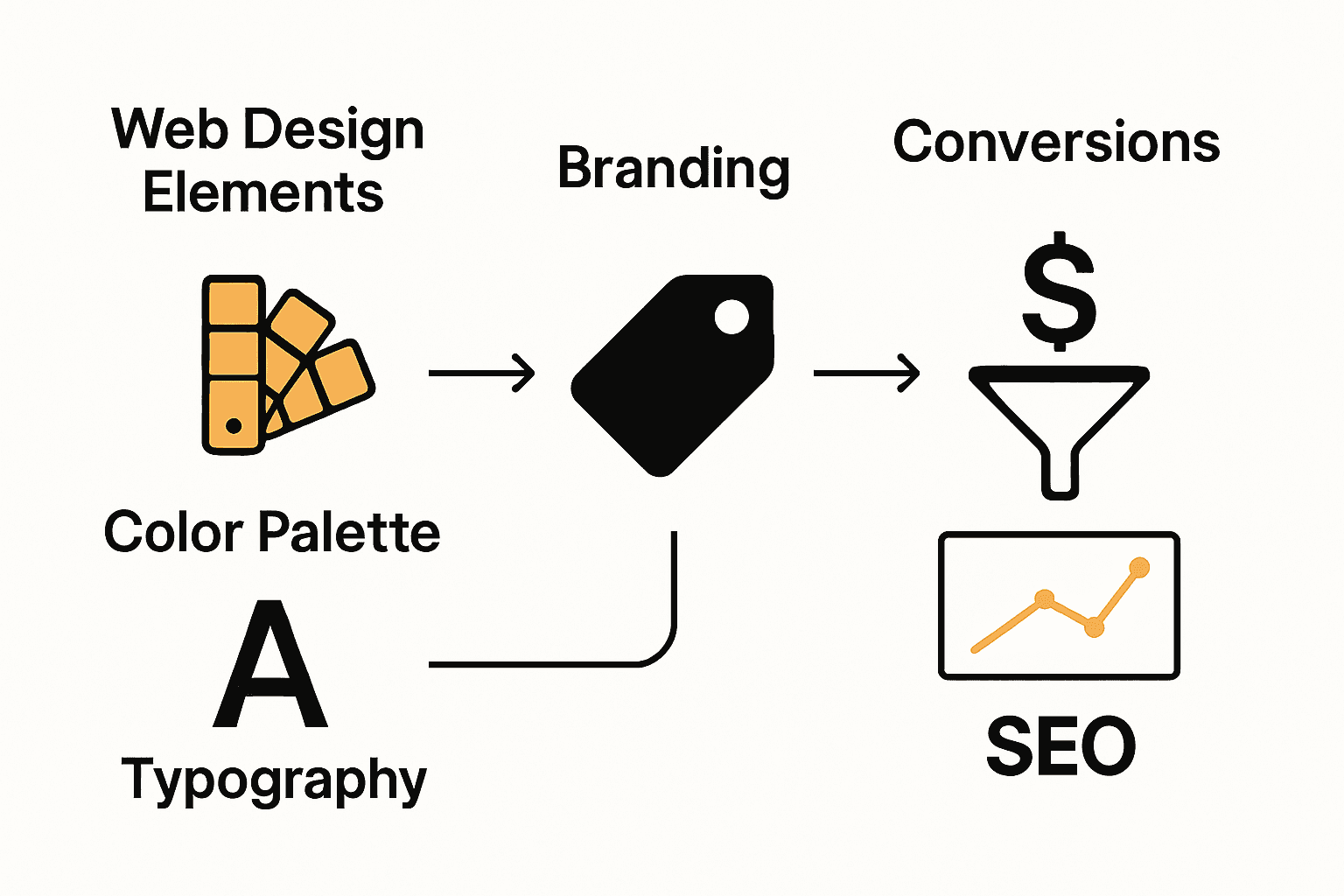
Here’s a comparison of how key web design elements impact marketing, branding, conversions, and SEO:
| Web Design Element | Marketing & Branding Impact | Conversion Rate Impact | SEO Performance Impact |
|---|---|---|---|
| Colour Palette | Strengthens brand identity | Directs user attention | Aids consistency across pages |
| Typography | Communicates professionalism | Improves readability | Enhances content clarity |
| Mobile Responsiveness | Ensures brand coherence on devices | Reduces bounce rates | Vital for search rankings |
| Page Load Speed | Maintains positive perception | Minimises visitor drop-off | Improves site ranking |
| Visual Hierarchy | Guides storytelling | Focuses user on CTAs | Clarifies content structure |
| Navigation Structure | Reinforces brand organisation | Simplifies user journey | Improves crawlability |
| Logo Placement | Promotes instant recognition | Builds user trust | Contributes to professional appeal |
Web Design’s Influence on SEO Performance
Search engine optimization is deeply intertwined with web design, creating a symbiotic relationship that directly impacts online visibility and search rankings. Modern search algorithms evaluate websites holistically, considering design elements as critical indicators of user experience and content quality.
Technical design factors play a pivotal role in SEO performance. Websites must be structured with search engine crawlability in mind, ensuring that navigation is intuitive, page loading is swift, and content is easily discoverable by search engine algorithms. This means implementing responsive design, optimizing image sizes, creating clean HTML structures, and establishing clear site hierarchies.
Key web design elements that significantly influence SEO include:
- Mobile Responsiveness: Ensuring seamless performance across all device types
- Page Load Speed: Minimizing loading times to reduce bounce rates
- Clean, Semantic HTML: Using proper heading structures and semantic markup
- Internal Linking: Creating logical navigation pathways
- URL Structure: Designing clear, descriptive website URLs
Understanding the intricate connection between design and search performance is crucial for businesses seeking online visibility. How Web Design Impacts SEO and How to Improve It offers comprehensive strategies for aligning your website’s design with search engine optimization best practices, helping you create a digital presence that both looks impressive and ranks effectively.
Common Web Design Mistakes in Marketing Strategies
In the competitive digital landscape, web design can make or break your marketing effectiveness. visualidentity.co.uk highlights that common web design mistakes including cluttered layouts, confusing navigation, and slow loading times can dramatically deter users and negatively impact conversion rates.
Understanding these critical design pitfalls is essential for businesses seeking to create compelling online experiences. According to ranktracker.com, overcomplicated designs and lack of mobile optimization are frequent errors that can significantly hinder user experience and reduce potential conversions.
Most prevalent web design mistakes include:
- Information Overload: Cramming too much content onto a single page
- Poor Mobile Responsiveness: Failing to optimize for different device screen sizes
- Inconsistent Branding: Misaligned color schemes and visual messaging
- Complex Navigation: Creating confusing or non-intuitive menu structures
- Slow Page Load Times: Neglecting performance optimization
Addressing these design challenges requires a strategic approach to digital marketing. 5 Common Mistakes to Avoid When Designing a Landing Page provides practical insights into transforming potential design weaknesses into powerful marketing opportunities, helping businesses create websites that not only look professional but effectively convert visitors into customers.
Transform Your Brand with Expert Web Design
Understanding the pivotal role of web design in marketing involves recognising the challenges small and medium-sized businesses face. From ensuring seamless mobile responsiveness to creating captivating visual branding and optimising user experience for higher conversion rates, the journey can be complex and overwhelming. Common pain points include slow loading times, inconsistent branding, and unclear navigation that harm your online presence and limit customer engagement. Embracing strategic design elements like clean typography, intuitive layouts, and trust signals are essential for turning your website into a powerful marketing asset.
At Kickass Online, we specialise in tailored web development solutions that align perfectly with your business goals. Our team focuses on delivering high-converting websites with enhanced SEO performance and ongoing maintenance, ensuring your site not only looks stunning but performs consistently across all devices. Whether you want to refine your brand identity or boost your conversion rates, discover how our expert services in the Websites category can elevate your digital marketing results.
Ready to overcome common web design challenges and position your business for growth?
Explore personalised strategies that deliver measurable success by visiting Kickass Online. Start today with trusted recommendations from Recommendations and take the first step towards a website that truly works for your marketing ambitions.
Frequently Asked Questions
What is the importance of web design in marketing?
Web design plays a crucial role in marketing as it serves as a strategic communication tool that enhances user engagement, reflects brand identity, and drives conversions through intuitive layouts and aesthetic appeal.
How does web design impact user experience (UX)?
Effective web design impacts user experience by creating intuitive navigation, appealing visuals, and responsive designs, which all contribute to user satisfaction and retention, ultimately leading to higher conversion rates.
What key elements should I consider in web design for better branding?
Key elements for effective branding in web design include a consistent color palette, appropriate typography, strategic logo placement, and visual imagery that aligns with your brand’s narrative, all of which strengthen brand recognition and trust.
How can web design influence conversion rates?
Web design influences conversion rates by incorporating elements like fast page load speed, clear call-to-action buttons, simplified navigation, and visual hierarchy, which together optimize user engagement and guide visitors toward desired actions.
Recommended
- Know Why SEO and Web Design Must Work Together
- How Web Design Impacts SEO and How to Improve It
- What is the Difference Between Digital vs. Direct Marketing
- What’s The Biggest Mistake Digital Marketers Make? | Kickass Online
- Effective Website Design: Key Principles and Proven Strategies 2025
- Understanding SEO Best Practices for Your Business – My Blog


Book A Discovery Call
Stay Connected