

How to Increase Website Conversions for Business Growth
Learn how to increase website conversions with clear, step-by-step actions for business owners seeking better online results and measurable improvements.

Over 90% of British businesses miss out on potential conversions simply because they overlook critical website data. For any British company, understanding how visitors actually move through the site is a deciding factor for growth. This clear step-by-step guide highlights proven strategies to assess your current website performance, set measurable goals, optimise user experience, and ultimately drive more conversions using trusted and data-backed methods.
Table of Contents
- Step 1: Assess Current Website Performance And User Paths
- Step 2: Define Clear Conversion Goals And Metrics
- Step 3: Optimise Website Design For User Engagement
- Step 4: Enhance Content To Address Customer Pain Points
- Step 5: Implement Trust Signals To Boost Credibility
- Step 6: Test And Monitor Conversion Rate Improvements
Quick Summary
| Key Message | Explanation |
|---|---|
| 1. Analyse web performance metrics | Use web analytics like Google Analytics to identify user behaviour, bounce rates, and conversion drop-off points. This helps improve user experience. |
| 2. Set specific conversion goals | Establish SMART goals tailored to your business objectives, such as increasing sales by a certain percentage within a set timeframe. |
| 3. Optimise website design for engagement | Focus on user-friendly design elements, ensuring navigation is clear and calls to action are prominent to enhance visitor interaction. |
| 4. Enhance content for user needs | Create targeted content that directly addresses customer pain points, based on insights gathered from analytics and customer feedback. |
| 5. Regularly test and monitor improvements | Continuously use A/B testing and performance tracking to assess changes and refine your website, increasing conversion rates over time. |
Step 1: Assess current website performance and user paths
Understanding your website’s current performance is crucial for strategic conversion improvements. By carefully examining how users interact with your site, you can identify precise opportunities to enhance user experience and boost conversion rates. Modern web analytics provide robust tools that help you map out detailed user journeys, revealing critical insights into user behaviour.
Start by leveraging web analytics platforms like Google Analytics to track key performance metrics. You’ll want to examine clickstream patterns and temporal web usage evolution, which reveal how visitors navigate through your site. Pay particular attention to metrics such as bounce rate, time on page, and conversion funnel drop-off points. These indicators help pinpoint where potential customers are losing interest or experiencing friction. Additionally, utilise performance measurement tools similar to those used in technical website assessments, which evaluate critical metrics like First Contentful Paint, Speed Index, and Total Blocking Time.
Here’s a summary of key web analytics metrics and their strategic value:
| Metric | What It Reveals | Strategic Value |
|---|---|---|
| Bounce Rate | Users leaving without interaction | Identifies problematic entry pages |
| Time on Page | Duration of user engagement | Highlights content effectiveness |
| Conversion Funnel Drop-off | Points where users exit funnel | Pinpoints needed improvements |
| First Contentful Paint | Speed to first content display | Impacts perceived site speed |
| Total Blocking Time | Delays in site interactivity | Signals technical optimisations |
Pro tip: Record and review session recordings to gain qualitative insights into user interactions, supplementing your quantitative analytics data with visual understanding of how real users experience your website.
Step 2: Define clear conversion goals and metrics
Defining precise conversion goals is fundamental to transforming website traffic into meaningful business outcomes. Your conversion goals serve as strategic benchmarks that help you measure the effectiveness of your online presence and guide targeted improvements in your digital strategy.
To establish robust conversion goals, implement the SMART criteria framework, which ensures your objectives are Specific, Measurable, Achievable, Relevant, and Time-bound. This approach transforms vague aspirations into concrete, actionable targets. For instance, instead of a generic goal like “increase website sales,” create a specific goal such as “increase online product sales by 20% within the next quarter by improving product page design and implementing targeted marketing campaigns.” Different businesses will have unique conversion metrics depending on their objectives some might focus on newsletter sign-ups, product purchases, consultation requests, or downloadable content engagement.
When setting and measuring your goals, consider both quantitative and qualitative metrics. Track key performance indicators like conversion rate, average order value, cost per acquisition, and customer lifetime value. Remember that meaningful goals should directly align with your broader business strategy and provide clear insights into your digital marketing performance.
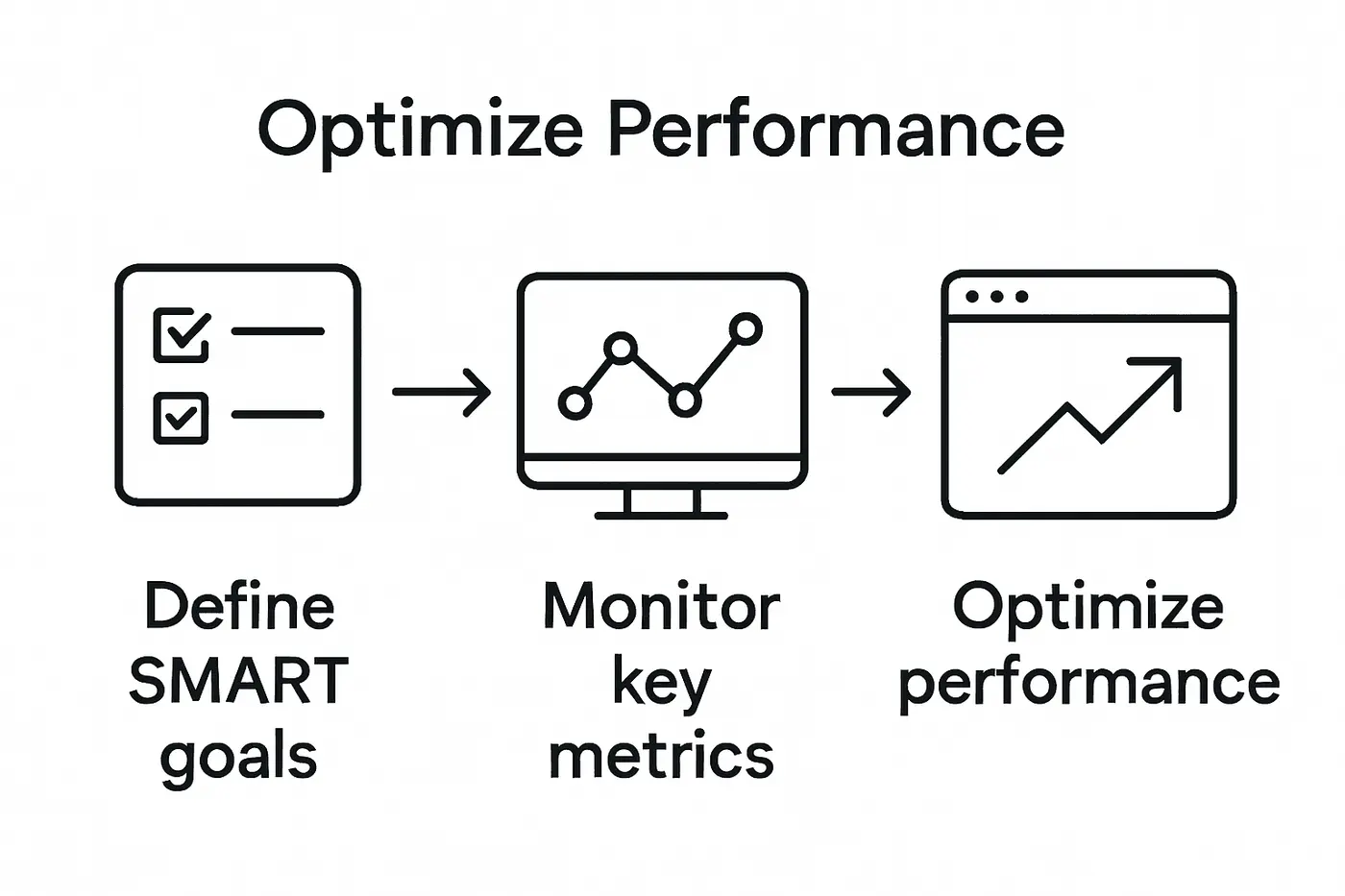
Pro tip: Create a dashboard that visualises your conversion goals and tracks progress in real time, allowing you to quickly identify trends and make data driven adjustments to your strategy.
Step 3: Optimise website design for user engagement
Website design plays a critical role in converting visitors into customers, requiring a strategic approach that balances aesthetic appeal with functional usability. Your website must not only look professional but also guide users seamlessly towards taking desired actions, creating an intuitive and engaging digital experience.

To achieve optimal user engagement, focus on gradually balancing user experience with visual design elements, ensuring that every design choice supports your conversion goals. This means creating a clean, uncluttered layout that directs users’ attention to key conversion points. Pay close attention to critical usability factors such as navigation clarity, responsive design, and intuitive user interface elements. Consider implementing clear calls to action, using contrasting colours that draw the eye, and structuring your content in a way that makes information easily digestible.
When designing your website, consider the comprehensive usability framework that evaluates navigation efficiency, operational performance, and overall user accessibility. Ensure that your website loads quickly, functions smoothly across different devices, and provides a frictionless experience that encourages users to explore and ultimately convert. Typography, whitespace, image quality, and interactive elements all contribute to creating a compelling user journey that feels natural and engaging.
Pro tip: Conduct regular user testing and analyse heatmap data to understand exactly how visitors interact with your website, allowing you to make data driven design improvements that directly impact conversion rates.
Step 4: Enhance content to address customer pain points
Effective content strategy goes beyond mere information delivery. It requires a deep understanding of your customers’ challenges, frustrations, and specific needs, transforming your website into a valuable resource that directly speaks to their most pressing concerns.
Begin by comprehensively analysing web data to understand visitor behaviour and identifying the precise pain points your audience experiences. This means diving into analytics to uncover patterns in user interactions, bounce rates, and engagement metrics that reveal where potential customers are struggling. Pay special attention to the questions they ask, the language they use, and the problems they are trying to solve. By mapping out these insights, you can create targeted content that provides genuine solutions and demonstrates your understanding of their unique challenges.
Additionally, consider the broader context of user concerns, particularly examining the challenges posed by third party content and user privacy. This means being transparent about how you handle user data, addressing potential security concerns, and creating content that builds trust. Your website should not only solve immediate problems but also provide a sense of reliability and expertise that makes potential customers feel understood and supported.
Pro tip: Conduct regular customer interviews and surveys to continuously validate and update your understanding of their evolving pain points, ensuring your content remains relevant and compelling.
The table below contrasts methods for identifying and validating customer pain points:
| Method | Data Gathered | Insight Type | Typical Use Case |
|---|---|---|---|
| Web Analytics Review | Behavioural metrics | Quantitative | Detecting patterns of friction |
| Customer Interviews | Individual opinions | Qualitative | Uncovering unseen challenges |
| Surveys | Broad customer feedback | Mixed (qual. and quant.) | Validating and prioritising issues |
| Heatmap Analysis | Click and scroll data | Visual quantitative | Understanding interaction flaws |
Step 5: Implement trust signals to boost credibility
Building trust with potential customers is paramount in converting website visitors into loyal clients. Your website must communicate reliability, professionalism, and genuine commitment to solving customer problems through strategic trust signals that reassure visitors about your business’s authenticity and capability.
Web analytics can help identify optimal placements for trust signals that enhance your website’s credibility. Focus on incorporating elements such as client testimonials, industry certifications, security badges, customer reviews, case studies, and transparent contact information. These signals work together to create a comprehensive narrative of trustworthiness. Position these elements strategically where potential customers are most likely to experience uncertainty or hesitation during their purchasing journey.
Moreover, when addressing third party dynamics and privacy concerns, transparency becomes crucial. Clearly communicate your data handling practices, display privacy policy links prominently, showcase security certifications, and demonstrate your commitment to protecting user information. Include visual trust markers like secure payment icons, professional association memberships, and verified business credentials that immediately signal your legitimacy and professionalism.
Pro tip: Rotate and update your trust signals periodically to maintain their relevance and impact, ensuring they reflect your most recent achievements and customer successes.
Step 6: Test and monitor conversion rate improvements
Continuous testing and monitoring form the cornerstone of effective website conversion strategy. By systematically evaluating your website’s performance, you can make informed decisions that incrementally improve user experience and drive higher conversion rates.
Gradually adjust website elements while monitoring user behaviour to understand how small changes impact conversion potential. Implement A/B testing methodologies that compare different versions of web pages, allowing you to identify which design elements, copy variations, and call to action configurations resonate most effectively with your audience. Focus on testing one variable at a time such as headline text, button colours, page layout, or image placement to ensure clear and actionable insights.
Utilise synthetic monitoring techniques to proactively assess your website’s performance and user experience. These simulation based approaches help you identify potential friction points, loading speed issues, and user interaction challenges before they negatively impact real visitor conversions. Create comprehensive tracking mechanisms that capture key metrics like bounce rate, time on page, click through rates, and actual conversion percentages. This data driven approach enables you to make precision adjustments that incrementally improve your website’s effectiveness.
Pro tip: Establish a regular review schedule for your conversion data, ideally reviewing performance metrics monthly and conducting comprehensive testing quarterly to ensure continuous improvement.
Boost Your Website Conversions with Expert Support from Kickass Online
Struggling to transform website visitors into loyal customers is a common challenge that this article addresses head on. By tackling key pain points such as optimising user engagement, enhancing content to resolve customer concerns, and building strong trust signals, you are already on the right path to increasing your online conversions and driving meaningful business growth. However, executing these strategies effectively requires specialised skills and a personalised approach that considers your unique business goals.
At Kickass Online, we understand the critical importance of strategic website design and continuous optimisation to maximise conversion rates. Our team of digital marketing specialists crafts high impact, conversion focused websites that balance aesthetic appeal with flawless functionality. Visit our Websites | Kickass Online category to explore how we create seamless user journeys that guide visitors towards decisive actions.
Ready to turn your website into a powerful growth engine now? Partner with Kickass Online to receive dedicated, expert attention tailored to your business needs. Discover actionable insights and bespoke digital solutions that deliver measurable improvements in user engagement and conversion performance. Start your transformation today by booking a consultation at Kickass Online and gain access to valuable resources from our Tutorials | Kickass Online to empower your digital strategy further.
Frequently Asked Questions
How can I assess my current website performance to improve conversions?
Understanding your website’s performance is key to increasing conversions. Start by reviewing metrics such as bounce rate, time on page, and conversion funnel drop-off points using web analytics tools. This will help you identify where users are losing interest.
What are SMART criteria for setting conversion goals?
SMART criteria help ensure your conversion goals are specific, measurable, achievable, relevant, and time-bound. For example, instead of aiming to ‘increase online sales’, set a goal like ‘increase online product sales by 20% within three months’. This clarity will guide your strategy effectively.
How can I optimise my website design for better user engagement?
To optimise your website design, focus on clear navigation, responsive design, and appealing call-to-action buttons. Implement user testing to gather feedback on design changes, aiming for a more intuitive layout that directs users towards conversion points.
What types of content should I create to address customer pain points?
Create content that directly addresses the challenges and needs of your customers. Use insights gathered from web analytics and customer feedback to craft solutions that resonate with your audience, fostering trust and engagement.
How can I build trust with users on my website?
Building trust can be achieved by incorporating elements like testimonials, industry certifications, and clear privacy policies. Make these trust signals prominent within your site layout to reassure potential customers and encourage conversions.
What is A/B testing, and how can it improve my website’s conversion rates?
A/B testing involves comparing two versions of a webpage to determine which one performs better in terms of user engagement and conversions. Implement changes incrementally and track results over time, aiming to refine your site for optimal effectiveness.
Recommended
Related reading
Build an ecommerce digital marketing strategy: grow sales
Learn how to build an ecommerce digital marketing strategy that drives real growth for UK SMEs, covering SEO, email, social, and how to measure results.
Read article: Build an ecommerce digital marketing strategy: grow salesThe ultimate website redesign checklist for SMBs
Protect your rankings and traffic with our complete website redesign checklist for SMBs. Covering audits, redirects, technical SEO, and post-launch monitoring.
Read article: The ultimate website redesign checklist for SMBsWebsite audit checklist: Boost your business visibility
Follow our step-by-step website audit checklist to fix hidden issues, recover lost traffic, and boost your business visibility online in 2026.
Read article: Website audit checklist: Boost your business visibility



Need help with any of this?
Send the brief and we reply the same day with a price and a date.