Small business branding steps for 2026 success

Building a strong brand identity often feels overwhelming for small business owners navigating the crowded digital marketplace. Many struggle to create cohesive messaging that truly resonates with their target audience and sets them apart from competitors. Effective branding is no longer optional; it is the foundation for attracting loyal customers and establishing lasting credibility online. This comprehensive guide walks you through practical, actionable steps to develop a compelling small business brand in 2026, from defining your core identity to measuring real-world impact across digital channels.
Table of Contents
- Preparing Your Brand Foundation
- Executing Visual And Verbal Branding Elements
- Building And Strengthening Your Online Presence
- Measuring And Refining Your Brand Efforts
- Enhance Your Branding With Expert Web Design And Development
- Frequently Asked Questions
Key takeaways
| Point | Details |
|---|---|
| Brand clarity drives connection | Defining mission, values, and audience precisely builds trust and recognition |
| Visual consistency matters | Aligned logos, colours, and typography create instant brand recall |
| Online presence amplifies reach | Strategic website design and social engagement foster customer loyalty |
| Measurement refines strategy | Tracking KPIs and feedback enables continuous branding improvement |
Preparing your brand foundation
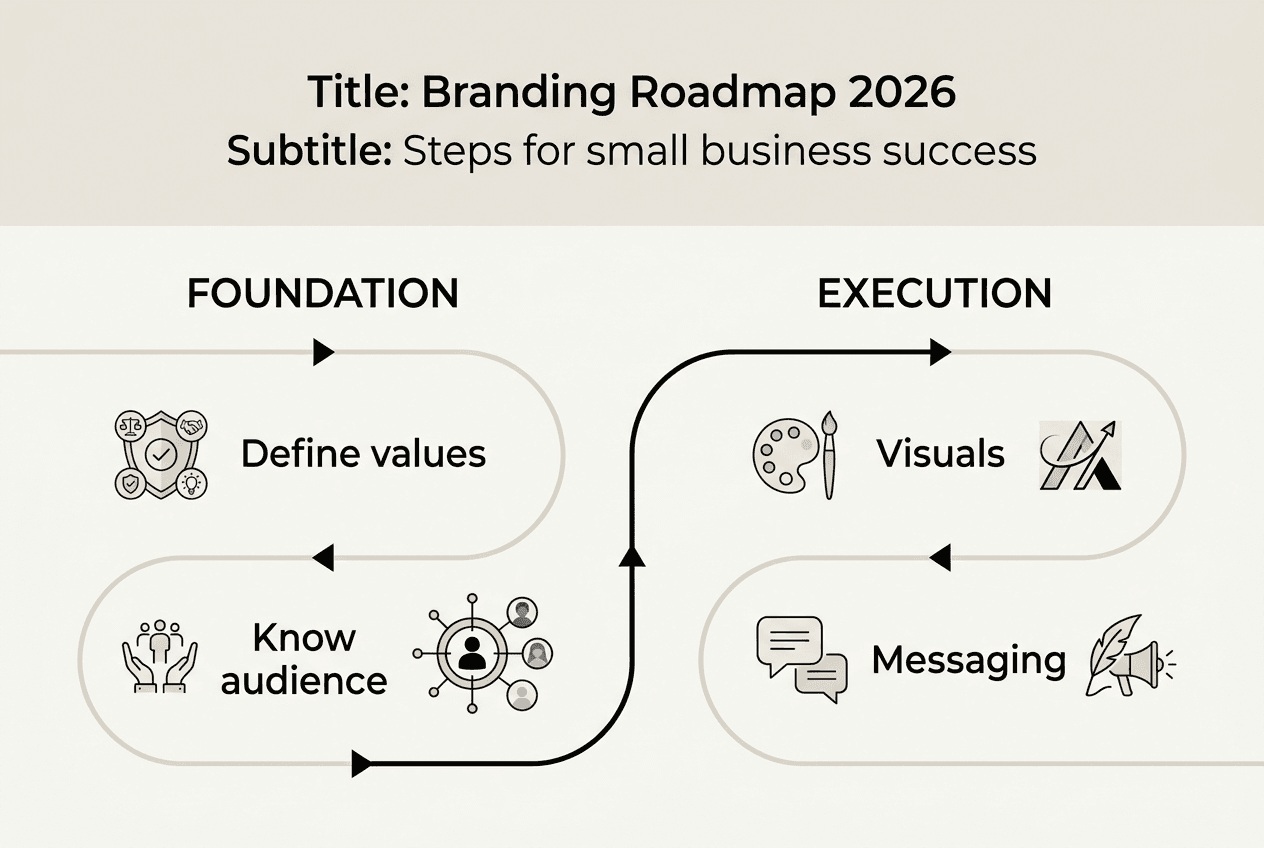
Before launching any branding campaign, you need solid groundwork that defines who you are and what you stand for. Start by clarifying your brand’s mission, vision, and core values. Your mission explains why your business exists beyond profit, your vision paints where you aim to be in five years, and your values guide every decision you make. These elements form the bedrock of authentic branding that resonates deeply with customers.
Next, identify and research your target audience with precision. Create detailed customer personas that go beyond basic demographics to include pain points, aspirations, buying behaviours, and preferred communication channels. Understanding your audience at this granular level allows you to craft messaging that speaks directly to their needs rather than broadcasting generic statements.
Craft a unique value proposition that clearly differentiates you from competitors. This single statement should articulate the specific benefit customers gain by choosing your business over alternatives. Avoid vague claims like “quality service” and instead focus on tangible outcomes: faster delivery, personalised consultations, or specialised expertise in a niche market.
Document your brand’s personality and tone of voice in a reference guide. Decide whether your brand is professional and authoritative, friendly and approachable, or innovative and bold. This personality should influence every piece of content you create, from website copy to social media posts. Defining a clear brand identity improves customer connection and trust, making it easier to build lasting relationships.
Consistency across these foundational elements builds recognition over time. When customers encounter your brand repeatedly with the same core message and personality, they begin to trust you as a reliable solution to their problems. Document everything in a central brand guide that your entire team can reference.
Pro Tip: Schedule quarterly reviews of your brand foundation documents to ensure they still align with your business evolution and market changes.
Executing visual and verbal branding elements
With your foundation established, translate those abstract concepts into tangible visual and verbal components that customers can see and hear. Begin by developing a logo that encapsulates your brand personality in a simple, memorable mark. Your logo should work across all sizes and contexts, from tiny social media avatars to large storefront signs.
Choose a colour palette that evokes the emotions you want associated with your brand. Colours carry psychological weight: blue conveys trust and stability, green suggests growth and sustainability, red creates urgency and excitement. Select two to four primary colours and define their exact values (hex codes, RGB, CMYK) to ensure consistency across digital and print materials.

Select typography that reinforces your brand personality. A tech startup might choose sleek, modern sans-serif fonts, whilst a heritage brand could opt for classic serif typefaces. Limit yourself to two or three font families: one for headlines, one for body text, and optionally one for accents.
Create comprehensive brand guidelines documenting precise usage rules for every element. Specify minimum logo sizes, acceptable colour combinations, spacing requirements, and prohibited alterations. These guidelines prevent well-meaning team members or external partners from inadvertently diluting your brand through inconsistent application.
Visual branding aligned with personality increases brand recall and loyalty, making every customer interaction more memorable. When someone sees your colour scheme or logo style, they should instantly recognise your business even before reading your name.
Craft messaging pillars that translate your brand foundation into actual words customers will encounter. Develop a tagline that captures your unique value proposition in five to eight words. Create value statements for key services or products that explain benefits rather than features. Prepare answers to frequently asked questions that reflect your brand voice consistently.
| Visual approach | Best for | Key characteristics |
|---|---|---|
| Minimalist | Modern, tech-focused brands | Clean lines, ample white space, limited colour palette |
| Illustrative | Creative, approachable brands | Custom drawings, playful elements, personality-driven |
| Photographic | Lifestyle, product-focused brands | High-quality images, authentic moments, emotional connection |
Ensure all elements maintain harmony for instant brand recognition. Your website header, business cards, email signatures, and social media profiles should feel like parts of the same cohesive system. This visual consistency builds subconscious trust as customers move between touchpoints.
Pro Tip: Create branded templates for common materials like presentations, proposals, and social media graphics to make consistency effortless for your team.
Building and strengthening your online presence
Your digital footprint is where most customers will first encounter your brand, making online presence critical for 2026 success. Design a user-friendly, branded website that reflects your identity from the moment visitors land on your homepage. Every page should incorporate your colour palette, typography, and messaging pillars whilst prioritising intuitive navigation and fast loading speeds.
Maintain consistent brand voice across all social media channels where your target audience congregates. Whether posting on LinkedIn, Instagram, or Facebook, your personality should remain recognisable whilst adapting content format to each platform’s strengths. A B2B consulting firm might share thought leadership articles on LinkedIn whilst using Instagram for behind-the-scenes team culture glimpses.
Use content marketing to tell your brand story and engage customers authentically. Create blog posts, videos, or podcasts that address your audience’s pain points whilst subtly demonstrating your expertise. Educational content builds trust far more effectively than promotional messages, positioning you as a helpful resource rather than just another vendor.
Leverage SEO best practices to improve online discoverability and ensure potential customers find you when searching for solutions you provide. Optimise website content with relevant keywords, earn quality backlinks from reputable sources, and maintain technical health through fast loading speeds and mobile responsiveness. An effective online presence is essential for growing brand awareness and customer loyalty in competitive markets.
Engage with customers actively across digital channels to nurture loyalty and gather valuable feedback. Respond promptly to comments, messages, and reviews with personalised replies that reflect your brand voice. This two-way communication transforms passive audiences into active community members who feel invested in your success.
Consider these essential elements for your online brand presence:
- Professional website with clear navigation and branded design elements
- Active social media profiles updated consistently with valuable content
- Email marketing campaigns that deliver personalised, relevant messages
- Online review management across Google, industry directories, and social platforms
- Content library showcasing expertise through blogs, case studies, or video tutorials
Your online presence should feel like a natural extension of your offline brand rather than a separate entity. Customers who visit your physical location or speak with your team should encounter the same personality and values they experience on your website.
Measuring and refining your brand efforts
Branding success requires ongoing measurement and adaptation rather than a one-time launch. Define specific branding KPIs that align with your business objectives: brand awareness metrics like website traffic and social media reach, engagement indicators such as comments and shares, and customer loyalty measures including repeat purchase rates and referral frequency.
Collect customer feedback systematically through surveys, social media listening, and review monitoring. Ask direct questions about brand perception: what words customers associate with your business, whether your messaging resonates clearly, and how you compare to competitors. This qualitative data reveals gaps between intended brand identity and actual customer perception.
Use analytics tools to track website traffic patterns, social channel performance, and conversion rates across different touchpoints. Google Analytics shows which content attracts visitors and keeps them engaged, whilst social media insights reveal which posts generate meaningful interactions versus passive scrolling. Platform-specific tools like Facebook Insights or LinkedIn Analytics provide demographic breakdowns of your audience.
Adjust visual and messaging elements based on data patterns rather than assumptions. If certain colour schemes or content topics consistently outperform others, lean into those strengths whilst testing new variations. Regular brand performance tracking helps optimise messaging and visual elements for higher impact over time.
Create a regular review schedule to stay aligned with evolving business goals and market conditions. Monthly check-ins can assess immediate campaign performance, whilst quarterly reviews examine broader brand health trends. Annual strategic sessions should revisit foundational elements like mission, values, and target audience definitions to ensure continued relevance.
| Metric category | Key indicators | Measurement frequency |
|---|---|---|
| Brand awareness | Website traffic, social reach, search volume | Monthly |
| Engagement | Comments, shares, time on site, email open rates | Weekly |
| Customer loyalty | Repeat purchase rate, referral frequency, review sentiment | Quarterly |
| Conversion | Lead generation, sales attributed to branding efforts | Monthly |
Document what works and what doesn’t in a centralised tracking system accessible to your entire team. This institutional knowledge prevents repeating past mistakes and accelerates future improvements. Share insights across departments so sales, customer service, and marketing all understand how customers perceive your brand.
Pro Tip: Set up automated reporting dashboards that compile key branding metrics in one view, saving hours of manual data gathering each month.
Enhance your branding with expert web design and development
Whilst these steps provide a solid framework for building your brand independently, professional support can accelerate results and avoid costly missteps. Expert website design and development ensures your brand’s visual elements translate beautifully online with technical excellence that keeps visitors engaged. A well-designed site becomes your hardest-working brand ambassador, operating 24/7 to attract and convert ideal customers.
Strategic SEO strategies amplify your brand reach by positioning you prominently in search results when potential customers seek solutions you provide. Combining strong branding with search visibility creates a powerful engine for sustainable growth. Comprehensive digital marketing strategies sustain engagement through targeted campaigns that nurture relationships and foster lasting customer loyalty. Professional guidance helps you implement these branding steps effectively whilst focusing your energy on running your business.
Frequently asked questions
What are the most important steps to start branding a small business?
Begin by defining your brand identity through mission, vision, and core values that guide all decisions. Identify your target audience precisely using detailed customer personas, then craft a unique value proposition differentiating you from competitors. Develop visual elements like logos and colour palettes aligned with your brand personality, and create messaging pillars that communicate your value consistently.
How can I keep my brand consistent across all platforms?
Create a comprehensive brand style guide documenting exact usage rules for logos, colours, typography, imagery, and tone of voice. Apply this guide rigorously to your website, social media profiles, email campaigns, and print materials. Train every team member who creates customer-facing content, and conduct regular audits to catch inconsistencies before they confuse your audience.
What metrics should I track to measure branding success?
Monitor brand awareness through website traffic, social media reach, and branded search volume growth. Track engagement via comments, shares, time spent on site, and email open rates. Measure customer loyalty using repeat purchase rates, referral frequency, and review sentiment analysis. Use analytics platforms and customer surveys to gather both quantitative data and qualitative insights for comprehensive brand health assessment.
How often should I update my brand elements?
Review brand performance metrics monthly to catch immediate issues, conduct quarterly assessments of broader trends, and schedule annual strategic evaluations of foundational elements. Minor refinements to messaging or visual details can happen continuously based on data, but major rebrands should occur only when core business direction shifts significantly or market research reveals fundamental perception gaps.
Can I build a strong brand with a limited budget?
Absolutely. Focus first on defining clear brand foundations, which costs nothing but strategic thinking time. Use affordable design tools for initial visual elements, prioritise one or two social platforms where your audience concentrates, and create valuable content consistently rather than sporadically. Authentic storytelling and genuine customer engagement often outperform expensive campaigns lacking strategic focus.
Recommended


Book A Discovery Call
Stay Connected