Master the Content Creation Process for Business Growth
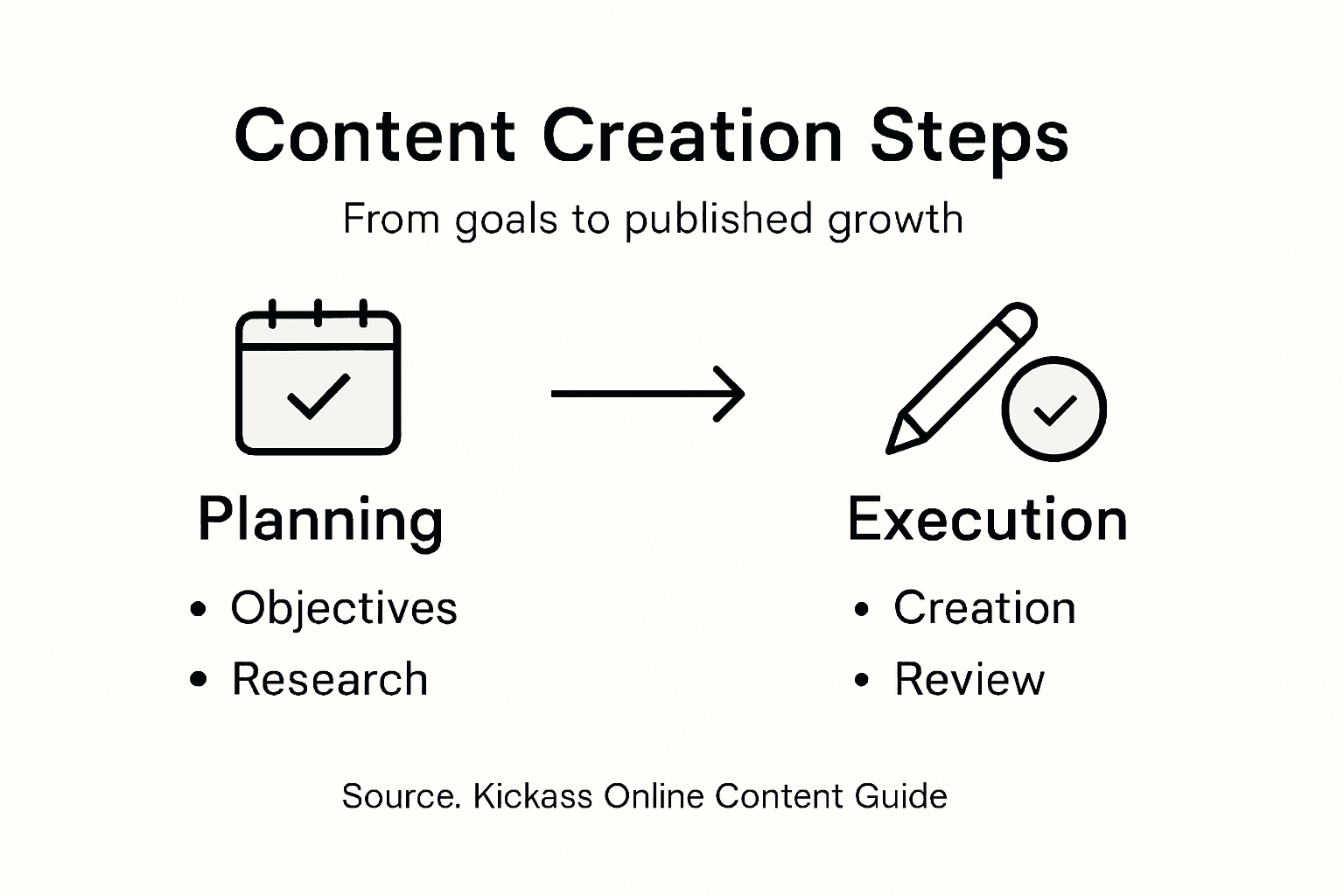
Running a small business in Milton Keynes means juggling countless demands, but one challenge stands out: creating content that actually gets results. In a crowded online market, clear project objectives and audience research make the difference between content that works and content that’s ignored. This guide cuts through the noise and provides practical steps for purposeful digital marketing, helping you attract the right customers and grow your presence with confidence.
Table of Contents
- Step 1: Define Clear Project Objectives
- Step 2: Conduct Comprehensive Audience Research
- Step 3: Develop Strategic Content Plans
- Step 4: Create High-Quality Targeted Content
- Step 5: Review And Optimise Published Assets
Quick Summary
| Key Insight | Explanation |
|---|---|
| 1. Define Clear Project Objectives | Establish specific and measurable objectives to guide your content creation process effectively. |
| 2. Conduct Comprehensive Audience Research | Gain insights into your audience’s preferences and behaviours to tailor your content strategy. |
| 3. Develop Strategic Content Plans | Create a cohesive content strategy that aligns with both business goals and audience needs. |
| 4. Create High-Quality Targeted Content | Focus on producing relevant and engaging materials that resonate with your audience. |
| 5. Review and Optimise Published Assets | Regularly assess and update content to ensure ongoing performance and relevance. |
Step 1: Define clear project objectives
Developing clear project objectives is your strategic roadmap for successful content creation. This crucial first step ensures your entire project stays focused, aligned, and measurable from the beginning.
To craft precise project objectives, start by understanding exactly what you want to achieve. Establishing specific research objectives helps you define the scope and direction of your content strategy. Think of your objectives like a compass - they’ll guide every decision and keep your project on track.
Your objectives should follow a structured approach:
- Be specific about desired outcomes
- Quantify your goals with measurable targets
- Align objectives with broader business strategies
- Consider potential limitations and challenges
Break down your objectives into clear, actionable statements. For instance, instead of saying “increase website traffic,” specify “boost organic website traffic by 25% within three months through targeted content creation.”
Effective objectives are your project’s north star, providing clarity and direction throughout the content creation process.
Research-driven objectives help you maintain focus and avoid unnecessary work. Research objectives serve as a roadmap that guide every stage of your project, from initial planning to final execution.
Pro tip: Create a one-page objective document that clearly outlines your project’s goals, metrics, and expected outcomes to keep your entire team aligned and focused.
Step 2: Conduct comprehensive audience research
Understanding your target audience is the foundation of creating compelling content that truly resonates. Audience research transforms generic messaging into targeted communication that speaks directly to your potential customers.
Comprehensive audience research involves a strategic approach to gathering insights about your potential readers or customers. This process helps you decode their preferences, behaviours, and pain points, enabling you to craft content that feels personally crafted for them.
Your audience research should encompass multiple dimensions:
- Demographic analysis including age, location, income
- Psychographic exploration of values, interests, lifestyle
- Behavioural tracking of online interactions and preferences
- Engagement pattern assessment across different platforms
To gather meaningful insights, you’ll want to employ multiple research methods:
- Design targeted online surveys
- Conduct one-on-one interviews
- Analyse social media interactions
- Review existing customer data
Effective audience research transforms guesswork into a precise, data-driven content strategy.
Creating detailed audience personas allows you to visualise your ideal reader, making your content creation more intuitive and targeted. By understanding their language, challenges, and aspirations, you can speak directly to their needs.
Pro tip: Update your audience research every six months to ensure your content remains relevant and aligned with evolving customer preferences.
Step 3: Develop strategic content plans
Creating a robust strategic content plan transforms your content from random pieces into a cohesive, goal-driven approach. This critical step ensures every piece of content you produce serves a specific purpose in your broader business strategy.

Strategic content planning requires integrating multiple insights to align your content goals with your organisational objectives. Think of your content plan as a roadmap that guides your communication efforts, helping you navigate the complex landscape of digital marketing.
Your strategic content plan should include several key components:
- Mission statement defining your content’s core purpose
- Clear, measurable objectives
- Target audience personas
- Content themes and topics
- Distribution channels
- Performance metrics
A well-crafted content strategy transforms scattered efforts into a powerful, unified communication approach.
To develop an effective plan, follow these essential steps:
- Analyse your current content performance
- Identify gaps in your existing content
- Align content with business goals
- Create a detailed content calendar
- Define success metrics
Developing a comprehensive planning document involves engaging stakeholders and maintaining flexibility. Your plan should be a living document that adapts to changing business needs and audience preferences.
Pro tip: Review and adjust your content strategy quarterly to ensure continued alignment with your business objectives and market dynamics.
Step 4: Create high-quality targeted content
Crafting high-quality targeted content is the heart of effective digital communication. Your goal is to produce material that speaks directly to your audience’s needs, challenges, and aspirations.
Creating targeted content requires a strategic approach that goes beyond simple information delivery. Modern content creation leverages technology and deep audience understanding to develop materials that truly resonate and provide genuine value.
Key characteristics of exceptional targeted content include:
- Laser-focused relevance to specific audience segments
- Clear, concise communication
- Actionable insights
- Authentic voice and tone
- Demonstrable expertise
- Multimedia adaptability
High-quality content transforms information into meaningful experiences that engage and inspire your audience.
To develop targeted content effectively, follow these critical steps:
- Deeply analyse audience personas
- Identify specific knowledge gaps
- Choose appropriate content formats
- Craft compelling, solution-oriented narratives
- Validate content against audience needs
Content curation strategies involve carefully selecting and synthesising information to create original, impactful materials. Your content should not just repeat existing information but offer unique perspectives and transformative insights.
Pro tip: Regularly conduct audience feedback surveys to ensure your content remains precisely aligned with evolving reader expectations and needs.
Step 5: Review and optimise published assets
Content review is your strategic opportunity to refine and enhance existing materials, ensuring they continue to deliver maximum value to your audience. This critical process transforms good content into exceptional, high-performing digital assets.
Reviewing published content requires a systematic and critical approach that goes beyond surface-level editing. Think of it as a comprehensive health check for your digital content, identifying areas for improvement and alignment with current business objectives.
Your content optimisation strategy should focus on several key dimensions:
- Performance metrics analysis
- Relevance and currency assessment
- SEO effectiveness evaluation
- Audience engagement tracking
- Competitive positioning review
Effective content optimization transforms existing assets into dynamic, high-impact communication tools.
Follow these structured steps to review and optimise your published content:
- Gather comprehensive performance data
- Identify underperforming content segments
- Update outdated information
- Enhance readability and structure
- Align with current SEO best practices
Content review methodologies emphasise the importance of timely, balanced updates that maintain the integrity of your original message while incorporating fresh insights and perspectives.
Pro tip: Implement a quarterly content audit schedule to systematically review and refresh your digital assets, ensuring they remain relevant and high-performing.
The table below compares content review and content planning in the context of ongoing strategy:
| Aspect | Content Review | Content Planning |
|---|---|---|
| Main goal | Improve existing materials | Structure future output |
| Timing | After publication | Before creation |
| Key activity | Data-driven updates | Gap and trend analysis |
| Major benefit | Maintain relevancy | Anticipate audience needs |
Here is a summary of how each step impacts your content creation process:
| Step | Main Focus | Typical Outcome | Business Impact |
|---|---|---|---|
| Define objectives | Set clear project direction | Measurable, focused goals | Higher strategic alignment |
| Audience research | Understand target users | Tailored audience insights | Increased engagement |
| Content planning | Organise content efforts | Cohesive strategy document | Efficient resource use |
| Targeted content | Produce relevant materials | Persuasive, valuable content | Brand credibility boost |
| Review & optimise | Refine existing assets | Improved content quality | Sustained performance |
Elevate Your Content Creation with Expert Support from Kickass Online
The article highlights common challenges in mastering content creation such as defining clear objectives, conducting thorough audience research, and maintaining high-quality targeted content. These steps are crucial to business growth but can feel overwhelming without specialised expertise and strategic guidance. If you struggle to develop a cohesive content plan or to continually optimise your published assets for maximum impact then partnering with a trusted digital marketing agency can make all the difference.
At Kickass Online, we understand the importance of aligning your content strategy with your business goals while ensuring your website ranks highly and engages your ideal audience. Our personalised approach means you receive dedicated attention from specialists committed to crafting high-converting websites and implementing effective SEO practices. This support ensures your content efforts consistently drive measurable growth and sustained online performance.
Ready to transform your content creation process and see results fast
Discover how a strategic partnership with Kickass Online can take your business growth to the next level. Visit our website now and book a consultation to start building a tailored digital marketing plan that reflects your unique objectives and audience needs. Take control of your content success today by contacting Kickass Online and unlock the power of professional web development and expert online visibility.
Frequently Asked Questions
How can I define clear project objectives for content creation?
To define clear project objectives, start by identifying what you want to achieve with your content. Break down your objectives into specific, measurable statements, such as aiming to increase organic traffic by 25% within three months through targeted content development.
What methods can I use to conduct comprehensive audience research?
You can conduct audience research by using a mix of targeted online surveys, one-on-one interviews, and social media analysis. This approach helps you understand your audience’s preferences, behaviours, and pain points, shaping your content strategy effectively.
How do I develop a strategic content plan?
To develop a strategic content plan, begin by analysing your current content performance and identifying gaps in your offerings. Create a content calendar that aligns with clear objectives, target audience personas, and distribution channels to ensure cohesive messaging.
What are the key components of high-quality targeted content?
High-quality targeted content should be relevant to specific audience segments, feature clear communication, and provide actionable insights. Focus on crafting compelling narratives that address your audience’s challenges while establishing your expertise.
How can I effectively review and optimise my published content?
To effectively review and optimise your published content, gather performance data and assess its relevance. Update outdated information, enhance readability, and ensure alignment with current SEO best practices to maintain the content’s effectiveness and engagement.
How often should I conduct audience research to stay relevant?
It’s advisable to update your audience research every six months to ensure your content remains relevant and aligns with changing preferences. This regular review allows you to adapt your strategies and keep your audience engaged.
Recommended
- Why Content Marketing Works: Complete Guide for SMEs | Kickass Online
- 7 Essential Steps for a Winning Content Marketing Checklist | Kickass Online
- Content Marketing: Succeed with Impactful Content Strategies
- Content Marketing for SMEs: Guide to High-Impact Content Strategy | Kickass Online
- 7 Strategic Real Estate Marketing Tips for Dubai Investors


Book A Discovery Call
Stay Connected