What Is Reputation Management and Why It Matters

More than 85 percent of British consumers say a business’s online reputation shapes their trust and buying decisions. For entrepreneurs and small business owners across the United Kingdom, this means every review, comment, and mention carries real weight. Reputation management is no longer optional—it is a vital strategy for standing out in crowded local markets, winning new customers, and building long-term relationships that power business growth.
Table of Contents
- Defining Reputation Management for Businesses
- Types of Reputation Management Strategies
- How Online Reputation Tools Work
- Benefits for Small and Medium Enterprises
- Risks, Costs, and Common Pitfalls
Key Takeaways
| Point | Details |
|---|---|
| Strategic Importance of Reputation Management | Reputation management is essential for shaping stakeholder perception and building trust, ultimately serving as a strategic asset for businesses. |
| Holistic Approach to Strategies | Employing inside-out, outside-in, and co-created strategies can comprehensively enhance organisational reputation and address stakeholder expectations. |
| Utilisation of Online Tools | Effective online reputation management tools facilitate monitoring and sentiment analysis, enabling organisations to proactively manage their digital presence. |
| Proactive Risk Management | Identifying potential reputational threats and establishing clear communication strategies can mitigate risks and preserve brand integrity. |
Defining Reputation Management for Businesses
Reputation management represents a strategic organisational practice focused on systematically shaping and maintaining how stakeholders perceive a business. At its core, it involves proactively monitoring, influencing, and protecting an organisation’s public image across multiple channels. Corporate reputation as a strategic asset emerges from deliberate efforts to align organisational actions with stakeholder expectations.
Businesses engage in reputation management through multiple interconnected strategies that span communication, performance, and stakeholder relationships. This encompasses everything from managing online reviews and social media presence to ensuring consistent product quality and transparent organisational practices. The goal is to build and sustain a positive perception that differentiates the organisation from competitors and generates trust among customers, investors, and the broader public.
The fundamental components of reputation management include continuous monitoring of public sentiment, rapid response to potential reputation threats, and strategic communication that reinforces the organisation’s core values. By understanding that reputation is an intangible yet critical asset, businesses can develop comprehensive approaches that protect and enhance their standing in the marketplace. Stakeholder perceptions fundamentally shape organisational reputation, making proactive management essential for long-term success.
Pro tip: Implement a systematic reputation tracking process that includes regular sentiment analysis, social media monitoring, and prompt response protocols to maintain a positive organisational image.
Types of Reputation Management Strategies
Businesses can adopt multiple strategic approaches to effectively manage their reputation, with each method targeting different aspects of organisational perception. Reputation management strategies encompass three primary approaches: inside-out, outside-in, and co-created strategies, which collectively provide a comprehensive framework for maintaining and enhancing organisational image.
The inside-out strategy focuses on reinforcing the organisation’s core character and internal functions. This approach involves developing strong internal values, maintaining consistent communication, and ensuring that the organisation’s actions align with its stated mission. Companies implementing this strategy prioritise transparency, ethical practices, and demonstrating their unique organisational identity through every interaction and communication channel.

Symbolic approaches to reputation management highlight the importance of the outside-in and co-created strategies. The outside-in approach concentrates on understanding and responding to stakeholder perceptions, actively monitoring public sentiment, and adapting organisational practices to meet external expectations. This strategy involves continuous engagement with customers, investors, and the broader community, using feedback mechanisms and sentiment analysis to shape organisational responses.
Pro tip: Develop a multifaceted reputation management approach that integrates internal values, external feedback, and proactive communication strategies to build a resilient and positive organisational reputation.
Here is a comparison of the primary reputation management strategies discussed:
| Strategy Type | Focus Area | Core Activities | Typical Outcome |
|---|---|---|---|
| Inside-out | Internal culture & values | Strengthen ethics, ensure transparency | Strong organisational identity |
| Outside-in | Stakeholder perceptions | Analyse feedback, adjust operations | Enhanced public trust |
| Co-created | Jointly shaped reputation | Engage stakeholders, co-develop vision | Collaborative brand credibility |
How Online Reputation Tools Work
Online reputation management tools are sophisticated digital platforms designed to monitor, analyse, and manage an organisation’s digital presence across multiple channels. These tools aggregate data from various online sources, including social media platforms, review websites, news outlets, and customer feedback forums, providing businesses with comprehensive insights into their public perception and brand sentiment.
The core functionality of online reputation tools involves several key processes. Content tracking enables organisations to monitor mentions across digital platforms, capturing user-generated and firm-generated content in real-time. Sentiment analysis algorithms evaluate the tone and emotional context of online discussions, helping businesses understand the nuanced perceptions surrounding their brand. Additionally, these tools generate detailed reports that highlight positive interactions, potential reputation risks, and opportunities for strategic communication.
Integrated frameworks for digital reputation management emphasise the importance of proactive content management. Advanced tools now offer features like automated response suggestions, competitor benchmarking, and predictive reputation risk assessment. These capabilities allow organisations to not just react to online conversations, but strategically shape their digital narrative by identifying potential issues before they escalate and developing targeted communication strategies.
Pro tip: Choose an online reputation management tool that offers comprehensive monitoring, real-time alerts, and actionable insights to stay ahead of potential reputational challenges.
Benefits for Small and Medium Enterprises
Reputation management represents a critical strategic asset for small and medium enterprises (SMEs) seeking to establish credibility and competitive advantage in increasingly crowded marketplaces. Unlike larger corporations with extensive marketing budgets, SMEs must leverage reputation as a strategic differentiator, using targeted approaches to build trust and visibility among potential customers.
The primary benefits of reputation management for SMEs include enhanced customer acquisition and retention. By actively monitoring and responding to online feedback, businesses can demonstrate transparency and commitment to customer satisfaction. Digital reputation becomes a powerful tool for building trust, with positive reviews and authentic engagement serving as social proof that can significantly influence potential customer decisions. This approach allows smaller businesses to compete effectively against larger competitors by showcasing their unique value propositions and personalised service offerings.
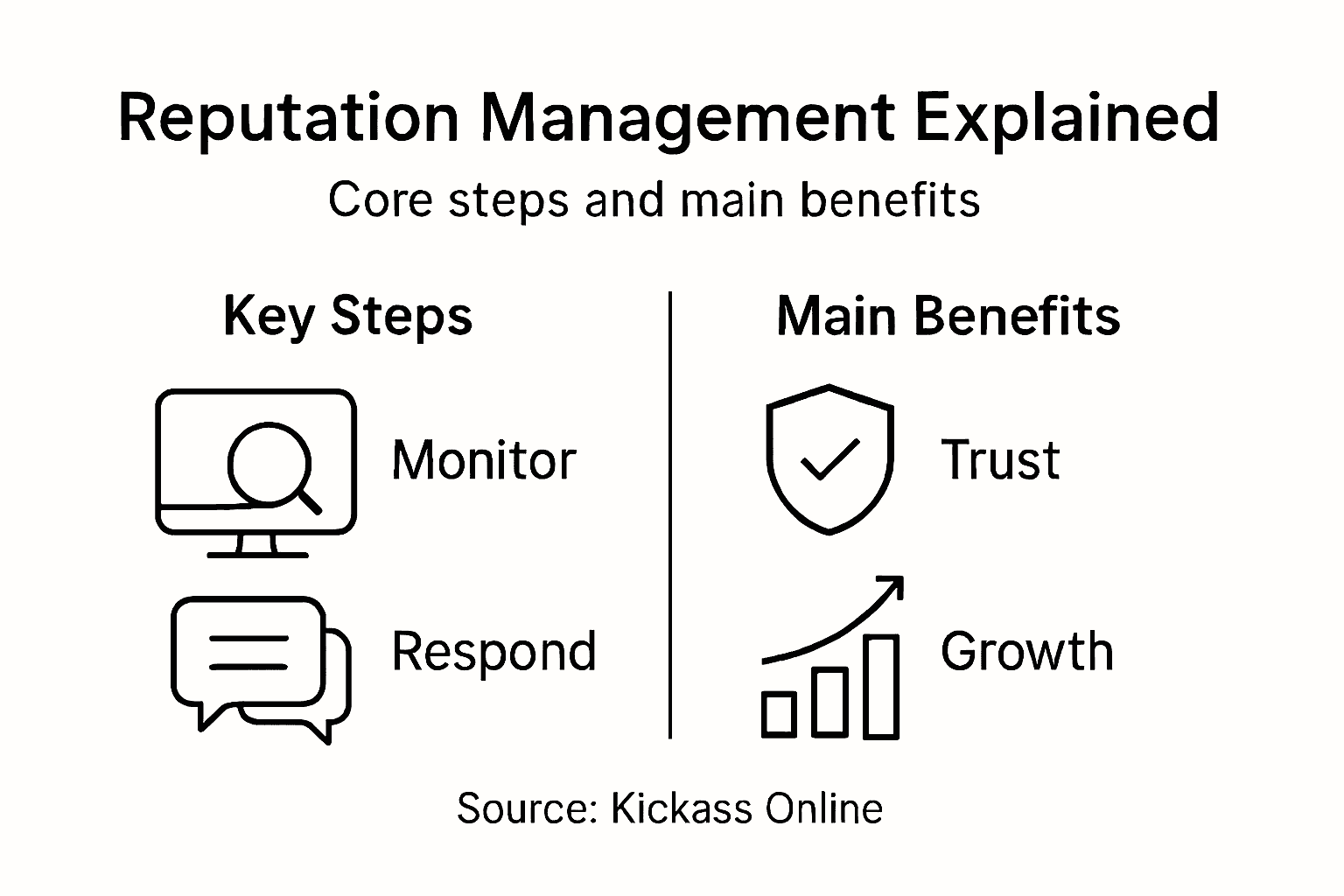
Financial benefits extend beyond direct marketing efforts. Effective reputation strategies help SMEs gain competitive advantages by establishing strong stakeholder relationships with customers, suppliers, and local communities. Businesses that consistently maintain a positive reputation can attract better partnership opportunities, secure more favourable business terms, and potentially access improved financing options. The cumulative impact of strategic reputation management can translate into tangible economic benefits, supporting long-term business sustainability and growth.
Pro tip: Develop a systematic approach to collecting and showcasing customer testimonials, ensuring they represent genuine experiences and highlight your business’s unique strengths.
Risks, Costs, and Common Pitfalls
Reputational risks present complex challenges that can rapidly undermine years of carefully built business credibility. These risks emerge from multiple sources, including social media controversies, customer complaints, employee misconduct, and external misinformation. Small businesses are particularly vulnerable, as negative perception can spread exponentially faster than positive narratives, potentially causing significant financial and brand damage.
The primary costs associated with reputation management involve both preventative measures and potential recovery strategies. Reactive reputation management often requires substantial investment in crisis communication, legal consultations, and public relations efforts. Businesses may need to allocate resources for reputation monitoring tools, professional communication services, and potential compensation or remediation strategies. These unexpected expenses can strain smaller organisations’ financial resources, making proactive reputation management crucial for long-term sustainability.
Reputation risk management involves navigating complex strategic dilemmas, with common pitfalls including inconsistent communication, delayed responses to negative feedback, and lack of transparency. Many organisations struggle with identifying the precise sources of reputational threats, leading to ineffective mitigation strategies. The emotional and qualitative nature of reputation means that standard risk management approaches often fall short, requiring nuanced, context-specific interventions that balance organisational integrity with stakeholder expectations.
The following table summarises the key risks and mitigation approaches in reputation management:
| Risk Source | Example Impact | Mitigation Approach |
|---|---|---|
| Social media controversy | Public backlash, lost trust | Proactive monitoring and response |
| Customer complaint | Damaged brand integrity | Transparent issue resolution |
| Employee misconduct | Negative publicity | Clear conduct policies, swift action |
| External misinformation | Misinformed stakeholders | Strategic communication, fact checks |
Pro tip: Develop a comprehensive reputation risk assessment framework that includes regular monitoring, clear communication protocols, and predefined response strategies for potential reputational challenges.
Strengthen Your Business Reputation with Expert Digital Solutions
Managing your business reputation requires more than just monitoring online feedback. As the article highlights, challenges such as social media controversies, customer complaints, and misinformation can quickly damage even the most carefully built image. At Kickass Online, we understand these risks and offer personalised digital marketing services designed to build trust, amplify positive perception, and protect your brand from reputational threats.
From professional website development that reflects your core values to advanced SEO strategies that boost your online visibility, our dedicated team crafts solutions tailored to your unique goals. By partnering with us, you gain access to comprehensive support that integrates reputation management principles like transparent communication and proactive responsiveness. Discover how our expert services can elevate your credibility and secure long-term success.
Take control of your organisation’s reputation today with strategic digital growth. Visit Kickass Online to learn more about our web development and integrated marketing solutions.

Ready to protect and enhance your reputation with trusted digital expertise? Book your personalised consultation at Kickass Online now and start building a stronger, more resilient brand presence.
Frequently Asked Questions
What is reputation management for businesses?
Reputation management refers to the strategic practice of shaping and maintaining how stakeholders perceive a business. It involves monitoring, influencing, and protecting an organisation’s public image across various channels.
Why is reputation management important for small and medium enterprises (SMEs)?
Reputation management is crucial for SMEs as it helps establish credibility and competitive advantage. Active management can enhance customer acquisition and retention, allowing smaller businesses to compete effectively against larger competitors by building trust and showcasing unique value propositions.
What are the key components of reputation management?
The key components of reputation management include continuous monitoring of public sentiment, rapid response to potential threats, and strategic communication that reinforces an organisation’s core values and mission.
What risks are associated with poor reputation management?
Poor reputation management can lead to significant challenges, such as public backlash, lost trust, and financial damage due to reputational crises. Common risks include social media controversies, customer complaints, and external misinformation, which can rapidly undermine an organisation’s credibility.
Recommended
- Why You Should Pay Attention to Reputation Marketing | Kickass Online
- London SMEs’ Local SEO Success Stories: Transforming Digital Presence and Driving Business Growth
- Top 8 Effective Ways to Get Your Brand Noticed Online | Kickass Online
- Defining Business Branding Online: Complete Guide | Kickass Online


Book A Discovery Call
Stay Connected