Why Content Marketing Works: Complete Guide for SMEs

More than 80 percent of small businesses struggle to stand out against larger competitors. The difference often comes down to how well they connect with their audience. Content marketing offers a smarter way for small business owners to attract attention and build trust without relying on heavy sales tactics. This guide helps you understand how strategic content can grow your reach, deepen connections, and turn everyday browsers into loyal customers.
Table of Contents
- Defining Content Marketing And Its Purpose
- Core Elements That Drive Effectiveness
- Types Of Content And Strategic Approaches
- Real-World Benefits For Small Businesses
- Common Pitfalls And How To Avoid Them
Key Takeaways
| Point | Details |
|---|---|
| Valuable Content Creation | Focus on producing relevant, high-quality content that addresses customer needs, rather than direct sales pitches. |
| Audience Understanding | Develop detailed audience personas to tailor content and meet specific customer challenges effectively. |
| Set Clear Goals | Establish measurable objectives for content marketing efforts to align them with overall business strategies. |
| Avoid Common Pitfalls | Maintain consistency in content delivery and ensure that each piece serves a strategic purpose related to your marketing goals. |
Defining Content Marketing and Its Purpose
Content marketing represents a strategic approach that transforms how small and medium enterprises (SMEs) communicate with their potential customers. Fundamentally, it’s about creating valuable, relevant content that attracts and engages your target audience, rather than directly selling to them. According to APC Research, content marketing is “a strategic approach focused on creating and distributing relevant content to attract a defined target audience and drive profitable customer action”.
At its core, content marketing differs dramatically from traditional advertising. While typical marketing interrupts consumers with sales pitches, content marketing provides genuine value. Think of it like this: instead of shouting “Buy my product!” you’re offering helpful information that solves real problems. For SMEs, this means creating resources like how-to guides, industry insights, case studies, and informative blog posts that demonstrate your expertise without directly selling.
The purpose of content marketing goes beyond mere promotion. It serves multiple critical objectives for small businesses:
- Building Trust: By consistently sharing knowledgeable content, you position your business as an industry expert
- Improving Online Visibility: High-quality content helps improve search engine rankings
- Generating Leads: Valuable content attracts potential customers who are actively seeking solutions
- Nurturing Customer Relationships: Regular, helpful content keeps your audience engaged and connected
With the right content marketing strategy for SMEs, businesses can transform how they connect with their audience, moving from interruptive sales tactics to becoming a trusted source of information and solutions.
Core Elements That Drive Effectiveness
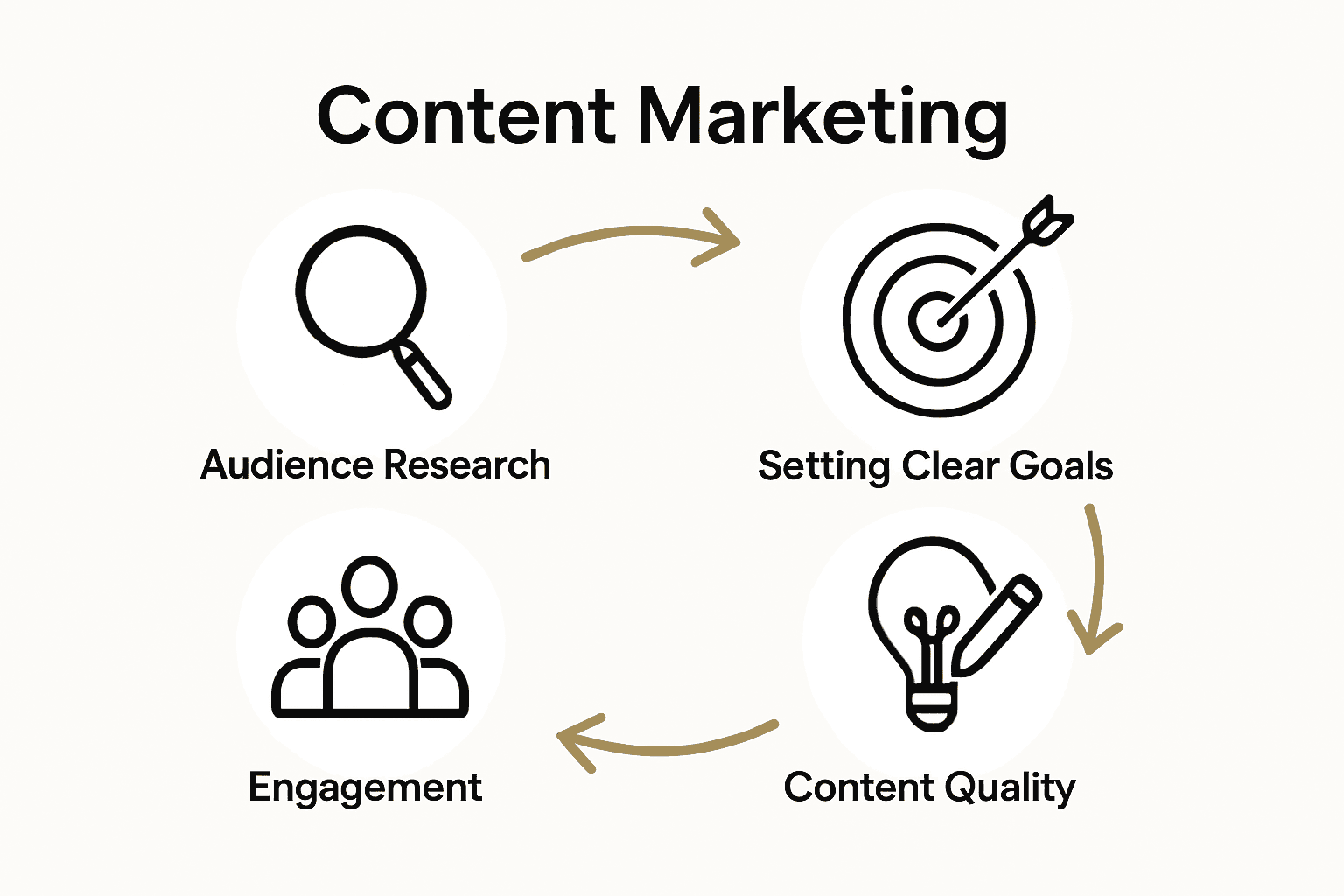
Content marketing success hinges on understanding and implementing strategic core elements that transform generic content into powerful business tools. Hofstra Research highlights that effective content marketing strategies are built on four fundamental pillars: audience research and segmentation, clear and measurable goals, high-quality content creation, and engagement and community building.
Audience Understanding sits at the heart of content marketing effectiveness. This means going beyond basic demographics to truly comprehend your target audience’s pain points, aspirations, and information consumption habits. Successful SMEs develop detailed audience personas that guide content creation, ensuring every piece of content speaks directly to specific customer segments. By mapping out customer journeys and understanding their challenges, businesses can craft content that feels personally tailored and genuinely helpful.

The second critical element involves establishing Clear and Measurable Goals. Content marketing isn’t about producing content for content’s sake. Each piece should align with specific business objectives such as:
- Increasing brand awareness
- Generating quality leads
- Establishing thought leadership
- Improving customer retention
- Driving website traffic
- Supporting sales conversion processes
Lastly, Content Quality and Consistency determine long-term content marketing success. This means producing authoritative, well-researched content that provides genuine value. SMEs should focus on creating in-depth resources that solve real problems, answer specific questions, and demonstrate deep industry expertise. With the right content marketing strategy for SMEs, businesses can transform their online presence from mere noise to meaningful conversation.
Types of Content and Strategic Approaches
Content diversity is the cornerstone of an effective marketing strategy. As Coursera explains, content marketing involves creating and distributing useful, relevant content across various formats to attract and engage a target audience. According to Wikipedia, these formats range from traditional written content to multimedia experiences, including news, videos, white papers, e-books, infographics, email newsletters, case studies, podcasts, and how-to guides.
Strategic content selection requires understanding your audience’s preferences and consumption habits. Small and medium enterprises (SMEs) should focus on creating content that not only informs but also entertains and solves specific problems. Different content types serve unique purposes in your marketing funnel:
- Blog Posts: Build thought leadership and improve SEO
- Podcasts: Create intimate, long-form connections
- Infographics: Simplify complex information visually
- Case Studies: Demonstrate real-world problem solving
- Video Content: Increase engagement and shareability
- Email Newsletters: Maintain consistent audience communication
The key to successful content marketing lies in strategic storytelling. By unlocking the power of strategic storytelling, SMEs can transform their content from mere information to compelling narratives that drive business growth. Each content type should be carefully crafted to address specific audience needs, creating a cohesive narrative that guides potential customers through their decision-making journey.
Real-World Benefits for Small Businesses
Content marketing transforms how small businesses compete in a crowded marketplace. Coursera highlights that effective content marketing can attract customers, drive brand awareness, and establish expertise in a particular area, providing small businesses with a powerful tool to increase visibility and customer engagement.
According to Wikipedia, content marketing goes beyond traditional advertising by creating sustainable brand loyalty and providing valuable information that generates a willingness to purchase from the company. For small businesses operating with limited marketing budgets, this approach offers several critical advantages:
- Cost-Effective Marketing: Significantly cheaper than traditional advertising channels
- Enhanced Credibility: Positioning your business as an industry thought leader
- Long-Term Asset Creation: Content continues generating value long after initial publication
- Improved Customer Trust: Building relationships through genuine, helpful information
- Increased Online Visibility: Boosting search engine rankings and organic reach
Small businesses can leverage content marketing to punch above their weight. Digital marketing strategies enable SMEs to compete with larger competitors by creating targeted, meaningful content that resonates directly with their ideal customer base. The key is consistent, high-quality content that addresses specific customer pain points and demonstrates genuine understanding of their challenges.
Common Pitfalls and How to Avoid Them
Content marketing can quickly become ineffective if small businesses fall into predictable traps. Hofstra Research emphasizes that avoiding common pitfalls requires setting clear, measurable goals, understanding the target audience, and consistently creating high-quality content.
One of the most significant mistakes small businesses make is creating content without a strategic purpose. Many entrepreneurs produce random blog posts or social media content without considering how each piece connects to their broader marketing objectives. This scattergun approach leads to wasted resources and minimal impact. Successful content marketing demands a deliberate strategy that:
- Aligns content with specific business goals
- Targets a well-defined audience segment
- Maintains consistent brand messaging
- Provides genuine value to potential customers
- Tracks performance through measurable metrics
Another critical pitfall is inconsistency and lack of commitment. Content marketing is not a one-off activity but a long-term investment. Strategic content marketing for SMEs requires patience, regular publishing, and continuous refinement. Businesses must resist the temptation to abandon their strategy after minimal initial results. The most successful content marketing campaigns build momentum over months, gradually establishing trust and credibility with their target audience.
Unlock the True Potential of Content Marketing for Your SME
Are you struggling to create a clear content marketing strategy that builds trust, generates leads, and boosts your online visibility? This article highlights the common challenges SMEs face, such as inconsistent content and lack of measurable goals. At Kickass Online, we understand how vital it is to align your content with specific business objectives and to maintain a high standard of quality and consistency. Discover practical Tips and Tricks that help you turn your content into a powerful tool for growth.
Take control of your digital presence today by partnering with Kickass Online. Our expert team specialises in creating high-converting websites, optimising SEO, and providing ongoing maintenance tailored to your unique needs. Do not let untargeted content hold your business back. Book a consultation now and transform your content marketing strategy into a lasting business asset.
Frequently Asked Questions
What is content marketing, and why is it important for SMEs?
Content marketing is a strategic approach that focuses on creating valuable, relevant content to attract and engage a target audience instead of directly selling products. It’s important for SMEs because it builds trust, improves online visibility, generates leads, and nurtures customer relationships.
How can SMEs effectively use content marketing to generate leads?
SMEs can generate leads through content marketing by creating high-quality resources such as blog posts, how-to guides, and case studies that solve specific problems for their audience. This valuable content attracts potential customers who are actively seeking solutions, encouraging them to engage with the brand.
What are some common types of content used in content marketing?
Common types of content used in content marketing include blog posts, podcasts, infographics, videos, email newsletters, research papers, and case studies. Each format serves unique purposes and helps SMEs connect with their audience in different ways.
What are the key elements of a successful content marketing strategy for SMEs?
A successful content marketing strategy for SMEs includes understanding the target audience, establishing clear and measurable goals, producing high-quality content consistently, and fostering engagement and community. These elements ensure that the content resonates with the audience and aligns with business objectives.
Recommended
- Content Marketing Mastery for SMEs: Crafting & Sharing | Blog
- Content Marketing for SMEs: Guide to High-Impact Content Strategy | Kickass Online
- Content Marketing to Drive Growth: Brand Authority and Trust | Kickass Online
- Harness the Potential of Content Marketing for Your SME | Kickass Online
- What is Content Marketing? Understanding Its Importance
- 7 Content Curation Strategies Every Business Owner Needs – My Blog


Book A Discovery Call
Stay Connected